Brad Casebier: Episode 728
Read the full transcript
Brad Casebier
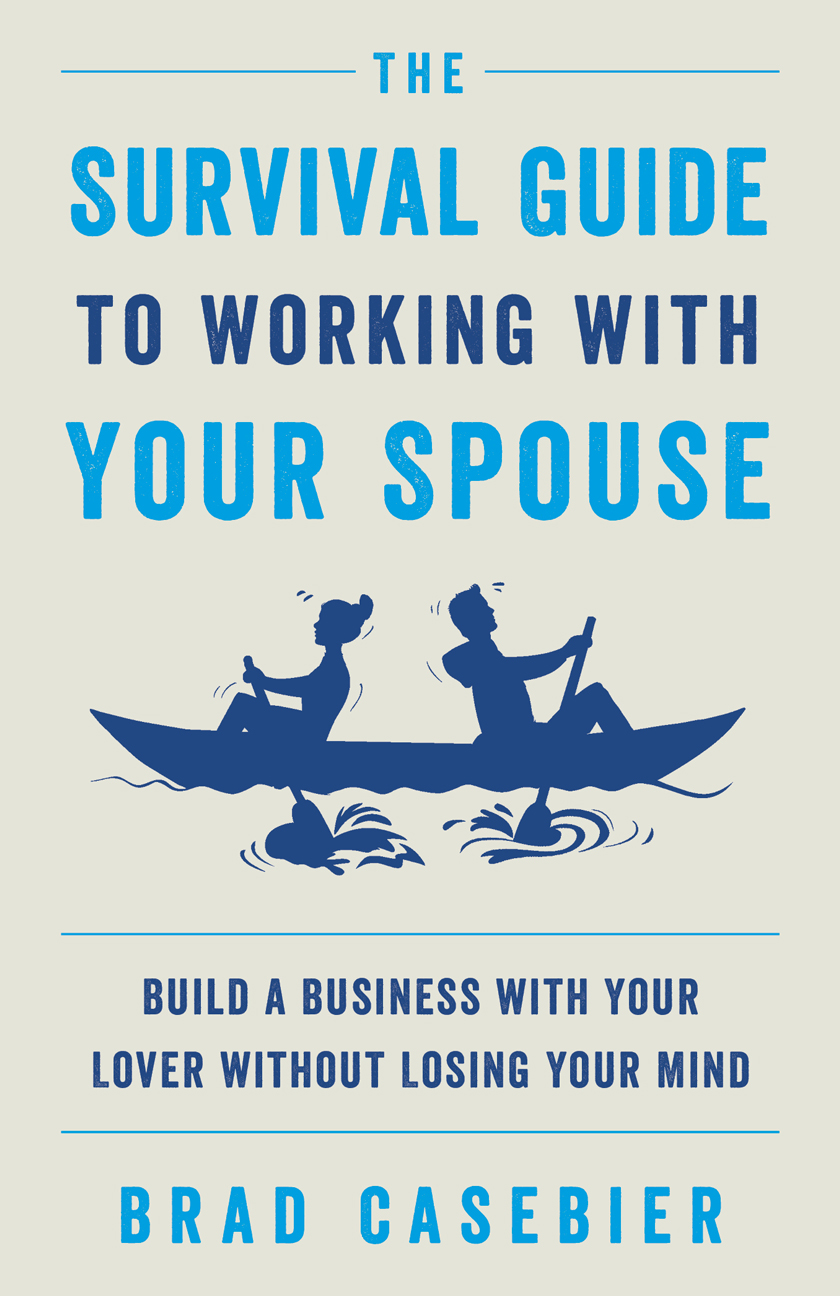
Brad Casebier was a typical struggling small business owner who discovered that partnering with his wife gave them both a superpower to grow something truly remarkable together. Like all married business partners, he and his wife, Sarah, quickly discovered that working together while maintaining a fulfilling relationship was going to require some changes.
Brad and Sarah’s humble beginnings and their belief that anything is possible are proof that the American dream still exists. The Survival Guide to Working with Your Spouse shares the changes that worked for them so that you, too, can build an amazing future.
📚 Books by Brad Casebier
Transcript
[0:00:21] JB: Thinking about turning your romantic life partnership into a business partnership? It could take both your business and your marriage to the next level or it might destroy them both. A healthy dose of preparation can be found in Brad Casebier’s new book, The Survival Guide to Working with Your Spouse: Build a business with your love without losing your mind. On Author Hour today, Brad discusses the importance of aligning your visions, clearly delineating your roles and he shares other tips that he and his wife learned the hard way so you don’t have to. Hi Author Hour listeners, I’m here today with Brand Casebier, author of The Survival Guide to Working with Your Spouse: Build a business with your love without losing your mind. Brad, thank you so much for being with us today.
[0:01:08] Brad Casebier: I’m glad to be here.
[0:01:10] JB: You and your spouse are in business together. Can you tell us first what your business is and how this book came to be?
[0:01:17] Brad Casebier: Yeah, you bet. We started a plumbing business in 1999 and didn’t have a clue what we were doing really, kind of floundered around fore a while and Sarah was an RN and at one point we had this conversation, realizing our careers were in conflict and she says, “What if we work together?” We worked on something that was ours and we both go all in on this one thing and we really concluded that was kind of an exciting proposition and I think this is very common story of husband and wife in this country and it’s a disaster, it’s really hard.
[0:01:52] JB: But you persevered.
[0:01:53] Brad Casebier: We did, we did. We ended up building up our business. This year, it’s going to do 50 something million in gross revenues, we were purchased by a private equity firm for a pretty significant amount of money around November in 2020.
[0:02:06] JB: Congratulations.
[0:02:07] Brad Casebier: Yeah, thank you. I’m the CEO going forward, we’re working on acquisitions all over the US now and taking what we built with our company called Radiant Plumbing and Air Conditioning in Austin Texas and spreading the magic that we created there all over the US.
[0:02:21] JB: You believe that this success would not have come unless you and your spouse had been working together?
[0:02:27] Brad Casebier: 100%. It’s a kind of a blessing and a curse, right? I don’t know how any one person could do what we did together. I don’t think it’s possible because we have different strengths and then the real challenge is learning to trust the other person operate within their strengths because if you don’t understand that person’s strengths and you have those, it might even seem like a flaw, you know? Then you could kibosh something that’s really magical that your partner brings to the table because it’s just not – you can’t relate to it. You have a magical blend of skills that one human being couldn’t possibly ever have.
[0:03:05] JB: Yeah. I mean, you know, that’s a lot of how marriage works in general, right? You kind of specialize. I mean, my husband does all the school stuff for our child and you know, I handle other things and so it’s kind of makes sense to take that understanding of roles into business. How is working with a spouse different though than working with any other kind of business partner?
[0:03:31] Brad Casebier: It’s so different because inevitably, you would want to potentially have sex with this person at the end of the day and you can’t be as direct as you would like to be. You can’t bullshit this person, I don’t know if we cuss on this podcast, I apologize. They see it as the real truth, you can come home with a normal job and say, “Man, the co-workers were this way or that way,” and they know the truth, you know? You’re really exposed and you have to grow through a lot of things that I think couples that don’t work together can avoid growing through. You just have to face hard conversations because there’s no escaping them when you work together. You’re 24/7 together, no escape.
[0:04:12] JB: It’s intense.
[0:04:13] Brad Casebier: It is. It’s a lot of togetherness, it really is.
[0:04:16] JB: Okay. You’ve laid out this kind of three foundational keys you call them, for how to work well with a spouse. I’d love to ask you a little bit about each of them. First of all, you talk about the importance of aligning your visions?
[0:04:35] Brad Casebier: Yeah, if we don’t agree on where we’re going, that’s a non-starter and the problem with this is, is people often think that they’re in alignment but they haven’t spent enough time digging deep enough to realize that there’s enough disconnect of what the destination is, they’re really pulling against each other as they go forward and if you're going to – you decide you're going to go to a restaurant and you know it’s in town but you haven’t really decided where you’re going, there’s inevitably going to be conflict on that trip, it’s going to be very frustrating about which route do I take. Until you’re really clear on the exact destination, you don’t really understand what route to get there. That’s so true in business, you have to really – it’s so much easier and you make similar decisions and there’s less conflict when you know exactly where you’re going.
[0:05:27] JB: Okay, I mean, this is good advice for any kind of business partnership but especially when you're working with your spouse I imagine.
[0:05:36] Brad Casebier: Yeah, I’d say the stakes are higher working with your spouse. You’re not just going to lose money, you can lose your relationship if you do this wrong.
[0:05:43] JB: Yeah. I mean, do you find that people want to work with their spouses and don’t, out of fear of just that kind of thing happening?
[0:05:52] Brad Casebier: For sure. I hear comments all the time that they think it’s crazy that we do it or they think it’s amazing that we do it and “I would never even attempt it and it scares me.” I think that’s a real deal but then, there’s a whole other segment of society that’s blissfully ignorant and they just like, “Yeah let’s do it, it’ll be fun.” Have no idea what they’re getting ready to step into and then other times, it’s straight up necessity. I think this happens more often than not, the person starts a business and the spouse is like a free employee. Then that can create some pretty grotesque relationship dynamics and some bitterness around getting sucked into something that you never really signed up for but here, you have to do it because now, whole financial security is on the hook and now I’m the free employee for the business and unfortunately it happens a lot.
[0:06:39] JB: What’s your advice to a couple who finds themselves in that kind of situation?
[0:06:43] Brad Casebier: Get serious, I have a little segment in the book on this, about like a coerced it, employee that’s like a role. That’s no – you’re not really acting as a teammate when you’re being coerced to be in a position and I think, if I reflect back on Sarah and I’s world, we were modeling my parent’s business. My mom kind of handled the taxes and my dad did the work. My mom helped my wife handle the taxes but I started hiring a bunch of people and all of a sudden accounting and all this got much bigger than just taxes. Sarah was just by default supposed to do it because that’s – that was my model, that’s how my parents did it and she didn’t want that job and it wasn’t really fun for either of us but then one day, she decided she wanted in and I think there’s a point where you either are in or you’re out and I don’t think getting not being in business with your spouse is okay too but being angry about it and being in the business isn’t any way to live. You kind of either get all in, take it seriously or extract yourself out of that situation.
[0:07:46] JB: Yeah, well that brings me to the next of your three keys here, the importance of knowing your roles. Tell us about that.
[0:07:55] Brad Casebier: It’s incredible, it’s so – particularly with the smaller business, it’s so easy to blend roles and be in each other’s business. Sarah and I both – we’ve swapped roles, she was the general manager, I was a general manager, back and fourth a couple of times, we both have exchanged being in charge at marketing, she was the initial plumbing service manager, then I was that and then, I mean, we’ve had all this transformation. What’s really messy is when your employees don’t really know who is in charge and I got to ask both of you that can’t get a clear answers and you give different answers, it’s very inefficient for business and also, just really hard on your relationship because you’re constantly happen to haggle out decisions and it’s like, we were doing marketing and it was like, we were having this big debates about what color of orange was the right color of orange. One person needs to make that decision and be responsible for the outcome and you got to stop the collaboration and start powering people to make decisions and then you move forward faster and there’s less frustration.
[0:08:56] JB: Okay. Then the third of these keys here, your business and your relationship, tell us what’s going on with this one?
[0:09:04] Brad Casebier: It’s an interesting segment because I just, that’s says a bit of me just talking about what I’ve learned personally about how to be in a relationship and in business. It’s a pretty vast topic but you know, is the ultimate goal to make a lot of money, is it to – you got to kind of determine like how important is the human being that you're married to in this dynamic? We both found, there’s times when we had to really let somebody run with the ball, even though we didn’t think that was the right play because they needed it. They needed to run with it. There’s like – if you’re really looking out for your spouse and their life experience, not just the business, what do they want their life to be like? That could be – it could be having enough time to hit all of the soccer games and basketball games or it could be your life experience that they really desire is to make hundred million dollars in cash when they sell their business. Very different lives, very different choices but trying to impose what you want on your spouse is, — ah man, that’s going to just be a long uphill battle and we both had to give a lot to let the other person get to experience what they wanted to experience in business and in life and there’s a lot of give and take in that. I don’t know if I explained that well, it’s kind of a deep topic. It’s not just about the business when you’re working with your spouse. Failure is okay sometimes. Sometimes people have to experience failure and you love that person through the failure and they needed to experience it. It is a wild business concept if you’re working with employees. It’s a different game when you are working with your spouse.
[0:10:43] JB: Yeah and you know, I was thinking about what you said about how you – when you are working with your spouse, you know this person’s life goals or your desires and in a way that maybe you wouldn’t know a more regular kind of business partner and that can benefit the business because you know you understand motivations. I mean, is that right?
[0:11:03] Brad Casebier: Yeah, absolutely and I’ll maybe reframe a little bit is you think you know your spouse and what we found too is we, in our process and discovery, we were really getting to know ourselves because we had some probably unconscious drivers that we weren’t really even aware of until we kept hitting this friction moment and realize, “Oh, I thought I wanted this one thing all along but I really don’t and I’ve never really been able to see it or verbalize it but I keep leaning this way and it’s causing friction because we both thought I wanted this but what I really want is this.” That was, my wife was totally committed to be a stay-at-home mom and not work and that was a lot of peer pressure from friends and family and things of that nature and she was losing her mind, you know? We both thought that’s what she wanted. She woke up one day, it’s like, “You know what? This isn’t for me.” I said, “Okay” and that was one of those moments where you discuss, you have to be like, “Okay, this is kind of a game changer and let’s figure out how to adapt to the new world” you know? That’s part of allowing your spouse to have a life experience that they needed.
[0:12:09] JB: I mean it sounds like in you all’s case going into business together benefited both your relationship and your business.
[0:12:17] Brad Casebier: For sure. I think I would say the benefit to the relationship was there’s a lot of battle scars there. That wasn’t fun because it’s growth requires some stretching and some pain and you do hit these incredible friction points where stuff is just not working and you know, we’re both really committed to each other and we’re both committed to finding a solution and that’s the key for us was just to punch through until we found how we could communicate and live with whatever the solution was but yeah, it was a huge growth opportunity for us. Absolutely and it is hard work. It’s heavy lifting.
[0:12:55] JB: You mentioned earlier that sometimes couples kind of find themselves working together for circumstantial reasons. Is this book for people in that situation who now need to learn how to navigate it or do you also promote? I mean are you proponent of working with your spouse? Do you suggest like, “Hey, you should check this out, this could really benefit you and your business?”
[0:13:20] Brad Casebier: You know, I don’t really probably – there is a segment on there where I say the book is for anybody even thinking about working with their spouse. You should probably read this book if you are thinking about it because it covers a lot of pre-decision things and that it gets very tactical about how to create score cards and things of this nature to hold each other accountable so you’re not just in each other’s business and kind of I don’t feel like you are doing enough. It’s like either the data says you’re doing enough or you’re not and it makes it a little less personal. I think the book is for everyone that is in that space. Yeah, I kind of have missed the element of your question and I think there is another add-on.
[0:14:01] JB: Well, it is just a case by case scenario. I mean, I was looking at your book and I am just trying to imagine like, “Wow, if my husband and I worked together, what would that be like?” you mentioned some scars earlier. What was one of the biggest challenges that you and your wife faced when you started working together?
[0:14:19] Brad Casebier: There is both been times where we completely saw very different routes tactically on how to get to an outcome and we’ve both given into each other different times and it’s like sometimes, when you’re the one giving up your ground and saying, “Yeah, okay do it your way” that can feel pretty rough and then on the other hand too like Sarah yielded on something one time like I was very counter all of our coaches and I guess I could see it. I needed to do it and she’s like, “You know, I’m going to trust you on this one” and it was like I can’t tell you what that did to me emotionally. It’s like when your spouse trusts you overall the other coaches and just going to say, “You know, I don’t know. I am going to let you run with this” it was like some real bonding experience for me and it really helped me commit to an even better success because I had to pull through and focus to our livelihood too. It is so personal, it’s incredible.
[0:15:10] JB: Yeah, I mean you can really trust that your business partner is all in, right?
[0:15:13] Brad Casebier: Yeah.
[0:15:15] JB: They are not going to embezzle money and fly off in the middle of the night.
[0:15:18] Brad Casebier: Right, the hardest thing I think that we both had to go through is giving up roles that we owned. I owned this role and now it’s yours and that’s the identities get attached to titles and roles and that can feel really awful and those can be some really good growing moments because you know, we’ve dived into like, “Am I the role or am I more than that?” you know? Then, “Who am I without the title?” or whatever, so those have been some really hard moments. I think people get anytime your identity is attached to something and you lose it, that’s an excruciating experience.
[0:15:55] JB: You write about the different mindsets of business owners, the different kinds of business owners like the entrepreneur for example, can you tell us – I thought that was really interesting, can you tell us a little bit about that and whether or not you want you and your business partner to have the same mindset or kind of complimentary ones or what’s your take on that?
[0:16:14] Brad Casebier: Yeah, this is a wild concept and I am sure somebody has probably covered it before but I totally just kind of went for my gut on what I’ve seen and experienced with all the people like friends and I have coached and family members and just where is everybody, people have different reasons for being in business and again, it is wild how much we’re driven by unconscious beliefs that we don’t ever really talk about or we didn’t really decide. It is just kind of the way we operate, it is our operating system. A person that is entrepreneurial just really want to get business off the ground, they are going to be – they want everybody to kind laud them for how amazing they were putting this business offer grounded, they don’t really want to own and operate it long term. They just want to prove they could get it up and that’s totally fine. It is just a style and then there’s artist types and different people that they’re just craftsman and they just want to produce their craft. The business exists as a format for them to do their craft. There is people that are in the legacy, they want to build something for generations to come and all of these different mindsets create very different choices on how you – every decision you make is going to be guided by why you’re in business and so I am just really trying to help couples cut through the unconscious and make it front of mind so we can understand each other and we can have healthier conversations about how we’re going to proceed forward. I think if the book has any intent is that it’s just to help people really understand each other and themselves so that it’s easier to run the business together. You can have an entrepreneur and an artist work together but you got to understand, we’ve got different end outcomes in mind and so we have to figure out how to create a balance in the journey.
[0:17:54] JB: There is so much planning behind the planning and that’s like the adage “measure twice, cut once” I guess — and that seems especially true when you are working with a spouse. Before we do this, let’s check a few boxes or let’s investigate. I think this book is going to save people a lot of time and heartache.
[0:18:13] Brad Casebier: That is the goal. We have enough pain and heartache for everybody else and we’re hopeful that this would be – this was something she and I, Sarah and I have talked about for years and years and I just – I did a bunch of writing on it in 2017 and then this last 2020, I just like really got committed and both it was so funny because I had to rewrite so much of it because so much have changed in the last three years. It was almost a complete rewrite with kind of an outline but yeah, it’s a neat experience and I will say this, I think it is a very high former relationship. I think maybe even we were designed for this as a couple to have a common cause and the growth that we experienced with each other going through this process made us much tighter in our relationship and also had a profound impact on the business. I am a big fan of it. I don’t recommend it for everybody if you spouse doesn’t get out of bed every day on a regular time, if they are not doing a great job with their day job that they currently have, you may want to think about that might not be the one you want to go into business with, you know? I don’t know, maybe we just had the right DNA but I think it is really good healthy things for couples to do. I don’t think it is weird at all.
[0:19:25] JB: Well, thanks so much for sharing all the wisdom you all have gained. Brad, it’s been a pleasure speaking with you. Again listeners, the book is, The Survival Guide to Working with Your Spouse: Build a business with your lover without losing your mind. Brad, in addition to reading the book, where can people go to learn more about you all and your work?
[0:19:43] Brad Casebier: You can find our website at bradsarah.com. There is some resources there you can download and there will be more very soon as we move forward.
[0:19:52] JB: Great, thanks so much.
[0:19:53] Brad Casebier: Thank you.
[0:19:56] JB: Thanks for joining us for this episode of The Author Hour Podcast. You can get Brad Casebier’s book, The Survival Guide to Working with Your Spouse: Build a business with your lover without losing your mind, on Amazon. You can also find a transcript of this episode as well as previous episodes on our website, authorhour.co. Make sure to subscribe to The Author Hour Podcast for more interviews and insights into life-changing books.
Want to Write Your Own Book?
Scribe has helped over 2,000 authors turn their expertise into published books.
Schedule a Free Consult