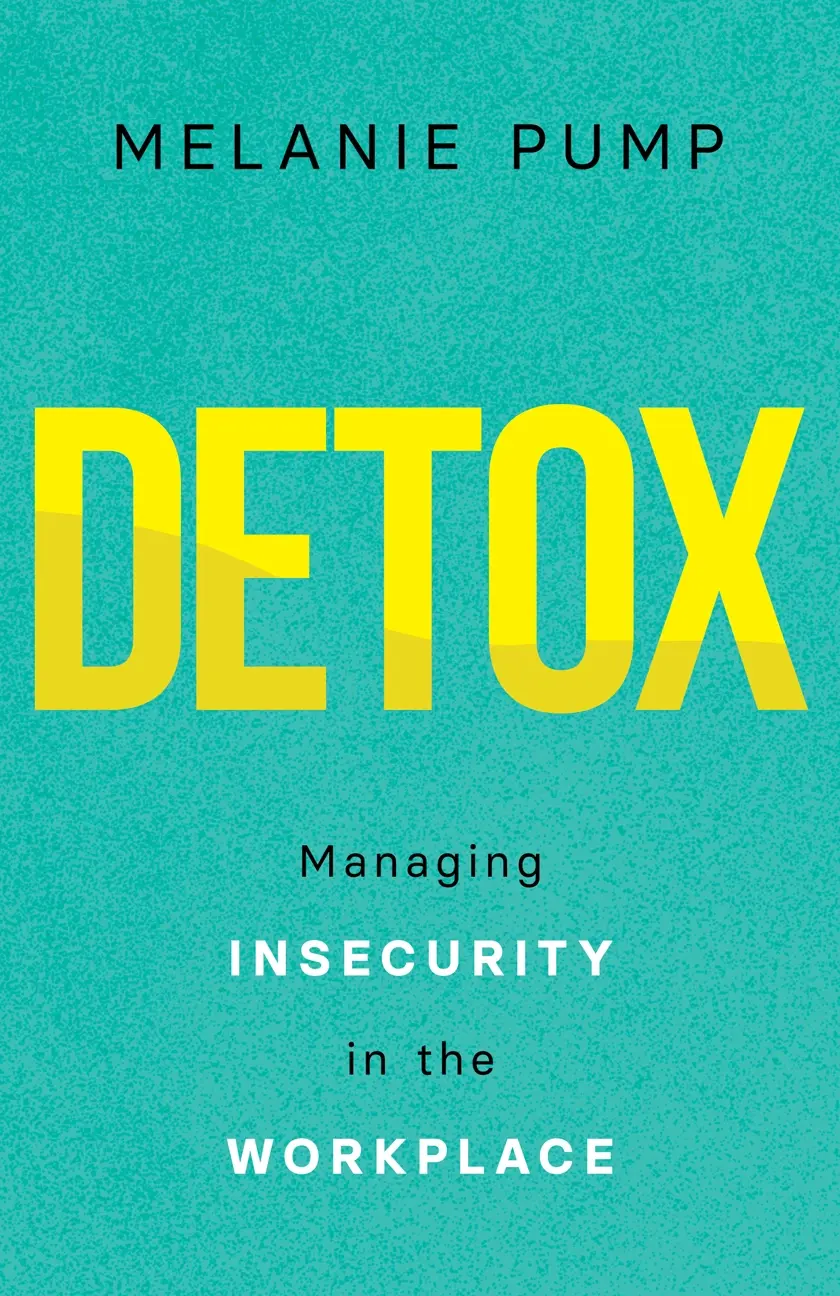
Melanie Pump: Detox: Managing Insecurity in the Workplace
Read the full transcript
Melanie Pump
Melanie Pump grew up in a family that went bankrupt soon after she was born. By fifteen, she was a high school dropout. Today, she is Chief Financial Officer of Brane Capital, a trusted, independent partner for digital asset custody.
Particularly attuned to the critical effects of a toxic environment, Melanie spent more than twenty years of progressive corporate experience studying the impact leaders and workplace cultures have on employee security and performance.
Through that effort, Melanie learned how to shape a corporate environment to manifest powerful teamwork, authentic communication, diverse creativity, and heartfelt loyalty. She wrote Detox to help leaders and employees everywhere learn how to truly thrive.
📚 Books by Melanie Pump
Transcript
[0:00:27] DA: Is your team willing to propose game changing ideas and offer diverse opinions? Will they take personal risks for the sake of your company and its reputation? Most leaders can’t answer yes to these questions, especially during critical times of change. Melanie Pump’s new book Detox, demonstrates the real tangible impact of toxic work environments that stifle innovation, collaboration, succession planning and productivity and it shows you what you could do to change that. No longer will you wonder how to create a healthy, secure environment that can dispel the natural insecurities and fears within your team to unlock their true potential. Hey, Listeners. My name is Drew Applebaum and I’m excited to be here today with Melanie Pump, author of Detox: Managing Insecurity in the Workplace. Melanie, thank you for joining, welcome to The Author Hour Podcast.
[0:01:16] Melanie Pump: Thanks so much for having me.
[0:01:17] DA: Let’s kick this off, can you give us a rundown of your professional background?
[0:01:21] Melanie Pump: Yeah, my background is, I’m actually an accountant by trade, I’ve grown my career starting out in the corporate world as the receptionist and grew my career all the way up to being a CFO now.
[0:01:32] DA: Now, you’ve had a long and successful career. Why was now the time to share these stories in the book?
[0:01:39] Melanie Pump: Yeah, well, I’ve been working in the corporate world for almost 25 years now and during that time, I’d observed some trends of behaviors of what would happen when a workplace created insecurity in employees and how that worked against employees reaching their full potential and after having been in a number of work environments where I saw this occurring, it really just ignited a passion in me to try and get us to understand it a bit better and for people to be more aware of what happens when an environment makes employees feel unsafe.
[0:02:06] DA: Now, a lot of the book you talk about, what you’ve experienced in a workplace yourself but were there any points during the writing process, maybe just by doing some research or by digging deeper into certain subjects, did you come to any major breakthroughs or learnings?
[0:02:21] Melanie Pump: Yeah, I mean, I did a lot of research and I spoke to a lot of different people as I wrote the book as well, just to make sure it wasn’t totally about my stories and a couple of things, one that I learned was about the concept of psychological safety, which although I didn’t know about it when I started to formulate my theory is actually directly aligns with what I’m talking about and psychological safety is a term that was coined by Amy Edmonton, a Harvard professor. Her research has completely validated, I also saw about how employees start using unproductive defensive behaviors when they’re in a work environment that makes them feel insecure.
[0:02:55] DA: Now, when you decided you were going to write the book, in your mind, who were you writing this book for? Is this for HR or hiring managers, is it for executives and who is really having the big takeaways from the book?
[0:03:08] Melanie Pump: Well, when I originally started writing it, I was thinking more broadly because the concepts really apply to all of us, all of us can feel insecure. As I wrote it, I started to realize that it would be the most useful to target it to people who can make a difference. People who can enact change in the work environment. Because of that, it is really targeted at leaders and also at HR professionals because HR professionals can provide guidance and advice to leaders on how to create a positive, healthy work environment.
[0:03:35] DA: Now, is there anything readers can do to prepare themselves to start the book or really, do something to make sure they’re getting the most out of the book?
[0:03:44] Melanie Pump: Well, I mean, having a really open mind and be ready to walk through some of your own experiences because you know, the people that have read the book today or to date, they’ve all found that it’s made them look at things a little differently, they look back on some of the experiences and interactions that they’ve had with people and it’s made them understand that they may have actually been more because somebody was feeling insecure than somebody being lazy or just having a bad attitude. I would say, really approach it with an open mind and be ready to look at your past interactions and your own reactions to situations as well.
[0:04:15] DA: Now, let’s dig into the book a little bit. You open the book with a quote that says, my life’s journey has made me an expert in insecurity. Can you talk about what experience you had in the workplace that led to this insecurity?
[0:04:29] Melanie Pump: Right, well, some of it actually goes back quite a bit earlier. My journey right from childhood started out with a lot of insecurity. My father went bankrupt when I was very young, in the early 80s and my family really dealt with trauma and pretty much through my whole childhood. I ended up out on my own at age 15, out on the streets actually, I didn’t finish high school. Obviously, somebody living that kind of life feels extreme insecurity. I was fortunate though, to wake up and realize that I could do better and to start out in a corporate environment to get an opportunity as a receptionist. I did that obviously, with that imposter syndrome that we talk about so often, because I was a high school dropout, I didn’t know much about the corporate world and I had to overcome that and over time, I did through the support of some very amazing mentors and leaders and went back to school and got my education but I know what it’s like to feel insecure.
[0:05:20] DA: Can you walk us through, maybe what a toxic workplace really looks like?
[0:05:25] Melanie Pump: Yeah, I mean, there’s many levels to it because when we think of toxicity, we automatically think of people and you know, that is true, in a work environment, where you have a bullying leader or people are micromanaging, those types of behaviors definitely create a toxic work environment. A toxic work environment can also come in a place where there’s a lot of uncertainty and there’s a lack of transparency because people feel unsafe when they don’t know what’s happening, they don’t know if their job is safe. These things can all lead to toxic behaviors that create insecurity and spread toxicity through a work environment.
[0:05:59] DA: Now, once you’ve been part of the toxic corporate culture, how difficult is it to heal and grow in your career?
[0:06:08] Melanie Pump: It is very difficult, especially, luckily for me, when I started, I had a healthy work environment for about the first 15 years of my career. I was very fortunate. When I then got into toxic work environments, I saw the difference and I saw how it stopped me from growing and my career got stunted during the period that I was in those unhealthy environments. Once I got out of them, then I was able to grow and reach my full potential. Awareness is really critically important to be able to recover and get past an environment that is unhealthy.
[0:06:40] DA: You spoke about it a little bit earlier about insecurity and toxic leaders leading to employees, unable to perform at their full potential. Let’s just talk about insecurity in particular, what does that actually look like in a workplace and where is it bred from and is it manageable and how can we manage it if we see it and start to notice it now?
[0:07:00] Melanie Pump: Yeah, big questions. For starters, insecurity. Insecurity comes from many different things, a work environment isn’t the only thing that can make you insecure, like me when I was young, I came into the workplace with insecurity. The thing is, if you already have insecurities from your personal life and then you get into a work environment that also magnifies those insecurities, it can derive a lot of unproductive behaviors and those manifest as defensiveness, procrastination, passive aggressive behavior. People who are insecure, they really limit their interactions with others. You’ll have a much less connected corporate culture where people are feeling insecure. Those are some of the things that you see. There’s a number of things that companies can do to help reduce the insecurity of employees and a lot of this is about communication, transparency, making somebody’s role clear. Like I said earlier, transparency and uncertainty can really contribute to insecurity. If an employee isn’t certain of how they’re doing in their role for example, that can really trigger insecurity in them because are not sure if they’re doing a good job, it’s really important that leaders communicate how someone’s doing, whether they’re doing well or whether they’re doing poorly. Both is really important because even if you tell somebody they’re not doing well, at least they know and they know what they can improve rather than them just not being sure what’s happening. That is what it really – just making sure that leaders are open with their teams about what’s going on can really help to reduce insecurity.
[0:08:24] DA: Now, a close second to insecurity in terms of mooring employee performance is uncertainty. What is the impact of having employees just feeling uncertain all the time?
[0:08:37] Melanie Pump: Yeah, our brains actually get really uncomfortable with uncertainty. There’s research that shows out there that if we feel uncertain, a lot of our mental energy is going to be focused on trying to find certainty. What that means is if we have employees in the workplace who don’t know what’s going on, they feel unclear about their performance, they’re going to be putting less focus on actually doing their work and more focused on trying to figure out what’s happening or trying to create certainty for themselves. This is actually going to reduce their overall productivity. There is a dual purpose of making sure we create certainty for our employees. For one, it is just better for their mental health overall but it will also increase the productivity of the workplace.
[0:09:14] DA: Is there a way to combat this?
[0:09:17] Melanie Pump: Well, being transparent. That really is one of the most important things. I mean we think about, you know, a good example is actually the pandemic where all of a sudden, there is so much uncertainty in the world. If employers kept their employees informed about what was happening, what they were doing to address the risk of COVID, how they’re going to ensure their employees were safe, that would ease some of the employee’s insecurity. Of course, there is still going to be stress because it was a stressful situation but if they at least feel comfortable that they know what their employer is doing and they know their employer is taking steps to mitigate the risks around the pandemic that would reduce some of the uncertainty that the employees feel.
[0:09:53] DA: We talk about uncertainty and we talked about insecurity, so how can readers and how can listeners really assess the type of workplace that they’re in?
[0:10:04] Melanie Pump: Yeah, they can look for some of those unproductive behaviors that I mentioned earlier. If you have a workforce where there is a lot of defensiveness, you see people unproductive, procrastinating, those can be signs. You can also really just look around the corporate environment and see how engaged people are. I’ve walked through offices where there is a healthy culture and when you walk through, people look up, they make eye contact. They greet you, you see people collaborating with one another. When you walk through an office where people don’t feel safe and there is a lot of insecurity, people keep their head down. It’s as if they’re protecting themselves by limiting their social interaction. You can feel that if you pay attention when you walk through a workplace, you can get a vibe for how healthy and how safe the workforce feels.
[0:10:47] DA: We’ve talked about what negative and toxic workplaces look like but let us flip it on its head. What do truly nurturing and inspiring workplaces look like?
[0:10:58] Melanie Pump: Yeah and so much of that is about openness and people being comfortable saying what they’re thinking, throwing out ideas, collaborating with each other, open to change and willingness to take risks. If a workplace is healthy and safe, people are going to be more comfortable at exposing themselves. They may be more comfortable saying, “You know what? I’m not very good at this. Can I get some support to help me out?” You know, if people feel unsafe, they are going to be protecting their underbelly whereas in a workplace where people feel supported, they’re going to be okay putting up their hand and saying when they need help. It really is just a lot about in a healthy workplace, people are more open about themselves in general, both the good and the bad.
[0:11:36] DA: I love that you brought this up because sometimes people think this actually doesn’t exists and it’s just a mirage but can companies actually do the right thing for people while still doing the right thing for their business, can you have it both ways?
[0:11:51] Melanie Pump: Absolutely and that is part of why I’ve stood up and I’ve been trying to say something because I do 100% believe as of – and I’m a finance professional, keep that in mind so I believe. I look at the numbers, I believe that companies will do better if they create a safe workplace where employees are willing to throw out their ideas, they are more productive because they are not worried about whether their job is safe. I think businesses will grow and employees will reach their full potentials and so will organizations if they create a positive healthy work environment.
[0:12:22] DA: You actually bring this up in the final chapter of your book, you say, “Some of you will wonder if everything I’ve gone through in the book is all too much” and that readers might ask themselves, “Won’t this kind of cuddling only lead to bad behavior and folks taking advantage?” so what is your answer to that?
[0:12:40] Melanie Pump: Yeah because we’ve all had experiences overtime where we felt like somebody is taking advantage of us and that actually is creating some insecurity in us as well when we’ve seen that. It makes us less trusting of others because we are afraid that they’re going to take advantage but in my experience, when people do that, it’s because they are feeling unsafe in the environment itself. If you create a safe place where people are collaborating and working towards common goals, you’re going to find there is a lot less of that taking advantage because people will have trust that their leaders will look out for their best interest as well as the interest of the organization. I feel the risk of not having a healthy environment so people don’t reach their full potential is actually much lower than creating a workplace where maybe a person or two is going to, you know, as we call it take advantage but I believe the impact of that is much lower than the benefits of creating a healthy work environment.
[0:13:31] DA: What can someone do who is not in management or in a leadership position to really shake up their company culture? I think a lot of people if they’re feeling this way or now that they’re going to recognize why they feel a certain way or why their career has been stagnant, their first idea is to just leave, right? Let’s say they want to stay and change things, what can they do?
[0:13:52] Melanie Pump: Yeah, so they really need to make sure that they accurately assess the situation for starters. Now, we do have a negativity bias where we tend to focus on the negative. Whenever somebody is talking to me about the work environment, I say first off, even make a list of what’s the good, what is the bad so you have a full understanding of just how unhealthy that environment is or if you’re excessively focusing on the negative of it. Once you’ve really defined that, then it’s how impactful are these things to your mental health and do you have the power to change them. Changing them requires you to speak up, so to be comfortable going and saying to if your leader, unless your leader is the issue, then you may want to go to talk to somebody in the HR department or make a report if there is really negative behaviors but you need to be willing to speak up because people won’t know there is a problem unless you say there is. That is what you have to do and then you also have to make sure that your modeling the healthy behaviors and you’re modeling what you expect in the workforce because you can’t complain about somebody else’s behavior if perhaps you were contributing to it. Those are a couple of things that you need to consider.
[0:14:54] DA: Now, what impacts do you hope the book will have on a reader and do you hope they’ll take some immediate steps in their own life or career or company?
[0:15:03] Melanie Pump: Yeah, I really do hope that it helps us turns a light on a bit for the reader about that we may be sometimes jumping into conclusions too quickly about our employees and their behaviors and that there could be something that could be worked on to help them improve their performance and that it could even be something that we’re doing as leaders that are making people feel uncomfortable and therefore, they’re using protective behaviors. I would really like it if leaders read it and then just took a bit of a look at why they do the things they do and consider the psychological safety and the reduction of insecurity of all the interactions they have with their teams.
[0:15:38] DA: Let’s say readers finish the book, they are digging it and they want to maybe dive a little deeper, are there other resources you could suggest?
[0:15:47] Melanie Pump: Yeah, I mean well, I do have a website myself, that’s melaniepump.com and I post regularly, blog post on that and then I’m also do different media and television spots, et cetera. Definitely following me is one way to do that but there are, you know, there is more and more of a movement today about an awareness around psychological safety so I recommend researching that. Like I mentioned early, Amy Edmonton is doing that and then also Adam Grant is another person who is really advocating for the safety of the workplace.
[0:16:16] DA: Well Melanie, we just touched on the surface of the book here but I want to say that writing a book where you are just helping folks feel more comfortable in the day to day in their office and promoting positive culture in an office as well is no small feat. So congratulations on having your book published.
[0:16:30] Melanie Pump: Thank you so much.
[0:16:31] DA: I have one question left, it is the hot seat question. If readers could take away only one thing from the book, what would you want it to be?
[0:16:38] Melanie Pump: I really would want it to be that we be more thoughtful in our interactions with each other and be more understanding of what could be causing reactions in our peers and in our employees because I do think sometimes people don’t get the opportunities that they should because people judge their behaviors and I think we need to really try and reduce that and give all of us a chance to reach our full potential.
[0:17:01] DA: Melanie, this has been a pleasure and I am excited for people to check out the book. Everyone, the book is called Detox,and you could find it on Amazon. Melanie, besides checking out the book and you just gave us your website, are there other places where people can connect with you?
[0:17:13] Melanie Pump: They can connect with me on social media under Melanie Pump CFO and then also I’m quite active on LinkedIn as well, Melanie Pump.
[0:17:21] DA: Awesome, well Melanie thank you so much for giving us some of your time today and best of luck with your new book. Thanks for joining us for this episode of Author Hour. You can get Melanie Pump’s new book, Detox, on Amazon. Also, you can also find a transcript of this episode and all of our other episodes on our website at authorhour.co. For more Author Hour, subscribe to this podcast on your favorite subscription service. Thank you for joining us, we’ll see you next time. Same place, different author.
Want to Write Your Own Book?
Scribe has helped over 2,000 authors turn their expertise into published books.
Schedule a Free Consult