Bill Hicks: The Leadership Manifesto
Read the full transcript
Bill Hicks
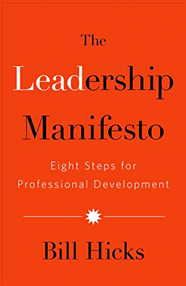
Bill Hicks has more than twenty-five years of leadership experience, over half of it at the executive level. He is Chief Relationship Officer and Senior Vice President of customer relationships at Ultimate Software, where he leads the company's ongoing relationships with thousands of customers. An award-winning executive with a passion for leadership development, he has mentored team members throughout his career. In The Leadership Manifesto, he distills what he has learned into eight essential disciplines that define a great leader.
📚 Books by Bill Hicks
Transcript
[0:00:31] Charlie Hoehn: You’re listening to Author Hour, enlightening conversations about books with the authors who wrote them. I’m Charlie Hoehn. Today’s episode is with Bill Hicks, author of The Leadership Manifesto. What’s the difference between being a good leader and a great one? Bill believes it’s having a mentor. For the past three decades, Bill has lived the life of corporate leadership. He learned the ropes at Ultimate Software, a company that’s ranked in the top 10 best places to work in America. In this episode, Bill shares some of the lessons he’s learned that define a great leader. Whether you’re a young professional who is in search of guidance or a mentor looking to jump start the next generation of business leaders. This episode is for you. Now, here is our conversation with Bill Hicks.
[0:01:45] Bill Hicks: I’ll go back over 25 years ago, young guy out of college, I’m a consultant and I get thrown out to a project where I’m going to manage a handful of individuals all of which were twice my senior in age and I get thrown on the project and I didn’t know what I was doing. I knew I wasn’t doing good because when you know you’re not — don’t know what you’re doing, it can’t be a feeling of confidence. I didn’t know how to talk to the people I was managing, I didn’t know how to talk to the client and I honestly had no one to turn to. My boss just wanted me to make money for him, the client just wanted me to fail so he could prove that he was right and I essentially just bullied my way through it, just cut my head down and did the best I could with no guidance on what I was supposed to be doing. I just tried to apply common sense, and courage and willpower and it was such an uncomfortable feeling. I got through it, got to do another project, I just didn’t like that feeling of not having guidance and really support because if you have guidance and support in life, you can always do better, it’s really the guiding force for you and so I fast forward 25 plus years later, I’ve been managing for a long time and just felt like I had all these experiences that I wanted to share to a community of individuals that were in my situation 25 years ago and help them be successful.
[0:03:15] Charlie Hoehn: After that happened, were you pretty proactive about seeking out a mentor or guide at your company or did you struggle for a while to find one? What did the process look like in finding one?
[0:03:32] Bill Hicks: I was just challenged in the fact of I didn’t know who to go to, I didn’t think it was okay, I think that was the biggest thing, I didn’t think it was okay to ask for help, I just kind of thought you just supposed to know what you’re supposed to do. When you look back, of course you don’t know, you didn’t have that roadmap but I didn’t have the strength to ask and I didn’t know who to ask. Then eventually over time, I’d make a mistake, sure every time, I’d make a mistake and then maybe do three things right, I make another mistake and do a couple of more things right and you know, I just learned through the whole act of trial and error and eventually, kind of looked back after five years of that and thought, “Hey, I’m doing a pretty good job.” That gave me the confidence, right? I got bigger teams and started moving forward and just tried to do those right things and eventually, I moved up to a level of leadership where I had peers that it felt okay in that situation to ask him how they were doing things. It wasn’t really asking upwards, it was more asking sideways.
[0:04:32] Charlie Hoehn: Let’s talk about your book, The Leadership Manifesto. You wrote this for who? Who’s it really for?
[0:04:41] Bill Hicks: It’s really for anybody who is leading or who wants to lead. That was really the audience how he’s trying to serve, I think there’s so many people out there who are in leadership and we kind of just keep doing the same thing over and over and learning through trial and error and maybe asking around. We’re not, the act is sharpening our saw, making our self-better so that’s clearly an audience I was trying to serve and provide information through and it’s been great since the book’s been out, I’ve had people come up to me, people that I respect as leaders and share, “Hey, thanks for reinforcing this,” or, “Hey, I kind of take my eye off that ball and in reading this really help me go back to the basics of the things I should be doing.” That’s current audience, the second audience, I truly I want to help is the Bill Hicks of 25 years ago that doesn’t have a mentor, doesn’t have a leader that they can ask questions of and really help them through eight steps of how do you become a leader, how do you get better? That was really the group I was after.
[0:05:52] Charlie Hoehn: You have these eight steps listed in the book, can you give us the — let’s start with the big one, that you most want people to remember from this episode, what would you pick?
[0:06:05] Bill Hicks: Well, I think the biggest one is, think about a company that you respect their brand, whatever that is, think of any company that you respect their brand.
[0:06:17] Charlie Hoehn: Let’s say Cost Co.
[0:06:18] Bill Hicks: You respect Cost Co. Why do you respect Cost Co?
[0:06:21] Charlie Hoehn: They treat their people well.
[0:06:23] Bill Hicks: Right, that’s a great reason, you don’t know if they are inexpensive or they do the right things, you just think they treat their people well, right? Because when you’re in there, the people are happy, they’re there to serve you, they’re chipper when you’re checking out. I think for myself of I think of Subaru. I think of Subaru, they have those great commercials where they’re showing that they do the right thing and I don’t know if their car’s a great car, I mean, I know it is because I know people who drive them but they give the spirit of, they care and they want to do what’s right. If I was in there buying a car, if I was in there getting service, that they’re going to care about me because that’s the brand they project. I think about people as individuals and the brand that they project and what they have going on out there and I want to make sure that I’m projecting the brand that I want to be. If I can’t think of what that brand is, then how do I project that? How do I have that image? That’s really what I want to project is. The brand that makes the most sense of who I am. Who am I? The way you mentioned Cost Co. Well, you said, they treat their people well. Well they probably have a great culture there, right? They probably have a great culture of taking care of their people, what’s your culture as a person? People, when I ask that question, what do you mean a culture? That’s what businesses have. I think about us as individuals, there is our inner self. We have a culture that’s within us just like a business does. If your culture of who you are, does it match with the brand that you want to project, then you’re never going to be satisfied in the role that you’re portraying at work. Because you’re portraying something. You’re not actually being yourself. I think there’s a huge connection to the individual of who they want to be and there’s so many people to say, “I want to go into leadership,” because they think that’s just the next thing. But if they don’t like the dynamics of what comes with leadership, that’s shaving the tough conversation, representing your team in the right way. Caring about what other individuals are doing, if that’s not who you are, that’s not your personal culture, that never really can be the brand that you project in the best possible way.
[0:08:42] Charlie Hoehn: Yeah, you’re saying basically, if you never really investigate what your personal culture is so that you’re accurately portraying it to others and being your best self basically. They see what your culture is, then you might fall into the trap of thinking, well, “I have to be a leader because that’s the next step in portraying whatever incongruent culture I’m portraying,” right?
[0:09:14] Bill Hicks: Right. If this is not a match, if I say I want to be a medical surgeon but I don’t have the discipline, to see blood and understand autonomy and have really good biological understanding, I’m never going to be a great surgeon even though it may sound like, that’s what I want to do or my favorite one is, “I want to be a fire man, right?” A lot of kids grow up, I want to be a police man, I want to be a fireman. If you have a fear of those dynamics then you’re never going to be a great fireman, even though it sounds great.
[0:09:44] Charlie Hoehn: Yeah, I mean, I actually think the doctor example is great because so many teenagers can get encouraged by their parents to go into these seemingly prestigious, reputable, financially well-off jobs and the kids don’t necessarily always want to go into them but they go into them because they’re like, “Well that’s the culture of our family.” I’ll go into that even though I don’t know my personal culture. Let’s talk about this personal culture idea because I really like this. How do I figure out what my personal culture is?
[0:10:25] Bill Hicks: I think knowing your personal culture is taking some time of, there’s two things. First off, ask the people that are closest to you, that your parents, if it’s someone, a significant other, if it’s your friends. “How do they see you?”
[0:10:40] Charlie Hoehn: You know, I think of a highlight. My wife sees me and if she sees me in a certain way, she’s going to know me best, she can share with me how that is representative. I think anyone, if you have that close group of individuals and they can share how they see you and how they know you and then you have to be receptive to that feedback. I think that’s a great way of doing it, I think it’s also just giving yourself some time to think of who you are. When are you in a situation that you are uncomfortable? In my beginning of my journey, I remember giving feedback to people, I did not like that. I felt like, “Who am I to tell this person what to do,” and for years, that was always something within me that just didn’t feel right. It was one of those things that I had to just overcome because I realized, all the other aspects around leaderships I enjoyed, I love the coaching aspect, I love the opportunity of marketing my team to other individuals. Then I realized, I wasn’t not only hurting myself by not giving feedback, I was hurting the individuals, I was leading. If you do it in the right way, giving feedback can be an enjoyable experience because you’re making that individual better. I felt the feedback was telling people what to do and that wasn’t the right mindset. The right mindset was, I’m helping these individuals, I’m not telling them. I think that’s another example of like, for me, I knew that was an uncomfortable space so I had to pour myself into that to understand why and maybe there was another way of doing it.
[0:12:18] Bill Hicks: You encourage people to ask friends, coworkers, family, “What do you think of me?” So that you can start to more objectively assess the personal culture that you’re portraying and then make the adjustments that you need to, to be more aligned with what you want to portray. That’s the big idea, right? Well, I think to kind of correlate that as well, it’s not just what I’m projecting, I think if we’re asking, we project, you could ask almost anybody that knows you because that’s the persona that you’re representing. The reason I’m recommending, to getting to other people that are closest to you, hopefully you’ve been honest enough with them that they know you better to really understand who you are. Right? That’s the difference there, I think there’s a persona we all project, like hey, “I want my boss to see me in a certain way, I want those certain individuals to see me in a certain way.” But those that are close to you, hopefully you have the type of relationship where you can get that information. I think it’s hard for some people to admit, I’m not good at this, “That’s not who I am," but if you could have those relationships where you can understand that. Or, just open up your mind to understand, it’s okay not to be great at everything. It’s okay not to even be good at certain things. Because we’re not going to be good and great at everything. Let’s find that place where you are strong so you can accelerate in those areas.
[0:13:48] Charlie Hoehn: Great, I like that, I like that a lot. Before we get into the next principle that you recommend, the next step, I mean, tell us a little bit about the style of this book because it’s pretty unique compared to a lot of the books that we cover on here.
[0:14:06] Bill Hicks: Well, my goal when I set to put the story, put this book together is, I wanted to have something that you could finish and that you enjoyed reading while you were absorbing the information and then lastly, the goal was, six months, six years down the road, you still will remember components of the book and you can point back or you could reference, and you did it with a smile on your face, you wanted to go back for that information. What I did is I wrote it as a fable, it’s a story of myself, mentoring an individual named Jennifer and I am walking her through her journey of leadership. The first half of the book is for when she’s not in leadership and I’m helping her get ready to become a leader, what do you need to do? Then halfway through the story, she gets promoted and then I get to work through the disciplines and the foundations of being a leader. It’s very written in the storytelling fashion so trying to help people consume the book in an easy way and an enjoyable way and then we’ve really worked hard on reinforcing aspects in there, reminding individuals what we’ve talked about. Because if you write a great book and you don‘t remember anything afterwards, then you didn’t meet your goal. I wanted to make it where you finished it and you enjoyed it and you got value out of it and you came back later down the road to read it again.
[0:15:31] Charlie Hoehn: It sounds like that you took a similar style to books like The E-myth or Who Moved My Cheese, right? It’s telling it through a fable, yeah. Which is great.
[0:15:44] Bill Hicks: There’s just no mice in this one though.
[0:15:47] Charlie Hoehn: Thank goodness. No, I mean, that’s great. Some of the best business books are written as fictional fables because they’re more enjoyable to read. That’s pretty cool. What are some of the other big steps, I don’t want to cover all eight but what are some other ones that you feature in the book?
[0:16:06] Bill Hicks: Well I think one of the things that people get stuck in when they are leaders and when they want to become leaders is how can they lead outside of the world they’re in. There’s a whole section devoted to leading outside the organization. That’s through volunteer work, that’s through community work, that’s through helping other departments that maybe you can help that don’t know they need your help. Giving yourself an opportunity to continually get better in areas where you’re coming and taking as much risk. When you’re leading at work, the eyes are on you, you have a certain level of responsibility but say you’re leading through a community organization, this mindset of just having baseball having more at bat, getting the opportunity to continue to work harder and better on being a leader by having opportunities. Because if you don’t have opportunities to get better as a leader, it’s all just in your head at that point or it’s just reading but I want to encourage the individuals to find ways to have leadership opportunities. One of the things you see and a lot of the corporate organizations is, “Oh I want to become a leader and I can’t grow,” or, “I am in leadership but I can’t do more.” I think you can take it upon yourself to find other avenues to lead. That’s the encouragement that we go through in the book. To help individuals find those opportunities.
[0:17:29] Charlie Hoehn: Yeah, can you give a few examples of easy ways to create those opportunities for yourself at a company?
[0:17:36] Bill Hicks: A great example for me is a lot of companies have the concept of ‘boards’, like “Hey, we’re going to have a group to work on a new project or a new opportunity,” or better yet, “We’re planning a big event or having the annual x meeting,” you know? Whatever that meeting is, volunteer to be on those groups, meet individual, other individuals that you can network with. My favorite and what I’ve gone through quite a bit is serving on boards in my local communities. Be it for you know, humidity boards in your local area, be it athletic boards for your kid’s sports programs. Maybe you’re a project manager and there’s a board in your local area for project managers. There’s so many opportunities, you just kind of have to open your eyes and look. Find those organizations that are looking for help. There’s thousands of organizations that are seeking help, put yourself out there, volunteer, put the effort in and if people hear the word volunteer, it means different things to different people. You could volunteer for business, for personal, for friends and family organizations, there’s so many opportunities to put yourself out there and of course, there’s the benefit of just being a volunteer but there’s also the opportunity to serve in a leadership role in those organizations. That may not exist in your corporate environment
[0:16:31] Charlie Hoehn: Author Hour is sponsored by Book in a Box. For anyone who has a great idea for a book but doesn’t have the time or patience to sit down and type it out, Book in a Box has created a new way to help you painlessly publish your book. Instead of sitting at a computer and typing for a year, hoping everything works out, Book in a Box takes you through a structured interview process that gets your ideas out of your head and into a book in just a few months. To learn more, head over to Bookinabox.com and fill out the form at the bottom of the page. Don’t let another year go by where you put off writing your book. Bill, what is a great leader look like to you? Because I’d imagine, I mean, there are people who proclaim that they are leaders but they’re really very dominant and people just kind of, are forced into following them and to me, that’s not as much leadership when it’s for the people who are following, it doesn’t feel like a choice or something they want to do. What is a great leader look like to you and what is it that they do differently from people who end up leading the way that I just described?
[0:20:22] Bill Hicks: Well, there’s so much written now about the idea of ‘servant leadership,' it’s a little bit of what I’m going to say is going to sound some of that but I think at the end of the day, a leader who wants to develop their team to be at its highest performing capability, at a desire for them and not for themselves is a great leader. That can look like so many different things. But at the end of the day, if you’re trying to help your individuals, you’re watering them so they can grow, not so you can be successful, really, for them to be successful. That’s a leader that people aspire to, right? You know, someone that knows that you’re in it for them and not themselves. Who doesn’t want to work for that leader?
[0:21:05] Charlie Hoehn: Bill, could you give an example of a leader in the business world that you think embodies the qualities that you're talking about.
[0:21:13] Bill Hicks: This isn’t in the book but I want to give a real world example and it’s the gentleman I work for. Today I work for ultimate software, I have the fortune opportunity to report directly to the CEO and founder Scott Scher. Here at ultimate, Scott has a mindset that says, you always do what’s right that’s with your employees, that’s with your customers and when you know you work with a guiding principle, the tone from the top of the gentleman who says, Always do what’s right, that’s empowering. That empowers you to make great decisions on things that you know through your experiences feels right, looks right, that’s a great feeling, a lot of times in the real world. You have to make decisions based on things that you know that aren’t always the right thing to do and I’ve been there many times and it is an uncomfortable place to be. We’ve all been there many times but working for Scott, you have the guiding principle of doing what’s right. He is always there for you, you reach out he’s here to help whether if it is with an employee, or if it’s with a customer the answer is always, “What can I do to help?” And that aspired me to have that same leadership style with my team because first off I know it’s okay. I have been given that freedom from Scott to do that and then work with my organization to really work on doing what’s right. Now sometimes doing what is right may not always feel like the culturally right thing to do because you have to make tough decisions sometimes. Maybe it is not giving the customer what they want but it’s still doing what you know is right. So I get a lot of inspiration from Scott just with that core tenement of doing what’s right and then within the book, what I did is even though it is a fable, every story in there is a real story. The famous change the name to protect the individuals but they’re all real stories and they are stories of people who are ascending and trying to become leaders. People that are leaders and are struggling on what to do next. You run into this dynamic of sometimes you get what you thought you wanted to go. And you arrive and you don’t know if that’s where you really want to be. We see that in leadership all the time of individuals that are saying, “Okay I have arrived, but is this my place?” And I think we as leaders who can help those individuals find those right places that’s important because at the end of the day it’s work and if we can get people to feel like they’re in the right place when they come to work, that feels like we have success.
[0:23:46] Charlie Hoehn: So why does this really matter to you, to get this message out right? Because there had been other leadership books out there but what do you really want to see happen now that this book is out on the world?
[0:24:02] Bill Hicks: I think if you have a piece of knowledge and you don’t share that then you are not giving that gift and what I really wanted to do is I feel I’ve been leading for over 25 years, if you’ve been doing that for that long of time you don’t have a lot of really good stories and you have some challenging stories and I felt if I can share that, I am giving a gift to the readers to help them improve their opportunity for success and that was really the foundation of doing it. You know I have a great role here at Ultimate Software. I didn’t need to do this. It was something I wanted to do to help others be better in their careers.
[0:24:41] Charlie Hoehn: Love it, and what do you think the impact would be if more people rose to the occasion of leading? Not just people seeking out a mentor but people becoming mentors, what do you think the impact would be?
[0:24:56] Bill Hicks: Well Charlie I think it’s interesting you’re are saying, what if people become more mentors and when we hear the word mentor, a lot of times you just relate it back to work but what I would challenge everybody to do is be a mentor in whatever they are good at. If you are a great fisherman, help other people learn how to fish and if you are a great writer, help other people learn how to write. Mentoring can be so many different things. It’s helping someone in their youth become a better adult. It’s all those different aspirations and I think that’s really the challenge I would put out there. If anybody can help others be better then go for it and if it’s in work that’s great but it’s anything in life, help others become better and on the flip side, if you want to improve in what you do in your personal journey, don’t be afraid to ask for help. Find someone who is better than you and ask them to help you out. What’s the worst they can do? They can say, “No,” and you are learning to accept no as the answer right? And you’re just getting better in that. Go find other ways, go find other individuals to help you improve on whatever it is that you feel is best for you.
[0:26:07] Charlie Hoehn: Sometimes I hear the advice, we live in this amazing age where we now have the access to all this great information that’s being freely distributed so you can get a virtual mentorship. What are your thoughts on that? Do you think that is good enough or do people need the face to face interaction?
[0:26:27] Bill Hicks: It’s really however you learn. There is so many people who don’t want that face to face or live in a part of a country or in an area where they don’t have access to the right resources. So if a virtual mentor is going to help you, go for it. Whatever it is that’s going to help you learn better, maybe it’s when your work shift is. Maybe you are going to school during the day and you only have the time to do it at night, whatever that is, don’t let the physical interaction be the stop point for you to get better on what you need to do.
[0:26:58] Charlie Hoehn: Good advice, I agree. Now tell me, your book has been out for a little over a month now. You mentioned that some of the people who have read it have come up to you and said, “Thanks for the reminder. You know I need to make time to lead” what have been some of your favorite stories from readers or your favorite transformations that you have seen in the short time that your book has been out?
[0:27:25] Bill Hicks: So one of my favorite stories is someone that I worked with and this individual came up to me and talked really about the brand piece which is towards the end of the book about the brand of their team and this person was talking about how she spent so much time worrying about how well her team is doing and how little time she spent asking others how her team was doing and that’s really how we wrapped up the book. It is this whole idea of ask others how you are doing, kind of how we start the book off by saying how you as an individual seek guidance on how you are doing but when you become a leader and you are not out asking how you’re doing and how your team is doing, you are selling your team short because we all have this grandiose idea sometimes that we are doing such a great job but at the end of the day, the people that we serve as a leader and I am talking about the people in the outside. Not within our team, if they don’t have the same vantage point then we failed essentially and this person was telling me just how to reinforce it and there is a whole piece in there about, “Don’t eat lunch alone,” so there is this running joke now of people that I know that are saying, “Hey do you have time for lunch? I don’t want to eat lunch alone” and then they put a little fund to it but it’s a great point is that take all of your opportunities to constantly find that chance to get better. And if that is meeting with people that can help you grow, if that is helping others so they can grow, find those opportunities and just don’t let them go dormant eating at your desk when you could be out eating at the cafeteria and helping other people.
[0:28:53] Charlie Hoehn: Awesome, now let’s start to wrap things up. So Bill can you give our listeners a challenge, what is something they can do from your book this week that can change their life and it could be just what you just said or something else, up to you?
[0:29:09] Bill Hicks: So I think the thing I would encourage everybody to do is find that one thing they want to be better at and it doesn’t have to be work related. What is that one thing? And identify an individual who can help them achieve that goal. Easy to do, it takes a little bit of your time and then the hardest part of the ask is to make the ask of the individual to help them be better and if you ask with sincerity and explanation, it’s hard for the individual to say, “No.” It can happen but it is hard for them to say, “No.”
[0:29:47] Charlie Hoehn: Yeah, I agree however to make things even easier, for the listener, can you give an example of what you might say to an individual once you figure out the one thing that you want to get better at?
[0:30:02] Bill Hicks: Sure, I had someone come to me, “Bill, I am not in a leadership role right now. I want to be a better leader. I want to know what that looks like, could you spend an hour with me just going over what you think I need to do to become a leader?” so the great point of the question is I know it’s an hour of my time. It is not forever, the person is asking to get better so of course I want to help them and who knows? Maybe after the conversation there is a relationship or there is a mentorship opportunity there that we could grow upon but you may say the very simple question. “Hey Bill, I want to be a leader one day. Can you help me with a road map on how to get there or what does it look like to be there?” Very simple question, asking for help, put a time box on it so the person doesn’t feel like they don’t know how much they are committing and it is pretty to say yes to their question.
[0:30:58] Charlie Hoehn: That’s good. I love it, I’ve used that in a very similar conversation in the past and you are right, it works really well.
[0:31:05] Bill Hicks: Yeah I am doing that this afternoon. It is pretty straight forward, yeah.
[0:31:08] Charlie Hoehn: Excellent, so how can our listeners stay in touch with you maybe connect with you and follow you going forward?
[0:31:17] Bill Hicks: Hey, I love the interaction. I love the connection, you could find me at bill@leadershipmanifesto.com, if you want to shoot me an email or you can find me on LinkedIn under Bill Hicks and welcome the opportunity to interact out there as well.
[0:31:32] Charlie Hoehn: Excellent. Well this was great Bill, thank you so much.
[0:31:36] Bill Hicks: Thank you Charlie, thanks for the time today.
[0:31:40] Charlie Hoehn: Many thanks to Bill Hicks for being on the show. You can buy his book, The Leadership Manifesto on amazon.com. Thanks again for listening to Author Hour, enlightening conversations about book with the authors who wrote them. We’ll see you next time.
Want to Write Your Own Book?
Scribe has helped over 2,000 authors turn their expertise into published books.
Schedule a Free Consult