Benjamin Wolf: Episode 754
Read the full transcript
Benjamin Wolf
Ben Wolf is the founder and CEO of FractionalLeadership.io, the first platform dedicated to referring vetted fractional leaders to small and midsize business owners and leaders.
Ben recognized the value of fractional leadership while building operations at a healthcare startup from pre-launch into the largest organization of its type in New York State. Today, he operates Wolf's Edge Consulting, a Fractional Integrator firm for small and midsize businesses, and hosts the podcast Win Win - An Entrepreneurial Community.
He lives with his wife and four children in Long Island, New York. Connect with him online at
📚 Books by Benjamin Wolf
Transcript
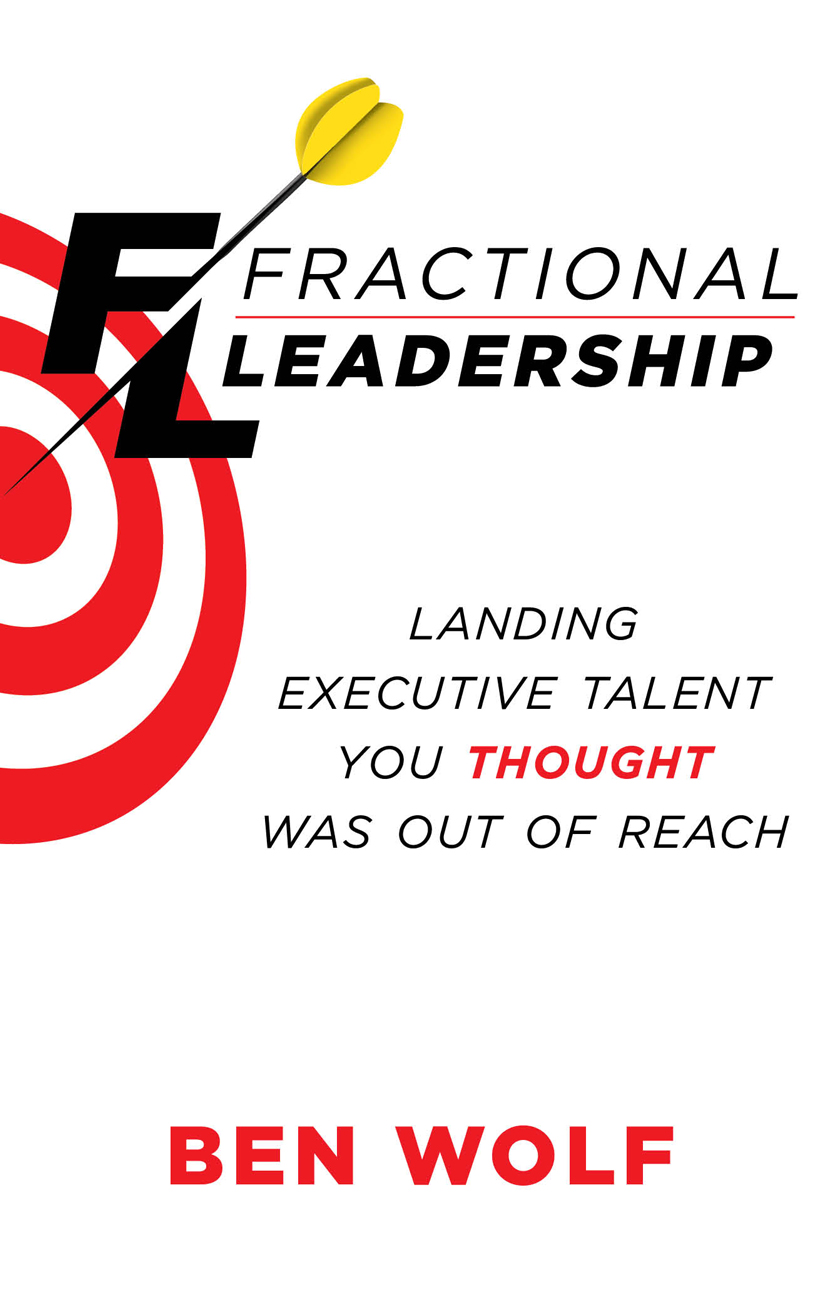
[0:00:46] BB: Do you own a small or midsize business? Wish you could find and afford game-changing executive talent to take your business to the next level? Now, you can. Fractional Leadership shows you step-by-step how to land the experienced, been-there-done-that executive talent you thought was out of reach. If you’re ready to step up your game in marketing, sales, operations, finance, or technology, but you just can’t justify hiring a top dollar executive full-time, a fractional leader can help you bridge the gap. Ben Wolf is the founder and CEO of fractionalleadership.io and the author of a brand-new book, Fractional Leadership: Landing Executive Talent You Thought Was Out of Reach. Welcome to the Author Hour podcast. My name is Benjie Block. Today, I have the honor of speaking with Ben Wolf. Ben is the author of a new book, Fractional Leadership: Landing Executive Talent You Thought Was Out of Reach. Ben, welcome to the show.
[0:01:40] Benjamin Wolf: Thanks so much for having me, Benjamin.
[0:01:43] BB: Yeah, Ben. For listeners who may be unfamiliar with you and your work, can you just provide some context for us, tell us a little bit about yourself?
[0:01:51] Benjamin Wolf: Absolutely. I grew up in Nashville, Tennessee, married with four children. In Long Island, New York currently. Got into the entrepreneurial world by joining the founder at a healthcare startup, a very tech-focused, very mission-driven, and grew that organization from just kind of birth to over 130 people at the time I left and the largest organization of its type in New York State. Really learned all about growing a business at that point, and then opened up a practice as a fractional outsource chief operating officer. After that, build up that business, and just through networking, my own podcast, and a lot of other connections came across so many other fractional leaders, people who do executive c-suite services for small and midsize businesses. I just realized how defused the whole history is and decided to write this book to kind of create the first comprehensive guide to what fractional leadership even is, how it works and how to find the right person if you do want to do it. That’s how I got into the book. Also, how I got to into founding Fractional Leadership, my company, which matches vetted fractional leaders with small and midsize businesses who need executives on a fractional basis to lead their marketing, sales, operations, finance, or technology.
[0:03:12] BB: Awesome. What made right now the right time to write and release this book?
[0:03:17] Benjamin Wolf: I think a lot of it has to do with just the explosion of this industry, which became even faster through the after effects of COVID-19, and all the lockdowns and everyone working from home. There was already for years and years a process towards greater independence and greater flexibility about how we find the right people for our businesses. It was going on for many years before that, but there are still many people who just can’t imagine, most people with businesses, small and midsize businesses just couldn’t imagine like what does it mean. Especially at the leadership level, and not like just outsourcing or administrative function. How do you work with people that are not physically with you? Most people just cannot get their head around that? But then, they were all forced to from months on end, at the early part of 2020. At that point, a lot of people kind of hated it and went back to fully in person. But a lot of other people were like, “Hey! Why do we have to be limited by the people happen to be within 10 or 15 miles of my corporate office? I could have the best people anywhere with a more flexible model.” Just more and more people, just the interest in using fractional leaders, getting fractional executives in just exploded two or three months I would say after COVID hits, when the kind of dust settled and people realized, “Hey! I want to get back into growth mode again.” Since then, everybody I’ve talked to in the fractional leadership world has gotten a lot more interest then, and as that work from home and flexible work culture continues to expand now and become normalized, it’s just more and more business are open to it. Which is why I think now is a particularly appropriate time to be giving people the resource to learn about how fractional leadership is, what does it accomplishes for you, how it works, what does it do to your business, how does it help you scale when you can’t afford the experienced right person full-time and yet, might as well just have to do without. But now you don’t, you can bring a fractional executive, a fractional leader into the organization, been there, done that leadership that you’re so desperately need. Because very often, nobody in your organization has run a business the size of the one that now you’ve gotten it to before. So bring in somebody who has done that before and can lead you around all the pit falls here in the corner and get you two to three times more speed on the growth that you want or the achievements that you want to get without having to hire somebody full-time. They could help you to bridge you over until you can get scaled enough to bring on somebody full-time in that role.
[0:05:56] BB: That’s great. When you take on this project, in your mind, who is that ideal reader for this book?
[0:06:03] Benjamin Wolf: The ideal readers for Fractional Leadership are really business owners or leadership team members of growing entrepreneurial companies I would say around 5 to 250 people. In short, that’s really what I would say.
[0:06:16] BB: I got to be honest. As I was prepping for this interview, reviewing the content of your book, I was unfamiliar with this idea of fractional leadership. Someone may be listening to this right now and they go, “I’m new to this idea.” Give people just a brief context of what is fractional leadership, sort of your elevator pitch.
[0:06:35] Benjamin Wolf: Sure. Absolutely. I mean, you’ve built a small or midsize business, you’ve grown it but you’re just hitting the ceiling because you started this business, because you’re great at floral arrangements, or building apps, or installing HVAC systems, or construction or whatever it is that you do. You built this business because you’re great at that, you love doing that. That doesn’t mean that you’re great at finance, or marketing, or sales or some other parts of the business. Very often, the people that grow up in the business with you if you have a leadership team are also, they’re just figuring all this out for the first time. You start to hit the ceiling where you don’t know what to do. How do you manage people? How do you manage processes? How do you manage marketing or finance with the kind of issues that you’re facing? When you have 5 million, 10 million, 15 million in revenue or 50 or 100 people or 20 people, is just issues that you’re just not sure how to handle it. You want to bring an experienced executive in, some leader who’s been in there, who’s done this before. But 250, 300,000, whatever it happens to be for that particular leader, it’s just not doable at your scale yet, or maybe you could do it for your CFO, but you can’t do it yet for your CMO, for your marketing leader. Fractional leadership is a solution where you bring somebody as a regular member of your leadership team, just like you would if they were full-time, but they’re spending a fractional amount of their time with you, doing that with several clients, and allowing you to bring onboard, get to know your business, learn your business over time, and be a real member of your leadership team and have that little tactical administrative stuff, some of the more level things be done by other people, either outsourced, vendors, other members of your team who are reporting to them. It gives you really 80 percent of the benefits of having a full-time sales manager, or marketing leader, or ops leader and gets you most of the benefits of that. Eighty percent of the benefits of that with the fraction of the cost. That’s really the solution. That’s great for six months, a year, two years, whatever it is, so that person can help you get scaled big enough and fast enough until you could bring in on an experienced executive full-time, to be 100 percent dedicated to your business.
[0:08:46] BB: That’s great. When did you first become passionate about fractional leadership and when did you realize the power of this model?
[0:08:54] Benjamin Wolf: Well, when I was doing fractional COO work myself, and just realizing and also hiring other fractional leaders. Through my clients, like I’m hiring fractional CMOs, and CFOs or sales leaders and realizing that this is just a long, slow – at least I’m aware of it because I’m doing it, right? I’ve already had that leg up. But I realized that it’s a very, very manual process. If you Google outsource CFO, fractional CFO, what you’ll find is, any terms like that, you’re going to find that there’s a million different terms that people call things. There’s no standard. No one even knows what to Google. You Google one thing, you’ll end up finding 5 percent of the websites of people doing what you’re looking for, if you’re even looking for it. It’s just a complete diffusion of terminology, and knowledge. The information about fractional leadership if you want to find it right now, it’s spread out over thousands of individual websites. There are very few articles. There are little things here and there in Forbes and Entrepreneur Magazine, Wall Street Journal that come out from time to time, but not very much out there at all. There’s no book that comprehensively addresses the topic, which is why this is the first one, Fractional Leadership: Landing Executive Talent You Thought Was Out of Reach was just – I realized, there’s such a diffusion in this area, there’s a huge vacuum, huge level of diffusion of attention and a huge lack of any center of gravity for this whole industry. I created fractionalleadership.io, my website, created this book, Fractional Leadership and all the activities that we’re doing, to create a center of gravity, a central place people can look to find out, “Hey! What is this? How does it work? What good would it do me? Am I a right fit for [inaudible 0:10:34.5]? Was it not good for me? If I am looking to bring on a fractional leader, instead of having to manually take down notes off of dozens of websites, and get on bunch of calls with people that may not even be a good fit with me. I created fractionalleadership.io as a vetted fractional leader referral platform to just make it easy. Just put in your information, what you’re looking for. Within two days, business days, we’ll send you two to three fractional leaders that fit what you’re looking for and that we’ve already vetted, so you could just skip straight to the finalist and skip all of that weeks, and weeks of frog kissing. People that are not a right fit or don’t have the industry experience that you need or outside your price range, just skip to the people that actually makes sense for you, so that you could spend your time in the highest and best use.
[0:11:19] BB: It’s so important to consolidate information, so you’re doing a great job with that through this book and your website. One of the things you talk about in Chapter 4, you give some questions to help determine whether fractional leadership is right for someone who may be considering it, an organization who’s looking to do this. Tell us a couple of the questions we should be asking if we’re thinking fractional leadership, maybe this is the right way to go. What should we be asking?
[0:11:42] Benjamin Wolf: Well, there are few things and I put a few of them there. One of them, I guess I would ask is that, one of the groups of people I found that is the easiest to adopt fractional leadership is people – especially when it’s going to be virtual, when someone’s long distance, is people who already have at least one member of their leadership team who is not physically in the same corporate office as everybody else. Certainly makes it easier. Very often, fractional leaders are available locally to people in their area. That’s certainly a good solution, even everyone isn’t in-person together. But to ask yourself, are you open to working with someone on a strategic high-level way on your leadership team, who’s not physically going to be with you ever week. Again, if it’s virtual, sometimes – in fact, my clients currently actually happen to be in person, but I’ve done it virtually before. You have to decide if that’s something that you’re open to and something you could feel comfortable with? One thing is, do you feel comfortable with people who are not babysitting and micromanaging their team? For instance, if you hire a fractional sales leader, do you feel comfortable? I mean, are you going to be able to let go and feel comfortable with them working with you and your sales team to set up sales processes, sales metrics or whatever. Because really often, what happens when you have a full-time sales manager, let’s say, is that you can cover up with bad sales management with just a fact that they’re a helicopter manager, just kind of hovering over their team and making sure they don’t make any mistakes. That can kind of cover up for bad management or for being bad management. What your fractional leader is going to do is act as a good manager and help set up metrics, and give people the training and guidance that they need and be there for them. But also, create accountability, create metrics that people are accountable for and the support they need to be able to meet those metrics and then hold them accountable to them in a serious way, so that you don’t have to rely on them never internalizing what it means to be good at their job but rather allow them to become self-sufficient and independent by being managed in a healthier way. That’s something that a fractional leader can help you do. But if you’re going to always like swoop in on days with that person or hours when that person is not with their team, or always – if you’re not going to be able to avoid and resist the temptation to kind of end run around them constantly with their team, if you feel like you can’t do that and you’re always going to do the end runs and you’re always going to swoop in, then that’s going to be very hard to be a successful engagement. That’s somebody I think that may not be a good fit and maybe you need to either just do the role yourself, and kind of live in misery and overwork status for a while and just do that until you can afford to hire somebody full-time, because it’s just maybe not be a good fit for you.
[0:14:19] BB: All right. So many people in startup culture are guilty of waiting too long to bring someone else on because in a sense, it’s like your baby, your thing that you’re starting. This is important for growth, extremely important to be able to hand things off in the right way.
[0:14:34] Benjamin Wolf: Yeah. This fractional leadership is great in that sense that you don’t have to wait as long as you would, if you would have had to wait for full-time, you can now scale things and get better faster. Because it’s not going to cost you $300,000 for an experienced sales leader, or CIO or CTO the way it would have if you would hire an experienced person or an off the bat full-time. This can be kind of a bridge that can get between here and there and get some stuff off of your plate and have someone to take responsibility for things that you, like you said, as the business owner that always wants to be in everything. You could start to let go of those things sooner so you could focus on the stuff that you actually love doing. Let’s say you’re the CIO, CTO, so you’re managing product teams or you’re managing outsource freelancers to build whatever your product is. But then, having a fractional CTO come in and help you lead your team and build your products, maybe you love doing sales a lot more. Now, you can get out of that product stuff or somewhat, and focus more on the part that you love doing and you’re great at, which maybe is sales or whatever that happens to be or research and development on your physical product, whatever it happens to be, because it allows you to spend more time on what you love you doing, you’re great at and less time on something that someone else honestly knows better and has more experience at.
[0:15:47] BB: That’s great. That actually leads me right into the next question. I’d love for you to give people just a couple examples of the type of growth you’ve seen facilitated within companies that implement fractional leadership. What was the original pain point that you were approached with and what kind of breakthrough was delivered?
[0:16:05] Benjamin Wolf: Look, I’ll give you an example from one of my clients who brought me on as a fractional COO basically. We call it fractional integrator in that business, because integrators is the term used for COO in companies that use the entrepreneurial operating system, EOS, which is like a business management framework for small and midsize businesses. Anyway, that’s a term that I use in my practice for the kind of COO that I am. One of the clients, they just knew that they can learn all these great things in EOS, and how to run a business, and what kind of metrics to create, and how to create vision, and roll that up to the company and drive execution and discipline. But they just knew themselves that they’re just too all over the place. They just knew themselves that they’re not going to have the discipline or the attention span to go beyond the fires that they’re constantly putting out, or the stuff that’s kind of get done day to day to focus on doing the stuff that’s going to really move the business forward, that’s going to improve their operations, improve their people component, improve their vision, improve their execution of the important project that are going to move the ball forward to make things different tomorrow than how they were yesterday. Otherwise, if you just focus on fires day to day all the time, things are just going to stay the same like on and on and on and on. They just knew that they weren’t going to have the discipline or focus to move the ball forward to make things better. In between the session with the EOS as implementer that they were using, and so they brought me on as a fractional integrator. We found that after just our first quarter, they went from 18 million in revenue to 25 million in revenue, 25 percent increase. Not because I was magical, or I have some sort of mystical powers, but just simply because I call myself the pusher in chief. As a fractional operations person, I’m pushing on. I’m noticing thing and pushing it to the surface. Pushing things that they knew about but weren’t getting addressed to get addressed and then push execution on those things getting addressed. What ended up happening over that first quarter was that, there were stuff that they knew about and they just had known about it for two years, and we’re just putting off because they’re so underwater with the day to day and with the fires that always have to be put out. Just by them bringing me on, because they wanted me to force them to like deal with things and move the ball forward. Just by dealing with some kind of low-hanging fruits, basic stuff, they’re able to make some tweaks and improvements to their operations that just drastically reduce cost and improve revenue. Again, it wasn’t any magical, it wasn’t any huge even, but it was just – the fact that they had somebody whose job was to focus on improving their processes, improving their execution, address issues and then create accountability around the results of addressing those issues and we’re able to just get them huge results with again, only about a day a week of my time.
[0:18:54] BB: That’s incredible. Yeah, I hear you kind of say two things. I think, one that you hit on that’s so important, you say, self-awareness is vital for the business owner to see, “Man, if I just keep going from fire to fire, this thing is never going to grow as I had originally intended.” Self-awareness is vital. The second one is, you provided outside eyes into the business. When you’re not in the day-to-day, you can actually see everything from a very different kind of brand-new perspective that is so important to someone who is in the weeds and isn’t it day-to-day. That self-awareness on the part of the business owner and the organization and then those outside eyes fractional leadership seems to provide both. That’s great.
[0:19:37] Benjamin Wolf: Yeah, absolutely. They say, a fish can’t see water. There’s a phrase, I forgot who said it, that a person cannot simultaneously be inside a system and understand that system. You have to be outside of it to understand it. Leadership team and visionary owner can do that. They could take time to meditate, or take a clear break or go to an offsite session and think about things that are on the business. Also, like you said, having a fractional leader, whether it’s a leader in executive marketing, in sales, operations, and finance, or technology who’s not on the business and as you said, could see things that they don’t see because they’re outside the system. One hundred percent is a huge, huge value that people – which is why people use fractional leader so much and it’s growing.
[0:20:23] BB: That’s great. Well, you’re taking a lot of the guesswork out of finding and vetting the right fractional leaders. You’re doing some great work at fractionalleadership.io. You’re helping organizations kind of skip straight to finalists. Talk to me about how that matchmaking kind of works and what would someone expect if they said, “Okay, Ben. I love what you’re talking about when you talk about fractional leadership, sign me up.”
[0:20:44] Benjamin Wolf: Absolutely. We tried to make it very easy for people. We created like an easy form on the website that you fill out to say, “What kind of fractional leader are you looking for? What’s your budget?” or basic idea as much as you can give about your budget or what you could spend? How much time commitment do you think is involved? What kind of industry experience is very important to you? Sometimes that is very important and sometimes, it doesn’t matter that much. Like [inaudible 0:21:09.4] operations, I typically don’t really need to know. I’ve worked in cyber security, I’ve worked in construction, in media, and a tech company and a nonprofit. I really didn’t necessarily know much about those industries before I started doing them, but what I’m expert in is processes, and people, and vision, and execution and organization. Really, it’s agnostic as to industry. But sometimes, if you’re a sales leader, you need to know the product. Sometimes you want to shorten the learning curve by having a sales leader who has a background or someone who have a background in your area, in your specific industry. Sometimes that’s important, sometimes it’s not, but it lets you specify, is that important and if so, what industry the person has experience in, et cetera. Once you do that, what you can expect is within about two days, business days, we’ll send you two to three fractional leaders, people who could reach out to who will give those people or those firms your information as well and you guys could reach out to each other and connect. You pay nothing as a business owner. The fee or the revenue from fractional leadership comes from the fractional leader’s side. Yeah, you could find the right person that way. The work of vetting them, of saying like, “Hey! Are their clients happy with their work? Do they match their core values so they can have an attention to detail? Are they going to be abundance minded and committed to doing the right thing and really having ownership of whatever they do through a process of reference checks and screening interviews?” That’s what we do in advance or before you’ve even made your request, we’ve already vetted these firms and these solo practitioners to make sure that we’re sending you people who are worth sending and who are not going to disappoint, who are going to get the result that you want.
[0:22:55] BB: Kind of coming to the end of our time together, but if a reader is to pick up this book and they take away one or two things, what do you hope those would be, Ben?
[0:23:04] Benjamin Wolf: Absolutely. I would just want them to take away the fact that they don’t have to be trapped in that entrepreneurial catch-22 is, you’ve grown so much that you need experienced leaders who’ve been there before, you need experienced leadership, but you just can’t afford it yet. You can’t scale without that experienced leadership, but you also can’t afford that experienced leadership until you scale and can afford it. So then, it’s just kind of brace to that entrepreneurial 22 and lets you break through the ceiling by saying, “Look, you could get that person with 10, 20, 30 years’ experience onto your team, onto your leadership team as a partner to help you grow this business and take responsibility for the aspect of that’s within their purview,” and you don’t have to wait until you can afford someone like that full-time. They can help bridge you from where you are now to where you are ready to bring on someone like that full-time. Which again, sometimes it’s 6 months, 12 months, 18 months, 2 years, possibly more. But the ultimate success of any fractional leader that you’re bringing in is not to get an internal engagement with you and have an internal retainer. But it’s to get you on your feet and get you scaled to the point where you could bring that experienced leadership in-house. That’s ultimately the goal.
[0:24:18] BB: That’s great. Ben, where can people connect with you further and reach out?
[0:24:22] Benjamin Wolf: Well, please connect with me at fractionalleadership.io. Certainly, if you’re a business owner, you could reach out there or certainly request a referral of a fractional leader, you can certainly also just go to the Contact Us page, just reach out if there’s something else you want to talk about. We’re always looking for more fractional leaders for the team as well. Again, people in marketing, sales, finance, operations, technology who are great fractional leaders, if you like to join the team, like to have us vet you and join the team, join the community. We’d love for you to go to fractionalleadership.io as well, follow the match making page and click on the part for fractional leaders.
[0:24:57] BB: That’s great. I want to say this, completing a book is a massive undertaking. Congratulations and thanks so much for taking some time today to speak with us about your book.
[0:25:07] Benjamin Wolf: It’s great being here. Thanks so much for inviting me.
[0:25:11] BB: Thanks for joining us for this episode of Author Hour. You can find Fractional Leadership: Landing Executive Talent You Thought Was Out of Reach by Ben Wolf on Amazon. A transcript of this episode as well as all our previous episodes is available at authorhour.co. For more Author Hour, subscribe to this podcast on your favorite subscription service. Thanks for joining us. We’ll see you next time, same place, different author.
Want to Write Your Own Book?
Scribe has helped over 2,000 authors turn their expertise into published books.
Schedule a Free Consult