Steve Thomas: Donoricity
Read the full transcript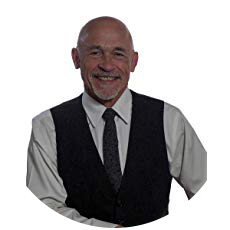
Steve Thomas
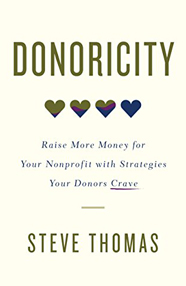
Steve Thomas is a fundraising professional with more than two decades of experience helping nonprofit organizations move out of financial crisis and into growth. A former nonprofit CEO, he has consulted with organizations ranging from emerging groups to major Christian ministries, focusing on donor-centered messaging and strategy. He is a partner in two agencies, Oneicity, which serves Christian ministries, and Hoots and Thomas, which works with nonprofits and small businesses. He lives on Bainbridge Island, Washington, with his wife and business partner, Kris Hoots. He is the author of Donoricity: Raise More Money for Your Nonprofit with Strategies Your Donors Crave.
📚 Books by Steve Thomas
Transcript
[0:00:36] Charlie Hoehn: You’re listening to Author Hour, enlightening conversations about books with the authors who wrote them. I’m Charlie Hoehn. Today’s episode is with Steve Thomas, author of Donoricity. Nonprofits are dedicated to their causes but they still need to raise funds in order to operate. The challenge is, how do they communicate with their donors in a way that the donors love? Steve is a veteran fundraising consultant and he believes in building mutually beneficial relationships by emphasizing the donor’s needs over the nonprofits. In this episode, Steve shares strategies that foster more goodwill with donors and inspires them to become regular benefactors. By the end of this episode, you’ll have his best tactics for creating long lasting partnerships with donors that will help your organization build a brighter future. Now, here is our conversation with Steve Thomas.
[0:01:54] Steve Thomas: Years ago before I got on this side of the desk as we say, and began doing agency work, I actually had been the director of operations for a nonprofit. I had run staff and fund raising and had the agency relationships and carried on all of that stuff and then in a moment of weakness, the board hired me as the CEO of the organization. Overnight, I went from being the number two guy, to being the guy who not only ultimately was responsible for doing the things that I needed to do. More importantly, I didn’t begin to carry the primary direct relationships with donors. That was something that I knew I hadn’t done any of. But I wasn’t really worried about it because I was a little younger and a little more arrogant in those days and so I got an appointment with a guy. He lived in Tennessee just outside of Nashville and a southern gentleman. What I knew about him was that he loved the work that this nonprofit that I was serving what we did and he had really big bucks. More importantly than really big bucks, they were all liquid, he had done some cashing out and so he was a perfect candidate. I hopped on an airplane, went to see him, had a really great conversation with him. Very early in the conversation, I may be the only guy who has this moment but there are these moments when you know things aren’t going well. I could just tell, I wasn’t doing a good job. I was talking about all the things we were getting ready to do the ways he could fund this project, literally how easy it would be for him to just make all this happen and I saw the look on his face and then those of you who know these nonverbals, he leaned back in his chair and then crossed his arms and I felt a drop of sweat begin to form on the top of my head and kind of run down the back of my head. I thought, he’s not loving this. I pressed harder and I talked probably a little faster. The desperation began to seep out around me and –
[0:04:05] Charlie Hoehn: You were not selling him a car.
[0:04:07] Steve Thomas: No, then I did what you just don’t do in those moments, I kept talking because I knew I had to raise these dollars and so I had read a lot of stuff from people about what you’re supposed to do. Man, I was trying to mirror his body language. I was trying to stay in his pace. I was doing all things we were going to do and so I reached into my briefcase and I pulled out a really beautiful brochure and it was, you know, “Here’s what you can do” and man, it was so miserable because it was very clear, he wasn’t interested. At some point, I eventually – you know, kind of wound down and ran out of things to say badly and he just said – in the most lovely to the southern trial just kind of said, “You know, I’m just not that interested in what you’re doing.” I knew he was. What I had done was I had tried to sell this guy. More importantly, I hadn’t tried to listen to him and he was a gentleman, you know I don’t want to predict his age, but he was maybe 25 or 30 years, my senior, maybe a little bit more. Very successful business man as I got to know him later and kind of preview the fact that it kind of worked out okay. You know, he told me, “You know, Steve, anytime you buy a land by the section and sell it by the foot, you do really well.” It was like, okay, it’s going to be all right. This guy, he was so kind. What I had done was I had forgotten to get to know him, understand something about what he was interested in. Here’s something really cool, now, he never gave me a dime okay? I need to say that. Total fail there. But one of the things he did was he let me go see his friends and so he would make an appointment through the years that I connected with him, he would make an appointment with one of his friends and he’d say, “You go see him, he’s going to be interested in this part of the project and he’d say, here’s a little coaching tip, here’s something you ought to think about.” “Here’s something, this is really important to him, here’s a piece of his life.” And through a couple of years, maybe 18 months, he gave me access to some of his relationships. More importantly, he only understand that a donor, someone who wants to commit to a project or nonprofit is doing or that a ministry is doing. They have an interest in their heart and this guy, charming gentleman, he’s passed away and so I don’t have permission to use his name or I would. He was just a great guy. He helped me understand that a donor is not an ATM machine you walk up to and you throw your credit card in, you punch your magic number in and cash pops out. That a donor has an interest, they’re trying to change the world in some way. If they’re a Christian donor, these are about a lot of our clients are Christian ministries, they are donors who even are thinking about that god bless them with these dollars, they need to think carefully about how they use it. I begin to realize that all of these things I had been reading weren’t helping me and so, I went to school with the –
[0:07:32] Charlie Hoehn: The things you’d been reading?
[0:07:34] Steve Thomas: Yeah, all the seminars I’d gone through and the things I had looked at about how to raise money, none of them were helping me because all I was thinking about was the technique, I was thinking about – here’s the next thing you're supposed to – Charlie, it’s like the guy who teaches you the more times Charlie, you use someone’s name, Charlie , the better we connect, Charlie, right? That’s a bad technique. I’m Charlie trying to just insert your name as many times as possible. Well, the important part Charlie, is that I need to know who you are. If I can connect with what your interest is in the world and if you have a connection with my situation, what my nonprofit was trying to do, then we have something to talk about. But it is about you as the donor, not about me trying to pay my bills or meet my budget. When I shifted from thinking about what I needed to thinking about how it could be on the other side of the desk, what that person, as a person, not a contact or not a move I’m trying to manage, or a marker I’m trying to move on a white board but as a person who has a life and an interest. That began to open up for me and so the flop sweat, I can still feel it running down the back of my shirt, that got better when I realized that I was going to be able to connect donors, not with what I could sell them on but what was already in their hearts. You know, it’s magic when you think about the fact that you don’t have to convince somebody to do something, you just have to help guide them or help them understand how they could be a part of something. Then it’s not, you selling something, it’s about you connecting with them as a person.
[0:09:20] Charlie Hoehn: This is all stuff I agree with, Steve, it’s a powerful mindset shift. I think, When it comes down to it though, people struggle with doing it properly. I mean, you’re subtitle of your book is Raising More Money With Your Nonprofit With Strategies Your Donors Crave. Can you walk us through some of these strategies and maybe we could do even a little bit of role playing to make it a little bit more obvious?
[0:09:50] Steve Thomas: Sure. Well, I guess maybe the thing to say is that, after I did what I was able to do at that nonprofit and then moved on to the ad agency side of the desk which is the world I’m thankful to get to occupy now. It’s one thing to be across the desk from somebody. It’s another thing to think about, what does an email look like where I’m considering that person? What does a direct mail letter look like when I’m considering that person. It is a fundamental mind shift. Our company, you know, the book’s called Donoricity because I have a tendency to make up words, one of the ad agencies that we run is called Oneicity, it looks like one I city but it’s pronounced Oneicity like electricity or simplicity. This agency we formed with this idea that the same strategies, this magical idea that the donor has something they want to do in the world and we can connect with it, it could be done not just across a desk but through email, through direct mail, through a variety of media. My very first client, he was gracious and wrote the foreward to Donoricity, was a client that in their very early days, I did an assessment for him and we sat down and he said, his name is Jeff Gillman and Jeff incredible guy leading an amazing organization, California, changing lives. We had the conversation where I said, “This is about building relationships with donors, not treating them like ATM machines.” He was sprayed to hug me across the desk because it was something he had been thinking about. Jeff has been my client for nearly a decade. IN that time, he and I have worked on and collaborated and become great friends but more importantly, he’s done a great job of taking what I believe in these kind of things. He’s just accelerated even further. One of the questions that always gets asked is, “Is any of this real, how does this actually work?” One of the things that we do in the book is talk about the fact that donors are their people but you have to treat them as very busy people and as people who are doing a million – well, actually, they’re doing more than a million things but they’re doing a lot of things and the very best donors are occupied with lots of different activities and things they want to be involved with. You have to get their attention. We talk about ways to get donors attention, we talk about ways to help a donor understand how they fit and what to do. Then maybe most importantly is we talk about the fact that a donor wants to be asked to do more than just give a gift. Here’s the thing. I don’t know about you Charlie but there are occasions when I don’t have money to give to organizations that I love. As a big podcaster like you, you’re probably never run out of money at your house but occasionally, Hoots and Thomas, we kind of run a little short. When someone we love says, “You know, we could use the help” and we think to ourselves, “Gosh, this is not our time.” If you just make it about the dollars in that moment, then I feel really bad because I didn’t give you a gift. But if you give me the option to do more than just give the gift then I begin to think, I have a good feeling, even though I didn’t have money to give, when the bank account fills back up or you know, whatever. Your big investments or your podcasting checks, however that works come to your place, then when the dollars come around, you have the warm feeling not the bad feeling of having said no. We teach that donors are really looking for you to involve in, not just with their income but they’re looking for you to connect with them in other significant ways.
[0:13:42] Charlie Hoehn: What’s an example of a significant way? Because every nonprofit basically does this where they only ask for money. What are some examples that have worked really well?
[0:13:54] Steve Thomas: one of the things that – our clients, in the two agencies that we have, Onecity serves Christian ministries and so these are organizations where the predominant of the donors are Christian faith based people. One of the things that is very common and very real is not only to ask people to be involved at the financial level. But to say, “We would appreciate that if you would be peripheral about this situation.” It can feel like you’re using that as a technique and what I want to say in the book and what I will say here is feel free to think that but that’s not the case. Here’s what’s really interesting is I actually am a person who believes in prayer and believes in that power in my life. I know that when I have someone to be involved in that way and I ask them to pray, they not only have done something good because I actually believe something happens when you do that. But they have felt involved. I have connected them in that way. Not as a strategy to connect them but just in the same way they give a gift, it draws them in. I also then would say to them “Now, share me on Facebook” because I like pairing the idea of hifalutin spirituality with a prayer and the low end of Facebook. One of the keys in both of those is to say to them, “You’re doing something that makes a difference in that moment.”
[0:15:30] Charlie Hoehn: Author Hour is sponsored by Book in a Box. For anyone who has a great idea for a book but doesn’t have the time or patience to sit down and type it out, Book in a Box has created a new way to help you painlessly publish your book. Instead of sitting at a computer and typing for a year, hoping everything works out, Book in a Box takes you through a structured interview process that gets your ideas out of your head and into a book in just a few months. To learn more, head over to Bookinabox.com and fill out the form at the bottom of the page. Don’t let another year go by where you put off writing your book. Obviously a different industry, what I’m about to describe but for authors that I work with and when they ask me about marketing advice for their first week that their book is out. A lot of them are tempted to say in their emails to their friends, “Hey, could you buy my book, rate and review on iTunes.” “If you can’t do those things, share on Facebook.” I always tell them, do not give them that out because sharing it on Facebook is on the long term, it’s not going to help your goals. Yeah, as much as if you can support this book or leave a review. They can either pay it with social proof that lasts forever on Amazon or they can buy the book. I’m curious if you measure the long-term type thing? If you give them the out of Facebook does –
[0:17:07] Steve Thomas: Okay, one thing I would say is, it would be ideal if someone will not take, if they will actually, in your author example, if they’ll actually jump in there and you know, introduce them physically to the 10 friends in their book group or whatever. One of my goals is to get someone to be involved. Here’s the other piece of the book that I didn’t lead with because I was trying to avoid it but I’m just going to say, one of the things I tell my clients and one things I love telling people who are not my clients is to not say thank you to their donors. I’ve actually seen people – their tongues roll back and their eyes roll back in their heads and their tongue – swallow their tongues and flop on the floor when I say that.
[0:17:47] Charlie Hoehn: May I guess why? Before you give the answer?
[0:17:50] Steve Thomas: I can’t wait, yeah, guess, what?
[0:17:52] Charlie Hoehn: I’m guessing that it diminishes the status of the organization and makes them seem needy.
[0:17:58] Steve Thomas: You’re really close. Here’s the thing. Let’s take your author example, say you know, Charlie, you and I are best friends and you ask me to do that, rating and reviewing, I rate and review and I do my part, I never hear from you again. Or, you say, “Thanks Steve, good job.” Okay? What if you came back to me and said, “Holy cow Thomas, do you realize that you were one of a couple of people who have the following it takes that when you rated and reviewed it, we charted, and the book sales went off the charts because you wrote, I counted them, a total of 17 words.” “You were amazing with those 17 words.” Then you say to me, “Wow, would you do one more thing for me?” I’m going to lean in and go, “I gave you 17 words and it changed your life, you bet I will,” right?
[0:18:58] Charlie Hoehn: Yeah, because you’re giving them the win.
[0:19:01] Steve Thomas: Exactly. And, you’ve allowed me to validate my effort, my gift, my participation, you know, however you want to look at it. I always have to come back and say, yes, it’s still good to say those two words, “Thank you.” That’s not it. Thank you means nearly nothing. Here’s what means something. You tell me my dollars, my interest, my effort meant something and yeah, impact and you give me a metric or you give me something concrete. I had a guy call me this week, had to go to a meeting and he said, “I’ve got a one minute question for you,” which those are always interesting. I’m on the phone walking back through Seattle and he says – we have this event and I had been at the event and had gone very well but he said, “We had one guy…” and I keep the confidentiality. He said, “He’s a first time donor and he wrote us a mid-five-digit gift,” okay? Charlie, you’re not in that world but I’ll just say, you don’t usually get first gifts in the mid five digits, okay? That’s kind of a big deal and he’s like, “I’ve got a letter written, I’ve got the thank you note all done, what else do I do?” I said, “Okay. Have you ever been to your place?” He said “No.” I said, “So you’re going to do a tour?” He said, “Yeah, absolutely.” “Okay, get the toured thing.” I said, “On the tour, here’s your goal, not to talk about what you’re doing but to talk about what now, this donor is doing.” You literally – you get the chance to not just say the two words “Thank you.” Okay, great words “Thank you.” Okay, great words. But more importantly, you say, because this organizations helps people who are homeless and then in great poverty, you can say, “See that family over there? They are going to get a chance to not only have food but they’re going to have a chance to get off the street because of your gift.” “These people over here are going to get job training because of you. We can help pay for the tutor who will be doing – helping them with resume writing because of you.” These are the faces of the lives you’re changing. That takes it away from a transaction or as I say in the book, I talk about you know, I was a terrible thank you note writer. My mom never would let me – when I graduated from high school and then from college. She wouldn’t let me cash any of that checks if from family members until I wrote my thank you note. Well, I think if that’s all you leave it at, you put it in the category of a bridal shower or a wedding shower or a birthday gift. Donors don’t give for thank you’s. Donors give, because they’re ready to change the world in some way that’s significant. If you can tap into that by validating and giving them feedback, here’s what difference you made in the world then they aren’t dreading your next conversation. “Oh they’re going to come back and ask me for money.” No, they’re going to have a conversation to give me an opportunity to change the world in the way I want to change it. That becomes a conversation I want to have, either in email or in person or whatever the various tools you might use to have that conversation because that’s what’s cool. This thing works in person, it works in email, it works in a direct mail piece, it works in video.
[0:22:26] Charlie Hoehn: Wow.
[0:22:27] Steve Thomas: Might work in a podcast, I don’t know, I haven’t tried it.
[0:22:30] Charlie Hoehn: I’m seeing the similarities to some of the stuff that I’ve tried in the past that has worked really well, just in different fields. I love this. Steve, where did you learn this stuff, was it through trial and error or did you have mentors or how did it happen?
[0:22:47] Steve Thomas: I’m so scarred and beat up, you can’t believe it. Mostly from –
[0:22:52] Charlie Hoehn: You learned the hard way.
[0:22:53] Steve Thomas: Total failures. Jeff Gillman, my client that I mentioned, we were having conversation about major donors and so these are people of significant impact in an organization, who were writing, significant checks. He and I are actually literally sitting on a bench waiting to go eat in a restaurant and we were talking about how does one create relationship with these major donors in a way that gives them value, helps them feel like they’re important but yet doesn’t make you as the one who is doing the asking, feel like you’re selling them. There’s a variety of techniques and they’re all good, they don’t really work for me, you know, you’re like, “Take them to a ball game or play golf with them or you know, take them out to dinner.”
[0:23:41] Charlie Hoehn: Send them a gift.
[0:23:42] Steve Thomas: Yeah, exactly. You’re doing all these and I have no problem with sales but it’s sort of a sales kind of thing, you know? I feel like willing to loan, kind of out there, you know, kind of doing my thing. What he pointed out, I’ll never forget this. He said, “If they say, this is not my time to give, what do I say?” We begin to talk about the fact that if it’s all about the money and if it is all about the gift in that moment and most importantly, if it is all about what you, as the organization are trying to do, you’re going to fail. But, if you look to that other person, like my friend in Tennessee, and I finally got to understand what was important to him and I begin to look for ways what was important to him and how they aligned with what I was doing. As the same thing, what we have created is this idea of saying, there are ways to connect with donors that are about what they want to do. You don’t have to sell them on that, you don’t have to persuade them, and if you’re only asking for money and only asking for one thing, they’re eventually going to either say no, or not have money and then all you can do is go – “Well I’ll be back when you have money.” Look at your wrist watch and go, “Would that be like a couple of weeks from now? What would that be like?” That’s a miserable thing for everybody. But if you can say to somebody, “Totally understand but would you help in this way,” to the author experience, “Loved your Facebook share but now, would you actually write me a review?” Okay. “Or if you don’t have time to write a review, share me on Facebook and I might come back to you and tell you what a difference your Facebook share made and how much more – give me 20 words on iTunes and here’s the link to make it easy” because that’s one of the other things that we talk about is that donors are very busy, you better give them a recipe. You better tell them, “Here’s what I’m looking for, here’s the link to click, here’s how you’re going to do it so that I don’t have to think about it, I don’t have any…”
[0:25:59] Charlie Hoehn: Make it easy.
[0:26:01] Steve Thomas: Chris Brogan talks about recipes on these kind of matters and I agree with them 100%. That doesn’t make it sound scientific or business. I can follow a recipe, everybody’s followed a recipe. Well, give them some steps, here’s what you can do. This is not your time to give me a gift of cash, here’s how you can help me. “Would you introduce me to a couple of your friends? Would you have a coffee?” “I’ll take a share on Facebook if you got you know, I got 2,000 friends, I’ll share on Facebook, I’ll help you out.”
[0:26:28] Charlie Hoehn: Steve, I love all of these ideas and I’m totally with you. I mean, it sounds like what you’ve done in your book is you’ve taken the stuff that really works in authentic sincere marketing. Seriously. Okay why do you laugh?
[0:26:47] Steve Thomas: Well, you know, a lot of people would say, honest, sincere marketing would be the classic oxymoron like army intelligence or something like that, but I agree with you because it’s more about being authentic and real than marketing. I agree with you. I found that funny, sorry about that.
[0:27:03] Charlie Hoehn: There is a distinction, marketing, yeah, I agree with you.
[0:27:07] Steve Thomas: You’re with me there? Yeah.
[0:27:09] Charlie Hoehn: The hollow marketing that is more manipulative and persuasive but there is a new – Seth Godin, you mentioned.
[0:27:16] Steve Thomas: Exactly.
[0:27:18] Charlie Hoehn: He talks about permission marketing and what you’re talking about is making a connection with people.
[0:27:23] Steve Thomas: If I were Godin, I would be calling this permission fund raising or something like that because it very much a partnership and a valuing of the other person as a person.
[0:27:35] Charlie Hoehn: Right.
[0:27:36] Steve Thomas: I understand the value of this but why does this – what is the bottom line difference in these? Right? What happens if a nonprofit doesn’t implement these and they kind of maintain what they’ve been doing? What’s the difference and the bottom line?
[0:27:56] Charlie Hoehn: Interesting. Well, this is not easy to quantify but you’re going to feel really lousy about yourself over time and you’re not going to feel really good about the partnerships you’re building. You know, our companies produce a bazillion pieces of direct mail, emails, websites, we even do telemarketing. Those are all just tools and on one hand, you can use them like back in the mad men days where television advertising was just all about, how can you saturate people with the message, or, as it is today, it is all about relationships, it’s all about authenticity, it’s all about what do I, as the consumer, more importantly, I, as the donor want. I tell the story in the book that my business partner and wife, people who know her call her Hoots so just between you and me Charlie, Hoots read this book, one of the kind of casual mentions in it is something about an elephant sanctuary. The long story short is, we really had never given any money to any non-profit or any organization that didn’t help people and that wasn’t intentional. It’s just our hearts we’re drawn to people in need or people who we were trying to help in their lives but this group called the Elephant Sanctuary, she just became consumed by them. I had the experience of someone who cared – I mean it’s not that I didn’t love elephants but I didn’t care about elephants but they did this great job of telling the story of elephants. What they’re like, who they are and so I am a person who has a heart for people in need but I never really – you know it’s not like I am a bad guy but I just hadn’t thought about the struggle of elephants. Well this in book and in this non-profit, they do this marvelous job of telling – I think in the book they made it to the final of humanizing elephants. They are not making them people but I understand the personalities, I understand the trauma and the bad stuff they’ve dealt with. But one of the things that has happened out of that is I now am a donor and supporter and lover of people who are trying to help elephants who have struggled. That’s not for everybody but the difference it makes is when you do this stuff and Elephant Sanctuary is not a client, I am just saying they do a good job of what I believe in. When you do this stuff, people who are maybe not even leaning towards you, they begin to change. One of the things that Jeff said in his forward about his book was that the strategies that had played out over a decade, he’s been able to see the difference it makes. Hard ROI response rate net income kind of a difference. So that’s the kind of thing we point to and just say, “Here’s what you can do” and one of these that I want to say because guys come on these podcast and we are all selling books and selling stuff that we are doing, one of the things that I try to do in this book and I did the best I could was to say, “If you’ll just do this stuff your way and find your path” – I wouldn’t even be that prescriptive what you will see is a change. So it’s not like you buy the book and oh gosh, this is something that I have to also hire when the city or Hoots and Thomas or whatever the company might be to do it. No, if an organization will just take these principles and then as I say, do it their way. They will see a difference. I have seen that over and over and over again with our clients and the people I consult with. You know one of my favorite stories is I occasionally do coaching for people and they’ll be four, six or eight sessions. So the very first session with this guy, I talked to about the no thank you stuff and I say, we run through all the details of that of how to validate a feedback to a donor and he said and there was this long pauses and I am thinking, “Are we breaking up?” Am I starting to get connection and he’s like, “I really think that might work” and I said, “Oh yeah it’ll work”. Well we worked to reschedule the next call and he writes back and emails back and says, “I’m good, I don’t need any more sessions” and I’m like, “Wait a minute, you paid for four you only got one, what’s the deal? I’ve got to help you” and he’s like, “I am doing so well just on what you taught me about feeding back and validating, I don’t need any more sessions. I’m happy with paying for the four and I’m all good. I’m just good” and so that’s what I just want to say. Is that these things when you get the understanding that you are not selling and you are not trying to be somebody you’re not, you’re not having to do it your way, you’re not having to try to pretend you’re Seth Godin or Chris Brogan or whoever, you find what fits your organization, take the principles that are in the book and then you can find your way with them and donors will respond and they respond in ways that will blow your doors off. You know one of the things that’s going on right now for many non-profits is they are such a competitive marketplace for donations but also for attention. I mean just getting someone to notice what you are doing is hard. These kinds of things once you begin doing it and understand how these principles play out, it’s not easy. This work is never easy. It’s not like podcasting where it’s a piece of cake but you are doing something that – you didn’t even laughed earlier you know? I was expecting a little chuckle, Charlie, a little laugh or something, but anyway, it is always something that these things work as you’d put into your mill, into your context, you can make this work for yourself. So it sounds like the real benefit of implementing these is this makes this a lot more emotionally gratifying for both the parties and sustainable.
[0:34:08] Steve Thomas: Well said, sustainable is beautiful. Yeah, I hadn’t thought about that word but that is a perfect word for this because you are not just grinding and grinding and grinding.
[0:34:18] Charlie Hoehn: Right, so is this book only for people who are parts of non-profits or organizations that have to raise money or is it for the donors as well?
[0:34:30] Steve Thomas: Well you know that’s really interesting, I hadn’t thought about that. I’m really fascinated to think about what donors think about it. So if you will allow me, you know one of the things, one of the principles that we have in our companies is that we will never do a strategy or a technique that if a donor found out about it or heard about it they would be embarrassed by or are offended by.
[0:34:53] Charlie Hoehn: Is that a common thing in –
[0:34:57] Steve Thomas: I don’t think so and I won’t get it.
[0:35:00] Charlie Hoehn: Well I am just trying to think if there are practices that are used.
[0:35:04] Steve Thomas: Sometimes there are strategies and labels for groups of donors that are for customers that are not always very flattering and so just as reflecting on, I would love what a donor thought about the book because the book is aimed at entirely at people who were leading either a faith-based Christian ministry or a non-profit and we did a really good job of helping people understand different motivations of donors, different needs of donors and to sort through those kind of things. But it’s a book that a donor would absolutely could read and so cool that you brought this up because I literary flat footed about it, I hadn’t thought about that. But I would be proud if an organization that one of our clients was doing this went to a donor and said, “Here’s what we are following, what do you think?” I think a donor would be delighted and I just will say, I’m not sure every piece of fund raising and non-profiting marketing advice you could do that with.
[0:36:07] Charlie Hoehn: Is there any particular strategy or technique in the book that you’re particularly proud of?
[0:36:15] Steve Thomas: Because I worked so hard in the book I am proud of all of it. It’s like saying which of your kids is the best looking, okay so that makes me think about something. One of the things that most non-profits struggle with is finding new donors and one of the things that I teach in the book is this idea that most people are not going to be your donor. The population, most people are not going to resonate with your cause and the reason if you may be thinking about it was I call it “The Ugly Baby Strategy”. So Charlie, you’ve been in an elevator or an escalator person where you bump into somebody and it’s a mom or a new dad and they’re got a baby wrapped up in a blanket right? And they are so proud of that baby and you go, “Well let me see!” They pull back the blanket and it looks like a little wrinkled smooched up Winston Churchill face, right? And the one thing you can think is “That it is not a pretty baby” but they are so proud of that baby because to them, it’s a pretty baby. One of the things that we do is we talk about how to – that most non-profits have to understand that the vast majority of the world will think about their non-profit as an ugly baby and will not find it beautiful. So we think about how you get past that with a couple of techniques. One, just making sure that you are getting in front of enough people and how to present your messaging so that your message can resonate with whoever might find your baby pretty and allow that. So decide do you have acquiring new donors and what is really cool about it is it will fit in digital spaces as well as print and as well as in-person kinds of things and so the idea of how you craft your stories so that a donor understands why in spite of what you might think your baby’s pretty and they ought to pay attention to it.
[0:38:08] Charlie Hoehn: Steve, give the listeners of this who may be involved in a non-profit or know somebody at a non-profit who works there, give them a challenge for this week. What is something that they can try out from the book?
[0:38:22] Steve Thomas: Okay, my recommendation is you get a donor on the phone. Somehow a real live, someone who is given you two dollars or $200,000, someone who’s made a gift of some money, big or little in the last couple of months and once they get over the awkwardness of you getting them on the phone, you ask them why they gave their gift and you ask why three times because you probably won’t get the deepest most candid answer first. And the reason to do that is to understand that donors have motivations that are usually not in the mind of the organization and as you begin to think about your donors are people much like businesses, once they begin to think about their customers as people things change. It is a joyful amazing experience for most non-profits, well I will say every, to actually have a conversation with somebody who gave them a gift and to appreciate them but then to say, “Why? Why did you give that gift?” And usually they will give a bad answer and then say, “Is that the only reason? I’ve noticed that you have been giving a number of years. Well why have you stayed with us for so long?” and pursue that path to get you to the deepest why because what I have found in encountering lots and lots of donors and now lots and lots of clients with lots and lots of donors is at the core of that person who writes that check or who gives that credit card gift or wherever they are giving method is. They have a desire to change the world. They want to do something to help a person’s life be better. They want to make an elephant’s life be better but it all comes down to this metric of changing the world. Once you understand that that every bit of your communications is not going to be about what you want to do but it’s tapping into what that donor wants to do and Charlie, if I make things about what I want to do versus what you want to do then I’m going to head into the direction you want to go. But if you and I will line up or we find out, “Gosh we both want to get this podcast landed and not it sound horrible” and you make me sound like I’m fairly intelligent then we are going to be able to work this together and that’s the same way. It becomes effortless. Well okay in fairness, less effort filled if I am thinking about what you want to do more than just what I want to do and that’s the key.
[0:41:02] Charlie Hoehn: That’s a great challenge. Now where can our listeners stay connected with you and follow you and your company?
[0:41:10] Steve Thomas: Probably the best way is we built a website just for the book called Donoricity. Funny how you make up words you can get the URL too. So it’s Donoricity.com and you can, as I say on the book, here is where you can find all the things that I didn’t intend to leave out but did and these are put in there and some resources and ways to communicate and stay in touch because it is important to me that if people are interested in this that I know what their conversations are. One thing I’ll say is if you disagree strongly with the book, just be nice you know? And I love those conversations as well because I am always interested in learning what people are thinking exactly the way non-profits need to be thinking about what their donors are thinking.
[0:42:02] Charlie Hoehn: Perfect, thanks so much for this Steve.
[0:42:04] Steve Thomas: My pleasure Charlie. It was delightful, you made this far less painful than I expected it to be. Great.
[0:42:09] Charlie Hoehn: That’s the goal.
[0:42:10] Steve Thomas: Well done.
[0:42:13] Charlie Hoehn: Many thanks to Steve Thomas for being on the show. You can buy his book, Donoricity, on amazon.com. Thanks again for listening to Author Hour, enlightening conversations about books with the authors who wrote them. We’ll see you next time.
Want to Write Your Own Book?
Scribe has helped over 2,000 authors turn their expertise into published books.
Schedule a Free Consult