David Cain: Infinite Dead: A Daily Guide to Grateful Dead Concert Performances
Read the full transcript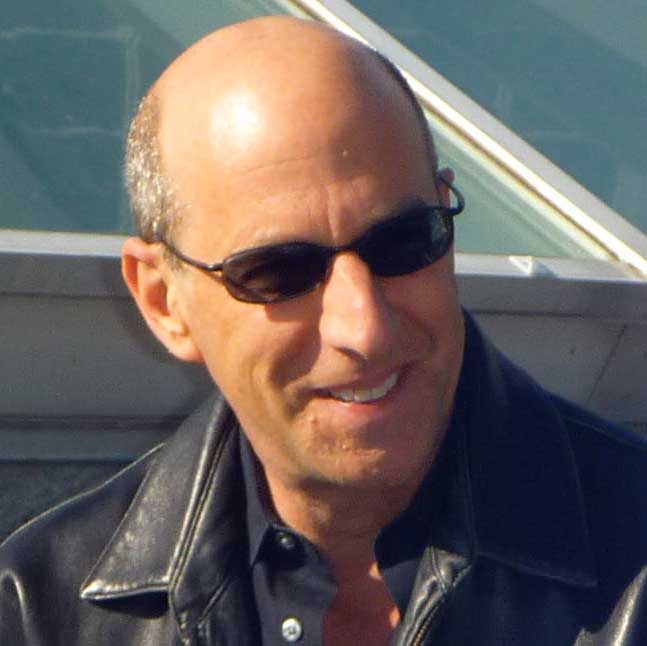
David Cain
David Cain has been listening to the music of the Grateful Dead for over forty years, including seeing live performances of the band in twenty-five cities in thirteen states during the course of three decades. David's writing on music, sports, and other subjects has appeared in publications ranging from Addicted to Noise to USA Today Baseball Weekly.
📚 Books by David Cain
Transcript
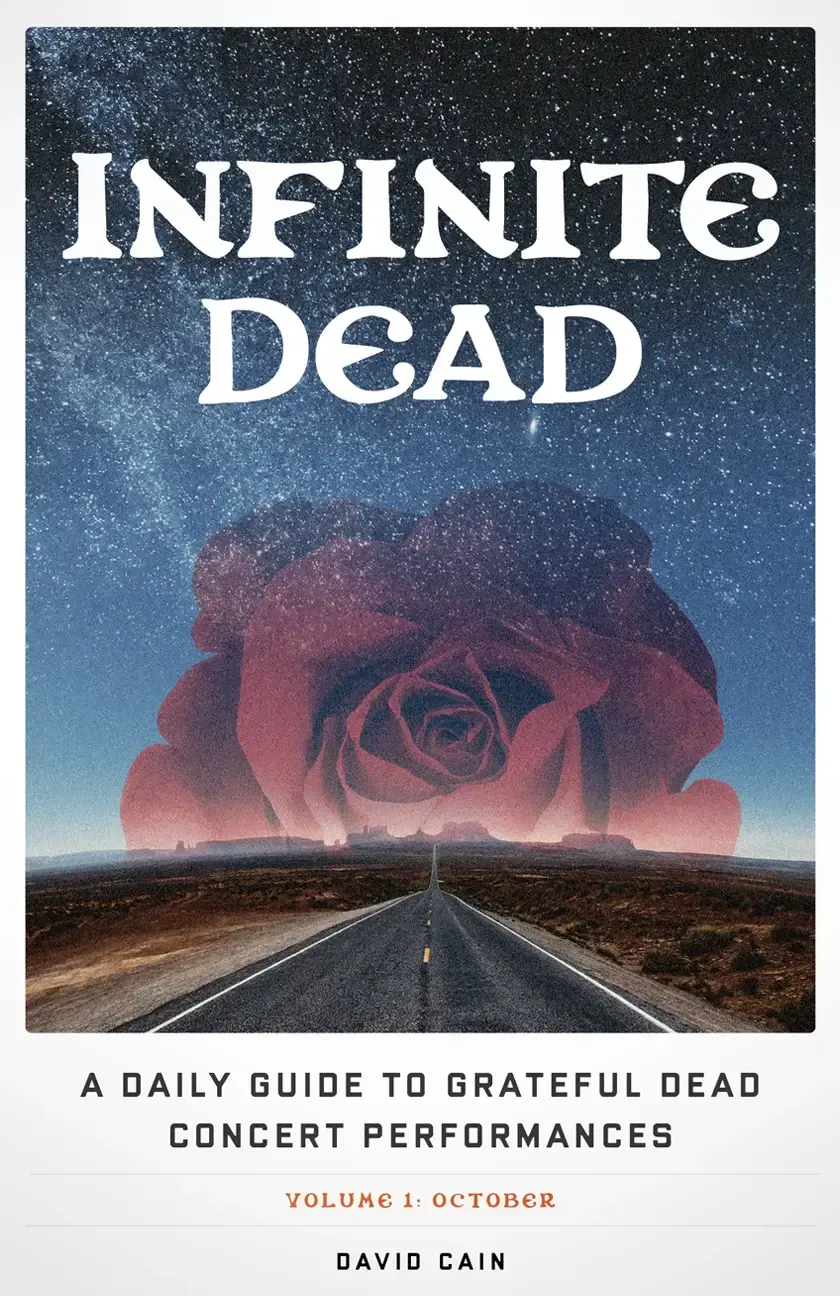
[0:00:27] DA: David Cain’s new book, Infinite Dead, is a groundbreaking guide to Grateful Dead concerts. Its first volume features detailed reviews of every Grateful Dead concert performed in the month of October over 200 shows, including acoustic, electric performances, their five-night final stand at the Winterland Ballroom, and 13 Halloween performances from their first in ‘66 to their last in 1991. Whether you’re a next-generation Dead Head, just discovering their music, or a long-time fan with an extensive collection of recordings, Infinite Dead aims to bring the Grateful Dead concert experience alive again. Hey Listeners, my name is Drew Applebaum and I’m excited to be here today with David Cain, author of Infinite Dead: A Daily Guide to Grateful Dead Concert Performances. Volume I October. David, thank you for joining, welcome to The Author Hour Podcast.
[0:01:27] David Cain: Good to be with you, Drew.
[0:01:28] DA: David, can you kick us off with just a brief rundown of your background?
[0:01:34] David Cain: I’d be glad to. My professional background is 12 years as a business lawyer and about 20 years in high tech startups where I did mostly and am continuing to do sales and marketing work for those companies, that’s my professional background. I have an unprofessional background, which consist of some nonfiction writing, creative writing on my own of various subjects including a couple of pieces about music, as well as a lifelong interest and passion for music and particularly, the music of The Grateful Dead and somehow, all the dots ended up connecting and now, there’s a book.
[0:02:19] DA: Now, why was now the time to write this book? Was there an “Aha!” moment, something inspiring out there? Or did you have a lot of downtime and you were just listening to a lot of Dead and you're like, “I need to document this.”
[0:02:36] David Cain: I’ve had a running email conversation with four friends for a long time. Every time there’s something new about the Grateful Dead, a CD comes out, or a new recording, a video, we would send an email around and talk about it briefly or just let people know. It became a forum for talking about the Grateful Dead amongst ourselves. In 2016, the month of May was coming and I thought it would be nice to reminisce with them about Grateful Dead performances in the month of May. It was a great month because, for us, we were all in college in the northeast and at May, it got warm, you go outside, you open the windows in the dorm, you’d play music and, as it happened, toward the end of the 70s, the Dead would tour the northeast and we got to see them. I thought, this would be nice if we could talk about these performances and this month and I put together a list, I sent them an email that said, “Hey guys, here’s your May 1st” Maybe there were five concerts that day. I listed them along with links to recording this and then some annotations here and there, some notes that I had made. They liked it and we did it for 30 straight days. Then I got busy but they said, “Hey, if you want to do this again, let us know?” And we ended up doing it again for October 2016. Fast forward into 2017 and having then done December, January, and February with them, a hundred plus straight days of sending emails with my thoughts about the Grateful Dead’s concert performances, I decided I would write a review of every Grateful Dead concert. April of 2017 was the first month that I tried to write more of a review as supposed to these daily capsule summaries. I started working on what I thought would be a very big book that would take quite a bit of time and in 2020, one of my friends said, “How’s the book coming, Dave? We’re not getting any younger.” I really took that to heart, he was only half joking but I thought, “It would be nice if the book came out at a time when we were all around and were able to enjoy it.” I decided, this could be serialized and I decided I could publish at least one month while I’m trying to complete the larger book. At that point, I had to figure out how to publish, do I get an agent, do I find a publisher and go through that whole process? And here we are, volume one, we’re all going to be here for it, which is great.
[0:05:17] DA: Now, a lot of times, you’ll have the idea of the book in your head, you want to do a volume of every show. When writers sit down, sometimes they’ll have major breakthroughs and learnings just by digging deeper into some of their subjects. Did you have any major breakthroughs or learnings just by listening to all the October Dead shows? Did you learn anything new about the band?
[0:05:40] David Cain: Yes. Quite a bit. I’ll just mention one. I think, a lot of fans of the music tend to get locked in to years or tours that they really love, why not? If you like chocolate ice cream, you’re going to order chocolate. By doing it in this fashion, by calendar dates which meant, say, October 1st, you could have a list that includes performances from the 60s, 70s, 80s and 90s. Doing it that way forced me to listen to the band across four different decades, which involve different band members. It really and many times, it took me out of my comfort zone and forced me to kind of re-examine things. I wasn’t the biggest fan of the last few years of the band’s performances and part of that is a built-in bias when you start listening to the band in 1978, by the time they get to the 90s, you found so much to enjoy, you tend to prefer where you were. This book required me to spend a lot of time with performances in the 1990s and I found some that were quite good. In the book, I mentioned among others, October 1st 1994 which was a time where you wouldn’t necessarily think they were their best and they seem 10 years younger and it was quite a surprise to me and there’s a lot of energy that night. Yes, I found a lot of surprises, concerts that I think people wouldn’t ordinarily think about which really were quite good and I try to point out the book designates some concerts with a rose which is to guide people to some concerts in particular that I found compelling and maybe overlooked.
[0:07:26] DA: Now, when you were writing the book, who were you writing this book for? Was this for you and your friends who are pretty deep fans, can casual fans or new fans have takeaways from the book as well?
[0:07:37] David Cain: That’s the hope, that it could be of interest and of use to a broad range of fans. Yes, I mean, on one level, I meant it to be potentially a companion, a daily companion. You go to work, it’s a Monday, it’s 9AM, you’re not ready to start working but you got the book on your desk. Maybe you think, I wonder what the Dead did today, you know? Where did they play and was it good? And for five, 10 minutes, you could dive into the book and then start your day and can do that at any point during the month. Kind of a nice companion and that’s for anybody whose had any level of exposure to the Grateful Dead’s music. Then I also thought, it would be good, even for experienced listeners to have a guide. You may have gone to Italy before, you’ve been to Rome a couple of times and you can go and wonder around, you’re going to have a great time in Rome, right? You’re going to find the colosseum, you’re going to go to a great restaurant and have a great meal but if you had a guidebook, right? you might end up trying a restaurant, you kind of passed by. You look at the window, didn’t think much of it. But if you had the book that suggest that hey, there’s a great restaurant here and you could eat some great food. It was meant as a guide even for people who have listened to hundreds of Grateful Dead concerts.
[0:08:59] DA: Let’s turn the tables and let’s just talk about you for a moment. How and when did you become a Dead fan? And if it was, you know, just by seeing those summer shows, what was it about them or those shows that really drew you in?
[0:09:14] David Cain: Yeah, really started listening to the Grateful Dead quite a bit in 1978. I’d been a big fan of music, Allman Brothers, Eric Clapton, Lynyrd Skynyrd and even before that, as a kid, listening to the radio, that’s what kids did back then before the Internet. I would go buy singles, 45s. In college, I met people with extensive album collections and a friend turned me on to one Grateful Dead album, Steal Your Face, 1974 live recording and he thought I would like it. He knew that I like the Allman’s and some others and he pointed out this particular Johnny Cash song, Big River, country tune and I thought I could get into country rock, blues rock, I already liked that stuff and, wow, did I? You know? I listened to that and just was floored, they did an up-tempo and Garcia had a field day on it. That was the beginning, I just dove head first and listened to everything I could. People along the way, some people had collections of bootleg recordings and were kind enough to share them. I began to see them in concert and that was really the beginning and strangely enough, even after they stopped touring, because of Garcia passing in 1995, even after that, I was just as interested in their concert performances, right from the 70s or 80s. It was still present for me and it was something I still really wanted to explore. It was still very interesting, the music they had played. Then, everything went to another level when people began to upload their recordings to archive.org and suddenly you had a Grateful Dead library. Maybe 2,000 different performances for which you have some kind of a recording, partial or full, and now you have a library. I spent a lot of time there and so that was kind of the journey in a nutshell.
[0:11:15] DA: Now, you do offer links to these shows you talk about in the book. Now, do these links, do they bring you to the archive.org or is there another repository where someone can find a lot of these older shows?
[0:11:28] David Cain: You can certainly go straight to archive and wander around there, you can pick a year and the archive will present entire years, list of recordings. Some concerts have 20 recordings and you can just wander around. What I did for the eBook was put a link in there where if you click it, it will take you to the infinitedead.net blog and you will have a subset of recordings on that blog. For a particular performance, let’s say October 1, 1994, I might have picked out three of the recordings, maybe five, and they will be on the blog. When you click it, yes, you’ll go straight to archive.org. I also on the blog, have footnotes, annotations about the particular recordings because they’re very different. Some of the recordings are audience recordings, some are soundboard coming straight of the band’s equipment. Some are called matrix recordings, which someone has taken the time to blend audience and soundboard recording into what they call a matrix recording and I’ve tried to pick out the best. When you are confronted with 10 or 20 recordings, it is not so obvious as to even there where you should start and I’ve tried to help the listener a bit there by saying, “Look, I have listened to at least parts of all 10 or all 20, start with these three. You know, here is a sample of an audience recording that’s quite good, here is a soundboard.” You can’t do that in the print publication and the paperback but through the eBook, you know I do offer some additional guidance.
[0:13:03] DA: Now, you do detail so many shows and as you said, it goes through October and then everyday there isn’t just one show, there could be multiple shows, and so you do go into detail to these shows. Can you explain a little bit what readers can expect to find in the details of these performances?
[0:13:21] David Cain: Sure, you know sometimes I’ve actually extracted a quote, something one of the guys said at the performance because they rarely spoke. They spoke more in the early days than the later days but there is a lot of banter in these concerts and some of it was pretty entertaining, so once in a while I throw something in that Garcia said or Weir said or Lesh said. Sometimes the announcer on stage would have an interesting comments, there’s some of that. The bulk of it though really focuses on what’s going on musically. You know, if there a particularly good Jerry Garcia solo and why is it good? Rather than just say, “This was really hot,” I try to give some details to why this particular solo was quite good and maybe compare it to some others of similar quality. I also bring in some historical research so you’ll know is this the first time they played this song, was it turned out to be the last time that they played it? I kind of weave different elements into it but the bulk of it is a real focus on what will you hear on this recording if you spend some time and what are the highlights? If there were some lowlights, I don’t shy away from that either. I tried to be fair and kind, I don’t consider myself a critic but I want people to know, you know? Like, “Garcia’s voice here was pretty rough.” or, “They came in for a landing on the song and they missed it, they missed their mark.” So I try to call it like I heard it on the recording.
[0:14:57] DA: Of all of the days in October and if you don’t know offhand that’s totally fine, what would you say was really the most special performance for you and why so?
[0:15:08] David Cain: Yeah, I couldn’t pick just one. That would be tough. I think there are probably 20 to 25 that were designated with roses for one reason or another and even of course in addition to those, there’s others that are quite good. Those are ones that I thought were special for one reason or another including that they might have been overlooked and were a surprise for me, such as October 1, 1994. You know, Halloween as the calendar goes, you know this book is lucky because it includes their Halloween concerts and those are pretty fun. Over the years, they did some pretty interesting things. They got very creative on Halloween and of course the crowd was very pumped up and in full costume for these concerts and there were some special things. They began to play Werewolves of London, a Warren Zevon song that they covered, and it was kind of rare but they began to make it a habit to do it on Halloween and that’s fun. It is fun to dive into October 31st and read about the Halloween performances. You know, there are also great performances in the middle of the month at the War Field in Radio City Music Hall from 1980 where they had decided after 10 years to start playing acoustic sets again, which really was very special. Some people had been able to hear them do that in 1970 and you know, at the time, I never imagined the Grateful Dead would play three sets in a concert and the first one would be acoustic and here they were doing it. Those are also in the book and very special performances.
[0:16:49] DA: You talk about shows in the book that are right around the time or about a year before Jerry Garcia passes away in 1995. Could you actually hear any sort of decline in the music or with him, or was he really rocking out up to his final days and his death was kind of sudden?
[0:17:12] David Cain: Well, his death was certainly sudden to anybody. It wasn’t sort of eminent exactly, he had had physical troubles for quite a long time and I think the decline was kind of gradual in terms of his playing, but there is still strong performances. But you can certainly notice. You know, one thing you’ll notice is the voice but eventually there is loss of speed, for example. His hands got into a condition where he just could not do speed and that had been one of his many hallmarks, right? How fast he could play and in an articulate way where you could hear the notes and, you know, wonderful and so you’re not going to really hear a lot of blinding speed in the last few years. On the other hand, he continued to be very creative where he could. He could still sing in the ballads. Some people would say it took on some extra power where speed wasn’t an element in the slower songs he could put a lot more into them, a lot more feeling and emotion. He began to get very creative I felt with the way he sang words. He would begin to accent certain syllables and you could hear it. Bob Dylan of course did lots of this over the years. If you listen closely in the last couple of years, you can hear Garcia spending some time playing with the words and the song and so there was that going on.
[0:18:42] DA: That’s really interesting. Do you continue, you know, you have clearly listened to so many shows, do you continue to see the Dead in their new lineup even to this day or are you pretty much stick to Garcia and pre-’96 days?
[0:19:01] David Cain: Well, I’ve become more of a listener of recordings and listener at the live concerts where I don’t attend many live concerts these days, just by choice. I mean, I have friends, dear friends who love going to the live concerts. I just don’t do a lot of that anymore. You know, after 1995, I certainly listen to whatever the next incarnation was and I was going to see those things, whether it was kind of this combination band that included both Bob Weir and Phil Lesh or they each went off into their own. Weir had his and Lesh had his. I saw those and enjoyed them and so I continued to do a little bit of that but I think most of my listening has continued to be with the recordings, particularly since 2016, 2017 where I decided I was going to write these daily kinds of summaries and it was really spending most of my time hunkered down at my desk in front of the computer and listening to music and making notes and trying to get the words to come out right, that’s been my chief mission in the past few years.
[0:20:09] DA: Can you talk a little bit about what’s contained in the appendix of the book and then further along, what resources you provide to readers towards the end of the book?
[0:20:19] David Cain: Sure, so the appendix is basically about what I call methodology. You know, how did I think about the music as I was doing these reviews and doing the writing, and how I thought about these things. There’s a lot to think about. I mentioned earlier your potential personal bias because you started listening to the band in the 70s as opposed to a lot of people start listening in ’87 or ’92 and it puts you in a different place and gives you a different starting perspective on the music. I wanted myself to be aware of these things but I also thought readers should know, right? How I thought about that and how I tried to account for those potential biases or subjectivity. My goal was to try to be as objective as I could and I wanted to lay out my methodology for making some judgment calls about the music and so that’s really what the appendix I hope will do for readers is kind of explain a bit how I came to certain conclusions about things. There are times where I indicate that a concert is better than is known, right? The appendix tries to explain how I came to those conclusions generally. There is a little bit of a bibliography in the back, some of the sources that I consulted. One was certainly a book called DeadBase. A friend of mine gave me a copy of that, I don’t know, around 1991, that’s DeadBase V, and it covers the band’s concerts through 1990. It has a complete set lists, it’s got statistics about songs, a very useful resource. Over the years I began to annotate my copy of DeadBase and make notes in there and I wanted people to know, you know, this is a very important resource if you want to do your own exploration. DeadBase is kind of indispensable for me and I suppose for other reporters or historians of the band’s music.
[0:22:29] DA: Well, David, we just touched on the surface of the book here but I just want to say that just writing a book that’s this in depth of so many shows, it clearly took a lot of time and effort to put this together and what I consider at least a must have for all Dead fans is no small feat, so congratulations on publishing the first volume of many for this book.
[0:22:52] David Cain: Thanks, Drew, I appreciate it.
[0:22:54] DA: This has been a pleasure and I’m excited for people to check out the book. Everyone, the book is called, Infinite Dead, and you could find it on Amazon. David, besides checking out the book, where else can people connect with you?
[0:23:06] David Cain: Well, there’s a blog, infinitedead.net, and that’s where readers will find on each day links to recordings, which will take them to archive.org and some annotations and editor@infinitedead.net. I try to respond as best as I can.
[0:23:27] DA: Well, David, thank you so much for donating some of your time to us today and best of luck with your new book. We can’t wait for Volume two to 12 to come out soon.
[0:23:37] David Cain: Thanks, Drew.
[0:23:42] DA: Thanks for joining us for this episode of Author Hour. You can get David Cain’s new book, Infinite Dead, on Amazon. Also, you can also find a transcript of this episode and all of our other episodes on our website at authorhour.co. For more Author Hour, subscribe to this podcast on your favorite subscription service. Thank you for joining us. We’ll see you next time; same place, different author.
Want to Write Your Own Book?
Scribe has helped over 2,000 authors turn their expertise into published books.
Schedule a Free Consult