Dane Espegard: Episode 770
Read the full transcript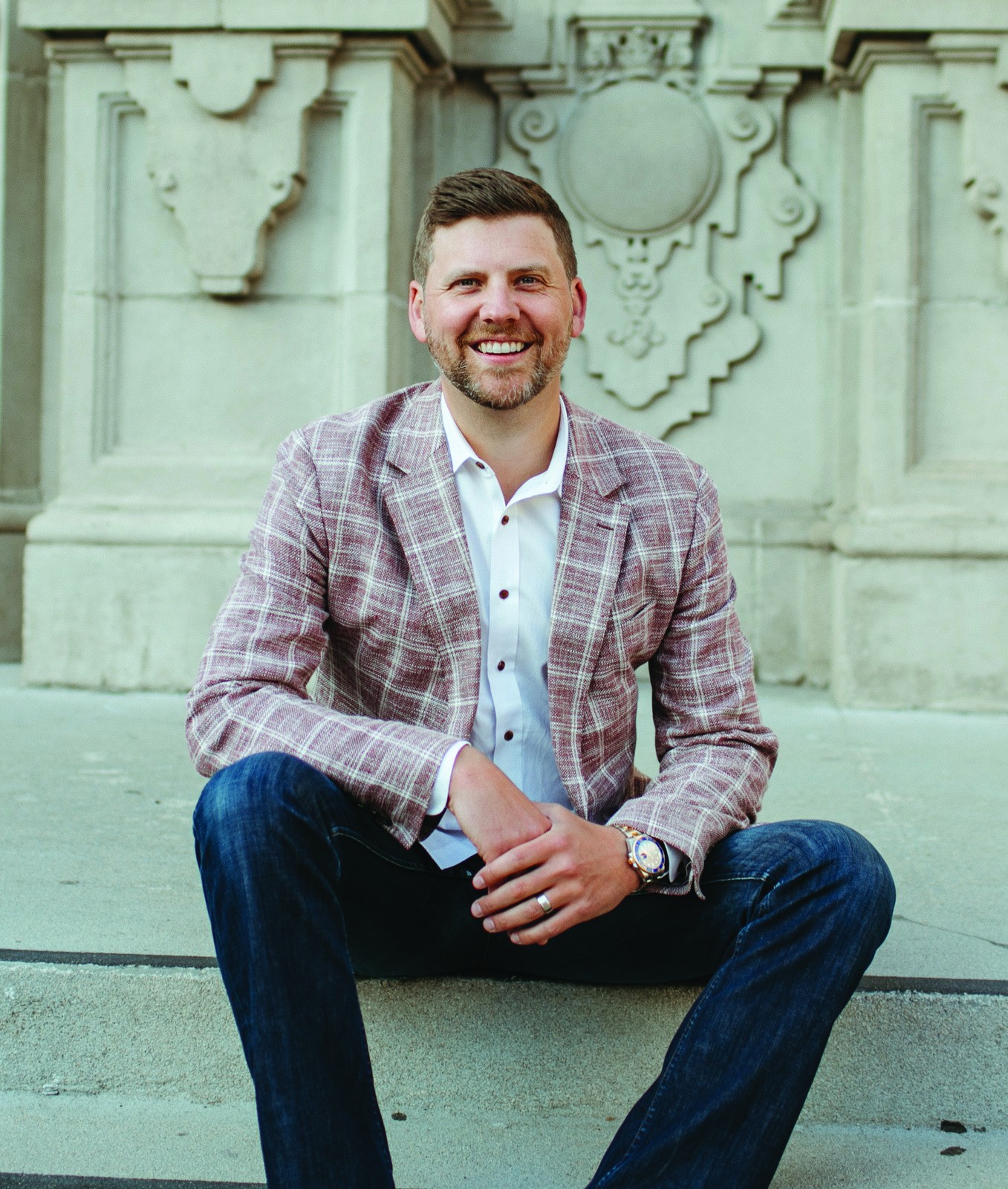
Dane Espegard
Dane Espegard is a division manager for Vector Marketing, the direct sales distributor of Cutco Cutlery. For nearly two decades, Dane has trained and managed thousands of young professionals in networking, interpersonal communication, and leadership skills, helping his teams and mentees realize their personal and professional goals. He is revolutionizing corporate cultures with his dreams program. Dane lives outside Minneapolis with his wife, Brookelynn, and their two daughters, Elin and Izzi.
📚 Books by Dane Espegard
Transcript
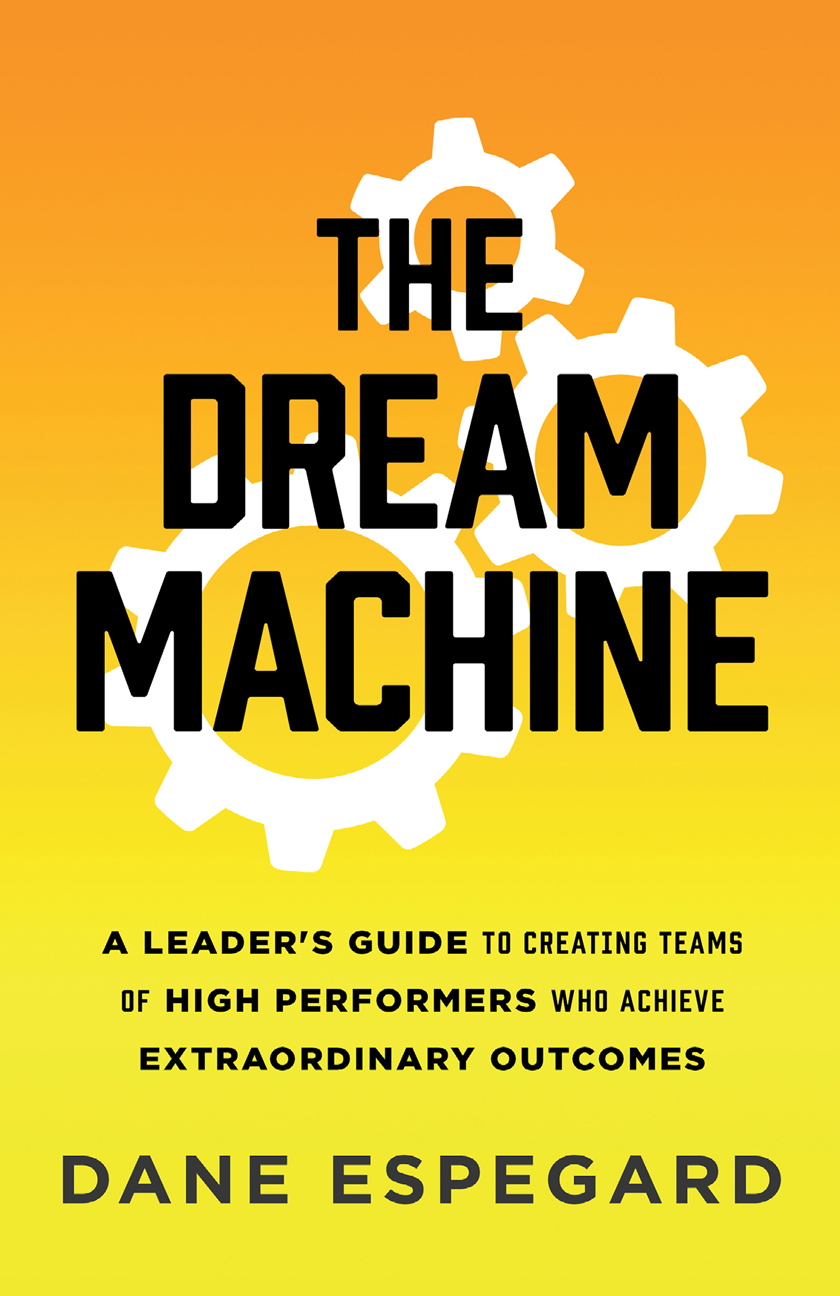
[0:00:31] DA: For a CEO or business owner, the teams you lead are the heart of your enterprise. An investment in their fulfillment is an investment in your company’s future and as the landscape rapidly changes more than really anyone could have foreseen, organizations are scrambling to find and retain their best people. In his new book, The Dream Machine, Dane Espegard shares his system for developing a culture centered on dream planning and goal realization. Being part of a dream’s culture means creating a unique list of desired experiences, whether it’s achieving a fitness goal, learning a hobby, or even exploring a country you’ve never visited. The book teaches you how you and your employees can maximize potential with a step-by-step guide for transforming your culture and driving your business to the next level. Hey Listeners, my name is Drew Applebaum and I’m excited to be here today with Dane Espegard, author of The Dream Machine: A leader’s guide to creating teams of high performers who achieve extraordinary outcomes. Dane, thank you for joining, welcome to The Author Hour Podcast.
[0:01:31] Dane Espegard: Happy to be here.
[0:01:32] DA: Kick it off with us, can you give us a quick rundown of your professional background?
[0:01:37] Dane Espegard: Yeah, absolutely. I got started with Cutco Cutlery and Vector Marketing, the knife company, right out of high school. My first real wage with entrepreneurship was as an 18 year old learning how to sell Cutco Cutlery and doing in-home presentations and I did that for four years of college to pay my through university of Wisconsin Madison and when I graduated, I decided to stay with Cutco in a career role and so I opened my own office, kind of like a franchise for Vector Marketing and did that for a couple of years, built my own team, I was in charge of the recruiting, the sales training, and the development of those individuals. Had a lot of fun and a lot of success with that a couple of years out of college and then advanced with Cutco to become a division manager where I moved to Omaha Nebraska, I was there for about four years and then had the opportunity to move to a bit larger territory. I’m Minnesota, North Dakota, South Dakota, and Iowa. I have been growing that division with Cutco and that move happened in 2013 and that’s been the majority of my professional career.
[0:02:34] DA: Now, why was now the time to share these stories in the book? Did you have an “Aha!” moment was there something truly inspiring out there, just have a lot of time on your hands because of COVID?
[0:02:45] Dane Espegard: Yeah, great question. I’d always – the book is titled Dream Machine and so, I’ll talk a little bit about the creation of somebody’s dreams list, but on my dreams list, write a book has been on there for a long time and I always thought it would be something later in life when I had more time. There was kind of a culmination of a few events that led to it happening much sooner than what I had originally anticipated. One was seeing the dreams concept in full form during COVID for my organization and how it had a really big impact on the individual’s dream, arguably one of the toughest times in their lives during the first four, five months of COVID. Then, not just on those individuals but what it did for our organization during that time, also, it was a good friend of mine, Justin Donald, I had just completed his book writing process and launch for his first book and so, we were together I September in Montana of 2020. He was telling me about his path with all that and really encouraged me to jump into it now and introduced me to scribe and the entire process. Went home from there, I said to my wife, I said, “Justin really thinks I should do this now” and my wife’s been urging me to do something like this for a long time so she was in full support and that’s when things started moving.
[0:04:00] DA: When you said, “Okay, I’m going to write this book,” a lot of times, authors will have the idea of the book in their head and then when they actually start writing the book, they come to some major breakthroughs and learnings. Do you have any of these major breakthroughs or learnings or your writing journey, maybe by doing some research or just by digging deeper and some of the subjects in the book?
[0:04:19] Dane Espegard: Yeah, I think while going through, it forced me to recognize some of the things that we had done in our organization that I don’t think I had ever put to paper in terms of hey, here are all the exact steps that we’ve done to create this culture, this sales winning culture that we’ve had in our organization. So, by needing to come up with the exact process for the book writing journey, it really forced me to get clear on exactly the things that we’ve done over the course of the years but also, through interviewing some of the people at work on this topic, I also got to see really how much it meant to a lot of the team members.
[0:04:54] DA: Now, in your mind, when you started writing the book or when you were outlining the book, who did you see as the main reader of this book? Who were you writing this book for?
[0:05:04] Dane Espegard: Any business owner or just leader of people within an organization. I think that anybody who is in some sort of role of influence or leadership position, there’s always this – okay, obviously we’re focused on work but the relationships with the people that we work with, they really matter and hopefully, they evolve to being really caring about those people. For me, I believe a ton in this process because it’s what we’ve done in our organization but what I’ve been able to see that it does, is really strengthens the relationship with the person as a person, not as a contributor to the business, right? In other words, work becomes a component of it but it’s really, the focus is on that individual. Anybody who leads people.
[0:05:47] DA: now, I want to dig into the book and you actually start by talking a little bit about yourself in the book and you say, you're well known as “the dreams guy”. How and why did you get that nickname?
[0:05:59] Dane Espegard: Part of it is the concept of kind of living life out loud, it’s something that I think is really important in leadership. When I made my first dreams list years ago in 2007 at a conference for Cutco and Cutco paid for a keynote speaker, Matthew Kelly to come in and he had us create our first ever dreams list. So I made a list right there on the spot of a hundred dreams and it was invigorating and exciting. Then, I had that list, I was aware of it for basically the next month or two and then it kind of fell off and I didn’t really look at it again until I had the opportunity to move to a new larger territory to the twin cities. When that happens in our organizations, kind of like you’re starting another business from scratch and so I had gone through my first two times of starting a business and starting a team and went through the wins and the losses of that process and got much more clear on the type of culture that I wanted to setup in my organization. I wanted it to be centered around dreams. I knew that if it was something that was going to really get some legs behind it, it would need to be something that I was living out loud. I took it to my then girlfriend, Brooklyn, now my wife and we really dove in to the whole concept and made really big dreams list for ourselves. Then basically, planned out our next year of 2013 centered around how many dreams can we accomplish this year? Started doing that out loud in front of my team and so my friends, my team, my family, everybody kind of got to start seeing me be vocal about not just, we went on this trip but hey, I was able to check something of my dreams list. Just using that, the wording of dreams instead of bucket list or something else is kind of where that came from.
[0:07:39] DA: You also said that you’ve become the guy who initiated a simple process that has continued to grow organically. Talk about the formation and how you formulated and maybe how you just came into the dream machine process.
[0:07:54] Dane Espegard: Yeah, the first part of it which is what we did for the first three or four years was we just helped people to create their dreams list and so, we went through, we call our dreams-storming process and we’ve refined it over the years but we take people through what’s now nine categories and we spend roughly three hours or so going through this. When we started doing it, people would make their list of a hundred or so. I just did this with the company NGNG and I did it virtually with their team and they have about 30 employees and the average person I’m acting came up with over 300 dreams during that three-hour session. For a lot of people, that’s all they need, is to just get this list created and then there’s certain people that this just strikes a cord with and they start running with it. During that process, we help them create not just the list but then, drill down to hey, what are some things that are actually maybe doable or within the realm of possibility within the next three to six months and then what I’ve noticed is that this whole process becomes contagious for certain people. On our team, the reason that it grew organically is that we had a handful of people that loved this concept, ran with it and then all I did was recognize publicly when they would accomplish a dream and then it would kind of bring the rest of the team back to “Oh yeah, that dreams list”. Get them focused in a non-shameful way of I hadn’t really been looking at that.
[0:09:15] DA: You also say that the dream machine process is, it’s lifechanging for creating dreams for yourself and also, for people you work with. What is the end goal of creating these dreams and the dream machine process and how, really do you get other people involved?
[0:09:32] Dane Espegard: I think the goal, I think one of the main goals of any organization should be to improve the lives of the people that work there. When I think about this concept, I can say that this is really what’s led to my life being one of excitement and fulfillment. The exciting thing with this is there’s always more and as people accomplish certain things in their dreams list, they tend to add more to it and so, life just becomes more and more exciting. I think about last year with COVID, I think if you were to pull a thousand people, the majority of them are probably going to say 2020 was a really horrible year and I can tell you from people that practice this dreams concept, if you were to ask them how 2020 was, there’s a lot of people in our organization that were like, 2020 was obviously, pandemic aside, with the global aspect but me personally, 2020 was my best year. I’ve got a guy in my team that’s 21 years old and he accomplished something like 35 dreams during the pandemic of 2020. It’s just, to me, it brings such a larger purpose to what we do on a regular basis. For me, work used to be talking about sales goals and quotas and sales contest and everything work related. Now, work is a vehicle for those individuals to help them reach the next things in their dreams list. What I like about that is the relationship that I have with the team members is no longer a work relationship but it’s a, “Hey, I’m genuinely trying to get these individuals to live the life of their dreams and work as a portion of that.” That might mean that I lose those people, right? That’s something, as I’ve explained this to business owners, a few people have said, “Well, aren’t you a little nervous to deal to lose your people?” I think that’s a valid concern but my response to them is always, “I would so much rather have somebody who is alive and engaged and empowered for two years than somebody who is asleep at the wheel for four or five years.” In reality, a lot of times, people don’t leave and it’s hard to leave a place where you feel valued for who you are and where you’re trying to get instead of just what you do for the business.
[0:11:27] DA: Now, you’ve been talking about people making their dreams list and some up to 300 dreams. What do you find that most people have as their dreams and put on their dreams list and how many of them or how often do you, some of the bigger ones do they come to fruition?
[0:11:41] Dane Espegard: Great question, so I think when people think of dreams list at first, they think of like bucket lists and things that I’m going to do at some point in my life and what I was really intentional with the language of this of not wanting to be a bucket list because I think “bucket list” typically means later in life. The idea behind this was the terminology around dreaming instead of goals allows us to detach from the, “Is this possible right now?” because we have a tendency in life when it comes to goal setting to set things too low because we want to make sure we hit it. The idea of dreaming is A, anything is possible and so when we do this, we set people in a certain place during the dream setting workshop of abundance and anything is possible, no time or financial constraints. What’s interesting though is through that process there are people that write down the simplest things. I have a guy on my team Robert Wicks, I didn’t even know this was on his list until I was checking in with him during COVID. He said, “Yeah, I just finished a dream on my list, I just flossed for 30 days straight.” I said, “What?” I said, “That was on your dreams list?” and he said, “Yeah, it was on my dreams list.” You know, some of them are really small like that. Some people have on their health. It is like, “I want to be able to do 20 pushups. I want to be able to run a mile.” They are not all these grandiose things. There are also— travel tends to be the largest category in terms of number, right? What I love about that is, you know, we start small with local, right? What is local to you and what’s in the kind of neighboring states and in the US, and then we go a little bit more global and we have a big slideshow that we show that helps kind of thought jog through the process but we start with that category to get kind of the creative juices flowing, and then it is pretty simple for people to kind of be thinking abundantly after that. I mean, I’ve had people in our organization that have done this throughout the years. We have people that have lists up to 800 now and they just get more specific is what it is.
[0:13:28] DA: What do you think is holding people back from talking about and voicing their dreams to others? You mentioned earlier, some people just needed to say it out loud or just needed to write it down and see it so why is that wall up and how do you break through it?
[0:13:42] Dane Espegard: That’s a good question. I would say the two things comes to mind, vulnerability is one and then the other one time. I don’t think that most people give themselves the time and space to think about what would be fun and exciting and uplifting and inspiring for me personally to do. You know we get into this and I talk a little bit about this in the book, but we go through life, you know as a kid you’re like, “Anything is possible and I want to be this” and people around you are like, “You could do it. That’s fantastic.” Then you reach a certain age, a lot of times it’s in high school and then the conversation becomes a lot more from mentors or family or teachers or whoever of, “Hey, you got to be a little more realistic. That’s probably not going to pay the bills.” We get shuffled through the – you know, “You got to pick a major, you got to go school, get the security,” and it comes from a good place, right? When parents encourage their kids to go to school and get a degree and get a secure job, that comes from a really good place of wanting to protect that person but that is not necessarily the exciting, uplifting, “I’m fired up to wake up in the morning.” We get into this, “Okay, now I am in my job. Now I have these things to do,” and we’re just focused on the right now, it is hard to think bigger picture of what else is out there, what else is possible? Because there is not a lot of people that are asking us those questions on a regular basis so we kind of just fall into this routine. At least this is what I had experienced even for me personally, falling into a routine of just onto the next thing. Then the time just slips by and here we are five years later, 10 pounds heavier, or whatever the case is, right? I think the vulnerability thing, most people are having a lot of conversations with people about their dreams and aspirations, right? It is a lot of surface level conversation especially as the pandemic hit and we’re in front of people less, we don’t necessarily have this just like unharnessed time with people, which is where those conversations a lot of times can come, right? We just haven’t been around people.
[0:15:38] DA: Now, you actually have two really interesting terms in the book that are dream storming and dream stealing. I found them both really interesting so do you think you could dive in and tell us a little bit more about both?
[0:15:50] Dane Espegard: Yeah, so the dream storming process just brain storming but with dreams, right? It is trying to create as many as you possibly can on your list and that is kind of that first process of helping somebody through this. The dream stealing thing, I love that. The dream stealing, this is kind of been one of the iterations of our program is that we used to just help people make their list and whatever they did with it, they did with it. Then we started running these retreats at work where we’d help people create their list and then right after that, we would put them into small groups and we would actually do dream sharing, which then would lead to dream stealing. We’d ask everybody to kind of highlight five to seven on each category or ten and it depends on the group size but they identify the ones that they’re excited to share and they could pick ones because they think they’re funny, they think they’re unique or they are slam dunks of “Yes, I’m going to do this.” Then they go through and share. So what we do is we kind of set the table for people to be listening to others. If they hear something and they are excited about, they are going to steal that dream. The word “steal” maybe has a negative connotation but we explained that it’s a good thing and it is also somebody while you’re goes, “Hmm” right? Then starts to write something down. That means “I’m stealing that for my list.” The beauty of this is that, you know, the more the merrier. It’s not if I have something on my list other people write them down, if anything that is just more exciting.
[0:17:11] DA: Can you talk about the person that really inspired this idea for you and maybe a little bit about the origin story of how this idea came in your head?
[0:17:21] Dane Espegard: Mathew Kelly, author and keynote speaker. He wrote a book called The Dream Manager, and that’s where this whole concept came from. When I heard him speak in 2007, he had us make our list and part of the gift package, if you will, for all the attendees was his book, The Dream Manager. I got that, I made my dreams list, went home, read that book, flew through it. It was awesome, it read like a fictional book. It’s based on a true story but it read like a fictional story about a sanitation company in Ohio and basically about how they hired somebody whose sole job was to work with people and identifying their dreams and helping them achieve those. I remember reading that being like, “Man, what a cool job” right? To be the person who the only conversation that you’re having with people are all these really fun uplifting maybe coaching conversations, maybe not, but just being a resource for people that they don’t have on a regular basis. I remember thinking how cool that would be and I gave that a lot of thought for, I don’t know, maybe a month, right? It was a concept that lived with me for a short period of time and then it kind of got shelved like a lot of things with— kind of fell back into the monotony of everyday work-work-work and live life. So, I didn’t bring that stuff back out until I had the opportunity to move territory and start from scratch again and I had the time to sit there and think about what’s the culture that I want and then I revisited that book, revisited my dreams list and kind of took off from there.
[0:18:53] DA: Now in general because thinking about and talking about dreams and expressing them, what does it really do for your mindset overall even if you accomplish all of them, even if you accomplish none, just by getting those dreams out there, how does that change?
[0:19:08] Dane Espegard: Yeah, I think that when— the whole concept of dreams is meant to be a fun conversation, right? I think about the dreams concept, getting something on paper is part of it, right? Or on your computer or anything else. You know, it’s the idea of just “what if”. Think about— I can remember this, when I was in high school, I remember working at McDonalds, good old Mickey D’s and I remember the team at McDonalds really would pool their money together and they buy a whole bunch of Powerball tickets, right? I remember the days that we would get those thinking for almost my entire shift what would I do if I won the Powerball, right? There is all of these “what ifs”. It never happened but I could tell you that one shift would buy fast or I was in a good mood. It was fun to just dream about “what if” and so I think that there is something to that. I use the example a lot of like when you have a trip in the schedule, right? Drew, if you’ve got a trip scheduled for November. The trip itself is going to be exciting but the lead up to the trip is almost as exciting as the trip itself. The planning, the anticipation, the odd, the countdown, the booking of the hotels, the “What are we going to do on the trip?” and “How much fun this is going to be!” and the research. There is value that comes to you outside of just the act of accomplishing it yourself, right? I just got back on a three and a half week family camping trip. We’ve been planning this thing for a while and the anticipation was a handful of months, it was a ton of fun, and then the trip itself obviously had a lot of value also. I think that the dreams concept it’s just like with goal setting. I’m sure people have heard the quote before that it’s not about reaching the goal, it’s who you become in the process. I think with the dreams, it is not necessarily about the actual accomplishment of it but it’s the enjoyment and the purpose that it brings you on the day to day. What I bring up to people is like, “Hey, that one trip that you had each year and it brings you two, three months of excitement, well, imagine if you always had something next month. How exciting and how much purpose would you have to get things done? How much purpose would you have to balance your finances or do some planning?” or whatever else the case is? You’d probably be pretty excited about that if there is always something else in the calendar. For me, I’m always at my best when I am on purpose and off-self and what the dreams thing does is it gives me a massive menu to always be on purpose, to have something next step.
[0:21:36] DA: Well, Dane, we just touched on the surface of the book here but I want to say that just writing a book where you’re just helping folks become more successful in both their professional and personal life is no small feat, so congratulations on having your book published.
[0:21:48] Dane Espegard: Thank you, I appreciate that.
[0:21:50] DA: I have one big question left; if readers could take away only one thing from the book, what would you want it to be?
[0:21:57] Dane Espegard: One thing from the book, great question. I think if there is one thing that I want a reader to get from the book is that diving into our own and other people’s dreams is worth the time needed.
[0:22:10] DA: Well, Dane, this has been a pleasure and I’m excited for people to check out the book. Everyone, the book is called The Dream Machine and you could find it on Amazon. Dane, besides checking out the book, where can people connect with you?
[0:22:21] Dane Espegard: Yeah, they can connect with me on my website, which is daneespegard.com and then also on LinkedIn, Instagram, any of that as well, which is just Dane Espegard as well and on the website, there is a lot of different ways to reach out to me and get into contact with some of the cool stuff that we’re doing centered around dreams.
[0:22:38] DA: Well, Dane, thank you so much for giving us some of your time today and best of luck with your new book.
[0:22:43] Dane Espegard: Thanks a lot, Drew.
[0:22:46] DA: Thanks for joining us for this episode of Author Hour. You can get Dane Espegard’s new book, The Dream Machine, on Amazon. Also, you can also find a transcript of this episode and all of our other episodes on our website at authorhour.co. For more Author Hour, subscribe to this podcast on your favorite subscription service. Thank you for joining us, we’ll see you next time; same place, different author.
Want to Write Your Own Book?
Scribe has helped over 2,000 authors turn their expertise into published books.
Schedule a Free Consult