Rags Gupta: Episode 774
Read the full transcript
Rags Gupta
A serial entrepreneur and operator, Raghav "Rags" Gupta has worked with a number of startups and scaleups and achieved multiple exits, including being part of the founding management team at Brightcove (IPO), Chief Commercial Officer at Videoplaza (acquisition), GM EMEA at Ooyala, and COO at Humatics. He is currently President of Butlr, the breakthrough proptech startup, as well as Venture Partner at Hyperplane Venture Capital. Rags is an active angel investor, mentor, board member, and advisor working with the likes of MIT Sandbox, Harvard Launch Lab X, Dvinci, Elucidata, and Asylon, among others. Rags studied operations research at Princeton University and lives with his wife and two children outside of Boston.
📚 Books by Rags Gupta
Transcript
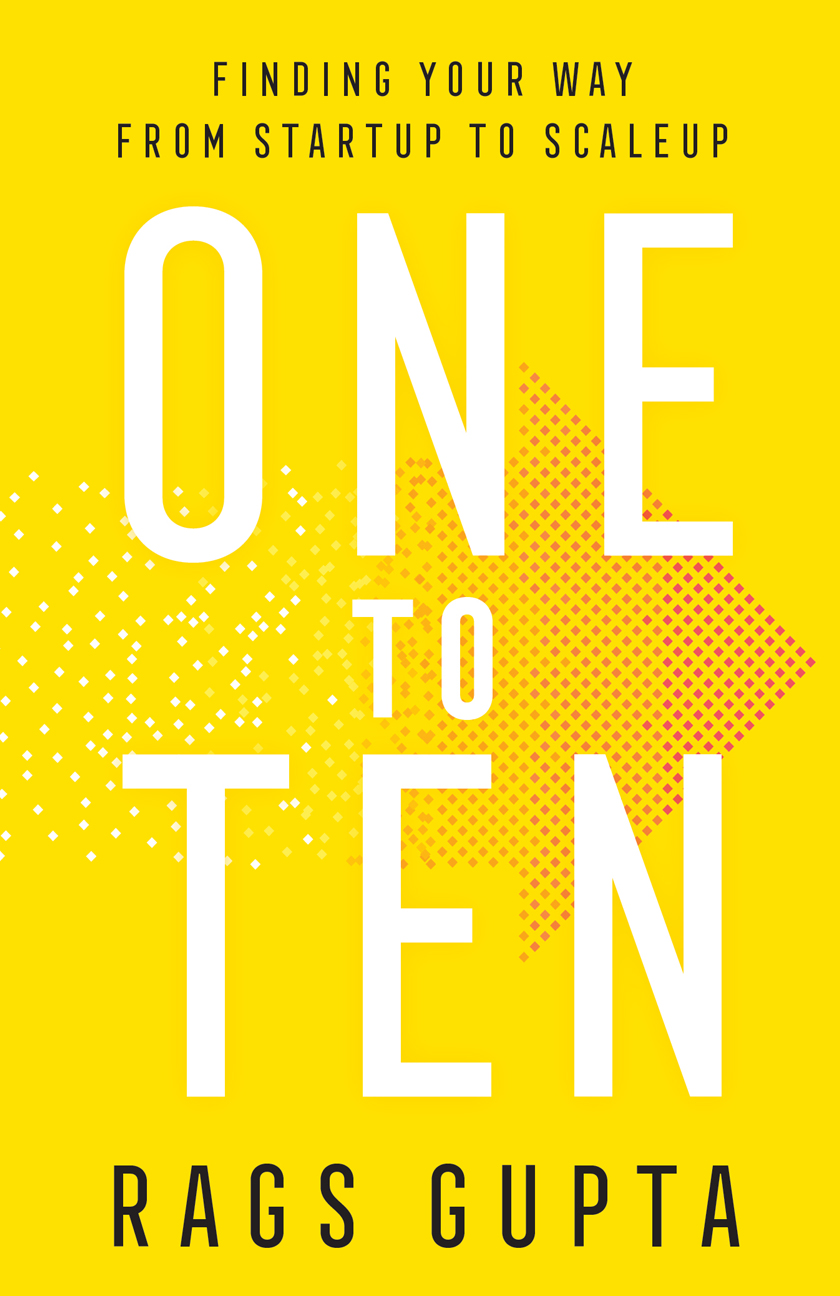
[0:00:34] BB: Here’s a little secret: most tech startups get to one, they build a product, land some customers, and close funding. The harder part is getting from one to ten. Tech founders struggle to progress past early adopter customers and founder led sales. To grow from a scrappy group in which everyone just pitches in, to building out an executive team and a well-functioning organization. They struggle to go from one to ten, from startup to scale up. In One to Ten: Finding your Way from Startup to Scale Up, serial entrepreneur and operator, Rags Gupta provides B2B teach entrepreneurs with the tools, frameworks and principles they need to overcome the inevitable growing pains and plot their path to 10 and beyond. Welcome to the Author Hour, I’m your host, Benjie Bach, and today, I am honored to be joined by Rags Gupta. He’s the author of a new book titled, One to Ten: Finding Your Way from Startup to Scale Up. Rags, thrilled to have you joining us here on the show today.
[0:01:31] Rags Gupta: Thanks, Benjie, great to be here.
[0:01:33] BB: Well hey, let’s start by doing this, Rags. Can you give listeners an idea of your personal background and tell us a little bit about yourself?
[0:01:41] Rags Gupta: Yeah, sure thing. I’ve been a technology entrepreneur and operator for a little over 20 years, working at startups from inception phase all the way through to somewhat that we’re ended up being acquired or went public and kind of everything in between and started in technology during the .com boom and then the subsequent bust and then been lucky to be a part of different technology cycles and have seen a lot in the valley, in New York, in Boston, in the UK, across a number of industries. That’s kind of overall my background. I’m currently a venture partner at a Boston based seed fund called Hyperplane and as well as the president of a prop tech company called Butler which we invested in. I do a few other activities related to startups and entrepreneurships. I’m on the board of a fast-growing solar company called DaVinci and advisor to another company called A Salon and investor in a bunch of other companies. I love the space, I love startups and entrepreneurship and pleased to be here.
[0:02:43] BB: With such a busy schedule, what made right now the right time to take on this project and what was the main goal in writing this book?
[0:02:52] Rags Gupta: Yeah, rewind back to March or April 2020 when everything was kid of kicking off with the pandemic and I was really – made me think a lot about what I wanted to do and take on and I’ve been doing a lot of writing back in the day when blogging first came out and I kind of stopped doing that after a while and just realized how much I missed it and missed putting my thoughts down on paper and so the pandemic and the lockdown and having more time in my hands just gave me the time and space to be able to work on a project like this and writing as a way to really have impact beyond just synchronous communication with someone. That’s how the project was born and very glad to be getting it out there and hopefully some of the lessons learned and stories from it can impact and help other people.
[0:03:41] BB: Absolutely and I’m sure they will. I love the niche of this book, the One to Ten space. But let’s first establish, what does it mean to go from zero to one.
[0:03:53] Rags Gupta: Yeah, sure, hopefully for a lot of people, they might already know but Zero to One is a very well known book by Peter Thiel from a lot from a lot of his teachings so it was really inspired by that kind of concept but in general, conceptually, zero to one is that phase where you’re really starting from nothing and getting something out there and fundamentally, entrepreneurship starts with insight and it starts with insight about a technology, about a market, about what the world will be like and then you go about figuring out how to best serve that insight if you will. This phase of zero to one, it’s about innovation and testing, it’s about trying to establish product market fit and from a product perspective, that can mean prototypes and mockups and alphas on the go to market side, it can mean you're doing pilots, you’re doing tests, you’re getting beta customers, we’re trying to define your ideal customer, your initial markets but you haven’t fully figured that out yet perse. In almost all cases, its founder led sales, right? You're still trying to figure it out and you want to hear directly from the customer and funding wise, you’re probably in the pre seed or seed stage and you have a relatively small team with a bunch of people wearing different hats and being scrappy and figuring it out.
[0:05:16] BB: You say zero to one is the easy part, right? Going from one to ten requires different muscle than what got you from zero to one. Why do you think the zero to one space is so highly - I would say saturated, even with content and information and then there’s less talk about that one to 10 space?
[0:05:33] Rags Gupta: Yeah, if I rewind the first part of my career in tech, I mean, it was really hard, the zero to one phase was hard, you didn’t have material and content out there, you didn’t have accelerators and incubators, it was hard to get companies to return your emails or calls, they were just like, you’re a startup, why should we talk to you? As technology’s grown though and as companies have been disrupted, they realized that they actually need to lean into the cutting edge and the innovation and so a lot of these big companies have these innovation teams and scouts and venture groups and so on. They’re leading into innovation, they want to know what’s happening so that they don’t get disrupted in the future so they can co opt some of these new innovations and products. They’re going to be really willing to experiment and do pilots and work with companies. Same with on the funding side of things. It’s just gotten so much more competitive and as a result, it’s a lot easier to get funding as you're starting out. I think you’re asking why, I think it’s a combination of factors, right? There’s a romance to the founders in the garage starting something and having then a world-changing business. There’s been just a lot of focus spent on that first phase of innovation and ideation. The one to ten phase is actually, a lot of growing pains, it can be messy, it can be muddled, it can be – it’s not necessarily all the kind of the bleeding edge and so maybe that’s also reason why there hasn’t been this much time and energy spent on that phase.
[0:07:13] BB: Well, it’s needed and so as a serial entrepreneur and operator, you’ve worked with a number of startups and scale ups. The first leg of the stool in the sense, as you put it in the book is around product readiness. In this scaling process, right? What are some of the common hiccups you see happen or maybe you have encountered them in that space of product readiness when going from one to 10?
[0:07:38] Rags Gupta: Gosh, where to begin? It’s really – look, in the zero to one phase, you are testing and iterating and trying to figure out where there’s some sort of product market fit. As a result, almost inevitably, you’re racking up what’s called tactical debt. It essentially means, you're making technical and architectural decisions for speed and for cost over quality and scalability and those kinds of things, right? As you shift over to growth mode, then some of those decisions are going to come back and need to be dealt with or that’s the kind of concept of debt where you got to retire that debt. You may have a system that you need to get up and running really quickly and it’s perfectly fine and it serves you but as you started growing your customers, it’s going to start the cloud hosting cost you have are going to rack up because of the way you architected it. That’s tactical debt that you might have to deal with during this phase if you’re trying to get union economics aligned for your growth stage. That’s an example of product readiness but it’s not just technical debt, it manifests itself and really other aspects of companies’ product besides the core product itself. That can mean, if you have hardware type business, are you able to produce it at scale and at dependable levels, right? In terms of quality and consistency, right? You may have been in the first phase, handcrafting and assembling your product and shipping it out to customers, well, now, that’s not necessarily going to cut it and you’ve got to then stand up a proper manufacturing supply chain function, quality, those kinds of things, right? Same goes for documentation to other functions such as support and just having those things lined up because that’s what customers in production that are actually using a product not just in a test environment but actually in real world, that’s what they’re going to expect.
[0:09:39] BB: Yeah, you say that deciding when your product is good enough to ship is one of the most important calls you’ll make during the one to 10 stage, you have a story about that process in one of your startups and walking through that decision because clearly, perfectionism can be a product killer and then also, shipping a product half baked also not right to do.
[0:10:00] Rags Gupta: Yeah, that’s right. It’s worth noting, what I’m trying to really do is give a framework for thinking about it and just having people aware of the decision because it’s going to be different for different types of businesses, right? If you're doing a social media app, right? The bar for getting it out there is going to be radically different and lower than if you’re doing a medical device product or a robotic system that is working on something mission critical at a factory. Mistakes are different and the expectations are different in terms of quality, up time reliability and what have you. You just have to be aware really of understanding where is that threshold? That’s what I’m getting at, is trying to understand what that threshold is and what’s going to happen is, the engineers, they’re going to want to keep on engineering and could be tinkering, it could be trying to just make it that much better and the story from the book about this one engineer at a company and he was showing me around the lab. He said, “Rags, you know” I was asking about a project and he was giving me the update and he said, “Rags, you know, there’s always a subpoint where you got to shoot the engineer.” “What do you mean?” I’d never heard of that phrase. He said, you know, because engineers are going to want to be engineers and they’re going to want to keep iterating. At some point, they’re sort of just saying, it’s like a saying out there, which is, shoot the engineer i.e., so that they’re not working on it anymore and you can get it out the door. That was a colorful phrase but one that stuck out and it’s really one for CEOs and entrepreneurs to know, okay, at what point am I going to have to shoot the engineers and say, “No, we’re going to ship this and we got to get it out there to the world” and the danger of waiting too long is you’re getting a longer feedback loop from the customer, right? With the customer. You want to get the quickest feedback you can that’s credible from the customer, otherwise, you’re just shortening your runway and you’re sort of shooting in the dark that way.
[0:12:00] BB: Once their product is good to go. You say, it’s time to build a repeatable sales machine, this is the second leg of that stool. At zero to one phase, much of the sales are founder led as you previously mentioned. That’s not going to take you to the next level and I know that transition can be difficult. What are those common difficulties encountered, sort of the lid you have for the ceiling that you have to break through there?
[0:12:24] Rags Gupta: A lot of times it is around the hiring and onboarding and managing of the first people that are going to be selling for you. They are not going to be founders by definition and so oftentimes founders, they have the vision, right? They’ve got the authority and people take their calls and they can kind of wax lyrical about whatever they’re doing, right? That’s not going to be the case once someone you have hired in to be your first sales person necessarily. That said, you want to hire sort of these market making reps, sometime you call them renaissance reps, ones that have very much an entrepreneurial spirit and mentality, you know they are still going to be evangelizing but evangelizing in their own way and have their sort of mini-vision for it and it really helping kind of and used to working in an environment where there isn’t a set playbook. The dangers are expecting them to just use your same script and be successful. That’s often really not the case, you know they don’t have that knowledge and that authority with your customers and so during this phase, it is really about hiring the right people with the right mentality and making them successful with the right onboarding the right scripts and really helping to write that playbook so that at the end this phase, it can be repeatable where you can say, “Yep, this is how I’m going to get my leads and fill the top of my sales funnel.” “This is how long it’s going to take to run those processes and this is what we can expect on the other side in terms of sales.”
[0:13:59] BB: Is the playbook your way of saying this is how we could pass off vision or is there something else as well that you would say as the company starts to scale, these are things to put in place in order to make sure that the vision stays high as you are hiring and growing?
[0:14:14] Rags Gupta: Well, in the sales context there is sort of the vision piece but then there is what’s the pitch, what are scripts you know, like the more tactical parts of it in terms of how do you deal with objections, how do you do pricing, all those kinds of things, right? That you then have to put it and tactically and those then become living documents that you won’t, you know, your next set of sales people and go to market people to then be able to learn from and contribute to.
[0:14:42] BB: You say great sales execution comprises of four components, just honing your pitch, running quality meetings, negotiating win-win deals and reliably closing deals and then you say to understand how to do this effectively, first you need to brain storm probing discovery questions that will help you connect to the customer. What are some questions you ask yourself to help better understand where your customer is coming from?
[0:15:08] Rags Gupta: Let’s take an example, right? Let’s just say I’ve got a software platform that sells to HR managers to help them better manage and understand the mood of their employees, right? There is open questions, which are, “Hey, what are your top three priorities this year?” That is an open question, right? It can go anywhere in terms of what they say. A probing question and you know, this is taken from some sales training and materials out there like the values align framework but a probing question is something like, “Well, you know we’ve been hearing that actually mental health in the workplace is becoming a bigger and bigger driver of both nutrition and productivity laws. Is that something you guys are thinking about and I am curious on what you guys are doing about that?” It’s a question but you are using some of the context before it to probe into something that you know, ties to your value proposition of what you’re doing.
[0:16:09] BB: Scaling human capital comprises the third and the final section of this book and it is the third leg of the stool to go from one to ten and you say it is also the hardest one to nail. Clearly that’s partially just because humans are messy, right? What leads into that becoming the hard one to kind of nail?
[0:16:29] Rags Gupta: Yeah, so this book is for first time – it is primarily targeting first time technical entrepreneurs that may have really never managed teams, may have never hired out an executive team and managed them and may have never terminated and fired people before and so on, right? It’s hard because you got to do all of those things to get to ten and beyond, right? You got to hire out your first executive team and make sure that the right hires and that they’ll give you leverage. You got to figure out your org structure and the people that got you to one may play different roles or may not make sense for them to still be at the company to get from one to ten and beyond, right? Some people just love that initial phase and they’re just like trailblazers, right? You know, I have worked with one before. This person was just like a world-class smart and just would blaze trails, right? Just like unbelievable innovation and leading edge type of stuff at the same time to get it ready for customers and production and going through all the steps and managing people and all of that, wasn’t that necessarily his forte and so that’s where as a founder, you got to recognize and understand your human capital and how they can best contribute and how should they best be organized and the rituals and cadences you put in place to be able to really get the most out of it. There is a quote in there originally from Elon Musk about essentially your outcome is the sum of your human vectors. It really resonated when I first heard it where it’s – and people rowing, they might be strong rowers but if they’re rowing in slightly different directions, you’re not going to go as far and fast as if they’re all rowing in the same direction. Now, that’s really what he meant.
[0:18:17] BB: You provide a number of very helpful mental models for a strategic decision making. Can I throw to at you that stuck out to me in my reading and have you talk about them?
[0:18:26] Rags Gupta: Sure thing.
[0:18:27] BB: Awesome, the first one is this idea of embracing constraints.
[0:18:31] Rags Gupta: Yeah, so embracing constraint is look, you know, there is that old saying, necessity is the mother of invention and when there’s constraint, it actually leads to more creativity, right? When you are up against it or you’ve got the constraint of runway or whatever it is, it’s this forcing function. It cause you to focus, to bear down and it just shuts options off because a lot of times were spent just like trying to understand different options and trying like play those through. When those things are taken away, you can just focus on what remaining options there are and how to make the best of them.
[0:19:09] BB: Yeah, there is something about the finite that actually causes us to live into moments more, so an entrepreneur in your company when you have a constraint, it can cause creative problem solving and thinking and then in life as a whole when you realize I only have limited time, there’s an approach that can come with that and a sense of urgency that is powerful. I thought that one was very insightful for someone in that stage where you could be looking elsewhere going to, “The grass is greener over there. They have more money, they have more resource. They have more people” but embracing your constraints could lead to your own creative breakthrough, right?
[0:19:47] Rags Gupta: Yeah, a hundred percent.
[0:19:49] BB: The second one that I thought was funny, slightly awful but a great business principle is this idea of drowning puppies. Can you explain that one?
[0:19:59] Rags Gupta: Yeah, it was a saying. It’s again, stuck with me. I probably heard it in 2007 or something and it really does a bright quote and I will never forget but it was this awful metaphor but what it means is there are pet projects, right? There is things that are out there that are different options, different projects, initiatives that are well-meaning that could work but are not really on the critical path of what you need to go do to kind of get your product out there and scale. With these projects, these puppies, you know they’re cute but they need care and feeding and people don’t want to give them up and as a result, it can lead to a lot of distraction and just dilution of effort across all of these different projects and so again, the saying, which is like and it is so awful because they are sort of this like ruthless, dispassionate like you got to kill some of these projects off and also really help people understand why and bring it back to the greater mission, right? Of like, “Look, these aren’t bad projects but they’re just right now not on the path to getting it to where we need to go and so we got to give these up to be able to get to where we want to go.”
[0:21:14] BB: Was there any specific area for you that you found yourself sort of trying to take detours into some of these projects and then you would need to realign? Is there an example that you may have there?
[0:21:24] Rags Gupta: Oh yeah, I can’t give a ton of information but there is this one company I was involved with where there’s a product we had, which had a few different ways it could be used and there was one mode, which had a couple of customers but just had not been fully prototized and there was promise to it but we just decided, “You know what? We’re just not going to go sell that. We’re not going to go develop it. We’re not going to do it” right? We were working on some of these other aspects of the product and prototizing that type of technology and at the same time what happened was every once in a while, I don’t know, at a sales meeting they would talk about, “Hey, we got an opportunity with this other type of application” or you know, if we walk in the halls at our office with that team, which is a separate office and you know they’d be pulling me in for talking about features for this application. It really dawned on me that this thing is still alive and kicking and it is leading to cycles being spent that shouldn’t be and so that’s a good example of just projects that won’t die that just have people attach to it, you know, emotionally attach to it and you got to also be mindful of that, that emotional attachment and be respectful and acknowledge that as well.
[0:22:39] BB: As we start to wrap up our time together, there is obviously a need to continue to grow personally as your company grows, as a startup scales. What’s been the biggest catalyst for your continued personal growth?
[0:22:54] Rags Gupta: I mean, I think to be in technology and in areas where technology can have impact in the wider world, I think you’ve got to be growing yourself and getting out of your comfort zone. At least that’s how I approach my career. I started off in the World Wide Web days and I’m now in robotics and sensors and prop tech and all kind of other stuff and so for me, I’m always trying to learn new tricks and stay fresh with what’s out there and really when I find that, “Oh this is hard going.” I tell myself, “Well, this is actually what it feels like to be out of your comfort zone.” This actual learning and lean into it, embrace it, don’t fight it because that’s what leads to complacency and getting stale.
[0:23:42] BB: Besides checking out the book, where can people find you online, Rags? What’s the best way for people to reach out?
[0:23:47] Rags Gupta: Yeah, so you can find me on Twitter @ragsgupta, LinkedIn, you can look me up there and also you can drop me a line, rags@hyperplane.vc.
[0:24:02] BB: It’s been such an honor to discuss the book with you, great work and thanks for taking time today to be on Author Hour and best wishes as this resource gets out into the world.
[0:24:12] Rags Gupta: Thanks, Benjie. It was a pleasure.
[0:24:16] BB: Thanks for joining us for this episode of Author Hour. You can find, One to Ten: Finding your way from startup to scale up, on Amazon. A transcript of this episode as well as our previous episodes is available at authorhour.co. For more Author Hour, subscribe to this podcast on your favorite subscription service. Thanks for joining us, we’ll see you next time. Same place, different author.
Want to Write Your Own Book?
Scribe has helped over 2,000 authors turn their expertise into published books.
Schedule a Free Consult