Lilli Correll: Episode 776
Read the full transcript
Lilli Correll
Lilli Correll is a Fortune-6 healthcare executive and licensed counselor. A dedicated champion of patient-centered solutions within the healthcare industry, she has spoken to crowds of thousands about the patient experience and has been featured in Golden News Wire, Open Minds, Mental Health America, and The National Association of State Mental Health Programs Directors.
Through her signature combination of intellect, insight, experience, and compassion, Lilli Correll offers powerful lessons that can help anyone rise above their circumstances and create their own unlimited success. Learn more at resolvetorise.com.
📚 Books by Lilli Correll
Transcript
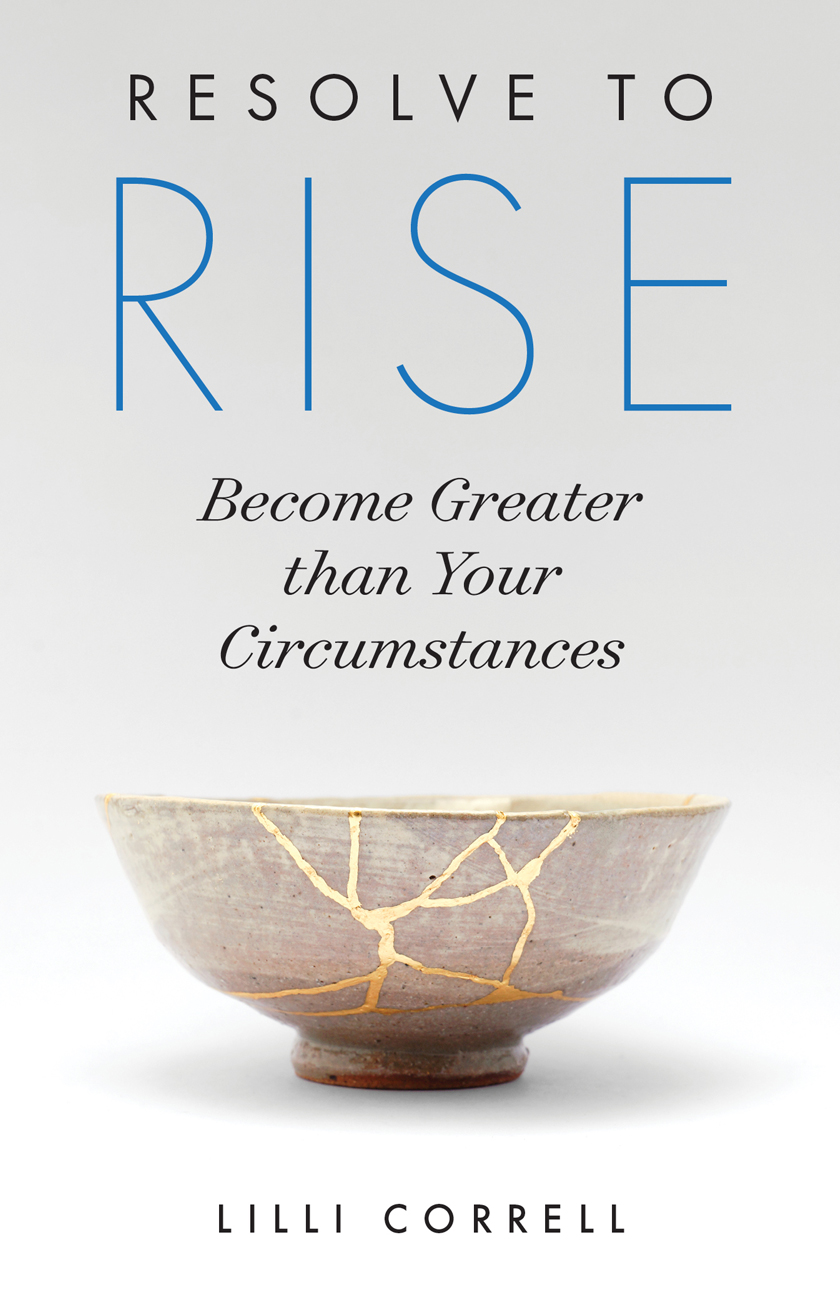
[0:00:42] BB: Suffering is a part of life and trauma is all too common. Although no one talks about it, leaving many feeling alone, ashamed and disqualified from living a good life. Some cultures believe suffering is actually a rite of passage, a way to rise. Discover the concrete steps that you can take to heal from the effects of abuse presented in the compassionate, gentle tone of someone who understands all too well, the courage and vulnerability it takes to heal. In Resolve to Rise, Lilli Correll investigates the fundamental reasons why it feels so hard to recover after deep suffering especially suffering caused by abuse. Offering compelling solutions to equip you in your efforts to move forward. Welcome into the Author Hour podcast. I’m your host Benjie Bach and today, I’m honored to be joined by Lilli Correll. She has just authored a new book titled Resolve to Rise: Become Greater than your Circumstances. Lilli, so glad to have you joining us here on Author Hour today.
[0:01:41] Lilli Correll: Thank you.
[0:01:42] BB: Lilli, for listeners who could be brand new to your work, can you just give us a little bit about yourself and your background, some context?
[0:01:51] Lilli Correll: Sure, when I was growing up, my mom had bipolar one with psychosis. Sometimes it was treated, often times it was untreated and as a result, my mom could go from being very happy and humorous to having a complete mental breakdown, screaming, yelling, throwing things. At one point actually, picking me up and throwing me. Obviously, that really imprinted itself into my psyche and also just into my belief about myself and who I was. I spent a lot of years I think, just believing that I wasn’t really going to ever live a good life, going to ever kind of amount up to my peers because I was damaged permanently. As I started to get help and healing and just had really great supportive people in my life, I started a new narrative about claiming my best life and being able to have that trauma and what it taught me but also have healing and really kind of redeem my life and as I was doing my work and sharing with other people, a lot of people would say to me, “Lilli, you’re so good at articulating what’s going on in your internal world, I wish I could do that. I wasn’t able to put that into words but you said it exactly how I’m experiencing it.” I started thinking, I think at some point, I need to either be an inspirational speaker or I need to write a book or something, to help people find the words for their internal experience so they can find also a journey forward to hope and fulfilment and freedom from that sense of being broken.
[0:03:44] BB: I love the passion behind this project. Clearly, you felt like, “Okay, this could be a good next step but what made right now the right time to actually take on a project like this and write a book?
[0:03:57] Lilli Correll: I have been keeping journals for pretty much my entire life.
[0:04:00] BB: Hey, me too.
[0:04:03] Lilli Correll: I don’t even have all of my journals but somehow I had 30 that I was able to collect together from all the years and sometimes, my journal entries are just kind of like writing down whatever’s going on, what I’m feeling and kind of working through it and sometimes I’ve had spiritual experiences and I kind of write down what that experience was like and so I was sharing it with one of my friends actually, in December of 2019. Just reading her an excerpt of something that I had been kind of processing and she said, “Lilli, that was so powerful, you need to write a book” For some reason, at that particular point, it felt like the time is now. I started collecting all of my journals together, piling them in January of 2020 and honestly, when the pandemic hit, I said to myself, “Oh my gosh, the time is now.” That’s kind of what inspired this moment now.
[0:04:59] BB: That’s amazing. Clearly, when you’re writing journals, some of that is – I mean, mainly, for yourself and your processing but then when it comes to a book, you now know other people are going to be looking in on this and you’re wanting to share so people can feel those emotions or put it into words but whose kind of that imagined reader in your mind as you’re putting together this book? Who is your ideal reader?
[0:05:23] Lilli Correll: I’ve always thought of people who are sitting in my spot, having gone through horrible trauma that should never have occurred for anyone and believing that they are irreparably damaged. That they cannot have joy, that they’ll never have healthy, fulfilling relationships that life will never be fulfilling for them and those are the people that I’m writing the book for. I want folks to read it and have a sense of hope and excitement about what the future can hold for them, instead of despair and fear.
[0:05:59] BB: That’s great. I think you do a great job of articulating that and giving hope throughout this book and so I want to dive in a little bit to the content here over the next few minutes. You write from a very unique perspective because you’re someone who has experienced early childhood trauma, you’re a behavioral health clinician and a certified clinical trauma provider. Take me back in your life story, you touched on it a little bit, the formative years were rocky, chaotic, violent, even at times between your parents. What do you remember most from that time?
[0:06:34] Lilli Correll: It’s funny. Part of how I dealt with and I think is probably very common with trauma was by dissociating and honestly, forgetting a lot of what happened. I have kind of a mixed bag. I mean, there’s things that I remember of violent episodes where my mom was enraged and as a child, I thought, it was my fault somehow or that I had caused it because I knew my job was to make sure that my mom was happy and she was okay. There was this sense that I had done something wrong. If things were kind of falling apart. Then there’s – I remember things like my silliness and in our family, it was very strict at my grandmother’s house, you could not laugh at the table, although I was –
[0:07:16] BB: Wow.
[0:07:17] Lilli Correll: Always violating that rule.
[0:07:19] BB: That’s a good rule to violate.
[0:07:21] Lilli Correll: Exactly. I would just start giggling and I just – you know, when giggling kind of takes on its own life and then the next thing you know, other people are laughing because it’s just a contagious – they don’t even know why they’re laughing. I sort of remember things like that too of just this silliness and playfulness that was just a part of who I am and who I was in my childhood. It’s kind of both end, it’s mixed up, the trauma and the good times.
[0:07:49] BB: Right. I read that your dad was like the first man to win custody of the kids in your state, is that right?
[0:07:55] Lilli Correll: That’s what he told us growing up. He said, “I guess it was a requirement” you were not going to get custody if you were a man, unless, the mom was heard to threaten the lives of the children. Honestly, it was one day when she actually did that, she threatened to kill us, the police officer chop us up into pieces and burry us in his potato patch which apparently, he had. There we had a law enforcement person witness my mom do exactly that. Yeah, he was the first man in the state of Massachusetts.
[0:08:31] BB: When you n ow being an adult, look back at all that your mom, like the trauma that she caused but now, obviously there’s this human side to her as well as you learned, right? What she was experiencing mentally going through. How do you think of that, how do you try to reconcile that internally?
[0:08:52] Lilli Correll: That’s really hard to reconcile. Honestly, I’m not angry with her anymore. She did pass away but she had her own trauma and honestly, when she was first diagnosed or when they first kind of discovered that there was just something not right going on with her from a mental health standpoint, it was just such an unpopular time to have mental illness and my grandparents I know were not supportive and kind of gave her this indication that she was being poisoned and that there was nothing wrong with her. When you have parents who wrap around you, support you, say, let’s get you the help that you need and if she had been able to get on medication and get the support she needed, I feel like it could have been a very different path that she took and I honestly, I feel sadness for her and just the very challenging life I think she led and that I think more than anything, that’s kind of where my heart goes is just to a point of sadness for her.
[0:09:52] BB: Yeah, I hear that. It’s so – I guess, wild might be the right word to say to me, that really, in our lifetime we’ve seen the talk around mental health and awareness there and medication and all that. Some of the taboo has fallen away which I’m so grateful for but it’s wild to me how long it’s taken for this to come to the forefront of conversation. Your story is unique in its specifics clearly, right? Every person has their unique story but also, something you touch on in this book is that our pain is very universal, right? Suffering is human, you say people are always – people are suffering. There’s an upside and a downside to that. How have you seen both at play?
[0:10:38] Lilli Correll: Well, first of all, I think that when we’re in pain, when we’re going through a difficult time, our tendency as human beings, I’ll just speak for myself is that we compare. If I’m not doing well and other people are doing well, then I feel alone in my pain so I think that pain can kind of capitalize on itself and then it becomes suffering. Painful things happen to all of us but as we feel more alone and alienated in the pain and suffering, it just kind of gets worse and worse. I think what can come out of that is that when we start sharing openly about what’s going on with us, other people realize that they can get through whatever difficulty they’re going through. Honestly, sometimes there’s just validation. I share a story in my book about this woman who had called in and she had tragically hit her two-year-old niece with her car, it was absolutely consuming her for years and years and years. She just could not forgive herself and I thought I was sharing all kinds of great wisdom and all my clinical knowledge and all these great stuff with her, but what she took away was the moment in the conversation where I decided to share with her that I too had hit a pedestrian. I wasn’t paying attention, I was looking down to grab crackers for my two-year-old who is throwing a fit and when I came up and thank God, I was only going like five to 10 miles an hour, I was hitting this 18-year-old girl who literally came up on my windshield and dented it. I left that call thinking like you know, again, I had shared all this wisdom but what she told me the next session was, she jumped off the phone and she ran to her mom and she said, “Mom, you're not going to believe it, my counselor hit a person” In that instance, it was just kind of a reminder that my suffering could be peace and hope for someone else if I shared it.
[0:12:38] BB: That’s a fantastic example of it. When did you realize or have those first, I guess, moments where like, if I share the experiences I’ve been through, it allows others to do the same? Because I think it’s so interesting that we all experience pain and all these things that we go through that’s – it unites us but it remains so hard to talk about.
[0:13:03] Lilli Correll: My father was in a 12-step program when I was very young so I was about 11 years old and he was taking me to these Palatine groups and I was pretending. I wasn’t sharing openly. Then meanwhile, I’m leaving those meetings and I’m going and drinking and doing whatever other shenanigans I was doing at the time because I felt so ashamed and so I was in this space of reality of my suffering is unique and I’m a horrible person and I’m damaged beyond repair. I think it was in hearing other people share vulnerable things and then starting to share my own vulnerability that I started to realize that my pain and suffering was not as unique as I thought it was. If I shared it openly with people, it opened up this opportunity where I didn’t have to be alone. I also became more and more aware of my own humanity and that some of those feelings actually had nothing at all necessarily to do with trauma and had everything to do with just being a human being and having fears and joys and shame and embarrassment and all those things that are human emotions that I had convinced myself was part of the irreparable damage.
[0:14:21] BB: Yup, hearing other people share definitely invites you. Maybe not in the moment but eventually, you had the example over time so that’s powerful, that’s important. Trauma as a word is – I would say, it’s growing in the lexicon but may still sort of be this intimidating or foreign word to some. What’s like a good working definition for us of trauma and how would someone maybe know if they’ve experienced it like one thing, I would say for myself is early on, that word made me be like, well, trauma sounds so heavy. I don’t know if I’ve experienced it, you start comparing other people, things they’ve gone through. What’s a good working definition and how do we know maybe if we’ve experienced it?
[0:15:05] Lilli Correll: I’m going to start with one of the last words that you said which was comparing. I think that we have to get away from comparing because trauma really is – it’s more individual than I think we might actually perceive. Trauma, a working definition. I think trauma has less to do with the incident that you experience and more to do with your physiological response to what happens and your psychological response, right? If you are a terrified that your life is at risk or you are scared that someone else’s life is at risk, you have experienced trauma. I mean, it could be that you’re driving home from school and you witnessed a fatality accident or you drive and that your adrenalin rushes and you are worked up. Then you noticed that in future weeks whenever you drive by that spot or whenever you see similar circumstances your body tenses up and you start breathing kind of heavy and you feel anxious. It can be that simple and it’s really a personal experience for how you kind of digest if you will that scenario that you went through.
[0:16:14] BB: That does make it hyper personal right? Because two people could see the same thing and definitely not be triggered in the same way.
[0:16:22] Lilli Correll: Correct.
[0:16:23] BB: What are some ways we might see trauma playing itself out in our mental and our physical experience?
[0:16:29] Lilli Correll: It’s the symptoms or the experiences are so wide and varied but just to give kind of a general sense, you know we think of fight or flight when we think of like something happens and you feel like your adrenalin rushing and your body tenses up and you kind of stop thinking with your brain in terms of being able to process and come up with good strategies or whatever you use what some professional reference as kind of the basement brain or the downstairs brain, where you are in kind of that fight or flight. Trauma when you have a full diagnosis of post-traumatic stress disorder or you are having symptoms of that, you might have difficulty sleeping at night, you might have nightmares. You might have difficulty eating. I know for me I find that if I’m in that fight or flight mode, I am not hungry, I have no appetite whatsoever. Some people when they get heightened stress responses, they eat all kinds of food.
[0:17:28] BB: That’s my dad, not just to call him out but stress eating definitely was in our home.
[0:17:33] Lilli Correll: Yeah, so it does show up in different ways but a lot of times you see issues with eating, with sleeping, with again, your reactivity to things like I think I spoke too in the book just about how there were certain emails I will get and when those emails come through they’re connected to so many things that I don’t have control over and my anxiety goes through the roof and it seems like to anybody else, it is just an email and maybe annoying, maybe an annoying email. For me, it’s connected to the safety issue for me and so this is fight or flight and my appetite goes and I am kind of tunnel vision and I am not able to like I said, kind of process things as effectively, so there’s a lot of different types of ways it can manifest but I think a lot of people have those types of experiences. Oh, and dissociation, let’s not forget that.
[0:18:24] BB: Are there any effects that I guess surprised you when you were first learning about them? Because when I was reading especially some of the physical experiences, sometimes we – you know there is the idea of like your body keeping the score and all that but that’s honestly still pretty new and sometimes we experience things that were like, “Oh that is tied to this” was there any finding where you’re like, “Wow, that was a little surprising” where people wouldn’t naturally think this?
[0:18:52] Lilli Correll: This is going to be awful but you know what? Hey, this is about trauma so already there but no, I had some situations that were really distressing and I literally felt like I was clearing out my entire bowel. I was in the bathroom like 17 times. I had no idea it was connected to trauma and so when I was reading, the body keeps score and studying different perspectives on the impacts of trauma. I was learning the physiological ways that our trauma can show up or triggers to trauma. That kind of surprised – I mean it doesn’t surprised me when I think about it, it’s like, “Well yeah, because it can upset your stomach but I guess I just didn’t realize how common that was. It is kind of the last thing you hear people do before they go.
[0:19:35] BB: Yeah, no that is shocking to me too but it does, like you are saying it makes a whole lot of sense.
[0:19:40] Lilli Correll: Then that it changes your brain in some way so that it’s hard to really embrace peace and excitement in the moment because there is a tendency to not be present in the moment because you are in this fight of flight kind of self-protective kind of space and again, maybe not surprising as much as validating.
[0:20:02] BB: Yep, validation is a good work for it and I would say this is like maybe we’re being personal anyway so let’s just go there but there’s a lot of the therapy work that I am learning about myself right now is it’s very hard to be present when you’re always maybe keeping the score, is the right language for it but always externally looking for signs of if you’re okay, if you’re safe, if you’re doing good enough, you know? You have this paragraph in your book that I thought was extremely good. I won’t read the whole thing but I will read a chunk here. You say, “Growing up is a savior” I believed that savior in quotations, “I believed that the world was an unsafe place unless I helped calm and address other’s needs. My needs were not a priority. Somewhere along the way, I stopped connecting to and listening to what I needed.” That is a big deal, mine is more feelings. I would love to hear you talk about your needs and maybe what did it look like to rediscover that or start with where you were in that savior complex in a sense?
[0:21:10] Lilli Correll: Absolutely, that’s been a really, really big part of my journey because if I could calm my mom, everybody was safe literally so it was a life or death kind of experience for me in that environment and because the body kind of hold onto that trauma response, then when mom is not there and the situation is not there that doesn’t mean that those responses go away. It was showing up in that I was constantly surveying kind of what was going on with other people around me and if people were getting agitated my tendency was to try to figure out how to calm the agitation. In some ways, it seemed like I almost had a superhero power because I was really connected and really in tune with what was going on with other people and would pick up on their energy and sometimes even know things about them because I was so attentively paying attention to what was going on with them and what I was missing out on, which I think that paragraph is really speaking to is being connected to myself and having a sense of what I was needing and what was going on for me so that I could take care of myself. Then maybe be a support to that other person or maybe not be around that person if they were dangerous because you know a person without that traumatic experience might be like peace out, you know? I’m gone because you’re freaking out but with my background and experience, my job was to engage the very thing I was most frightened of to calm things down for everyone and so having that grandiose sense of myself and my abilities, it might put me in danger repeatedly. That’s been a really important part of my journey of slowing down my nervous system, of kind of reconnecting.
[0:23:08] BB: The hope I hear in that is because you’ve done the work now on this side, I mean there has to be some really key benefits that you get when you are working with others now because you still have that ability to read the room in a sense, right? To feel what other people are feeling but now you also know where you actually stand. You know your needs, so obviously it is never going to be done perfectly but do you feel like it’s become a bit more of a helpful superpower in a sense?
[0:23:37] Lilli Correll: Yes, I mean I definitely think that has been extremely helpful. I think it’s been even more helpful just turning it inward and being aware of I’m feeling anxious or I feel afraid, which seems really basic and yet was very monumental for me to just be hatched.
[0:23:55] BB: I got to say it does not sound basic to me, maybe because of the work I’m doing but I often don’t know how I feel and I think there is a lot of people, if you don’t know what you feel you don’t talk about it, right? There’s probably a lot of people out there that are in that space where they are going, “I don’t know how I feel but I don’t talk about it because I don’t know how I feel, so what would I even talk about?”
[0:24:14] Lilli Correll: It’s super hard to take care of your needs when you don’t know what is triggering you or upsetting you or causing distress. When you’re not connected to that, when you are not aware that this happened and now I feel anxious, then you don’t know how to navigate things differently so that you don’t have to experience that degree of anxiety. I would say exceedingly informative when you can start to connect and for me, that’s been about engaging. Like you said, the body keeps score. Engaging the body that’s why I have a real issue with talk therapy because you go in and you talk-talk-talk-talk about it but it’s if you’re not engaging the body and the work as in plugging in quieting, listening, feeling how your body tenses up, those types of things, it is really difficult to make significant change and so what happens is as a clinician, which again you said earlier, I’m a clinician. I am also a client, right? As a clinician, I am kind of in the one up in some ways and the client can sometimes interpret that as their failure and proof that they are irreparably damaged instead of maybe the therapist is not the right therapist for you to take you on this journey and to involve you wholly in it.
[0:25:38] BB: Yeah, that conversation or thinking through like who is right to take me on this journey can be a hard process because it is already a big leap to put yourself out there and go to some form of therapy and then to make sure you are connecting with the right person for you, the right environment is very critical but taking that first step is obviously very important and then trying to figure out your needs moving forward and being willing to learn as much as you can from someone and then go to the next context that continues your evolution. I love the hope that you provide throughout this book, the idea from heartache and trauma, good can still be found. You invite people to take small steps forward. What has that looked like for patients that you’ve worked with, maybe some really specific small steps that you’ve identified to get people out of their old habits?
[0:26:31] Lilli Correll: I think that a lot of times clients come in again in their brokenness and despair and they haven’t taken stock of what is beautiful and resilient and magnificent about them in the midst of it because when we take inventory of ourselves, often times we’re basically making a list of all of the deficits and so what I often find early on is how in awe I am of the clients who come and seek counsel from me, at their strength, their courage and sometimes like you hear their story and you’re like, “How are you sitting here?” “How do you retain a job? How are you having relationships with people? Wow” and I think that part of this journey, an important part of it is really to take stock of those strengths and that brilliance that resides in every single person that has gotten you to where you are. Yes, do you have a distance journey ahead of you? Of course you do. Is there a lot broken that needs to be repaired? A hundred percent but to pick up the broken pieces, there has to be a part of you that’s whole. Honestly, I think that is one of the very first steps is including in your inventory what is beautiful and resilient and strong and building out of that.
[0:28:00] BB: Yeah, that’s so key. I really think people as they read Resolve to Rise, they are going to feel that and hopefully they will get in touch with those parts that are good and beautiful and then obviously begin that process of saying, “Okay, I’m not exactly where I want to be but you know, the best days are in front of us.” You give away so many practical things in this book as well so you’re sharing journal entries but you are also speaking from this clinician side. You are giving away practical tools and there is no way we could cover all of that in an interview like this but for those that are going to pick up the book and they’re going to read it, when they put it down what are you hoping maybe a couple of the main takeaways are and then what are you hoping that they feel?
[0:28:44] Lilli Correll: I hope they feel empowered and strong within themselves, a sense of hope and encouragement. That is probably the most honestly, the most important thing to take away from this book is that I am not damaged beyond repair and I’m going to be building out practical tools because I think like the healthcare system it’s very difficult to navigate. How would you know what an evidence based practice is? What is that even mean to be an evidence based practice? How do you engage the body and therapy, what does that look like? What can I expect? Who are therapist that are using those approaches and not? My hope is that the book is just foundational and building that hope and starting to give you some practical tools, I’m glad that you read that in it. My hope is to continue to build out those tools to really equip people to claim their best selves.
[0:29:33] BB: Lilli, for people that want to connect with you after they check out the book, where are other places people can find you and reach out?
[0:29:40] Lilli Correll: Sure, I am launching a website, www.resolvetorise.com. There will be a way to connect with me through that website, so I think that would be the best approach.
[0:29:52] BB: Great, I have to say it’s been an absolute honor to discuss the book with you. Great work, thank you so much for taking time today to speak with us on Author Hour and I know Resolve to Rise is going to be a great resource for so many.
[0:30:05] Lilli Correll: Thank you.
[0:30:08] BB: Thanks for joining us for this episode of Author Hour. You can find, Resolve to Rise: Become greater than your circumstances, on Amazon. A transcript of this episode as well as our previous episodes is available at authorhour.co. For more Author Hour, subscribe to this podcast on your favorite subscription service. Thanks for joining us, we’ll see you next time. Same place, different author.
Want to Write Your Own Book?
Scribe has helped over 2,000 authors turn their expertise into published books.
Schedule a Free Consult