Fred Joyal: Episode 786
Read the full transcript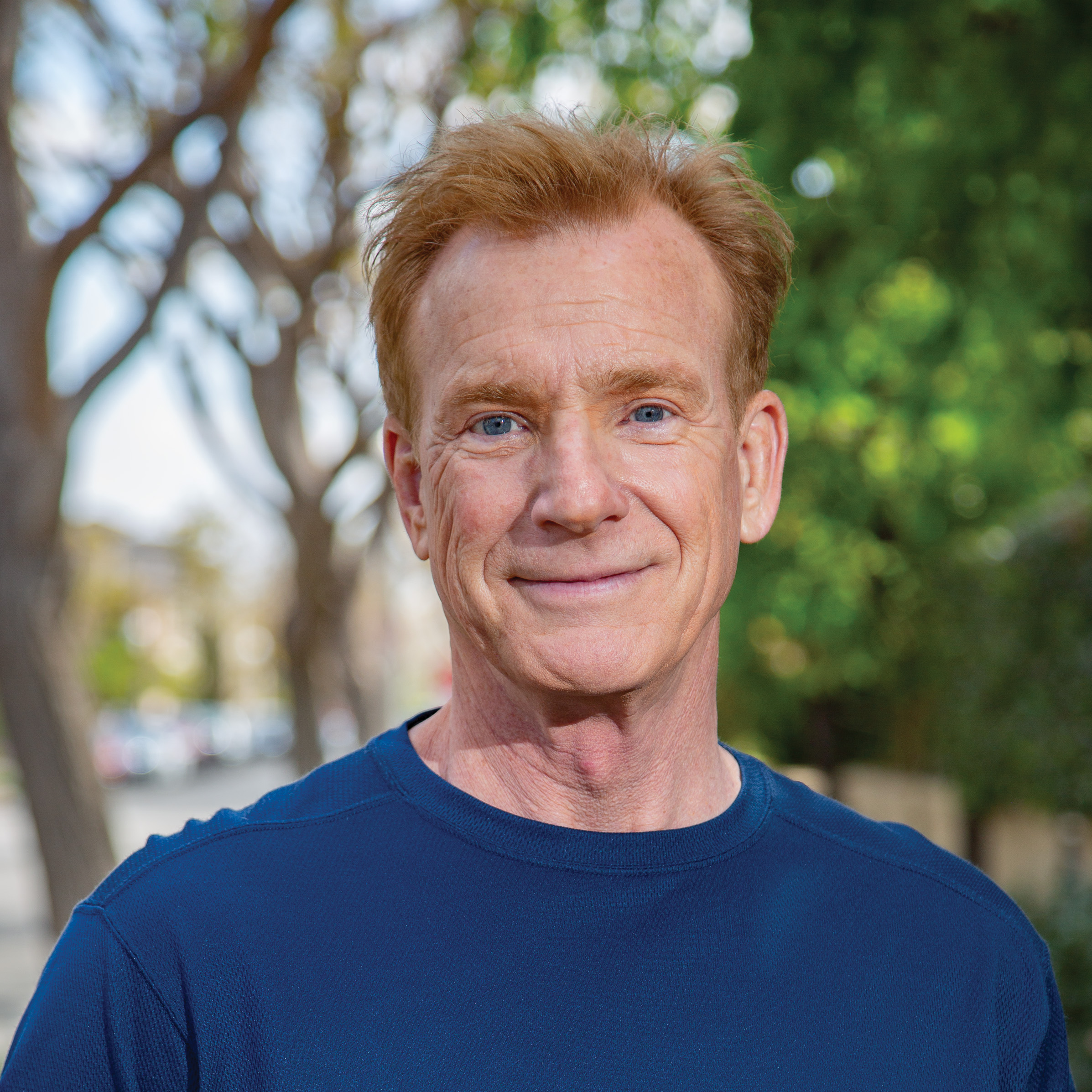
Fred Joyal
Fred Joyal is an author, speaker, entrepreneur, and business advisor. Along with a lucrative career in advertising and marketing, he co-founded the most successful dentist referral service in the country, 1-800-DENTIST. He has written two books on marketing, dabbled in stand-up and improv comedy, acted in bad movies and excellent TV commercials, and visited over forty-four countries around the world.
He has an honorary Doctor of Arts degree from the University of Rhode Island, perhaps because of his generous donations. He once beat Sir Richard Branson in chess and was also a question on Jeopardy!. He is an avid cyclist, a below-average tennis player, and an even worse golfer.
📚 Books by Fred Joyal

Transcript
[0:00:01] Host: Becoming super bold is just you've expanded your comfort zone further and further and further out so that when you're chasing your dreams, you're looking at the most fulfilling life that you could possibly have, you can get there. You take action. You don't hesitate.
[0:00:24] Fred Joyal: Boldness is a superpower. Bold individuals tend to seize life in remarkable and almost unbelievable ways. They succeed in business, in their careers, in love, and they have a great time doing it. A bold person will walk up to a supermodel and ask them to dance, stand in front of an audience and tell jokes. Bold people start companies, they run for president. What surprises most people is that boldness can be taught. Fred Joyle started as an extremely shy person, too timid even to make a phone call. And he transformed himself into someone who's done stand-up and improv comedy, spoken to audiences of 5,000 people or more, met dozens of celebrities, and just by being bold, he found love, joy, passion, and success. And he can teach you how in his new book, Super Bold. The book gives you a systematic step-by-step approach that could take you to a surprising level of boldness in as little as 90 days. It's all possible and it's possible faster than you think. Hey listeners, my name is Drew Applebaum and I'm excited to be here today with Fred Joyle, author of Super Bold, From Underconfident to Charismatic in 90 Days. Fred, thank you for joining. Welcome to the Author Hour podcast.
[0:01:47] Host: Thank you very much. I'm really excited to get the book out and to talk about it to people.
[0:01:53] Fred Joyal: Well, we're going to dig into the book today for sure. But why don't you kick us off by giving us a brief rundown of your professional background.
[0:02:01] Host: So I started in the advertising business many years ago as a copywriter and then eventually started a business called 1-800-DENTIST, which is a referral service for dentists. and it's still operating. I sold it about five years ago, but ran it for about 30 years and it became a significant business. I tallied it up and figured out we generated over a billion dollars of revenue under my leadership. So that's part of my background, but really I became a writer. I started to write books. I wrote the advertising for the business for many years. A lot of the commercials, I acted in the commercials and wrote two marketing books for the dental industry. But then this has been nagging at me, this book, the concept for this book and all the material in this book and the systems that are developed and exercises in this book. Emerged from years and years of working in the business world and working in life, living an interesting and adventurous life with lots of twists and turns in it.
[0:03:06] Fred Joyal: So why was now the time to share these stories? Was it just simply, as you mentioned, you've heard enough and you want to spread the word? Or was there any other inspiration out there? Was there an aha moment?
[0:03:19] Host: I had been working on this material for a while and I had done a couple of lectures with some of the concepts. And actually it germinated with a group of high school students. A good friend of mine does a summer session, a five day session with high school students, teaching them all sorts of life skills. And I went in and did a lecture on cultivating the superpower of boldness. And they were so responsive to it. that I ended up promising them that I would have the book out in the next year. And of course, the next year is 2020 as it happens. And so I had a little more time to work on it. And so that was really the propellant that got me going and said, all right, I've got to get this book at people's hands. Because they were just so excited about the content and the systems that I had put out there. And I said, I'm really going to make this available.
[0:04:18] Fred Joyal: So when you decided, yes, you're going to write the book, you're going to sit down, put pen to paper.
[0:04:23] Host: A lot of authors will have the idea of the book in their head, but during the writing process, you'll either pivot or you'll come to some major breakthroughs in learning on the subject.
[0:04:33] Fred Joyal: Do you have any of these pivots or breakthroughs or learnings during your writing journey?
[0:04:38] Host: I'm pretty good at having gotten two books done and done a tremendous amount of advertising, writing. I'm good at the structure of books and creating those concepts and phrases and things that really communicate to people. And so I knew what I wanted in the book. I knew that I wanted to lay out this systematic approach and I knew I had to create the exercises. Of course, I did eventually bring in an editor and she just did this phenomenal job of just tightening everything up and eliminating some of the repetitiveness and I just kept reading it going, yes, yes, that's great. That's better. That's better. So it's always great to have somebody else put a different set of eyes on it but i really knew where i was going i mean i had really built up it really was too long i had just way more content that i needed. I will get down as much as i could and then she came in and just made it really flowing really concise so. It was it was more of a steady process rather than like, you know, hitting a wall and going, what am I doing here? I knew really knew what I wanted to get across. And it helps to lecture about the content first, because you see what resonates and you're developing those sentences and thoughts and concepts and key phrases that trigger people's reaction. So that was a lot of the foundation for it was getting to really speak it before I wrote it.
[0:06:08] Fred Joyal: Now, in your mind, when you started the book and you gave lectures around it, who were you writing this book for? Who is the reader you had in mind who should pick this book up?
[0:06:19] Host: A remarkably broad audience. It certainly skews a little bit younger in terms of people who are trying to learn how to master their life. But it's really for anyone who has hesitated feels underconfident in certain situations, misses out on opportunities because they lack the confidence, not all the time, but when it matters most, when it's something critical, something important for them, and they've missed out in life. And that's a lot of people and it's a lot of people at every age. Certainly people in high school, in college, as they graduate from colleges, they begin careers and they work in their careers. But then also starting businesses, looking for relationships, long-term relationships in their lives, beginning the second chapter of their life or the second phase of their life when they're enjoying their midlife crisis, let's say. So it's anybody who's at a point in their life where they go, I need to be bolder. I need to act with, I want to be able to act confidently in any situation. I don't want to miss opportunities. I don't want to hesitate. I want to know how to do this. And cause I've seen, they've seen people who act boldly and they're, they go like, why are they doing that? How are they doing it? Why are they not nervous or embarrassed or hesitant or fearful? full of rejection or something why are they like that because that's what sparked it for me is like I would see people like that and say how do they behave like this and because I don't behave like this I grew up incredibly shy and underconfident and I just had to work at it and work at it and miss opportunities over and over and over again till I was so angry I figured out ways to fix it So it's really anybody who's in that situation personally in their life, who want to chase their dreams. People give up on their dreams not because it's too difficult, it's because they missed opportunities and they couldn't figure out how to summon that confidence, that boldness, that fearlessness to really chase their dreams.
[0:08:39] Fred Joyal: Let's just set the foundation here. The book is called Super Bold and you talk to the book how boldness is a superpower. So just again, set the foundation for what does boldness mean? What does super bold mean?
[0:08:54] Host: Boldness is not holding yourself back, not being the one to stop yourself. What happens is most of us stop ourselves. We can come up with the worst case scenario for doing anything that feels risky or daring or out of our comfort zone. And that's our guiding principle. Oh, the worst case scenario. Whereas a bold person doesn't have that. They just act. They boldly go where other people wouldn't. They chase their dreams and they have much more fulfilling lives. And so this begins a process in your life of saying, I want to be bolder. I want to be bold in situations that matter. And I want to be able to summon it because a lot of times people have had these moments in their life where they did step up. They asked that woman to dance or they asked for a promotion or something. They did one thing and their life changed. It was a pivotal moment in their life. But then they said, I don't know why I did that. I don't know how I did that. How can I do that consistently? And so what I've developed is a way to build this boldness muscle in you so that you can call on it. Whenever you want wherever you want no matter how far out of your comfort zone you think that is and that's what super boldness is when you're super bold you can walk up to anybody meet anybody you'll try anything you're not you're not impaired. by rejection or embarrassment or any of those things that stop most people. You're not running the wrong program in your head that's telling you to stop, that's telling you what could go wrong. You're just going, I'm going to figure out how I'm going to walk right into this situation. I always tell people, you know, that dying of embarrassment is not a medical diagnosis. It's actually a choice to feel embarrassed. You don't have to feel embarrassed in any situation. You do feel it because you've programmed yourself into believing that you should be embarrassed, but you don't have to. In the same situation, you could go, well, that's kind of funny. It entertained everybody else. that or I'm a flawed, typical human being and laugh it off. So becoming super bold is just you've expanded your comfort zone further and further and further out so that when you're chasing your dreams, you're looking at the most fulfilling life that you could possibly have. You can get there. You take action. You don't hesitate. It's a long answer, but I'm very passionate about it because I see the difference it makes in people's lives.
[0:11:51] Fred Joyal: Now, is there a difference between being bold and confidence?
[0:11:58] Host: Yes, there's a very specific difference. Somebody who's confident feels a certain way. Somebody who's bold acts. Boldness is confidence in action. They don't just feel confident. They do things. They take risks. They take chances. They put themselves out there and make things happen. And when that happens, they've moved into boldness and you see people like that. And actually, when you become that comfortable being bold, people will start to perceive you as charismatic. That's the final step. And I want people to see that's why the subtitle is about going from under confident to charismatic because charismatic is just how other people perceive you and they say wow this person is just really boldly pursuing their dreams in a way that everyone feels engaged in it. I'm not talking this isn't about taking advantage people and and abusing situations and manipulating people or anything like that. That's not what I'm training people to do. I want them to impact other people and feel the power of that, the satisfaction of that. I want them to be bold enough to make a difference in the world. Because that's what we need. That's who makes a difference in the world, our bold people. And we need a heck of a lot more of those.
[0:13:38] Fred Joyal: Now, are there actual cons to boldness or by being super bold? Because it sounds like... very win-win.
[0:13:47] Host: I have not experienced any. You know, you can certainly, in terms of let's say, base jumping or something like that, in terms of physical things, there's certain amounts of risk in being bold. But socially, there really isn't. Because a bold person also knows how to apologize. Boldness lets you be comfortable saying, I'm sorry, I was wrong. I overstepped here. I hope you can forgive me. My intentions were good, but I'm very sorry if that upset you or offended you. I mean, apologize actually takes a little courage. You're admitting you're wrong. Bold people are very comfortable admitting they're wrong. They know they're bumbling upwards. They're using failure as a stairway rather than a barrier. Unless you're actually jumping off a cliff and hoping your parachute opens, the rest of boldness and being super bold is all upside.
[0:14:52] Fred Joyal: Now, you actually spoke about it a little earlier. I want to bring it back up. You said that there was a time when you weren't as bold as you are now, and you sort of taught yourself to become bolder. But along the way, you missed out on certain things. So can you talk about a little bit more about what you were like then, how you are now, and just how you got here?
[0:15:15] Host: I mean, I was incredibly shy growing up. I couldn't ask a girl to dance. I couldn't call them on the phone. I couldn't ask for a promotion in a job. I did all of these things in a very hesitant manner. And I would see bold people acting and going like, why are they like this? You know, my first college roommate was like this. He was just incredibly bold and I just, I couldn't figure out where it was coming from in him and I envied it, but I couldn't emulate it. But gradually I learned and I watched and I said, okay, so he's just, he's not dealing with rejection like a normal person. Whereas I, you know, I actually had an opportunity at this business I was working at a machine shop and I was just working. I was just doing it to make some cash. I was between colleges and the owner saw some potential in me. So he said, come on in. I want you to start calling potential clients here. Here's a desk. Here's a phone. Call them and see if you can get somebody on the phone that wants to talk about our products. I couldn't dial the phone. Not once. So back to the machine shop floor with me. And so but it was things like that and you know I missed a couple of really what I thought were really good potential relationships because I wouldn't speak up. I was too hesitant and I couldn't even read the situation because I was so underconfident. But gradually i had these moments of boldness and they worked for me and i just started pushing myself and i found ways to train myself studying improv comedy was one of them that taught me. to just relax, to find a way to relax and use my energy to act in a confident and then an old way. And what happens, and it happened to me as it will happen to anyone, is when you shift to this, you actually, from a biochemical standpoint, you create neural pathways. We have these neural pathways that are hesitant, underconfident neural pathways in our brain. that say danger danger danger about everything when you start to reinforce positive action with bold action the brain says oh there's nothing to fear here this is not danger because the problem of being a human being is we chemically process danger whether it's physical actual danger or social danger completely the same way We squirt the same chemicals into our body. We sweat, we get nervous, our blood pressure goes up, our tongue gets tied, our memory gets worse, our cognitive skills are impaired. All of this happens, we stop breathing even. All of this because this is what the body knows how to do when it's in danger. Basically, it's hiding and saying, don't let the saber-toothed tiger notice me and eat me. But it's useless in the real world, in social situations, in situations where you're out there trying to improve your life, trying to meet people, trying to make a difference, trying to have an impact, trying to take risks.
[0:18:39] Fred Joyal: Now you talk about the pride method in the book, which is a series of steps you can execute to act boldly, which might give us an overview of what the pride method is. And is this something you actually created yourself?
[0:18:54] Host: Yes, I was trying to find a way to figure out what the steps were to act boldly in any situation. What worked for me and how did I start to make it consistent? And so I broke it down into these steps and it turns out to be these five steps that the acronym is PRIDE. And the first step is preparation. Many times we go into social situations, totally unprepared. We don't prepare what we're going to say. We don't prepare how we're going to behave, you know, any of that stuff. So that's key to defeating your underconfidence is to prepare yourself. Prepare the words you're going to say. If you're going to meet somebody, what are you going to say? If you're going to meet somebody in a Starbucks line who's right in front of you, prepare what you're going to say ahead of time. Don't just go, geez, I hope I think of something. And then the second step, the R, is relaxing. And what a lot of people don't know is it's very easy to relax yourself if you focus on it. And this two or three key steps that I talk about in the book Some of them involve basic breathing techniques. Some of them are shifting your physiology, shifting your body, and you are able to relax yourself. A lot of people say, you need to just relax. It's like, okay, how would I do that? I tell you how, because you can. And then the I, then pride, the third step is insight, and that you need to have insights about your bold action, the thing that you feel is risky. And the biggest insight that people can come away with is 99% of the time nothing bad will happen it's all in your head and many many times you will succeed. and achieve much more than you thought you could. You'll get beyond, way beyond where you thought. And if you didn't, you learned something. You absorbed something as information to get better and improve your confidence. The D in pride, the fourth step, is dosage. Controlling the dosage of the experience. A lot of people go, I need to be bold or I need to be more confident. So they thrust themselves into situations that are way beyond what their nervous system is geared to handle. So you want to build up your strength and tolerance. If you were trying to lift weights, you wouldn't try to lift 500, bench press 500 pounds right out of the gate because it would just fall on your neck and kill you. So just like that, you're going to control the dosage of the experience to build your boldness muscle. And the exercises in the book are designed to do that, to build your boldness muscle step by step by step. And the E stands for everyday action. The key to achieving almost anything is to work at it every day to do something because it does something very powerful to your brain when you work on something on a daily basis, even if it's for five minutes or two minutes. because the brain goes, oh, this is what we do. This is who we are rather than being a weekend warrior or a dabbler. We are somebody who does this. And so when you work on your boldness every day, it naturally improves. And the brain says, this is who we are. And so the pride method then is taken into the five levels of exercises in the book. and you work your way up using these five steps till they become almost automatic for you when you're in a situation, but you may encounter situations like, oh wow, I'm feeling pretty anxious about this. I need to get ready for this. I'm going to ask for a raise. And so, okay, how do I prepare? How do I relax? What's the insight I want to have here? What's the dosage? How do I prepare every day? for this experience, for this situation where I go in there. I may spend two, three weeks making sure that my boss knows everything that I'm doing that impacts the business, or I may be working every day on that speech that I want to say that presents to my boss why she should give me a raise. The book is about taking action too, just like boldness is confidence in action. The book is taking action. It's not something you read. It's something you're going to do to change your life.
[0:23:38] Fred Joyal: I do want to mention that in the book, you do have journal sections where you ask readers to take notes and ask themselves questions. And then even in the back of the book, you have a lot of examples of
[0:23:53] Host: potential answers for people who are digging deep, but just can't think of anything.
[0:23:58] Fred Joyal: And I know you have a accompanying website as well. Can you talk about what resources are available on the website?
[0:24:06] Host: Yeah. So the website is my name, FredJoyle.com. And because a lot of people are going to read it on a digital form on Kindle or some format like that, or they're going to listen to the audio book. And so they're not going to have the physical material. So I've made it so that they can go to my website and download a PDF of all the exercises and a PDF of the journal layout. And I highly recommend, I almost insist, that people get a physical journal to work with with the book because there are things that they're going to do all the way through that I ask them, you know, like list the 10 people you would really like to meet that you could possibly meet and also list the 10 people you'd like to meet that's like it's way out there. I'm not necessarily going to be able to meet the Queen of England or the Pope or Richard Branson or somebody like that. But I want that list too. I want them to think about it's not impossible, it's just further out there. But I want them to start thinking about what's possible and really put it in their journal. And then also analyze some of the moments where they were bold in their life. some of the moments that they really felt terrible. They really embarrassed themselves, what I call cringe-worthy moments. Just write them down and then figure out how serious they really were. And then I want them, every time they do an exercise, to write down what happened. Did it work? Did you achieve something or did you embarrass yourself or it felt like you embarrassed yourself? or you could have done it differently, write all that down. And there's something very powerful about writing, not just keyboards. They've actually done some great research on showing that when you write on a keyboard, you can actually write faster and get more information down. But when you write it with your hand, you retain it three times more, which is kind of fascinating. But we're human beings. We have all of these quirks, right? But when you keep the journal, you will be able to see your progress. And it's also part of everyday action. It's like, I got this journal and I didn't do my boldness exercise today. I better do it. Maybe I just got to go down to a local 7-Eleven and introduce myself to somebody while I'm in line or something like that because I got to get my exercise in for the day. You know, that journal is there to keep them in action. And then also to reflect on, you know, a year from now, you know, I'm saying in 90 days, you can become Super Bowl. If you work diligently every day at these exercises, you will transform yourself. But you can go at whatever speed you want and get to whatever level you want of boldness. That's really up to you. How fast that happens is up to you. But it could certainly be done in 90 days. You will astound yourself at how fast you could do it. But you want this journal to look back and go and really laugh and go, I remember when it was I couldn't make eye contact. And now it's like every conversation I have, I just make eye contact with everybody.
[0:27:29] Fred Joyal: Well, Fred, we just touched on the surface of the book here, but I want to say that just writing this book, just helping folks out, leave a bolder and more fulfilling life. It's no small feat. So congratulations on having your book published.
[0:27:43] Host: Thank you so much. I mean, I feel great about it and I'm eager to get it out there and actually to do workshops on it and stuff like that. So, so the people can really accelerate the experience and fuse this ability into their lives.
[0:27:59] Fred Joyal: This has been a pleasure, and I'm excited for people to check out the book. Everyone, the book is called Super Bold, and you can find it on Amazon. Fred, besides checking out the book and your website, is there anywhere else where people can connect with you?
[0:28:13] Host: There are going to be workshops that I do all around the country that will be all-day workshops on developing your super boldness, and it's an accelerated program. So check that out on the website as well. and you can also link up on the website with me and have a 30 minute conversation where maybe I can help you or maybe I can point you in the right direction and maybe there's individual coaching I could do for you or maybe just get you into the workshop when I know I'm going to be in your area. So that's available on the website too. You can actually book time to chat with me and tell me where boldness has been hanging you up or tell me what's great. Eventually, I have an Instagram page and a Facebook page and I want people to do exercises and post them and say, I did this and I'm like, I can't believe it. I smiled at five people today and every one of them smiled back and they're all complete strangers or something like that or I smiled at five people today and nobody smiled back and I don't care. I smiled at the sixth person just like the last five. I want people to give me that kind of video feedback as well about their experience doing the exercises and building their boldness. It's going to be a boldness community. I want to make the world a bolder place because that's how we're going to make a difference in the world and have more satisfying, more fulfilling lives.
[0:29:49] Fred Joyal: Well Fred, thank you so much for giving us some of your time today.
[0:29:52] Host: I just want to say best of luck with your new book. Thank you so much. It's been a pleasure.
[0:29:58] Fred Joyal: Thanks for joining us for this episode of Author Hour. You can get Fred Joyle's new book, Super Bold, on Amazon. Also, you can find a transcript of this episode and all our other episodes on our website at AuthorHour.co. For more Author Hour, subscribe to this podcast and your favorite subscription service. Thank you for joining us. We'll see you next time. Same place, different author.
Want to Write Your Own Book?
Scribe has helped over 2,000 authors turn their expertise into published books.
Schedule a Free Consult