Jack Murray: Episode 794
Read the full transcript
Jack Murray
Jack Murray is an entrepreneur, story consultant, speaker, and author. As the CEO and founder of both MediaHQ—a media contacts database and press release distribution tool—and the storytelling agency All Good Tales, Jack helps companies define their storytelling strategies, train their staff as storytellers, and share their stories through innovative technology.
A recognized expert, Jack has worked with hundreds of brands, organizations, and teams over a twenty-five-year career. He advises leadership, communications, and marketing teams through story training courses, story strategy workshops, and keynote talks.
Jack lives in Dublin with his wife, Alison; his daughters, Matilda and Gwen; and a dog called Maxi Lopez. Connect with him online at Murraystory.com.
📚 Books by Jack Murray
Transcript
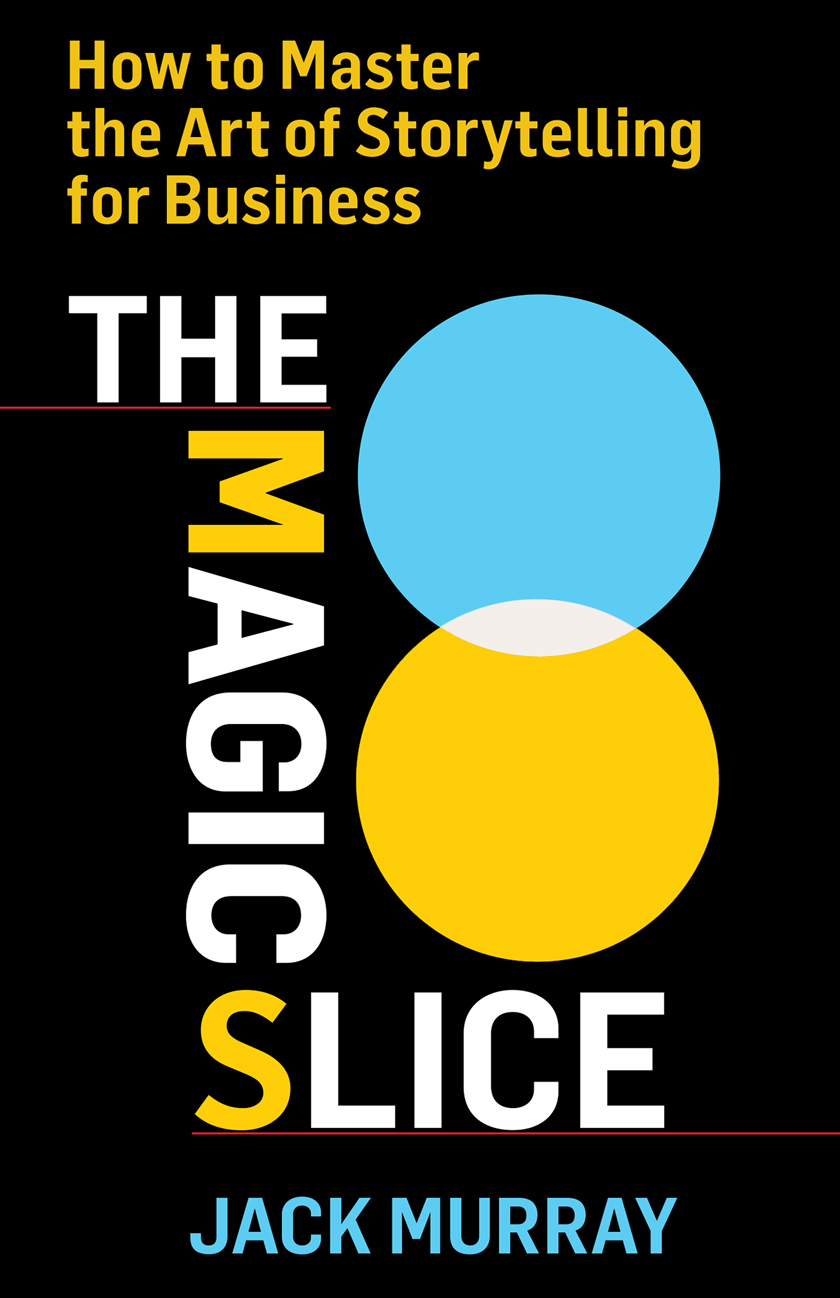
[0:10:15] BB: Right. It is a game-changer when you actually do that because it kind of allows other people to do the same, right? Yeah, to bring it back to be actually being human. Amazing. Well, I will rattle off the six steps in the Magic Slice process here, and then have some questions on a few of these. But the book lays out these six: Find a mission and articulate it. Tune in to the different audiences, tune in to your different audiences. Step three is create your Magic Slice topics for stories. Create your Magic Slice statement. Generate compelling stories. And revise and edit. What I would like to do is, I would actually like to start and hone in on step number two, because I know step one is very important - find a mission and go articulate it. You go into great detail to explain how to make sure that is true and that is there. But I think when we start to talk about tuning in to your different audiences, there may be more questions around that. We know that need for a mission or maybe we have the internal sense of why we are doing what we are doing. But knowing our different audiences and know how to interact with them can become pretty difficult right?
[0:12:07] Jack Murray: Yeah, and if you are not communicating to somebody that is in your mind's eye, you are not communicating effectively. The best people can tell stories and they know who their audience are. And in any exchange in communication, there are no difficult questions. There are just different ways to get your message to your audience. When it comes to profiling your audience, one of the stories I talk about in the book, in my first job I worked in a very well-known brand in Europe which is called Dubarry shoes. I walked into the marketing director's office and he had, he was a man in his mid 30’s, and he had a stack of women's magazines beside his desk. I poked fun at him for reading women's magazines and he looked at me with a steely look and he said “the women that read these magazines are customers, start reading, you got to know how they think." And it was a really stark lesson for me. When it comes to audiences there are three reactions that, you know you are in your Magic Slice. The first one is, if your audience says "This is a new voice, this is something really fresh and it is really, really engaging." The second one, is "You are saying what I am thinking." You are giving the audience an “aha” moment, so that you are saying something “thank god that is exactly what I am thinking”. The third one is, "I have never thought of this before." And I can give you a very good example of that. The brand SPANX, which you know is created to give women a sense of confidence, started as an undergarment to give women a sense of confidence and to give that seamless feel to any garment they wear. But it was created by Sarah Blakely and she created the name, the brand and the look, the feel. It was completely revolutionary, it really stood out and the reaction of the audience was “this is amazing, I never thought of this before”. Just by the way she executed it, she was in that part and she knew exactly the women that she was communicating with at the start. The advice that we give to people who want to tell stories are, know who your audience are, because great communicators know what the dial looks like and they know where they need to move it to. So let us be honest, we communicate to get a reaction to change people’s behavior, to get them to do something to get to stop doing something, and unless you know who they are you would not be to do that.
[0:14:19] BB: That is right, and once you know they are - that was a great example with SPANX. Step three was this idea to create your Magic Slice topics for stories. I found this so insightful and also very practical. If you can pick up the book you are going to find a lot of questions that Jack is asking that you can spend time on, to really dive deeper. I found step three to have a lot of that type of content. Very, very insightful. So instead of telling me how to do this step of creating your Magical Slice topics, talk about or give us a story, explain how this may flesh out in an organization.
[0:15:00] Jack Murray: I will give you an example of that. The reason you create Magic Slice topics, if you could imagine a folder, a big chunky folder and the outside of the folder it said “My Organization's Amazing Stories”. The topics would be the dividers between each section if you could imagine it that way. And what each topic should do is, it should be like an engine to create loads of stories underneath it. Let us use the example of a healthy bakery. So imagine a healthy neighborhood bakery and you are creating a new brand, and you want to create topics for stories for a healthy bakery. So let me give you an example of some of the topics you could use for a healthy bakery. Healthy bread recipes could be one, you could write loads of stories about that. The history of brown bread, great ingredients, the life of a pastry chef, the bread of the weak, and the last one, a little bit of controversial sandwich porn. Amazing photographs with amazing sandwiches. Then each one of those, you could imagine tons and tons of stories underneath each topic. The purpose of creating the Magic Slice topics are, it creates this structure around the brand of the organization and it gives you these pointers, jump-off points in which to create great stories that will resonate with your audience.
[0:16:11] BB: Which really, ultimately as you are saying that, it is coming back to creativity and exercising that creative muscle. To be able to see in that type of flow or thinking that type of folder system, where you are able to identify, what are the topics and what are all these different ways we can use this and flow from it. What would you say to someone who is maybe in that space where they are like, “Man, Jack that sounds really creative but this is a little overwhelming for me” How have you intentionally fostered your own creativity?
[0:16:40] Jack Murray: Well, I suppose the first part of that is, is that you have to nurture your creativity and you have to give it space. So if I run course and people come on the course and say to people how long is your working week and they say 45 hours or they say 40 hours. You say to people when is the last time you paused to think creatively? And in all of your working week, 10% of our working week should be dedicated to creative endeavors. That is half a day. And when you say that to people, you say "Look, there are 5 days in a working week, half a day should be devoted towards creativity". Because new ideas are the engine to generate more business. I suppose, what do I do personally? I know that when I exercise, I think better, I know when I sleep well, I think better. In the book we talked about that amazing creative place called flow. Flow is when your mind and your body and your intention are completely aligned, and the good ideas are kind of streaming out of you and you are completely aligned at the task on hand. And you know that as you are doing something, that you are doing really good work. I’ll give you a bizarre one, my kids, I have two daughters that play a lot of sports, the equivalent to what little league would be, and I regularly find myself driving around in my car, leaving them to games or leaving them to training. I find myself sitting in front of the car for an hour while they are on sports practice, an absolutely, brilliant creative time, because it is like I am hiding in plain sight, nobody can bother me for those 60 minutes. I get really productive. I think everybody is different I think you have to find that mix of what works for you. But what the bottom line of that is, you have to - if you are not the creative one on the team, you do need a creative force. The bad news is that, everybody's desk is different since the pandemic, but it doesn't generally happen at your desk because there is a million slings and arrows at your desk to drive you mad and to pull you down. For me, if I am in a hotel lobby or I am in a coffee shop, or if I am in the front of the car, or I get up early and go for a run and my head is clear, my endorphins are kicked up, they are really great times. But it's to John Cleese's point, that is raised earlier on in the conversation - no, creativity is not a talent, it is a way of operating and it is incumbent on businesses and brands to find that way of operating. I will give you another example one of the things we know with post-pandemic work was that Zoom calls are great but there are a lot of them. You could smash your attention span into smithereens. We have engineered quiet time in the week since the start of this year. We had nine months of the pandemic last year and we said "What do we want to do differently?" So Tuesday is designated as a quiet day in our office. People have loads of work to do but they do not do meetings on a Tuesday and it just means you have time to think. You are giving permission and we are trying to make a culture that people can do deep creative work on a Tuesday, and they know they do not have to rush on a Zoom meeting call in 20 minutes or they do not have to get back to something. Giving people enough time to do that. And you know what, productivity has gone up, it has not gone down.
[0:19:43] BB: Right, giving that time to intentionally grow that creative muscle. Then, over time, you will see a return on investment. I think that can scare some people. Definitely is worth it. That's amazing. We had this idea, the Magic Slice topic and then it becomes the center and everything flows from there. You want to give, maybe one more example when it comes to that, how that might work?
[0:20:08] Jack Murray: There is a company called Hiut Denim, a small denim brand. They started in West Whales in a town called Cardigan. They are focused on their mission - to go back to the starting point of the Magic Slice - the town in Cardigan in West Whales used to be one of the greatest production hubs of denim jeans in Western Europe. Then at a certain point the early 90’s, they closed down the factory and brought it all to Asia. David and Clare Hiut moved there and they want to start a denim brand and they saw this unbelievable talent in the community that was focused on sourcing great denim, cutting great denim. They started a brand called Hiut Denim and the mission of the brand was to get their town making jeans again. The day they launched - the story was so compelling and it did flow into a kind of a zeitgeist thing about British Manufacturing - but they got like 18 months’ worth of orders on the first day. And they tell really compelling stories about makers, about process. We do one of their topics, about the history of denim, about continuous improvement, is another one of their other topics. They have a number of teams that they plugged into really well. And another example while we're at it, is a company based in Detroit that I have been fascinated with for the last 5 years, it is a company called Floyd. Floyd started in 2016 by two friends called Alex O-Dell and Kyle Hoff. They had this idea for simple furniture. Alex O-Dell was moving around to lots of apartments. He did not want the hassle of buying a table. He wanted to be able to make a table from anything. They manufactured this set of steel legs that you could attach to any piece of timber and you can make a table. They called the company Floyd, because Alex's dad, grandfather, and great grandfather were all called Floyd and they were all steelworkers. They made the product from steel and they set it in Detroit, which is the home of the American automobile and a huge industrial hub, formerly huge industrial hub. And they went on Kickstarter, and the story was so compelling, Benji, that - they'd set themselves a target of $18,000. They told the story so well, that in their funding round they raised $256,000. A 1400% increase of what they were looking for. I remember, buying a set of the legs for our story studio that we ran all the story courses in. I told that story every day on every course to people about the power of storytelling. I said, “you see the table you are sitting at, you see that legs on that piece of timbre?” This is the story and that is the power of a great story
[0:22:59] BB: At face value, you could tell me that idea and it would not be that compelling, but the story behind it changes the game, right? A good product with a great story, there's just the way the story is triggered in our mind and how it stays with us. And then how much more we cherish those products or those things that has story attached.
[0:23:19] Jack Murray: They have 3 Magic Slice topics. One is called Learn, which focuses on sustainability and design. The learn one is about two of the central tenants of their mission, which is about sustainability and design. One is called Lived In, and Lived In shows their products in a home setting and how they work. The other one, which is very clever, which is called Stay Floyd, and they have done a partnership with Airbnb, where you can stay in certain Airbnbs that have a lot of products in them. So three simple things. Their mission is the anti-Ikea Mission. It is not about disposable furniture, it is about re-using, it is about finding things that you like and it is about being sustainable. So, a thriving mission and you can see how that would appeal to a millennial generation. That is executed, their storytelling engine, through those three topics, and it resonates with an audience.
[0:24:10] BB: The one for me that resonated years back, and then I saw that you touched on the book as well, was Charity Water and their ability to just tell stories in the non-profit space. How compelling they are as a company because they are always looking for ways, whether it is their founder's story or the countries they are working in in building these wells, and letting those that have funded those wells really know the stories of the community they impacted. That was one that had really impacted my life several years ago. And again, in a non-profit space that is flooded with good causes you could give money, when you have great stories, and people’s hearts attach to that, you can do incredible things. Charity Water is on a pace to try to literally end the water crisis around the world, because of all the work that they have done. So I love that you hit that story as well.
[0:25:04] Jack Murray: Actually the reason I hit on that was because there was a certain part in the book where we talk about, how do you generate a culture of storytelling? When we get beyond the Magic Slice, we talk about “Okay, we know the creativity, we know the science, we know how to do it now but where do we do it?” And one of things about "Okay, that is grand, but how do we actually break eggs and make an omelet?" On the Charity Water things, one of the things they do really well, is they make everybody a spokesperson. If you work for Charity Water you can tell a story, you are empowered to go and give a compelling keynote that you captured the essence of what their powerful story is. Scott Harrison, it started with him, his life was off track and he wanted to go and give something back, and everybody who is a spokesperson for Charity Water captures the essence of that story, and does what you said, they compel all the people to be involved in the charity. That is the power of a great story.
[0:25:59] BB: How does your company, Media HQ, how do you guys actively create a storytelling culture?
[0:26:05] Jack Murray: There is a few things that we do. I would work closely with all of the staff here to empower them to give presentations. The next bit of advice I always give to people has been the template, this thing in corporate organizations where you put a straitjacket on all of your people and say “All the slides should look alike. You have to put the logo in the corner." The other bit of advice would be, make storytelling the rule. Make it a rule that people have to tell a story. Practice is another big one. Every time we get together we play a game where everybody has to give an O’Reilley, this is a form that O’Reilley media would have pioneered. It is called an ignite. There are 20 slides, each slide has 15 seconds and you do not control the clicker, somebody else does. It is like a runaway train; you tell one story in five minutes over 20 slides. One of the things we do to encourage a culture of storytelling in our organization is, when we get together we tell people to do them and we say do it with something that you love, nothing to do with work. You will always see a different side to somebody that you work closely with when they do that. If it is a car crash of a slide, it is over in 15 seconds and if it is the best slide you have ever done, it is over in 15 seconds. It is very egalitarian from that point of view.
[0:27:24] BB: The stakes are not too high so you could get more people bought in as well. It is not like public speaking is the end of the world in that scenario. That is great.
[0:27:32] Jack Murray: Exactly.
[0:27:33] BB: Let me ask you. When we are talking about creating this culture, we are talking about writing all these stories. How often would you suggest - when someone gets passionate about this work, they are writing it down they have all these ideas. But when it comes to revising and editing, you have a whole portion of the book devoted to that. I would love to, as we start to wrap up our conversation here, just give some best practices if you will.
[0:27:57] Jack Murray: I suppose the first bit of advice I would give to business people who are listening, who are thinking about buying the book is, where can you put stories in your life? How often do you present to groups? How often do you tell the story of the company? This is useful in every function of the business. It is useful for raising funding. It is useful for HR. It is useful for PR, marketing, and content. The thing about communications is you have to do it in an outward way and you have to connect with an audience The first bit of advice that I do is kind of stock-take, how often that you do that. We have all been party to those conversations where somebody bores us to tears with a bad PowerPoint and then we go back to our desks and think “Oh, I have to do that presentation tomorrow.” Then we inflict on them what they inflict on us. It is a vicious circle. So how could you actually change that interaction, and treat people like adults, and put stories around things that you are doing. Then I think from an outbound point of view, depending on the size of your organization, one really good simple rule at home is - obviously you have to go through the process and you have to set your Magic Slice. That involves going through the six steps and going through the process. Once you know all that stuff, then at least once or twice a week, and it could be a Tweet, a Facebook post, it can be a press release, it could be a Zoom call, it could be something. But always try and tell a story, and try to do it a couple of times a week. Like anything else in life, Benji, practice makes perfect. The real sense that you are improving is that you are not sharing dry facts all of the time, and boring bullet points. That you are actually tuning to your audience and you are doing it in a story and you are using the elements of a story, and the classic element of the Hero’s Journey, and something happens, and all of that. That is all in the book and the process to do that. But it is only by practicing, that you could actually get better at it. The biggest problem that I encounter in communications in people is, the biggest problem they have is, they do not communicate enough. It is a bit like, you say you are going to get fit and you go to the gym, and you say "I am going to the gym every two months." You might get a heart attack on your next visit because you are not match-fit enough, and it is only by repeated practice that these things get better.
[0:30:16] BB: Jack, when readers are finished reading this book and they are applying the concepts that we have talked about today., what do you ultimately hope that they take away, and what do you hope they feel as they start to apply the storytelling concept to their life.
[0:30:30] Jack Murray: A sense of connection. I also think the most important thing in communications is deciding where you want to go and being driven to get there. It is just a sense of purpose and a sense of mission. Knowing that, through communicating with stories, you can solve the big problems, you can hire better people, you can raise more money, you can sell more product, you can convey a better brand message, better social responsibility. And that stories have that power to drive all of that in your organization, and it is only when you tune into that and start doing that, that you will reap those awards.
[0:31:07] BB: That is so good. Those with the best stories will succeed, and you communicate that so well in this book. Besides just checking out the book, how can people stay up to date and maybe reach out to you?
[0:31:20] Jack Murray: I am on Twitter, I am @mediamurray on Twitter. I do a lot of stuff on LinkedIn, so reach out to me on LinkedIn. And my website is murraystory.com or mediahq.com
[0:31:32] BB: It is such an honor to discuss the book with you. Great work. Thank you for taking time to speak with us on Author Hour. I know The Magic Slice is going to be a great resource for so many.
[0:31:44] Jack Murray: Thank you Benji.
[0:31:47] BB: Thank you for joining us on this episode on Author Hour. You can find The Magic Slice: How to Master the Art of Storytelling for Business on Amazon. A transcript to this episode well as all of our previous episodes is available now at authorhour.co. For more Author Hour subscribe to this podcast on your favorite subscription service. Thank you for joining us and we will see you next time, same place different Author.
Want to Write Your Own Book?
Scribe has helped over 2,000 authors turn their expertise into published books.
Schedule a Free Consult