Jonathan Dison: The Consulting Economy
Read the full transcript
Jonathan Dison
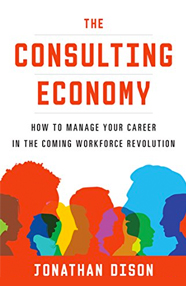
Jonathan Dison is the founder of Lightrock Consulting and BenchWatch.com, and a consultant and firm owner with more than twenty years of experience. He began his career at Arthur Andersen before going independent and building his own multi-million-dollar staffing firm. His work focuses on the agile workforce of the future and the disruption reshaping the consulting and staffing industry. In his book, The Consulting Economy: How to Manage Your Career in the Coming Workforce Revolution, he teaches aspiring and experienced consultants, contractors, and freelancers how to find a niche, start a business, develop a clientele, maximize income, and build a career that is vibrant, challenging, and rewarding.
📚 Books by Jonathan Dison
Transcript
[0:00:29] Charlie Hoehn: You’re listening to Author Hour, enlightening conversations about books with the authors who wrote them. I’m Charlie Hoehn. Today’s episode is with Jonathan Dison, author of The Consulting Economy. When you hear the term “consultant”, you’re probably thinking of people and suits sitting in a corporate boardroom and talking about strategy. But Jonathan says that most consultants don’t actually do that, they’re just normal people with skills who get hired to work on a project and if they pursuit consulting full-time, it’s possible for them to earn $250,000 per year or even more. In fact, consulting may be one of the best ways for ambitious people to build rewarding careers. In this episode, you’re going to learn how to actually get started as a consultant, how you can land your first clients and make a full time living doing work you love. Whether you’re a millennial who is just starting out or a parent who wants to spend more time with your family, this episode will show you how to successfully earn a six figure income working for yourself. Now, here’s our conversation with Jonathan Dison. Jonathan, what is the number one take away from The Consulting Economy? If you had to pick the main idea that our listeners can remember or take action on this week, what would that be?
[0:02:18] Jonathan Dison: The main idea is that you can do this, it’s just not that hard. You don’t have to be some specialist to be a consultant or a contractor. It’s not like you need to go out and advise the biggest companies in the world. That’s actually not what they want. That’s like 5% of the consulting market. Just the concept and the takeaway that this probably is for you, that you can make a job out of this, that lots of people have made jobs out of this is really just the confidence that I want people to take away from this.
[0:02:56] Charlie Hoehn: Yeah, so I’m thrilled to be talking with you actually because consulting is something I’ve always considered getting into more heavily myself, but I have the exact same misconceptions I guess that a lot of people you’re trying to reach have, which is exactly what you said. Consulting to me seems like if I’m not doing it with the Googles or the Fortune 500 companies of the world, then maybe that’ snot actually consulting. Or I don’t even know how to become a consultant for those companies necessarily because my background is in a variety of different things and usually only authors come to me wanting consultations for their books and I’m not sure how to branch out into helping these bigger companies do stuff. Because, you know, frankly, most authors don’t have that much money to spend, right? So how do I — If I can do this, like you just said, how do I go from being somebody who has done a little bit of marketing for individuals to being somebody who can work with this bigger companies? How do I make that transition?
[0:04:12] Jonathan Dison: The first step is to carve off your niche. Your niche, if you’re like most people, that could be several things, right? So the process of carving off your niche starts with thinking about what you really like to do and who you like to do it for, what type of industries or clients are you interested in, right? We could turn you into lots of different things, right? But if you sit down and you think about that you really enjoy interviewing people and extracting information out of them and being able to put it into a digestible format and you’re really interested in technology and those sorts of things, I’ll tell you, companies like Google and Facebook and those guys, they need people like you. In fact, they need people that can tell them that they are specialist in doing that so that when they have that need, they actually think of you, as opposed to just some bigger, broader communications consultant, right? One of the biggest hurdles that we see, we’ve done this hundreds of times, is people have a tendency to want to tell people that they can do more, that they can do everything.
[0:05:35] Charlie Hoehn: Right.
[0:05:36] Jonathan Dison: And then the client doesn’t know what you do really well and better than anybody else. This was something that I learned super early in my career in a super painful way. We had gone to a client, we’ve gone to Hewlett Packard, this guy had got us a trusted interview and introduction there, we’re trying to sell him some work. We went in there and man, we told him we could do everything from mergers and acquisitions to technology implementations to project management, all these sorts of things. It was a smooth pitch, we walked out of there, we thought we were the man and this guy, this executive, former executive at HP did us a big favor that was very painful. He said, “You’re not going to get anything out of that, and I’ll tell you why. You told them you could do everything and they don’t believe that.” He’s like, “I don’t even believe that and I’m your friend. You didn’t tell them what you did better than anybody else.” That’s one of the big things that we really hit upfront in this book and, you know, for you Charlie, if you started thinking about this things, it’s carving off your specific niche, and it’s almost counterintuitive, to narrow down, to the one thing or a few things that you do really well, that you like to do well. Because that’s the other thing is, is people want to buy, they want to buy people that love what they do. If you’ve got an energy and a passion about something, that’s part of what they’re buying because they don’t want to do that well and they believe that you’ll bring the passion to just pour yourself into doing a really good job for them.
[0:07:21] Charlie Hoehn: Yeah, I love that story. I have a few questions that sprung up in my mind. First of all, you said, ‘What do you do better than anyone else?” I’ve always felt, and I think this has been something that it really helped me early on but later on in life, I felt, have started to hurt me is I have been able to be better than most people at a handful of complementary skills. For instance, I’m a good video editor, I am a good writer, I am a good public speaker, I am a good digital marketer. Now these four skills I was able to basically use to land myself in really great jobs, awesome opportunities, they’ve served me well. But I find that I’m at this junction now, not necessarily where I have to pick one and let all the others die on the vine. But, I’m conflicted because I feel I’m very good at all of them with the exception of maybe writing where I just kind of want to — I don’t get that much joy out of writing but all the others, I get a lot of joy out of. How do I pick? If the world does not reward Jack of all trades, if we’re becoming more of a specific thing that we help specific people with, how do I decide on which one to go with?
[0:08:58] Jonathan Dison: I would tell you, to pick the one that you like the best and then the big conceptual shift is, you can put it out there and if it fails, you can rebrand yourself to the next thing quickly and easily. Because there’s so many people out there looking for you that the market’s going to tell you pretty quickly whether they’re buying what you’re selling. And for you to change that to the next thing on your list is about a 30 minute process. So if you really love the digital marketing, put yourself out there in that niche. There are thousands of consulting and staffing firms that have clients already that are looking for people like you that they can sell to the client and put a markup on top of, there’s clients out there in the market looking to hire contractors like you directly and technology makes that so easy and so fast. You’re going to know real quickly if “Charlie the Digital Marketer” is your niche but if you said that that’s the thing that you really like doing the most, I would encourage you to focus on that first, put it out there quickly and you’re going to know within 15 to 30 days if the market loves it or not. If the market doesn’t love it, just change yourself to Charlie the writer and people are going to find you for those things because with technology, they can cut through the world’s information and hone in on writers with a quick search on different tools.
[0:10:47] Charlie Hoehn: Right.
[0:10:48] Jonathan Dison: It’s this mental shift of it’s not like you’re stuck in that for the next 30 years of your life. Pick your niche, put it out there and see what the market responds and then with no investment or marketing dollars or anything like that, you just change your niche, that’s the beauty of kind of where technology’s brought us to.
[0:11:12] Charlie Hoehn: Yeah. You know, I love that because it really diminishes the fear that there’s going to be a withering away of the skill or that I’m neglecting this part of me that I identify with so strongly. I love that you can just pick one for 30 days, test it out and if it doesn’t work out, you can switch to the next one until you strike what the market actually wants.
[0:11:39] Jonathan Dison: That’s right.
[0:11:42] Charlie Hoehn: Jonathan, let’s get into the specifics of how do I get these companies to know about me or how does one of our listeners who is interested in consulting, how do they reach out to these companies? I mean, you said if I wanted to get into just doing interviews and extracting information, there are companies like Google, Facebook, Amazon, that want those types of people versus a communications specialist. How do I get in front of those companies for the next 30 days to see if they take me up on that offer or if it’s something they’re interested in?
[0:12:22] Jonathan Dison: The easiest way to get in front of the Googles and the Facebooks of the world is through the consulting and staffing firms that they’re already using. These companies have been providing resources to those companies and thousands of other companies for a long time. They basically get paid to find talent, and how do they find talent? They’re out using technology, they’re using mostly things like LinkedIn, recruiters, their recruiters are always out on LinkedIn, using the LinkedIn recruiter service, finding people. So if you research staffing firms, technology staffing firms, or communication staffing firms, you’re quickly going to figure that out and if you go onto LinkedIn and you reach out to this people that are recruiters, that’s what they get paid to do is have a network of people that they can call up on demand to place people. BenchWatch is another tool; that’s something that we’ve created that basically helps these staffing and consulting firms quickly figure out who is available. If you're on BenchWatch and you're available when they do a search, they’re going to find that you’re available because half the time, what recruiters spend their time doing and wasting their time doing is trying to figure out who is available in their network. If you connect with these guys, they’re going to have 10 jobs for you and the big concept is to think of yourself as your own little business entity and you just connect out to all these staffing firms. There’s thousands of them, I’ve got one of them. You connect with this people and they have the relationships, they have the projects, they carry all the complex things like general liability insurance that, you know, protects Google if you slip and fall on their property and those sorts of things. The point is, the fastest way to get to dollars in your bank account, is by connecting with people that are already looking for you and that’s these staffing and consulting firms.
[0:14:38] Charlie Hoehn: That’s amazing. So with, let’s say LinkedIn and BenchWatch, I’ve been on LinkedIn for many years, I don’t actively keep my profile super up to date but whenever there’s a big career milestone of some sort, I’m on there, I add it to the list and I don’t really expect much from it. You know, it’s just people adding me occasionally messaging me spam but I know there are people who are getting tremendous value out of it. What am I doing wrong? What do people do wrong on LinkedIn or BenchWatch that prevents them from seeing this types of opportunities?
[0:15:17] Jonathan Dison: Yeah, good question. The first thing that they’re doing wrong is kind of what you’re doing, which is you’re just listing everything in the world, right? You’re listing everything that you’ve done and you’re not focusing it in on the niche and I’ll probably just keep coming back to this. This is why carving off your niche is such an important thing. You know, in that headline or that first section on LinkedIn, when you can really define yourself and define what you’re interested in and you know how easy that is to change right? If you define that and then you reach out to a consulting or staffing firm, you know, one of our clients at BenchWatch is a company called Vaco, They’re a national staffing firm, 32 offices, hundreds of millions of dollars of revenue a year. They’ve got connections to everybody in the Fortune 1,000. These people are literally looking for you, that is their job. So if you can tell them what you’re good at, what your niche is and what you’re better at than other people, and then if you reach out to them via LinkedIn, they didn’t have to find you. If you tell a staffing coordinator in your city that works for Vaco or BG staffing or Manpower or any of these big staffing companies, if you tell them that you’re available and what you do better than anybody else, they may have 10 opportunities already or they may just call up a client that they know and trust and ask them if they could use you, right? If you’re great at digital marketing, they’ve got connections into the marketing divisions of all these global 2,000 companies, Fortune 500 companies. They call them up and they point them to your profile or they show them your resume. If that company can hire you instead of hiring a full time employee, they’re going to hire you because you’re flexible, they can get rid of you easier, they can match the work that they really have to the skills that they need at the time and they can continue to flex.
[0:17:38] Charlie Hoehn: Right.
[0:17:40] Jonathan Dison: It’s just so easy to do. Just updating your LinkedIn profile, it can be that simple, it can be your online resume, right? Reach out to this staffing firms through LinkedIn or BenchWatch and you are on their bench and they are going to find you opportunities, that’s how they get paid.
[0:17:59] Charlie Hoehn: It seems crazy to me Jonathan that more, for instance, more college graduates or more people who find themselves constantly hunting for low level jobs, are frustrated. Why don’t they take this approach, why isn’t this taught?
[0:18:18] Jonathan Dison: I completely agree. I feel like we should be teaching these things in college but that’s a whole separate discussion. I think the…
[0:18:27] Charlie Hoehn: Is it because of the myth that people honestly think that consultants are these people who show up in suits at these companies and they go in and they just tell the executives, “You should be doing this strategically instead of this,” and then they leave. Somebody call that pigeoning basically. You go in, you take a crap and then you walk out.
[0:18:51] Jonathan Dison: Yes, you nailed it, that’s the first myth right? The first myth is you know, that consulting is this big, fancy thing. The second thing is the myth of the 30 year job. That’s gone but our mindsets have not changed and there’s lots of people that have talked about this, right? People still seem to think that they need a job in the traditional sense of the word. So if you can clear that mental hurdle, you know, you’ve made giant steps. But the one that I can really help educate people on is the myth that you touched on. People think, even my own family, right? For the longest time, my in-laws, my wife’s parents, they thought I worked for the CIA because when I came out of school, I went to work in consulting. I worked for one of the biggest consulting companies in the world, Arthur Anderson Business Consulting. Their question to me was, “Why would anybody pay you to consult them?” Which makes total sense and the thing that people don’t understand is there’s only very few consultants that walk in to the big companies of the world like Chevron or Google and tell them what to do. The rest of the consultants — a better word might be contractors. The rest of this consultants and contractors are there to help execute things and that may be implementing a new technology. That may just be a communications person that is helping out with writing newsletters that go out to the whole company, that may be somebody like you Charlie that’s a digital marketing expert in the marketing department, helping them think about new and different ways and then helping them execute those. So that myth that you’re going to walk in there in a suit into the executive offices at Chevron, it just doesn’t happen, I mean, I’ve never done that, first of all, I’ve never had to wear a suit and I did big time consulting. The one client that I had to wear a suit to, god, I hated that client, we ended up getting rid of him. It was terrible. You’re just not — that’s just not what consulting is, it’s all about taking the skills that you know how to execute better than other people and doing those on behalf of a client.
[0:21:28] Charlie Hoehn: Yeah. I’m excited. I want to hear your story more. Tell me about the first big check that you were written for a consulting where you realized, “Oh my gosh, this could be my career, this could be all I do,” and what was that job? What all were you doing?
[0:21:50] Jonathan Dison: I have been in consulting my entire career. I came out of college and I went to work for Arthur Anderson Business Consulting in Houston. So I was in the oil and gas practice, we were doing — we had big clients from day one. My big aha moment, it wasn’t crystal clear but I knew there was something wrong with the industry, was my very first day, my very first minute that I walked in there. I walked into these big fancy offices on the top floor of one of the most prestigious office buildings in downtown Houston and I walked me around the office and it was amazing. It’s all wood panel, they were telling me how it had been featured in Architectural Digest, you know, all kinds of stuff. Just a fortune spent on this. The thing that jumped out to me was that there was nobody there and so I’m sitting there thinking, “Why are we paying for this? Consultants are always at clients sites, what’s the deal?” I was young, I was 22 years old, I didn’t know how to turn that into anything but over time, what I’ve come to just really realize is and frankly what clients have come to realize is that they were the ones paying for that. They were paying too much for services that didn’t add value. Why were we carrying that level of overhead? As I kind of stayed in what I call big consulting for about six or seven years, kind of rose up the ranks at Arthur Anderson and eventually I kind of just… I didn’t want to be a partner, I never wanted to take the partner track. Because it’s funny, I never thought I could sell, I was never the sales person, which is funny because now I’m a sales person for my own firm but I just never thought of myself in that way. I basically went out and I started doing independent consulting. I had made some relationships, at that time it was at Chevron and they had some opportunities, I knew this people, they knew what I could do, it wasn’t a sales process at all and I just started working on projects and I was billing them directly. So it was a lot cheaper and they…
[0:24:19] Charlie Hoehn: How did you know what to charge, by the way?
[0:24:20] Jonathan Dison: I just made it up man, I just you know…
[0:24:24] Charlie Hoehn: How did you decide?
[0:24:27] Jonathan Dison: I knew kind of what we charged, what with the big firms charged and I knew that if I — so just as a ballpark right? At the big firms, we would have been charging these guys $200 bucks an hour which is the equivalent of about $400,000 a year. When I was kind of an early, mid-level consultant. I was like, “You know, how does $135 an hour sound?” Well that’s a huge discount for them. But I was still making $275,000 a year and by the way, that was like more than double what I was making in big time consulting.
[0:25:08] Charlie Hoehn: Yeah, that’s a lot.
[0:25:09] Jonathan Dison: I doubled my salary, I get to work directly with Chevron, I didn’t have all the administrative stuff that I still had to do because I had a real job with Arthur Anderson, performance reviews, those sorts of things and I was just, I could focus on the client. Then what happened was, the client started asking me if I knew other people that were good because they trusted me. So first I just started giving them people, then I finally realized I could just setup my own firm and put a very small margin on top and everybody would still be happy and that’s kind of how my firm kind of organically grew. I will say, just kind of as a side note back to what we were talking about earlier, you know, having learned a lesson, I called that company Oil CM. Oil Change Management. It was very focused. Change management’s a lot of like communications and training and those sorts of things. I was very focused on a function and an industry and I don’t even think the clients knew the name of the firm but they knew that we focused and we had people that knew the oil and gas industry and that people that knew how to do this one specific thing. We just kept adding trusted people and as the company kind of grew and grew, you know, I was having to go out and convince people to get into consulting. I mean, there was clients of mine at other companies that I convinced to come work with me. Because I know I could trust them and I knew that they had the right skills and I had the same conversation with them that I kind of written down in this book where I convinced them that this was really real for them.
[0:26:59] Charlie Hoehn: Right. You’ve mentioned $275,000 a year at $135 per hour. That’s a 40 hour workweek for a consultant right? Were you working 40 hours a week for each client or how was that working?
[0:27:18] Jonathan Dison: Yeah, I mean, it differs for different firms and it can differ based off of whatever you want it to be for you but the people that work for us work 40 hours a week, nonstop, fully billable for years. The typically — the people that hire us, the Chevrons, the Halliburtons, the waste management is a big fortune 500. They’re hiring people for nine, 12, two year contracts, you know? Nine month, 12 month, two year contracts. This are essentially jobs right? Now, if that’s not what you want, you can define your niche and what you want differently but from what all of my experiences, these people are hiring people, this big companies are hiring people for very long term contracts.
[0:28:12] Charlie Hoehn: Yeah, interesting. That’s another thing to take into consideration is, I mean, you can do consulting part time like I’ve done but if you really want to make this a full time job and do well at it which you can, then you’re totally right. It’s super important to pick whatever you love doing the most because if you're doing full time, something that you’re good at but only kind of like, that’s brutal right?
[0:28:38] Jonathan Dison: Yeah, that’s exactly right. I mean, just to make it a little bit more specific. I would say 90% of the people that work for us and really just all the other firms that we know are full time. The people that are part time, there’s a couple of — there’s one guy, this is interesting right? There’s one guy that has done some work for us but he’s worked for several other people, we just know them really well, he’s a fashion designer. He’s kind of an up and coming fashion designer in Houston but he does consulting to supplement that while he gets that up and going. Sometimes he’ll take a three month contract, sometimes he’ll take a six month contract or a nine month contract, depending on what the client needs, and sometimes he’ll work part time. The other thing that I think is probably even more relevant for a wider audience is you know, the working parent, we have several working moms that work for us and you know, they’ve got small kids, they want, they obviously want to spend time with those kids. But they also want to work and they want to use their skills. They define their niche as I need to work from home or I need to work a flex schedule, “I can only work between the hours of 10 AM and 2 PM Monday through Thursday,” and then they’re willing to trade off maybe a lower bill rate to make themselves more attractive but those people, people are looking for that in the market place.
[0:30:13] Charlie Hoehn: Author Hour is sponsored by Book in a Box. For anyone who has a great idea for a book but doesn’t have the time or patience to sit down and type it out, book in a box has created a new way to help you painlessly publish your book. Instead of sitting at a computer and typing for a year, hoping everything works out, book in a box takes you through a structured interview process that gets your ideas out of your head and into a book in just a few months. To learn more, head over to bookinabox.com and fill out the form at the bottom of the page. Don’t let another year go by where you put off writing your book. Yeah, totally. I mean, my wife is actually — we’re about to have our first kid and she is an expert at interior design, it worked for a major firm but she had to leave her job and so I mean, that sounds like, I mean, if she wanted to do that, she could.
[0:31:19] Jonathan Dison: Absolutely.
[0:31:20] Charlie Hoehn: Yeah, that makes a lot of sense. Tell me more of the success stories that either your book or BenchWatch has created? I want to get more into the specifics and if you have people who had surprising consulting stories, how they became professional consultants and maybe niches that no one would have thought of. Even better.
[0:31:44] Jonathan Dison: Yeah, I’ll give you one of my favorite stories to tell is about this lady, she was actually one of my clients and she worked for a big company, a Fortune 200 company for her whole career. 22 years, and she was a tough cookie. She has a reputation as a bulldog, I love her. I thought she was great but she got let go in the downsizing. The company laid her off and she was in bad shape. She loved the company, she didn’t know what to do and it wasn’t like she called me but she happen to call me. I wasn’t her first call but she did call me and I was like, “This is easy just come work with me.” I happened to be working at Chevron at the time and I was like, “Look, they need people that have executed these type of projects before.” We were putting in this new web conferencing tool and she had never worked with that tool before but she knew how to run projects and long story short, I convinced her to do this and she has been rehired by Chevron consecutively for five years in a row. She’s never missed a paycheck, she probably makes, I know she makes a ton more money than she made before and she’s just happy and appreciated by the client. They keep rehiring her because she’s great. So that’s a great one, right? That was in the middle or late phase of their career that got in a bind and turned to consulting to bail them out instead of looking for the next career job. Another really good one was a guy who I grew up with, he has social anxiety. He would get nervous in front of people and it just limited him in a lot of ways and he had never had a really good job. He had never had a real job. In fact he was still living at home with his folks and those sorts of things. But he was super smart, I knew he was super smart I grew up with him. He was super trustworthy and I had an opportunity to bring him onto a project where we just needed somebody that was a utility player that we could trust and that was cheap frankly and we got him in and of course he did great and he was just one of these people who was like, “What else can I do? How else can I help?” and the client loved that. He had no specific niche other than was just a utility player helping out with different things across the project. That’s another guy, he’s been rehired probably five times and this guy probably makes a $150,000 a year. So he went from zero to $150,000 a year, which is basically about a $70 an hour bill rate and the client thinks that’s the greatest deal in the world. It is the greatest deal in the world for them because it’s super cheap.
[0:34:52] Charlie Hoehn: Yeah, I think that’s the other crazy misconception is thinking about becoming a consultant yourself. You are almost like, “Oh man, well I’d be charging so much,” but you don’t think about how much money the company is saving by paying you that amount and it sounds like with that guy that his story could be mapped into any ambitious college graduate who just wants to start working on interesting projects with good people instead of applying to jobs on Career Builder or Indeed they can go team up with another team of consultants who needs that utility player, who needs that person who’s just there to help right?
[0:35:38] Jonathan Dison: Totally and we go into that a little bit in the book. We tried to breakdown consulting by stages of your career. So early career, it’s all about gaining experience and we basically in the book we kind of talk about trading off your money to gain experience, and I’ve had this happen. If you come up to me and you tell me you love the oil and gas industry and you want to learn more about the oil and gas industry and you want to get on a project just to learn and you’re going to drop your bill rate down to be so cheap. Basically what that tells me is number one, we’ve got the right level of enthusiasm and you’ve got to show up well for the client but number two, I’m going to be able to make some money off of you and so trading off money for learning is what you should do as an early level, early in your career person. The other phases are the mid-level or mid of your career, late career and that what we call semi-retirement. For mid-career it’s all about your job being flexible to suit your life. Similar to some of the working moms that we’ve talked about. For late career, consulting is really about making more money because you are at that stage of your career where you’ve got exceptional experience, you’ve got exceptional relationships. You’ve got to talk about how to take that time and use consulting to make more money as you move into retirement and then this other concept that we call semi-retirement, which we think is going to be huge with the whole baby boomer generation. Yeah, I think it is, this isn’t some revolutionary concept, these folks want to keep working. My dad is a great example but we’ve got tons of other ones. They retire and they sit around the house for a couple of months and they get bored and they really want to be useful again and consulting is a great way to do that on your own terms and get paid for it in a way that can help your retirement savings last longer. So we actually go into that in a pretty good amount of detail in the book.
[0:37:55] Charlie Hoehn: Right and all people need to get started is effectively a LinkedIn profile or a BenchWatch profile stating how they cater to a specific niche, is that right?
[0:38:10] Jonathan Dison: That and a resume, right? And we’ll walk you through this in the book, you can have four resumes. So Charlie for you on the four things that you like to do, you could have a resume tailored to each one of those and you could leave those resumes to this staffing firms for them to have on file. So depending on the opportunity that they see pop up, they’re going to send that resume. That’s what we do at my firm is we’re getting requests from clients all the time. We’ve got that resume on file, we just send them over. So it’s just that simple and there’s no cost to it. That’s the beauty of this for people.
[0:38:48] Charlie Hoehn: Yeah, you know I think maybe and now it guess to speaking bureaus, right? Where a lot of speaking bureaus they will list your profile on their site and then when an opportunity comes up that you fit that opportunity, they just recommend you to that client but it sounds like these guys are much more proactive about it where they earn their income based on how many good recommendations they are making to appropriate consultants. So they’re more proactive about promoting you, right?
[0:39:26] Jonathan Dison: Exactly. These guys are only as good as their bench of talent and that is exactly right. That is how they get paid, that’s all that, they’ve got hundreds of these recruiters sitting around all day, that’s all they’re doing is trying to find the right people for the opportunities that these companies like Google and Chevron has reached out to them for.
[0:39:50] Charlie Hoehn: Yeah, before people dive into this and think it’s the next big thing and abandon their life as it currently is, well that’s an exaggeration but you know what I mean, who should not do consulting? Are there certain types of personalities that just aren’t a good fit for it?
[0:40:09] Jonathan Dison: Yeah, that’s a good point. What I have found is the people who care are the ones that do the best and that’s actually hard to find. I think you still can do it and you can be of some value to clients because you have a skill and you can do work. You can be a pair of hands but the people that really thrive are people that just care about doing a good job. In fact, that’s the number one element that we look for because we can teach you everything else, or the client will teach you everything else. But if you just care about grinding it out and doing the right thing, you’re going to do awesome. If you’re somebody that’s all about you and you need to be self-reflective as you think about it, right? because there’s a job for people like that too. It’s just that this isn’t it but if you’re one of these people that it’s just all about you and you don’t like to wake up before 10 o’clock in the morning or you only want X, Y and Z, this may not be for you because consulting at the end of the day is about service. This is a service industry and if you do well, people are going to tell other people that you’re great and if you don’t do well, people are going to tell that also and you’re not going to last very long.
[0:41:37] Charlie Hoehn: You know, it’s funny that you bring that up because I think a lot of people think or at least start to think that maybe they fall into that latter category where, “Oh, I just don’t or I only care about myself, I don’t do that kind of work for my clients.” But I think any consultant or freelancer will tell you that it depends on the project and the client. If you have a client that you just don’t believe in the work that they are doing, you only took it for the paycheck, yeah it tends to affect the quality of your work. So what you said at the beginning about not only picking what you love the most and finding your specific niche but being very selective about who you want to help the most and who you really want to serve and only taking on the projects that you really believe in because otherwise, it can really feel like a grind because you are not aligned with who you are and what you believe and that’s really tough and that’s the exact reason I think people don’t end up in consulting is because they just desperately take on whatever is handed to them, right?
[0:42:52] Jonathan Dison: That’s a great point. That’s a phenomenal point, and that’s why that self-reflection early about carving off your niche is so important. If you do end up working for people that you like, you’re exactly right. You have a different type of business, a different type of freelance but it’s very similar in that way. On the stuff I work on, we end up becoming friends with our clients because we just — we’re interested in these things. We’re interested in the same things that they are interested in. We end up doing a good job for them but we’re just really — they’re nice to us, we’re nice to them. We end up having this long term relationships and it makes it to where it’s not a job and that’s really the holy grail of any type of job you can have but that’s definitely the holy grail of consulting because these people just keep rehiring you. And you’re not out there selling yourself, it takes zero effort, it takes zero cost. I mean these folks at Chevron they rehire us because we know their business. Other people have told them that we did a great job and that’s all they really need to know. If you get into the right things that’s going to happen organically and naturally for you in your career as a consultant.
[0:44:15] Charlie Hoehn: Yeah, well this has just been really great, really informative. I love the getting to work with your friends. I think it’s such a huge element to this, I mean I’m a big advocate of the message that you try to play for a living where you don’t feel like you’re in a job and you don’t feel like you are trying to buy colleagues but more of your friends or your playmates, your co-conspirators who are coming together to do interesting, fun, challenging work. So consulting seems to be like the best of all worlds because you get to connect with all sorts of people working on interesting things and if you’re a project type of person, which I think a lot of people are, it seems like a tremendous fit for those personalities.
[0:45:04] Jonathan Dison: Absolutely.
[0:45:06] Charlie Hoehn: Yeah, so I want to wrap up Jonathan with some questions about what your life has been like as an author. This is your first book, right?
[0:45:16] Jonathan Dison: Yep.
[0:45:17] Charlie Hoehn: Yeah, so when did you ultimately decide that you are going to write The Consulting Economy?
[0:45:24] Jonathan Dison: I’ve probably had the idea for a few years and it’s really just driven by the fact that it needed to be written down because I’ve said it so many times, literally hundreds of times.
[0:45:39] Charlie Hoehn: Yeah, you just got tired of saying it.
[0:45:41] Jonathan Dison: Yeah, I just got tired of saying it and if you say it that many times, you just need to write it down. So I’ve had the idea for a few years and really what it came down for me it was just I didn’t know how to write a book, I didn’t have the time to get it done. So we work with a service called Book in a Box and they made it pretty easy.
[0:46:04] Charlie Hoehn: Yeah, our company.
[0:46:05] Jonathan Dison: Yeah, they made it easy. They made it, I don’t want to say fun but I think it’s fun as it can be because it can be a grind on some of this so I think that’s about as easy as you can get it. You guys have a model, this contractor model that’s similar to what we are talking about so they understood the concept and I understood how the Book in a Box model worked. I believed that I would be working with specialists for each of the different steps of the process. The architecting of the book versus the writing of the book versus the editing versus the marketing and so for me, that was really the thing that kicked it off was I found a trusted partner to be able to do it and they were interested and they thought it was a real book. Again, it’s kind of a similar process where they had to test and make sure that there was a real valuable book here.
[0:47:02] Charlie Hoehn: Right and what was the most challenging part of the process? Book in the Box tries to make it as easy as possible but there are still challenges.
[0:47:11] Jonathan Dison: For me, the biggest challenge is this first step of architecting it and that really comes down to almost what you would call like a detailed table of content, like a super detailed table of contents with some description at each level. So for me at least, it’s the organization of all the stuff that you have in your head and being able to pull that out into a story that’s organized and relevant and easy to digest for our reader and for me, I never probably wouldn’t have been able to do that and that’s why paying for the service made sense.
[0:47:53] Charlie Hoehn: Totally. Yeah the architecting your book properly at the outset is something that is so essential to having a good book and it’s also the thing that I think people tend to neglect in any project, really. I saw this in apps, with app developers they would have this idea, they would communicate it, they might even write it out in an email and then they’d be totally disappointed months later when the developer turned out something that just did not match what was in their head. And the problem is they didn’t sit down and architect everything what it was going to be like for the user or the reader, in your case. What is it going to be like for the reader to go through this thing? And “architect” is such a perfect word because you are walking through this house. You are walking through this experience of reading the book, so you really have to pay attention to creating that stuff otherwise man, the book falls apart or it sucks or yeah, it can get completely derailed midway through the process.
[0:49:06] Jonathan Dison: And for me, it’s helped me just sharpen the way that I talk about these things with people now. So going through that process has kind of had a reciprocal relationship back into my business of just, if it didn’t make sense to the writers that I was working with and they kept having to ask me questions, well it’s not just making sense to other people out there in the world and so it’s just this collection of dots that you’re gathering from your experiences and those dots need to be lined up correctly and connected in the right way.
[0:49:45] Charlie Hoehn: Absolutely. Now is the purpose of writing the book, it was primarily to get the message out of course but are you using it now as a business card or to drive leads to BenchWatch or to establish you as an authority? What are the main things that you’re hoping to get out of this book?
[0:50:07] Jonathan Dison: Yeah, I’m still evaluating that to be honest. The first thing was it just needed to be written down so that stood on its own but I can’t believe that more people aren’t talking about this and so I’ve thought about the whole becoming an authority figure on this and I don’t know, there’s pros and cons to doing that going forward so I’m thinking some of that. I think it will drive some lead generation for BenchWatch, which will be good. I don’t know that it will drive lead generation for my consulting firm but that was never really a driver. For me, it really was like, “This was absolutely needs to be written down first and then let’s see what the reception is and then just see if there is bigger and better things to go into going forward.”
[0:50:59] Charlie Hoehn: Yeah, you know I’ll tell you from my perspective what I think is going to be the most powerful move for your book is getting these success stories of normal people becoming professional consultants out on a regular basis because the more times people start to come across these stories of normal people who were down on their luck or just had to quit a job or didn’t want to go into retirement or tough job market for a collage grad, all these people getting into consulting, if you have a way of regularly distributing their success stories, those individual success stories, it’s going to make a massive impact especially with the amount of money that they’re now earning. I remember a huge case study that blew up was an Uber driver who is earning over a $100,000 a year in San Francisco. Now, that is ridiculous on multiple fronts, right? That’s only one guy. With Uber, you are not taking into consideration the depreciation of the equipment, and so the amount that you are actually making when you have to buy new cars much less than that and so on and so forth but that blew up. That was incredible press for Uber itself and I think the same thing can be said about not just BenchWatch but LinkedIn and The Consulting Economy itself. So the more of those stories that I think come out, the faster this will pick up as a conversation.
[0:52:42] Jonathan Dison: Yeah, that’s a good point. We have a lot of educational content on BenchWatch. That’s a part of what BenchWatch is, it’s an educational tool for the independent consultant and contractor.
[0:52:55] Charlie Hoehn: Oh that’s cool. So do you guys have templates and stuff like, “Here’s what to say to a new client. Here is a standard contract.”
[0:53:04] Jonathan Dison: Yeah we have resume templates, right? We can coach you through all of that. We walk you through all of the tax savings you should be doing every year as an independent consultant and contractor; writing off office space in your house, writing off vehicle expenses. Just all these things that people don’t think about that we do because we are in this business. So we’re doing that but one thing we haven’t been doing that maybe we need to do more of is just these success stories that you are talking about.
[0:53:32] Charlie Hoehn: Yeah because then it makes it real.
[0:53:34] Jonathan Dison: Yeah.
[0:53:35] Charlie Hoehn: Then it gives others the courage to try it. So if you’re educating, amazing, right? They have all the tools they need to get up and running. But really, people are afraid to blaze the trail if they think no one has been on it before. But they’re happy to follow somebody’s recipe. I mean, I used to work with Tim Ferriss and one of the things he shared with me that he shared on his blog as well is one of his keys to being a successful writer is he just shares his recipe for whatever he does. And I remember him telling me that he was surprised more authors don’t do that because it’s very simple to do to just share whatever steps, whatever recipe you followed to get to the result that you got to and it’s obviously not going to be applicable for everybody but sharing your recipe, I mean, that was applied in the chef world as well, right? These restaurants used to think that sharing your recipes was a horrible move. It would be like a magician sharing his secret. But the ones that did share their recipes became celebrities, they became thought leaders, they became highly sought after and they actually got so much more in return than they ever gave away. So the more you can share those, I think the better off BenchWatch and frankly anybody who wants to become a consultant is going to be.
[0:55:08] Jonathan Dison: You know, hopefully that the book comes across that way because we do, we really — the first couple of chapters, you’re really trying to convince you but then the remaining chapters are all about the tactics of how to get it done, the recipe as you said. Hopefully people find it valuable and they’ll share it with somebody else.
[0:55:27] Charlie Hoehn: Yeah. So let’s do a quick speed round. These are short succinct answers and then we’ll wrap up.
[0:55:34] Jonathan Dison: Okay.
[0:55:35] Charlie Hoehn: What is your favorite internet resource or web app that’s not BenchWatch?
[0:55:42] Jonathan Dison: I love Trello, I’m not sure if you’ve ever heard of Trello. Man, if Trello ever went out of business, I’d be in trouble because it runs my day-to-day life. I’ve got multiple boards and that’s just for me, it organizes my thoughts of what I have to do, right? I use it to — I have long lists of things that I want to do but then I move it into my today activities and those sorts of things. For me, I’m just a huge Trello fan, especially because you can use it in mobile.
[0:56:15] Charlie Hoehn: Yes. Tell us about a recent embarrassment or personal failure?
[0:56:21] Jonathan Dison: The thing that I’ve been really learning, other than that giant failure I told you about earlier where it was — where we went to Hewlett Packard and the guy told us that we can do that thing. That’s one of my good failure stories. But what I’ve really come to learn lately is that I am not the person to run the companies that help start up. This has been kind of a revolutionary concept for me over the last year or so, we brought in some partners to run our consulting company. It had really reached a level that I wasn’t doing what it needed and people wanted more out of it, our consultants wanted more. We’ve brought in a partner, somebody I’ve known for my entire career, she’s been my boss and you know, our people are much happier, she’s grown the business 35% in the first quarter of this year. I mean, She’s just doing such a better job than me, it’s not even funny. Then with BenchWatch, it’s another thing. BenchWatch has kind of reached the level that I’m not the person to run it. So we’re talking to professional CEO’s that we can bring in and we’re talking to some pretty good ones. That’s really, it’s really one of the failures that I’m trying to turn into a positive because it’s bringing in people that are better and more specialized and more experienced in these things that I am.
[0:57:50] Charlie Hoehn: Well that’s one of those, I forget the term for it where you're in an interview and they ask, “You know, what’s your biggest weakness?” “Oh, I work too hard.” So you manage to spin that into something that was a positive thing about yourself so bravo, nicely done. I think that’s called wisdom is really what your biggest personal embarrassment is.
[0:58:16] Jonathan Dison: Maybe the embarrassment is how long it took me to figure it out?
[0:58:20] Charlie Hoehn: There you go. What’s a parting piece of advice you have for aspiring authors?
[0:58:26] Jonathan Dison: You know, kind of on, based off of what we were just talking about, if you love to write and you're good at that, write your own book. If you’re not, and I can’t imagine that most people are, use something like book in a box to help you. It’s just going to be a more enjoyable experience number one and then number two, you’re going to save yourself a lot of time and money and effort and pain. So that’s my advice is, just freeing up the headspace for me, just getting this book out of my mind and down on to paper and just clearing it away, it just feels so much better, it’s not hanging over me. If you love it, if you love the grind of writing a book, do it yourself. But I hated that.
[0:59:12] Charlie Hoehn: Yeah. I hated it too. I’ve done it three times, actually four and I’ve hated it almost every time.
[0:59:20] Jonathan Dison: Yeah. It’s painful.
[0:59:22] Charlie Hoehn: If I had known ab out Book in a Box or had access to them, I would have used it but yeah, I totally agree with you, writing a book on your own is really challenging. Jonathan, this has been an awesome interview, where can our listeners connect with you, is it BenchWatch or somewhere else?
[0:59:39] Jonathan Dison: Yeah, I think BenchWatch is probably the best place, they’re going to — the listeners are probably going to be most interested to learn more if they’re interested in reaching out, it’s probably learning more about how to become a consultant. I think BenchWatch is going to have a ton of that information, even more than the book. That’s probably the best place to go but you know, I’m also on LinkedIn and those sorts of things but all the good stuff is probably on BenchWatch.
[1:00:06] Charlie Hoehn: Excellent. Thank you so much for being on the show Jonathan.
[1:00:09] Jonathan Dison: Yeah, thanks Charlie, I appreciate it.
[1:00:13] Charlie Hoehn: Many thanks to Jonathan Dison for being on the show. You can buy his book, The Consulting Economy, on Amazon.com. Thanks again for listening to Author Hour, enlightening conversations about book with the authors who wrote them. We’ll see you next time.
Want to Write Your Own Book?
Scribe has helped over 2,000 authors turn their expertise into published books.
Schedule a Free Consult