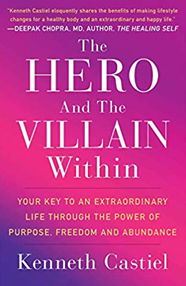
Kenneth Castiel: The Hero and the Villain Within
Read the full transcript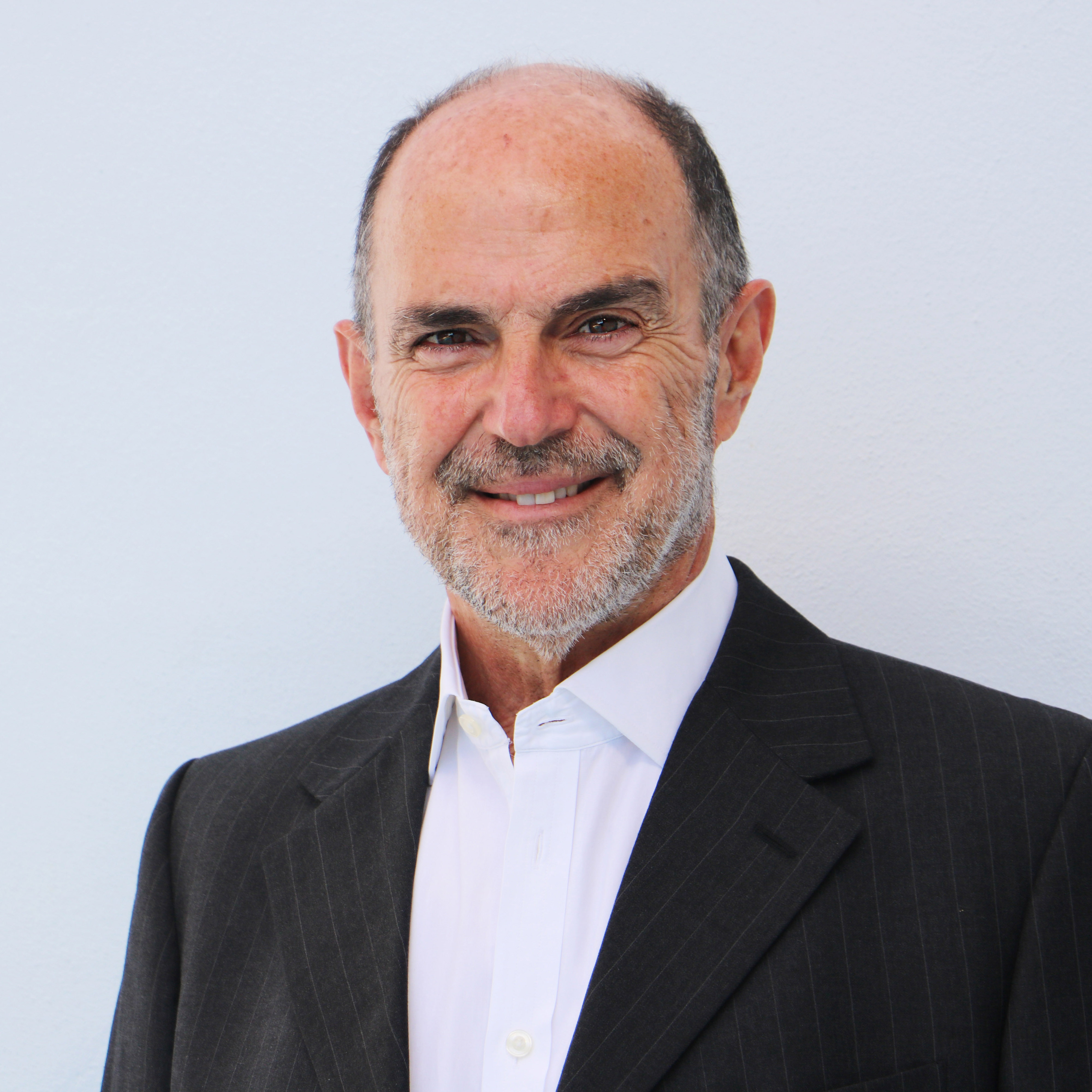
Kenneth Castiel
Kenneth Castiel is an entrepreneur, high-performance business coach, and keynote speaker, and a Million Dollar Round Table life member. He began his career selling books door to door and went on to found one of Gibraltar's leading home-grown financial services companies, which he sold after thirteen years, reaching financial freedom at the age of forty-three. He later returned to university, earning a master's degree in creative leadership and studying psychotherapy and psychology, and he has pursued advanced training in NLP and archetypal branding.
📚 Books by Kenneth Castiel
Transcript
[0:00:40] Charlie Hoehn: You’re listening to Author Hour, enlightening conversations about books with the authors who wrote them. I’m Charlie Hoehn. Today’s episode is with Kenneth Castiel, author of The Hero and the Villain Within. Kenneth is a business man based in Gibraltar, he began his career selling books door to door and then he went on to found a multimillion dollar financial services corporation that had 50% of Gibraltar’s citizens as their customers. When he was 43 years old, Kenneth sold the company and he attained financial freedom but that’s not what this episode is about. This episode is about growing old in a healthier way that most people don’t know about. In this episode, you’ll learn how to connect with your subconscious, how to discover your big ‘Why’ and some simple exercises that will help you live a fuller, happier life. Now, here is our conversation with Kenneth Castiel.
[0:02:07] Kenneth Castiel: My father passed away at the age of 89 and even though most people say, “Well 89, that’s good innings,” I mean, 89 is a ripe old age but unfortunately, I saw my father deteriorate over many years. The last 15, 20 years of his life, the quality of his life was not good at all. Even though I knew that as it was happening but it hadn’t hit me until he passed away. Because I felt sorry to see my father leave and I said, “What a pity that the last 15, 20 years of his life was in and out of hospitals struggling with medication, going to doctors, having operations.” It made me realize that we don’t look after ourselves. My father didn’t look after - my father had gone to the gym for instance and built his muscles and toned his muscles and made his body stronger, as he was getting older, he would have faced old age in a completely different way. You know, for me, the example that I like to give is that we all have an army coming to get us and that army has already set off and it’s on its way with your name on it. If that was true and it was a physical army on his way to get you, you would get ready for that army, you would put up your defenses, you would do whatever it takes to defeat that army that’s coming to get you. But on the other hand, we don’t do that with the army of old age that’s coming to get you. It doesn’t have to be old age, “I’m 90 years old,” it could be that you’re 70 years old but obviously your body is not ready for the high blood pressures and the cholesterol and the old and difficulties that come with getting older. My father inspired me to change my lifestyle and I became health and fitness conscious. At that stage and this is three years ago, I went to the gym, got myself a personal trainer, changed my lifestyle and I lost 30 pounds in weight. 30 pounds in weight, If you can imagine 30 one pound packets of sugar that I was carrying around with me 24 hours a day, seven days a week. I went back to after I lost the weight and I go to the gym, three to four times a week and I have a personal trainer and so on and so forth. I not only lost the weight but I went back to my doctor, he checked me up, he said, “Please, stop taking medication for blood pressure,” because I used to take medication for blood pressure, high blood pressure. I used to take medication for cholesterol, I used to have a back problem that plagued me and I was always in pain. Since changing my lifestyle, the cholesterol is gone, the high blood pressure is no more and the back problem is gone as well. Not only because I lost the weight but because I keep my body fit, I build my body up, I build the strength in my body. That was major in my life and that was around that time was the time when I said, “Well, enough is enough,” I have to write this book and I want to put this message out there that because that you should get out of the social conditioning that says, that because you hit a certain age, you’ve got to take medication, you’ve got to accept your physical state if it’s no good and on the other hand, you’ve got to send your body and your mind a different message altogether by keeping fit, by eating well and obviously empowering yourself with a healthy body and a healthy mind.
[0:06:22] Charlie Hoehn: First of all, that’s fantastic that you’ve changed your physical state to that degree, that phenomenal, so congratulations. Let’s talk about your book, The Hero and the Villain Within. Is the main focus of the book then to get your physical health in order or what would you say is the big idea in the book?
[0:06:48] Kenneth Castiel: The big idea in the book is to really first of all expose social conditioning. It’s really, “Are you ready to wake up?” Are you really ready to realize that there’s a, what I call the hypnosis of social conditioning that you’re living a life that is invented, that – unless you’re talking about universal truths like gravity. I mean, you put two people at the top of the building and they jump off and one is a saint and one is not a saint. They’re both going to end up with the same fate, they’re going to die. That’s a universal truth, gravity. But, everything that we do, everything that we do that we don’t even realize comes from social conditioning, it’s almost like a hypnosis. We think that we have to do things in a particular way. My book explains this with stories and with situations to make you realize and to capture yourself doing the hypnosis of social conditioning in your life.
[0:08:02] Charlie Hoehn: What’s your favorite story or example from your book of this social hypnosis?
[0:08:08] Kenneth Castiel: Well, there was a girl called Jane and she used to watch her mother every Sunday prepare the roast. The mother used to cut off both ends of the roast, put that extra meat in the fridge and put a much smaller piece of meat in the oven. She used to ask her mother, “Why do you cut off the end pieces? Why don’t you put in the whole piece of meat in the oven?” Her mother used to say, “Well I don’t know, that’s how your grandmother taught me.” Christmas came along and grandmother was with them and Jane said, this is my opportunity to find out why she taught my mother to cut off the ends of the meats before she puts the meat in the oven. She asked her, grandmother, “Why did you teach my mother to do it that way, why not keep the whole thing?” Her grandmother said, “I didn’t teach your mother to do that, when your mother was growing up, we didn’t have lots of money, we had a tiny oven and it didn’t fit, the piece of meat didn’t fit in the oven so I used to cut off the bits at the end, put it in the fridge so that it would fit in the oven.” Whereas the mother thought that this was the way, this was the correct way to prepare Sunday roast, it was simply, if when you looked at the source of where the information came from, it was for a particularly, totally different reasons. The mother would say, “This is the way, this is the rule, this is the way you actually create a roast.” Whereas when grandmother was asked, she said, “It was only because I couldn’t fit it in my oven but there’s no reason why she shouldn’t put the whole roast in the oven.”
[0:10:00] Charlie Hoehn: This goes into our – I guess, the nature of grownups, past a certain point that they stop asking ‘why’, right?
[0:10:10] Kenneth Castiel: Yeah, not only do we stop asking ‘why’ but we are under hypnosis. We don’t even have an opportunity of asking ‘why’. We just do things and this is not just that, this is advertising as well. I mean, you know, people live by the way the guy looks that is driving the car in the advert or the way the girl looks that is going into a store to buy some clothes and if that is the way they feel that they should look, this is why a lot of the time, people are unhappy because they’re unhappy with the mirror that they’re using to look at themselves, includes a perspective, a perception which is invented by the advertising company. “This is how you should look, this is how you should behave, this is the car you should drive.” and so on and so forth. We believe all of that and it’s all a lie, it’s not true.
[0:11:15] Charlie Hoehn: I was studying marketing in college and I felt very conflicted about it when I chose that as a degree because of some standup material that I’d heard from a comic called Bill Hicks who would talk about how, he had a famous bit that was so uncomfortable to listen into where it would say, “If you’re a marketer, kill yourself because you’re doing the devil’s work in making people behave and buy things that they would never buy on their own.” It’s to the point of this hypnosis falling into these behaviors, these actions, these purchases and these desires that would never be there if it weren’t for the advertisement. How did you break out of that hypnosis?
[0:12:12] Kenneth Castiel: I’ve been reading and reading and reading and reading ever since I was 15, 16, I would read about these things. My grandfather, in fact my parents too, believed in freedom and freedom wasn’t just a physical thing, it wasn’t just limited to physical freedom, it was freedom of the mind, freedom of how we think, being critical thinkers. You know, when I went and did my master’s degree a few years ago, you know, that was a big thing for me because critical thinking was huge in that masters. Nothing is taken for granted and you scratch the surface and you keep scratching until you find all sorts of perspectives that is not just the obvious one that everybody accepts. I’ve read lots of books that have helped me to break out of that hypnosis of, that slumber. I would call it a slumber of social conditioning.
[0:13:18] Charlie Hoehn: Do any of those books come to mind as particularly worthwhile?
[0:13:23] Kenneth Castiel: Yes, The Four Agreements is one of them. There’s another one called A New Earth by Eckhart Tolle, there is another one called Silence by a Buddhist monk called Fitchnat Hung. Then there’s an amazing book in marketing which I suppose is the flip side of all of this which is also in my library and it’s a great book, The 22 Immutable Laws of Marketing by Ries and Trout.
[0:13:57] Charlie Hoehn: Yes. Classic.
[0:13:59] Kenneth Castiel: Yeah, it says, how the aim is for an organization for a corporation to own a piece of your mind real estate so that when you think of computer, you think of software, you think of Microsoft and you think of fizzy drink and you think of Coke. You know, that happens instantly and for it to be happening instantly, you know, they need to own a piece of your mind so that your mind relates to that instantly even before you say it, you’re thinking, coke, when you say fizzy drink. You don’t even have to say fizzy drink, all you have to do is listen to a fizzy, what the fizzy cold drink does and you think of coke. There’s much more, I mean, you know, it’s when you start looking at these things, people as I said to you before, lack confidence because you know, we tend to lose ourselves, we don’t know who we are anymore, we keep trying to do what we’re told to do and where, what we’re told to wear and use the right perfume. Then there’s the social condition that happens as a kid is growing up you know? Somebody’s saying, “Don’t be clumsy,” you know, we don’t really know how to the extent that you know, a derogatory instruction to a child about herself impacts that person’s life, right through their life. There’s a whole education that needs to happen in the world because we – we have to mind our language, how we speak, what we say, how we condition our own minds by the language we use. You know, if we keep saying, “I can never do that,” I mean, I know somebody that keeps saying, “I am a coward, I can never do that,” every day of her life I hear her say that. Therefore, the next time something presents itself, her mind is already conditioned not to take the massive action because she believes that she’s a coward, where did that come from, maybe a teacher, maybe a friend, maybe a parent. It comes from well-meaning people who are clumsy with their instructions, with their –
[0:16:26] Charlie Hoehn: Their mind’s thinking. Tell me Kenneth, what would you instruct that person to do to break out of that, to recondition her mind and to apply the principles in your book?
[0:16:43] Kenneth Castiel: Well, as my book is not just a book about what it is, it’s a book about how to work on yourself so that you can break out of that social conditioning. It gives you, my book gives you the tools at the end of each chapter. The only things that I ask the reader to actually go through and do that introspection, it is really an introspection that I feel that we all gain by doing, it’s an introspection, it gives you exercises and it gives you ideas that will little by little open up your mind and encourage you to catch yourself doing that social conditioning. So that you suddenly smile at yourself and say “Hey, look at what I’m doing, I believed in doing that all my life and now I realize it’s invented.” You know, I would say that the book takes care of that right through. It’s a ‘how-to’ book so it’s not just reading and accruing information, there’s information but you know, the major part in the book is to actually take action. I will be running workshops based on the book so you’ll be doing, if you were to come to a workshop, you’ll be doing a lot of the work that is in the book but in a structured way with me.
[0:18:16] Charlie Hoehn: Why does this really matter for the listener to wake up, I guess? Could some people argue that you can go through life blissfully asleep and hypnotized and that’s that, it doesn’t matter because at the end, we’re all, as you said, the saint and the criminal, they end up in the same place. It does. Kenneth, let’s go through one of those exercises if you would take us through that.
[0:24:03] Kenneth Castiel: Okay, let me just take you, one simple exercise because most good things are just simple. What I’d like you to do is to become aware of your breath and become aware of your inhale and become aware of your exhale. Inhale and exhale four times and be aware of it because normally we’re not aware of it, we’re just having conversations and we’re not even aware of our breath. Be aware of your breath. Then become aware that the breath is happening in the now. If you’re aware of the breath, you’re in the present moment, you’re in the here and now, you’re not in your head and for the few seconds that we’ve had this conversation and you have been in the present moment by being aware of your breath, your inhale and exhale, you’ve had a reprieve, you haven’t been jumping from thought to thought, you’ve been here, present. Here, present is a place of healing because it’s peaceful. This is why it is my belief, they tell you when you sleep, you repair, it’s good for your health to sleep because your conscious mind which is the mind that is an incessive thinking, gets out of the way when you sleep. You repair. But if you can do that when you’re awake, by coming back to this present moment for your breath or by becoming aware of the chair that you’re sitting against your legs. Now, where was that awareness before I asked you?
[0:25:55] Charlie Hoehn: Kenneth, I was actually, as you were talking about sleep, I was trying to remember and I think it’s the Dalai Lama who said the best form of meditation is sleep.
[0:26:05] Kenneth Castiel: Yes, the best form of meditation is sleep and the best form of meditation is being awake in the present moment and I teach you that in my book. So when you’re breathing, you’re in the present moment. You are not asleep. What you’re doing is you’re awake. You’re asleep when you are in your head thinking about all the things that you need to do or haven’t done or may happen or may not happen.
[0:26:33] Charlie Hoehn: Yeah.
[0:26:34] Kenneth Castiel: Okay, so that’s why I was giving you the example of the feel of the chair on your legs as you’re sitting against it. It just shows that you are not awake in the present moment. Suddenly you become awake and you become aware of the chair against your legs and that is happening in the now. So every time you are conscious of the chair, the feeling of the chair against your leg, you’re in the now. You’re not in your head all over the place, you’re here and now. You’re in the refuge of this place and it makes you feel a lot more relaxed, a lot more happy, a lot more present.
[0:27:19] Charlie Hoehn: Author Hour is sponsored by Book in a Box. For anyone who has a great idea for a book but doesn’t have the time or patience to sit down and type it out, Book in a Box has created a new way to help you painlessly publish your book. Instead of sitting at a computer and typing for a year, hoping everything works out, Book in a Box takes you through a structured interview process that gets your ideas out of your head and into a book in just a few months. To learn more, head over to Bookinabox.com and fill out the form at the bottom of the page. Don’t let another year go by where you put off writing your book. Do you think people end up getting sick because they’re so in their head that they are not listening to their body at all?
[0:28:11] Kenneth Castiel: Yeah, I believe that completely. I believe that people get sick. I mean I don’t have to say it, modern science tells you that stress kills. That says that stress creates all the critical illnesses, cancer, stroke, heart attacks, they contribute to those illnesses. Of course there are other things like your lifestyle and so on and so forth, maybe genes but you know stress is a killer and you cannot be in stress if you’re fully present and this is what I teach in my book. I teach you how to be fully present, how to keep coming back to this present moment. Of course, you need practice and patience to learn this but this is something that will save your life. This is not something that is you’re going to do it just because you want to try something new. This is something that is going to give you a quality of life, longevity and it’s going to keep you safer from critical illness and if you’re in your head, stressed out and never here. So it’s really like a journey. If I’m in planet earth in this living in my body and I’m never here, I’m always in my head jumping from – force jumping from branch to branch like a monkey I will never enjoy my life. I could live until I’m 90 and I said I was never in my life. I was always in my head so this is why this is important to be mindful. When you eat, you know not necessarily when you eat, you eat. When I eat, I eat. I am not having conversations about my business when I eat. Or I’m not having conversations about other things when I eat. I eat, I am conscious of my food in my mouth. When I drink, I am conscious of the liquid of the water coming into my mouth and the enjoyment of that. When I am doing any – I will share with my wife, one of the things that they took away from us was being able to wash dishes because most people have dishwashers because you can mindfully wash dishes. You know you can feel the water in your hands and the soap suds and then you dry the dish and you’re conscious because the dish is in the present moment. So if you’re with the dish, you’re in the present moment. You’re not in your head.
[0:30:38] Charlie Hoehn: Yep, it’s one of my favorite little daily activities that I do is cleaning the kitchen or cleaning the dishes and I actually – it’s funny that you should mention that. I saw an article recently about how it’s one of favorite things to do.
[0:30:55] Kenneth Castiel: Really?
[0:30:57] Charlie Hoehn: Yeah because it forces him into the present moment and it sounds like and for some reason I’d never made this connection until this conversation but it sounds like what meditation really is, is the practice of returning to the breath, the practice of being aware of the breath, the dedicated time to do that whereas mindfulness is really the ongoing return to the breath and being in the present moment even if you are doing other things.
[0:31:30] Kenneth Castiel: Yes, exactly and mindfulness is an ongoing meditation I like to say because you are constantly meditating. So you can be in business, sitting at a high powered meeting, relating to important strategy for the people you work for or for the company that you own and you can still be present. So you can still be doing that from this present moment which makes you much more effective. So this is not about going away and sitting at the top of the mountain. This is about living in modern life, owning a business or working for a corporation and being more effective because you’re fully present.
[0:32:14] Charlie Hoehn: Kenneth, to return to your point at the beginning when asking about social conventions and why we do things the way we do, is there a reason why we focus on the breath and mindfulness rather than let’s say the beating of the heart?
[0:32:31] Kenneth Castiel: I think the breath is easier. It is easier to focus on the breath. You know we –
[0:32:38] Charlie Hoehn: Because you control it.
[0:32:39] Kenneth Castiel: You control it, it’s there all the time, you suddenly come back to something that is sustaining you. The fragility of life is in the next breath you breathe. If you don’t breathe it, you die. So breathing ranks up there as the most important thing that sustains on a minute to minute basis but it is also easier I believe to be aware of your breath. You know I am doing it now and I am speaking to you and I bring myself back with a breath. It’s much easier. I mean the other thing that I use that I teach in the book is sound. Some people are audio people more than visual people, more than anything else. You know really and truly the overview is you’re five senses. So anything that you experience through your five senses is in this present moment. You know what you’re looking at is like standing behind your eyes and looking out from behind your eyes as if you are looking out of a window. Whatever is in front of you is in the present moment. So for that split of a second, you look at the book in front of you and that book is in the present moment. So you come back to now if only for a split of a second but for a split of a second you can heal, you can be here and then go off again in your journey in your head but keep coming back to now through your five senses. I said sound because if you are listening to my voice, my voice is in the present moment. I used to have a neighbor, lovely neighbor but he has a dog that barks and barks and barks and he barks a lot less now but rather than get upset every time the dog barked, I said “The bark of the dog is in this present moment.” So it’s like having an alarm clock. The dog was bringing me back to the present moment because sound is in the present moment. So anything that you hear is in the present moment and it brings you back to this present moment.
[0:34:55] Charlie Hoehn: So Kenneth your book isn’t out yet at the time of this recording but can you tell me about how some of the stuff that you’ve taught in your book has affected people you know, people you’ve worked with, what has it done for them?
[0:35:15] Kenneth Castiel: Well, we built a business around the stuff that, not just being present, other things as well but as around the stuff that we are discussing today and other stuff that is in the book that we are not going to be discussing today and it’s affected them in that I think the main thing – I would say two things, the first thing is learning how to take massive action. Let me give you this example, a decision is a conduit to somewhere. Let me give you the example like this, you go to the airport to catch a flight and they tell you the flight is cancelled and you’re stuck. You are not going to go anywhere and in the same way metaphorically, when we don’t make a decision we’re stuck where we are. So that’s one of the things I deal within the book that has affected a lot of people in my life. The power of making a decision, the power of breaking out of procrastination. The power of taking yourself down the conduit that having made the decision you are allowed to go otherwise you are like at the airport, the plane is cancelled and you’re stuck there and not moving. That’s one big area of living a better life is taking a decision and not holding back.
[0:36:47] Charlie Hoehn: Yeah, taking and making the decision and taking action, you know I saw a good movie, a good documentary recently called, If You Are Not in the Obit, Eat Breakfast, which is if you are not in the obituary eat breakfast and Jerry Seinfeld was actually interviewed in that movie and he said something that really stood out to me. He said, “If you’re doing something life is good. If you are doing nothing, life stinks. Life is action, there’s nothing else to it”.
[0:37:22] Kenneth Castiel: Exactly. Absolutely and when I speak to people about being fully present, they think it’s about just meditating and sitting on top of a mountain but it’s not. It’s about taking action because you are here. When you are in your head, you are worrying about things. You are creating a situation that doesn’t exist and the proof of that is that you are watching a horror movie at 1:00 in the morning at home and all the lights are out and you keep looking back because you think that the villain or the horror or the mummy or whatever it is, is actually sitting behind you coming to get you. And we are very suggest-able, our minds are very suggestible. So coming back to this present moment gets rid of all of that. It frees from the suggestibility of the human mind and gives you that empowerment to carry yourself forward in a way which is real and not invented.
[0:38:19] Charlie Hoehn: Well this transitions really nicely to how we can sort of wrap things up which is can you give our listeners a challenge. What is the thing they can do from your book to change their life this week? And I think I could guess it but I’d love to hear it from you.
[0:38:39] Kenneth Castiel: Let me ask you and our listeners or your listeners rather this question: “What is it that you are prepared to let go of for you to live the life of your dreams?” And let me take that further, “What is it that you want in the future that you will be prepared to let go off what no longer serves you now?” And the reason why those questions are pertinent is because we all do this. We all hold onto something, a narrative of who we are whether we can do this whether we can’t do it. The relationship that we have that we put the excuse on the relationship that doesn’t allow us to take ourselves forward. Whatever it is, “What is it that you’re prepared to let go off for you to live the life of your dreams?” So if I’ve got a couple of – can I do an exercise around this?
[0:39:35] Charlie Hoehn: Yeah.
[0:39:36] Kenneth Castiel: Okay, so consider you are flying out of your head and find the direction of your future. Fly down that future timeline until you get to three years from now. When you get there, I want you to turn around and look back towards now as if you were looking down a time tunnel. Notice that you’re happy and that you feel very satisfied with what happened in your life in the last three years and now ask yourself as you are looking down the time tunnel towards now: “What is it that has happened in my life both personally and professionally that has made me so satisfied with my progress?” And I want you to do that exercise. That’s the challenge, you’ve asked me to leave your readers with a challenge. I want you to look at, to do that exercise and see what needs to happen in your life in the next three years for you to be satisfied with your progress both professionally and personally but it is about taking action. It is about doing the exercise. It’s about being mindful about carrying this out and taking the massive action otherwise, you know one day links with the next will link with the next and before you know it, three years have gone by and you are still in the same place as you are today.
[0:41:19] Charlie Hoehn: How do they know when they look three years into the future what they’ve become, how do they know that this is truly what they want versus what the social conventions have hypnotize them into wanting?
[0:41:36] Kenneth Castiel: That is a great question and I’ll answer it the best I can. We need to learn and I deal with this in the book as well, there’s a whole chapter on this. We need to learn how to connect with our unconscious mind and you might say, “Well how do you do that?” Because anything that is happening out of your conscious awareness is happening in your unconscious. In other words, you don’t have to know anything about biology for the blood in your body to circulate and to keep you alive and well. You don’t have to remember all the telephone numbers that you need to phone if you were to call your mom or your friend or whoever. You are not conscious of their telephone number now but the moment you think of them you think of the telephone number. So it’s stored away for you in your subconscious mind. Just to give you a couple of easy examples. So when you connect with your subconscious mind and say, “What would I like three years from now?” “What should have happened in the next three years for me to be happy with my progress?” Your subconscious mind is going to give you a feeling and if that feeling is blank, then maybe, if it has no feeling, if it’s just something that you can invent it out the top of your head and you say, “Whatever,” then that might not be something that resonates with you. So you are looking to think of something to connect with something, to things in your life that resonate with you. And your subconscious mind will give you that good feeling. If I could, somebody wants to be in a relationship that is not in a relationship now and you think of the type of person you would like to be in a relationship with, what type of relationship you would like to have, how far do you want to take it with them? Do you want to share your life with them? Do you want to have children with them? What sort of house do you envision that you’ll be living in? What type of extended families will you have? What will you do with Christmas time? And so on and so forth. That is going to generate feelings that will either make you feel fantastic and good and give you a warm nice feeling or it will not create any feeling at all. You can tap into your unconscious mind and identify how the things that you’re plotting for your future resonate with who you are. Am I making myself understood here?
[0:44:19] Charlie Hoehn: Yes sir, it sounds really like it goes back to listening to your feelings and are they aligned, are your thoughts aligning with your feelings or not and I think this is particularly challenging especially for a lot of men who’ve been for many years muting their feelings or avoiding them.
[0:44:49] Kenneth Castiel: Yes, there comes a time where you have to be a whole person and a whole person include your feelings. It includes your conscious and unconscious mind. It includes being present so that all of these wonderful things can be done. It includes trying to break away little by little from social conventions that make you, hold you back and it’s what you have just said about men is a social convention. I mean men are not supposed to cry for example. It’s wrong for a man to cry, and you know, ultimately, you hit it on the head what you said about men and so we need to work on ourselves so that these are not limitations that we impose on our wonderful life because our life should be a wonderful lives. The only thing is we create lies around the work that we do, the business that we do and we identify, our thoughts are identified with these things that we do but it’s not who we are. We are much – you know it’s difficult to put words to this but we are much bigger than the work that we do and the activity that we do and the sport that we do. We are much bigger than that. You know I have a mentor that says the cosmos within is much bigger and greater than the cosmos outside. So when you start thinking about these things, hopefully something starts waking up if not now at some point in time where you’re really developing who you really are not just a limited profile relating to the work that you do or where you come from.
[0:46:37] Charlie Hoehn: Yes, I think that all of the great spiritual texts have that message of the cosmos within or the Kingdom of Heaven lies within everyone and yet, the most challenging thing for most of us is to turn within or to acknowledge that treasure within and to spend time with it.
[0:47:06] Kenneth Castiel: You mean the challenge is to actually do it.
[0:47:09] Charlie Hoehn: Yeah.
[0:47:10] Kenneth Castiel: Yeah, I agree with you because that is the world that we’re living in. We are living in – I think that life is wonderful and the world is wonderful and I’m an optimist and I am always in awe of being here, living this wonderful life, experiencing good things and bad things but you’re absolutely right. It’s a question of finding that within yourself. Finding that within yourself and that’s what I endeavor to do in the book. I am trying to help people, help the reader to find that within themselves. With keeping their feet firmly on the ground and still talking about the everyday modern life that we are on planet Earth. We are not sitting on a mountain so you know the book brings the aspects of what you’ve just said, which is finding yourself within the Kingdom of Heaven is within you and so on and so forth and at the same time keeping your feet at the ground and living a splendid life. Where you have to earn a living, where you have to be aware of profit and but you can do that in a socially responsible way. So you become a better world citizen because you want to be involved in things that are good for the planet because it is not just about you. It’s about all of us. It’s not just about me, it’s about all of us. You know it really is, you don’t – you see, where I say in my book that we’re like a family and like a family, there are going to be certain members of the family that you are not in love with that you don’t like but that doesn’t mean that we are not a family. We’re a family. It just so happens that you need to pull up your socks and do life better because you are affecting me or you’re doing this or that but you know, we are whether we like it or not, we’re a family. We are one and the more we differentiate and the more we see each other as different from someone else, the more we create that rift. So really what comes first, the chicken or the egg? It creates huge problems and has done so for thousands of years of recorded history. Where we all use our social conditioning to say, “This is mine and don’t put your foot in here and this is yours,” you know?
[0:49:40] Charlie Hoehn: This is this country and they act this way and this is that country and we do things that way and this is this religion.
[0:49:47] Kenneth Castiel: Exactly, absolutely. You’ve got it.
[0:49:49] Charlie Hoehn: Well Kenneth, this has been a great conversation. I find myself wanting to talk more and more about it but how can our listeners connect with you, follow you, maybe take one of your workshops?
[0:50:01] Kenneth Castiel: Well I’m on my website is kennethcastiel.com and I’m on social media on Facebook, I am @Kenneth Castiel. On Twitter I am @kennethcastiel. On LinkedIn, I am on Kenneth Castiel and on Instagram, I am on @kenneth_castiel.
[0:50:33] Charlie Hoehn: Oh no, I thought you had them all.
[0:50:38] Kenneth Castiel: Well you know something? I had Kenneth Castiel on Instagram but I had a problem with logging in once and you know I just can’t get through to Instagram to tell them, please resolve the issue, so I’ve had to submit to Kenneth_Castiel, what can I do?
[0:50:59] Charlie Hoehn: This is the modern tragedy, yeah. Well Kenneth this has been lovely so thank you so much for sharing your thoughts and for sharing about your book.
[0:51:09] Kenneth Castiel: It’s been my pleasure, thank you for having me.
[0:51:13] Charlie Hoehn: Many thanks to Kenneth Castiel for being on the show. You can buy his book, The Hero and the Villain Within on amazon.com. Thanks again for listening to Author Hour, enlightening conversations about book with the authors who wrote them. We’ll see you next time.
Want to Write Your Own Book?
Scribe has helped over 2,000 authors turn their expertise into published books.
Schedule a Free Consult