Joanna Martinez: A Guide to Positive Disruption
Read the full transcript
Joanna Martinez
Joanna Martinez is the founder of Supply Chain Advisors LLC, where she advises clients ranging from startups to Fortune 500 companies. Over a career spanning four decades, she led transformation initiatives across the pharmaceutical, beverage, consumer products, financial services, facilities management, and real estate industries. A noted speaker on procurement and supply chain topics, she was twice designated a Pro to Know and named a Distinguished Alumna by Rutgers College of Engineering, where she serves on the Industry Advisory Board.
📚 Books by Joanna Martinez
Transcript
[0:00:37] CH: Author Hour is about answering one question. How can you get the best ideas from great books without spending so much time reading? Every week, we take you behind the scenes with a new author, about the most important points in their book. If you love to learn while you're on the go, you’re in the right place. All of our book summaries are 100% free and we do more than a hundred episodes every year. Please subscribe to and review Author Hour on iTunes. Today’s episode is with Joanna Martinez, author of A Guide to Positive Disruption. Business change is often out of our control and it can be very unsettling but turmoil also creates opportunity. In this episode, Joanna gives us the tips, tricks and tools to become effective agents of change. She learned this during her career that spanned four decades as a corporate executive who led transformation initiatives of all types within various industries from the pharmaceutical industry to the consumer products, financial services and real estate and many more. In this episode, she’ll show you how to roll with the punches and give you the knowledge you need to become a positive disrupter. While no one is immune to disruption, the right process and the lessons from this episode can help you turn it into something positive for yourself and your team. Now, here is our conversation with Joanna Martinez.
[0:02:32] Joanna Martinez: Over the course of my career, I lived through 18 reorganizations, that doesn’t mean I got fired 18 times, it means though that 18 times I was in a situation where my job was changing, going away, my company had been acquired, I had to compete for a new job because what I had done before was gone. Maybe the second or third, probably the third reorganization along the line, I was doing my accomplishments at the end of the year and I realized that I had accomplished nothing. I was working for a really good company. I had a lot of great opportunities but I had wasted the entire year worrying about what was going to happen. That was my moment, my aha moment, that made me say, “Wow, I can’t do this, I’m early in my career. I can’t spend the next 35 years trying to duck my head and not make eye contact and hope that no one will notice me. So that I make it through the next reorganization.” That I had to come to terms with the fact that it was looking like it was a way of life. How was I going to adjust? What was I going to do, how was I going to get to the point where I was somewhere who was making positive change instead of worrying that change was going to happen to me. I’m a pretty good writer, when it comes to putting pen to paper and I stared at that keyboard for a long time trying to say, what am I going to say, what did I do this year? And really, didn’t have anything to show for it.
[0:04:15] CH: Wow, that’s unreal. When you were thinking back on this year and you realized there was nothing, can you maybe tell us what your days looked like during the year of “nothing accomplished?”
[0:04:30] Joanna Martinez: Well, you know, I had come to work and I had managed what I had to manage and I had basically just stayed with the status quo. I hadn’t made any improvements, I hadn’t dealt with any of the big issues, I hadn’t made waves. You know, I started thinking then about the term disruption, somebody mentioned something about this disruption or we’re having another reorganization, here comes more disruption. I realized as I pondered that. That maybe, it was better to be a disruptor than to be a disruptee. It was better to be someone out there making positive change than it was just someone trying to hold back in the shadows because you’re afraid something’s going to happen to you.
[0:05:18] CH: Can you tell me about a moment where’re you really felt like you were just kind of ducking your head in the shadows like, I’m trying to get the sense of what that was actually like on a moment basis.
[0:05:30] Joanna Martinez: Well, it was when I was sitting there, you know, at the beginning of the year, in a large company, you have to create a set of objectives for the year, here are the things that I’m going to do and it’s not show up every day. It’s, “Here are the changes I’m going to make, here are the cost, numbers that I’m going to achieve or the sales numbers I’m going to achieve,” whatever it is. You know, I just realized, I hadn’t done any of them, I had spent all of my time being worried. When I’m really worried, it kind of sits at the top of my nose. Where something sits, where that congestion sits, if you have a nasal infection, you know? Everywhere I looked and everything I did, I thought about, there’s change coming. What am I going to do, you know? How am I going to survive this? What’s going to happen to my family, that sort of thing. I worried about what might happen. Instead of making good things happen so I would be noticed as someone who is worth keeping, right? Somewhere in there, when I looked and I saw that blank piece of paper and I realized how much I had fallen short, that was my moment where I said, wow, this has to be different. I have to throw this mindset away and adopt a new one which is, I’m going to be a positive influence, I’m going to make positive change because if nothing else happens, at least, I have positive things that I can put on my resume so that if I don’t make it through the next reorganization, I at least will have some really good things to be able to show another perspective employer.
[0:07:14] CH: You know, I think that’s pretty remarkable Joanna. Is you could have reacted by saying, “I spent too much time worrying last year. This year, going forward, I’m going to worry less, so I’m going to take up meditation and I’m going to do yoga.” But instead, you thought about, “How can I be a more positive contributor? And how can I regain my own inner strength?” Why do you think you responded that way versus the way that a lot of other people respond which is I need to control my emotional state?
[0:07:49] Joanna Martinez: Well, I think, it’s because I recognized that it was not an isolated occurrence, right? I hadn’t lived through a couple of isolated occurrences but I was seeing a pattern, I was seeing constant change, we were beginning to see automation coming in, don’t forget, I’ve been working for a long time so when I started, everybody didn’t have a laptop, right? It’s about – we were starting to see more PCs coming into the workplace and things being done differently and I started to recognize that it was sort of beginning of a sea change. You know, I could probably find a quieter company, I could find a place that was more churn resistant, I could find a situation but I felt like I was only delaying the inevitable. The thing to do was to seize it, right? To carpe diem, seize the day, I probably saw that Robin Williams movie somewhere in there. Just said well, heck, if this is what it’s going to be, I’m going to have to convince someone multiple times in my career, that I am the right person for the job then I’m going to have some great things to be able to show that I’ve accomplished. Because in the end, I’m getting paid, right? In the end, someone has hired me to come in and not just maintain the status quo but to make change and I didn’t feel - I felt I was working for a wonderful company. I didn’t think I was holding up my end of the bargain.
[0:09:20] CH: You were in an employee at the company, right? You weren’t a contractor?
[0:09:26] Joanna Martinez: No I was an employee.
[0:09:28] CH: Okay, so from my understanding and correct me if I’m wrong, there are some companies where the employees are there, simply to maintain status quo. At major massive companies that you know, let’s say Fortune 100 companies where they’re so big that they’re basically their own economies and the employees job is hey, keep the ship going the way it’s going and then they hire outside people to make those changes so that wasn’t the case at your company, right?
[0:09:59] Joanna Martinez: Well, I was a department manager, right? The expectation would be that every year, you were going to have some sort of a positive impact, you weren’t just going to come in with the same cost per unit as you had the year before. You were going to be figuring out some ways to do it better. You were going to be identifying places where automation investment would be a benefit for the company, you were going to be taking the positive steps to reduce the number of injuries or lost time accidents in your part of the business. You know, the company had goals in a very clear credo and set of objectives in terms of what they expected from their employees. Now, it is true, if my job were to turn a switch. Well, even if you’re turning a switch, and keeping the machine up and going, the expectation would be that over time, that machine would be up and running longer and longer. I’m sure somewhere, there are people who are hired to just come in and maintain status quo, not do any better, not change but I have a feeling that most of those jobs have long been replaced by a computer. We had some gentlemen whose roles it was to go out every day and take inventory. In a way, you could argue that they just had to turn in accurate numbers day by day for their career. When they left, they were replaced by a PC.
[0:11:29] CH: Yeah. Well, let’s talk about your book now, right? You’ve had this big aha moment, you’re going to be the positive disruptor, tell us, what is the big idea that people need to know from your book that they can start to incorporate into their thinking or even their work this week, that can be really transformative for them?
[0:11:59] Joanna Martinez: First of all, I’ve just mentioned to you that it’s a whole lot better to be a disruptor than to be a disruptee, right? You know, the disruptor in the fourth grade was a kid who got in trouble but that’s not the case, you know, when you’re working in corporate America to be a disruptor now is a good thing, it’s a positive term, right?
[0:12:20] CH: Can you give an example of a great disruptor in corporate America? Maybe not a specific person but an instance that you can think of, that was a great positive disruptor.
[0:12:31] Joanna Martinez: Person who is a great positive disruptor.
[0:12:35] CH: An instance maybe, just an example of some type.
[0:12:38] Joanna Martinez: Well, certain corporate cultures, right, there are people who just basically, you go to a meeting, the corporate culture is you go to a meeting and you – everyone agrees they are going to do something as a follow up and nobody really does it. Few people do it, right? They take minutes and they say, we’re going to do this and I’m going to do this, I’m going to follow up and rarely does anything happen. I was in a situation where there was a sales person from one of our suppliers who was big and he was brushing, he made a lot of noise and he owned the room when he walked in. I couldn’t stand him. I used to say, I hear him down the hallway, keep him away from me. He was just too much, his personality was too much for me. Then I realized one day that he was the only person who ever did what he said he was going to do. He’s the only person who ever really followed through. And that in fact, instead of staying away because his personality was different from mine, I should embrace the positive work he did because he was the only one who was actually helping us make change. Everybody else, you go, you know, you have a meeting and you come back a couple of weeks later and no one else had ever done everything they said they were going to do, you could see people had maybe tried at the last minute to make it look like they had. But he was the one who came through with the big bold changes and the big bold – things that he said he was going to do. He was the one who came in with the ideas.
[0:14:20] CH: Was this something you realized after you’d sort of seen the frame of positive disruption is the way to go?
[0:14:26] Joanna Martinez: Yeah, I was looking and saying you know, he certainly – he’s a larger than life personality and that doesn’t kind of fit with the way I do things, however, this guy is making positive stuff happen, he’s coming through, he’s the one who is really moving us along. We have this goal and you’ve got the train moving along the goal, he’s the engine. He’s the one who is making it happen because he’s the one who is actually delivering. He sees the vision, he shares the vision and he’s actually helping us deliver against that.
[0:15:00] CH: He actually got things done and what are the other characteristics of a disruptor? They actually get things done, they make change happen, are there other traits to them that we ought to know so we can aspire to be like them?
[0:15:15] Joanna Martinez: An important trait for a disruptor, an important skill for a disruptor is to look to the outside, to understand that it’s not all about them but it’s about the other people that they’re dealing with. The people to whom you have to sell your ideas. By that I mean, all of us, right? You take these personality test and you can – sometimes you get them during a workshop at work, sometimes you can just take them on the web, you know, we’ve all been exposed to them but they sort of tell you what your preferences are, right? Are you outgoing, are you introverted, are you someone who is very creative, are you very – do you work on one thing at a time, do you need a lot of things in order to keep yourself motivated and going, right? People tend to focus on themselves and understand kind of where they are on that, some people deny where they are on that but you know, people sort of get a sense for themselves but people don’t always look to the people you’re working with and the people that you have to convince. So, for example, if most of the time, this is a generalization, but the vast majority of time, I would argue that the CFO of a company is a very numbers person, right? They’re the ones who are meeting with analyst, they’re the ones who are responsible for reporting company results. They’re going to be very numbers focused. You want to do X, what’s the effect of that? What does that mean in terms of dollars and cents? If I give you the money and make this investment, what’s it going to mean? The people who go to those CFO, someone who is going to approach the CFO has to think about the CFO’s logical reaction and make sure they have the answers. If you’re the creative, big picture person, I want to - and you don’t have those answers, you’re not going to get taken seriously. People aren’t going to follow through and say yeah, that’s a great idea. You need to think about your audience and the fact that you might need to convince this person that you have a good idea. But, if you don’t come in with the kinds of analysis and the kinds of answers laid out in the way or the answers prepared in a way that person would expect them, you’re not going to get listened to. In every company, there’s an early adaptor, right? There’s someone who has every app, every bell and whistle, ever piece of technology. If you walk in with a power point presentation that’s multicolor, that’s stapled together and paper side by side, you're not there where that person is. You're introducing some noise in the channel that doesn’t have to be there if you took your style and adapted it to that person.
[0:18:02] CH: Yeah, just having empathy for the audience, that you’re really trying to sell and having a deeper understanding. I think that’s such a great point that you make. Everybody’s taking the strengths, find or test and in the corporate world but no one is focusing on studying the competencies and the strengths and the listening styles of the people that they really have to collaborate with and sell to.
[0:18:28] Joanna Martinez: That’s right. There is a phrase I heard a long time ago, do what is necessary, not what comes natural. We all think about ourselves and we all have things that we do that are the natural way we react to things and maybe that’s a fit with the people that you work for or the people that you have to convince to implement an idea that you have. But maybe not. If it’s not, you have to think about making those adjustments, even though they are not what you would naturally do and approach them that way. I’d like to get that for a second, you ask me a question about you know, disruptors and I couldn’t think of anything – you know, I gave you that one example and perhaps it’s a good one, perhaps not but a disruption, right? A positive disruption doesn’t have to be, I came up with this idea and we were able to completely revamp the way we manufacture this product and we cut the cost in half and we saved all this money and we took the company from the brink of bankruptcy into a positive state. It doesn’t have to be something like that. There are few people equipped with the knowledge and the ideas. Enough end to end information to be able to do something like that. There are lots of changes, positive disruptions you can make, for example, you look around you and you see people who are putting out the same information month after month, right? They’re creating reports or they’re sending things out to people and you look and you follow that process through the company you find that it’s not being used anymore. That it made sense at some time but it’s no longer needed, you know, I saw a situation where a company and a partner of theirs were actually fed ex-ing documents back and forth every day. The thing is, they were only about 12 blocks apart in mid-town Manhattan. 12 short blocks by the way. Someone and they were spending an enormous amount of money on FedEx every year. Now, those documents still had to get from point A to point B but somebody started picking them up in the morning as they passed by on their way to work. You know, I mean, that was – that’s a change, it was a disruption to the way things had been for a long time. But a very positive change for the firm that are very little things. Something like water bait, things that aren’t being done today by big systems and by that I mean this, companies who were early investors in technology. Say a dozen, 15 years ago right? Have this big pieces of software that are running on their servers in house and they’re difficult to manage and they are cumbersome and have a lot of information in them and they’re in the obstacle to change, right? It’s hard to change them because there is so much information fitting in there and so much of an embedded way of doing things that even though that technology may no longer be relevant, even though it might be faster, better, cheaper if you did it in the cloud instead of running it in the servers, the job, the task of the investment and the sunk cost is already in the way of doing things makes it a big obstacle but there are lots of app developers out there. There are lots of companies with pieces of software that allow you to do a small piece of that big pie in a much faster way and then feed it back in. So you know by becoming digitally savvy and understanding how finance procurement, RND, sales, the kinds of little digital aids that are out there bringing something small like that in your company can be a way of sharing information of making something cumbersome, a lot smoother because you are taking this big negative piece of it and doing it in a more efficient way for a lot less money. Something like blockchain right? People are educating yourself on blockchain which is just being talked about in terms of a way to pass money or a way to pass information around the web. There is a big disruptor kind of hanging out there. It is out there just sort of starting a sunrise on the horizon. Going out there and learning and keeping yourself educated on that and then when it’s ready being able to bring it to your company is a great way to be a disruptor. I heard a webinar by a woman who works in supply chain for a transportation company and she did a webinar in blockchain and she said that she did this because she sets herself a goal of learning something new every other year and learning it well enough so that she can articulate it to other people and be an “Expert” and she said she does it for herself because she is interested in what’s out there and she does it for her company because she then can be the go-to person as some of these things take hold and become reality.
[0:24:01] CH: So it sounds like what you are really describing Joanna is becoming a person of value, of so much value that you’re indispensable to the company no matter what technological innovations or disruptions in the company come on.
[0:24:19] Joanna Martinez: I don’t think anyone is ever indispensable. Save perhaps for the odd inventor here and there. You know the guy who knows the Coke formula for example, Coca-Cola formula. He or she maybe indispensable. For the rest of us, we’re never indispensable however, the more you learn and the more you do and the more changes you make, you put yourself in a situation where you are a whole lot more marketable. So if something happens where your company suddenly sold, right? And your suddenly out of the job and it has nothing to do with you being good or bad, it has to do with the company that bought you already has your function in house and they don’t want a new person, then you’ve got some great skills and you’ve got some great evidence of positive change that you’ve made for your company that is going to help you get that next job. I’ll give you an example of something that I saw. There was a role we were trying to fill once and the roll was travel manager. We wanted someone to come in and manage the travel program for the company that I work for because there was a lot of money being spend and a safety issue. There had been some situations like the train derailment in Spain or subway bombings in London and we need to know where our employees were and didn’t have that. So we were looking for this travel manager and that’s a space where there is a lot of churn taking place. A lot of automation, a lot of travel roles or companies that might have had five people in a travel role now have one or two and a lot of automation backing them up. That’s a place where there has been a lot of information and automation that has had an effect. So there is a lot of people with travel experience out there in the market and when we put the job on the website and looked again, 36 hours, 48 hours later, we had 400 people who had replied. And as we started to look at the resumes, they were all the same. They’ve all done the same, they’ve all listed the same kinds of accomplishments, resume after resume after resume, there was no spark that set anyone apart and what I am talking about here is doing positive things in your firm that will help you stay employed but also if you don’t, you have something that is going to set you apart. So when someone else is faced with 400 resumes to look at and yours is one of them you’ve got accomplishments or you’ve got something that is a little different than the others.
[0:27:08] CH: So let’s pretend your background now, I mean you are also a speaker, you have done a lot of consulting, you’ve done workshops, tell me what you would say to me today to start making myself into more of a positive disruptor and I feel a kinship with your message because I feel I already am a bit of a positive disruptor. I come to the people I work with, with new ideas. Oftentimes I have gone far enough down the path to validate that the idea is legit and I presented them in the way that I want to be presented to. So I am a little ways down the path and I believe in this message for sure. What can I start doing this week to level up?
[0:27:52] Joanna Martinez: You can make a friend outside your industry in a different part of the country in a business that has different problems than yours has and different challenges because it is that shared knowledge that helps you find the disruptions.
[0:28:12] CH: Okay, so I am booking a flight to North Dakota.
[0:28:16] Joanna Martinez: You know what? Look, there’s webinars, there’s seminars, there’s a million ways to do that. I’ll tell you why I say that. That struck me the other day. Since I’ve been working independently, I see people in different industries in different parts of the country and this is a bit of a gross generalization but I think there is some real truth in it. I see a body of people in industries sometimes located in specific parts of the country that know each other. They have grown up together, they’ve worked for the same companies who have a lot of financial services companies for example in the New York area. You’ve got biotech inform concentrated in a couple of places. You’ve got basic hard manufacturing in other parts of the country and you have a scenario whereas people move from industry or from company to company within the industry. They bring their friends with them. They find a job or they hear of a job opening and they recommend it to their friends and so you get these bands of people who have only been around their industries right? And then other parts of the country, the west coast for example you’ve got more new technology emerging companies and they are dealing with different issues. Sometimes they are so small because they are just starting out that they have a hard time coming back with ways to save the company a lot of money. Because companies are not making a lot of money yet. They don’t have to spend to be able to save a lot. They don’t automate it already so they don’t have things that they can automate and they have to figure out ways to add value and to bring something to the party and they, sooner or later will be, their industries will be mature and they will benefit from the mindset of the people who are working for the mature industries. The people of the mature industries need a way to shake it up. Many of them have been doing things the same way here on year and they have to find themselves to a spark, a way to set themselves apart. So why not go to an industry that’s not mature that’s dealing with different kinds of problems? Sometimes, something as simple as listening to a webinar. You know there’s millions of free webinars out there all the time. Listening to someone speak who is not the person that you might typically be going to because they’re in a different role. If you are in manufacturing, listen to someone in marketing vice versa, you know look for someone. If you are in the pharmaceutical industry and you have very rigorous process, look at someone in an industry that’s on a real growth trajectory and maybe doesn’t have that kind of rigorous process in place and that cross pollination of ideas is good even if you never travel and don’t listen to webinars. If you are in any kind of professional organizations, look for people. Or look at some of the new organizations, not the tried and true groups that have been out there for 40 years, 50 years have a formula but maybe look for some upstarts. You know even something like an alumni organization for your university if you’re not a member, maybe something there will expose you to an individual that you already have something in common with because you went to the same school but they are doing something vastly different and that might spur you to make a change.
[0:31:57] CH: I like that a lot. One of my friends is a big online entrepreneur and he noticed he got into a pattern of just studying online marketers, only studying all these other online marketers and he thought, “This is crazy!” Because there’s a ceiling here. I should be studying some of the top companies in the world like PNG, McDonald’s, how are they doing things and I saw his business really take off after he made that shift. So just moving, cross pollinating better ideas, different ideas. I know Warren Buffett is a big believer in that that you read a diversity of books so that they can cross pollinate with each other like you said.
[0:32:45] Joanna Martinez: I will give you an example, a great example I think. A friend of mine is an attorney in Brooklyn. When he started his business, I asked him how things are going and he said, “Business is great. I am getting a lot of clients. I am loving the work, I feel like I am adding value but the problem is getting paid. The problem is that I spend a lot of time calling clients, following up, sending out invoices, the payment part is taking the time away from me being able to do the positive things that I enjoy and that bring in the income”. So I gave him a suggestion, I said “Look at what happens when you take the dog to the vet.” You walk into the vet, the vet examines your pet and says, “Well there are a couple of options here. We can do this and this is what it’s going to cost. We can do that and this is what it’s going to cost or we have a third option and this is what it’s going to cost” that conversation takes place really early on in the process. So that before you go down a path you understand what that bill is going to look like at the end. I said, “Why don’t you think about that? Why don’t you think about taking that conversation that people shy away from and having that conversation upfront,” because if you say, “Well okay, we have this possibility or this and this is about what it’s going to cost and this is what I think it’s going to be and here’s an estimate” or whatever, you’ve at least planted that seed into your brain that this is what it’s going to cost and so it is not a surprise when they get a bill at the end. In fact that goes back to something that I learned from one of my mentors at Johnson & Johnson which was negotiate the hard stuff first, right? And well I did my very first contract on my own. So I had moved into a role where I was negotiating with third parties on behalf of the company and I did my first on my own and I was pretty proud of it and I went in to show him and he looked at it and he hinted it back to me and said, “You aren’t done because you haven’t negotiated any of the hard things.” “You haven’t accommodated for what happens if this goes south, what happens if this doesn’t work, what happens if business changes on either end, the product that we’re getting this for doesn’t succeed or something, you haven’t accommodated for any of that. You have to negotiate the hard stuff first,” and you know, that rings true. If there is a piece of this book that is true no matter what your role is, it is that because when you go to a new company and you change jobs no matter what your job is, you have a conversation about salary. Well maybe I know this because people have told me. Tons of people hold back where they are hoping for a little more vacation but they don’t ask. They’re thinking that they come on board and they’ll ask after or they have an issue with a benefit or they’d like to change somewhere. They like some kind of an accommodation even something like being able to leave early on a certain date. To be able to pick up a child from child care and they don’t lay it all on the table. They wait until they’re on board and then sometimes, they get it and sometimes they don’t. What better time to ask than when you’ve just at the beginning of a relationship, everybody still likes each other, everybody is gung-ho from moving forward, that’s the time to ask.
[0:36:31] CH: It’s so obvious when you say that and yet, that is the exact opposite instinct that myself and pretty much everyone I know has. It is you wait, wait until the end and it’s kind about a “What about this?” It’s more of a timid, , please type of thing, why not just lead with it? I really like that.
[0:36:56] Joanna Martinez: I mean obviously, you’ve got to make sure that you’ve got that job offer right and that these people want you in there but you do that. The other thing that I try to make in this book is that it is really important to be prepared. There are a few brilliant people in this world who can walk into any situation and command the room and get their points across and lead and make things happen just because they are blazing bursts of light, supernovas that come around only once in a while. That’s not the rest of us and that’s okay because you can still get a lot of things done. You can still accomplish a lot in the workplace. You just have to prepare a little more. You have to spend time maybe stepping back and looking at the numbers you pull together and said, “Does this makes sense?” Ask yourself, “Does this makes sense?” Bounce it off someone that you know and trust to say, “Here’s my presentation, how would you change it?” And in the working world today, we go fast. We go fast, “Get this done, I need this done tomorrow, I need this done.” And as a result, I think introduce a level of errors. A level of ideas not thought through because we haven’t taken the time to prepare.
[0:38:27] CH: Well how do you cause positive disruption? What do you do?
[0:38:31] Joanna Martinez: So past successes can be an obstacle to disruption. Investments that companies have made cost a lot of money and get embedded in the way of doing things and often, companies will be reluctant to just throw that away, why should they if processes and things have been built around doing things a certain way. So my recommendation to people to someone who is looking to cause positive disruption is to disrupt for easy. Look for things in the business and in your processes every day that are cumbersome, unwieldy, take a lot of time and look for ways to simplify them. Maybe you can think of an idea by yourself, maybe you can talk to an engineer in your company. Maybe you can talk to the other people who are suffering from the fact that this thing takes a long time or it’s difficult to do and come up with the way to do it simpler. It doesn’t require a huge investment. Once you’ve made a couple of simple changes and a couple of little bits of positive disruption, it becomes easier and easier. You can build on your successes, people hear about changes you’ve made in one place and maybe you’ll get the funding to do something a little more complicated that will require a little bit more of an investment. The opportunity is there, just look. Look at what’s difficult, look at what people are doing outside, educate yourself. You know on the way home from work when you’ve got the radio on, listen, download a podcast or two and listen to something that is going on in other industries and bring some of those ideas forward. It doesn’t have to cost a lot of money. It doesn’t have to require an airplane ticket and it doesn’t have to take a lot of time. Just a little bit at a time you can acquire the right mindset.
[0:40:23] CH: So just to wrap up with one final question Joanna, how can our listeners stay connected with you, follow you and potentially hire you for leading a workshop on positive disruption?
[0:40:35] Joanna Martinez: Well my company is called Supply Chain Advisors and so you can find Supply Chain Advisors, our website on the web but you can also find me on LinkedIn. That’s Joanna Martinez and please put in, there is a million Joanna Martinez’s in the world, So please, when you are doing a search put in Joanna Martinez procurement or something like that or you will get all kinds of people who are not me and I would hate to disappoint. That’s a whole other story.
[0:41:03] CH: Thank you so much Joanna Martinez procurement. I really, really enjoyed talking to you so thank you for being on Author Hour.
[0:41:11] Joanna Martinez: Okay, thank you Charlie.
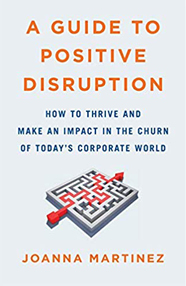
[0:41:15] CH: Many thanks to Joanna Martinez for being on the show. You can buy her book, A Guide to Positive Disruption, on amazon.com. Thanks for tuning in on today’s show. If you like what you heard, here is what I want you to do next. Open up the podcast app on your phone or iTunes on your computer and search for “Author Hour with Charlie Hoehn” and then click “ratings and reviews”. Take 10 seconds to rate this show or leave a review. It is a small favor but it’s really the best way to show your support and give me feedback and if you know someone else who’d love Author Hour, take another three seconds to text them a link to this episode. We’ll see you next time.
Want to Write Your Own Book?
Scribe has helped over 2,000 authors turn their expertise into published books.
Schedule a Free Consult