Jeff Hyman: Episode 83
Read the full transcript
Jeff Hyman
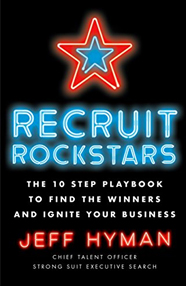
Jeff Hyman launched his recruiting career at Heidrick & Struggles and Spencer Stuart, two of the preeminent global executive search firms, and serves as Chief Talent Officer at Chicago-based Strong Suit Executive Search. He has created four companies backed by $50 million in venture capital and has hired more than three thousand people over the course of his career. He teaches the MBA course on recruiting at Northwestern University's Kellogg School of Management and hosts the Strong Suit Podcast. His work has been featured by Inc., Fortune, Forbes, The Wall Street Journal, CNBC, and Bloomberg. He holds a master's degree from the Kellogg School of Management and a bachelor's degree from The Wharton School, and is the author of Recruit Rockstars: The 10 Step Playbook to Find the Winners and Ignite Your Business.
📚 Books by Jeff Hyman
Transcript
[0:00:23] Charlie Hoehn: You’re listening to Author Hour, enlightening conversations about books with the authors who wrote them. I’m Charlie Hoehn. Hey everyone, as you can hear, I’m a little bit under the weather but we’ve got a great episode for you today with Jeff Hyman. Jeff is the author of Recruit Rock Stars and I want to read to you what Dick Castelo, the former CEO of Twitter said about Jeff’s book. He said, “I read this book in one weekend and I loved it. Everybody claims they want to hire A players but Jeff and his book helps you understand why B players are more damaging to your company than you expect. You can’t build a world changing company without world class talent. Ignore Jeff’s wisdom at your peril.” In our conversation, Jeff and I talk about what every growing company needs to know in order to hire the right people. We talk about the common mistakes that most of us make when we’re hiring people such as hiring applicants who remind us of us. Jeff also breaks down all the critical steps in the hiring process and the things that you have to do before you ever post a job listing. Finally, we talk about where, at least 50% of, your company’s hires should be coming from and if they’re not, well, you’re losing out on the best people and you’re wasting a ton of time and energy in the hiring process. See if you can guess what that is. All right, here we go, here is our conversation with Jeff Hyman.
[0:02:15] Jeff Hyman: As a candidate coming out of business school many years ago at Kellogg. I was very frustrated because I didn’t really have much of an interest in going to work for a big company, I was always more entrepreneurial. Other than large companies, I just didn’t know how to connect with small to mid-sized companies that might be doing something more interesting, more progressive, this was before the days of online recruiting and so, after I moved to Silicon Valley, I wound up starting one of the first online job boards called Career Central at the time. Even though we were in the business of recruiting, I had no idea what I was doing when it came to recruiting, we were using software to match candidates with companies but in terms of building my own internal team, I was a 26 year old kid who thought he knew everything and didn’t know anything. It’s not the kind of thing they teach you at Kellogg Business School, at least not back then and made just some awful hairy mistakes, it made every mistake in the book but one that comes to mind was key financial officer, the business was growing and my board of directors encouraged me to hire a heavyweight chief financial officer and they did. It was clearly in this hire within four weeks you know, he was falling asleep during meetings. Really, making math errors in board decks which is not a good thing. I had to part ways with him and that was really difficult, no one likes firing someone but especially because I had just – I lost a lot of face with my investors, my venture capital firms and so that was kind of my wakeup call. Kind of, my scared straight moment that taught me I needed to get much more serious and methodical about recruiting. Ever since then, 20 years I’ve just been a kind of a student of it and you know, I’ve kept track of what works, what doesn’t work, I’ve read every study about it and just became fascinated with it.
[0:04:14] Charlie Hoehn: Wow, all right. This is ridiculously valuable book that you put together. I want to know all about your methodology. What you’ve discovered over the last 20 years on the journey to figuring out how to recruit the best people. If you could distill the core idea or the biggest takeaway from your book, I know you have – it’s a 10 step process, right?
[0:04:39] Jeff Hyman: Yeah, the biggest takeaway is not even a step, right? The steps are the mechanics, right? The big idea is that you know, 90% of business issues are really recruiting issues and that sounds so obvious but as founders, as entrepreneurs, as business leaders, CEO’s were so busy doing that we don’t spend time on this most important thing which is hiring the right people. If you’ve got an amazing product or service or startup idea, it is doomed to failure without the right people to make it happen. A rock star in every single position in your company and when you do that, it is literally transformative, you get your life back, you get your weekends back, you’re not micromanaging, you can sleep at night. It has a very personal positive effect as well as the effect on the business. The problem is, most companies don’t do this well, they don’t do it right, there is a right way to do it and a wrong way to do it which I’ve studied over 20 years and now teach at Kellogg Business School and 50% of new hires don’t work out, 50%. You’re basically flipping a coin. The average person is gone within 18 months and –
[0:05:51] Charlie Hoehn: Why don’t they work out most of the time?
[0:05:52] Jeff Hyman: You know, that’s what the book is about, there’s 10 main reasons I found but the overall issue is that you hire the wrong person and you hire the wrong person because you probably looked at things that were not predicative of success in that role. You looked at the wrong things or you looked at nothing, you didn’t do your homework, you didn’t interview them the right way, you didn’t do the right reference checks and if so, you didn’t talk to the right people but one of the biggest things is, you looked at things that are not predictive, you didn’t look at their DNA, what makes up the person as supposed to their resume and what companies they worked for. Things that are really not that predictive.
[0:06:27] Charlie Hoehn: Predictive DNA, can you give an example, because all of this stuff, I feel like, people know on the surface or like “Yes, of course.” Can you break down what an average employer does that seems right on the surface but is actually wrong and doesn’t question the predictive behavior?
[0:06:47] Jeff Hyman: Sure. You know, because this is not really taught, we tend to fall victim to a lot of biases. You know, we look for people like ourselves, we hire people like ourselves, we hire people that we think we’d like to spend time with. None of that is predictive. What school they went to, not that predictive. What companies they worked at, not that predictive. There have been studies that have shown what is predictive and it’s the person’s makeup, their DNA and by that, just like you have DNA that tell what color your eyes are going to be and your hair color and your height. You also are hardwired at a pretty young age, turns out it’s about eight, you are the person you’re going to be with rare exception, you know, if you’re detail oriented, if you’re funny, if you’re creative, if you are a hustler and you work hard, whatever it is, that is baked at a very early age, the problem is that stuff doesn’t appear on a resume. It doesn’t appear on their GPA, it doesn’t appear on, if they worked at a competitor. Industry experience, not that predictive but if I can understand your DNA which is hard to get at, right? You can’t just say hey, what’s your DNA? Some people don’t even know what it is, they’re not self-aware but if I can get at that in the recruiting process, I can get that 50% accuracy up to 90% accuracy and that helps you build a company of rock stars.
[0:08:05] Charlie Hoehn: Wow, okay. Teach us, how do we get to the predictive DNA or how do we really cut to the core of that and test for that and really - I'm thinking of okay, the strengths finder tests seems to be pretty solid if I had to guess, that might be where I would start but where do we begin?
[0:08:26] Jeff Hyman: Strengths finder is a wonderful model for the individual to understand what a person’s strengths are, it’s a great book. But as an employer, most people are lazy and don’t’ take the time to think about what does success look like in this role? What competencies are going to be necessary for success in this role? Then what DNA enables a person to have those competencies to do them every day and excel at it. Before you just start interviewing and post a job on a job order or something like that. You take the time to really think about what does this job entail. What is this person doing every day, what competencies will they need to succeed at it. I’d say 95% of people don’t take the time to do that and so how can you possibly find what you need if you don’t know what you’re looking for, “I still haven’t found what I’m looking for.” You know, the book starts with an explanation of how to develop a score card that everyone’s on the same page, all the interviewers agree upfront and we’re all looking for the same thing and P.S. those things actually are going to predict success. Now, finding the person interviewing, that’s a lot of challenges there but this is where the first step is where most people go wrong. They have no idea what they’re looking for.
[0:09:46] Charlie Hoehn: Figuring out what success looks like in this role and what the person is going to be doing on a day to day basis and how it’s measured by the company and then, like you said, just to reiterate, what competencies will lead to that success and then what DNA does this individual have that ultimately led to those competencies or they basically have those skills built into them. The strength finder stuff is like step three of that process.
[0:10:20] Jeff Hyman: It is, it’s an important part of it absolutely but where most employers start is, you know, we need someone with five to eight years of experience in this industry. Preferably from these companies. When you start drilling into it and you really ask why, you know, what about that is predictive, the answer is nothing, are you telling me that someone with four years’ experience or 12 years’ experience wouldn’t be, couldn’t be the perfect person. Or if they did this same exact thing but in a different industry, are you telling me that there’s something so unique about your industry that they wouldn’t be successful. There are things that are far more predictive.
[0:10:57] Charlie Hoehn: Yeah, okay. Once we figured out what success looks like, we know the day to day and we know the competencies that we need in that role. What do we do next in the process?
[0:11:09] Jeff Hyman: Now we know what we’re looking for and so where most hiring managers go wrong is they’ll whip together a job description, you’ve seen these I’m sure Charlie, right? Most of them, you know, would put you to sleep in three seconds. First of all, they’re not compelling, they’re boring, they’re poorly written, they read like an HR person or a legal person wrote it but most importantly, they are focused on those same ridiculous requirements, five to seven years and a CPA or an MBA, whatever. It turns out that studies have shown that many people will not apply to a position if they feel that they don’t qualify.
[0:11:45] Charlie Hoehn: That’s true. I’ve read Jeff that men are significantly more likely to apply for positions that they’re not qualified for it and women are almost –
[0:11:55] Jeff Hyman: Nearly 100% of women will not even apply.
[0:11:58] Charlie Hoehn: Yeah. Women are extremely competent in certain roles, especially and so to filter them out automatically by making the barrier seem to high is such a huge missed opportunity that you can’t even feel as a hire.
[0:12:16] Jeff Hyman: It’s so painful, especially when you’re at 4% unemployment, you’re lucky to get anyone interested. Why would you possibly artificially constrain your pull by including a laundry list of requirements which PS aren’t predictive anyway. PS, I know you would flex on them anyway. If you said, “Must have five to 10 years’ experience.” I bring you the perfect person who has 11 years experience, are you going to tell me you’re not going to meet with them? Of course not. Flipping the whole job description on its head and developing what I call a job invitation which is a sales piece. It’s written by a professional copywriter and it talks not about the requirements of the job but why it’s such an amazing job.
[0:12:58] Charlie Hoehn: Yeah, I’m just guessing here but I’d imagine it makes the applicant feel like this is the next step of my hero’s journey. This is what I was made to do.
[0:13:11] Jeff Hyman: Crazy not to at least have a conversation with these folks. So again, it doesn’t sound like rocket science and it’s not but if you take a few minutes today and you go to any major job board, read through 10 job descriptions and you’ll –
[0:13:25] Charlie Hoehn: it’s like reading through the phone book.
[0:13:26] Jeff Hyman: It’s awful. I’ve actually literally hired professional copywriters to write these things and they’re so compelling and so masterful, cost 50 bucks or hundred bucks but you’ll get a dramatically broader funnel of candidates interested and people that aren’t really actively looking will even raise an eyebrow and pay attention.
[0:13:49] Charlie Hoehn: Yeah, what do you tell the copywriters, how do you guide them to write that type of a post?
[0:13:54] Jeff Hyman: You’re taking them through the scorecard and the DNA that we talked about to try to breathe life into and kind of bring words to the kind of person and the kind of work that this person will be doing so that it self-selects. I read this and I’m like “Wow, that’s me. I would love to do that job every day,” or, “That’s not me, I’d have no interest in this and I don’t apply,” right? Not only do you get more applicants, more interest from candidates but the degree of match goes up as well. There’s no substitute for video Charlie, I mean, I always tell clients in those job invitations to link to a two minute video that you can do on an iPhone, I don’t care if it’s professionally produced but it brings life to your company, your office, the job, far more compelling than any words. Certainly, don’t just have HR just write a boring job description.
[0:14:47] Charlie Hoehn: I love it. Okay. Now, people are applying to this application or they’re going through the process and you’re getting a bunch of applicants in, now what?
[0:15:00] Jeff Hyman: Well, the biggest mistake here is that, that’s where companies stop, right? They post and pray, they’ll put this job description or job invitation on a job board or a couple of job boards, by the way, there’s tens of thousands of job boards. They pick the wrong ones but more importantly, no one applies relatively speaking because we’re at 4% unemployment, no one’s looking for a job. We’re essentially at full employment, in fact, we’re at 2% unemployment for college educated, knowledge, workers.
[0:15:32] Charlie Hoehn: 2% unemployment?
[0:15:33] Jeff Hyman: Yup. College educated people in the US are at 2%.
[0:15:39] Charlie Hoehn: It does not seem like that. It is not painted that way in the media.
[0:15:44] Jeff Hyman: Not everyone – a lot of people pulled out of the market, right? Because they couldn’t find a job they wanted after the crash in 2008. A lot of people are unhappy and disengaged.
[0:15:54] Charlie Hoehn: Yes.
[0:15:54] Jeff Hyman: That’s different. You know, I think it’s 80%. But, technically, they got a job. Some are looking but most are not and so the way to tap into these people and this is really the hidden grail and the focus of chapter four is your employee referral program. Only two thirds of companies have an employee referral program. Those other third are missing out but even the two thirds that have one, only 20% of their hires come from that program, it should be 50% so half of your hires should be coming through your employee referral program and there’s a whole bunch of things people do wrong on that program which we don’t have to go in to but far more effective, faster, cheaper, longer, retention higher scores. Then hiring some stranger off a job board.
[0:16:39] Charlie Hoehn: Yeah. I’m just thinking back on my own experience and that’s absolutely true.
[0:16:47] Jeff Hyman: There’s just so many benefits because your rock star employees will introduce you to other rock stars that they’ve worked with. When they bring their friends and colleagues who are rock stars, they will stay longer because they want to work with other rock stars. It becomes very – it’s like building a moat around your company, right? Your employees will want to stay, they’ll want to work with each other, they’ll love each other, it’s less about building a culture and it’s more about building a team of people that just want to work together because they challenge each other.
[0:17:15] Charlie Hoehn: Yeah. I think of Stan Lee, his quote, the creator of Spider Man, X men, all those. He says, when you work with people whom you admire and you respect because they’re so good at what they do, it doesn’t feel like work, it feels like you’re playing and yeah, you’re surrounded by people who are pushing you to be better and all that. Rock stars hanging out with rock stars like you said. The employee referral program, why do so many companies neglect this?
[0:17:46] Jeff Hyman: Like I said, two thirds have one but it’s pathetic, it’s not marketed well, they don’t promote it, keep it fresh, there’s been a lot of studies that have shown that how much you pay your employees per referral is actually nowhere near as important as you think. Google actually did a study where they doubled it from $2,000 to 4,000 and it made no difference in the number of referrals they got. You don’t even have to pay that much but you got to keep it fresh, it is a marketing program that PS, your head marketing should run to keep it fresh and have a kind of a bit unified theme. You got to keep it in front of your people. They need to know, not just to refer people but “I’m looking for these three roles, can you help me, who do you know?” Make it easy for your employees, it’s literally one click or one email box that they send these referrals to. If you put them through hoops, they just won’t spend the time doing it. Then the worst thing is if it’s a black hole, right? If I introduce you to one of my friends or colleagues and you don’t take it seriously or you don’t get back to them or whatever, I will never refer another person. That’s a huge –
[0:18:52] Charlie Hoehn: Who’s the best at this that you’ve seen?
[0:18:55] Jeff Hyman: There are some companies in silicon valley that will get over 50, 60% of the referrals through employee referrals. You know, they’re not especially sexy companies or any household and aim companies but they’re very good at creating a story that we want to build an amazing place to do your best work and that is not about ping pong tables or beer bashes on Friday. That is about us recruiting and surrounding you with a team of rock stars that can challenge you and teach you and do your best work and that’s what gets the referral flowing. It’s not different than you know, sales leads and sales referrals.
[0:19:34] Charlie Hoehn: Jeff, I have a question for you. With the term rock stars, I’d imagine some people kind of bristle at that because it’s been used so many times. I’m thinking, before this interview, I was actually thinking, rock stars is in my mind has always just been used to describe A players, just people who are exceptionally hard working, organized, consciences, great at their job. Now I’m thinking more in terms of, well, everybody could be a rock star, they just need to be in the right role.
[0:20:09] Jeff Hyman: Got it, that’s the point of the whole book, right? There’s a lid for every pot and if the individual knows what they excel at, which a lot of people never do that soul searching. They just drift aimlessly and their career just kind of takes them and they don’t, you know, arguably, they don’t deserve to find it because they’re too lazy to really figure out what they should be doing. On the other hand, every job is interesting and compelling for the right person. But again, employers don’t hire the right people and so you have this disconnect, this love connection that never happens. It’s much like divorce, right? 50% rate, very similar dynamic.
[0:21:29] Charlie Hoehn: Author Hour is sponsored by Book in a Box. For anyone who has a great idea for a book but doesn’t have the time or patience to sit down and type it out, Book in a Box has created a new way to help you painlessly publish your book. Instead of sitting at a computer and typing for a year, hoping everything works out, Book in a Box takes you through a structured interview process that gets your ideas out of your head and into a book in just a few months. To learn more, head over to bookinabox.com and fill out the form at the bottom of the page. Don’t let another year go by where you put off writing your book. What is it with businesses, it’s like 80 to 90% of new businesses fail in the first few years? And how much of that percentage do you attribute to just having the wrong people in the wrong roles.
[0:21:47] Jeff Hyman: Well, rather than give you my opinion, I’ll quote the very famous study that found that 66% of growth companies fail because of people problems. That may be the founders can’t get along, they hire the wrong people, they built the wrong culture. But two thirds, it’s more than product market fit, it’s more than we launched the product, the market didn’t want or we priced it wrong, it’s more than we had crappy marketing, it is the number one reason businesses fail. Now, if you’re a restaurant with 98% failure rate, you know, it could be you’re on the wrong corner, location, whatever, or your food sucks. In general, for most growth businesses, this is the reason they fail and most entrepreneurs, most founders spend all their time thinking about their product, they spend all their time thinking about sales, they spend all their time thinking about raising money and they spend very little time thinking about the types of people that they bring on the bus in the first place.
[0:22:42] Charlie Hoehn: Because it’s hard, there’s so much stuff going on but when you’re talking about the things that actually matter to long term success and growth, this seems to be the number one thing that people need to figure out and focus on. It sounds like there’s just not – I mean, the fact that – I’ll tell you a little bit of a back story about me, Jeff. I’ve studied this as well but from the other end of the table. When I graduated in 2008, I was confronted with the job listings that you were talking about that read like the phone book and I was so frustrated because I would apply to a bunch of these, they wouldn’t get back to me, they wouldn’t even respond. This went on for months and I just decided, I’m just going to create positions. Basically, based on my competencies and what problems these companies or these individuals are facing. I’m going to propose it to them and I’m going to offer to do it on a free trial basis. I kind of came at it from the other way where it was like, “Well, clearly, the employer is not going to be doing the match making so why don’t I just do it?” Ultimately, for the people listening to this who are maybe in a role that they feel is incorrect for them. Can they apply your principles from your book?
[0:24:05] Jeff Hyman: Yes, as a job seeker you mean? As an individual? Absolutely. The number one thing that you wouldn’t want to do is to join a company that didn’t take recruiting seriously, right? When I talk to candidates or individuals, friends. They say, “I’m so frustrated, I’m interviewing with this company and they’re putting me through the process and it’s taking so long. They’ve had me do all these things.” I’m like, “That’s great.” They’re like, “Why? I say, “Because they take recruiting seriously, they actually give a shit about making the right match and finding the right role for you and if it turns out it’s not the right home for you, wouldn’t you rather know now versus after you start?” Versus just, you know, one interview in hiring me, right? Which doesn’t tell me anything. I actually think that individuals, the best thing they could do is look for companies that are known for great recruiters, not for having the coolest culture, the most ping pong tables or even paying the most. Instead, look for companies that are just really good at recruiting. Their job, the positions are interesting and immediate. The job descriptions, bring them to life, the interviews are compelling and engaging and thought provoking. They actually check your references really thoroughly. If that all goes well and you get the offer obviously. There’s a very high likelihood you’re going to be successful in that role and you’re going to love working there and you’re going to be successful there. Because the company has made such a commitment and investment in recruiting you, you can feel pretty confident, they’re going to treat you pretty well and want you to stay. If they just hire you after – in a one hour meeting, they have no skin in the game, they don’t really care if it works out or not, they’re just looking for a warm body. That’s the number one thing you could do and a lot of job seekers have told me, they’ve read the book even though it’s not at all a job seeking book but they kind of have reverse engineered to your point, the process.
[0:25:58] Charlie Hoehn: I want to get to the transformations that your readers have had after reading this but before we get to that, tell me about the interview process? What do employers get wrong there?
[0:26:10] Jeff Hyman: Few things, everyone thinks they’re great at interviewing and I can appreciate that, we’ve all done a lot of interviews. A head hunter does more interviews than most, right? I’ve done over 10,000 interviews. Just like anyone who has done 10,000 anything, you get to see the same patterns over and over. Versus most of my clients who just haven’t done as many interviews. Probably the biggest mistake is asking questions that are not predictive of success, they’re not predictive of anything. They’re really just a waste of time and kind of annoying. A good example, which Google used to do is they would ask these brain teaser kind of questions. Thinking that if someone was smart enough to figure it out, then they must be super smart, we should hire them. PS, we’ll look at their GPA as well and if they don’t have a three five GPA, we’re not going to hire them. Well, it turns out, last year, they went back and they did a big retroactive study and they looked at all this stuff and they found that people that could answer those brain teasers were no more likely to be successful than those that couldn’t and that GPAs were not predictive of anything. They banned both of those practices, they no longer ask those silly questions and they don’t care about your GPA. They focus on things that –
[0:27:16] Charlie Hoehn: Isn’t that just devastating to hear as a former student that the GPA truly doesn’t matter?
[0:27:22] Jeff Hyman: I wouldn’t have made their cut off anyways. The point is, asking questions that makes sense, I ask the same questions over and over. They’re listed in the book, I give them to the candidate in advance, there’s no trick questions, there’s no surprises, this is not about entertaining me or entertaining myself with how smart a question can I come up with which is what most people do just to stay awake. I ask the same questions over and over about each role. When I do that, I can form a pattern, I can start to see like a stock chart, is the person trending up, are they trending down, have they flat lined, have they peaked? Also, I can compare them to other candidates because I’m asking the same questions of everybody. Most people will ask random questions in a random order to random candidates, you can’t possibly compare and contrast candidates against each other.
[0:28:12] Charlie Hoehn: How many questions are you asking before you feel like you’ve got the stock chart of the person?
[0:28:19] Jeff Hyman: It’s like dating, you spend progressively more time with the person, like a funnel. The book goes through that process but there’s a 20, 25 minute phone screen, just to see if there’s even a basis for discussion but that phone screen is very different than most people do it. Then the heart of the interviews are a career deep dive with about 15 to 20 minutes per job. That takes about an hour and a half based on how many positions the person has held and then there is a DNA interview to get at that. Each interview has a different purpose and different questions, all that’s in the book but you know, I’d say in an hour and a half, you’ve got a pretty good sense of whether this person has the competencies and the DNA to be successful in the job.
[0:29:03] Charlie Hoehn: I mean, that alone, it sounds like it’s worth the price of admission to the book. Do you have a personal favorite question that you ask that evokes really good answers?
[0:29:12] Jeff Hyman: Yeah, you know, again, not a trick question but in a given role, what was the biggest thing you did that delivered results and what were those results? And everyone has one and they’ll tell you what it was, you know, I grew the business by 20% or I turned around this division or I found this bug in the software and all that’s great. Then, the next question which I know is pretty simple, “How’d you do it? Tell me how you did it and walk me through it.” What you find is the story starts to fall apart, I start to sound like an owl, “How, how did you do that?” I just drill down for a couple of minutes and for the rock stars, the story totally holds together, it’s compelling and I don’t mean, their speaking ability as much as the story line holds together. It starts to make sense that why their DNA and competencies led them to find that error because they are anal-retentive or OCD or whatever or for B or C players, the story just falls apart. It turns out they got lucky or the perspective client just landed in their lap. They didn’t find them through prospecting and hunting or it really was a team effort as oppose to their effort. So that question of ‘how’ and I know that sounds ridiculous is one that is rarely used in interviews to drill down into the how of what happened and unless I know the story of what happened, I can’t tell you whether you made it happen, whether it was luck, whether it was a team effort, etc. So that’s my favorite question and I know it sounds ridiculous but it’s a lot better than how many bird cages are there in New York City.
[0:30:49] Charlie Hoehn: Right, no, I love this. This gets me genuinely excited. I for sure am going to be using that as a reference in the near future so thank you. That’s awesome. So to get through the interview, they’re onboard right? Or are you putting them through a little incubation period where you’re testing things out?
[0:31:09] Jeff Hyman: That is a great leading question. I think because you read the book so the next step is the test drive. So 91% of companies skip this step and the reason it’s important is even if you do the interview the right way, even if you follow every word of the book, interviews are notoriously still unpredictive because you are sitting in a white room with a couple of windows, a couple of glasses of coffee and it’s all theoretical right? It’s all past, but hypothetical questions, hypothetical future questions are also unpredictive. “What would you do if you started tomorrow or how would you tackle this?” Or whatever, again it’s all theory. It’s all interview speak and people that give great interviews are not necessarily great candidates. So instead, I put them through a test drive and the book walks through how to do that. Now you can only do this for probably the final two candidates because it takes a little bit of time. But it’s a two hour, two day exercise, a real life exercise even if you have to pay the candidate for their time where they are doing something that is essentially what the job would be. So if you’re hiring them for an assembly line, they’re putting widgets together for a day. If it’s a sales position, they’re going to be reading a dossier and preparing a presentation and presenting to you and pitching to you or if it’s customer service, they’re going to answer some of your calls. Whatever it might be, you can craft a test drive and how the person does in that test drive shows you a ton about how they are going to do in the real world when you actually start. So basically they are starting the job before you actually extend the offer.
[0:32:39] Charlie Hoehn: This makes me think of my friend, runs the company App Sumo here in Austin and he was telling me that that’s one of their keys to success with hiring is they go through the interview process, everything you talked about, and then they hire them on as a consultant for two weeks or a week and they pay them well.
[0:33:01] Jeff Hyman: It’s not about saving money. It’s about avoiding mistakes.
[0:33:05] Charlie Hoehn: Exactly, yeah and they said that alone has been more powerful than just about anything that they’ve done. So I love that and once they get through the test drive is there anything else to the process before you make the full-time hanger?
[0:33:19] Jeff Hyman: Well yeah, there is one last step which is you’ve got to validate everything you’ve been told which is reference checks and most people hate them. I’m not going to tell you they’re fun to do but most people, if they do them all, do them after they have already made their decisions. Sometimes after they have already extended an offer and then they do it to cover their ass or tell HR that they did the reference checks. If you are going to do reference checks, do it the right way and do it before you make the decision and do it with backdoor references, people that candidate did not give you so that you can really get at validating the information you’ve been told.
[0:33:50] Charlie Hoehn: Backdoor references, I am not familiar with this.
[0:33:53] Jeff Hyman: The front door references would be the three or four or five references that the candidate gives me and I’m certainly going to talk to them. Backdoor references is using LinkedIn to find people that I know that also know the candidate and speaking with those backdoor references is arguably even more revealing than the ones they give me and it doesn’t have to be co-workers. It could be customers, maybe vendors, investors, board members.
[0:34:16] Charlie Hoehn: But you are sticking with mutual contacts or just people they are connected with?
[0:34:22] Jeff Hyman: You start with mutual contacts because they are far more likely to be candid with you because they don’t want to see you make a hiring mistake. In the book, I tell a quick story about an amazing candidate that I interviewed in Chicago. Two hours, just amazing, blew me away, checked references with two texts to people that I knew that knew him. Both of them has said, “Run don’t walk from this guy,” so I avoided a catastrophe just by checking references and he never wouldn’t have given me those two people. So obviously when folks –
[0:34:52] Charlie Hoehn: Well just curious, why did they say that?
[0:34:53] Jeff Hyman: There were some ethical issues with this particular case and ironically, two different ethical issues because they had worked with him at different times. Now you know, a great interview or candidate interview won’t mention those ethical issues and you will never find them unless you check references. Even then you may not find them until it’s too late.
[0:35:12] Charlie Hoehn: Yeah, okay so checking the references. Yeah that is a part of the process that yeah.
[0:35:17] Jeff Hyman: [inaudible].
[0:35:18] Charlie Hoehn: Yeah, I have skipped in the past. Yeah it is a whole lot and you feel like you’re inconveniencing the reference and all of that stuff so.
[0:35:25] Jeff Hyman: Right, so here’s the way around that Charlie and it actually works really well is I make the candidate arrange the references, not just an email intro but none of this phone tag back and forth, right? I tell the candidate and rock star candidates can produce their references on demand really quickly and B and C players can’t. So it actually is very telling. I found that who they produce and with the ease they produce them is almost as useful as the reference check itself, right? Does that make sense? In other words, if you can give me every manager you’ve ever had and you can get them on the phone with me in 24 hours, I already know what I am going to hear versus if it takes you a week and half of them are “not available” and “this guy died” or whatever, even if there’s good explanation, I’m not in the business of taking risks and so I’m not going to take the risk.
[0:36:16] Charlie Hoehn: Anything else that I maybe am overlooking here?
[0:36:20] Jeff Hyman: Well, the problem becomes rock stars have choices right? So being arrogant and assuming you are just going to get a yes because you’ve blessed this person with an offer, a B and C player will just say yes but a rock star is going to ask a lot of questions. They are going to negotiate, they have other opportunities, you’ve got to close them and so there’s a whole chapter on that because most companies are arrogant and say: “Well I will email the job offer letter,” and then they get a ‘no’ and they’re surprised and so you actually want to start at the end of the process and work your way up the funnel. So if you are getting no’s you’ve got to figure out why you’re getting no’s. Is it because your Glassdoor ratings stink? And if they do then you’d better fix that first. So it is much like a sales funnel, I actually thought about writing the book in reverse because you’ve got to fix the funnel from the bottom up.
[0:37:10] Charlie Hoehn: You have to put on your best store front as the company.
[0:37:14] Jeff Hyman: Yes.
[0:37:15] Charlie Hoehn: Yeah, absolutely. Well let’s dive into the transformations that you’ve seen. I mean you have been doing this forever so you have for I would imagine –
[0:37:26] Jeff Hyman: Yeah, longer than I care to admit.
[0:37:27] Charlie Hoehn: Right and you’ve been teaching it at Wharton. I would imagine you have tons of success stories from doing this for so long. Can you tell us a few of your favorites?
[0:37:39] Jeff Hyman: Well, I’ll tell you one that is recent. No names mentioned. So a CEO that didn’t read the book but he listened to my podcast. I’ve got a podcast and he had heard an episode of me talking about –
[0:37:50] Charlie Hoehn: What’s your podcast called?
[0:37:52] Jeff Hyman: It’s The Strong Suit Podcast and we do much like this, interviews with people, CEO’s and other experts, a lot of head hunters, a lot of VC’s and we talk about talent and recruiting and he had heard an episode about the test drive that he was, really challenged him because he had made a bunch of bad hire recently and the interviews were amazing, right? They knocked the socks off but that was it. Then he made an offer, they came in and they – like three or four or 80% of them bombed in the job. And when he heard that the test drive is the most predictive thing you can possibly do in recruiting, actually you can even stop the interviewing and do the test drive and you’ll do better. He brought me in to construct test drives for his most common role which was sales reps, the role that he hires the most of and we put together a test drive. It’s not rocket science, the book actually lays out how to do it. He just wanted some guidance and the book wasn’t out yet and he reduced that error rate from 80% or 85% down to less than 50%. Now that doesn’t sound great and it’s on the way down. I think he will get it down to even 20, 25% but the difference in the business is enormous because as your sales people come in with a long sales cycle which his is and they fall out then you have a vacancy. It’s costing you money because you have a sales territory that is not being covered. And then, the new hire starts and they have to start building the pipeline all over again. Not to mention they probably shit the bed with the prospects they were talking to and piss them off or turn them off to the company so you have lost those guys forever. So that one change, that one change of implementing a test drive totally changed everything about his sales force which obviously has already made a significant impact on his revenue because he doesn’t have as many bad hires and he has higher retention and it’s starting to make an impact, sales force is VP’s of sales, this is where you see the biggest impact of that.
[0:39:57] Charlie Hoehn: You know this is making me think that we should have mentioned this at the beginning. I will dwell on this on the intro for sure but I remember reading a study where if you have one bad apple at the company, just one person, it affects basically the entire company.
[0:40:15] Jeff Hyman: It is, yeah it’s like a cancer.
[0:40:17] Charlie Hoehn: Yeah, so the fewer you can have of these scenarios which you really make it sound like this is much easier to avoid than we would think, just most people aren’t as systematic about it.
[0:40:30] Jeff Hyman: And part of the reason is the whole recruiting process but then the other reason which chapter nine touches on is getting rid of your bad hires. So I don’t mean your bad performers, I mean your bad hires. So let’s assume you get to 90% which is my goal with clients, you are never going to be perfect but let’s say you get to 90% accuracy. That means one out of every 10 hire was a miss hire and you will usually know within 30 days. Sometimes you’ll know it within 30 hours. If you don’t deal with it right there and then and you keep that B or C player around or the person that doesn’t fit or whatever, it quickly spreads to the other rock stars. They start to resent that they are having to carry that person and they also start to view you as the leader as a weak leader because you are not recognizing your mistake and making the appropriate change. So it does spread very, very quickly. It doesn’t turn them bad, it just turns them off because rock stars want to work with rock stars. So when you let someone in who is not because the process is not flawless and then you don’t deal with it or like you said earlier Charlie, get them into the right role where they might excel. So maybe you hire someone into a sales team into a hunter role and it turns out they are a way better farmer, why wouldn’t you move them to the farming role? But no, you let them sweat it out and sit in the hunting role. They miss their numbers, they are 70% to plan, everyone is pissed off and it takes months and months or longer, years before you finally deal with it and what happens is your rock stars will leave in the interim because they won’t tolerate that kind of mediocrity on the team.
[0:42:00] Charlie Hoehn: I’m just thinking now, so we have a policy at Book in a Box that I’ve always loved which is, “You’re hired because you are an A player but if you’re in the wrong seat, it doesn’t mean you’re fired. You need to find the right seat.”
[0:42:12] Jeff Hyman: Perfect. Yeah, it doesn’t work for very small companies where you may not have that luxury but for mid-size and large companies, you’ve gone through all that cost and expense to hire the person. They’re interested, they hopefully love the mission, they just threw in the wrong box. Find the right box or create the right box for them and you’ll still save a ton of money.
[0:42:30] Charlie Hoehn: Yeah so I am just thinking like now, what would be great is to come up with the exact process the person needs to go through when they are creating their new seat. Yeah because it is a cultural thing but I don’t know if we have it step by step. So I know we are coming up on your time, two final questions, can you give our readers a challenge, one thing they can do from your book this week and then finally, how do our listeners stay connected with you?
[0:42:57] Jeff Hyman: Yeah, so one thing you can do this week is think about some of the mistakes that we’ve talked about and just be honest with yourself, what do you think is the biggest one? Don’t try to tack up the whole process at the same time. Is it that you’re not thinking about the roles and developing a score card? Is it you don’t know what your company’s DNA is? You don’t have a test drive in place, people that you’re interviewing have no idea what questions to ask. Just pick one don’t try to fix everything. I think that is a really good place to start and have this an intellectual honest conversation with your leadership team whoever that may be. Maybe one other person, it may be your board of advisers or maybe your five direct reports, “How can we improve this stage of the process?” And asking the right interview questions or implementing a test drive and you’ll be surprised the impact it can make pretty quickly. Just one thing. One thing, you know I would start with the test drive because 91% of companies which means most of your listeners don’t have it and it is the most predictive. So I would probably start there and just think about what role did they hire the most of, so is it sales reps, is it software developers, is it customer service people? The ones that you hire a lot of, you’ll get the most impact with creating a simple test drive for that role and you’ll also start to become a believer. And you’ll say, “Geez this is working! We’re not getting the bad hires that we’ve got.” And you’ll expand that to all the other roles. I will probably start with the test drive. In terms of how people can stay in touch, Recruit Rock Stars is the website, recruitrockstars.com. You can get the free video course, you can get the book, you can get the free podcast. I have a free webinar every month so I’m happy to talk to people. I love talking about this stuff, I’m very passionate about it and you know I believe in giving this stuff away as much as I can.
[0:44:49] Charlie Hoehn: Awesome, awesome interview. Jeff thank you so much.
[0:44:52] Jeff Hyman: Thank you for the time Charlie.
[0:44:55] Charlie Hoehn: Many thanks to Jeff Hyman for being on the show. You can buy his book, Recruit Rock Stars, on amazon.com. Thanks again for listening to Author Hour, enlightening conversations about book with the authors who wrote them. We’ll see you next time.
Want to Write Your Own Book?
Scribe has helped over 2,000 authors turn their expertise into published books.
Schedule a Free Consult