Raman Sehgal: Episode 839
Read the full transcript
Raman Sehgal
Raman Sehgal is the founder of several niche companies, including ramarketing, a multimillion-dollar international marketing agency that helps companies get noticed in the global life science space.
An entrepreneur from a very young age, Raman embarked on a business journey that ultimately spanned the Atlantic—from a spare room in the Northeast of England to the bustling streets of Boston, Massachusetts, where he lives today with his wife and three sons.
Raman authentically shares his knowledge, mistakes, and learnings around the world as a keynote speaker, podcaster, blogger, Forbes Agency Council member, and guest university lecturer. You can find him online at ramansehgal.com.
📚 Books by Raman Sehgal
Transcript
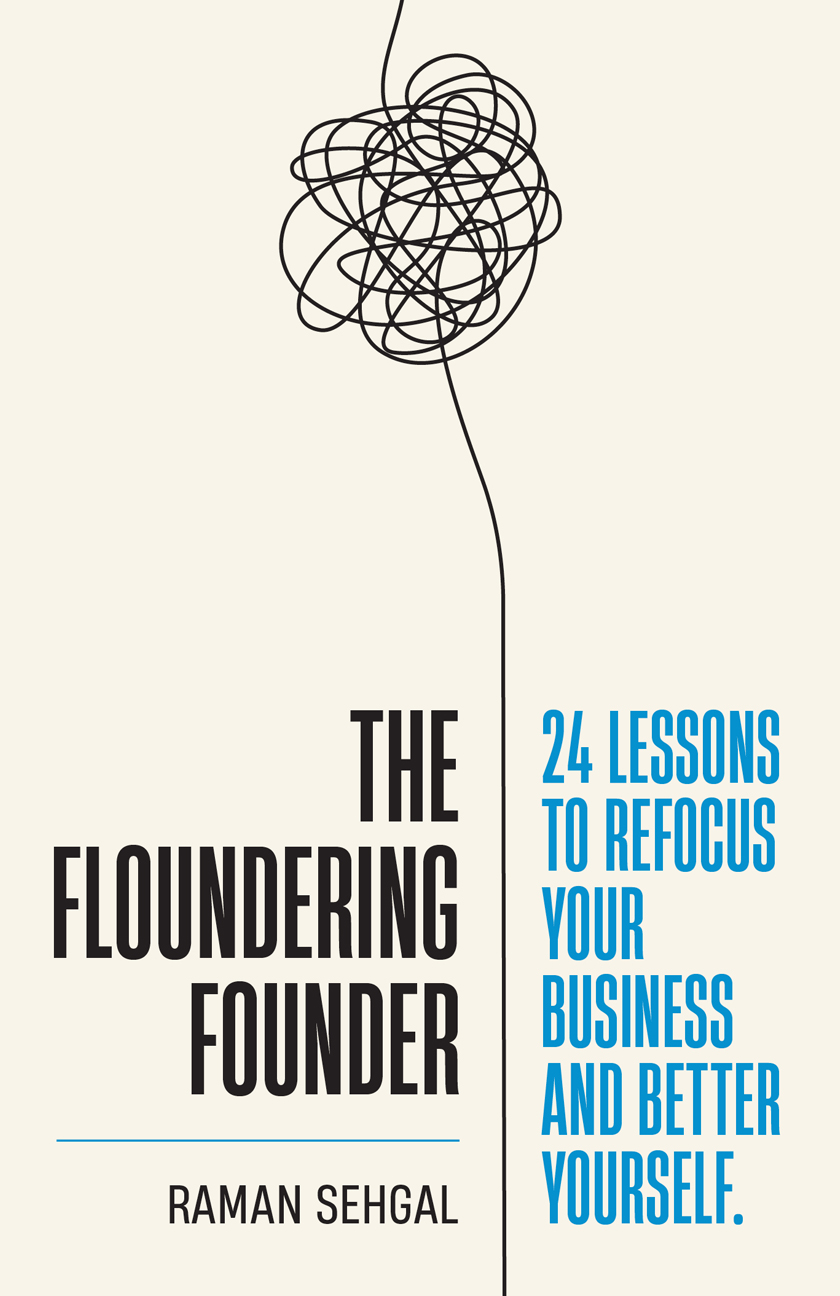
[0:00:27] FG: Do you ever feel like you’re drowning in your own success? Expertise-based entrepreneurs are excellent at what they do but that doesn’t mean it’s easy to manage a growing service business. Juggling constant client demands against the need to focus on growth can be a real struggle. It’s an all-consuming journey that can feel suffocating, making it hard to find time to step back and evaluate both for yourself and your company. In his new book, The Floundering Founder, Raman Sehgal helps you re-engineer your business and your life for long-term success. In 24 bite-sized lessons that fit any schedule, you’ll learn to navigate forward with renewed intentionality and purpose. The Floundering Founder collects the essential tools and learnings that can have the greatest impact, the ones Raman wished he had known before learning them the hard way. This is The Author Hour Podcast and I’m your host, Frank Garza. Today I’m joined by Raman Sehgal, author of a brand-new book, The Floundering Founder: 24 Lessons to Refocus Your Business and Better Yourself. Raman, welcome to the show.
[0:01:43] Raman Sehgal: Thank you, Frank, absolute pleasure to be here.
[0:01:46] FG: To start, I’d love to hear just a little bit about your personal and professional background.
[0:01:51] Raman Sehgal: Yeah, sure. I mean, I suppose, background personally, I’m originally from the northeast of the UK so a place called New Castle. So I was brought up in a relatively working-class part of the world and my parents run a local post office and so had me working in the convenience store part of the post office from when I was about eight and nine and yeah like many kids, kind of went through school and fortunately managed to get myself to college in the UK to study marketing and that ultimately led me down a path of working in a couple of marketing agencies and one of those jobs was working for a few clients in the pharmaceutical sector and little did I know that that was going to be the start of what would lead to a path of a business and an entire career spent in actually the supply chain of the pharmaceutical and biotech industry. In 2009, just before I think I turned 30, I set up my own agency, although I didn’t think it would be my own agency. It was just a little side project, a little freelance gig, and yeah, you know 12 years on, that business has turned into an equitable marketing agency in the pharmaceutical biopharma space and since then as well, I’ve also founded a couple of other businesses. One in kind of talent acquisition space and then managed to have my own podcast and as you also know, I’ve written my own book as well. So that’s 40 years in about two minutes, which hopefully is – that’s all you need to know, Frank, that’s it, we’re done.
[0:03:35] FG: Your company, Ramarketing, what’s the origin story behind that? What made you want to start that company?
[0:03:43] Raman Sehgal: I wish, you know, I’m sure you get – well, I’ve heard some of your guests come on here and give really fancy entrepreneurial stories and mine was very much just opportunistic. One of the companies that I worked for demerged from another business and the CEO of that company rang me up one day and just said, “Hey, do you mind doing our PR and website management and SEO and stuff in your spare time?” I remember telling my wife saying, “Hey, I can earn an extra 10 grand, 15 grand”, whatever it was, which you know at the time, was an astronomical amount of money to basically fund our travel fund. Yeah, that was it, that was back in 2009 and I was still working full-time and then doing this on the side and then that was going on for a couple of years and managed to pick up a couple more clients in that time and then in 2011, I kind of took the view of, “Okay, I better leave my job so to speak and go do this properly” and that job actually end up becoming a client and they were again in the pharmaceutical supply chain. What seemed like a little side project, kind of ended up becoming my kind of real focus from a career perspective and over the next 10 years or so from 2011 to 2021, we grew very steadily for a few years. Then decided to completely focus kind of entire business on the drug development supply chain, which I can talk about in more detail if you like but that was a kind of acceleration point for the business and the growth of the business and just to give some context, we’re headquartered in the UK. Well, I’m based in the US, in Boston. Our agency was the fastest-growing communications agency in the UK last year. We are for a service business, anyway, we grow pretty quickly and are very proud to help clients all over the world.
[0:05:34] FG: Great. You mentioned in your book and the introduction of your book begins with the quote and it says “Someone once told me the definition of hell. On your last day on earth, the person you could have become will meet the person you became” and it’s attributed to anonymous. Why did you choose that quote to start your book?
[0:05:57] Raman Sehgal: Well, it’s funny, I heard that quote on – when I was either driving or running or something on a podcast years ago and it really kind of stopped me. I remember hearing it, thinking, “Wow, that’s quite a powerful concept of the person I become meeting effectively a better version of myself” and I couldn’t quite live with the thought of that regret and I feel like a lot of us in life, particularly entrepreneurs that start their own businesses are so busy doing what we’re doing that we don’t step back enough to look at what we’re doing in our business and actually what we’re looking, what we’re doing to ourselves as well and can get into some pretty nasty habits as well as entrepreneurs. For me, it was just a quote that got me at the right time when I was really feeling very overwhelmed running my own business and getting very lost and kind of not really knowing what to do and kind of was the – that led me down a path of ultimately of becoming the best version of myself that I could be and then thinking I don’t want to get to my last day on earth and have regrets because I think that’s something that many of us probably fear but many of us even, there are people that get to that point and you have to start now if you don’t want that to be the outcome. If you don’t want to have those regrets then you can’t wait until that day, you’ve got to start working on what that success looks like today. Yeah, it’s a really kind of profound quote and one that I think really set the scene and that hopefully captures where a lot of the readers are in their lives when they hopefully read the book.
[0:07:40] FG: Yeah, that discussion led to an exercise you talked about doing, where you walk into a café and I think see your future self. Can you talk about that?
[0:07:50] Raman Sehgal: Sure, yeah. This is something I would encourage everyone who is listening to do, it’s this kind of concept of hey, Frank, yourself, you walk into your favorite restaurant or your favorite café or your favorite bar and you walk in and you see someone that looks a little bit like you and then realize it’s Frank of 10 years’ time. You walk across and go have a conversation with a 10-year-older Frank and you start talking and that Frank will give you some pearls of wisdom as to how to get the most of the next 10 years. If you really think about it, you kind of already have a feel for what things you will regret if you don’t get moving on them now. Many of us put goals and plans in place but often, they’re not necessarily made from a place of, “If I don’t do this, I’m going to regret it.” By almost going and having that conversation with your future self, certainly for me and a lot of people who I know, it helps them unlock lots of things that will ultimately help them with their goals. For example in my own life, I wanted to live in another country. I wanted to really give it a go with my company. I didn’t want to get to 10 years’ time and think, “You know what? You should have really rolled the dice and have a go with your company and rather than just keeping it really small and just you.” By kind of reengineering that situation, it kind of led me down a path of going for it with my business, which I have, moving to a new country, obviously which I did, having lived here in the US and so now I genuinely encourage everyone irrespective of what you do in your career. It’s a really fun exercise you need to do with your partner as well to try to align on what the next 10 years of your life looks like.
[0:09:35] FG: Can you talk about how your book is structured and why you decided to lay it out that way?
[0:09:43] Raman Sehgal: Yeah, sure. In essence, it’s effectively in two parts and the majority of the people, The Floundering Founder, will be of interest to will be people that have started small service businesses that are a few years into their journey and often, certainly what I found in my network is just because you're a good marketing person, you’re a good accountant, you’re a good recruitment person, doesn’t mean you know how to run a business. The same thing I see over and over again is people that are really good technical people, really get overwhelmed by all the other stuff that comes with running and growing kind of a small business. It’s a real kind of balancing act. The way that book is designed is kind of in 24 lessons, 12 lessons, effectively aimed at how to – kind of lessons that have worked for me and my business that I think may work for most service companies, small service companies and then the following kind of part, the second lot of 12 lessons are all about how to improve yourself and how to get better. It’s kind of almost like a cross-genre kind of entrepreneurial business book is the first half but certainly, the second half is probably more self-help which is not a type of book I ever thought I would write but it really is just the things and mistakes that I’ve made, the learnings that I’ve had and the lessons that have really allowed me to achieve the success that I’d never ever dreamed, I dreamt of ever achieving actually. My hope for the book is that people read it and take some shortcuts and not make the same mistakes that I’ve made and ultimately, it allows them to get to where they’re going in a kind of shorter practical way and I have tried to write the book in non-theoretical terms. It’s a very practical hands-on, do this, do that, I’ll think about doing this and that type book that certainly from the feedback that I’ve had so far is really resonated with people that it’s not a book that’s based on, “Wouldn’t it be great if life looked like this? It is things that you can actually do on a daily basis that will ultimately kind of have a compound effect over years and make a huge benefit to your life.
[0:11:56] FG: I wanted to dig in to a few of these 24 lessons and I know we won’t have the time to do a deep dive but I’d love to just throw a few out to you and just get a summary of what the insight is and why you think it’s important. The first one I was interested in talking about is chapter three which is “Focus and Find Your Niche”. Can you talk about that one?
[0:12:22] Raman Sehgal: Yeah, certainly and you know, from my own experience of – most service book businesses start and they tend to be quite broad. They’ll market or try to market to different sectors where there’s many services as they can and it’s a bit of a catch-all because you need the business. At some point in time, certainly what I’ve seen is, if you are able to niche or niche down and kind of narrow your focus say by sector is a good example, so rather than approaching every sector in the world, you say, “Okay, I’m just going to focus on the financial technology sector. I’m just going to focus on the automotive sector.” it allows you to become a specialist in that space. As long as that market has enough room for growth and it’s going in the right direction. Certainly, I’ve seen many businesses have a huge amount of success when they are able to niche down because when you try to be kind of everything to everyone, you can often end up being nothing to everyone because you become a bit of a generalist. A huge kind of a part of that part of the book if you like is to just give people some insight into actually some lessons of how to decide, to kind of where to focus and most of what I have actually focused on is specific sectors and industries but you can do it another way, which is you just become a specialist in a particular capability because you know, I think I used this in the book. You know, it is that classic go into if I hurt my knee playing soccer and I go to my family doctor and the family doctor is going to charge me $100 or I can go to a knee specialist and the knee specialist is going to be $200. I am going to pay $200 because I want to go see the specialist that knows what they’re talking about and it is not too dissimilar from that kind of analogy but I suppose the other thing that happens when you niche down as well is it gives your team and your business more clarity of purpose. You often – what I saw at my company we would go to all kinds of local networking events and business events. I look back now and I go, “What on earth were we doing?” We’re just trying to be relevant to everyone and just missing the mark, so it’s so wasteful whereas actually if you are a market research firm in the old emotive sector, then I suspect there are very specific events for you to go to or specific websites to read or people to target, which again, if there’s enough opportunity in the market, it can make you really kind of irresistible kind of option for that market because I guarantee there’ll be buyers in that market that will be dreaming of a business like yours, so that’s kind of some of the ethos of niching down.
[0:15:12] FG: Yeah, I really enjoyed reading that chapter because you know, I agree a hundred percent but it can be really hard to niche down because sometimes you can feel like you’re going to miss out. By focusing on one area, you’re going to miss out on these other areas, the discussion that you have on that chapter has really helped me think that through.
[0:15:31] Raman Sehgal: It does take courage. You have, I mean certainly, you know I look back and it was a massive decision when we did it in 2015, ’16 but you know, you have to believe the growth opportunity that was there and if it doesn’t work you can always widen, right? You can always add a sector, you can always broaden your offering if it doesn’t work out but certainly, I would recommend people find a specific or a narrower field and really give it a shot. If it works, great and what you’ll find is yes, you’re going to say no to opportunities but you’re also going to accelerate and down the route that you’re on at a speed that you can’t accelerate when you’re trying to be everything to everyone and even it’s not even just about fantastic growth and all that kind of stuff. It is also about, you just become a bit of an expert in one field because I remember years ago, we used to have clients from different sectors come to us and almost felt like you were trying to learn a new sector every time, which is exhausting. It’s also unsustainable and really difficult to scale, you know? Whereas certainly what I found is if you can really narrow your focus and be an expert in one sector, you can really invest and be an expert in that sector. You know, the media that you consume, the people that you meet, it can really, really accelerate your position in that sector, so yeah, I certainly encourage people to not only check out their chapter but also think about that in their own businesses and lives.
[0:16:59] FG: Okay, next one is chapter six, “Money. Make It, Don’t Chase It”.
[0:17:06] Raman Sehgal: Yeah, so I think you know, I remember and I think I might talk about this story in the book of someone, a cousin of mine, he has go give me – I’ll show my age upfront because it ripped out an article from a magazine and he sent it in the mail to me and it was all about chasing – not chasing money but actually focusing on looking after your people, looking after product and effectively doing the right thing and the money would follow. Again, certainly what I have seen is especially in the early stages of service businesses, they just chase the opportunity and chase the cash. To your point previous, there would have a very wide focus because they just want to get the opportunity and money from anywhere and again if you decide to go down one route and do it really, really well and invest in it and you’re courageous about it and you trust in what you’re doing is right, certainly in my experience, the money follows. If money is the only thing that is your barometer for success, it’s never enough and you know, I’ve experienced this first-hand. You know, if I want to earn, I don’t know, X amount of dollars a year and I guarantee the next year, I’ll want to earn more.
[0:18:26] FG: Yeah, a hundred percent.
[0:18:28] Raman Sehgal: There are people that don’t have and my wife is a good example, she has no relationship. She doesn’t think about money ever other than she knows there is money in the bank for her to get groceries or whatever the kids need. She just does not have a relationship with money but any of us that are in business, I think it’s a really slippery slope if all you focus on is the money. Whereas if you focus on looking after your people, doing a great job for clients, investing in your product, becoming the expert in your field, then the money will follow and you’ll never be disappointed. If you just chase the money, it can lead to some terrible decisions and I think the following chapter or the one before talked about saying no to clients as well because if you chase money, you can end up working with people that you really don’t want to work with. That doesn’t work out well for your business or your health or your culture or anything like that.
[0:19:20] FG: Yeah, very good point there. Okay, chapter 21, “Get Lucky: Be the Lead Domino”.
[0:19:28] Raman Sehgal: Yeah. Wow, you’re really giving me a test today actually. You’re making me – I am kind of thinking through on my book because I wanted to write in that chapter and I haven’t got the book. I am not cheating, I haven’t got the book open in front of me or anything but you know, so yeah. That chapter is, I’ve reflected a lot over the years about my own success and you know for many years felt like I’m just lucky, right? Even I remember for years, I said to my wife, “I’m going to get a big tattoo saying lucky on my wrist” because I just feel like the luckiest person alive because I’ve got a great life, I got a great family and you know, business is going well and all that kind of stuff and then I think one of the things that I’ve noticed as I got older is you get to work with more people and see their careers progress. I’ve seen some of my teams progress and I’ve seen my clients progress and just elsewhere in the industry and I know they’re entrepreneurs and one thing that I see which is it’s kind of a bit cliché but the people that do well in their career, in their lives tend to make their own luck to an extent because they put the effort in and they show up when it really matters and you know as an example, I think that I use in the book. You know when I moved to the US, I was nine years into my journey and it felt like I was starting again, so I had to go to a bunch of events and meet new people and start again and it was like kind of getting lucky again and for me, it led to connections, it led to contacts, it led to introductions, ultimately led to new clients in business and you know, I could have just sat in my office and not met anyone. You know, the very convenient thing to just not talk to anyone but that, we wouldn’t have the success we’ve had if I’ve done that and it’s the same for many kinds of other entrepreneurs out there that you’ve got to make stuff happen. You can’t just sit there and hope that it happens and so for me, one of the things that I’ve found is you use a domino thing. You have to be the lead domino. You got to go first and stand up and ask the first questions. One of the easiest tricks I often say is, if you’re at a conference or an event, put your hand up and ask a question because there is only five people apart from whoever is on the panel that will get that opportunity and all of a sudden, everyone in that audience knows who you are and the company that you work for and I guarantee someone will come and say, “Great question” or someone from the panel will say, “Hey, I really liked your question” afterwards. It’s such a simple thing but a lot of us just kind of hide behind our phones or just put our heads down and write notes and don’t do anything and I think that’s where I think entrepreneurs and anyone actually, any professional business owner can just be a bit more brave and just go first and you know, be the lead domino.
[0:22:09] FG: Well, writing a book is such a feat, so congratulations on getting it done. Is there anything else about you or the book that you want to make sure our listeners know before we wrap up?
[0:22:19] Raman Sehgal: I have no other than you know, I’m always curious to see. It is weird even considering myself as an author. I saw it on my calendar today and I kind of have going because genuinely, Frank I didn’t — One day I’d hope to write a book and hopefully I had some stuff to share that would benefit the world and it’s a real bizarre thing to even be considered obviously and to be a published author and certainly what I found even before the book came out was just how might the perception of me has changed because I have written a book. Which is, you know, I am not an egotistical person or anything like that but it is quite bizarre that how people all of a sudden put you almost at a higher level because you have written a book and that’s pretty cool but one of the things I think I reflect on having written the book was just what an effort it takes to get there and I kind of doing parallel I can think of is running a marathon. If you’ve run a marathon, before you start training, you stand there but, “How on earth am I going to run 26 miles?” and clearly, you don’t run 26 miles on day one and it takes, you know, 16 to 20 weeks of training for most of us and it’s a real hard slog and the discipline required and you’ve got to turn up, you’ve got to do the work and you know, when it’s rainy and it’s cold and all that kind of stuff. It’s fascinating, you know, writing this book is almost – it was almost an identical process but obviously with writing rather than running. For anyone that’s listening that is hoping to become a published author or writing their first book, my biggest piece of advice is and I know it’s something that the Scribd team talk about as well is really stick to a routine and really be disciplined and thankfully, I learned that from running. I was able to adopt, what I did is and might be interesting for you to know is I spent an hour a day for a year writing this book. That’s from start to finish, that’s how long it took me and for a lot of us, I think that seems very doable because you know, 365 hours, which doesn’t sound like that much but the hard part is actually at 6:30 in the morning being at my desk and actually writing even if the writing was terrible and some days it was horrific. You know, that piece of discipline and obviously, it’s a big theme in the book in the second half of the book as you’ll know, Frank, where I talk about building good habits and you have to – you got to spend the time and do it. You have to stay disciplined and you’ve got to do it properly and this process was no different, so I’d certainly encourage any kind of aspiring author or ones that are writing a book just stick to whatever works for you and just stick to it. Because what I saw was people falling off the wagon when they were just, you know, they would spend three months and they hadn’t worked on that book and I just did not want to be one of those people. I was like, “I’m going to stick to this religiously” and ultimately, I think I got my book done pretty quickly and I am really proud of the outcome and obviously I hope you guys are too and I encourage you all to pick up a copy and buy it and hopefully get some value from it.
[0:25:33] FG: Well Raman, this has been such a pleasure. I’m really excited about your book coming out. I certainly enjoyed checking it out. The book is called, The Floundering Founder: 24 Lessons to Refocus Your Business and Better Yourself. Besides checking out the book, where can people find you?
[0:25:49] Raman Sehgal: Yeah, so the easiest place to get in touch with me is find me on LinkedIn. You know, hopefully the spelling of my name will be in the show notes and on the book and also the domain name, ramansehgal.com, if you go there, there is some free resources in there. You can get the first chapter, there is a couple of chapters for free and all the blogs and kind of things that I do are on there if anyone is interested. Yeah, I just wanted to say thanks Frank for having me on the podcast. It was a real pleasure to get to know you and yeah, thanks for the questions you put me on the spot and made me think and I’m like, “Yeah, I think I still know my book” because it’s a crazy process because you write it and then there’s all the stuff that happens between when you stop writing to actually get it launched so you kind of almost forget all of this stuff that you’ve written in your book, so thanks for kind of keeping me on my toes.
[0:26:41] FG: Thank you, Raman. Thanks for joining us for this episode of Author Hour. You can find, The Floundering Founder, on Amazon. A transcript of this episode as well as all of our previous episodes is available at authorhour.co. For more Author Hour, subscribe to this podcast on your favorite subscription service. Thanks for joining us. We’ll see you next time, same place, different author.
Want to Write Your Own Book?
Scribe has helped over 2,000 authors turn their expertise into published books.
Schedule a Free Consult