Casey Graham: Episode 842
Read the full transcript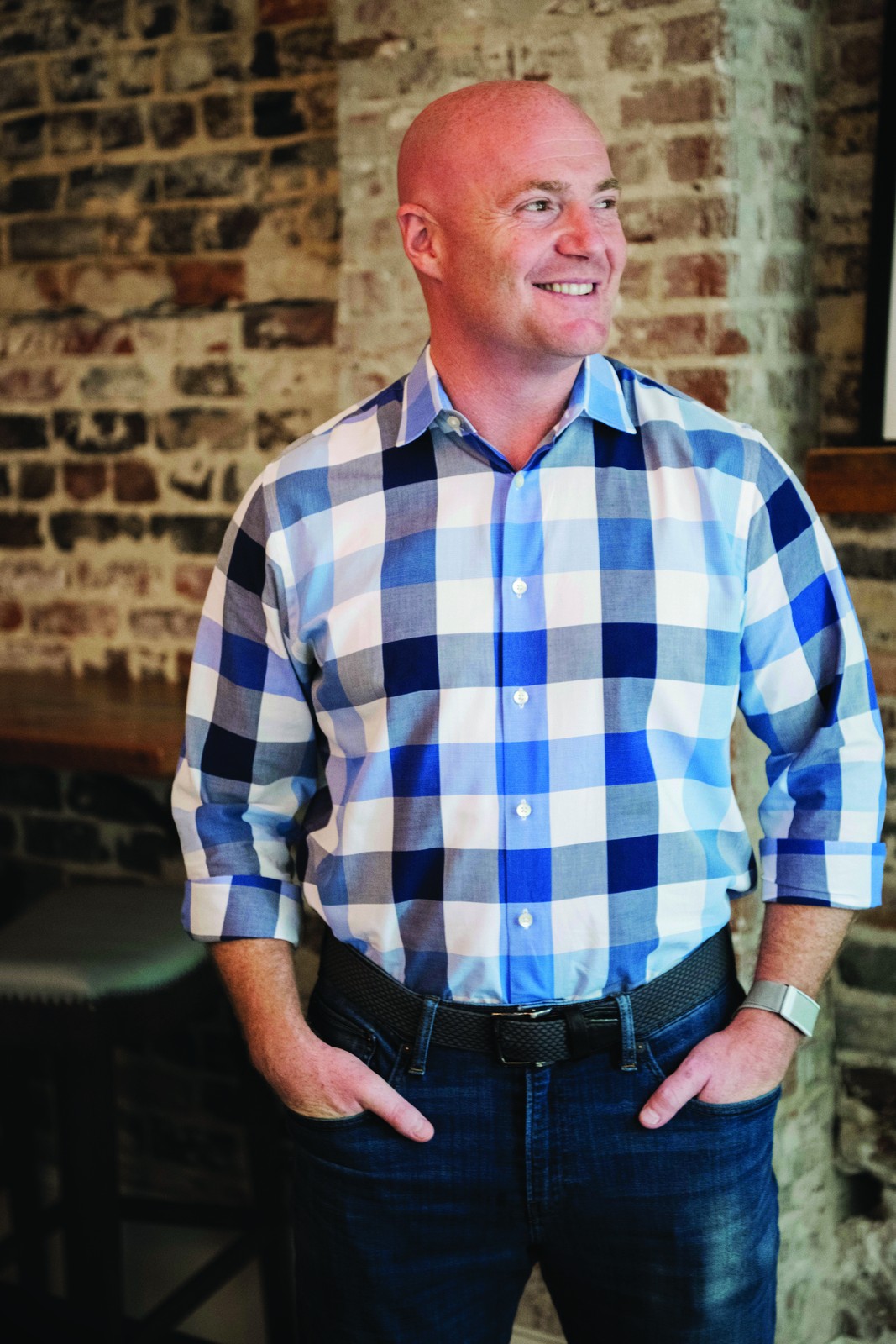
Casey Graham
Casey Graham is a lifelong entrepreneur and the co-founder and CEO of Gravy Solutions, the first and only payment recovery solution for subscription-based businesses. Graham founded and sold three companies prior to launching Gravy in 2017. Most notable was Graham’s successful exit of The Rocket Company in 2015 after making the Inc. 5000 list three years in a row.
Graham prides himself not only on achieving unconventional success that owners can emulate but on being best known as a family man. He’s been married to his wife, Kacie, since 2004, and they have two children: Darby and Gage. When he’s not actively leading Gravy, you can find him fishing, enjoying a good cigar, or watching Alabama football.
📚 Books by Casey Graham
Transcript
[00:00:01] Casey Graham: Owner's intent is no more than two sentences, and it is the real reason that you own the business. It is as the owner, not as the operator, this is the issue. We're one person, but we wear two hats. Owner's intent is the two-sentence, no more than two-sentence clarity of here's why I own this business and exactly what I want to get out of it without lying to myself.
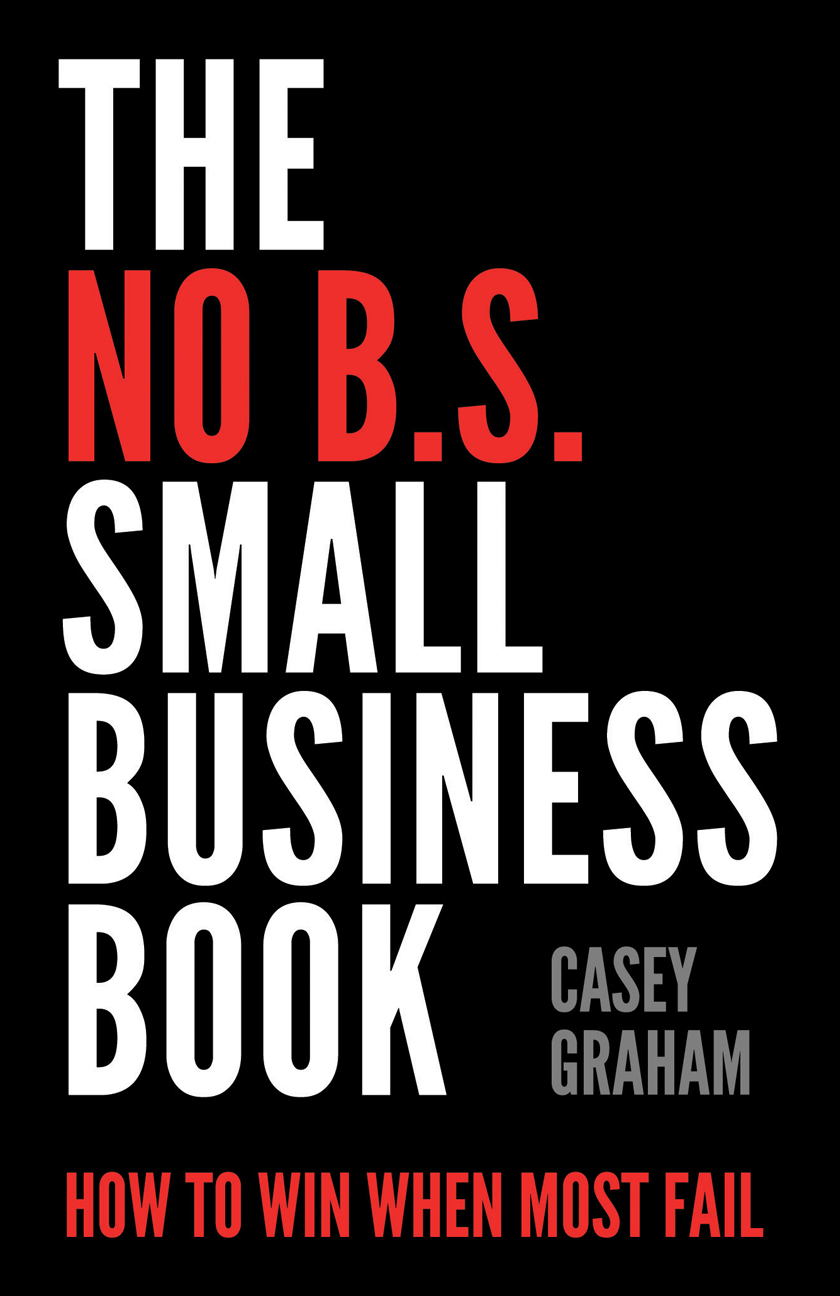
[00:00:31] FG: Casey Graham is a lifelong entrepreneur and the co-founder and CEO of Gravy Solutions, the first and only payment recovery solution for subscription-based businesses. Casey founded and sold three companies prior to launching Gravy in 2017. In his new book, The No B.S. Small Business Book, you will learn how to get ruthlessly honest about yourself, your business, and what you really want from both, and how to get it. You'll roll up your sleeves and get your hands dirty, applying practical business strategies gleaned from decades of experience building and exiting successful companies. If you want to gain massive traction from achieving massive clarity as you take massive action at all levels of business and life as a no B.S. business owner, then buckle up. This is the business book you've been waiting for. This is the Author Hour podcast, and I'm your host Frank Garza. Today I'm joined by Casey Graham, author of a brand-new book, The No B.S. Small Business Book. Casey, welcome to the show.
[00:01:34] Casey Graham: Frank, thanks for having me.
[00:01:36] FG: So, to start, can you share a little bit about your personal and professional background?
[00:01:40] Casey Graham: Yeah, my name is Casey Graham. My wife's name is Casey Graham. We're both Casey. So, I always share that first in case I tell a personal story about Casey. That is not me talking about myself in third person and we've been married for 17 years. I've got a daughter. Her name is Darby. She's 14. My son is Gage, he's 10. And we live on a farm. We hunt, we fish. And we kind of live that life. That's what we do, personally, professionally. Gravy is — cofounder of it, CEO currently, been doing that for the last four and a half years. We have 150 people around the world that are part of our organization and we love what we're doing. Our mission is to return $1 billion back to our clients by the end of 2023. That's what we're on a mission to do. But previous to that, I started, grew, and sold three separate companies in three different industries, and Gravy is number four go at it. And so, that's a little bit of the professional and personal.
[00:02:43] FG: Yeah. So, you said you sold three companies prior to launching Gravy, and you've been a lifelong entrepreneur. What do you consider to be your entrepreneur origin story? How'd you get started?
[00:02:55] Casey Graham: When I was seven years old, I literally went to a lady named Miss Cassidy and she owned a glass company. And she had like an acre and a half of just garden and yard and all this stuff. I remember rallying two of my friends, Brad and Nick. We went door to door around our neighborhood and we were asking people if there's anything we could do in their yard to make money. I remember, she was the only one that took us up on it. And we got paid $21, $7 apiece. It took us eight hours to pick all the weeds. But literally from the very beginning. People say, “Where does this come from?” I think it's just who I am. And then at, you know, 14 years old, I owned my grass cutting business, I started investing in the stock market at 14 years old. I would cut the grass and then go inside and the guy was a stock market guy. And so, I was, “Well, me about that.” He helped me start. I'd cut the grass, instead of him just paying me, I would put the money into the mutual fund. So, I started doing that. Just got the bug early. In college, I had a business called collegeloadout.com where we focused on moving sorority girl stuff. The target market of sorority girls is always awesome. And so, we did that and that you know, and it's just been my whole life. It's just who I am and it's what I enjoy and it’s what I’m good at. I held a job for four hours one time, and I quit at lunch, and I said, “I'm never going to do that ever again.”
[00:04:17] FG: That's the story right there. So, why did you decide to write this book, The No B.S. Small Business Book?
[00:04:28] Casey Graham: I almost had to write it. What I mean by that is I didn't write this book to sell books. I know that sounds kind of strange, but I almost wrote this book to curate all of the non-book stuff. So, like non-book stuff of like, how things actually work in small business. We hired people to ask me to consult or speak or and I had all these random thoughts. I was like, “What's the core of this?” And the reality of it was getting down to the, what I call owner’s intent of business and bringing everybody back to, as a business owner, how do you approach literally waking up every single day and going into your business and being clear about that. So, the idea of owner’s intent is the idea that weaves throughout the whole book. And that means that we're not going to have B.S. reasons for owning businesses, we're going to have real reasons for owning businesses. And we're going to be really honest about those reasons to ourselves, to our family, to our team members, and to everybody else. Because in a world where there's just so much fanfare around like, everything has to have this noble cause for everything we need to go, we're doing this so we can IPO and honestly, say, we've kind of missed the point of small business being that, hey, sometimes, as a small business owner, you just want to be in business for yourself to have the freedom that you want for your life and that's okay, and we’ve got to be okay with that. So, I just feel like that message was missing out there. And so, I had to write it almost for myself, to be okay with understanding that everything doesn't have to grow and be big, and everything doesn't have to be these massive success stories. You can be a really good small business owner, lead a really great life with a lot of freedom in your life. But you've got to be clear about what your owner's intent is. Inside your owner's intent, you can find fulfillment, you can find simplicity, and you can find the freedom that you want. So, that whole idea, I've been spending like 10 years kind of grappling with, and I needed to curate it down to an easy read and that's why I did it.
[00:06:30] FG: Yeah, that term owner's intent, that was really something that caught my eye at the beginning, in the opening pages of your book. Can you talk more about what is owner’s intent, and how can somebody define that for themselves?
[00:06:45] Casey Graham: Owner’s intent is no more than two sentences. And it is the real reason that you own the business. And it is, as the owner, not as the operator, this is the issue. We're one person, but we wear two hats. Owner’s intent is the two-sentence, no more than two-sentence clarity of here's why I own this business, and exactly what I want to get out of it without lying to myself. That's the simple version of it. Because as owner of a business, a small business, you're also the operator most of the time, meaning there's not like these shareholders, and then you're the CEO, and there's a clear separation. You're the shareholder, and you're the CEO, right? You're the shareholder, and you're the get-crap-done person. So, we mix these two things together. And so, what most people do is they just operate their business, but they never take time to go, “Why do I really want to show up as the owner of this business? And what does the operator have to do to make the owner happy?” But the problem is they’re the same person. So, what I help do is break down, how do you break these two thoughts out to where the operator is clear about what they do inside of the business, and the owner is clear about what they want out of the business. And getting that separation, and getting clear and putting your owner’s hat on and thinking as an owner, is the number one thing that will then drive you, as the operator, to make the owner happy. Does that make sense?
[00:08:18] FG: Yeah, it does. Not to put you on the spot, but would you mind sharing what your owner's intent is for Gravy Solutions?
[00:08:27] Casey Graham: Yeah, when I started four and a half years ago, I said, I came out of a very difficult season of my life, after selling my last company. And I said, I can't not know why I own this business. And so my owner’s intent, it was to build a world-class company that my adult children would want to work at someday if they so choose to. And so, the filter is, so why are we growing the way we're growing? Why are we adding staff? Why do we let staff go that don't fit? Why do we build the culture the way we build it? Do we raise money or not? If my daughter came home, or my son came home when they were 30 years old, and they came home for Christmas with their family, and they said, “Dad, let me tell you about the company I work at.” That's the company that we're trying to build and that's why I show up every day because I don't need the money. So, when I sold my last company, I'm good. And so, Frank, that sounds great. But what do you do when you're 36 years old, and you don't need to work anymore? Well, people say, “Oh, I'd love that. That'd be awesome.” Well, it wasn't awesome for me. I hated my life. I want to do something that adds value in the world. And the way to add value for me is to build a company that I want my daughter to work out someday if they so choose to.
[00:09:32] FG: Yeah, I love that. As I was reading through the table of contents of your book, I love the titles of all the chapters. I mean, you read the title on these chapters, and you can't help it like get curious about it and want to dig in because it's not obvious, but it's something interesting. And an example of that is a chapter called “$300 Bottle of Wine: Why Reinforcing Culture Solves All Other Business Problems”. So, you use that $300 bottle wine story to kind of lead into something you call curiosity conversations. Can you talk about what is a curiosity conversation?
[00:10:08] Casey Graham: Yeah, most people, in general, think they're right. Right?
[00:10:15] FG: Yeah.
[00:10:16] Casey Graham: I mean, at the end of the day, like we have our perspective, our opinion, our thoughts, our view, our worldview, and most people think they're right. And what I found in businesses is that everybody with their viewpoint and their view, they think the right. So, what happens is the number one thing that's destructive of culture is judgment, and judgment is right or wrong. What I found is it's not very helpful in understanding where people are, it's not very helpful in understanding how to overcome issues, it's not very helpful in understanding why somebody is behaving the way that they're behaving. Let's say somebody is behaving in a way that is annoying to you. Well, the typical thing to do is like, “Hey, can you please stop doing that behavior?” Well, the curiosity conversation would be the idea of, instead of being judgmental, of stop doing that, or you shouldn't, or you should, it's to understand why. And it's to understand, I see you do that in Slack, or I see you said that, or in meetings that seems to come across this way. I'm curious, what was your perspective in the meeting that made you want to talk about that in that way? Or I'm curious, and so, what we do is we created a phrase called curiosity conversations to say, if I ever say to you, I need to have a curiosity conversation, that is an alert to say, “Hey, I feel like something's off. But I'm not going to judge you because I can't see the way that you see.” And then you get on their side of the table, and you see the way that they see. And then oftentimes, it diffuses all of the negative stuff in culture where people just hate talking to each other, and they don't want to talk to each other and things are bad, that kind of stuff. So, curiosity diffuses, curiosity is humility. Curiosity is a warm place to be and to understand, and essentially, it's bathed in empathy, to be curious. So, that's what we try to do here. We don't get it right all the time, but curiosity conversations is a real thing here, baby.
[00:12:15] FG: Yeah. It sounds like that can be something that's very helpful, not only at work, but in your personal life, as well with family members other loved ones, friends. Have you found that to be the case?
[00:12:25] Casey Graham: Yeah, I just wish I would practice it more. No, but for real, it's like, I'm curious, this is a great statement, you know, for a practical thing is like, “Hey, Frank, I'm so curious.” And when you say that, they go, “Okay”, and they’ll lean in. But if you start with, “Hey, can you please stop?” They lean out. And so, even with children, “Hey, I'm curious about”, and they’ll lean in. And so, that one little phrase, one little statement brings people together, and it gets people to lean in instead of checkout.
[00:12:58] FG: So, another chapter I couldn't help but dig into was “Let Freedom Ring: Give Everybody What They Want.” And you start with a story of taking a tour of your friend's office, and this friend's company had gone from nothing to an acquisition by Target for 550 million in just three years. So, can you share what did you learn from this tour? And how do you apply that to your company now?
[00:13:23] Casey Graham: Yeah, the story was great. I remember walking through and having a conversation, they were growing this company so fast, and it's literally a once-in-a-lifetime kind of opportunity. And the opportunity was so big, and it's happening so fast, that he was like, we just didn't have time to like, deal with all of the drama that happens when you get a bunch of people together, right? That's just humanity. You have a bunch of people together, and just drama appears, and all this kind of stuff. So, there was a lady who felt like she had her anxiety and stress was really high. She was like, if there was just like, a way for me to process that and deal with this at work, that would be super helpful, and all this kind of stuff. So, she said that in a one-on-one. They said, “Well, how would you want that to be done?” She's like, “Well if we had like adult stress coloring books or something for anxiety, and all this kind of stuff, but I've heard other people talk about this, and blah, blah, blah, blah, blah.” So, usually, there are situations when you hear that this isn't something that like work can't fix all of your stress and your anxiety problem. So, some of it is work, but then some of it, it's just personal. Oftentimes, we either don't listen to it and go, “Okay, you need to figure it out on your own”, or we go, we don't know what to do, and we listen to problems and all this kind of stuff and it just takes time and energy and mindset. So, the guy literally called a construction company, and he had them the next day, come build an anxiety sitting room with coloring books and just on the other end, they turn this whole thing and they just said, “Okay, there it is. You can have it.” Within like 24 hours, they built that for the lady, and instantly the problem went away. And then they had people that ask these questions about can I have? Or could I do a swag? All this stuff that you can have as much swag as you want. And then what they found out is when you give people everything they want, and you just say, “Yes, of course, we can make that happen. Sure, we'll do it.” The more you do that for people, the less people are going to ask, and the more resistance you put up, the more people are going to fight against you for that one little thing. And so, the number one way to remove resistance from your people is just to give them what they want. Obviously, there's a limit to this. Like you can’t just, “I want a new house”, I'm not talking about that stuff. I'm talking about stupid, petty things that like if you found out they need two screens, you just give them two screens. If you found out they need something you just give it. So, find out what people want and what people are griping about or complaining about, and just give it to them and it goes away. It's interesting.
[00:15:50] FG: Yeah. And so, is there anything if people were to take a tour of your offices at Gravy Solutions that they might be surprised that you guys have?
[00:15:58] Casey Graham: We don't have offices. Yeah, we've been virtual. Slack has been our headquarters since day one.
[00:16:03] FG: Okay, last one. There's a chapter titled, “What If I'm Wrong?” That starts with a story that begins and I'll quote, “Right before I walked through the church doors to get married, one of my groomsmen asked me, Are you sure she's the one?” What is the lesson that that story leads to?
[00:16:20] Casey Graham: The number one reason people don't pick an owner's intent, meaning they don't pick why they own their business and they're not clear, is because they're scared that they're going to miss something, or that it's going to cut them off from future opportunities, or that it's going to be so limited that they're not going to be able to move. It almost feels constricting. And so, that story is about the idea of at some point, you just have to make a freaking decision. At some point you have to commit. At some point, you have to just go, “That's it.” And then you have to know as well, and I'm not talking about necessarily with relationships, but with your business owner intent, is that you can absolutely change it in the future. But you absolutely can't not pick one right now, because people are scared if they're going to pick the wrong one. That's why most people don't do it. What I would say is, the bigger fear you should have is you're not picking anything, and that's what most people do. Most people don't have a clear statement. Most people don't know what the owner’s intention is for their business. And so, they never pick it. They never pick it because they think they might be wrong, but you're always wrong when you never pick it. So, you pick, you commit, and then what you got to understand is that business changes, life changes, and all those changes. As you get new information, you can change. But when you change, you've got to be committed to what's the next one and being clear about that. And committing to that to the time period. But it's never okay to be uncommitted for why you own your business and why you're a part of it because you're scared you're going to pick wrong.
[00:17:53] FG: Is there anything else about you, or the book that you want to make sure our listeners know before we wrap up?
[00:18:00] Casey Graham: I am a normal dude, screwed up, make bad decisions. The book was written out of me selling a business, becoming a millionaire, and hating my life, almost losing my family. It's written out of a lot of pain and a lot of like, I guess a phoenix from the ashes, kind of book of like, here's how I'm trying to do this as a redemption company and to be different. So, I would just say that if you pick up a copy, or you go through it, hopefully you can hear the reality of humanity and business and that I'm not somebody that's just some smarter, anybody, whatever. I'm just sharing real-life stories and experiences. I don't even think I'm necessarily right. But I do think that it's okay to share your perspective and be clear about what you know doesn't work and what does work. And so, hopefully you feel like I'm a real person and hopefully that comes through in the book.
[00:18:50] FG: Well, Casey, writing a book is such a feat, so congratulations on getting it done. It's been such a pleasure chatting with you. The book is called, The No B.S. Small Business Book. Besides checking out the book, where can people find you?
[00:19:03] Casey Graham: I am 100% on LinkedIn, Casey Graham is my name, and you can find me there.
[00:19:09] FG: Thank you, Casey.
[00:19:10] Casey Graham: Thank you.
[00:19:13] FG: Thanks for joining us for this episode of Author Hour. You can find The No B.S. Small Business Book on Amazon. A transcript of this episode, as well as all of our previous episodes, is available at authohour.co. For more Author Hour, subscribe to this podcast on your favorite subscription service. Thanks for joining us. We’ll see you next time, same place, different author.
Want to Write Your Own Book?
Scribe has helped over 2,000 authors turn their expertise into published books.
Schedule a Free Consult