Bonnie Koo: Episode 851
Read the full transcript
Bonnie Koo
Dr. Bonnie Koo is a dermatologist and certified life coach passionate about helping Type-A, successful women with personal finance strategies. While facing her own financial struggles after completing her medical degree at Columbia, Bonnie decided to educate herself and make her money work for her. Now, she hosts The Wealthy Mom MD Podcast and provides women with the cognitive tools they need to create wealth through her workshops and interactive programs. For more information, visit wealthymommd.com.
📚 Books by Bonnie Koo
Transcript
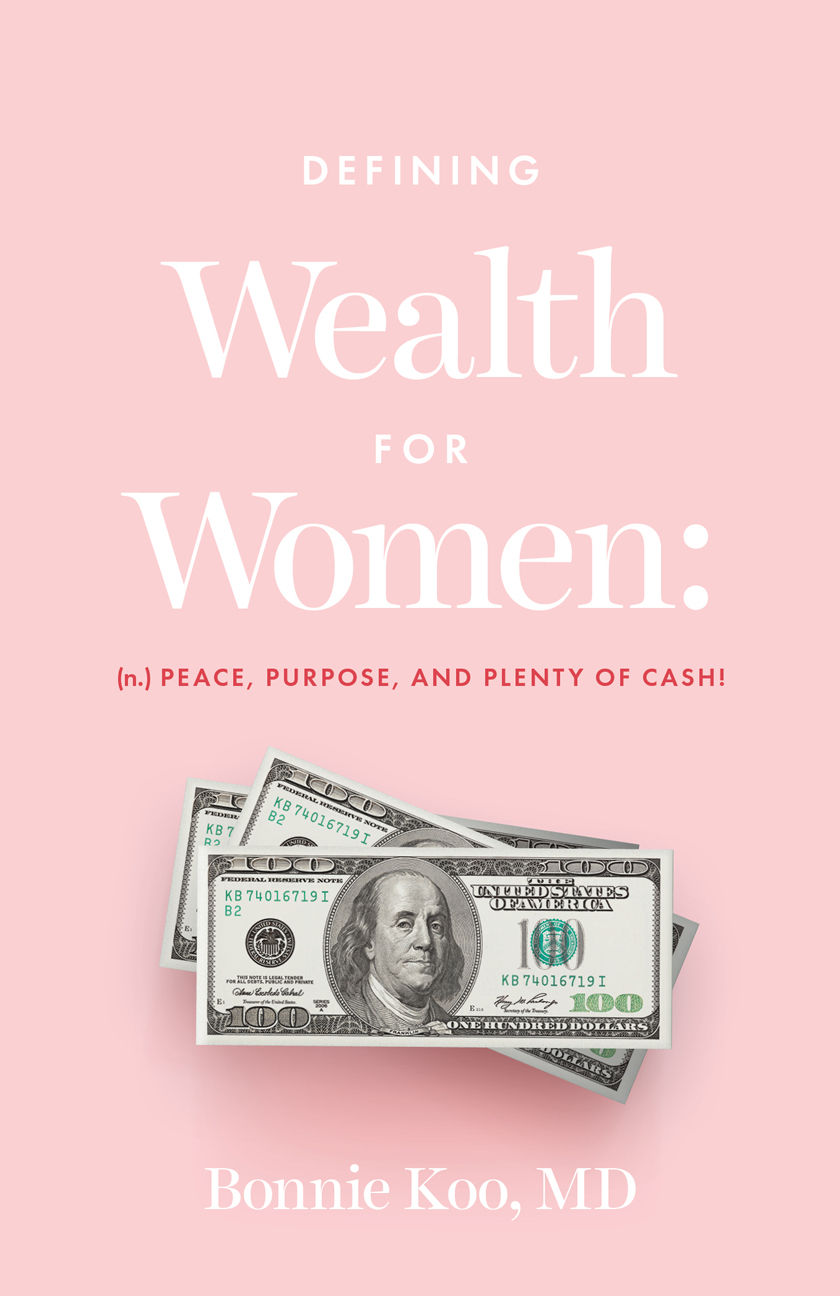
[0:01:01] BB: From the outside, you have it all, the advanced degree and fulfilling career, the loving family, and the nice home. Inside, it’s a different story. Student loans and credit card debts still follow you around and living pay check to pay check feels like you’ve missed an important memo that only your financially free counterparts received. You’re relying on the next promotion and the big raise to feel better about your finances. What if, making more money isn’t the solution you need? What if you could have all the money you want with a few simple adjustments? In Defining Wealth for Women, Dr. Bonnie Koo reveals the common misconceptions and limiting beliefs that many professional women have when it comes to money helping you see what’s possible when you break through the self-imposed ceiling. Even if you’ve never struggled with finances, this book helps you take your financial status to the next level and make your money work for you. Here is my conversation with Dr. Bonnie Koo. This is Author Hour. I’m your host Benji Block and today, excited to have a conversation with Dr. Bonnie Koo. She has just authored a new book, it’s called, Defining Wealth for Women: (n.) Peace, Purpose, and Plenty of Cash. That’s a great title. Bonnie, welcome to the show.
[0:02:22] Bonnie Koo: Thank you, I’m so excited to be here.
[0:02:24] BB: As a board-certified dermatologist, how did you become passionate about personal finance? Tell us about some of that journey for you?
[0:02:36] Bonnie Koo: Yeah, well, first, I just want to say, I think, when people see that I’m a physician, they just automatically think, “Well, doctors don’t have money problems.” That’s a-whole-nother conversation because I think a lot of us think that – if you make a certain amount of money, then you shouldn’t have money problems and that’s so not true, right?
[0:02:52] BB: Yeah.
[0:02:52] Bonnie Koo: Basically, What happened was, I was finishing up my residency, it’s four years for dermatology and I was getting job offers and I was like, “I need to figure this out” because my income was about to dramatically increase, residents make around four to 50 grand a year and depending on your specialty, you could – your next job could be 300k plus, right? I was like, “I got to figure this out for myself.” I just started reading books about it, I had some friends who are into money or at least that they seem like it and so I asked them, “How did you learn?” and so that’s kind of how I got started personally learning about money and that was six or seven years ago at this point. Then what I found soon after was that so many other physicians, specifically, women because that’s who I was talking to, no one knew anything about money. It was just this big hole in our knowledge and like I said earlier, because we do make a great income, like most of us are making multiple six figures, I think there was a lot of personal shame around not knowing what to do, right? If you think about the money narrative, no one really talks about it unless you had that special parent who did talk about it with you. Most of our parents didn’t know what they were doing, right?
[0:04:04] BB: They have shame too so they don’t want to tell you.
[0:04:07] Bonnie Koo: It’s just a blind leading the blind, right?
[0:04:08] BB: Yeah. I love that you decided to do something about that because beyond just being passionate for yourself and going, I need to learn because I’m about to make more money, you then see this gap and you decide, that’s a lane I want to run in, right? I want to teach strategies specifically for women physicians. Did you even know that that could be a lane that you would end up going down? How does that develop over time?
[0:04:34] Bonnie Koo: Yeah, there was a lot of space between learning about it myself and then thinking I should teach it to other people and so, at first, it just came down to – I was just helping lots of people, I was answering questions and specifically, I was in this large Facebook group that was only for doctors, female doctors and it was specifically to talk about personal finances and the story is that I started my new job but it wasn’t that busy because it was a new practice. What that meant was, I had a lot of free time to be on Facebook. I just started answering everyone’s questions and it soon became apparent to me that I was one of the few people that knew the answers. I was just answering questions and it was really fun for me to do so and I was learning more and be able to give better answers, then literally one day – I had no idea or even thought that I would do something about it. This was like, “Oh, I’ve got free time and I’m on Facebook groups, let’s just answer people’s questions”. Then one day, a friend of mine was like, “You should start a blog” and I was really perplexed when she said that to be honest. I was like, “Why would I start a blog? The reason why I was so perplexed was because there was already another personal finance blog that a doctor started and so I was like, “Well, they can just read his blog. He already talks about everything I talk about” and then she’s like, “Yeah, but you're a woman.”
[0:05:55] BB: Yup, you got that perspective that I think is so critical to have. I love that you were willing to not just let it be the thing that he did but you’re going to take it on yourself. Okay, did you start a blog, and then that led to the book or why did this now become the right time to write a book?
[0:06:15] Bonnie Koo: That blog started January of – I think it was 2017 and so here’s the thing. I actually have a background in IT, that was actually my job before I went to med school and the reason why I say that was, it was very easy for me to whip up a blog and a website. That wasn’t a bear because I hear a lot of – or I talked to a lot of new entrepreneurs and they always say I’m very tech challenged but so tech was never a problem for me. Putting a website, starting a blog, it wasn’t pretty by any means but it was easy to just get going. Here’s what I’ve learned about looking backwards because when I talk to a lot of just new entrepreneurs about this, I was able to create blog posts so easily because I could see what people were asking, does that make sense?
[0:07:01] BB: It does.
[0:07:03] Bonnie Koo: People would ask the same five, 20 questions, literally over and over again and so I was like, “I’ll just write a blog post that answers all these questions” and then instead of writing this huge answer in the Facebook group which gets annoying after a while, I’ll just post my link.
[0:07:18] BB: That’s so important.
[0:07:19] Bonnie Koo: That’s how I got started with that and I started – I guess, becoming known because I was answering people’s questions, I started this blog and I actually got started being asked to speak because so much has changed even in five years in terms of talking about personal finance to doctors because honestly, before five or even six years ago, no one talked about it. Basically, doctors were walking around knowing nothing and you may have heard that there’s a stereotype that doctors, they usually have office managers that steal money from them.
[0:07:51] BB: Oh okay.
[0:07:52] Bonnie Koo: Because they’re not paying attention to the money.
[0:07:53] BB: Yup, exactly, okay.
[0:07:55] Bonnie Koo: There’s truth in that, right? Yeah, I just started getting asked to speak about it and even then, I was making some money, I mean, we’re talking like a few thousand dollars and I’m a dermatologist and dermatologists make a great salary. Let’s just say dermatologists aren’t thinking, we’re not paid as well as other doctors, we need to figure out a way to make money, that’s just not something we think about. I was just doing this for fun and it was like a jobby, right? A hobby that made a little bit of money. Yeah, it was a jobby. I wasn’t thinking this was going to be a moneymaker that wasn’t – it wasn’t a conscious decision to be a business until about two years later.
[0:08:32] BB: Interesting. Okay, in your study and then your writing of this book, let’s start to get into some of the things that you see and start to notice, specifically, one of them that I’d be interested in is the different ways that maybe think about money between women and men. What are the gaps that made you say we need a book that speaks directly to where women are at?
[0:08:59] Bonnie Koo: Yeah, before I actually even answer that, just want to give a little bit more history between when I started answering questions to even this book. I really thought money was like, “Oh I just have to learn how to invest” I just got to learn XYZ, follow this plan, blah-blah-blah. That is true to some extent but then what I realized about a few years in when I actually started working with a coach was that that is true, there are things you need to learn, you need to learn what the stock market is if you’re going to invest in stocks, right? How many of us own stock investments when you have no idea what they actually do, right? What I realized is like, that’s important but what’s even more important is what someone thinks they can actually do and because money is shrouded in so much secrecy and shame and judgment, right? We look at rich people and just think bad things about them generally speaking, right? There is just so much BS out there about what money is, what it isn’t and you shouldn’t want more money and that shouldn’t be the motivation to why you do anything, there’s just so much of that out there and so, how this relates to women is I think a lot of women, we’ve sort of we have internalized this and specifically, legally, it wasn’t until – I don’t know if you know this but it wasn’t until 1974 that women could take out a line of credit or a loan without a man’s signature, that’s crazy.
[0:10:19] BB: Wow, I knew it was late but I didn’t know it was that late. That’s insane.
[0:10:22] Bonnie Koo: Yeah, that’s like pretty recent, it’s not that long ago and then, if you just even wind it back less than a hundred years before, we couldn’t own property. We were considered a man’s property, right? In terms of marriage. It kind of makes sense that — why women – I think compared to – and men have trouble with money too, don’t get me wrong, right? I think women, there’s this literally, thousands and thousands of years of history where we weren’t even allowed to handle money.
[0:10:49] BB: Interesting.
[0:10:50] Bonnie Koo: That has rippling effects over time.
[0:10:52] BB: A number of times, this plays right off what you're saying. A number of times, I noticed in the book, you’re reminding readers that the way we think about money impacts the amount of money we have and that you have to start with mindset. What specifically do you see as some of those self-sabotage things that maybe grab a hold of many women and the mindset that needs to shift?
[0:11:15] Bonnie Koo: Yeah, well, I’ll just give you a physician example is because whatever specialty you go into, there is like “range of income” you could expect. Now, this can change between whether you're employed or start your own practice but let’s just stick with employed. Depending on, especially you might think, “Well, I’m family medicine and we don’t make that much.” You’re literally telling yourself that you can’t make more than – I’m just going to pick a number, 200k a year. Then what I find even more interesting is that when I question that, they’ll argue with me that they can’t make more than that. When you tell yourself you can’t make more than a certain amount or if something like 500k, that’s just preposterous, you don’t even try. That’s why the mindset’s so important because if you don’t think it’s possible, you don’t do anything about it, we know that, right?
[0:12:07] BB: Yup.
[0:12:07] Bonnie Koo: Why would you?
[0:12:08] BB: Yeah, it seems impossible so I’m not even going to contemplate if there is a path to get there, it just seems out of the realm of possibility from the outset.
[0:12:17] Bonnie Koo: Yeah, you might not even be cautious that it’s impossible. Just to give you a personal example, I don’t even think it was in the realm of possibility for me to make a more than a million dollars a year to earn that. I haven’t earned that yet but I know I will. What I mean by like realm of possibility, it wasn’t even like an option for me if it was a multiple-choice test.
[0:12:36] BB: Let me ask you a question. Do you think that that comes over time? You set just sort of the next goal that seems a little bit beyond reach and then you hit that one and then you up that number or what would you advise when it comes to thinking beyond where you currently are and what’s possible?
[0:12:52] Bonnie Koo: Honestly, I think, probably the biggest thing I help my clients is I give them permission to want as much money as they want. There’s no limit, technically.
[0:13:03] BB: Technically. I do think there’s some number in our head that seems far beyond where we could get like a stretch goal. Maybe stair-stepping that because I’m assuming you didn’t always, a million dollars a year wasn’t the number in your head years ago, was it?
[0:13:21] Bonnie Koo: No, I think I started at 500k.
[0:13:23] BB: Okay. Yup. I love the idea of a stretch goal where it’s beyond what you think is possible but enough to really get you actually started and then increasing from there. What do you think about that?
[0:13:37] Bonnie Koo: Yeah, and then the thing is, you get used to this number and you start meeting people who have made that or more and so it just becomes normal to you. Just take the example of the million-dollar thing. I haven’t made that yet but I now know a lot of people and some of them close friends of mine who are multimillion earning people not just their net worth but that’s actually what they bring in every year in their business, not necessarily personally. To me now, it’s normal to be a millionaire, it definitely was not normal five years ago.
[0:14:08] BB: Yeah, your network obviously matters so much to that because you got to know what’s possible. Okay, let’s talk about network for a second because that’s obviously vital as you got to see people that are essentially living a different way from where you are and then that exposes you to a new level of wealth and understanding around money. What did that look like for you? Did it happen naturally where now you’re just around those people or was it conscious decisions to get around those people?
[0:14:33] Bonnie Koo: I think it was a little bit of both. For example, once you start being open that more is possible for you, if you’re thinking, let’s say you’re making 100k now, you're like, “You know, it would be really cool to make 500k?” to me, that’s actually a really great way to start to open your brand it’s like, “Wouldn’t it be fun if I could make this amount of money?” Kind of like, have fun with it and then once you just start thinking about that possibility for yourself, you start actually seeing it. You’ve heard people say, if someone tells you about a specific red hat, you’ll start seeing that red hat everywhere. It’s the same thing, the same concept. You’ll just start naturally meeting or just noticing things but if you don’t, you can put yourself in rooms and this is why people join Masterminds for example. You purposely pay to be around people like that, whether it’s income or just being around people who are sort of thinking a little differently and out of the box and want to grow and I think that’s really important to do.
[0:15:32] BB: Was that sort of a part of the genesis for you? Was a Mastermind or something along those lines? When did you start to notice the mindset shift personally?
[0:15:43] Bonnie Koo: Yeah, it was when I hired a coach, I get the years mixed up, 2018 or 2019 and then I have since joined a business Mastermind so what that is, a group specifically for coaches, building coaching businesses which is what I have and so, obviously the person leading it is someone who is very successful at what they do. My current business coach I think made $10 million last year.
[0:16:05] BB: Nice.
[0:16:06] Bonnie Koo: She is teaching us in hers but she’s got three groups, it’s based on income and so just to be around other women and it’s mostly women like 99 percent, so the room I’m in right now has other millionaire earning women and I think as a woman, it’s just so important to see that A, women can do this and I think if you’re a woman of color, it’s important to see a woman that looks like you.
[0:16:29] BB: Yep.
[0:16:30] Bonnie Koo: You know, not just nothing wrong with white men and women but if those are the only examples you have in your life and you’re not white, you might think, “Well, it’s possible for them but maybe it is not possible for me.”
[0:16:40] BB: Yeah, you always got to have those examples. I love that we’re moving in that direction even in entertainment like we got to have representation across the board because it’s so empowering to see someone like you doing the work and I actually think this book is obviously part of that, right? Because it is not just that a woman is writing it, you have an interesting vantage point that you can take on that’s going to open the door for a lot of other women to think outside the box, so I love that.
[0:17:06] Bonnie Koo: Thank you.
[0:17:07] BB: Let’s dive into a couple myths. I love that the way you wrote this book, you each chapter give a myth that you then take time to expel and then provide a new mindset for us. The first myth of the book is this idea that money is complicated. I wonder if you could expand on that a little bit for us what you see as the common thought process there.
[0:17:33] Bonnie Koo: Yeah, so this is something I hear all the time like it’s complicated, it’s hard like some version of that and so it would make sense if you think something is hard and complicated, you probably don’t take the time to learn it, you know what I mean? It’s like a catch 22, it’s like, “Oh, it seems hard and complicated. I’ll get to it later” that’s kind of what our brain does.
[0:17:51] BB: Yeah, even when it’s important.
[0:17:52] Bonnie Koo: Yeah, it’s important and so I kind of delve into why this happens and I talk a lot about just how our brains are wired and talk about what I call the brain out of the packaging with the factory setting so to speak and so our brain’s factory settings, basically our brains don’t want to learn anything that is complicated or hard.
[0:18:15] BB: When we realize that because I would say I’m guilty of this, right? There is things in my finances that I continue to put off just because it seems too complicated, is it a shift going back to our mindset conversation just to say, “No, it’s not complicated” you start there, or is it a learning thing where it’s like, okay, you kind of have to force yourself into learning and then you realize it’s not so hard?
[0:18:40] Bonnie Koo: I think it’s a little bit of both depending on where you’re at and so I think understanding that it’s your brain’s tendency like natural tendency and it’s not a bad tendency to basically want to spend as little energy as possible because you have to understand our brain’s number one priority is to keep us alive like ensure survival, which sounds like a good idea, right? One of the ways that it does that is it wants to make sure you have enough energy in case there is a real threat like physical threat. Now, in this day and age, physical threats are pretty rare thankfully. They’re not zero percent but it’s pretty rare in our modern society here in the United States but our brains haven’t caught up with that if that makes sense, you know? What I mean by that is when your brain, when you say it’s complicated, your brain basically interprets that as “This is going to take up a lot of resources to learn this material.” We need to make sure that we can survive, I don’t know, a lion coming after you or something like that. You need to have the energy to run fast and also, here’s the second thing, not only that, we need to make sure we have the energy but here’s the second important thing: We haven’t had to learn about money to stay alive.
[0:20:00] BB: Right, yep.
[0:20:01] Bonnie Koo: You’re still alive right now, which means this is not actually vital to your survival and learning this, I don’t know if this is actually going to keep us alive, does that makes sense?
[0:20:13] BB: That’s a good point. No, it does because that’s I think why so many put it off because their current way of living is working for them even if it’s not optimal, it is a way of doing things, right? It’s the same reason why people don’t change their diet and the way they eat. It’s the same reason people don’t go to the gym, right? Because the way that they’re doing life right now is technically working so we can keep putting it off.
[0:20:36] Bonnie Koo: Yeah and when we say technically working meaning, it means you’re alive.
[0:20:40] BB: Yeah, exactly.
[0:20:41] Bonnie Koo: Which is a low bar, right?
[0:20:43] BB: It’s a very low bar and definitely we want to raise that bar, so I appreciate you pointing that out. Here is the new mindset that you provide in the book, you say, “Money is easier than my job. I just need to think about it differently” that distinction, money is easier than my job, talk about that for a second.
[0:21:01] Bonnie Koo: Yeah, so it’s really just noticing that it’s only as hard as you think it is and that is kind of what I say about everything so I know it can sound annoying to people who’ve heard my stuff. When I say annoying just like because I think our brains want to always think that’s not the answer. “No, no, there’s a five-step plan, just tell me the five-step plan and I’ll do it” because that’s easier than having to think hard about something. That’s kind of what I mean by it’s easier than your job. It’s like it’s your job wasn’t easy the first time you did it but you got better already, right?
[0:21:36] BB: Totally. I totally see mindset is something that can sound like we’re beating a dead horse but so much of it comes back to how you think about things and so I love that you’re constantly giving new mindsets in this book because ultimately, the listicles that are online of like the five things you need to do don’t change your mind and if you don’t change your mind, you don’t change your life. That is really important and I am glad you’re pointing that out. Let’s tackle a couple more, just give some further flavor to a couple more chapters. One of them that I thought was interesting, everybody works for money. That’s a myth because you say rich people don’t work for money, right? Talk about that and the shift that you’ve had to make in your mentality.
[0:22:22] Bonnie Koo: Yeah, this is such an important one and I’m trying to think about how to say it so we don’t take up too much time but here’s the thing, like most of us, we were told the same narrative like go to school, study hard, get good grades, get a good job, that’s how you make money is you get a good job, right? One of the things that I explain, I don’t know if it is in this chapter or a different chapter is this whole construct of school and getting a job was literally made up, and here’s what I mean. So, the industrial revolution, the rise of factories, and the need for factory workers, that’s actually what created our current modern public school system. What I mean by that is think about what an employer needs for a factory worker. They need someone to show up a certain time and work a certain length of time AKA nine to five, that’s how nine to five Monday through Friday was born, that’s made up, the 48-hour workweek is made up and we needed someone who could follow directions and what is school?
[0:23:20] BB: Yeah, exactly.
[0:23:20] Bonnie Koo: Read a book, regurgitate it. I mean, you know I’m stereotyping a bit here. I think there are some more progressive schools now but that’s kind of how I was taught. I don’t know how you were taught but I was basically, to me, school was learning something and regurgitating on a test. I don’t know about you but I remember thinking like, “This is dumb” when I was young anyway.
[0:23:38] BB: Yeah, I definitely am in that boat. Yep and you regurgitate it so then you cram for tests, right? Then it’s like, “Okay, well that test is in the past so I can kind of forget some of that stuff” and it creates that cycle of I just show up for these hours, I put in my time essentially, once it gets to work, then it’s just I got paid for my time.
[0:24:01] Bonnie Koo: You hit the nail on the head and so we’re basically taught from a young age like, “Oh you get a job to make money” meaning like we have to exchange some version of time, time is effort, to make money. Now, there’s nothing wrong with that and that’s what most of us will do in general in our lifetime but it’s understanding that that puts you 100 percent dependent on your job, your paycheck for money. You basically give all of your power to your employer and that’s just a very precarious place to be, to be like what do they say? One paycheck away from bankruptcy or whatever?
[0:24:37] BB: Which is, what, most of America right?
[0:24:38] Bonnie Koo: Yeah and so like I said, I’m not saying that everyone should start a business and you know, become a business owner although I think that’s a great way because then you really get to do what you want like be your own boss but that’s not for everyone. I totally understand that but it’s understanding that if you’re 100 percent dependent on your paycheck for money, then that’s just not a great place to be because then you’ll always have to work for money.
[0:25:01] BB: Yeah, I mean time for money, if you can’t escape that right? If you’re not in a place where you’re going to start something or whatever, there are other ways to make sure that your money is working for you. You outline several of those in the book. Any one that you would want to highlight here?
[0:25:17] Bonnie Koo: I mean, the number one thing is you – here’s the thing, whatever money people make, let’s say your take-home is a 100k a year, just to kind of make the numbers easy, most people look at that 100k income as what they could spend, right? Yeah, you definitely want to be able to spend the money and have fun and enjoy that, that’s for sure but then I think you need to also put some of that money aside. I don’t even like the word saving because saving money under the mattress doesn’t do that. That’s not useful either, right? But you need to have that money work for you. I think of every dollar I make that I put aside for investing like every one of those dollars is like a little employee.
[0:26:00] BB: Totally.
[0:26:01] Bonnie Koo: They each have a job.
[0:26:02] BB: I love that, yep and yeah, exactly, they’re given something to do that is what investing is and the chances of that growth over time is key and vital because money sitting still in savings like you were saying overtime that actually doesn’t work in your favor, which you can read the book and you’ll learn more about that so I don’t want us to have to go down that rabbit hole entirely but it’s super important. Whether it’s just a small step that listeners could take today would be looking into investing, which is easier than ever now.
[0:26:34] Bonnie Koo: Yes, totally. Everything is easy.
[0:26:37] BB: Yeah, everything is easy. I love that, I’m going to take that away from this conversation. I am going to try to shift that in my mindset. The third one that I wanted to touch on real briefly is that budgets are money diets. That’s a myth, you want to expel that, tell me why.
[0:26:52] Bonnie Koo: Yeah, so nobody likes diets, am I right?
[0:26:55] BB: Yes, we definitely don’t want diets.
[0:26:57] Bonnie Koo: Yeah, what sucks is, so I have a lot of friends who are weight-loss coaches and there’s nothing wrong with that but a lot of what they teach, some of them teach, they’ll say, “No flour, no sugar” and I’m like, “Are you kidding me? I am not going to stop eating pizza and pasta” but that is just me personally, right?
[0:27:13] BB: Yeah, no fun in life.
[0:27:13] Bonnie Koo: Yeah, I mean, for some people it is not a big deal but for me, that’s a huge deal. I’m Asian, we like noodles, okay? And dumplings, you know that all has flour and so I think there is just a myth out there that you need to have a budget, which basically is a money diet in order to get your money in order and if you just think of that word budget, I think budget for most of us, we think of budget and we’re like, “Ugh, that’s basically a money diet.” We may not think that consciously but it’s basically what it is on our minds and that just sounds horrible and not fun, you know? Who wants to sit around looking at what they have to cut out of their expense line, right? One of the things that I talk about is I think most of the financial blogs education out there, they’ll talk about the budget. Now, I’m not saying you shouldn’t plan your money and think about that but most of us look at our budget, I prefer the term spending plan but most of us look at the budget as we’ve got to cut something, right? Kind of how we look at diets, “Oh, I got to cut out my favorite foods now” or whatever we need to do and if you think about the focus on cutting expense, there’s a huge focus on cutting expenses and I think it makes sense to look at what you spend and if you’re like, “Wow, I don’t really want to spend that on XYZ” that’s fine to make that decision but one of the things I present to my readers is how many of us are actually thinking: How about I figure out how to make more money so I can actually spend all the money I want to spend? We’re so focused on cutting expenses, most of us don’t even think about, “What if we could just make more money?”
[0:28:44] BB: Yeah, I like that.
[0:28:46] Bonnie Koo: Which is way more fun than cutting expenses.
[0:28:49] BB: Way more fun, yes and you also use this language of like optimizing for joy, which I think is really insightful. It is a great way of thinking about why you would even look at what you’re spending, right? It’s on this point, the idea of taking stock of how you spent money in the past to make decisions about how you want to spend it in the future that is like the whole – it is a secret sauce if you would. I think knowing how you spent it to know, “Okay, where do we want to tweak to optimize for joy?” is a great takeaway and it’s a completely different way of looking at budgeting or a spending plan.
[0:29:32] Bonnie Koo: Totally.
[0:29:33] BB: Well, I have loved this conversation. Bonnie, as you think about women picking up this book, reading it, when they get to the end, what do you hope that they feel, what do you hope maybe like the main takeaway is? What’s your excitement for people to actually pick it up, read it and finish the book?
[0:29:51] Bonnie Koo: Yeah, I love this question. I think the biggest takeaway I want my reader, you know, it will be mostly women but there are some men who’ve picked up my book actually is I just first want them to just give themselves the permission to dream because I think so many of us feel like we don’t have that permission or luxury to even dream big about what we want. It doesn’t hurt to dream, right? It doesn’t hurt to dream and so I want to give that woman, that girl reading my book like you can have, you can make and have as much money as you want, like you’re allowed to do that. I think just like telling people you’re allowed to do that and you can if you want to and I think just like leaving people in that sort of openness that the future really is up to them, that’s kind of what I want them to walk away with that. They can literally do whatever they want and that can start now and it’s not too late no matter how old they are.
[0:30:48] BB: Well, I’m walking away with that mindset coming out of this conversation with you. For those that want to stay connected with you, obviously we’re telling them go check out the book but where else can people follow along with your work?
[0:31:04] Bonnie Koo: Yeah, the best way is to follow me on Instagram. My handle is Wealthy Mom MD and that’s also my website, wealthymommd.com and they can find out more about the book and everything else that they offer.
[0:31:16] BB: Great. It’s been such an honor to talk to you today. Great work on this book, the book again, I’ll give the title here, Defining Wealth for Women: (n.) Peace, Purpose, and Plenty of Cash! It’s a great resource, it’s on Amazon now so go pick it up. Bonnie, thank you for joining us on Author Hour today.
[0:31:34] Bonnie Koo: Thank you so much for having me.
[0:31:37] BB: Thanks for joining us for this episode of Author Hour. You can find, Defining Wealth for Women: (n.) Peace, Purpose, and Plenty of Cash!, on Amazon now. There’s a transcript of this episode as well as all of our previous episodes available at authorhour.co. For more Author Hour, subscribe to this podcast on your favorite subscription service. Thanks for joining us, we’ll see you next time. Same place, different author.
Want to Write Your Own Book?
Scribe has helped over 2,000 authors turn their expertise into published books.
Schedule a Free Consult