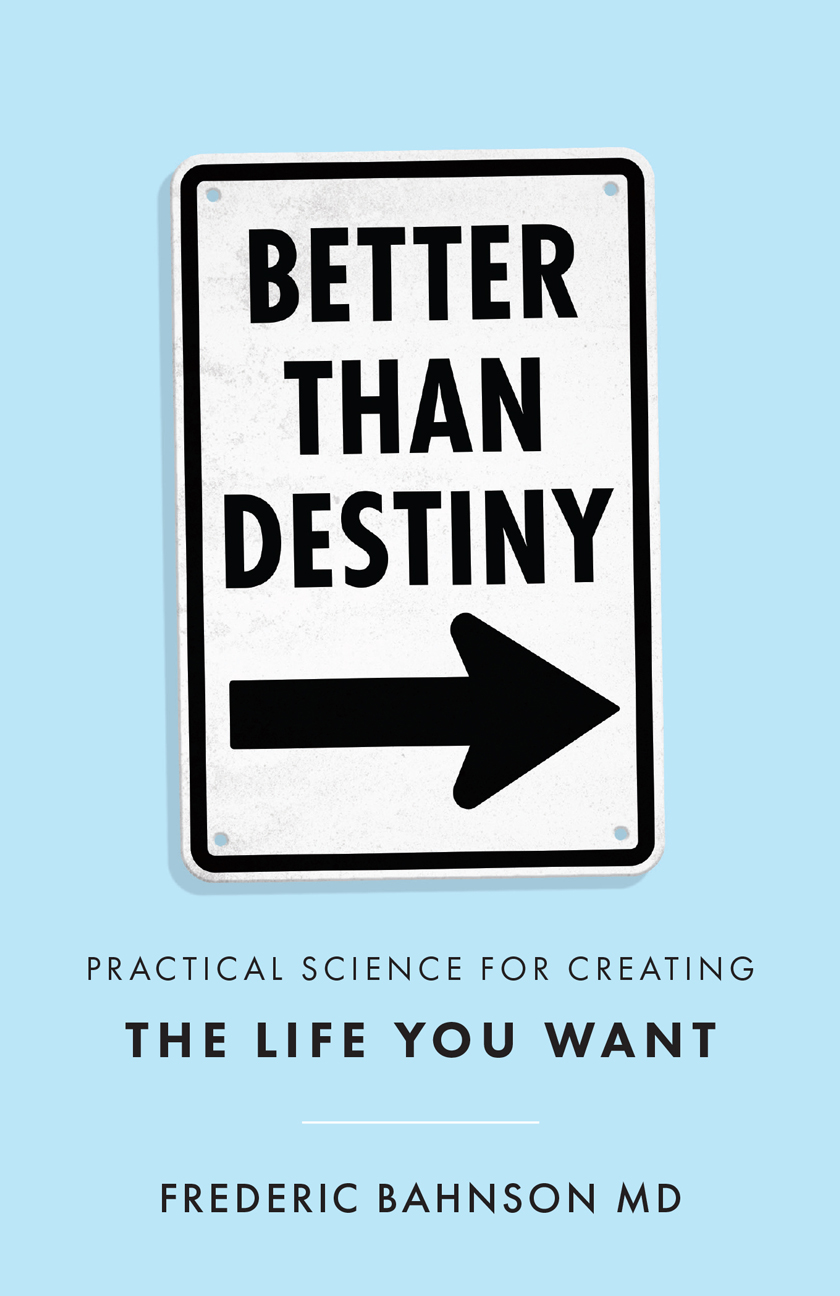
Frederic Bahnson: Better Than Destiny: Practical science for creating the life you want
Read the full transcript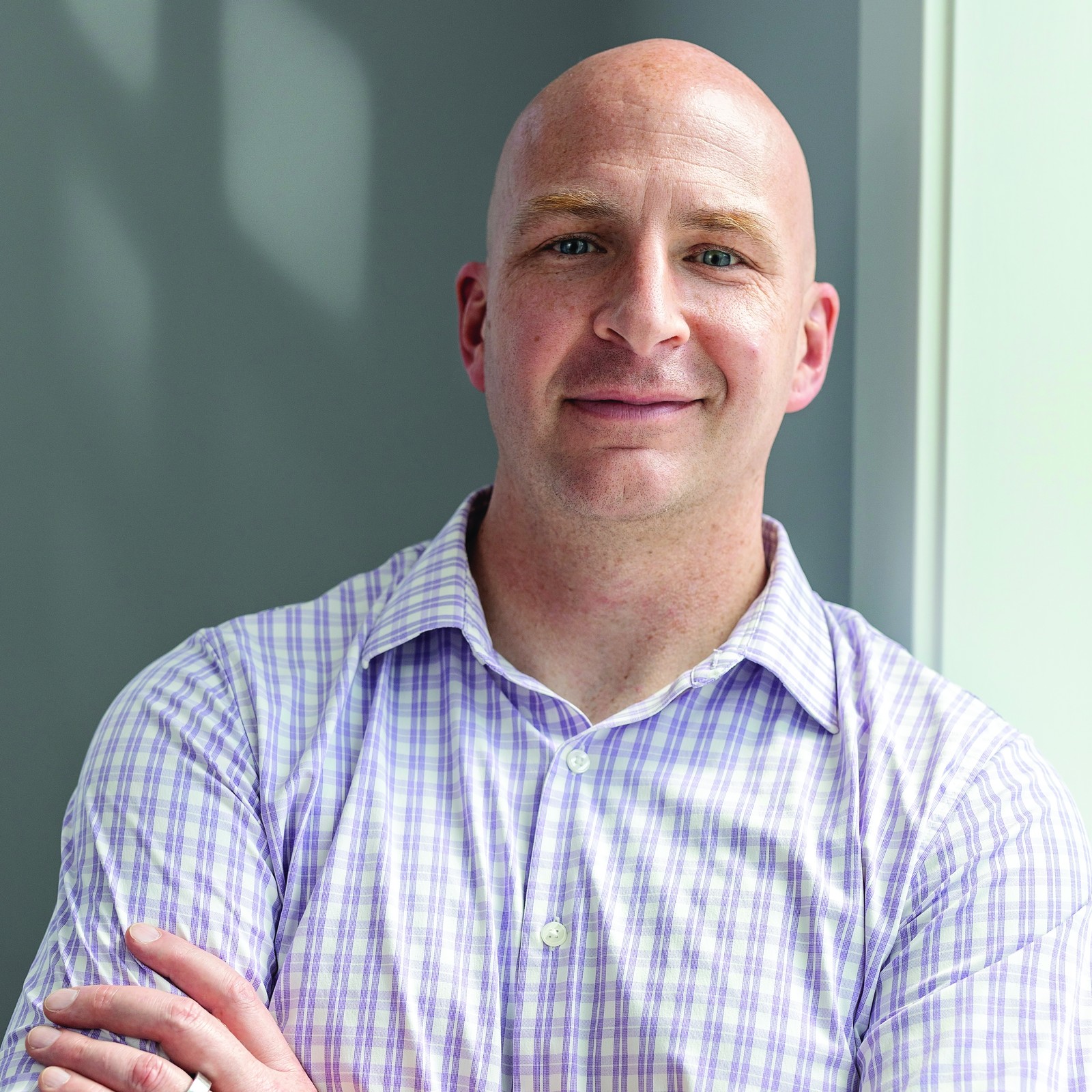
Frederic Bahnson
Dr. Frederic Bahnson is a personal and executive coach who works with individuals and teams to create happiness, improve performance, and foster well-being in their personal and professional lives. He has devoted two decades to the art and science of decision-making, delivering practical strategies that streamline this important human process. In addition to coaching, Frederic is a practicing general surgeon and served as Chief Medical Officer for Macro-Eyes, an AI company focused on global public health. He previously studied physics, worked as a systems engineer, and has won several awards for teaching and mentoring. Frederic and his wife, children, and dogs live in Oregon, where they enjoy endless explorations, hobbies, and outdoor pursuits.
📚 Books by Frederic Bahnson
Transcript
[0:00:42] DA: Some people hope destiny will create a great future for them but you have something more powerful than destiny, you have the power of choice. If our future is defined by the decisions we make, how do we make the right decisions? As the right decisions vary from person to person, how can you decide what is right for yourself to build the future you want? In his new book, Better Than Destiny, decision making expert, Dr. Frederic Bahnson takes the guesswork out of making good decisions and helps you set and achieve the goals that truly matter to you. His framework, which is backed by science, shows you how to create purpose, find joy, and build sustainable success. It's a key to learning what matters most to you, so that the life you build is a life you really want as life is too short to waste time on the wrong path. Hey, listeners. My name is Drew Applebaum and I’m excited to be here today with Frederic Bahnson, author of Better Than Destiny: Practical science for creating the life you want. Frederic, thank you for joining, welcome to The Author Hour Podcast.
[0:01:57] Frederic Bahnson: Thanks for having me, I’m excited to talk about the book.
[0:02:00] DA: Frederic, help us kick this podcast off. Can you give us a brief rundown of your professional background?
[0:02:07] Frederic Bahnson: Yeah, that’s a bit of a funny question in this context as straight forward as it seems because there’s kind of two answers to that question. One is the quick and I would say, sterilized resume version and the longer version is probably more interesting and if it’s alright with you, I’ll give you both answers.
[0:02:32] DA: I’ll take them.
[0:02:34] Frederic Bahnson: The resume version is I grew up in a small town and made it out and went to college, got a physics degree and then with that, eventually got an engineering job doing research and development, doing high tech stuff with electron microscopes and high precision laser stuff and eventually decided that I wanted to get out of that and pursue medicine. I was lucky enough to also get into medical school and go through that and then general surgery training and became a practicing general surgeon and then along the way, had an opportunity to combine those two professional histories and work first as an advisor and then for a period of time as the chief medical officer for what was at the time, a startup and now a prospering company that does machine learning for global public health and now, some other high impact supply chain things. Along the way, did more first, a lot of informal coaching and now, more recently, have actually cut my surgery practice back to part time so that I can spend more time and energy trying to do coaching and consulting and get some of these ideas out to people to use them. That’s the resume, that’s what’s on the back of the book for instance.
[0:04:06] DA: Well, it was an impressive resume so I’m glad you took the time to throw it out there, truly. In terms of the book. You’ve been doing this for a while now but why was now the time to hare these stories in your book? Is there something really inspiring out there for you? Did you have an aha moment? Why now?
[0:04:25] Frederic Bahnson: I think there were several "aha moments” and some of those are kind of interspersed with the more interesting but messy parts that get left off the resume, the uncertainty that goes along with wanting to make a career change and not knowing how to do that or if you should and all he personal decisions along the way as far as relationships and family and everything that’s behind the bullet points on the resume and then not too long ago, I had an experience with somebody I had been mentoring previously who called me up out of the blue, probably a year and a half or two years after we had last talked and he just had some questions for me about career decision that he had to make and it was time sensitive. He had to choose between a couple of different job opportunities that had different pros and cons for his personal life and for his professional development both short and long term. We had a really good conversation and I like to think that that conversation helped him but what it really did for me was it was this moment of really enjoying that impact, the conversation and also, him, telling me at the end of it, thank you, this was really helpful and like I mentioned, kind of along the way, I’ve done a lot of both informal and formal coaching and what I realized after that one conversation was that those moments of seeing people or hearing them over the phone, hearing people have a realization and a moment of clarity themselves. Not because of advice but because we’d kind of gotten to a point where they understood something about themselves and what they wanted and how to get it better and all these ideas that eventually became the book had been things I’d been learning and putting to use and organizing in my own head for years but after that conversation, it became really clear to me that I wanted to share these ideas more widely that there were more people that could benefit from knowing these tools and techniques than I would ever get a chance to speak to in person and a book seemed like a core part of a strategy to try to get this out to more people. Hopefully in a way that is accessible and people can pick up and put to use.
[0:07:20] DA: Now, when you were putting the book together, did anything happen along your writing journey that surprised you? Sometimes by doing some more research and you do use scientific research in the book, did you come to some, any major breakthroughs or learnings along the way?
[0:07:38] Frederic Bahnson: I would definitely say that I understand my own material, so to speak, better now than I did before writing the book because I had to get a lot more organized and rigorous about it. I had some good help, I certainly had an editor who took what I had written and pulled it apart and handed it back to me in different pieces and in different order, kindly, but also forcefully and challenged me to really communicate it more clearly and I think through that process, I also understood it even better than I had before. That was probably both one of the most challenging and most fun parts of the process was being challenged to not just know it well enough to use it but to know it well enough to teach it well.
[0:08:35] DA: Let’s dig into the book itself and I’d love to talk about decision making. Why is it a struggle to be good or constantly making good decisions? Does anybody really have this figured out?
[0:08:56] Frederic Bahnson: I don’t think so. I think that’s part of what gives a lot of us so much anxiety and discomfort is we feel like we should but it actually doesn’t come naturally in especially in high stakes situations and we’re rarely taught how to do it well. There are lots of people particularly in the last two or three decades that have put a lot of effort into researching this and understanding why we make the mistakes we make the cognitive biases, the social pressures, the misunderstandings we have about ourselves and each other that lead us to make mistakes, to make decisions, even when we’re consciously trying to make them well, still, sometimes make decisions that aren’t in our own best interest, particularly in the long term. We know a lot about that now but that knowledge and the tools that come out of it is really dispersed, it’s spread out across lots of books and lots of studies and not many resources that I’ve ever been able to find in 20 plus years of trying to understand this better for my own life and for my patients and clients. That there’s not that many resources out there that put a lot of it into a useable framework, there’s kind of one study that tells you a lot of depth about a very narrow topic, like a particular bias or error that we’re all prone to making and out of that, you can extract kind of one thing you probably should do differently in really specific situations. You need to really gather up a hundred of those things and then integrate them into a framework to actually use what would be the best practices right now in day-to-day life. I think there are people out there now trying to build curriculums for this to get this sort of information into schools, to teach young kids, to teach college students processes to make difficult decisions, to make important decisions and to make them well and to feel confident about it. That is a new idea that that can be taught and that it’s a very new concept and very early in the process of actually making it into the curriculum. Most of us never had that, I certainly did not.
[0:11:41] DA: Now, in the book, you did use a lot of scientist’s research that covered aspects of decision making and follow-through. Just building on what you just said, that was really hard to dig through that stuff. How did you distill that research to create the day-to-day practical guide for readers?
[0:12:03] Frederic Bahnson: Yeah, it started just with my own interest in the topic, this is another one of those kind of messy points in the bio where I knew I wanted to change careers and I had a little bit of a feeling of guilt like maybe that was – maybe I was broken somehow and I had a little or maybe a lot of feelings of anxiety of, “Okay, I’ve put a lot of effort into getting where I am now and now I want to go somewhere different. How do I know that this next step turns out better than my last attempt at picking a career?” to sum up all the choices that go into that into one, picking a career item. At that point, I consciously made a decision to look at what was out there. What’s been researched, not just what do people recommend but which of those recommendations are based on things that have been shown to be repeatable to work for people other than the people that are recommending them. I had my degree in physics, I had been doing research in development so I was – I could speak the language of a lot of the studies and filter through and so I started consciously pulling together this stuff and the more I learned about psychology, about the science of decision making, the more fascinated I became and the more I was able to extract those little nuggets of useful stuff, the more I found them to be very valuable to me in my life and to people I mentored along the way. I gradually kept doing that over a couple of decades, reading all the books and studies that I could get my hands on that were linked to this information that I had already found useful and it grew out of that.
[0:14:05] DA: What are the things that traditionally get in the way when folks are out in the world and just trying to make the best decisions for themselves, what are the major pitfalls that you’ve seen a lot?
[0:14:18] Frederic Bahnson: Yeah, I think that’s a really important question and I think there are a couple of key – you can call them biases or just common decision mistakes or shortcuts that our brain takes. One is that we heavily favor short-term both ease and reward over a long-term benefit. We have strong biases that push us towards doing what’s easy and what feels best now even when we’re consciously thinking of a decision as a long-term decision and so I think being aware of that is a step, having some tools to counteract it in a much bigger and more effective step. Awareness alone is not enough. It turns out, I think the research shows pretty clearly that knowing about these things is the open door to invite you in to do something about it but knowing doesn’t in fact counteract the bias itself. I think that the short-term thing is something a lot of people can identify with and I think that for most of us, those moments where we can identify, “Oh yeah, I have done that” those are probably the minority of the times. We’ve made these types of mistakes on our own behalf. The more impactful times are often the ones we don’t notice. They are the decisions we make fairly rapidly and don’t reconsider and never realize, “Ah, you know what? I can be in a different place now if I have thought through a little bit more on a couple of those key decisions.”
[0:16:18] DA: Let’s talk about long term goals because the decisions you make, you know, really depend on choosing the right goals. What kind of process goes into just really making sure you’re choosing the right long-term goals for yourself?
[0:16:38] Frederic Bahnson: I think that a lot of us have good intentions here but I think we can do better with a few simple things. One is to consider what we know about what leads to long-term happiness and for me and my own life and when I coach or mentor people, the thing I come back to is a pretty short list of the factors that repeatedly come up as predicting happiness and wellbeing in the long term and they get described a little bit differently by different researchers and in different studies but broadly speaking, you could say social connection, health and activity. The ability to be active and feel healthy, curiosity or interest in the world around you, learning new things and giving or helping other people and I think when we think about career goals, life goals, relationship goals, if we consciously kind of review how does what I’m considering putting a lot of time and effort into over the next days or months or years, how does it move me towards one or more of those five things, that goes a long way toward identifying which goals are really going to pay off for you in the big meaningful ways and which are not.
[0:18:16] DA: Now, once you’ve made either a decision or let’s say you’ve made your long term plan, really the second hardest part is actually following through with it. Do you have suggestions or techniques that you have to make sure that there is action being taken towards a goal?
[0:18:41] Frederic Bahnson: Yeah, a lot of good tools and I think you can start at either end of the spectrum. We were just talking about having those big goals clear and how they align with what you really want in the big picture in your life, whether that’s still being healthy decades down the line or having a happy family and social life, keeping those bigger goals in mind turns out to be really motivating. Along the way, getting really micro also helps, so making a plan that you can breakdown into what are the mid-level goals, what are the lower level goals and then what are the specific day-to-day tasks that move me towards that upper level goal, that top level and breaking those things down takes clarity but I think that’s the tool is knowing where you’re trying to get to and then being deliberate about identifying which things move you towards that and which things don’t. From that, you end up with – now, if my goal is a happy family life where I can support my partner and my kids, then I can identify the things that go along with that and some of those are financial goals and some of those are staying healthy and if I focus on staying healthy, I can break that down into day-to-day goals and try to build habits that support those and when I am struggling to stick with or develop a new habit, keeping in mind how it affects my long-term goal of being around and healthy and able to do fun stuff with my kids can help me get back into working on that habit and making it really pay off overtime.
[0:20:45] DA: I love to dig into habits because someone wiser than me said that habit formation is the process by which behaviors become automatic, which I think is very big when looking to attain a goal. When you are going through these habits, how do you form them? How do you know which are the right ones to choose are to help you towards you goals?
[0:21:13] Frederic Bahnson: Yeah, that’s a good question and I think that it depends a little bit on the goal. Some it’s pretty easy for most people to identify the type of habit that would be effective. Some others are challenging but that doesn’t mean that there is not habits that you can design for yourself and use. An easy example, a common one would be a fitness goal. If the overarching goal is long-term health and fitness kind of wellbeing and the short-term goal is, “Okay, I like cycling and I want to increase my cycling mileage, then the habit I’m going to build is I’m going to pick four days a week and at the same time, on each of those four days, on those same four days every week I am going to go for a ride.” That I think is pretty understandable to people and their understanding on how habits work, which again, there is a lot of detail you can dig into but broadly, habits are defined by a queue, something that clues your mind in that it’s time, that you are going to do a thing. After the queue comes desire, you are hoping to get something. From the desire, your mind and body perform a behavior and then once you perform the behavior you get a reward. That reward can be just the pleasure, the dopamine of having done something you feel good about. It can be something you’ve promised yourself, it can be consciously chosen or unconscious in those habits that we didn’t deliberately create but have fallen into and with like in the example, an exercise goal, pretty easy to define like, “Okay, when I get out of the car, when I come home from work on Monday, Tuesday, Thursday and Friday, I’m going to put my biking clothes and take a ride and when I come back, I’m going to have my favorite snack and a hot shower” and that’s pretty clear. There are some other areas where it can be a little tougher to see, “Okay, how do I use habits to achieve this goal?” like say, I’ve become unemployed and my goal is I want to get back into the workforce, I need a job. How are habits going to help me get a job and there, you can use things like not defining the habits so much as the task as dedicating the time. So I am going to say, “Every day after I have breakfast, I am going to spend two hours doing the next step in the job applications and I am going to set myself a goal of I’m going to apply to four jobs every week until I get a job.” I think there is something in that that kind of hidden and what I just recommended is also the understanding that you don’t always control the outcome but you have a lot of control over the process and for something like finding a job, you can sort of automate for yourself with habits the day-to-day steps of the process, sitting down, doing the work and then the next day, same queue, I finished breakfast, I sit down and I do the work for a period of time and developing that habit, keeping that routine going is eventually going to pay off. Whereas if you have to decide every day, “I’m not sure what I should do today. I’m not sure when to do it” a lot of your mental energy can go into just deciding whether or not and when and how to get to work on the goal but if you’ve got the habit, you already know when it’s going to happen. You’ve already dedicated the time and the energy, all you have to do is show up.
[0:25:24] DA: What immediate impact do you hope the book will have on readers and are there any steps you’ll hope they’ll take either during the reader of the book or right after finishing the book?
[0:25:39] Frederic Bahnson: Yeah, I hope people will do the exercises in the book and I think a lot of people will find different exercises that meet them where they’re at whether it’s stuck on a decision or trying to clarify a goal or having a goal in mind but not sure how to make an actionable plan for it. There is useful tools in there for all those things and so my hope is that people will engage with those tools not just read about them and find them interesting but actually use them. The impact that I hope that has is in the moment, I hope that it provides some clarity for people. I think it can be very uncomfortable to feel stuck and unsure and without a process. In the longer term, the impact that I hope that has is that those tools and processes continue to be useful for people that as other things come up as they do for all of us in life that it will be a little less stuck feeling or a little less onboard and lost feeling and a little bit easier to remember, “Ah, there are tools I can use to work this problem” rather than just feeling stuck.
[0:27:04] DA: Well, Frederic, we just touched on the surface of the book here. It really is a step-by-step guide to better and more confident decision making in long-term goals in your life. I just want to say that just writing this book that’s going to help folks make these positive changes and take the stress out of decision making is no small feat, so congratulations on having the book published.
[0:27:29] Frederic Bahnson: Thank you, it’s been very enjoyable process and I hope it’s helpful for folks.
[0:27:35] DA: This has been a pleasure and I am excited for people to check out the book. Everyone, the book is called, Better Than Destiny, and you could find it on Amazon. Frederic, besides checking out the book, where else can people connect with you?
[0:27:47] Frederic Bahnson: Well, we have a website up now, it’s fredericbahnson.com and that has some exercises from the book and some other info on it and I hope people will come check that out. Again, do some of the exercises, a lot of people find them useful and connect with me directly through the website. I am also on LinkedIn at Frederic Bahnson. I really look forward to connecting with people directly, it’s my favorite thing.
[0:28:18] DA: Well, Frederic, thank you so much for giving us some of your time today and best of luck with your new book.
[0:28:24] Frederic Bahnson: Thank you. Thanks for your time, Drew. I appreciate it.
[0:28:27] DA: Thanks for joining us for this episode of Author Hour. You can get Frederic Bahnson’s new book, Better Than Destiny, on Amazon. Also, you can also find a transcript of this episode and all of our other episodes on our website at authorhour.co. For more Author Hour, subscribe to this podcast on your favorite subscription service. Thank you for joining us, we’ll see you next time. Same place, different author.
Want to Write Your Own Book?
Scribe has helped over 2,000 authors turn their expertise into published books.
Schedule a Free Consult