Brendan McGurgan: Episode 887
Read the full transcript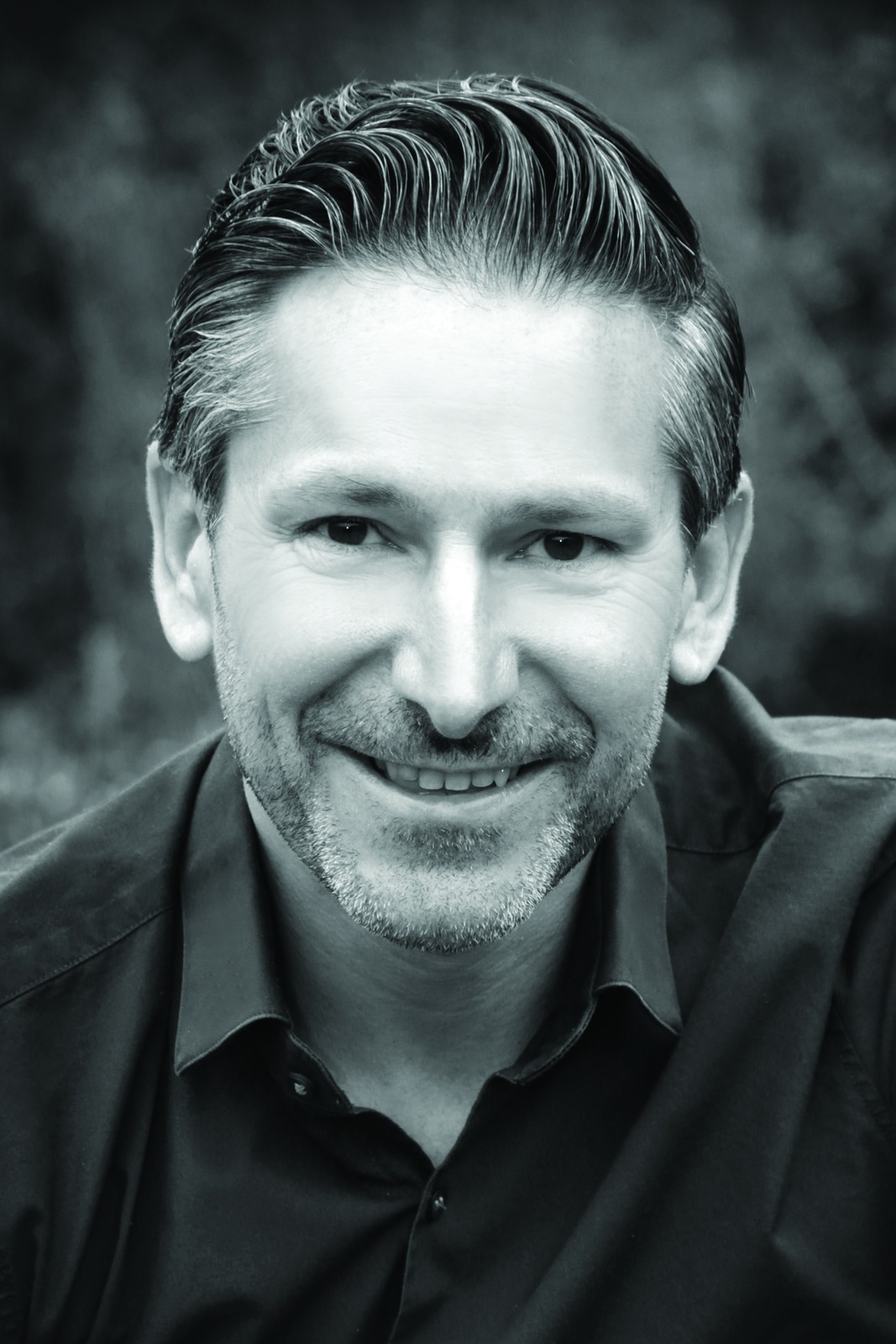
Brendan McGurgan
Brendan McGurgan is a global business leader who builds profitable, scalable businesses by delivering on his strong personal belief that anything is possible. Over seventeen years, twelve as CEO of CDE Group, he helped the company achieve 25x revenue growth and become an industry leader.
Claire Colvin is a highly experienced Talent Leader and partner of scaling CEOs, building the right culture and people-centered systems to accelerate the scaling process. The former Talent Director on the Board of CDE and qualified with a master’s degree in HRM, she draws on twenty-five years’ experience in high-growth SMEs, global organizations, and major UK PLCs.
Together, they co-founded Simple Scaling and developed the ScaleX™ Accelerator Program to inspire, connect, and enable ambitious leaders of SMEs to scale with purpose. Learn more at
📚 Books by Brendan McGurgan
Transcript
[0:00:00] Brendan McGurgan: Actually there's a paradox here because the focus on scaling actually is a way out and fundamentally it's a paradigm shift, it's a mindset shift and it really starts with a desire to get out of it in the first instance and to delegate. I talk about delegating to elevate. You've got to understand where you want to take the business in the first instance and often they don't give themselves the capacity to think, they're just active in the business on a daily basis.
[0:00:30] UNKNOWN: you
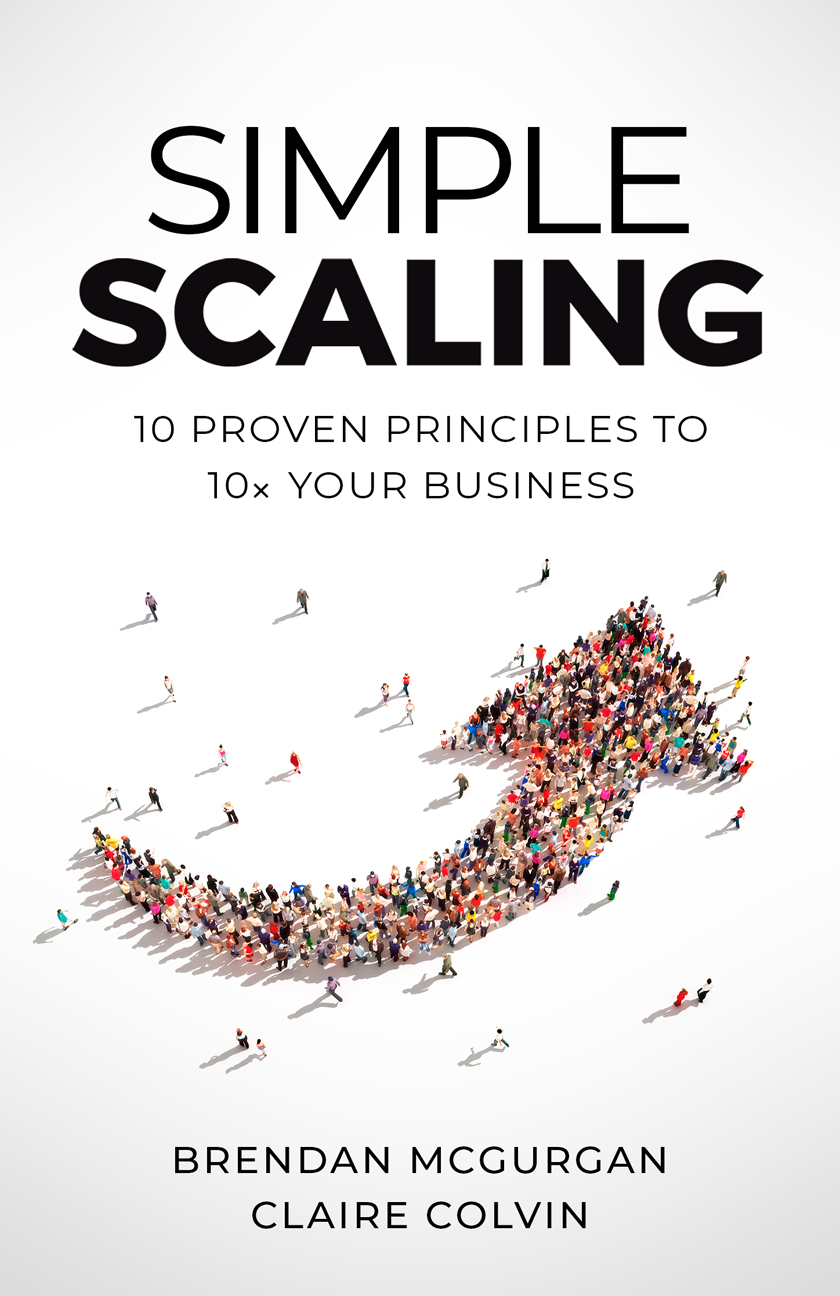
[0:00:33] Host: few startups ever managed to break free of the gravitational pull of the everyday to reach scale. In their new book, Simple Scaling, Brendan McGurgen and Claire Colvin teach 10 principles that offer all the knowledge you need to achieve scale, from developing a scale-up psyche, to establishing your purpose, sourcing the right people, planning, and implementing repeatable performance to fuel 10x growth. This book will walk you through each stage of the scaling process in one elegant integrated framework, showing you how to overcome all the challenges you'll meet along the way. Written by business leaders who have been there and done that, it's the only book you need to beat the odds. Hey, listeners. My name is Drew Applebaum, and I'm excited to be here today with Brendan McGurgen, co-author, alongside Claire Colvin, of Simple Scaling, 10 Proven Principles to 10x Your Business. Brendan, thank you for joining. Welcome to the Author Hour podcast. Thank you so much. It's a pleasure to be here. Brendan, help kick this off for us. Can you give us a brief rundown of your professional background? Sure.
[0:01:52] Brendan McGurgan: Yeah, I'd be delighted to and I'll take some guidance from you on this in terms of how deep we go. But I trained, studied accounting and finance at university and went straight into one of the large accounting firms, actually was Coopers and Librant. Back then, some people will know that now as Pricewaterhouse Coopers. They merged with Pricewaterhouse whenever I was there. So I trained as a chartered accountant, a three and a half year contract. And that was really to to earn the professional qualification as a passport into business. I've always loved business. Since I was young, I've always worked in businesses. And I was actually seconded when I was working in PricewaterhouseCoopers, seconded into technology business during the dot com boom and subsequent bust. So I was seconded in as a financial controller at the time. They offered me a role. I took that role. So that was my first role in industry heading up the finance function. At that point, we're putting into the finance director, the CFO. So a great experience, a wonderful experience. We scaled that business before scaling was a thing. We grew it to more than 100 employees with locations, including the US, Hong Kong, the UK. Then the subsequent dot-com bust took place back in 2002, 2003. And I was introduced to the founder of a small engineering company based in Northern Ireland. At that point, the business was turning over to three and a half million pounds, about five million dollars for your US listeners with 15 people. And the bulk of the business at that stage was coming from Ireland. I went into that business as, again, finance lead. I became finance director. within a year and subsequently became the group CEO a number of years later. And I spent 17 years within that business. Prior to exiting from one part of the business, I'm still involved in another part, which is established in Asia. And I founded with my co-author Claire, Simple Scaling, back in 2020. And our vision in Simple Scaling is to inspire, connect, and enable millions of ambitious leaders of SMEs to scale with purpose, hence the reason for writing the book.
[0:04:28] Host: So why was now the time to share the stories in the book? Did you have an aha moment, something inspiring out there for you? Or is this something where you said, OK, I want to spread all of the knowledge I've gained throughout the years and spread it to a mass audience?
[0:04:45] Brendan McGurgan: Yeah, that's a really great question. So it's a combination of all of those things. The fact is that whenever I became CEO of the business back in 2007, and to give you a little bit of flavor and context at that stage, we had around 50 people, revenues of almost 15 million pounds. We subsequently scaled the business to almost 100 million pounds revenue with 700 people employed globally with offices in six continents, including the U.S., including North America and South America. And what I found, so I spent 17 years in the business. My 12 years, 10 years as CEOs, I witnessed a real, we realized as a business almost 500 million pounds revenue cumulatively, and we were significantly profitable and cash positive. And my head was just consumed by the business. My entire existence was the business. So I was very much in a bubble when I was there. In fact, the realization that whenever I started the business, my wife was pregnant with my eldest daughter. And whenever I left, she was driving off in the car. So things seemed to happen very quickly in between time. So whenever I exited the main business, I'm still a non-exact director of one of the businesses established in Asia as part of our scaling. Whenever I left the business, I started to reflect on what it was that was fundamental to our success. This was triggered by quite a number of conversations with other CEOs who had a desire to scale their business. Now, whenever I became CEO of the business, scaling wasn't a thing. It wasn't in our business lexicon. It's very much a word that we're all very familiar with in the business landscape now, but it wasn't a thing back then. So, I reflected Drew on what it was and started to write down what the incoming CEO should focus on and this got me focused on a number of principles, hence the 10 principles. for scaling a business. Whenever I became CEO, there was no guidebook, there was no pathway, scaling wasn't a thing. There were very few people locally who had scaled a business to that size. So there wasn't an abundance of mentors and even mentoring and coaching wasn't a thing back then. So I was very much feeling my way, a little bit of imposter syndrome in the first period of of being a new CEO. I wasn't an entrepreneur. I didn't find the business. And I wasn't an engineer. And I found myself CEO of a very entrepreneurial engineering business. So I started to research this through and leaning on my own experience of what I felt were the principles of scaling the business to create a pathway. And I discovered that sadly, right now, it's less than 1% of businesses in the UK actually scale. There's 400 million SME businesses, so small to medium-sized enterprises globally. If we extrapolate that up, we're talking about less than 4 million of those businesses are achieving scale. Scale is defined by 20% average annualized growth either on employees or turnover over a three-year period. Just to give you a little bit of context in terms of the importance of scaling to our economies. In the UK alone, so I mentioned less than 1% of the businesses are scaling. There are 5.7 million SME businesses in the UK. in I think it was 2020, only 0.6% of those businesses achieved scale, so 34,000 achieved scale. Now, if the total SMEs, they're contributing £2 trillion worth of revenue to the UK economy, and half of that is coming from those 34,000 scale-ups. I thought that was incredibly sad that there's so very few SME companies achieve scale. There are lots of SME leaders out there who are leading incredible businesses. They have developed a wonderful product or service. do not have a pathway or a guide or an understanding of what it is to scale. And I really felt you talked about kind of what inspired you or was there an aha moment, I suppose, really reflecting on my own purpose, which now I mentioned at the outset is to inspire, connect and enable ambitious leaders of SMEs to scale with purpose. That became very much the purpose and the rationale behind writing the book. What I wanted to do here alongside Claire is to create a guidebook for those SME leaders who have a desire to bring their wonderful product or service to the world.
[0:09:56] Host: So hence the book. You say in the book that, as you mentioned, the vast majority of founders and entrepreneurs, despite having some really great early years in their business eventually hit that wall and start to stagnate. What are some of the major pitfalls that these companies keep falling into that causes them to stall?
[0:10:21] Brendan McGurgan: Yeah and there are a number, let me just let me just categorize as I see it the the SME leaders and over the last number of years we have supported through our Scalex accelerator program quite a number of companies to scale scale with purpose. And I see SME leaders falling into four categories. So you have the newbies like me. I was a newbie. I was a first time CEO. I had no previous experience. So I was coming to the role for the first time, very excited, but also kind of harboring that feeling of imposter center, but certainly searching for the way to scale the business. You have, and I suppose in terms of the context of your question, those SME leaders I describe as kind of dead men walking, they've become prisoners or they're on their way to becoming prisoners if they're not already prisoners within their own business. So the irony of it is they've left previous employment. to gain freedom that they desire, to design their own life, to design their own working day, to focus on only those things that they want to do. And they're waking up some morning with 30, 40, 50 people, maybe two, three phones, and they've found that they're working seven days a week. 15 hour days and they've become imprisoned and enslaved to the very business that they had established to gain freedom. So, you know, you've the dead men walking, you've the graduates, those who have come through the startup journey, they've established their product or service, they've got that product market fit and they now have a desire to scale the business. Again, the challenge for those graduates is the fact that what got them to here won't get them to their scaling up is very different from a startup. And then you've got the two G's, the second generation, managing directors or CEOs, those who have inherited a business from their father and it typically is their father who's founded the business. The father may have gifted them the title of managing director, but that person is still, the father's still very much in the business and they are in the shadows of their father. So once they have the title on their business card, really the team still gestures towards the father for guidance and direction in terms of the company. And the father hasn't really empowered the son. And again, typically what we find it is the son to actually lead the next chapter of the business's scale up journey. So the person that you describe as the dead man walking, the person who sadly has, well, initially has excitedly developed their own business and found themselves that actually they're buried in the bowels of the business. And every day they're creating walls that are thicker and bars that are thicker in terms of enslaving them in the business. And they struggle to see a way out. And actually, there's a paradox here because the focus on scaling actually is a way out. And fundamentally, it's a paradigm shift, it's a mindset shift, and it really starts with a desire to To get out of it in the first instance and to delegate, I talk about delegating to elevate. You've got to understand where you want to take the business in the first instance and often they don't give themselves the capacity to think. They're just active in the business on a daily basis answering those two or three phones. servicing those. Everything is channeled through them. All the decisions are channeled through them. The person on the factory floor cannot order a boat without ringing up the boss to see if he can order them. Everything is channeled through the MD, the founder of that business, and they become an impediment to growth and their own greatest blocker to the growth of the business.
[0:14:31] Host: Now, inside the book, it contains stories from current companies, current CEOs, and it also references a lot of books, including books on mindfulness. So how did you choose which companies, which C-suite individuals to feature and which books to reference? Yeah, that's a great question.
[0:14:53] Brendan McGurgan: I have spent probably the last six, seven years after a personal trauma, really reflecting on creating an environment, both a home environment and a business environment, which is conducive to people expressing themselves as people growing. And I find that it's certainly at a personal level, you can't instruct people to do the thing that you want them to do. But certainly, and I always use the CAM acronym, if you communicate, advise, listen, and model, modeling being the most impactful, that will ultimately create the change that you want to see, but it must start with you. So in terms of the books, I love reading, you know, I've always got two or three books on the go. So I've, you know, the last couple of years, I've had the capacity to read a lot, to read a lot around kind of self development. The mindfulness really came from a kind of a 25 year background in martial arts. I've always loved my sports. I've always try to seek out the additional gains, those little one percenters right before you're about to go into a tournament. What are the things that you can do to create a calm mind? And that led initially to experimenting with meditation. And then the meditation led to an encounter with the Wim Hof method. And I actually found the Wim Hof method after a retreat, which my wife kindly bought me for one of her wedding anniversaries. Normally we would go off to a spa retreat, but in this instance, she actually bought me a Wim Hof retreat. I'd heard Wim Hof being interviewed on the Russell Brand podcast. under the skin. I was just fascinated with this man, this Dutch guy who had created this way of being mindful through breath control, through cold exposure, and a development of a committed mindset. I was just fascinated. I remember listening to the podcast in the car, came home, came straight in, went on to YouTube. Seeing some videos of this guy held 26 world records across six different feats and including kind of running in the Antarctic in his bare feet. He climbing Kilimanjaro in his shorts in less than 36 hours. Just some phenomenal feats and he was contending that we all have the power to do this. His mantra is to, well, his vision is to make the world happy, healthy and strong. His mantra is the limit is not the sky, the limit is the mind. And that really intrigued me. And I found that after the weekend retreat experience in the Wim Hof method, that it just an incredible change. There was something that occurred during that 36 hours. that I hadn't experienced before. And I really, that was a trigger. That was an aha moment to decide to train as a Wim Hof method instructor. So I spent time with Wim Hof in Holland in his academy. Recently, I was with Wim in Poland just before Christmas actually. And the rationale being that I wanted to bring this method to the business world. I feel strongly and certainly the research would suggest this, that as business leaders, we make much better decisions when we're calm. When we respond to stimuli, when we respond to that difficult email from a customer, that difficult conversation with an employee, instead of reacting, that gap, that pause between stimuli and response is so critically important. And I've found that the Wim Hof method is a daily practice to support my desire to be more mindful and now through the Scalex Accelerator program, we're actually integrating breath work, including cold exposure to business leaders. Ultimately, if you're making decisions in fight or flight mode, which a lot of us are at times where we're agitated before we even go into a meeting, We are agitated about the agenda, what's on that agenda, what's maybe not on that agenda. Maybe we're walking into that meeting with a phone glued to our ear. We're taking a difficult call from a customer and we're not solely present on the matter at hand. And certainly my vision is to educate leaders around the importance of conscious breathing. And that's why the first principle is psyche, because the other nine principles in many respects drew a few time. in terms of the mechanics of scaling the business if actually the leader is not committed to personal scale up in the first instance.
[0:19:55] Host: Yeah, I will ask that everyone listening, it is quite the rabbit hole to go down. I meant to it as well. I've taken my share of ice back, but save that for later. But I'm glad you brought up the back to back around to the principles. So, you know, the book is broken down into 10 principles that really represent an integrated framework. for scaling success. So you mentioned one with Psyche right there, but, and you don't need to list all of them, but there, are there any other ones that you feel are incredibly important, if not like the most important few?
[0:20:30] Brendan McGurgan: Yeah. So the 10 principles are aligned to three themes, the three themes being inspire, orientate and accelerate. So the first three principles which psyche we've spoken about, the second principle purpose and vision is critically important. And the rationale for having purpose and vision is the second principle. Once you have decided that you have an aspiration, an ambition to change your current state and a desire to grow and scale the business, then it's really an examination of your purpose, which is why do you want to scale the business at a personal level and why does this business exist? So critically important in terms of actually engaging existing team members and attracting the motivated and inspired people to your team. If you're not inspired by your purpose and not inspired by a vision of terms of where you can take this company, then then others won't be, it's as simple as that. I talk about your vibe attracts your tribe and you must get inspired by where you want to take this business in terms of your vision for the business. What's your North Star? And for a scaling business, that can be a revenue growth target, a number of customers that you have a desire to serve. We had a participant of an SME company on our program lately who muttered quietly that he wanted to, and this was after a number of sessions and he hadn't communicated this externally, that he wished to serve one billion people with his software. through a process of crafting, helping him craft his vision. In nine months, he acquired three companies, including his largest competitor. They're based in the US. And he arrived at a point where he was proud to hear his nemesis, the MD of the company he acquired, actually recite in a passionate way the vision which he had crafted nine months previously. So where are you going? Division, why you want to go there in terms of the purpose and of course, people in the third principle related to the Inspire theme. So critically important for companies to understand the importance of developing a purpose and principle to, as I alluded to, to attract the people into the business. There's a lot cited at the moment about the great resignation, the war on talent. Four and a half million people left roles in the U.S. back in November, I see the latest Labor Stat citing. And And the reality is that those people have had a conscious awakening. I feel certainly during COVID, people have started to ask themselves, why are they doing what they're doing? Why are they sitting in traffic for two hours a day to go to their work to come back, feeling quite frazzled by a Friday, then going out on a Friday or Saturday try and enjoy themselves having the Sunday horrors again before they go back in and people for the last couple of years of COVID have decided that they don't want to do that anymore and they will be attracted to those companies which are purposeful. They have a desire to scale and as a result of that desire to scale and scale with purpose, It means that there will be opportunities for those people that were in other roles to actually grow and develop themselves and do something meaningful aligned to their own personal purpose as a result of that. So, you know, people so critically important. We talk about I used to work with a with a great guy who was an amateur, an amateur horse show jumper. So he rode horses and He talked about ensuring that we always have the right jockeys. So those people who are culturally aligned to our values on the right horses. So what we mean there is in the right roles. running the right race. So are they actually, and for a scaling company we had scaled across the globe, are they in the right region or are they in the right kind of industry sector? So having the right jockeys on the right horses running the right race is so critically important. So look, those are three principles I'm conscious of. We are not touching, I appreciate the time that we have, Drew, but the other principles very quickly, you know, we go through a process in the book of deconstructing then the vision. So they're all P's deconstructing the vision and then into a plan. So we invite our readers and certainly those who participate in our program to create a moonshot vision. People will be familiar with the kind of that terminology from from Jim Collins. The deconstructing that moonshot vision into a three year vivid vision and breaking it down into a one year, a one year plan with four or five goals, four or five key themes in terms of executing on that plan and then breaking that down into a 90 day. a 90-day review period of objectives and key results, again, leaning on the John Doar, the Andy Grove OKR methodology, something that I'd used for quite a number of years within the business and I found it incredibly impactful. So we get into the planning, we look at process, then we look at performance and what world-class performance looks like. We get into then proposition, which is moving beyond the profit And especially in engineering businesses, we get fixated on the features of some whizzy, spinny doof that we've developed and really the customer doesn't care. The customer wants to know the value, the gain that this is going to bring to him or her or the pain that it's going to remove by result of investing in that product or service. Then we get into place. So we advocate that if a company has a desire to scale, it means a mindset that has a desire to move beyond its existing borders. Partnerships is the ninth principle. Again, I've subscribed to who not how. So in everything that we're doing here, it's a case of thinking who can accelerate our scale up ambition, not how can we do that, but who within those new markets or those new industry sectors can help us. And then, of course, everything is linked together by positive growth culture. And so critically important that leaders of SME businesses, well, all businesses really focus on culture and values. And what do we mean by that? Essentially, it's It's the way things are done in an organization and ultimately every business that exists has a culture. It's just simply the way. the people behave within the business itself. It's up to the leader to put some guide rails and determine what behaviors they want to see within the business, calling out great behavior and challenging the behavior that isn't aligned to the values, the agreed values. That's a whistle stop tour around the 10 principles, Drew.
[0:27:58] Host: Sure. After each section and chapter, you do provide a lot of resources, a lot of workbook areas for people to ask themselves questions and take down notes, but you also have your own website as well. Can you talk about what sort of resources you offer there, as long as what the address of the website is? Sure, yes.
[0:28:21] Brendan McGurgan: Just to give the rationale for why there is scope at the end of each chapter to take notes. I love interacting with books. Some people who read books are horrified the way I deface my books. As soon as I get a book, I'm reading it. I have a pen, I have high letters, and I love interacting with it. So that's the reason we've given the readers the scope at the end of each chapter to reflect on the chapter. And I also contend that if you're going to spend time reading a book, listening to podcasts, going to a conference or a seminar, listening to a webinar, you know, take value from it, decide that you're going to take action as a result of the investment and time that you've just made. That's the rationale for having the notes at the end. Yes, we provide resources on our website, simple scaling.com. And those are resources and tools that I have used. And Claire has also used throughout the course of our scaling experience. So we invite all the readers to go in onto the website, you can download kind of on the purpose and vision, for example, we have our vision canvas there. It's a lovely resource to allow the readers to really think about where is it that they want to take this business. We have a mold your purpose questionnaire as well. So every chapter has has tools and resources to support the reader in their scale up journey.
[0:29:46] Host: Well, Brendan, we just touched on the surface of the book here. There's so much more inside. But I just want to say that just writing this book and helping folks really break through all the barriers that are there to scale their business is no small feat. So congratulations on having the expertise and taking the time. And congrats on publishing your book. Drew, thank you so much. And it's been a real delight to speak with you today. I do have one question left, and this is a tough one. So hang on to your seat. If readers could take away only one single thing from the book. What would you want it to be?
[0:30:27] Brendan McGurgan: Commit yourself to personal scale up, first and foremost. Own your experience. And what I mean by that is take responsibility for the results that you're witnessing within your business now. If you're achieving tremendous results, you are responsible for the environment that exists within your own business right now. So own your experience and commit yourself to personal scale up.
[0:30:55] Host: Well, Brendan, this has been a pleasure and I'm excited for people to check out the book. Everyone, the book is called Simple Scaling and you can find it on Amazon. Brendan, besides checking out the book, besides checking out your website, is there anywhere else where people can connect with you?
[0:31:11] Brendan McGurgan: Yeah, I'm very active on LinkedIn, so they'll get me Brendan McGurgan on LinkedIn. And also I host the Scale X Insider podcast. So back to revision of Inspire Connect and enabling millions of ambitious leaders to scale with purpose. We felt that one of the ways of reaching millions of people was through the medium of podcasting. So I invite people to actually check out the podcast. We've had some wonderful guests on there, guests that people will recognize the likes of Gary Ridge from WD-40, for example, an exemplar. scale up leaders.
[0:31:44] Host: So those two places are probably best, Drew. Well, Brendan, thank you so much for giving us some of your time today. I just want to say best of luck with your new book. Thank you so much. Take care. Thanks for joining us for this episode of Author Hour. You can get Brendan McGurgen's and Claire Colvin's new book Simple Scaling on Amazon. Also, you can find a transcript of this episode and all our other episodes on our website at AuthorHour.co. For more Author Hour, subscribe to this podcast on your favorite subscription service. Thank you for joining us. We'll see you next time. Same place, different author.
Want to Write Your Own Book?
Scribe has helped over 2,000 authors turn their expertise into published books.
Schedule a Free Consult