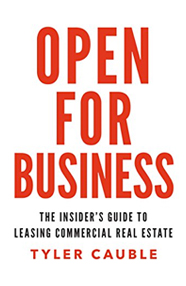
Tyler Cauble: Open For Business
Read the full transcript
Tyler Cauble
Tyler Cauble is a commercial real estate investor, author, and speaker, and a native of Nashville, Tennessee. He began his commercial real estate career in 2013 as an in-house leasing agent for a Nashville development firm before founding The Cauble Group, an East Nashville commercial real estate brokerage. In Open for Business, he gives small business owners the insider's guide to leasing commercial real estate.
📚 Books by Tyler Cauble
Transcript
[0:00:39] Charlie Hoehn: You’re listening to Author Hour, enlightening conversations about books with the authors who wrote them. I’m Charlie Hoehn. Today’s episode is with Tyler Cauble, author of Open For Business. If you’re a small business owner, one of the deadliest mistakes you can make is not knowing all the facts before you sign a lease, it’s such a big mistake in fact that it could put you out of business. In this episode, Tyler will guide you through everything you need to know before you rent commercial space. Tyler is the vice president of Commercial Leasing and Sales at Vastland Realty Group in Nashville and his mission is to empower business owners. So they can make the best decisions for their growing companies. Whether you’re looking for a new store front or location for your business or you simply need to get out of your garage, this episode is for you. Now, here is our conversation with Tyler Cauble.
[0:01:51] Tyler Cauble: My parents got divorced when I was in high school and I very quickly learned that if I was going to go out there and make it happen for myself, it wasn’t going to happen. As soon as I graduated, I got a job in direct sales. Did that for about 15 months and really enjoyed it, you know, realized that just from the training and from my experience there that I was really good at sales relating to people. I decided to kind of continue that, move back to Nashville, got involved with my grandfather, he started a construction company, I was working there for a bit and got a call one day from my former step-dad about asking if I wanted to come do real estate for him. I thought about it for a bit, said yes, got involved into it, you know, really just started working on leasing, our in-house properties that he owned and they were always smaller shops, they were 3,000 square feet and less which meant that I was really dealing with small business owners. That was when I kind of came to realize that small business owners really have no idea what they’re doing when it comes to leasing commercial real estate. You know, a lot of people don’t understand that what commercial brokers do even if they know about commercial brokers. A lot of people don’t even know that commercial brokers exist. I had seen a lot of people just get into trouble because they weren’t negotiating their lease and every lease is negotiable. I’m going to go ahead and say that, every point, just about in every lease is negotiable and I had seen a client who spent $100,000 on her build out to build out a 2,000 square foot space and she got taken advantage of by the contractor who didn’t put electrical outlets in the space. He didn’t put overhead lighting in the space and she was kind of left with the bill. There was nothing that she could do about it.
[0:03:32] Charlie Hoehn: Is that common? I mean, why did they take advantage of her like that?
[0:03:36] Tyler Cauble: It’s actually very common because a lot of people don’t know – you know, these business owners, they’re starting a business because they understand what that business does. The problem with that is that if you don’t have proper representation getting into the space, somebody’s going to take advantage of you. Landlords do this for a living and they have a team put together. Contractors do this for a living and they have a team put together to make sure that everything goes smoothly and in their favor. That’s really the biggest issue that we saw is that business owners, there was no singular resource for business owners to learn how to go about the process correctly.
[0:04:10] Charlie Hoehn: Tell me, does that particular instance of the woman who spent $100,000 on a $2,000 square foot space, is that the worst instance that you saw that you were like, “Enough is enough,” or did you keep seeing things get worse and worse for people?
[0:04:27] Tyler Cauble: No, you know, that’s by far the worst instance I’ve ever seen. Some things that are more common and I do talk about this in the book, the most common thing I see is regards to HVAC units. In a lease, the landlords will typically try to get the tenant to pay for everything, that way the landlord isn’t responsible. Well, that’s great in some instances, it works out for both parties but for a business owner that doesn’t know what they’re looking at, if they don’t have an attorney to review the contract, they have no idea what they’re signing. You know, a lot of these leases have a clause that say, the tenant is responsible for the HVAC units which seems pretty benign when you just hear like that. But you got to realize, you’re going into a second generation space, unless it’s new construction and that HVAC unit could be 12 to 15 years old. Well, if that HVAC unit blows out three months in your lease, you're going to have a $10,000 HVAC expense and a nice brand new fixture that you’re donating to the landlord. That’s actually relatively common.
[0:05:23] Charlie Hoehn: Wow, that’s the big hidden cost, if that goes out, what are some of the other hidden costs that renters would have to deal with?
[0:05:33] Tyler Cauble: Yeah, one thing that we always look for is what’s called the MEP, it’s mechanical, electrical and plumbing. You want to check mechanical which is your HVAC units, electrical which is all the wiring, all the voltage, everything like that and then plumbing of course. I mean, you know, some of that stuff is really difficult to just look at and see if it’s I n good condition or not. I always recommend to my clients that they get an inspector to walk through the space, they’ll be the ones that get in there with cameras that they can get down into the plumbing lines and you know, get up into the crawl spaces and up into the ceilings, the drop ceilings and take a look at all the wiring. I mean, I had a client where we were going in there and renovating a space for them as a chiropractor here in Nashville and the contractor got in there and pulled the ceiling tiles down and he said he had no idea how the building hadn’t burned down yet because the wiring was so bad. My client had been operating out of that space for five years.
[0:06:27] Charlie Hoehn: Wow, t hat’s frightening, jeez.
[0:06:30] Tyler Cauble: Yeah, it is, man, he said, none of the electrical wiring that was above their space was done to code.
[0:06:36] Charlie Hoehn: Who would know, you know? Like your client was doing, he’d work there for years, Tyler, if you had to pick the main idea from the book, would it be just that, to get some representation, rather than trying to figure this out for yourself or what would it be?
[0:06:53] Tyler Cauble: It absolutely is, I mean, I wrote the book, it’s actually based on an eight step infographic I came up with and I was kind of looking at it and had a bunch of friends who were authors and you know, when you’re surrounded by people who were authors –
[0:07:04] Charlie Hoehn: Then write a book.
[0:07:04] Tyler Cauble: Naturally want – exactly, yeah, let’s write a book. I can’t be the only one of my friends that doesn’t have a book.
[0:07:10] Charlie Hoehn: That’s a horrible mistake is to hang out with a bunch of authors, I’m really sorry that happened to you.
[0:07:14] Tyler Cauble: Yeah, right, so terrible. But you know, I was looking at this infographic and, “My gosh, that’s a book and it was an eight step guide to leasing commercial real estate.” Literally walks, the whole book goes into depth on everything from determining your needs, whether even need to be leasing an actual commercial space to leasing, to negotiating a lease and opening for business. I mean, it goes through all eight steps, pretty in depth. Yeah, I mean, throughout the book, I do highly recommend that these business owners seek representation because it’s very similar to buying a home. You know, when you’re out there buying a property, you don’t actually pay your real estate agent and it’s the exact same way in commercial real estate. We get paid by the landlords or services to you are free which means that you get all of that expertise, all that knowledge, all that security at no cost to you. It doesn’t make sense not to have representation.
[0:08:09] Charlie Hoehn: Why don’t more people seek out representation, is it because, I want to guess, is it because a business owner is the type of person who is intelligent enough to figure things out on the fly that they think, surely, I can figure this out as well?
[0:08:28] Tyler Cauble: Absolutely. I mean, a lot of entrepreneurs and business owners are, they’re very A type, they’re very driven and you know, they’re very good negotiators. That’s one person, there’s another person too but let’s talk about that person real quick, they think that they can negotiate the deal which they typically can. You know, this isn’t like an apartment lease that you sign when you were back in college, right? Everything in here is negotiable and landlords don’t actually have a responsibility to watch out for the business’s best interest. It is not like renting a residential home where there are a lot of laws protecting tenants. I mean, commercial real estate, if you sign a lease that says something, you have to adhere to it unless it’s illegal. I mean, that’s how landlords get away with having HVAC expenses passed on, the other significant portion of people that I deal with are business owners who didn’t even know commercial real estate agents exist. You know, sometimes they’ll work with a residential agent which is just as bad as having their representation or they’ll go it on their own. You know, when you’re trying to focus on your business, you really don’t need to be spending all that time driving around, calling up brokers, trying to take a look at spaces, because there’s no commercial MLS, like there is in residential. It’s kind of a wild, wild west to be honest.
[0:09:40] Charlie Hoehn: How long would that process take in a typical major US city, if you go it on your own and drive from property to property and look at things and try and figure things out versus if you just work with someone like yourself?
[0:09:56] Tyler Cauble: Well, I’ve spoken to people, for example, last year, we worked with a pest control company that they were actually represented by a residential group and they were in a property that I had the listing on. I went in and talked to them and said, “Hey look, we’ve got a tenant moving in after you guys wanted to make sure that you all are good on representation getting out of here.” They go, ”You know, we’ve got a residential agent that’s representing us, she’s going to bring us some properties.” Well, it comes down and that was you know, three months before they had to be out. It comes down to within 30 days, they call me and they say, “Hey, we haven’t been able to find anything, can you please help us out.” I pulled a property list and within a week, we had negotiated on the spot and had them in. You know, you can spend months looking on your own or you can go talk to somebody that knows what’s available in the market, knows how to find those deals and knows who to call if nothing’s available.
[0:10:44] Charlie Hoehn: Right, I kind of think of this as analogous to, you can apply for jobs on your own or you can go with a staffing agency or a recruiting firm whose job is to help you get a job. They get paid when you get paid. They’re typically much more effective, much more connected and even better at working with gatekeepers than you ever are or ever will be.
[0:11:12] Tyler Cauble: Yeah, absolutely, I mean, if I was ever – I mean, obviously I’m an entrepreneur, I do my own thing but if I was ever in the market for a job, there’s no way I’d be looking on my own, I would go straight to a recruiter and I have people that are moving to Nashville all the time that reach out to me that say, “How do I find a job in Nashville?” I point them straight to recruiters.
[0:11:28] Charlie Hoehn: There you go.
[0:11:30] Tyler Cauble: It’s easy as that.
[0:11:31] Charlie Hoehn: Yeah, I noticed that you said this twice that everything is negotiable and on the surface that’s like, okay, I get that, tell me what that really means, what does that really look like to illustrate that this is a deeper concept, because I take it as a very important that you said this given, repeating it.
[0:11:52] Tyler Cauble: Absolutely, it’s funny that you bring that up because we actually almost named the book, “Everything is Negotiable.” We ended up going for open for business because it’s much more business oriented. In a commercial lease, everything is negotiable, I mean, there’s a few points that you know, you can’t touch, you know, often times, the insurance policy, right? Or maybe the lender on the property has set a rental rate that they can’t go below $17 a foot. You know, there’s creative ways to get around that but everything else man, if you want free rent, if you want the landlord to pay for the build out, I mean, I’ve got a client that sets up a van that’s got their giant logo on it outside while they’re building out the space. That’s something you want to negotiate and put into the lease. We’ve seen everything from “Hey, we’ll do this deal but we wasn’t you to throw in that range rover,” you know? I mean, literally, however you want to negotiate, that’s the beauty of commercial real estate is its one very professional, very robust negotiation.
[0:12:50] Charlie Hoehn: How do you determine, like, if I had done this on my own in the past then I totally missed that and kind of just treated it like I would renting an apartment, and I came to you, what would you advise me on to start with in terms of everything is negotiable, you can get a lot out of this? Hey, free rent sounds good to me, how do I get that?
[0:13:10] Tyler Cauble: Yeah, absolutely. I mean, you always want to have leverage, I mean, what we’re working on with our clients right now is really taking a step up and how professional we present them. I won’t work with a client if they don’t have three years of tax returns that could be business or personal. A personal financial statement, a credit report, sometimes a business plan, it doesn’t necessarily matter, I can get away with a company or entrepreneur bio and their history and a branding package. When we present those to the landlord, it gives us a lot of leverage in the negotiation and that’s really what you want and it also depends on how hot or cold the market is. You know, if the market’s really hot, you kind of got to go with what the landlord says, it’s in the landlord’s favor but when it’s cooler, I mean, I’ve seen people negotiate six months free rent, 12 months free rent. Just depending on how badly that landlord needs somebody in the space but you know, there’s always market standards or not necessarily standards but what’s going on. You know, right now in Nashville, you can get up to three months free rent even though it’s a hot market. Just depending on the negotiations. You kind of have to be familiar with it and you have to be around it to know what you can and can’t ask for.
[0:14:18] Charlie Hoehn: Wow.
[0:14:19] Tyler Cauble: It never hurts to ask ever.
[0:14:21] Charlie Hoehn: Yeah, you know, it’s funny, one of my friends who is one of the best negotiators I know, he considered writing a book called “Just Ask.” Because the number of things I’ve seen him get was like, how is that even possible? He’s like, “Well, I just ask.”
[0:14:37] Tyler Cauble: Exactly. That’s very true.
[0:14:41] Charlie Hoehn: What type of clients do you tend to work with most and in what industry because I’ve spoken with some authors on the show who said, the future of work is remote work. What type of people are you working with that are wanting to get into these buildings?
[0:14:58] Tyler Cauble: Yeah, I mean, people have been bringing that up to me quite a bit lately, we work, just moved in Nashville, there’s a lot of cooking spaces here and I keep getting the question, you know, are Yo worried about your job, does that – are they taking business away from you? You know, that remote work kind of stuff is great but really, you know, these co-working spaces, that’s a step for a business. I mean, if you want to be the next Uber, you're not going to be working out of a We Work. Great for someone to get in there, incubate their idea, hang out with other entrepreneurs as they grow and then move in to a more professional office. It’s actually kind of a breeding ground but I mean, that’s how we look at this. I work with a lot of offices, a lot of – I do a lot of office in retail. We do some industrial as well but business owners from 250 square feet to 10,000 plus.
[0:15:52] Charlie Hoehn: Author Hour is sponsored by Book in a Box. For anyone who has a great idea for a book but doesn’t have the time or patience to sit down and type it out, Book in a Box has created a new way to help you painlessly publish your book. Instead of sitting at a computer and typing for a year, hoping everything works out, Book in a Box takes you through a structured interview process that gets your ideas out of your head and into a book in just a few months. To learn more, head over to Bookinabox.com and fill out the form at the bottom of the page. Don’t let another year go by where you put off writing your book. Let’s get in to the nitty gritty of your book. Kind of walk me through some of the main points that you really want listeners to take away from this episode.
[0:16:44] Tyler Cauble: Yeah, absolutely. The first thing that we do is help you determine whether you even need a space. You know, some business owners think, well the next step to naturally growing my business is to get an office. Well, you know, that’s a lot of overhead that you may not need to incur on your business. We recommend you run your numbers, you consult your CPA, any business coaches, lawyers, mentors and figure out if it makes sense, then we help you determine your needs. Based on how many employees you have or how much storage you need or what kind of area of town do you need to be in? Do you need walkability? We kind of walk through that, then I talk about how to assemble your A team. Like I said, landlords do this for a living and they still have their own team of professionals put together. I tell you how to find the right broker, how to interview them, because that’s very important, not all brokers are created equal, some will work harder for you than others and that’s a fact. How to hire an attorney, how to hire a contractor and how to make sure that it’s actually a good contractor so that you don’t have what happened to that lady that we were talking about earlier. Then we talked about focusing on your business. You know, now that you’ve hired you’re A team and gotten them all together, focus on your business, you don’t want – I mean, the last thing you want is to be so focused on finding space that you start letting sales slip by and by the time you actually find a good space, you don’t have enough revenue coming in to justify moving into it. You know, kind of let the professionals do their job. Then we talk about the site tour. Once your broker’s pulled a list together and you know, we talk about how to review the sites, how to go and take a look at them, what kind of demeanor you need? Because it’s just like buying a home, you don’t want to walk in and go, “My gosh, this office is amazing, this is the only office we could ever have, I love this part of town,” you know? Leverage. Exactly, you want to point out everything that’s bad in the space. Love doing that. Sometimes we’ll do it to the point where it’s a little uncomfortable because it helps in the negotiation, like I said, this is all about leverage and negotiating. Then we show you how to weigh your options. You’ve got three spaces, well, what are the pros and cons of each space, what makes the most sense for you and your team and your customers and the future of your company. Then we talk about the letter of intent and the lease and the whole negotiation process which really, there could be an entire book on that on its own. We dive into it a little bit. But really, just to show you kind of what your broker and what your attorney are going to be doing for you during that time.
[0:19:10] Charlie Hoehn: What are they going to be doing?
[0:19:12] Tyler Cauble: Well, so the way that that process starts, there’s what’s called the letter of intent and the letter of intent is basically a precursor to the lease and it has the basic economics of the deal. Rent, free rent, the term of the deal, who the parties are, what the address is. Because if you can’t agree on those basic deal points, if you can’t agree on the rent, there’s no point in talking about who is going to pay for common area maintenance and who is going to pay for changing lights in the hallways. I mean, there’s no point. You get attorneys involved and then it gets really expensive. Once you’ve set all the letter of intent, then you go to the lease and I always negotiate the letter of intent on behalf of my clients because that’s a very simple document, its’ not a legal document, it’s not binding. Then we’ll send the lease to an attorney. That way, you know, I’m a broker, I don’t’ have a legal degree, I can’t give you legal advice. You know, while I do look at leases every day and know how to negotiate them and know what should and shouldn’t be in there. I always defer to an attorney because they’re the ones that should be handling a document like that. Once that’s all settled, you know, I like to go through ever point too and say, do understands what this clause is. Do you understand what you’re signing? Because my clients need to understand that they’re signing a three or five year deal that is a legally binding contract that they will have to adhere to. Then I talk about opening for business and what you need to keep in mind moving forward so that you don’t go into the default of your release.
[0:20:43] Charlie Hoehn: Tyler, this sounds like an overwhelming amount of information to learn, right? It’s good to work with someone like you. I’m curious, what was the learning curve for you? How did you get to the level you’re at or how long did it take?
[0:20:55] Tyler Cauble: Man, yeah, absolutely, I mean, that was one thing that we realized when we were going through the book. I mean, there’s no way anybody’s going to read this and know what to do, right? That’s why we try to be as helpful and resourceful as possible about hiring and assembling you’re A team. I really wanted the business owner to have just a good idea of what’s going on. You know, I’ve been in the business for four and a half years now and for the first two years, I had no idea what I was doing. I had a couple of buildings, a shopping center and an office building listed. I was told to go find a tenant and then I would figure everything out after that. Really, I didn’t learn until closer to my third year when I was comfortable in doing everything. That’s when I started taking on outside work doing listings for other landlords and representing tenants looking for space. It took me three years to learn what I’m doing. You know, it is not a short learning curve, I mean, they say, it takes about three to five years in commercial real estate for you to learn everything because these are big deals and they’re big negotiations and there’s a lot to it, it’s a lot of legal work. It’s a lot of just hitting the ground, hitting the pavement finding deals. I mean, I’m still learning stuff every day.
[0:22:12] Charlie Hoehn: What are you learning about now?
[0:22:14] Tyler Cauble: Right now, we’re diving in to really investment properties and 1031 exchanges. I just hadn’t handled the hole out of those, I’ve done a few investments, a few sales like that but now, you know, the market is so hot in Nashville, we’ve got a client that’s looking to sell a 13 and a half million dollar property and he doesn’t want to take a hit on his taxes on that because he’ll lose half that money. What we’re going to do now, we’ll sell that for him and then we’re going to go and 1031 exchange that into other property in Chattanooga. And basically what a 1031 exchange is you know, you sell the property for 13 and a half million dollars so that means you have 13 and a half million sitting in a bank account. Well, if you don’t go and declare other investment properties that you’re going to put that money into, you have to pay taxes on it. But, if you buy other commercial properties or white properties with that money, you can defer that tax hit. It’s a good way, you know, they’ve been seeing on this property for years, it’s been in his family for a while, so he doesn’t know anything on it and we’re going to take it and buy 13 and a half million dollars’ worth of property in Chattanooga that will give him a phenomenal return.
[0:23:23] Charlie Hoehn: That’s incredible.
[0:23:24] Tyler Cauble: Yeah, that’s what I’m working on right now, kind of learning more about that.
[0:23:28] Charlie Hoehn: That’s really exciting. Well, let’s talk about some of the people who have gotten the most out of the ideas in your book, the stuff that you teach and actually, before we talk about that, I’m curious, are landlords going to love your book or hate it or not really care?
[0:23:45] Tyler Cauble: You know, I can imagine that landlords wouldn’t really care, I mean, look, we’re landlords ourselves, I represent landlords, the intent of this book is not to slight landlords in any capacity. I mean, the majority of work that I actually do is on behalf of landlords. You know, when everybody knows what they’re doing, it just always makes a deal that much easier. It’s like, you know, working with somebody that’s bought three homes in their lifetime versus that first time home buyer. You know you’re going to have to work so much harder to sell that home to a first time home buyer than you ever would than somebody that’s bought three times before.
[0:24:20] Charlie Hoehn: Completely.
[0:24:22] Tyler Cauble: Exactly. I just think that having everybody on every side, as educated as possible is the best thing for everyone.
[0:24:28] Charlie Hoehn: Agreed. Amen. I always say, it is much easier to take somebody from one mile an hour to 10 miles an hour than it is to go from zero to one.
[0:24:39] Tyler Cauble: Exactly.
[0:24:39] Charlie Hoehn: Yeah, that’s great. Let’s talk about people who have really benefited from the stuff that you teach in the book? What have been some of your favorite success stories? What stands out?
[0:24:49] Tyler Cauble: Yeah, I guess it’s kind of hard to quantify exactly who the success stories are just because when we go in, we make sure that the lease is done right. That means that –
[0:24:59] Charlie Hoehn: Well, I’m sure – sorry to interrupt, but I’m sure you have clients who are like, “Man, I did the last office space on my own and this time with you has been night and day.”
[0:25:09] Tyler Cauble: Yeah, okay, absolutely, well, let’s talk about the lady I was talking about earlier. The 2,000 square foot space and spent $100,000 on her build out. Well, not only did she get taken advantage of by the contractor, she had chosen a horrible location. She put it right next to her other business thinking that it would make sense for her to be able to walk next door. Well, the kind of business that she was starting and needed to be in a really nice, just a really nice retail area and she was in more of a rural office area. The business was going to fail no matter what. We ended up taking her, we shut that down which was tough going through the whole, she spent $100,000 on this space for three months, which is really rough but you know, we wanted to save the business so we shut that down and moved her into a really high density, high end retail district. She’s doing phenomenal today. You know, we made sure that the buildout was done right, I got her hooked up with a contractor that I know, like and trust which made all the difference because they were willing to work with her throughout the entire process. You know, it was a tough negotiation because she had gotten burned, you know? She was obviously being very protective of herself and being very cautious but I was there every step of the way to explain what was going on, why we were doing what we were doing and what would be best for her. I actually took her to a space that made me less money than another space that we were looking at because I told her, “Look, as far as your business goes, I would promise you this, I’m making less money but it’s the right decision for you,” because it’s not about me at the end of the day, it was all about doing the right thing by her.
[0:26:45] Charlie Hoehn: That’s got to be so gratifying, not only just from an integrity standpoint of understanding an entrepreneur’s needs and being able to put them in the right place, but also to see them in the future, really thriving because of those decisions that you’d made behind the scenes of laid out in front of them that would have destroyed their business had it not been for your help.
[0:27:10] Tyler Cauble: Yeah, absolutely.
[0:27:12] Charlie Hoehn: I’m curious and as I recall, the number one reason most businesses fail is because they run out of money and what is it, 80 to 90% of business, new business fail within a few years? How often do you see businesses going out of business because they are in a bad deal real estate wise?
[0:27:35] Tyler Cauble: All the time and it’s the saddest thing. You know fortunately, in my four years I haven’t had a single client go out of business because they didn’t have enough traffic coming to their store. They haven’t had any clients close. I mean knock on wood but the location is definitely one of the top five things you need to be considering because your rent is going to be one of your biggest expenses and if you have a high rent and you’re at a poor location where people can’t see you, they can’t find you or whatever, you know you’re not going to do well. So yeah, I mean we see people close all the time because just like the lady did, she opened it up right next to her other business thinking this makes sense we’ll just take this space when that’s not ever something that you need to be considering unless it’s, “Hey I don’t want to be driving 30 minutes to work, I want to drive 15,” you know? That’s not what you should be basing your location decision on.
[0:28:31] Charlie Hoehn: Is the rule of thumb for business owners similar to having an apartment? Like for an apartment the rule of thumb I believe is 25% of your income should go to rent no more than a third, is it similar with business owners?
[0:28:46] Tyler Cauble: There are a few numbers like that. They’re not quite that, you know restaurants like to be at 6% of gross sales. Their rent needs to be at 6%. That’s tough to say because you know they maybe in a spot that’s 1% or they may be in a spot that’s 10% but it’s getting a lot –
[0:29:01] Charlie Hoehn: Yeah businesses just varies so much, yeah.
[0:29:04] Tyler Cauble: Exactly and you know retailers like to be 10 to 12% but of course, they could be lower than that and you know an office, you can’t really quantify it. It really comes down to the business because you can have an office where there’s three people in it and they want just a massive office because they are going to be entertaining people all the time and you may have a call center where they want to jam as many workers in there as possible. So it really varies but yeah, I mean that’s why I always recommend we sit down with a CPA and figure out or your CFO what makes sense what can we actually afford. If you move and no business comes through that door, nothing changes, what can we afford?
[0:29:46] Charlie Hoehn: Well this has been incredibly valuable and for people listening who are going to be renting an office space, looking into moving into a bigger office in the future this could end up saving them from going out of business. So given that those decisions are made probably every few years on average for people I would guess, what is a challenge that you could give our listeners? Maybe something that they can think about this week from your book that can help their business?
[0:30:21] Tyler Cauble: I would say the most important thing is assembling the right team. If you have the right knowledgeable force with you then you don’t have to worry about it. I mean that’s what all great leaders do right? The best leaders always delegate. I am never going to know enough law to represent myself in a law suit. I am always going to hire an attorney no matter what. I will always hire a – even if I become a general contractor which is something that we do dabble in, I am not going to be the one that’s in there laying tile. I am always going to hire a guy to do that because they will always do that better than me. So I would I say that, with your business how can you replace yourself with somebody that’s more knowledgeable in that field which will stream on your process?
[0:31:04] Charlie Hoehn: Yeah, so who do they need on their A Team in regards to commercial real estate?
[0:31:10] Tyler Cauble: Exactly, I mean attorneys, brokers.
[0:31:12] Charlie Hoehn: Oh no I am asking – okay so attorneys, brokers.
[0:31:15] Tyler Cauble: Yeah, attorneys, brokers, contractor but brokers is always the best place to start. I mean if somebody came to me and they didn’t know anybody else, I could point you to two attorneys that I love and I know do good work. I could point you to two or three contractors that I love that I know do good work and they are a reflection of me. I want to make sure that they take care of you because you’re my client. So you know it never hurts even if you are not really looking to move anytime soon, it never hurts to have a broker on your side because what happens if tomorrow the landlord tries to kick you out of your space, which I’ve seen, for no reason and you don’t understand your lease because some people when the landlord says, “Hey I need you to move out” they’ll just go, “Oh okay, well you know give me a month and we’ll move out” not understanding that their lease – You know the landlord cannot do that. So it helps to have a resource like that on there that doesn’t charge. I mean when my clients call me, I don’t charge a 150 or $250 an hour for that kinda stuff.
[0:32:08] Charlie Hoehn: Excellent. So what they can do this week is to research local brokers to have on hand when they need them.
[0:32:16] Tyler Cauble: Absolutely and you know one thing we do too is if you guys want us to help you find a broker in your market, we’re more than happy to do that since we know what brokers should be doing and should not be doing on your behalf.
[0:32:28] Charlie Hoehn: Excellent. Well this has been great Tyler. How can our listeners stay connected with you and follow what you are doing?
[0:32:35] Tyler Cauble: Yeah, absolutely. So I really love Instagram, it’s been a very good platform for me. So if you want to follow me it’s at –
[0:32:40] Charlie Hoehn: Yeah, you’re a bit of a local celebrity on Instagram right?
[0:32:45] Tyler Cauble: Oh I don’t know if I would say that but I appreciate that. That’s really kind. I do love it, it’s fun just sharing pictures and behind the scenes of what we are doing and you know if you want to see me in a pajama onesie for Christmas, you could check that out too.
[0:32:59] Charlie Hoehn: Who doesn’t?
[0:32:59] Tyler Cauble: Exactly, it’s funny too because you guys obviously can’t see me but I am a big dude with a beard. So my handle is @commercial_in_nashville and there’s underscores for spaces and you could also find me at tylercauble.com and my last name is spelled funny. So I am sure you guys could find that in the show notes.
[0:33:19] Charlie Hoehn: Awesome, Tyler thank you so much sir.
[0:33:21] Tyler Cauble: Absolutely man, I really appreciate being on.
[0:33:25] Charlie Hoehn: Many thanks to Tyler Cauble for being on the show. You can buy his book, Open For Business on Amazon.com. Thanks again for listening to Author Hour, enlightening conversations about book with the authors who wrote them. We’ll see you next time.
Want to Write Your Own Book?
Scribe has helped over 2,000 authors turn their expertise into published books.
Schedule a Free Consult