Kenny Chapman: Episode 890
Read the full transcript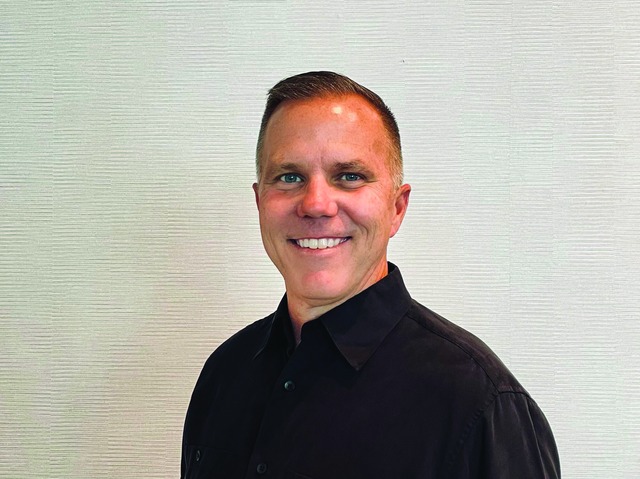
Kenny Chapman
Kenny Chapman is an award-winning international speaker, podcaster, life mastery coach, and entrepreneur. He has owned several successful companies in very diverse industries and is the founder and CEO of The Blue Collar Success Group, Inc., accelerating the success path of home service companies.
His true passion lies in his unique Life Mastery work, helping others manifest and enjoy their goals and dreams. Kenny makes his home in Scottsdale, Arizona, but travels extensively for both business and pleasure with his wife, The Lovely Christy. For upcoming events, books, audio, and video of Kenny, and to subscribe to his acclaimed leadership podcast, please visit TheBlueCollarCoach.com.
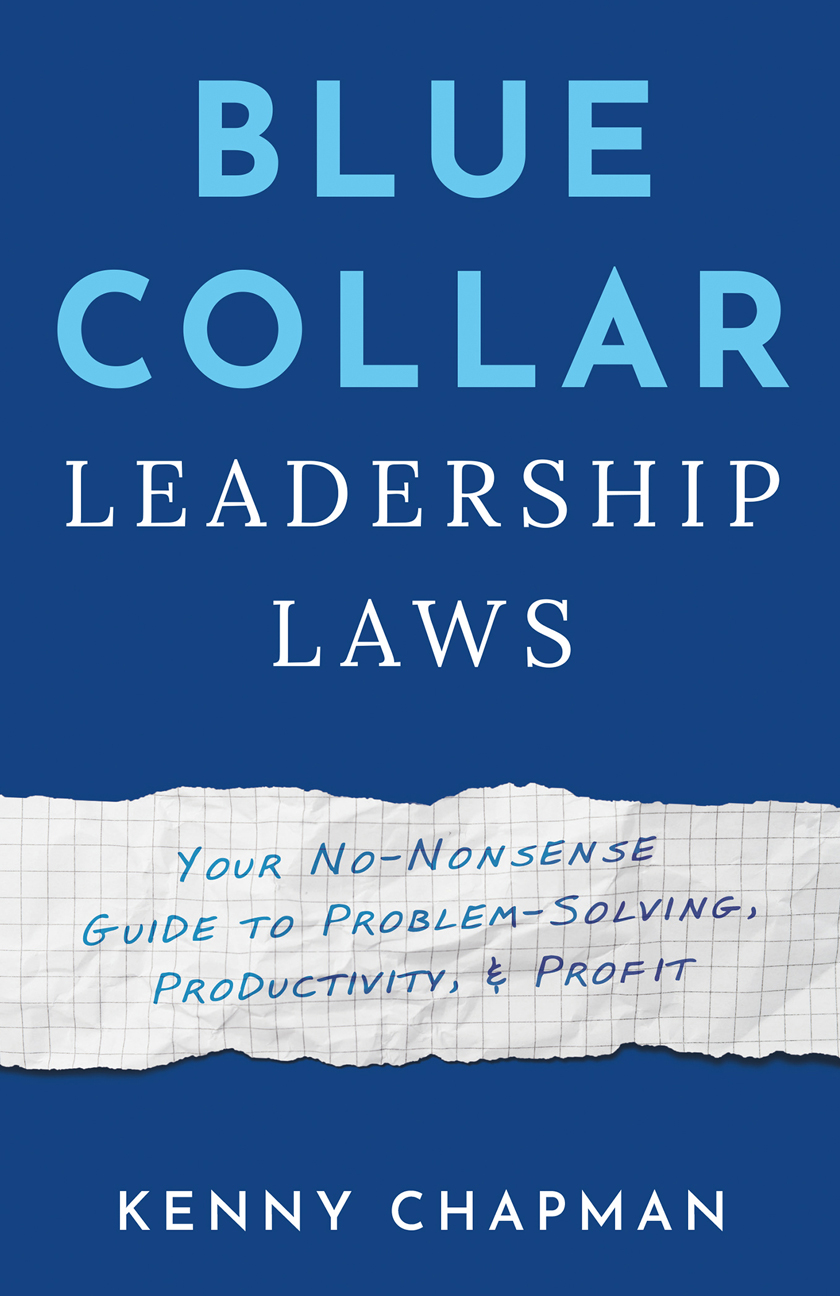
📚 Books by Kenny Chapman
Transcript
[00:00:35] BB: As a business owner, are you working countless hours for minimal profit while sacrificing health and family and quality free time. These Blue Collar Leadership Laws are going to show you how to take control of your business and massively improve your quality of life. Award winning author, speaker and contractor turned coach, Kenny Chapman shares his proven leadership methodology for creating a high performing self-managing business. With these easy to implement strategies, you're going to learn how Kenny went from broke and in the truck to taking six month vacation while the business thrived. You're going to learn how well intended leaders subconsciously sabotage themselves and their results. You're going to learn the one shift in thinking that it'll, will make the biggest difference immediately. Free yourself from the daily grind and put the blue-collar leadership laws to work today. Here's my conversation with Kenny Chapman. Welcome in to the author hour podcast, I'm your host, Benji Block. Today, I'm thrilled to be joined by Kenny Chapman, who has just authored his third book, this one is titled, Blue Collar Leadership Laws: You're No-Nonsense Guide to Problem Solving, Productivity, and Profit. Kenny, we're so glad to have you here on Author Hour with us today.
[00:02:01] Kenny Chapman: Oh, thanks, Benji. It's an honor to be here. Super pumped.
[00:02:04] BB: Let's start here, Kenny. Give us some of your background and maybe just tell us, what was the lead up to this book?
[00:02:12] Kenny Chapman: Yeah, man. I've been in the Blue Collar trades for a long time actually. I started out as a by myself in a drain cleaning truck in April in 94. Actually April 1st, which is April Fool's Day, but I started in the trades, and I beat my head against the wall in many years. Then I ended up getting good at it. I ran a very successful Plumbing Heating Air company for many years. Then I started coaching and training. I just always was seeing this what I call a broken success model where people were just working like crazy and not around their families enough and putting money in work ahead of everything else in life. I was like, no, wait a minute, there are laws of leadership that we need to get on the table and challenge ourselves in the Blue Collar trades to take a little bit of a different approach. That's what really brought me up to writing this book.
[00:03:05] BB: Really interesting. Excited to hear some of that enlightenment that you experienced, and maybe where you were then versus where you are now. Let me ask you a couple of questions here on this book, specifically, because you've done this before, why is this the right time in a sense, Kenny to release a third book? How long were you thinking about, oh, I got to tackle this leadership laws, blue collar leadership laws topic?
[00:03:30] Kenny Chapman: Yeah. Everything that I've done to this point had been more tactical, if you will. My first book was a personal development book, Six Dimensions of Change that it's really about how to improve your life. My second book, In-Home Sales Acceleration was specifically for our industry on a sales process. Now I just wanted to really address this whole, the overall, everything begins and ends with leadership, and you hold up a mirror of the leader of the company. That's what you're going to see the company as a reflection of is that leader, and it was just a burning desire that it was time to address personal development in the, “business space” of the Blue Collar Industries. That was what really motivated me to do this project.
[00:04:18] BB: Your imagined reader, obviously. They're going to be current leaders, but it is also for aspiring leaders. Who are you imagining as you're writing this one?
[00:04:27] Kenny Chapman: Yes, absolutely. Definitely, one of the things I say in the book is that if you're, if you're reading it, it doesn't matter where you're at. You're a leader in your family, in your community, in your church, perhaps. We forget that label of leadership. Everybody. If you're taking a breath right now, you're leading something somewhere. The great Les Brown taught me that when two people go for a walk, somebody sets the pace. That's true in life and business and all your relationships. I certainly hold that the Blue Collar Industry leader in light when I think about this, but there's a lot of transition happening, and we need a new, some new blood in leadership, if you will, as well.
[00:05:11] BB: Well, let's dive into some of the content of this one, in this book. Let's talk about you personally. At 30, in you alluded to this before, but from the outside, you basically had it made, you had some outer success. Then there's some things though, that internally, were holding you back. This is quoting you, but you say the things that held you back were deeply ingrained and reinforced daily by society and by your industry. So much of that was often disguised as normal attitudes and desires that were pretty much accepted without question. I have a two part question here. First would be, what was that success that you had experience? Maybe let us in to that picture. Then we'll go into your wake up moment. But what was the success in that moment at 30?
[00:06:00] Kenny Chapman: Yeah. Well, I mean, the perceived success from the collective agreement of society in the trades is, if you have a what I call a self-managing company, then you're successful. You don't have to go to the office every day, if you have a great leadership team or whatever. I was blessed. I was playing golf four or five days a week. I had a great leadership team. I didn't have to be there. That was that external success that I created at that time, what appeared to be very young in my life that a lot of people were aspiring to get to, and yet, I still had a massive void inside me.
[00:06:38] BB: Talk to me a little bit more about that void of the wakeup moment like, “Man, this isn't all I thought it would be.”
[00:06:46] Kenny Chapman: Yeah. It's the cliché as long as you're seeking happiness outside of you, you're never going to find it. I thought it had to do with money, I thought it had to do with houses and cars and some of the normal things and certain sales or number of trucks on the road. As I had all that, then I look at, I was in a bad marriage, I was an alcoholic. I had a drug issue. I was running from myself and manifesting what the world causes as success. I was getting on stages and getting standing ovations and my team respected me. Yet, I was fake inside, and it was tearing me up. I had to address it. That was really where it came to came to a head for me.
[00:07:34] BB: It's interesting, because when it is normal attitudes, and it's the desires of the industry, it's what's applauded. It can be easy to be just like “Man, does everybody feel like this? Does everybody also have this void?”
[00:07:46] Kenny Chapman: Right.
[00:07:47] BB: How do you go about starting to try to change it? What shifts are you making internally to go, I got to address this?
[00:07:54] Kenny Chapman: Yeah. I think it's major, it's an awareness play. It's really honoring your intention, one of the challenges that we have in the US, Canada and Australia is we're educating ourselves out of intuition, in my opinion. I believe that I'm not I don't have anything against higher education, but being in the trades from the trades and working with trades people for a living there's a, we're all looking for that thing outside that tells me what to do. What should I do? How should I feel? Where should I go? How should I spend my time? Rather than going inside and eliminating should and saying, “What do I want? What type of company do I want? Who do I want to surround myself with? Who do I want my clients to be? How do I want to serve? How do I want to show up? What's my impact, my influence?” That's really the questions that we need to be asking, not always going outside, because your intuitions there. But if you're constantly educating yourself, you're not listening to yourself.
[00:08:53] BB: I just wrote, I have a little whiteboard and I take notes while you're talking Kenny. I just put seven minutes in equals fire, because that is spot on right there. Learning to go inside, but I think that the difficult thing, if I'm being honest is I don't know if we can get to that inner awareness without immense and like outer, like realizing the depths of the pain or the struggle or the void internally. Pain is an indicator, it's a driver. Talk to me a little bit about, okay, it's one thing to identify it, it's one thing to go wow, I now have this awareness of this void, but now I'm going to start taking some action steps. You identified some limiting beliefs and you take a while to discuss those limiting beliefs in the books. What were some of those that you started to have to address and how did you do that?
[00:09:46] Kenny Chapman: Yeah. I really just had to really understand and start moving away from the us and them mentality, that you're born into a family. You got a whole deal of maybe you don't choose it and our parents did the best that they could. I believe everybody's doing the best that they can and you including exactly where you are whenever you're listening to this, but your past doesn't equal your future. Beliefs come from parents, peers and previous experience and when we wrap those altogether, the next thing is you can just be on autopilot. Interrupting the pattern of what you're doing and beginning to elevate your consciousness to understand, how do I want to go about my day today? How do I want to communicate? If I have the put in air quotes difficult conversation with a team member, does it have to be difficult? Or can it just be communicating for some clarity and understanding where someone else is coming from? So I think really, you're right, the awareness is where it begins, but then everything boils down to commitment. Tony Robbins talks about pain and pleasure being two major drivers. The reality is, we'll do more to avoid pain than we will to get pleasure. So as we hit bumps and hit roadblocks and find different levels of pain, I was very blessed that I found massive pain at what the world called a very successful life, but I was fortunate inside I was torn apart. So what is it that you're I've had it moment when you go, “No, I'm done with this. I'm not going to continue my life this.” Even though peers or people around you might go, “Oh, you've got it made, things are going great.” You know inside, if you want more, you listen to yourself.
[00:11:31] BB: One of the ways that you discuss breaking down these limiting beliefs is optimism. To find, there's a lot of pushback on optimism if the person is naturally pessimistic, which I put myself in that camp years back, and it's something that I've had to work on and really continue to try to better myself in that area to have a more optimistic worldview. How does optimism play into this? Are you naturally optimistic? Maybe, if not, how do you how have you fostered that?
[00:12:04] Kenny Chapman: Yeah. I think that's a great question and a very powerful thing that when optimism is often almost made fun of in society. I can't tell you how many times I got, oh you're doing an ostrich approach. You can't pretend like things are good or this or that, but the reality is when you start realizing that what if things are really here to help you. I was, six days after my 21st birthday, my father was murdered in cold blood when, he was an outlaw biker in San Diego. As I, so no, I haven't always been optimistic and that wrecked me. I had a lot of challenge and I didn't get to write the relationship with him and some different things. I went through this period of like, “Woe it’s me and look at my life. I hung a badge of honor on how tough things were for me.” Until I realized that wait a minute, what if what if this is a gift. That actually gave me a gift and mirror that he played full out. I learned how to play full out. I was headed down the wrong path he was too or there's no such thing as wrong path, just his path. I think that as you start really realizing that maybe there's not, call me crazy, but I don't believe there's no such thing as bad decisions even as we sit here today. I think you just make decisions of what you need to learn at the time and my father leaving the planet at the time he did give me a chance to go inside and go, wait a minute, what does this look like? I choose to frame it as a gift that I had 21 years of my life with him and mirrors to learn from him. Then I got to go on and be the man that I am today. Nothing would be what it is, if that hadn't happened. How do you find problems? We look for problems everywhere. What if everything's a gift?
[00:13:52] BB: Have you found an effective way to communicate it, can be a gift to people that give you that pushback or are you just done trying to explain it and you're going, my life is going to just lead by example in this area. I'm going to see it as a gift and hopefully people see that from in my choices.
[00:14:11] Kenny Chapman: Yeah. I think it's one of the – Law number three is, problems hold solutions. I talk about it in the book where it's a jump, I get it. If you would have told me that was one of the greatest things that ever would have happened to me when my dad was killed I would have been like, “Screw you.” You don't get hit type of a deal, but when you start taking and go, well, what if a problem, maybe it's just a situation and my mind can process situation. What if situation then moves to challenge? I'm competitive. I played sports. Okay, so maybe I can be up for a challenge. Then if I can move from challenge to maybe it's an actually an opportunity. Well, wait a minute. Now all of a sudden, I started firing different chemical in the brain. I'm excited about an opportunity. What does this look like? Then if I can move it all the way to, if it's a gift, if you give me a gift for my birthday and it's wrapped up, I want to open it, I want to see what's in there. It's not just oh, all the bad things that “happened” to me, or the “bad things” I should say happen. You don't just go, “Oh my gosh, this is amazing.” But you start going, “All right, here's the situation, here's where, well, what if this actually, I can get to where this actually serves me.” Because all pain in life, all pain comes from resisting, what is? That I think is where we get challenged as leaders. When we're influencers that, “Oh, my gosh, people don’t, they didn't do what I trained them to do.” Well, we're resisting what is, it's either your training, it's their intention, all these different things. The biggest, the hard part is, what is already has happened and it is before we even know about it. Then we get all pissed off. We don't we can't do anything about it, it's already here.
[00:15:55] BB: Yeah.
[00:15:56] Kenny Chapman: All we can do is moving forward.
[00:15:58] BB: How do you see time playing a key role in moving something from a situation to a gift? Whether it's the instance with your dad, or other times when you've been like, “Man, I could see this as a challenge. I see this.” You're moving it to gift. I mean, time and hindsight is a big player, right?
[00:16:17] Kenny Chapman: Yeah, it is. I think that's an agreement that we make with society. No different than death. In the Western culture, we celebrate death and we mourn for different periods of time, based on our culture, based on our upbringing, based on our personal thoughts. Time is an interesting one, but the reality is, it's going to be up to each individual, because certain cultures celebrate death, and that it's an incredible thing. You carry dead people through the streets, and everybody's celebrating. It's like a New Year's Day Parade here in the West, where it's all about how you frame it. Take as much time as you need, but your level of consciousness, your clarity and your desire to get over it. We can't talk about time and making the shift without talking about identity. If I had, for me personally, I had identity tied to the fact that my father was murdered. Think about that when I said a couple minutes ago that he was killed. If I say, he was murdered six days after my 21st birthday. I got your attention on this podcast. Many of you went, “Oh, my gosh, that's emotional, holy cow.” If I would have just said, “Oh, I lost my dad at 21.” A lot of people lose their dad at 21, but if I bring it in, so I did it here to get your attention, but for many years, I was unconscious of that, and I had identity around how hard my life was. Just check yourself what you're hanging onto. You can leave it in an instant, if you don't have identity tied to it.
[00:17:47] BB: So for you, and I would venture to say for most, right? You gain this awareness that you can view it as a situation, a challenge, or eventually hopefully, you're moving it to this space of gift. I would assume moving forward from just the situation with your dad to these other challenges that you had laid before you. You've seen the time gap close, because you're able to say, “Hey, it was a gift back then.” I can start to view this as a gift as well.
[00:18:15] Kenny Chapman: Yes, exactly. Again we're going deep for people here, it's a one of those things where stay with us. This is not and I'm not saying that there's no hardship or I'm not minimizing anybody's challenges –
[00:18:30] BB: For sure.
[00:18:30] Kenny Chapman: But it all comes down to how do you want to feel and at the end of the day, we think we want money, we think we want successful businesses, we think we want X amount of dollars in the bank. What we really want is a feeling and what those things mean to us. So I spent a lot of time working and helping people with emotional regulation, the ups and downs and the, “Oh, my gosh, things are amazing.” “Oh, no, things suck.” Most of those, you don't have a lot of control over either way. As you go through shortening your gap between when the world hands you a situation or what the world called problem to you learning and getting all of the value that you can from that, as you shorten that gap, you're going to realize that it's going to come down to how you want to feel, because if I want to feel crap, sometimes it's unconsciously, it could be my ego kicking my own butt for all the different things I did wrong, didn't do, say, all those, “Y'all my gosh, it's so bad.” Whatever that is, you'll learn how to shorten that gap as you go through the process and realize, I want to feel good and this doesn't feel good. I guess I better change how I'm viewing this.
[00:19:44] BB: Who's encouraged that in you the most, Kenny? Are there some people that really helped you live into this?
[00:19:52] Kenny Chapman: Yeah. I would say, I've had many coaches over my life and certainly, even in school, having some sports coaches, and then I was blessed with my parents got divorced when I was pretty young, and they stuck me in counseling. I had the gift they put me in counseling, and it was like, “Man, he's pretty screwed up. Maybe he needs a psychologist.” So then they moved me to psychology and like, “We still can't fix him, move him to psychiatry.” They've run me through all these labels. Then all of a sudden life coaching became a thing. So I was, I thought there was something wrong with me, because I was exposed to, “therapy” before therapy was cool.
[00:20:38] BB: You’re an early adopter.
[00:20:39] Kenny Chapman: Yeah, right. Exactly. Then what's funny is I land in the education business. As the Blue Collar Coach, I help people all day every day. It doesn't matter what the label is, but it's always having whatever that is, whether it's a coach, appear, a parent, a pastor, whatever that is, that can give you that third party mirror and help interrupt a pattern and hold up a mirror for you. Not for them to tell you how you should do it, or how they would do it, but to make sure they're asking you good questions, and helping you go inside to what you really want to manifest in your own life.
[00:21:17] BB: Reeling right off of that, the second law. There's seven total for our listeners. We're not going to hit on all seven here. Although we talked a little bit about law three that problems hold solutions. I'm going to go back to law to here for a second, Relationships Before Results, because we were just touching on results. I wonder obviously, for those in business we have to be focused on results. There's metrics involved and all sorts of things. That's key. How have you found this balancing act of going? Okay, well, I know results matter, but also relationships before results.
[00:21:52] Kenny Chapman: Yeah. I think it's powerful. One of my mentors, Dan Sullivan, taught me a concept. Actually wrote a great book called, Who Before How, and I think it's important that we focus on our team and really just, I've said for years that people should be on the balance sheet. We have all these key performance indicators that we measure and look and profitability, and revenue per head and all these things. But really, it's about the person and none of those things happen without that relationship. We went through a phase where you can't be friends with your team and the different, “Oh, no, I got to keep them at arm's length.” I just threw all that out, maybe because I've got a small family, maybe because I don't have children. I crave deep relationships. My best friends on the planet are involved in the businesses that I run, and I care about my people. It's always served me very well from a profitability standpoint. I just think that when you focus on the relationship, then the result comes along. Now don't get me wrong, there's no, you don't throw accountability out the window and it's all just a 24/7 birthday party. But when you have the relationship that really is going toward a common goal, and when you have a shared vision, and the relationship is there, just think it's a broken model, when we just look at numbers and were barraged by. We got stock tickers running nonstop and financial news and what's happening around the world and this or that. We just get sucked into an collective agreement to focus on the wrong things, get back to your relationships, and it'll change your life and your business.
[00:23:40] BB: Yeah. We get sucked into the wrong things. Then people use these phrases like leadership is isolating. It can be isolating at times, but think about how much that exacerbates the problem, right?
[00:23:52] Kenny Chapman: Yeah, exactly.
[00:23:53] BB: Because you're already thinking that way so you think, well, it should be isolating, and then you further back yourself into a corner so I love that. You said, man, how could people almost be on the balance sheet in a sense? Are there any ways that you call yourself back to relationship like you would with a balance sheet calling yourself back to other KPIs or areas or like, this is how I know that my relationships are functioning properly, Kenny?
[00:24:18] Kenny Chapman: I think with in where I'm at with my businesses, I have one-on-ones with my key leaders that just are, we call them COCs just cup of coffee meetings and check in on, what's going on with family and kids and personal challenges and what you're reading or paying attention to. Then, “Oh, yeah, let's get a business update. What do you need to bring me up to speed on.” Because I run companies that I don't have a day-to-day job in so I'm more of an investor and a consultant to my businesses that I play in. I think it's important to just make sure that I'm connecting personally, so I don't run a spreadsheet or have anything like that. I definitely do a gut check and see if there's anybody that I need to circle to and make sure that I that I feel connected. I'm fortunate enough to be connected with myself and my gut enough that I know if I'm out of whack a little bit. I have peers around me that will point it out if I'm not. So that's a good thing too.
[00:25:27] BB: I'll highlight all seven, just so our listeners can be aware of the seven laws outlined in the book. One is, Authentic Abundance. Two, you just heard us touch on Relationships Before Results. Three, Problems Hold Solutions. The fourth is, Purpose, Guided Responsibility. Five, Candid Communication. Six, Aligned Accountability. Then the book rounds out with loss seven, Essential Self-care. Two questions for you. We'll start on the good side. What of the seven laws as you're writing this book, you go, “Man, this this chapter, this law, it comes to me pretty naturally. It's part of how I'm wired.” Which of the seven is like, “Yeah, this is me.”
[00:26:09] Kenny Chapman: I would say law number one, which is interesting. I love your question. I just – I'm an abundance guy. I believe in abundance. I believe that we're taught scarcity and it doesn't have to exist. I didn't even realize I started there. I guess that's why, because that's who I am. I love it. It worked out as was supposed to.
[00:26:30] BB: Okay, so then my second follow up, and I don't know, I mean, it would be hilarious if it was last seven, it was the last one you wrote about, but what is the hardest one, when you're writing about this, oh, you’re going, “Man, this is an area I've had to constantly work on and check myself in, or this is a law I’d keep coming back to, because I don't hit the mark here all the time.”
[00:26:50] Kenny Chapman: Oh, my gosh. That is hilarious, because it's like almost we prepped for this thing or something. I mean, it's now ingrained. I have self-care rituals that I wrote in the book about, but it is the last seven has been over the history of my almost 30 years of being an entrepreneur. Self-Care was always the one that got thrown out, always the one that came last. I drank too much, I smoke too much, I didn't go to the gym, I didn't take care of myself, whatever that is. Now I with a future book, I may write that entire book on self-care, because nothing happens without it. But I – over the course of my career, I've struggled there the most, but now nothing else happens without it. It is my law number one now. You'll see when you read the book as far as the way download the PDF, and it has the essential self-care is the center and all the other laws are around that, because nothing happens without taking care of yourself.
[00:27:50] BB: Give me some of the guardrails you've set up, Kenny around self-care. Knowing that you've struggled with it in the past, what are some of the most helpful things you've leaned into?
[00:27:59] Kenny Chapman: Be easy with yourself. There's no – the challenges we set up there's all the clichés around perfection. Don't worry about perfection. The main guardrail I have is more than not. I personally, I meditate every day, I journal every day, I move my body every day, I do mental intentionality. But I really, those will all shift and change. I might journal longer, I might meditate longer, it might be shorter. I always set myself up for failure when it came to self-care. It was very rigid and very competitive. I've got to do this, this, this and this. I would also help people realize the difference between a routine and a ritual. You notice I use the word ritual when I'm talking about self-care, because that's what it is to me now. It's a ritual in my life that – a routine is something that you do regularly, a ritual is something that has a higher meaning to you, there's more spiritual depth to it. That's where I'm at. So the guardrail is just, “Oh, I'm not going to do that today, or I've got an early morning, I'm going to cut down on this.” Just making sure that it's more than not and finding balance and harmony, that's really what it's about. We set ourselves up for failure with, I got to do this and this and this, and then you miss, and you beat yourself up and then you miss again. Then the next thing you're back to not doing anything at all.
[00:29:28] BB: Well, let's start to land the plane here. As we start to wrap up, I wonder, when someone finishes Blue Collar Leadership Laws, what are you hoping their main takeaway is? Maybe it's a feeling, maybe it's an action item, but what you hope that is?
[00:29:41] Kenny Chapman: I hope that it is hope.
[00:29:43] BB: Nice.
[00:29:44] Kenny Chapman: I really feel that when you finish this book, you're going to realize that you already know a lot of things that I wrote to you about in this book, but I'm going to bring it to your consciousness level to where you can really realize and I'm giving you a path to do some things about it differently from your perspective, not from my perspective or what I did or what I think you should do, but you already know inside so I hope you've finished and go I've got some hope that I can make a few minor shifts, little hinges swing big doors. We're just looking for a little hinge and completely change your life in business forever.
[00:30:23] BB: Kenny, it's been great to get to chat with you, man. I know our listeners are going to really appreciate this episode. Where can people continue to follow your work and how can they connect with you?
[00:30:35] Kenny Chapman: Absolutely, go to the bluecollarsuccessgroup.com. All the major social media channels for Kenny Chapman as well, but bluecollarsuccessgroup.com is the best place to find us and what we do and help people every day as we accelerate the path of success for home service companies.
[00:30:54] BB: Well again, the book is called Blue Collar Leadership Laws: Your No-Nonsense Guide to Problem Solving, Productivity and Profit. Kenny is going to be a great resource for so many. Thank you for stopping by Author Hour today.
[00:31:07] Kenny Chapman: Benji, thanks so much, man. It's been a pleasure. Appreciate you.
[00:31:11] BB: Thanks for joining us for this episode of Author Hour. You can find Blue Collar Leadership Laws: Your No-Nonsense Guide to Problem Solving, Productivity and Profit on Amazon. A transcript of this episode as well as all of our previous episodes is available at authorhour.co. For more Author Hour, subscribe to this podcast on your favorite subscription service. Thanks for joining us. We'll see you next time. Same place, different author.
Want to Write Your Own Book?
Scribe has helped over 2,000 authors turn their expertise into published books.
Schedule a Free Consult