Dr. Jon Finn: Episode 900
Read the full transcript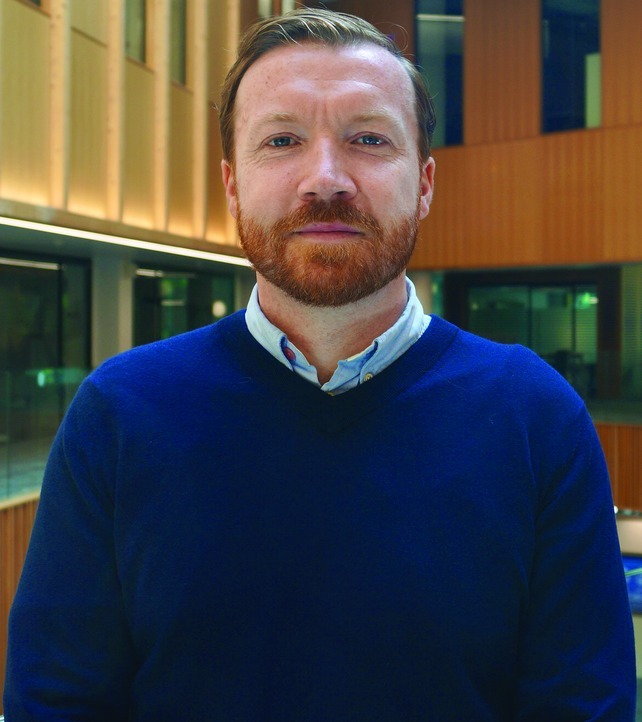
Dr. Jon Finn
Dr. Jon Finn founded the award-winning Tougher Minds consultancy and has three psychology-related degrees, including a PhD. He has worked in performance psychology, resilience, and leadership science for over 20 years.
Tougher Minds uses cutting-edge insights from psychology, behavioral science, neuroscience, and world champions to help organizations develop “Habit Mechanics” and Chief Habit Mechanics”—resilient people, outstanding leaders, and world-class teams.
Having trained and coached over 10,000 people, Dr. Finn, and his colleagues, work with global businesses, high-growth startups, individuals, elite athletes, coaches and teams, leading educational institutes, families, the UK government, and think tanks. For podcast episodes and free resources, visit: tougherminds.co.uk.
📚 Books by Dr. Jon Finn
Transcript
[0:00:31] BB: If you want to feel better and do better, the biggest problem that you probably face is that most self-help training and coaching is outdated and it’s ineffective in our challenging world. Why? Because it’s not rooted in cutting-edge science about how your brain actually works and what actually stops you from fulfilling your potential. So, what’s the solution? You've got to become a habit mechanic. Dr. Jon Finn will teach you how. This new, uniquely powerful approach draws on proven insights from cutting edge neuroscience, behavioral science, psychology, and world champions. Here’s my conversation with Dr. Jon Finn. Welcome into The Author Hour Podcast. I’m your host, Benji Block, and today, we’re thrilled to have Dr. Jon Finn on with us. Jon, welcome to the show.
[0:01:25] JF: Hi, Benji. Thanks for having me.
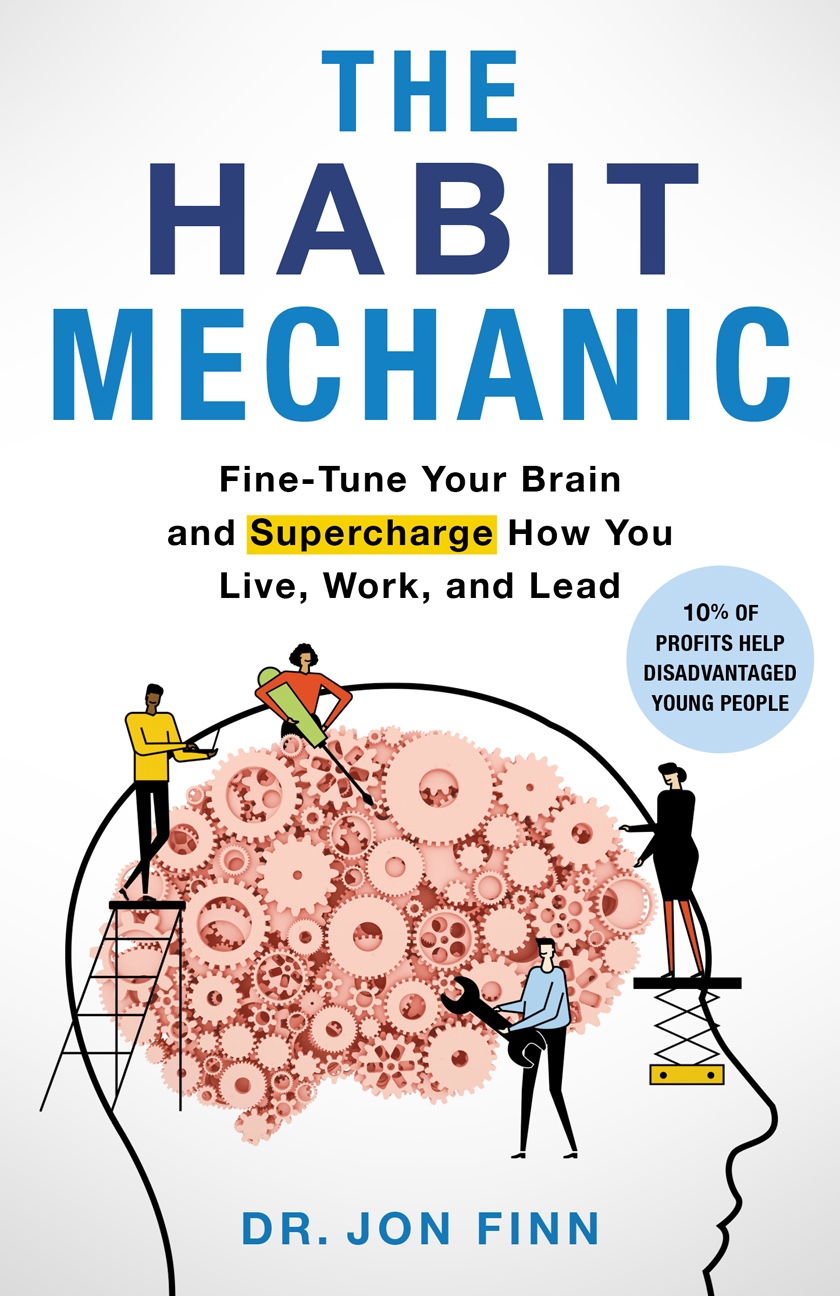
[0:01:27] BB: Want to say a massive congratulations because you have a new book. The title is The Habit Mechanic: Fine-Tune Your Brain and Supercharge How You Live, Work, and Lead, and we are glad to get to talk with you about this new work.
[0:01:43] JF: I’m looking forward to it. I am looking forward to discussing it in detail.
[0:01:47] BB: Well, let’s start here, what prompted this project and why was right now the best time for you to take on writing a book like this, Jon?
[0:01:57] JF: In short, because I think the world needs it. The world is more challenging than ever before. It’s harder than ever to feel good, to do well, to be your best, to fulfill your potential, it’s harder than ever for leaders to help others, to be at their best and create cultures that help people to be well and perform to their potential. What I see is the traditional ways we’ve used to try and help people be at their best and leaders use to try to help others to be at their best, they don’t work anymore. They’re ineffective because they’re not based on how our brains actually work and they’re not based on behavioral science, the science of why we do what we do. We need a different approach and we’ve spent over 20 years refining the ideas that we’ve written about in the book and the book is everything. Certainly, I know about helping people to be at their best. It’s not a short book, it’s not a book with one or two ideas in it. It is, as some reviewers have said, it’s a manual for life. It’s a toolkit for life and you can keep using these ideas again and again. In some ways, I feel the book is a bit of a philanthropic exercise because we are literally giving away everything we know about how to be your best but I just want the book to be a force for good and if people use these ideas, it’s shown that they change people’s life. I think the world is more challenging than it’s ever been. As we come out of the pandemic as people adopt new ways of working, as children got back into education, I think whatever you do in this world is more challenging than ever to do it. I just wanted to – we have programs that help people to do better, so I wanted to make that accessible in a book format because I think the book is probably still the best way to get ideas into people’s hands in a really practical way.
[0:03:53] BB: Yeah, I think it does that and executes on that vision so well. This book is, you mentioned, it’s like a manual for life and I love thinking of it that way because I do see it as something you would go back to and you would reference. I wonder for you as you work on this and you pour your heart and in so much of your research and your work into it, who are you imagining reading the book, who is that ideal reader for you, Jon?
[0:04:18] JF: Yeah, well, it’s everybody which is a problem for us because it’s often hard to know who to target but there’s a section in the book which is titled, the light bulb moment and that chapter details, I suppose, my journey through learning how to apply psychology and insight from science to help people to do better. We got to a point with the program where we were seeing that the same set of ideas was helping senior leaders and big businesses. It was helping parents, they were helping teachers, they were helping professional athletes, professional coaches, they were helping skill children. The same core ideas about, this is how you brain works and these are the things, the tiny, practical, simple tried and tested things you can use to help you to do better in life and that’s what’s so exciting about these set of ideas. They’re not for any one specific group, they’re for human beings, they’re for homosapiens. Nothing in the book is prescriptive, it’s all about taking the ideas, trying them out and seeing what works best for you in your life but whether you’re a leader of a big business, an employee, a parent, an athlete, all of those things or you’re a teacher and a parent or you’re someone studying for their exams at university or to make this transition into the next part of your life or you’re someone who has just started at what we call in the UK, secondary school, you can use these ideas to help you to do better and people are doing every single minute of every single day because we’ve got over 10,000 people using these ideas and they all report that they changed their life. If you want to feel better, do better, be at your best more often, fulfill your potential, if you want to help others to do that, this book is for you.
[0:06:07] BB: Well, I know our listeners are in that space, right? Because you don’t listen to podcasts about authors and the books that they’re writing if you don’t want to unlock your amazing potential, so you have a captive audience to your ideas for the next few minutes, Jon and I am one of those. Let me ask you this, you talk obviously, by title, we would know this about being a habit mechanic but I’d love for you to define that. Give us a picture of what a habit mechanic really is to you.
[0:06:40] JF: Yeah, I’ll give you an overview to start with and I’m going to read the habit mechanic manifesto, which is in the book.
[0:06:47] BB: Wonderful.
[0:06:47] JF: Because we want people to adopt and adapt a new mindset because I think that’s what it takes to actually be at your best in the challenging modern world. A habit mechanic is someone who understands their habits, their helpful habits and their unhelpful habits. That include things like beating yourself up too much, becoming overly stressed, procrastinating too much. The invisible and tangible things that we’ve don’t necessarily think about as habits, worrying too much. It's someone who understands those things and then he’s able to make tiny adjustments to build small, new, helpful habits in a sustainable way, in a way that actually helps you to make positive change in your life. You don’t just know what you need to do, you can actually move from knowing to the doing, to building sustainable new habits and behaviors. Then you can – once you're a habit mechanic, you can become a chief habit mechanic and that is, you can actually start to help others to make positive change in their life and to actually design cultures that make it easier for people to make change. The habit mechanic manifesto is this: I am a habit mechanic. I don’t use outdated self-help and coaching methods that are becoming less and less effective in the challenging modern world. I use proven insights from cutting edge neuroscience behavioral science and psychology to develop my own resilience and performance habits. Then I use the same techniques to help those around me to thrive and succeed. I change people’s lives by empowering them to be their best. My fellow habit mechanics help me to be my best. I am only one habit away. That’s the manifesto. Habit mechanic is not just about helping yourself, it’s about helping others to be at their best. The beauty of it is, you use the same ideas you’ve used to help yourself to help other people and we’ve designed the program like that.
[0:08:49] BB: You mentioned in the manifesto, outdated self-help and earlier, you talked about how you had a light bulb moment of sorts. I wonder if you could just take us personal for a second, Jon, and talk about how this has become something that you’ve wanted to give your life to and seen the benefits of.
[0:09:09] JF: Yeah. As a younger man, I was a reasonable rugby player and I got to the point of playing international student rugby, which is a reasonable level but I essentially fell at the last hurdle and I choked under pressure and I was studying sports psychology at the time and I was kind of kicking myself that I hadn’t been able to, I suppose, develop my mental performance and mental skills as much as I may have liked to but I then got quite a serious injury that stopped my rugby career progressing further. When you try to push yourself to be your best, you see how challenging it is and you see how important the mental side is. I just thought, there’s a set of ideas here that actually everyone could benefit from. Why wouldn’t we deliberately teach people how to manage stress and how to build confidence and how to perform under pressure and how to be productive and focus properly on how to be a great leader? What I saw, when I studied this in great detail and I’ve got three degrees in these area including a PhD is that most of the approaches we were using to try to help people were based on what we called black box theories. Until very recently, we haven’t really understood what goes on inside the human brain in any great detail and then about 20 years ago, we got this technology called functional MRI scanners. They allowed us for the first time to actually see inside the human brain in real time and most of the support that’s out there doesn’t take this new science into consideration about how the brain actually works. There are very, very few programs I’ve seen that do don’t take another set of science into consideration, which is why we do what we do, which is behavioral science. All the other approaches I’ve seen out there, they’re really well intended. They’re not based on good science and I think everyone could empathize with this idea of, “I know that I should eat five portions of fruit and veggies a day” and I agree that’s a good idea but most people don’t do it. There’s one thing, knowing something and most of the programs that are out there are knowledge-based programs. It’s a complete other thing to do it to become what we call a habit mechanic and very interestingly, just last week in the UK, some data was published showing that actually half of the national health services budget that was called the NHS in the UK is spent on lifestyle-related diseases. That is diseases that emerge because people don’t actually live their lives by following the advice they broadly agree with. We know we shouldn’t eat that type of food and we know we should exercise more and sleep more and probably not drink as much as we do and that smoking is bad. Yet, people are still doing these things to the tune of half the NHS’s budget per year and that’s a big budget. The way that we’re trying to currently help people doesn’t work. I knew that there was a new approach needed, an approach that actually took into consideration, how brains work and how to use insights from neuroscience to help us to make sustainable change and what we see in our programs, what we’ve seen over the last 20 years or so is when you start to teach people about how their brain works in a sophisticated but simple way and you show them how to build sustainable new habits, one tiny step at a time, you get amazing results.
[0:12:41] BB: Will you identify four steps in the book, I would love for you to take the next couple of minutes and just from a high level, walk us through what those four steps are?
[0:12:52] JF: Yeah, we’ve designed a book to be a journey and that’s the visual, it’s like a roadmap and the first step is called “Discover your secret superpower”. The first part of the book is showing why the world is so challenging but also showing that we can overcome those challenges by using our secret superpower, which I’ll give away now, is learning, we could learn, we’re designed to learn. Humans are designed to move around, solve problems, that is to learn and adapt and we show the importance of developing what we call habit mechanic intelligence, so that we can actually learn more new helpful habits that are going to make it easier for us to be at our best and actually start to discover what we call our super habits but also learn about our destructive habits so we can get rid of those. The first part of the book is setting this theme as to why the world is challenging and why learning to become a habit mechanic helps us to overcome those challenges. Step two of the book is fairly self-explanatory, it’s called, “Learn how your brain works” and we explain how the brain works using a number of different models we’ve innovated, starting with our very simple lighthouse brain model, all the way through to more complex models about immersion regulation, which is really at the heart of building more new helpful habits and being at our best. We found that even if we just understand the most basic lighthouse brain model, it makes it easier to be at your best to understand this invisible force between our ears that drive everything that we do but it’s easy to forget that it’s there. It’s not like a muscle on your arm that you can physically see. It is invisible but it’s driving everything that we do and just getting a little bit of understanding about what it’s designed to do is really helpful. Step three in the book then is showing the simple practical science-based habit mechanic skills that you can use to be at your best and none of these stuff is prescriptive. It’s about taking the tools in the book of which there are 26 different habit mechanic tools in the book, trying things out, seeing what works best for you but we break down our approach into different sections. So we start by showing you the tools you can use to motivate yourself and then to analyze your habits, so you can start targeting which new helpful habits you want to build. Then we show you how to systematically start building more helpful habits across different categories so we start with better sleep, diet and exercise habits so you can get your brain working well, then we move on to better stress management habits then better confidence habits, better performing under pressure habits, better productivity and focus habits, so you get more done in less time and really supercharge your work-life balance. Then we also show how to learn more efficiently and effectively so you can build habits more efficiently and effectively. Some of those headings will be appealing to some people, others will be less appealing but as you go on your journey through life, even if for example, stress management might not be very important right now, it probably might be at some point in your life, so that’s why this is a manual for life but what we’ve learned over the course of our journey and helping people to be at their best is they’re the salient points, really. Pain points for people, not all of them but I’m sure that everyone who is listening to this podcast will be able to connect with at least one of those titles I just mentioned and then, once you’ve learned how to be your best more often, that is, you’ve become a habit mechanic or you started that journey, developing your habit mechanic intelligence. Step four then is about chief habit mechanic skills. If I’m a parent or I work on the team or I’m a senior leader or a coach or I’m a part of a sports team then I’ve got some level of responsibility to start helping others to be at their best because leadership is just about influence and we’re all influencing each of those behavior all of the time. Step four really breaks down what is leadership and how we can do it better. That might just be in a mini leader or a small leader, so being a better role model for the people around me and getting a bit better at becoming more of what we call an action communicator or you can go all the way to learn to become a chief habit mechanic, which is learning how to create a culture that makes really easy for people to be at their best using some of our cultural development tools. People are now compelled to read step four if helping others to be at their best isn’t a big priority for them right now but it’s there for those that want it now and I think at every point in life, people get interested in helping others from being a parent through to becoming the coach as you get a bit older and you can’t be an athlete anymore or as you are naturally progressing your career to become a have more senior role in the organization that you work. If you don’t want to read that part of the book right now, don’t worry but it’s there for when you do want to become better at helping others. So that’s an overview of the book.
[0:18:11] BB: I love it. I want to go back to step two for a second. I want to provide a little bit of how our brain works and you mentioned the lighthouse model. I wonder if you take just a little bit further, dip our toes in the water if you would, Jon, on the lighthouse model and some of how our brain works a bit.
[0:18:30] JF: Yeah, the simplest way I’ve learned to explain to people how their brain works is by explaining, metaphorically of course, imagine you have a lighthouse in your brain and there are two characters that live in the lighthouse. One is called “HUE”, which stands for “Horribly Unhelpful Emotions” and the other one is called, “Willing Me the Power” or “Willpower”. So, HUE lives and works in the lighthouse control center and it’s using the light of the lighthouse to scan the past, the present and the future. His first instinct is to look for threats, some problems, so he is looking into the past about things that might have gone wrong, things that bother you and bug you and caused you to have unhelpful thoughts and it is also looking in the future about what potential problems do we have right now and then it is also projected into the – I think I said, sorry, it is also looking at in the present, I should have said that. I think I said the future. He is looking at the present, what’s going on right now, “Is there a tiger coming into the room? What do people think about me?” et cetera but then he’s also projecting into the future about what might go wrong. It could be as something as small as, “I am I going to miss the train? Am I going to be late for the meeting or will I get the promotion or do people around me really like me?” but it is a threat detection machine and it is scanning the environment all the time for that stuff. When there are no obvious problems, it’s then looking for – it’s next instinct is to look for things that are easy to do that give you a fast reward like eating a donut, checking your social media, watching the next episode on Netflix, so that’s what your HUE is designed to do. The other character, Willing Me the Power or Willpower, you can decide what you all just call, lives in the lighthouse his training room where it’s learning about how to help you to be at your best. That’s his job, what happens when there is a problem is that HUE calls up to Willpower and says, “We got a problem here.” Essentially makes you aware of the worry and then if your brain is working well, Willpower or Will I mean, he comes downstairs in the lighthouse control room, encourages HUE through the problem. He helps it to interpret the problem in a different way. It calms HUE down and what you are trying to do is make some of the stuff that Willpower understands like how to manage stress or how to be more productive, how to be a better leader. You’re trying to turn some of that stuff into a habit so that HUE is able to do it more automatically so that when it sees problems in the future, it’s better able to deal with it yourself instinctively and what you are doing there is you’re building what we call implicit emotion or regulation habits but the challenge is that the world we’re living is problematic and it means our brain doesn’t always work very well so that our relationship between Willpower and HUE isn’t always as idealistic as I’ve just shown there. By learning to be a habit mechanic, you are learning to get a better balance between your willpower and your HUE so that it is easier for you to build more new helpful sustainable habits.
[0:21:47] BB: I love that description and the picture there I think is super helpful. We all feel that tension between the two and I love just learning a little bit about how our brains are operating. You mentioned earlier how we can know what we should do but it doesn’t mean that it translates into habits. It doesn’t mean that it actually translates into doing. In that vein, I want to discuss how we learn because knowledge becomes a skill and then a skill becomes a habit but we live in this information-filled loud society and so there is endless knowledge. It becomes really, really difficult to execute and move something from something we know to actually something we do and have a habit form. Do you think Jon that it’s about consuming less information or how do we go about actual habit transformation?
[0:22:44] JF: Yeah, neuro biologically we understand how learning works, so you get an idea into your short term memory and it can hold idea for about 30 seconds and your short term memory can hold about five to seven chunks of information at a time. If you don’t do something with that information within about 30 seconds, your brain dumps it. If I say to you, seven, 12, 13, 22, six, five, eight, 13, 37, already you have forgotten the first numbers, right? Because I have overloaded your short term memory.
[0:23:20] BB: Absolutely, yep.
[0:23:21] JF: If I have stopped after maybe five or seven numbers, you could have held those but again, if you don’t do something with them you forget them. Not only to return them, you got to repeat them so you could write them down for example. You could say them out loud, you could tell them to someone else and when we start to repeat things, we start to change up our brain via processes called neuroplasticity. That knowledge starts to become represented by neurobiological connections in your brain. If you keep repeating those numbers, those connections get stronger and stronger and stronger but if you stop using the numbers, the connections fade and they die. It’s like when you are learning something, you move your neurobiological connections from cobwebs to cables but if you don’t use the knowledge, they go back from cables, back to cobwebs, back to nothing. That’s how learning happens and yet, it can become addictive to keep looking for the next fad, in the next tip or trick. What I am learning is that all these knowledge and all these tips and tricks are doing more damage than they are good because they lead into lots of people getting an idea, understanding an idea, try something once or twice, feeling like they are not able to do it like the influencer card. Then beating themselves up that they are not able to do it and feeling in the worst place than they were before they started because the advice, they’re being given isn’t designed to help them to build new habits, this knowledge advice. The best way that I can explain learning to become a habit mechanic and actually learning how to do better is a bit like learning to drive a car. You know after your first lesson, most people know broadly how to drive their car. They know where their steering wheel is and the accelerator and the break, you know, they’ve got the basics. That’s great but that doesn’t mean they can pass their test after lesson one. The average person it takes 65 hours I think to learn how to drive and you do that over about a sixth month period. If you actually want to change, it is about repetition, repeat to remember, remember to repeat. By practicing, you are changing your brain and that’s what the tools and the Habit Mechanic book will allow you to do. They give you ways to practice in an intelligent way and to reflect and plan and you don’t have to wait 65 hours to see progress, you can see progress after two minutes with our approach by using some light tool like the TEA plan. It is not about becoming the perfect driver, if you want to use that analogy, it is just about making sustainable progress. Whereas with the traditional approach, we try something new. We fail, we beat ourselves up, we give up, we move on to the next thing, we try that, we fail, we beat ourselves up. This is about looking at yourself in an intelligent way, trying something that leads to a bit of success then building on that success. As you go on that journey, you are building more and more helpful habits and learning more and more about yourself, you know? Life is a journey and by becoming a habit mechanic, it doesn’t guarantee you’re never going to fail. It guarantees that when you are, it gives you a much better chance of when you’re on an upwards part of your journey that you are going to be able to get to the peak. When you get to the peak, you’re going to be much better able to recognize, “Is this actually the peak or can I push myself further or do I need to tap my foot off the accelerator a little bit here and relax and give myself a bit of a break?” and when you’re falling down the other side where your life might feel a little bit out of control, you’re better able to reign things in faster because you’re more self-aware and actually not fall as far as you may otherwise have done and learn from those lessons and then build to become a better version of yourself. I am not sure if I have answered your question there Benji but I tried.
[0:27:21] BB: No, you definitely answered the question. I think you did a fantastic job of explaining that and I think that’s the constant tension of living in a knowledge age is that we are bombarded by information and consuming information can make you feel smarter for like what you said about 30 seconds or maybe it sits with us for a few hours but when you are actually talking about changing your lifestyle, it is going to need to be repeated, it’s going to need to be remembered. You mentioned just a minute ago Jon, this idea of “TEA”, “Tiny Empowering Action”. I love that part and I love that as something that our listeners could walk away with. Would you talk a little bit about this idea of tiny empowering action and having a tiny empowering action plan?
[0:28:09] JF: Yeah and this is chapter one of the book, so there is nothing longwinded about this book. It is practical, start with the blocks. We show you how to use the TEA plan.
[0:28:18] BB: That’s right.
[0:28:19] JF: TEA is very, very simple but it’s taken a long time and a lot of science to get right. For me, it is the most efficient and effective way to actually give yourself of doing a little bit better today and I do a TEA plan most days even on my days off because you just spend a few minutes. It literally takes two minutes and it saves me hours. The first step of the TEA plan is you rate how well you did your best to be at your best and achieve your goals yesterday. I would do this in the morning, so I look back to yesterday and say how well did I do my best, to be at my best and achieve my goals out of ten. Ten would mean I was perfect, one would mean I failed. I’ll be somewhere in between. It is not about being perfect, it’s just about doing what we call intelligent self-watching so that we have a better awareness of ourselves and then the next step is we say, “Okay, well, if I scored six yesterday” for example, I say, “Well, what tiny empowering action could I do today to give myself a better chance at being at my best?” Some of the things that I use and this is just my example is you got to work out your own TEAs but it might be something like only check the news once today or go for a five-minute walk at lunch time or eat a piece of fruit for breakfast or write a positive written reflection at the end of the day, so I commit to just the one thing and then step three is I say why, “Why is doing that thing going to be helpful?” so I write down why. I say I picked the positive end of their reflection. I could say, “Well, that’s going to help me to draw a line in the sand between work and home life.” It is going to help me to de-stress, it is going to help me to switch off and activate my evening routine. It is going to help me to sleep better, it is going to help me to be more refreshed in the morning so I can be more efficient and effective and by understanding the why and writing it down, we’re going to be more compelled to do it. We show you how to do for example, simple practical written reflections in the book, in the stress management section but even without those incisive how you do a great written reflection, everyone can have a go and start to get some benefits but that’s the TEA plan. Simple, practical, also we’re launching a Habit Mechanic University app as well soon.
[0:30:45] BB: Nice.
[0:30:45] JF: That space is first and foremost where people can come into the campus if you want to use the university language and just post that daily TEA plans and other planning and reflections in the Habit Mechanic community, so we can all support each other and celebrate people’s little successes and activate what we call the social influence and the community, knowledge and skills, change factors, which is part of our behavior change model. We absolutely believe that doing something tiny like the TEA plan every day is a fundamental part of being the best version of yourself and the book gives you the tools to start doing that.
[0:31:29] BB: Jon, since you implemented the TEA plan, what are some of maybe the practical changes you’ve seen in your life for those? It’s one thing to do it for a little bit but overtime I am assuming you’ve seen some general trajectory towards just success and obviously as defined by you but maybe a healthier lifestyle or being more active like what are some of the benefits you’ve seen?
[0:31:53] JF: Yeah, hugely. By repeating this process that’s how you build habits and what habit mechanics do is that have a list of their super habits that they’re working towards and that they work out what those super habits are by engaging daily activities like the TEA plan and use in our weekly reflection tools and using our monthly reflection tools and learning about themselves and developing their habit mechanic intelligence. My super habits I’ve developed by using tools like the TEA plan are things like I go for a run at the start of every work day, eating a breakfast which has got omega three acids in and complex carbohydrates, writing down my end of day reflection, doing some exercise at lunch time. I don’t have to plan to do these things anymore, they just happened almost automatically now. That is how I know they are habits but doing a TEA plan to maybe focus on one of those areas, triggers lots of other positive behaviors. Essentially, becoming a habit mechanic saves you time. It makes you more efficient and effective. You get to spend more time doing the things that you want to do with your life, not what the big powerful companies want you to do like spending time in their social media platforms or buying the things that they want you to buy from their online stores because that’s the highest margin product. They actually give you more control of your life because you understand yourself more clearly and you’re able to manage yourself better and the driving example is really powerful. Becoming a habit mechanic is literally like learning to drive yourself and it’s more complex than ever to drive ourselves and when I say drive, I’m thinking of like how you drive a car. It is more complex than ever to drive our self in the challenge in “VUCCA” world, which is the “Volatile and Certain Complex Ambiguous World” in the attention economy. In the hybrid workplace, it is more challenging than ever before but the habit mechanic – becoming a habit mechanic is the solution to do that. It’s tried, it’s tested, it’s science based, it’s just a force for good and the book literally is a manual for life. It tells you everything that you need to know how to do. It’s an approach that you can adopt not only to help yourself but actually to help the people that you care about in your life. They will help you to not only be healthier, not only to be happier but if you want to go there and I know that everybody does but if you want to go there, it will help you to fulfill your potential and to be an outstanding leader and an outstanding team member, again, if you want to go there.
[0:34:31] BB: Well, Dr. Jon Finn, this has been a great conversation. I love the heart behind this book, I love the science behind this book. It’s what we need more of in the world right now and so I am thankful that you’re giving away, again, we’ve mentioned it, a manual for life, something we can go back to, turn back to in different seasons when we are facing different types of challenges but again, it’s we’re learning how our brain works but we’re also implementing it. This isn’t just about knowledge, this is about repeatable systems, things we can do in our lives design like daily TEA, right? These things that we can actually apply and fine tune the way we live so we can live happier, healthier and live into our purpose and the things that we’re doing here. Thank you so much for stopping by Author Hour, Jon. We have so appreciated this conversation.
[0:35:25] JF: No, thank you, Benji and thanks for articulating some of the insights in the book. For me, the more people who read The Habit Mechanic, the better place the world will be. It might sound a bit corny but I think the more people who can understand themselves and how to manage themselves in a more helpful way, the better place the world will be. Again, this is almost like a philanthropic exercise because we’re giving away so much in the book. It’s everything I know about how to be at your best and I just really hope people use those insights and not only help themselves to be at their best but to help others as well.
[0:35:59] BB: Jon, for those that want to stay connected to you, I know you mentioned that you have an app in the works but where should people find you online, your work, how can they stay connected?
[0:36:08] JF: Yeah, so you can listen to our Habit Mechanic Podcast, which is in all the major podcasting channels. Go to our website, which is tougherminds.co.uk. There are tons of free resources on there and yeah, look out for the app when it’s available. It will be ready very, very soon and it’s free. Again, we’re just trying to help people to do better and build that tribe of habit mechanics that will help each other to be at their best and we’ll have a planner coming out soon as well, so that you can actually repeatedly write down these insights and recall them and just to give people a better way of actually building and sustaining new habits. Yeah, lots of places you can learn more about what we do.
[0:36:50] BB: Again, the title of the book is, The Habit Mechanic: Fine-Tune Your Brain and Supercharge How You Live, Work, and Lead. You can get the book on Amazon now, we encourage you to do so. Dr. Jon Finn, thanks for being on Author Hour.
[0:37:05] JF: Thank you very much.
[0:37:07] BB: Thanks for joining us for this episode of Author Hour. You can find, The Habit Mechanic: Fine-Tune Your Brain and Supercharge How You Live, Work, and Lead, on Amazon. A transcript of this episode as well as all of our previous episodes is available right now at authorhour.co. For more Author Hour, subscribe to the podcast on your favorite subscription service. Thanks for joining us, we’ll see you next time. Same place, different author.
Want to Write Your Own Book?
Scribe has helped over 2,000 authors turn their expertise into published books.
Schedule a Free Consult