Ben Oosterveld: Episode 910
Read the full transcript
Ben Oosterveld
Ben Oosterveld has had everything and nothing. After coaching agents for years, he got his real estate license and built a multimillion-dollar real estate business with an award-winning team in the space of three years.
And yet he’s also known homelessness and despair, living on the streets from the age of fourteen, attempting suicide at fifteen, and later spending 365 days in rehab.
The power of experiencing these radically different worlds is that Ben sees straight through the illusions that preoccupy most people and cuts through the BS that limits their freedom. Today, he uses this gift to support ambitious agents in discovering who they truly are and what they want so they can build a business that serves the life they love.
📚 Books by Ben Oosterveld
Transcript
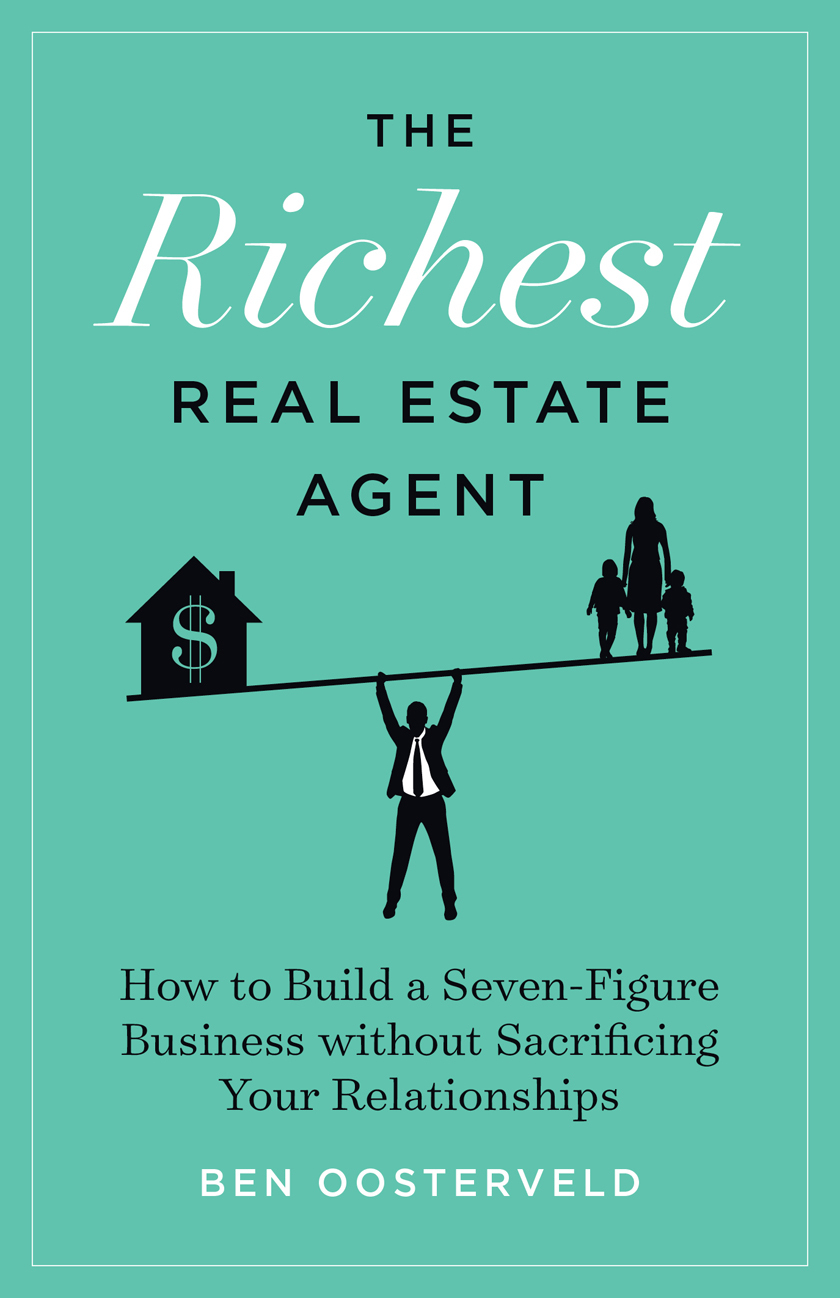
[0:00:34] FG: Everyone wants to be rich. Unfortunately, most people define wealth purely in financial terms. The result, they may have a lot of money but they don’t have time to do the things that fuel their soul. Ben Oosterveld wrote this book, The Richest Real Estate Agent, because he knows the cost of always chasing the next sale instead of building a real business. True wealth comes from getting very clear on what you want, developing a rock solid inner game and building powerful business systems that turn clients into lifelong raving fans. If you want to kill it as a real estate agent, without sacrificing what matters most to you, this is the book for you. You’ll find everything you need to know about the mindset and key systems it takes to build a real estate business that serves your most profound goals instead of stealing your energy and suffocating your relationships. This is the Author Hour Podcast, and I’m your host, Frank Garza. Today, I’m joined by Ben Oosterveld, author of a brand-new book, The Richest Real Estate Agent. Ben, welcome to the show.
[0:01:41] Ben Oosterveld: Thanks for having me, it’s a good day.
[0:01:44] FG: Yes, yes, it is. To start, I just love to hear a little bit about your background and how that led to you writing this book?
[0:01:52] Ben Oosterveld: Sure, first of all, being like dyslexic, ADD, it’s kind of a proud moment to be honest. It’s with the help of Scribe obviously, it’s just amazing how this has come together with the help and learning how to actually hire things out versus doing everything yourself actually gets stuff done. Yeah, it’s a very exciting. think just like anybody that has any kind of ambition, there’s a lot of people that have a desire to have a book and I’m one of them. The background is pretty crazy story. I was kind of a street kid back in the day, tough childhood. To be honest, I should be dead or in jail and you know, found my way through rehab and started building a life and it was really simple back then, I just wanted to be happy. I just wanted to be married, I wanted kids and it was literally, it’s such a small vision of what life would be like to be normal and things changed when I started making money and becoming successful and then you start putting the pressure on yourself to be a provider, crush it. You’ve got the entire world, entrepreneurship and in the real estate industry pushing you to make bigger goals, bigger goals and it just was never enough. So there was this book was written because I almost lost my whole marriage, my family, made millions of dollars in my life and it’s such a dichotomy to have a lot and look at losing what you love really got me to check in on what really matters but on top of that, being in real estate, being a coach and investor before I was even a real estate agent, I found that most agents are very much sales people. They’re not business people and so what happens is they just start selling their heart out, they got this big goals, they don’t know why they have their goals but they’re shooting for their rewards. A lot of lack of purpose and meaning behind their goals but they go for them and what happens is they sell, sell, sell but they don’t put systems in. They don’t actually get the business working for them and burnout shows up, divorce shows up, the rat race shows up and what happens is they keep on trying to get new clients but they forget to keep them and it’s simple, you know? Build out systems that actually keep your clients forever is a whole new way to think. It’s taking business coaching and injecting it into a real estate format because everything in real estate is sales driven. It’s like boiler room training every where and it’s a huge hole in the market where people could just keep their clients and live off of referrals, like 500 sales at a 10% referral rate is 50 sales a year. People would dream of those numbers but they need to start the business by keeping their clients as one of the major fundamentals versus trying to get more.
[0:04:23] FG: Right, how did you get your start in real estate?
[0:04:25] Ben Oosterveld: I was a real estate investor. I had 61 properties, I had staff, multiple cities and I went through the boom and I went through the bust. I learned some very good lessons, I had a lot of successes and I’ve had some good failures. I’ve been in real estate for many, many years and then I became a coach. I helped a lot of sales in marketing, training, personal growth, I was just this mixture of trying to find myself as a coach and before coaching was a thing, I was coaching. I worked with corporate companies, national companies and I ended up working with some real estate agents and I realized, like I said, I never want to be an agent, that’s brutal. It’s a brutal thing to do and it’s these people are just brutal. I was investor and ultimately started working with agents and I showed them a different way, a new perspective, how to play the long game from day one, how to work on personal growth, mindset and emotional intelligence mixed with business models and we started seeing massive success with this combination of mindset and business systems and it’s been 10 years later, I became an agent. I actually became an agent to prove my system, became rookie of the year, made 1.1 million my first two years. Built a real estate team, top team in all of Western Canada and I ended up selling the team and went back to coaching and that’s where I’m at today and we are full speed ahead, helping real estate agents changing the industry, get them to think differently, look at the long game and the personal growth, the mindset stuff.
[0:05:47] FG: As you were writing this book, who is the target audience you had in mind for it?
[0:05:52] Ben Oosterveld: You know what? In some way, when we were writing this book, we came up with a few different targets and I know that Marketing 101 is to have one single target but it does fit any real estate agent, but the thing is, the real target is someone that’s made a bit of money, they’re getting really busy, they’re stuck in the rat race, they might be losing a client here and there because they don’t have follow-up systems but they actually deeply care about building a life they love. They care deeply for their family, maybe their wife, husband, girlfriend, boyfriend, they found some money, they don’t want to lose what matters to them. They want to build a real business and so, this is an agent that has some depth but they’re also very ambitious. They want to build something, they want to make a lot of money but they want to do it the right way, so that’s who we’re targeting. So either you start out, you could start with us and do it right or if you’re busy, you can fix that and get your business scaled, get some help, outsource all the crap you don’t like and start getting really focused on building the life you love or if you’re with – dealt with a lot of million dollar agents that think that growth is their next step but the only step for them is to get extremely clear in what they want and start redesigning their business to serve what they want in life versus the next big goal.
[0:07:02] FG: Chapter one is called ‘The seven-figured mindset’ and I want to read you a quote from that chapter, “If you take just one lesson from this book, let it be this: Mindset is everything.” So tell me why mindset is everything?
[0:07:21] Ben Oosterveld: Sure. First of all, I don’t like the word but it’s a very well-known word, I think it’s a little deeper than mindset but it’s the word of the day. It’s kind of a mixture of mindset and emotional intelligence to be honest. How we see the business, how we think about the business, how we see ourselves and how we see the business, every single thing has to come to that filter. I’ll give one basic, okay? A lot of people think they’re procrastinators, okay? They start believing their procrastinators and they start buying books on how to get more organized and how to be more efficient, the five AM, get up at five AM or meditate three times a day or whatever these things are, they look at this external solution because the mindset is that they decided they’re procrastinators. When we start looking at challenging the mindset, this is where everything changes because you change the filter and for example, I don’t believe any real estate agent is a procrastinator. What I’d like to do is switch the perspective and help them understand that they’re just are too busy because a lot of times, as real estate agents, they remind me of a guy that would buy a restaurant and they would try to do everything themselves. Cooking, cleaning, serving, we’d all laugh at that person and think, “You’re crazy” and it’s like that person comes up and goes, “I’m such a procrastinator” and I’m looking at them with a different mindset as I didn’t want to introduce them a new mindset saying, “No, you’re doing five jobs and you're also doing jobs that drain your energy the most and you need to learn how to outsource those jobs.” With the right mindset, they can solve the actual problem. With a mindset that’s not there, that they’re not connected to a reality of what’s happening, they solve the wrong problem and they keep on that rat race. Does that make any sense?
[0:08:56] FG: Yeah, it does and I enjoyed reading about some of the common limiting beliefs that you see holding people back. Can you tell me about what are some of the limiting beliefs that you’ve had to overcome yourself?
[0:09:10] Ben Oosterveld: You know what? How about this, instead of making it about me, let’s think about the audience listening and I think one of the biggest ones is perfectionism, okay? The problem is, what happens is perfectionism equals slow, equals second guessing, equals hesitation, risk averse so they never actually win big, they’re medium. What they put out is really good but the problem is perfectionism is not the problem, it’s the fear of being judged. See, they have this nice pretty thing, all perfectionist thinks it’s almost like a drunk that says, “Oh yeah, I like a bit of wine.” The reality is, it’s not the problem, the wine – It’s like perfectionism is not the actual, it’s a nice way to say that I’m scared. We need to tear that down and one of the limiting beliefs of perfectionism means, “People are going to laugh at me, I’m going to fail in front of people” and if we can’t figure out that, that’s the real breakthrough. If we can get to the place where we can actually fail in front of someone, we’re going to win the game because I will fail a million times. “Frank, you laugh at me, I don’t care, I’ll see you at the end of the game.” It’s a different mindset and so, when we get over the fact that we’re scared of what people think, that’s really what perfectionism is and we need to take the chance and start retraining our brain because our brain is going to tell us the historical data that says, “Yeah, when you do this, people laugh” and your brain is going to try to keep you safe and say, “Okay, well, don’t do that, it’s safer.” But what you need to do is listen to your soul, listen to your gut and say, “Okay, here’s the deal, I’m going to take another chance” and then when you actually win, after you have a few failures, you realize, perfectionism is actually the enemy. It actually slows you down, it slows you down from what you want but here’s the problem, if you have perfectionism, you need motivation to be able to go to the transition to get out of that fear. The problem with what most people have is they’re not motivated enough and here’s why. They don’t know how to set their compass and the compass needs to be set to something extremely meaningful. If you think about – let’s think about motivation for just a second because, if you’re motivated, let’s just think about a mother who sees their kid who is about to get hit by a train, like what a terrible example but how motivated would that mom be? Let’s imagine the mom has a broken leg sitting in a wheelchair, they see that she would get up and hobble. She would move as fast as she could no matter what, you know why? Her goal has purpose, has meaning. The problem is when you have a financial goal and it is a number, there is no purpose, there is no meaning behind it. You need to know what that money is meant for then you’ve got motivation. So now, you need to have that if you are going to get over your perfectionism or over your performance mentality, over your control tendencies, you need to have purpose and meaning in that goal or you just won’t have the power, the motivation, you will never get through it. So it is a combination of breaking through but I broke through a lot of things in my life, right? Lots of things, I’ve been held back so much and I’m still looking at things in my life I am working on.
[0:11:50] FG: Yeah, so speaking of setting your compass, that was the next chapter and one of the things that really caught my eye in there was this exercise called ‘Five happiest days of your life.’ Can you tell me about how you use that exercise?
[0:12:04] Ben Oosterveld: Sure. Yeah, it goes along with a bunch of other questions that we ask when we actually have someone come into our programs. It is one of the big things we can’t go to anyone until we figure out what they want. If they say they want 50 sales, I am going to say, “Well, what are you going to spend the money on?” and that’s when their faces looks dumb, like, “I don’t know but I want 50 because I did 40 last year.” It’s like there is no meaning in it and so we ask people to align their personal goals with their financial goals and it is really fascinating to see that their financial goals are way bigger than what they need and so what we want to do is actually get defined at what does it make you happy. People have a very big struggle with the five happiest days of their life, it is very interesting or they feel they should put certain things on there. There is a lot of process, so how we use it is by seeing what makes them tick and I will tell you right now, it is never money. It is never money on it. What it is, is always an accomplishment like if they overcame something that was bigger than themselves that is when they’re happy. When they have connection with someone deep that they love that is when they’re happy. It is really, really simple and I have done thousands of these things and it is always the same. It is really letting the person see what really matters to them and then they put their business and professional goals beside that and they realize they are out of alignment and that their professional goals are not catering to being happy and to being fulfilled and it just brings so much awareness and it is kind of a lot of “aha moments” around this.
[0:13:28] FG: Yeah, another part of the early part of your book that I really enjoyed was your discussion on energy levels. I am going to quote a section for the intro of your book, “Your skill level, experience and training matter less than your energy levels.” So can you talk about why energy levels are so important?
[0:13:49] Ben Oosterveld: Sure, yeah. It’s super practical really like we can get into some real woo-woo energy talk but the reality is, I am a huge Edmonton Oilers fan. It is an NHL hockey team out of Edmonton, Alberta and they have the best player in the world right now and his name is Connor McDavid and he is like the new Wayne Gretzky. For anyone that knows Wayne Gretzky, he’s like the new guy and he is just crushing. He is better than anyone we have ever seen, the skill level of commitment and the dedication that he’s put in is just so incredible. If you would see the top, top, top of the world right there, that’s the guy but let’s imagine they didn’t sleep for three days. He went on a real good bender and he had to show up and play. He’s at 50% energy, maybe 40% energy, maybe he’s even got a bit of the flu. He is out there, how good is his skill level? How good is his experience? How good is his expertise? It completely takes him out. He misses his timing, he takes a shot, it is not as hard, it is not as accurate. It doesn’t matter the skills that we have if we don’t have the energy and so when it comes to the course in the book that I teach, what it is, is what we need is to locate your energy leaks. So some very practical ones is your thinking. Most of your energy is leaked out of thinking, which we love to challenge. That is where the mindset is massive. If you have the wrong mindset, you will be leaking energy. You will never win the game no matter how good you are and then the other thing is, people in your life is another check in, who is in your life. A lot of times we are doing jobs in our business that literally drain us. Let’s just even the basics, if you are an extroverted person, the psychology is that when you’re talking you are gaining energy, okay? Very basics on extrovert, you gain your energy from talking. Introverts lose energy from talking, so very basic. If you look at extroverts and they are sitting there doing bookkeeping or they are doing paperwork, this is, “Why are you doing this?” you drain energy. You’re slower, it costs you a fortune when you could literally be going to talk to someone about making money or having a date night with your family. It is just the very basics on energy, you got to be able to do what you are built for, so there is a whole kind of summary around it.
[0:15:56] FG: Okay, you have a chapter on how to hire and you go through this step-by-step process for making a project hire and one of the ones that really caught my eye was number 11, re-interview after two weeks. Why do you do that?
[0:16:13] Ben Oosterveld: The concept is you don’t know who these people are, they could be a good interview and it is all about setting expectations. When you hire anybody, you want to have a sense that you are safe, okay? When I interview someone and I invite them into my company, I literally just hired a new executive assistant, started three days ago and I said after two weeks, “I’d like to re-interview you but here’s the deal, it is not me just interviewing you, I want you to interview me” and she kind of says, “Oh, I like that. That is awesome.” What that means is that I am willing to let her reject me, I am willing to let her not be happy with me but we created just a basic relationship skill that most people don’t have, which is an honest conversation and so we create a moment. To be honest, most likely I can fire them before that but two weeks is just a really great place to establish that, “Yeah, you are who you say you are and you’re actually great but there is a couple of things you can look at here, here and here” and that person can give me feedback so I can be a better boss and a better leader.
[0:17:08] FG: Yeah, I like that. Okay, chapter six, ‘Keep your clients for life.’ You have several different ideas and processes people can use for this. Do you want to pick one and share that?
[0:17:23] Ben Oosterveld: I think the concept is really important. Let me just say this, if you have a client, right? You land the client, when you are dealing with the client you are so engaged, you are doing your best. First of all, you win them over because now you are getting paid, you do the job, you deliver on your service, your real estate and they buy the house or they sell the house and then after that, you don’t have to do anything. This is the problem and no one is teaching this. What do you after? So here’s the thing, when you keep your clients for life, the very, very first thing before you get into the actual system, you have to establish an emotional connection. During the process, you have to establish emotional connection. Now, obviously this show is not the whole place where you can dig through that but that is a huge portion of the coaching in the book and to understand how to actually emotionally connect with someone. If you don’t do that, no matter what you do after the sale it’s going to just feel like a basic like, “My insurance broker is sending me a note or just keeping me up to speed” we need to remind them of the emotional connection we have. One of the biggest ones we like to teach is and in the book, I think I shared it as ‘The Birthday System.’ What happens is like when I had my real estate company, I would have every single person have a dozen cookies on their doorstep on their birthday. What happened was every single year for the rest of their life they would celebrate their birthday and the reason why is because if we were to understand emotional connection, we celebrate something that meant so much to them from the ages of one to 16 and if you think about it, there is a party. You were treated like a queen or a king, they bring bearing gifts, they sing songs to you, they light candles, you blow it up, they cheer for you. They give you gifts and then at 17, usually there is nothing, 18 nothing, 19, nothing. We have a massive and nostalgic opportunity to make a major connection because you know what? If you can celebrate the birthdays year after year and this can be fully automated, which is really exciting because it is fully automated. Cookies, you can do this once a month, you could go to a cookie company or a peanut brittle or whatever it is but you celebrate their birthdays and have an automatic system. What happens is every year, you’re in that limited edition of grandma, mom and dad, friend, that’s about who celebrates your birthday and real estate agent. You’re inside that world and so the trick is, we have a full step-by-step system that we run, how to remind them of the nostalgic connection, how to remind them that you had an emotional connection, the key is to never ever, ever lose their clients for life. If we can understand that there is five sales per person per 20 years and you have 500 clients, there’s a hell of a lot of money that’s being missed and lost in the after the sale. There is no after the sale systems. This is one of the biggest things we teach.
[0:20:04] FG: Well Ben, writing a book is such a feat, so congratulations on putting this out into the world. Before we wrap up, is there anything else about you or the book that you want to make sure our listeners know?
[0:20:15] Ben Oosterveld: You know what? I really believe that I am looking for my tribe one person at a time. There is going to be some people that’s not interested in the personal development, not interested that the inner game are changing from salesman to an actual business owner with real systems like some people might not be understood. I really don’t care, those are my peeps. I am looking for my people and that is a commitment for the rest of my life. I think there is a way to utilize this book to bring a generational shift and to leave a legacy in people’s lives because once we shift the mindset, we can then shift the beliefs of themselves, the relationship with who they are, the relationship with their family, the relationship with their clients and what happens is I am going to leave a mark on the world in the real estate industry, which is typically an ego-based sales driven industry, which I almost didn’t write this book because of that reason. But then one day, I just realized that I need to write this book. Who is talking about this stuff? There is a way to be extremely wealthy, very, very rich bank account but you can also have a very rich life. Rich like a chocolate cake and it is not just rich like a number on a bank statement. This is what I am trying to change, I am on a mission looking for people to help me spread the word and it’s a hell of a lot more than real estate but the backdoor to success is through the personal side. It always is.
[0:21:20] FG: Ben, this has been such a pleasure. The book is called, The Richest Real Estate Agent. Besides checking out the book, where can people find you?
[0:21:27] Ben Oosterveld: benoosterveld.com. It is going to be probably the easiest way for people to connect with me. If you want to look at my real estate training, go to the realestaterebootcamp.com. Yeah, take a look at that and they can take a look at coaching but ultimately, benoosterveld.com will be the great place to go.
[0:21:46] FG: Thank you Ben.
[0:21:47] Ben Oosterveld: Yeah, thank you.
[0:21:50] FG: Thanks for joining us for this episode of Author Hour. You can find, The Richest Real Estate Agent, on Amazon. A transcript of this episode as well as all of our previous episodes is available at authorhour.co. For more Author Hour, subscribe to this podcast on your favorite subscription service. Thanks for joining us, we’ll see you next time, same place, different author.
Want to Write Your Own Book?
Scribe has helped over 2,000 authors turn their expertise into published books.
Schedule a Free Consult