Greg Nutter: Episode 917
Read the full transcript
Greg Nutter
Greg Nutter is the founder of Soloquent, Inc., helping business owners and senior sales executives solve revenue growth problems through direct, indirect, and multi-channel sales models. With over thirty-five years of experience, Greg has worked with a wide range of companies to develop strategies, programs, processes, and tools to grow revenues, enter new markets, increase sales consistency, maximize selling investments, and develop skilled sales, channel, and management personnel. In addition, Greg has offered his expertise on a wide range of sales performance topics through hundreds of executive briefings, workshops, and keynote speeches throughout North America, South America, Asia Pacific, and Europe. Learn more at
📚 Books by Greg Nutter
Transcript
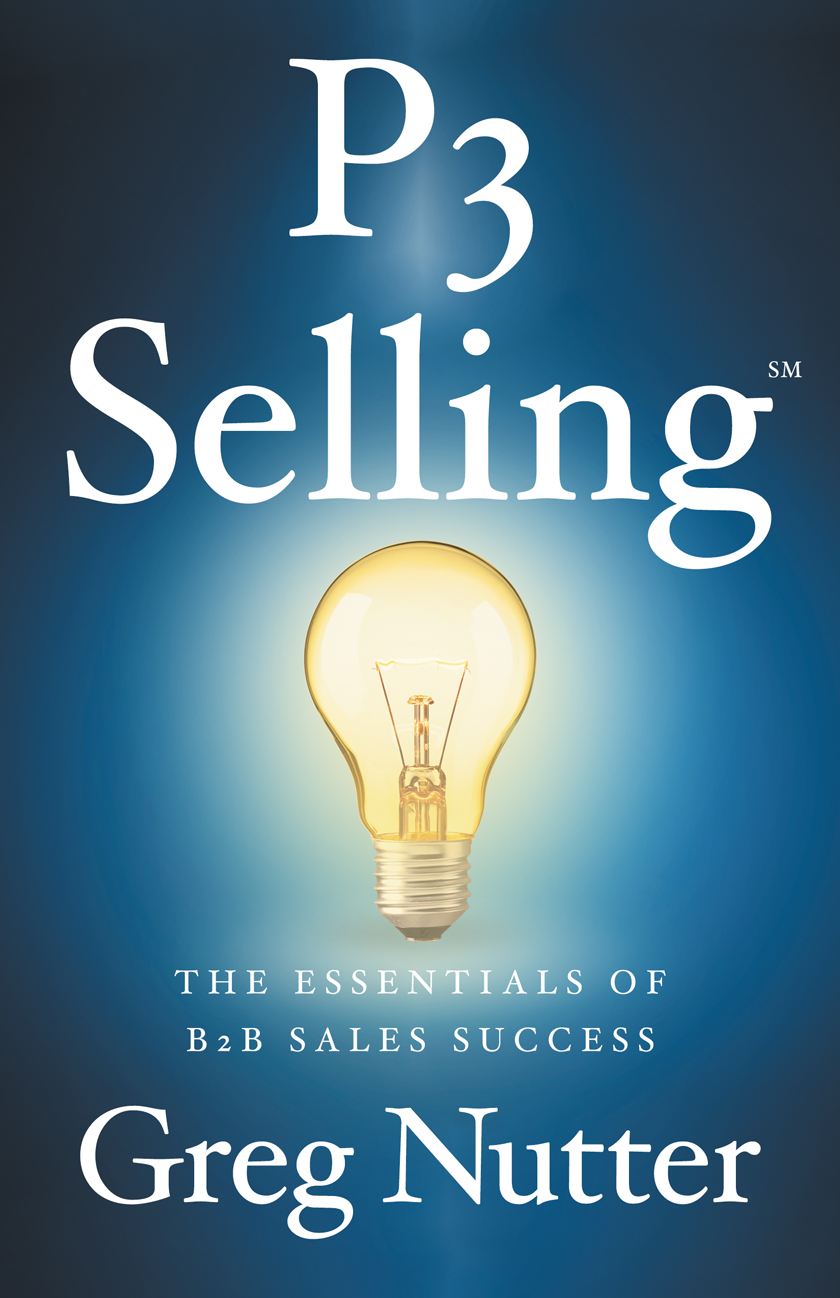
[0:00:50] BB: P3 selling is an easy-to-follow framework that explains what you need to do and why you need to do it to achieve consistent B2B sales success. Navigate today’s complex B2B environment with confidence as you win more deals, receive more referrals, make more money and advance your way up the corporate ladder. Stop hoping for lucky breaks and take control of your sales results, develop a deep understanding of the three most critical predictors of B2B sales success without the jargon and complexity of other sales training programs. Then, learn how to apply them through non-manipulative techniques that work, closing more deals without sacrificing your integrity. With specific activities at the end of each chapter to help you tailor these strategies and techniques to your own unique situation, P3 Selling is the must have resource you’ll turn to again and again. Helping you overcome every B2B sales challenge. Here’s my conversation with Greg Nutter. Welcome into The Author Hour Podcast. I’m your host Benji Block and today, honored to be joined by Greg Nutter, who has just authored a new book titled P3 Selling: The Essentials of B2B Sales Success. Greg, thank you for jumping on today and chatting with us on Author Hour.
[0:02:13] Greg Nutter: Thanks Benji, looking forward to it.
[0:02:15] BB: Greg, you have spent 30 plus years as a sales person, a trainer, a leader, a consultant and a coach. Give us some of the high-level highlights that then end up culminating in the working on this project and writing this book?
[0:02:29] Greg Nutter: Sure, thanks Benji. Over my years in sales, sales management and as you mentioned, consulting, I had an opportunity to work for a lot of sellers, a lot of sales managers, a lot of owners of companies. When I worked with them, I found very similar problems on their knowledge of selling, on their ability to consistently sell well. Even people who had been in sales 10, 15 years, I found them still making the same kinds of mistakes. I was motivated to take everything out of my head that I’d learned over the past 30 years and put it into one concise book that people could use as a reference to try and improve their skills.
[0:03:14] BB: So, for you, when you're working on this and you’re drawing on your experience, is there someone in your head that’s like the ideal reader, the person you want to pick it up or is it just sales team members in general? Who are you gearing this towards?
[0:03:29] Greg Nutter: Good question. There’s only three audiences. The first one, which is where I started when I began putting the book together is the person who is right out of school, eager to learn how to sell, picked up by a small to mid-sized company, given a list of people to call and told to make their numbers and a lot of the people in the small, mid-sized business they get no sales training and they learn over years and sometimes decades, some figure it out and some don’t. So that was my primary audience but I’ve done a lot of training over the last few years very senior people and I noticed that they seem to have forgotten in some ways the fundamentals. So I thought, it was also been written as a reference for them that they can pick up and say, “Hey, I’m having trouble, I’m in a slump, I need some new ideas to get going again” and the third audience which I came to near the end of writing the book is really sales leadership, sales managers. There’s a lot of great sales managers out there who really care about their people and are trying to do the best they can but most of them were excellers and so, they were great at selling and now, managing a team is so much different.
[0:04:44] BB: Right.
[0:04:45] Greg Nutter: They don’t necessarily have the process and the framework to do that, so the book provides a framework for those leaders to train their team, to coach their team, to manage their team.
[0:04:55] BB: Great for all sorts of different audiences. I like that you’ve really focused in on those three and that comes out in the way that you write this book. One thing I really appreciated is this is right to the point in the best way where it’s long enough that it was perfect for a book but also short enough to where, like you mentioned, people can go back, they can reference it, when they’re feeling like they’re in some sort of slump, they can refer to it. So diving into some of the content here, specifically, let’s define in B2B, in business to business which is the audience for this, how do you see it being different from other selling scenarios?
[0:05:38] Greg Nutter: Most of us are exposed to what we called B2C selling, selling to consumers, retail sales. That’s what we do and come across almost every day of our life, buying a car, buying a house, buying groceries and so we naturally think that what works in that environment works when we’re selling professionally, the businesses. As I mentioned a lot of people come out of school, get very little training, get tossed in and they try to apply that. I call it the clerking two step, we give information and then we ask for the order and if somebody says no, we give some more information and we add to the order, right? That works great when you’re buying a car or when you’re in a very simple selling situation. But in B2B sales, which has got a lot of complexity around it, businesses today are very risk averse, that’s why there’s a lot more people involved in the sale and so we call it the complex sale and it’s complex for two reasons. One dimension is, there’s a lot more people and steps involved in the buying process and the linkage between a product’s feature and a customer’s benefit is not as obvious. It’s not just giving information and hoping that somebody goes, “Ah, yeah, that what I want.” It’s more understanding what their needs are and then making that linkage or helping them make that linkage.
[0:07:08] BB: I loved when in the problem sections specifically, I’ll quote you here, you said, “The more problems you can find, the better chance you have of influencing the need for change” but there is also this element of you don’t just want to point out all the problems because your solution doesn’t solve all the problems, right? You’ve got to find the right problems. So, what are some of the questions or the strategy there to lean in and to stay focused on the problems that you really help solve?
[0:07:35] Greg Nutter: The way to do that right, I mean, we’re all really good at asking questions. The problem is that we don’t always have the right hand, right types of questions. To do it well requires some planning and what you may have noticed at the end of each chapter, there’s a section what we call make it your own. Where you take the concepts and you think through, “How am I going to use this whether I’m selling hazardous waste management” or a product life cycle management solution or something as simple as canisters of oil or something like that but how do I ask good questions that would resonate with my audience and so, you have to sit down and say, “Start with what problems do I solve?” “What kinds of situations might there be where someone would have those problems?” and then I start there by asking fact questions and then leading to problem questions and then leading the questions around importance. The one I always like to think in the back of my head is, “So what?” right? If somebody says, “Yeah, you know what? The fact that our price or cost for this is rising, that’s a big deal” right? How big a deal is it? So what? What if they keep rising? If somebody says, “You know what? Actually, we don’t care we can live with it” then it’s not worth focusing on. So it's going back and understanding the problems you solve, looking for situations where those problems might exist, probing, and then trying to understand a customer’s perceptions of those problems on whether they’re serious enough for them to take action.
[0:09:20] BB: One thing I think is worth focusing on for a minute here because we’ve brought it up multiple times already and you had mentioned potentially 10 people, right? In the buying process, one of our P is people and so, with that number of people involved in the buying process, we have to work to determine, right? Who actually holds or maybe influence, right? They’re all involved who holds the most, who holds the weight, how do I allocate my time because even if I can identify problems but maybe I’m only – you have to figure out how you’re going to navigate who you’re talking to. I wonder, how you place weight and priority. You give some really helpful ways of doing that and sorting out who is most important in essentially in the process in the book. Could you speak to that a bit?
[0:10:09] Greg Nutter: Yeah, we call that decision influence. So, some people are going to have more influence than others and there’s really two factors that in my experience drive that level of influence. One of them is authority and there’s even two kinds of authority, there’s the authority that is granted you by the company, maybe you’ve got a fancy title or maybe you’ve got and told you’re responsible for making these kinds of decisions. So organizational authority and that’s one aspect but we all know that when we’re selling, we often come across people who don’t have fancy titles, who don’t have senior positions, who actually carry a lot of sway and we call that charismatic authority. So being able to influence people and decisions beyond what your role or authority within the organization would imply. We look at that level of authority that you have with regard to decision influence. The second factor is motivation or drive.
[0:11:17] BB: Okay.
[0:11:18] Greg Nutter: How important is this decision to you? For a lot of people, it’s like, “Ah, my people take care of it. I don’t care.” Other people, “Hey, I am going to do everything possible to get my way on this decision.” So decision influence is these two dimensions of how much authority do you have and how much drive do you have and those two things come together to define how much impact or how likely you are to impact the outcome of that buy decision.
[0:11:49] BB: So I spent a little bit of time in sales not enough to speak intensely to this but you hit on something that I know I was guilty of in my time and I wanted to bring it up here. You say that it’s easy to think that all we have to do is kind of ask our contact to explain the buying process and then we just kind of follow along and especially in a buying committee sense, right? There’s all sorts of complexity there but you say actually not quite that there are two different buying processes that require selling. There is a buying decision process that each individual goes through as well as one for the company and that there’s separate processes but they are interconnected. Explain that to me.
[0:12:34] Greg Nutter: Yeah, so everybody goes through their own decision process, whether it’s to buy something, to go out on a vacation. We go through standard four or five steps every time and this process has been studied by a lot of psychologists, there is a lot of different aspects of it that we’ve learned over the years and it is important to realize that everybody goes through their own decision process separately. So if you’ve got people with high levels of decision influence and they are a part of the buying process, you need to constantly understand where they are. Are they in the early stages, are they in the late stages and depending on where they are, your activities will be different. You know a common mistake is we’re trying to close somebody when they haven’t even decided that the problem is severe enough to take action, right? So we should be doing something else once we recognize where they are and what I try and drive home to several points in the book is that a buyer’s stage in the buying process is defined by what they are doing and thinking not by what the seller is doing or thinking and the common disconnect is, “Well, I have given a proposal so they should be in and ready to buy” when that is not always the case. The second decision process is the corporate decision process, right? Which has rules and steps and subject matter experts that get involved and there is actually two streams in that. One we call the consensus stream where we’re trying to get a lot of people together to get critical mass that yep, this is something that we need to do and then there is a compliance stream, which is there to keep the company out of trouble. So, what are the legal terms look like? What is the financial return on investment look like? What is the risk associated with this? What is the impact for our organization? Those two streams on a corporate decision process moves largely by that compliance team but it’s driven by the people who have the problem as they go through their own decision process, individual process, so they are intertwined but they need to be sold to separately.
[0:14:55] BB: So intertwined in that you would and this is maybe more of a tactical question but you are going after getting consensus around the problem that you solved first and then compliance essentially will potentially flow from that, right?
[0:15:11] Greg Nutter: Yeah, once you get enough people individually who say, “Yes, this is a problem we must fix” that normally kicks off the compliance stream where people say, “Okay, let’s define the scope of the problem. Let’s define the impact to the organization. Let’s define how are we going to gather information, what decision criteria we’re going to use, how are we going to compare various vendors or options.” So they make sure that those steps are in place to keep the company out of trouble, yeah.
[0:15:47] BB: That’s good and I think I love the fact that this book again goes back to a very practical and ways of applying it to our specific situation because while B2B is different from B2C and so if all of our B2B listeners are going to have the similarities, we are also in very unique situations as well. So we want to address our specific situation and make this all our own thing. It is one thing to kind of internalize the three P’s, it’s another to see consistent sale success and to you, that desired outcome is found in doing our best to kind of control three factors, right? The three factors being skills, activity, and process. I wonder for all of our friends in sales listening to this, what do we need to do to put our effort behind or what do we need to do or put our effort behind to see this kind of go from a knowledge and like a book that I read to actual selling success?
[0:16:47] Greg Nutter: There is two parts to that. One is to be consistently successful in sales, sellers need to follow a process of their own. Then there are a number of different process that are foundational. A lot of organizations create playbooks, which are really a set of processes of how we’re going to prospect, how we’re going to manage deals, how are we going to track things in our CRM system and so those processes are critical. They are kind of a road map, so you know, you get in a car, you’ve gassed up your car, you’ve got the skills to drive that car but if you don’t have a road map to keep you on the right road at the right time, you’re going to have a trouble finding your destination. So we produce one of the second to the last chapters is called The Playbook, the P3 selling playbook, where we talk about four fundamental processes. Which is prospecting, call management, opportunity management, and pipeline management and by religiously following the best practices in those four areas, sellers have a much higher chance of being consistently successful. I’ve seen a lot of very, very talented sales people who have the skills. I’ve had seen some people who have moderate skills but work really hard, very high activity levels but without that consistency of process that holds those two things together, they often go through periods of revenue draught.
[0:18:24] BB: Okay, so I want to talk about consistent process here as then we start to wrap up but if you’re talking to an audience of let’s say small to medium size B2B sellers and they’re in that space that we talked about right off the top where maybe they have seen some sale success but ultimately it’s not put into a consistent process, what’s the first step you would have them take? What do we need to get in order to start to see more consistency in our selling?
[0:18:56] Greg Nutter: The foundation of the P3 selling method and I would say almost any kind of solution selling in a B2B environment today is being an expert on the problems that you solve. Knowing those better than your customer, better than your competition. If you always come from the standpoint of looking for problems that you know you can solve, you are viewed by your prospect or potential customer very differently. Instead of a product seller who’s, “Hey, I’ve got some product. Would you be interested in buying it?” it is, “Hey, I solve problems. If you have any of these, it would be great to work with you to help find them and address them.” It just changes the dynamic. I like to say, instead of arm wrestling across the table over a product decision, you are on the same side of the table collaborating on a problem solving situation.
[0:19:55] BB: Always better to be a guide, right?
[0:19:57] Greg Nutter: Yeah and that brings you to the second one is that not only do you need to be an expert on the problems that you solve but you want to be an expert on the buying process for your kinds of solutions, which to your comment Benji is the guide to how to companies make good buying decisions for products and services such as mine. Who are the people that are typically involved? What criteria do they use to get the best results? What are the steps they go through? What information do they look at? So being able to guide a prospect on how can they make the best possible decision and a lot of sellers won’t like me when I say this but even if it’s not yours, right?
[0:20:45] BB: Right.
[0:20:46] Greg Nutter: At this time, just establishes so much more credibility as a consultant rather than a product seller.
[0:20:55] BB: It leaves a door open as well versus…
[0:20:58] Greg Nutter: Absolutely.
[0:20:59] BB: Yeah, that’s great. Well Greg, I’m excited for those in B2B sales to pick up this book and to not just read it once but reference it when they’re in a bit of a need for a refresher and something that they can consistently go back to. For those that want to stay connected to you and they want to stay connected to your work beyond just the book, where can people do that?
[0:21:24] Greg Nutter: There is a website, p3selling.com and if you go up there, you can download some free tools, tools that are reference in the book, some little posters, you can sign up to get updates on the program. So p3selling.com is a great resource.
[0:21:44] BB: Awesome. Again, the book is called, P3 Selling: The Essentials of B2B Sales Success. It is on Amazon and we encourage all of our listeners to go pick up the book and I believe it will be a great resource for so many. Greg Nutter, thank you for stopping by Author Hour today.
[0:22:01] Greg Nutter: Thanks very much.
[0:22:03] BB: Thanks for joining us for this episode of Author Hour. You can find, P3 Selling: The Essentials of B2B Sales Success, on Amazon. A transcript of this episode as well as all of our previous episodes is available right now at authorhour.co. For more Author Hour, follow the show on your favorite podcasting platform. Thanks for joining us, we’ll see you next time. Same place, different author.
Want to Write Your Own Book?
Scribe has helped over 2,000 authors turn their expertise into published books.
Schedule a Free Consult