Philip Dur: Between Land and Sea: A Cold Warrior's Log
Read the full transcript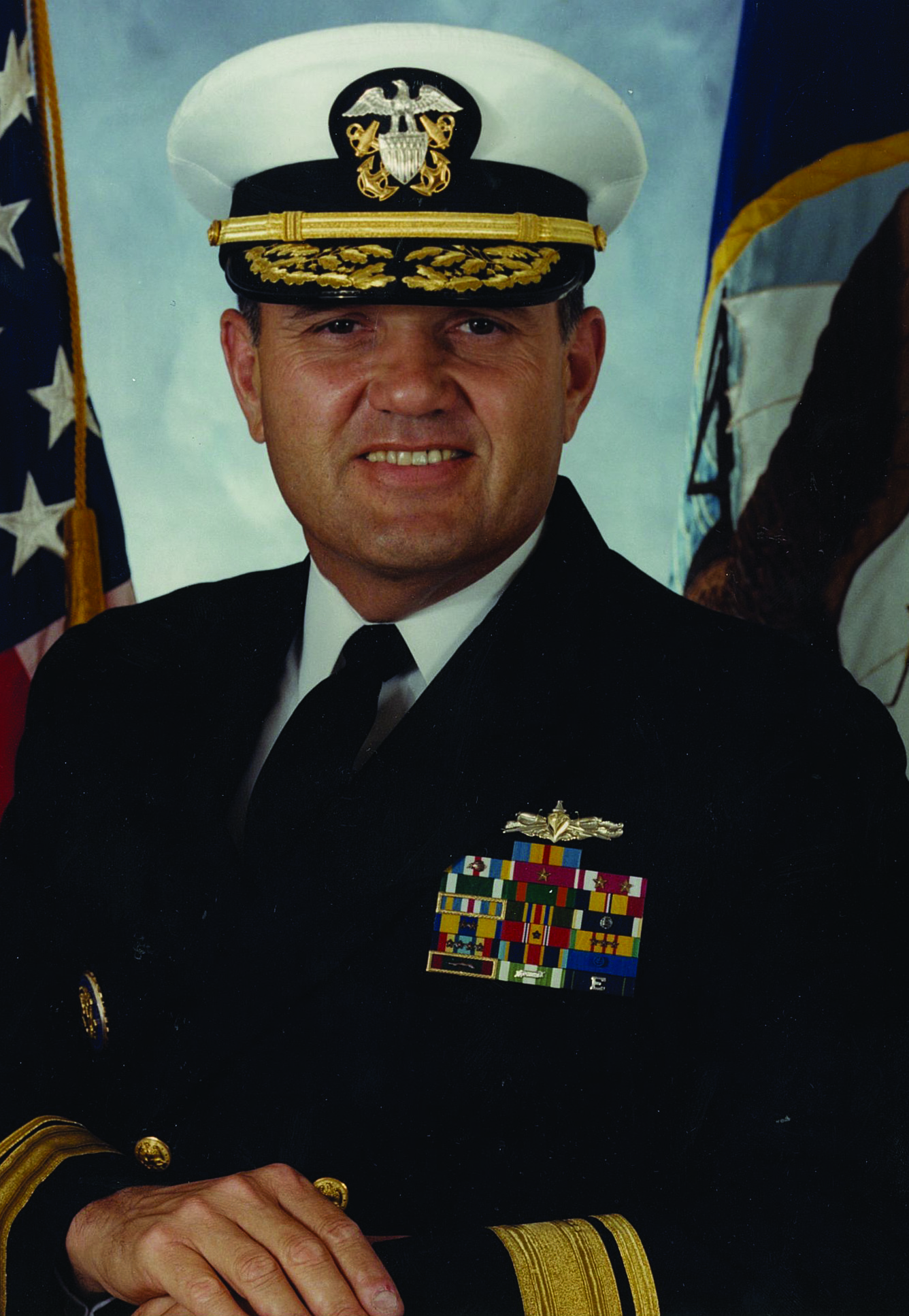
Philip Dur
Admiral Philip Dur was born to a diplomat and spent most of his early years abroad. He was educated in the US, earning a BA and MA in international studies from Notre Dame and a PhD in political economy and government from Harvard.
He has been awarded the Defense Distinguished Service Medal, the Navy Distinguished Service Medal, the Defense Superior Service Medal (oak leaf cluster), the Legion of Merit (two gold stars), the Meritorious Service Medal (two gold stars), the Navy Commendation and Navy Achievement medals, and the Navy-Marine Corps Combat Action Ribbon—and was made a member of the French Ordre National du Merite in the grade of Commandeur.
📚 Books by Philip Dur
Transcript
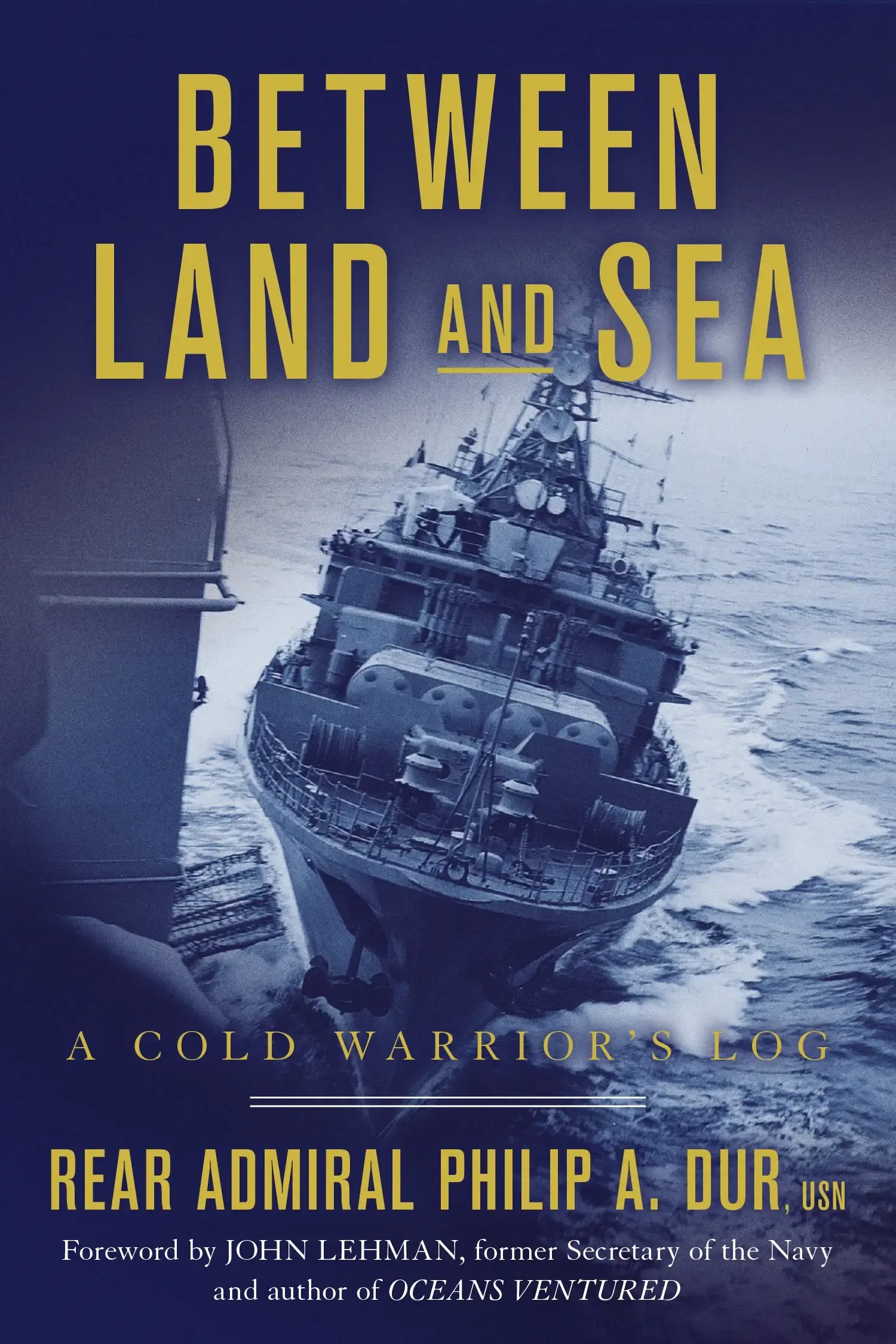
[0:00:50] DA: Career advancement for naval officers is generally considered to lie in progressively more demanding assignments in ships and staffs while at sea and those supporting the fleet when ashore. But, in fact, beyond these core career assignments, there are abundant opportunities in strategic and national security policy making and even diplomacy and foreign affairs. In his new book, Between Land and Sea, Rear Admiral Philip Dur, reflects on his vast experience and challenges commanding ships and a carrier battle group as well as his strategy and policy assignments in his 30 years in the US Navy, where he eventually found himself advising and briefing President Ronald Reagan on critical events in the Middle East. With pointed insights on the complex challenges that lie ahead for the United States, the book reflects on the past but also acts as a warning that learnings from those years should not be forgotten as there will always remain continuous threats from abroad. Hey Listeners. My name is Drew Applebaum and I’m excited to be here today with Rear Admiral Philip Dur, author of Between Land and Sea: A Cold Warrior’s Log. Admiral, thank you for joining, welcome to The Author Hour Podcast.
[0:02:16] Philip Dur: It’s my pleasure to be here with you.
[0:02:18] DA: Will you help us kickoff the podcast and can you give us a brief rundown of your professional background?
[0:02:25] Philip Dur: Yeah. The book is basically about my naval career and some of the formation to that career before I was actually commissioned in Anson in 1965. But the book basically is organized into chapters, each of which, details one of my assignments in the course of a 30-year naval career during the cold war. Beginning with my first assignment afloat in the USS Little Rock and ending with my tour of duty as the assistant deputy chief of naval operations for plans, policy and operations.
[0:03:03] DA: Now, why was now the time to share your story? Was there something inspiring out there for you, did you have an "aha moment" or just feel like you really needed to write this down?
[0:03:14] Philip Dur: Well, I think for a long time now, since perhaps 1992 or thereabouts, the assumption has been that the cold war is over and that the challenges that we confront as a nation in protecting our vital interests, were not in the form of a peer competitor, that is to say, another great power. I think what became obvious to me in the last three or four years is that the emergence of China and the re-emergence of Russia as challengers to our national security, suggested to me that it might be of interest to people to visit or revisit the 30-year cold war that preceded the moment we’re in and I think Russia’s invasion of the Ukraine underlines the importance to understanding what drove us to behave the way we did during the cold war and it might even resurrect some ideas about how to conduct ourselves in the future.
[0:04:14] DA: Yeah, absolutely. Now clearly, this is a reflection of your life and your career but when you went to put pen to paper and when you started writing your story, did you have any sort of major breakthroughs or learnings, just by maybe reevaluating some situations or by doing some further research around the scenarios and situations you were in?
[0:04:38] Philip Dur: I did. I think I had in the course of my career, collected a lot of notes as I went along. I was a religious note taker. In order to really reconstruct my career as I experienced it, I found myself having to dig through those notes and in certain cases, to refer to other sources that would refresh my memory if you will on the context that I was writing about.
[0:05:06] DA: Right.
[0:05:07] Philip Dur: Yeah, no, I think the research came as I worked on it and it took me almost three years to recollect all of these details that comprise a 30-year military career.
[0:05:20] DA: Now, there’s also a lot of photos in the book and some really incredible ones. How did you go about scouring those photos and were some of those in your own collection or did you have to find them elsewhere?
[0:05:30] Philip Dur: Some of them I took myself, others, I acquired in the course of my career, things that documented events, places that we were. You know, in all the cases, their photographs are by no means privileged or proprietary or classified, they’re generally in the public domain but I collected the ones that were pertinent to the story I was telling.
[0:05:57] DA: Now, I want to start digging into the book and we’ll start as the book starts from the beginning of your life. So, talk to us about what your childhood was like living through those cold war years?
[0:06:10] Philip Dur: Yeah, I think one of the things that I do in the book is I explain how it was that I came to be interested in national security, international affairs, foreign relations. My father was a career diplomat. Before that, he had been a naval intelligence officer during World War two and he was a Japanese linguist and a Navy Cryptographer, working on decrypting and translating Japanese naval massages during the war. He then at the end of the war, joined the foreign service and took my family and I which is to say, my mother and my siblings on an 11-year odyssey in France, Germany, Panama and Japan, before returning to the United States to finish my high school years. So, my life abroad, allowed me an opportunity to see the cold war while we were overseas and there were some dramatic manifestations of the cold war that I recount in the first chapter or the introduction to the book. But what I guess I’m trying to say is that I came by this interest in national security and arguably in a military career almost congenitally because it was something that my father had done and that I admired and thought I’d want to do myself.
[0:07:36] DA: Did you have any other careers that you were considering or were you just dead set on joining the military?
[0:07:43] Philip Dur: I thought for a while of perhaps joining the diplomatic services my father had. But after my Navy, my obligated Navy service. But to be truthful, I enjoyed my initial tours of duty in the Navy so much that frankly, I’d became committed to doing the best I could with the career in uniform and I’m very happy that I made a decision I did. One of the considerations that bore on my choice to remain in the military rather than to move over to a diplomatic career was I wanted very badly to do as my father had done and complete a PHD in national security affairs or some variant of national security affairs. The Navy was willing to oblige and I explain how that happened but the diplomatic service made it clear to me that they didn’t need any PHDs, they confer their own doctorates on the job. So I heard that, it sounded a little bit like hubris to me, so I moved on.
[0:08:50] DA: Was there any hesitation in telling your story?
[0:08:53] Philip Dur: No, the only hesitation is that like many memoirs and particularly one that features some of the assignments I had, there’s bound to be some critical observations.
[0:09:07] DA: Sure.
[0:09:07] Philip Dur: And some conclusions that will not be seen by everyone as complimentary. That said, you know, I had to write the story as I remembered it and not embellish it or do something to make it sound a little more palatable to everyone who might read it. But I think, there’s not a lot of controversy but there are some controversial accounts and that was one consideration for want of a better term that I took into account and pressed on nonetheless.
[0:09:39] DA: Was there a particular story or chapter that challenged you the most to put out into the world?
[0:09:46] Philip Dur: Yeah, I think the most challenging chapter were my two years assigned to the national security council in the first Reagan administration. That was a very, very busy time. You know, there were a lot of very important events that took place in the course of that two years and I wanted to be sure that I reconstructed those events as they were, not as I imagined them.
[0:10:12] DA: Now, along your journey, did you have any real major mentors and if so, what were the bigger lessons that you learned from them?
[0:10:24] Philip Dur: Well, I think I can truthfully say, Drew, that I had many mentors. The beauty of a naval career is that every two or three years, the setting changes, the people with whom you’re working and the people for whom you are working changes. But I did have several very, very prominent mentors. Prominent in the sense that they had a lot to do with my formation as a naval officer and ultimately as a flag officer. The first would probably be Admiral Mike Boorda, who was a mentor from the time I was a lieutenant until he actually became the chief of naval operations in the early 90s. Another one would be Vice Admiral, then ultimately Admiral James Aloysius, or Ace as he was known, Lions. Those are the two very prominent senior officers who were both very helpful to me as well as very - served to me in ways as models of how to pursue a career in the Navy. But that said, every ship in which I served before I had my own commands, I watched the commanding officers and the senior people in those ships as I was still relatively junior and took lessons on both what made them successful as leaders and I also took note of things that I would prefer not to do when I had an opportunity to command.
[0:11:50] DA: Sure.
[0:11:51] Philip Dur: So lots of mentors, two very prominent mentors but my goodness, I mean, my professors at Harvard and at Notre Dame were mentors and shaped my interest in national security and economics. So yeah, I mean like most people that have a military career comprised of in this case, I recount ten different assignments, there were a lot of mentors along the way.
[0:12:17] DA: Now you just mentioned it and as a naval officer and commander, how hard was it to balance personal goals and objectives with your service responsibilities?
[0:12:29] Philip Dur: Well, very difficult in the sense that enabled career entails - particularly the one I pursued - considerable time at sea and obviously away from home. So you have to sacrifice many of the comforts and pleasures of close knit family life with the requirement if you will that you disappear for six, seven, eight months at a time during your – while your children are young and growing up. So that part of it was a significant challenge but thankfully, my family did not hold against me the career I had pursued and indeed, they encouraged me and helped me in many ways.
[0:13:11] DA: Now, given that you background wasn’t from academia, it was from that Navy as a sailor, how did your mindset affect your decisions later on in life as a diplomat?
[0:13:25] Philip Dur: Well, I think at the end of the day, you know, you don’t have quite the latitude in terms of choices and decisions that you have and for example, I ultimately had a corporate career as well and there was a big contrast between your ability to manage your time and your interest in the military are constrained by the needs of the service and where that’s not so much the case in an academic or a business career.
[0:14:11] DA: Now, you also mentioned early on in the book that part of the reason you wanted to write the book is to not only give more details on certain moments of your life but really on why you left the Navy sooner than you would have preferred. So let’s dig into that, what really went into you decision to leave?
[0:14:30] Philip Dur: My decision to leave the Navy was driven by, I suppose several factors. The first being that I had an expectation, I had been given an expectation that I would get a promotion to three stars, a vice admiral and move to a fleet command by none other than the chief of Naval operations, the guy in a position to make that possible and although he was a dear friend, he wasn’t able to assign me to one of those jobs in the timeframe that I had understood would be the timeframe. So I began to despair particularly when the job I really wanted most went to another guy and I described that in detail in the book. So when that happened, I began to reflect a little bit in thinking, you know the cold war is over. We’re doing different things in the Navy than I was used to or you know, we’re invading Haiti and we’re picking up operations in Bosnia. So what I had trained for all my life in the cold war was preparing ourselves to confront the Soviet Union. So the business changed a lot in the early 90s. The Navy was being drastically reduced in size to get the peace dividend that the Bush administration felt the country was entitled to with the end of the cold war. So it was a changing business, my opportunity that I really wanted slipped away and I was having a conversation with a very prominent executive search friend, a friend in the executive search and I mentioned to him that if he saw something that he thought might interest me I’d appreciate him letting me know. Well, the way he let me know is he mentioned my interest to Dana Mead, who was the chairman and CEO of one of the largest conglomerates in the country at the time, Tenneco. I think it was a $32 billion conglomerate in those days and the next thing that I knew is that I had an invitation to come meet and speak with Dana Mead and before I could say much more, he made an offer to me to join him at Tenneco as a vice-president. And with all of that happening with my naval career and this offer, I opted to leave the Navy and undertake a corporate career. I want to make sure that as I do in the book, my purpose was not to get an offer from a corporation and then leverage that offer to get the promotion that I felt I deserved and hadn’t gotten in the Navy. So, I made a decision to accept the corporate position, sent my letter of acceptance and then I went in and met with the CNO and explained that I was leaving. He was not very happy with my decision but it was one I had to make.
[0:17:26] DA: Now, skipping forward to the end of the book, you actually mentioned that you decided to add more to the book after you had a few readers read an earlier draft. So what was missing from those early pages and what was eventually added?
[0:17:45] Philip Dur: Well, one of my early reviewers who was looking at a manuscript in its early stages said to me, “Look, it’s an interesting book, quite a story but after you put it down if you’re a young person aspiring to a military or naval career, you ask yourself, so what? So this was a great experience what does it mean to me? How do I look at what you’ve done and relate to what I am trying to do?” So I said, well I’ve got to write it post-script and explain what’s happening in the world as I see it and why young people aspiring to careers in uniform could look at the future with a good deal more interest than might be the case, might have been the case ten years ago. An emerging threat from China, a very unsettled situation in Europe especially in the last couple of months. But also the emergence of Iran as a nuclear power, which is likely to be the case and just the proliferation of weapons and systems that could portend serious challenges for the United States and its allies. So I thought I’d write that post-script and try to bring the reader up to date on why I think it could be a very interesting choice of careers were one to pursue one the way I did.
[0:19:11] DA: Now, what impact do you hope the book will have on a reader and are there any takeaways that you hope readers and listeners will take?
[0:19:22] Philip Dur: Yeah, I think there are two. I think, a lot of times, people make an assumption that military careers are almost made out of cookie cutters. Namely that there’s a progression of assignments, all of which with increasing responsibility, leads you to higher rank. But that there’s very little room for creativity, for want of a better term and I want to dispel that assumption. There are things you have to do in any military; in the Navy in particular. If you want to command, you have to have a number of assignments at sea in positions of increasing responsibility. But there’s a good deal of time and opportunity in the course of a 30-year career to do what you’d like to. The trick is to understand what the requirements are for the things you aspire to do and then satisfy those requirements and when you have, be a little bit insistent on what it is you’d like to do with your career beyond the must do requirements that are incident to promotion in the Navy.
[0:20:30] DA: Well Admiral, we just touched on the surface of the book here. Again, there is so much more inside of it but I just want to say that sharing your life and your career with the world is no small feat. So, congratulations on having your book published.
[0:20:45] Philip Dur: Well, thank you very much. I had a lot of encouragement to get this done and I’m happy to say that it’s been a lot of work but a lot of fun.
[0:20:54] DA: Well Admiral, this has been a pleasure and I’m really excited for people to check out the book. Everyone, the book is called, Between Land and Sea, and you could find it on Amazon. Now Admiral, besides checking out the book, is there anywhere else where people can connect with you?
[0:21:09] Philip Dur: Yeah. I mean, I have an email address that I am happy to include in the promotion to the book. I’ve had an opportunity in the last several years to speak to various groups about both my experience and the future as I see it and my hope is that if I kindle any interest in audiences that are interested in how we did the cold war or what it takes to succeed in the Navy, I’m happy to share those experiences going forward.
[0:21:42] DA: Wonderful. Well Admiral, thank you so much for spending some time with me today and joining the show and best of luck with your new book.
[0:21:49] Philip Dur: Thank you, Drew, very much. I appreciate the opportunity.
[0:21:53] DA: Thanks for joining us for this episode of Author Hour. You can get Rear Admiral Philip Dur’s new book, Between Land and Sea, on Amazon. Also, you can also find a transcript of this episode and all of our other episodes on our website at authorhour.co. For more Author Hour, subscribe to this podcast on your favorite subscription service. Thank you for joining us, we’ll see you next time. Same place, different author.
Want to Write Your Own Book?
Scribe has helped over 2,000 authors turn their expertise into published books.
Schedule a Free Consult