Debra Wanger: The Resilient Actor
Read the full transcript
Debra Wanger
Debra Wanger is an actor, singer, wellness coach, and public speaker who has performed in theaters, on screen, and in cabarets from New York to Los Angeles. Earlier in her career she worked as a talent agent at Creative Artists Agency, where she helped guide the careers of top names in entertainment, and she is a certified wellness coach through the Bulletproof Human Potential Institute.
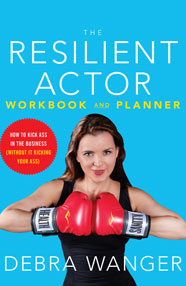
Drawing on decades of experience as an actor, talent manager, and coach, she wrote The Resilient Actor: How to Kick Ass in the Business (Without It Kicking Your Ass), an Amazon bestseller that serves as a personal coach in a book on subjects like exercise, nutrition, time management, and goal setting. She lives in San Diego with her three children.
📚 Books by Debra Wanger

Transcript
[0:00:30] Charlie Hoehn: You’re listening to Author Hour, enlightening conversations about books with the authors who wrote them. I’m Charlie Hoehn. Today’s episode is with Debra Wanger, author of The Resilient Actor. Acting can be a crazy profession and while there are a lot of books about acting technique, very little has been written about how to pursue your acting career without sacrificing your health or your sanity. In this episode, Debra gives us her survival guide for the acting professional, which will help you stay motivated from audition through performance. Now, here is our conversation with Debra Wanger.
[0:01:23] Debra Wanger: I have been acting since I was nine years old and you know, I followed my brother to acting classes and shows, he was working with our excellent group of actors in Chicago so I started following him and I kept going. And I don’t even ever remember making the decision of whether I wanted to act or not, I just kind of did it. It became my everything, it was how I – what I was excited about, how I got my attention, what I thought people liked me for, I thought it was kind of – I put all my eggs in that basket and luckily I must have been pretty good at it because I was successful and I did a lot of shows, I did children’s theatre and school shows and sang in the choir and took dance classes and did the whole thing. Then when I was 17, I went away to a competitive BFA which is Bachelor of Fine Arts program, at the time, most competitive big deal program that you could go to, of course I was 17 years old, holy cow, I can’t imagine sending my 17 year old across the country to go to college by herself but I started working and I was just doing the fast track to doing live musical theatre and all that. After a few years, I found myself very lonely, depressed, fat, broken out, having trouble getting off the couch. Luke and Laura or whoever the soap opera friends at the time were my best buddies and the mindset trick started to come in so it was getting harder and harder to show up to auditions and feeling – they don’t want to see me, they’re just going to cast somebody else anyway. When I wasn’t in the show, I was really down, I was really depressed, you know, when I was in a show, I had friends, I had somewhere to go, I had meaning, I had fun, I had a social life, I would relatively stay out of trouble but when I wasn’t in the show, I felt like I was the hole in the donut, so to speak. I felt like – I was as they say in the food, I was emotionally eating which would of course make my weight go up and then I was fat and uncomfortable and then I didn’t want to go to auditions because I felt so fat and who’s going to want me and I certainly didn’t want to go to a dance audition and put on a leotard. So I was in this really horrible cycle of feeling depressed and not wanting to show up and then of course, if you don’t show up for auditions, you don’t get, book jobs and then I’d feel bad about that. If I wasn’t in the show, I didn’t really have people to hang out with so much. It was sad and lonely place and I was kind of doing everything wrong. I didn’t have a lot of a life outside of the theatre, that was a huge mistake but I didn’t know anything else and I didn’t feel like I had value with anything else. You know, if I was in a show, I was very active but if I wasn’t, I wasn’t moving around much and so all of that was a downward spiral into not feeling good physically or mentally or I guess, spiritually.
[0:04:26] Charlie Hoehn: How long did this stretch of time last?
[0:04:28] Debra Wanger: It was kind of primarily about three years that I was really funky and then I did some geographical cures, you know, moved.
[0:04:36] Charlie Hoehn: Yeah.
[0:04:37] Debra Wanger: Which helps for a little bit but what they say is you know, wherever you go, there you are.
[0:04:41] Charlie Hoehn: You went from where?
[0:04:42] Debra Wanger: I grew up in Chicago and I went to Cincinnati for school and then I moved down to Florida where I was doing theater. You know, there’s a mix of the time, there was a lot of dinner theater, a lot of places to perform. That was that main period. I went back to college, I went too Boston and I did everything but acting for a while. Took a bunch of classes that had nothing to do with acting and I didn’t even tell people I was an actor and I kind of tried to figure out the rest of it and figure out who I was if I wasn’t an actor and tried to gain some balance and did a lot more healthy things, you know? Was more active and had friends who were my friends whether I was working or not and I was able to restore the balance in my life and figure out who I was beyond acting so then when I chose to go back to it, I was coming from a much more balanced place and much more wise place and I was doing it by choice. This time I said, “I miss acting, I do want to go back to it and it’s fun and it’s creative and I’m good at it and I’m not doing it because I need it and I’m not a good person if I don’t do it but because I enjoy it and that’s my art.”
[0:05:58] Charlie Hoehn: Right. Acting is something that you do and it’s not who you are?
[0:06:03] Debra Wanger: When you say it, it sounds like yeah, duh, but that was a hard lesson to learn.
[0:06:07] Charlie Hoehn: Sure.
[0:06:07] Debra Wanger: When we are actors, it’s so consuming, it is so easy to just, it’s all about, rehearsals are intense, you’re doing eight shows a week, that’s intense or if you’re on a movie set, you’re there all day long, crazy hours and you have to be ready at a moment’s notice. It’s pretty easy to get all consumed by it and forget that and that, yes, it’s a lifestyle but it’s your job. I don’t know a lot of accountants who are like, “If I don’t account, if I don’t count your numbers, what am I?”
[0:06:41] Charlie Hoehn: Yeah, more than any other profession, it can be all consuming and take over your life literally. That’s how you judge how good an actor is, by how much they let it consume them, right?
[0:06:56] Debra Wanger: Right.
[0:06:57] Charlie Hoehn: Yeah, I take it, you didn’t just write this book, obviously just to tell your story and what you went through, you likely saw this in a lot of your friends, no?
[0:07:07] Debra Wanger: Totally. I left out the part of my story as far as that I started, I worked on the other side of the business, I worked at a big talent agency and I worked as a talent manager and then I started working as a coach as well. I encounter people every day who are having these exact same issues. I basically wrote this book as what do I wish I knew 30 years ago, you know, if I had a fairy godmother who could hand me one thing, it’s like, hand me this book because it didn’t exist, there’s about 7,000 books on how to act and another 4,000 books on how to get an agent or the business of acting. But I’ve never seen a book on how to not be a mess, you know, how to stay sane and healthy.
[0:07:48] Charlie Hoehn: Right. Yeah, you said, before this interview, I mean, there’s no such thing as a sane actor and I take it, that this book is the attempt to help them stay sane.
[0:07:59] Debra Wanger: That was in jest by the way.
[0:08:04] Charlie Hoehn: I know you’re joking. But it’s a good point because it’s a very mentally and emotionally demanding job, and physically demanding job.
[0:08:14] Debra Wanger: Right, whether you’re working or not. How many jobs are you – I mean, several creative pursuits are like this but you’re always hustling for work. I mean, there’s a chapter in this book that says auditioning is your job, because performing is the perk but I think that the job is actually looking for work because there’s a few jobs that are serious regular or you know, you get a long contract on Broadway. But most of the time you’re just looking for the next job all the time and that is really emotionally draining. And then when you are working, you’re doing stories of – you know, most acting jobs are not boring days, they are the most important day of someone’s life, the highest and the lowest, you know? The day you got inaugurated to be president, the day you were murdered, the day – you know, whatever, it’s always a big deal or it requires a lot of emotional and physical energy.
[0:09:06] Charlie Hoehn: Yeah. Let’s talk about how to stay sane, what would you say is the core idea in the book or the number one takeaway for actors in order to stay sane?
[0:09:19] Debra Wanger: I would say, having a life outside of the theater. To not put all of your eggs in the acting basket, it’s great to – I mean, you’re going to have – you’re going to go to the theater as an activity which is great, you should be seeing other people’s shows and networking and hanging out with people and you should have friends who are actors. And you should be watching movies and studying and learning and going to class and all of those great things but not putting all of your time and energy in that because its’ that whole egg, all your eggs in one basket, if you drop that basket, you are out of eggs. To have some time and energy and I guess, emotional real estate in something else, whether it’s your yoga class or your knitting group or you know, your men’s group or whatever. You’re hanging out with your little baby cousins, whatever it is, having something – having a support system and having something beyond just being an actor that you can identify with and have support from.
[0:10:22] Charlie Hoehn: Where do they get started? I mean, in your book, you talk about fine tuning your instrument slash physical resilience, do they start with taking care of their health and investing in that, having that be the other part of their identity rather than just being an actor? Where do you recommend starting?
[0:10:43] Debra Wanger: I do like to start with the physical health and you know, everyone starts in a different place, some people are in great shape and they have great energy and they don’t get sick very often and some people are the opposite but regardless of where you are, I think it’s very difficult to have good mental and emotional health if you don’t have good, physical health. Definitely for me, I’ve seen this over and over again, if you’re drinking a lot, if you’re eating sugar, if you're overdoing the carbs, if you’re driving through taco bell all the time, you’re not going to feel good and it’s hard to think good thoughts when you’re not feeling physically well. When you don’t have the physical energy, it’s hard to have the mental energy. A lot of us are kind of running on fumes and certainly as actors with not getting enough sleep, staying up too late, going out drinking with the cast all the time, eating junky meals on tour, whatever it is, there’s a lot of temptation. If you don’t have the physical energy, it’s really hard to keep your spirits up and the mindset up. I think that requires physical energy. I forgot what the percentage is but the brain uses a ton of physical energy, like the – it uses more calories than physical exercise or something, we forget that. I’d like to start with the physical.
[0:12:03] Charlie Hoehn: I remember talking to a friend of mine who is a doctor and she works with professional athletes and you would think that professional athletes like NBA players would be so strict about what they eat, highly focused and I was so surprised that even people at the top level are eating tons of candy all the time or eating pizza and stuff. I think it’s easy to have this image of actors really care about what goes into their body but it sounds like that’ snot necessarily true.
[0:12:43] Debra Wanger: Right, a lot of actors are on a tight budget. You know, living in New York or LA is not cheap. There’s a lot of ramen noodles and cans of tuna and Starbucks and all that. I get it, those are expensive cities to live in, you got to watch your money but it’s fair – that’s the food that’s cheap is not – the low quality food. It’s very easy to that – as well, it taste good and after a long hard day or you know, I went to four auditions and I didn’t book anything, what do you want to do? Do you want to go home and eat a salad? You want to hang out with Ben & Jerry, you know? Or whomever. You know, your buddies will always be there for you. Yeah, there’s so much of that and if you’re eating crap, you’re going to want to eat more crap. Your body gets used to whatever you do to it so if you’re eating vegetables and green juice and drinking a ton of water and exercising every day. Your body starts to crave that or if you're eating the junk, it starts to crave that.
[0:13:42] Charlie Hoehn: Yeah. Tell me Debra, when did you notice that you’d broken through? That you had a more balanced life, that you were physically taking care of yourself and what effects did that have on your acting?
[0:13:58] Debra Wanger: I think when I came back to it after my 10 year absence and I moved to southern California and I started performing again and I realized I wasn’t getting sick as much and I wasn’t crying, the late night crying phone calls home didn’t happen as much and people thought I was just easy to work with. I would get hired again at the same theaters with people just saying, come on back, you want to do this part? It was just the – the whole road was smoother, I guess.
[0:14:29] Charlie Hoehn: Was there any stand out moment I guess or was it just in general? You’re like, this is now a thing in my life, it’s a pattern.
[0:14:37] Debra Wanger: Yeah, I think it was more general like it’s just easier, it’s just calmer and the less volatile and I’m more grounded. Back in the dark ages, I remember an older actor said, she called me a troubled girl. She said, she is a very troubled girl.
[0:14:55] Charlie Hoehn: To your face?
[0:14:56] Debra Wanger: No, not to my face but it got back to me. That stuck with me, it’s like, I don’t want to be called that but I was, I was uneven, I was up and down, I was emotional, I was moody, I was very insecure. I wasn’t always nice to everybody because I didn’t feel good and that’s so important. People will remember that. People want to work with nice, reliable, easy to work with, show up on time, people and talent will get you in the door but being easy to work with and being personable, that’s what keeps you working.
[0:15:31] Charlie Hoehn: Yeah. You know, for every negative thing that came out about him during the whole scientology stint, I have never heard anything but rave reviews about Tom Cruise and how easy he is to work with and how great he is to other people in the set. Just normal people. How common is it would you say for A list actors, the people at the top, to be following the rules that you kind of list out in your book versus those who are at the top but they’re still miserable. They’re like the old Debra.
[0:16:11] Debra Wanger: Well, I have been lucky enough to meet Tom Cruise and he is lovely and I swear there are beams of light coming off him. I don’t know, he is the most magnetic, charismatic, lovely person and he’s one of those, when he’s talking to you, you feel like the most important person in the world people. You know, Bill Clinton has that too. He is lovely. You know, when I worked at a big talent agency in LA and at the time it was the big one. I met –
[0:16:40] Charlie Hoehn: The CAA or –
[0:16:42] Debra Wanger: Yeah, Creative Artists, this was when Michael Ovitz was there, he’s a super agent.
[0:16:46] Charlie Hoehn: I know of it, yeah.
[0:16:47] Debra Wanger: Yeah, that whole thing. That was like – that was exciting, a little too exciting. I have stories.
[0:16:55] Charlie Hoehn: You know, quick connection, I am friends with his former assistant because he was planning on doing a book at one point.
[0:17:05] Debra Wanger: Really?
[0:17:06] Charlie Hoehn: Ovitz and I had a call but I ended up staying in touch with his assistant and she’s a great woman and I’d imagine you have some crazy stories because Ovitz – he’s founder of the CAA which for people who don’t know, most powerful talent agency in the world and it was like the original and then he was CEO of Disney for a while. He’s lived a crazy life to say the least.
[0:17:32] Debra Wanger: He was the one who was attributed with making the agent the most powerful person in the Hollywood food chain, he used to be. Became – you know, agent who have the most power and they would package these deals with okay, you can have Arnold Schwarzenegger but you also get this writer and this starlet and whatever and we’ll put them all together and make a super-duper package and I’ll walk away with a bajillion dollars. He was savvy – I mean –
[0:17:59] Charlie Hoehn: Scary savvy.
[0:18:00] Debra Wanger: Yeah, genius. It was a very exciting time to be working with all these very powerful people. But, what I found from meeting a lot of people and sending them scripts and making sure they know where their lunch was and everything. Was that the people at the tip top, you know, the Tom Hanks, the Meryl Streeps, the tip top people and the bottom people, the nobodies, the who people, the regular you and me people were lovely, kind, considerate, patient, all that stuff. It’s the people in the middle, the almost famouses or the used to be famouses, you know? The B list people, that were the jerks, you know, those were the people - I think it was the insecurity and the feeling like they had to prove something.
[0:18:47] Charlie Hoehn: Yeah.
[0:18:48] Debra Wanger: On their way up and those were the people who were a little bit messier and not as kind but a lot of times, you can tell. I mean, for every Tom Hanks, Nicole Kidman, some of these people who you can just tell they’re – Reese Witherspoon, the people who had their act together, you can just tell, or Meryl Streep. Even though she’s the most bananas talented, most decorated actress ever, you know she goes home and hangs out with her kids, right? You know?
[0:19:15] Charlie Hoehn: Yeah.
[0:19:16] Debra Wanger: And probably scrubs her toilet or whatever. And then there’s all those people and you know, whoever the list is this year, the Heath Ledgers and all those people who are ODing and just miserable and not taking care of themselves and riding the roller coaster. Yeah, there’s definitely some people who are – who take care of themselves and they have the longevity. They’re still able to do it.
[0:19:44] Charlie Hoehn: Yeah, it’s a marathon.
[0:19:46] Debra Wanger: Yeah, totally. Even when you're Meryl Streep, I mean, she had a team of people doing it for her but she gets a pile of bad scripts but she’s still looking for the next gig. You know and she’s still not a 100% sure what it’s going to be and I’ve had conversations with actors who still have to pay their alimony and still have to pay for their accountant and their publicists and their manager and you know it’s expensive. They still have bills to pay so sometimes when you see them do some horrible movie and you’re like, “Why the hell did they do that movie? Didn’t they know it’s a piece of crap?” Sometimes they do know it’s a piece of crap but they still have bills to pay.
[0:20:31] Charlie Hoehn: Author Hour is sponsored by Book in a Box. For anyone who has a great idea for a book but doesn’t have the time or patience to sit down and type it out, Book in a Box has created a new way to help you painlessly publish your book. Instead of sitting at a computer and typing for a year, hoping everything works out, Book in a Box takes you through a structured interview process that gets your ideas out of your head and into a book in just a few months. To learn more, head over to Bookinabox.com and fill out the form at the bottom of the page. Don’t let another year go by where you put off writing your book. My favorite story and I don’t know if it’s a myth or not is Bill Murray getting looped into Garfield and thinking it was some –
[0:21:22] Debra Wanger: Oh I don’t know if I know the story.
[0:21:24] Charlie Hoehn: Yeah like I believe he thought it was a high brow movie about something else that wasn’t the cat and find on based on that and then he was like, “Ah damn it,” and he ended up doing it anyway but it maybe not. It’s just too Bill Murray of a story to possibly be true but -
[0:21:47] Debra Wanger: Right, let’s just go with true because it’s more fun yeah.
[0:21:50] Charlie Hoehn: Yeah, so what percentage of these B actors, the people who are in the middle, do you think if they implemented the stuff that you are talking about, could actually end up getting to the level that they really want to reach and staying there?
[0:22:06] Debra Wanger: I think a lot of them, I mean obviously with film actors and some of it’s just fashion and luck and what you’re associated with. But if you’re talented and you’re easy to work with and you’re healthy between your ears, you’ll work and you’re persistent. I think it’s discounted how much you’re – oh god I am going to sound very California, your vibe, you know? Sometimes when you walk into a –
[0:22:38] Charlie Hoehn: It’s true. It’s true, we pick up on each other’s energy.
[0:22:42] Debra Wanger: Totally and especially with casting, you walk into a room, a casting director will say, “Yes please,” or “No thank you,” and a lot of it is before you’ve even opened your mouth and you know it’s not how well did you sing or how well did you read that particular side or how was your monologue, a lot of it is just what presence do you bring when you walk in the room and if you’re bringing unhealthy needy “I am a freak show,” “I’m a mess,” you can smell it from a mile away. Especially casting directors, they’re trained to do that. And if you’ve been a mess in the past, everybody talks. You know LA and New York are small towns and other places too are even smaller and I’ve certainly had directors call other directors that I’ve worked with and say, “How is Debra to work with?” Because they’re all friends or a lot of them are friends or they are watching out for each other and I would warn someone if I’d worked with someone and they were unpleasant. It’s such a team effort, the hours are long, it’s challenging, some of these spaces are very small, you’re doing physical stuff where you need to trust each other. I mean you’re lovers or you’re having fight scenes. You know, you need to be able to really be in the lifeboat with these people. So if you have any sense that these people are not going to have their act together, literary, you’re not going to play that and producers are investing tons of money in these projects. Whether it’s a film or a TV show or a Broadway show or whatever, that’s a lot of money and you’re not going to bet your money on someone who you’re not sure if they are going to show up or you are not sure if they’re going to be drunk or high or be getting sick or whatever or just be insecure. You know you would know someone who’s going to bring it. In order to bring it, you really have to take care of yourself.
[0:24:37] Charlie Hoehn: Yeah, let me ask you who do you most wish you could have gotten your book into the hands of? Apart from your older self, is there an individual actor or actress that you just love their work so much but they just did not have their act together?
[0:24:58] Debra Wanger: Who’s the biggest mess who could use my book?
[0:25:01] Charlie Hoehn: Yeah.
[0:25:01] Debra Wanger: What a great question. Wow I am trying to think. Well I guess someone like Phillips Seymour Hoffman or something. I mean just so freaking talented but obviously, haunted by demons and I don’t know, I guess that’s who comes to mind. I mean I kind of humbled to think that my little book would help such a giant talent but -
[0:25:25] Charlie Hoehn: It very well could.
[0:25:26] Debra Wanger: Yeah.
[0:25:27] Charlie Hoehn: Someday, you’re book came out when, in just a few months ago, November?
[0:25:33] Debra Wanger: Yeah. So yep and we made the Amazon bestseller list in December so.
[0:25:40] Charlie Hoehn: Nice.
[0:25:41] Debra Wanger: You know I beat The Artist’s Way, it’s so cool. Books that I’ve read that are on my bookshelf I actually say yes.
[0:25:48] Charlie Hoehn: There you go, that’s pretty great.
[0:25:49] Debra Wanger: It’s pretty crazy.
[0:25:50] Charlie Hoehn: And so is there anything else from the book, I know act two in the book is mastering the balance and you talk about getting your healthy head on which I believe we kind of covered, managing your mindset. Is there anything there we haven’t talked about?
[0:26:05] Debra Wanger: You’re looking for work all the time and most of the time you are going to hear no and you do build up a resistance to hearing no like a door to door salesman. If you’re trying to sell vacuum cleaners you are going to hear no a lot, you’ll get used to that. But it does wear you down. So you have to have some emotional resilience and mindset to combat that but also our work is self-generated. I mean once you’re in a show, you have a call sheet or you have a stage manager or someone to get you to show up, he’s got the paycheck to get you to show up but when you’re auditioning, you’ve got to get yourself to go. You don’t have a boss making you to go to the audition. So all of your motivation has to be self-generated and getting yourself in the proper place as we were talking about not coming off as needy and desperate and insecure when you do walk into the room. So it requires a lot of the mental and emotional energy to show up and not talk yourself out of the audition. Psych yourself up, get yourself into a good calm place where you can work and not freak yourself out, not to be too nervous and deal with all the rejection which is not every job has that. There’s a lot of jobs where you are lucky enough if you book it. Once you get hired for the job, that’s your job and so you chose to leave or you mess up really big. And with actors, some days you don’t want to show up. You just want to stay in your cozy warm bed or it’s very easy to talk yourself out. “Oh well they’re looking for someone older,” or younger or they need brown hair, they need blond hair, oh they’re just going to cast that same person they always cast. There’s a 101 ways to talk yourself out of it. So you really need a good mindset to keep going and sometimes, you have these long streaks of unemployment which really can wear you down. So it’s how do you keep showing up when you’re not sure why you are showing up, so you are wondering why you’re doing it.
[0:28:04] Charlie Hoehn: And you talk about GSD which to keep this a family friendly podcast I suppose. In case anybody is listening with kids, I don’t know, Getting Things Done.
[0:28:15] Debra Wanger: Yes, getting stuff done as well yeah.
[0:28:18] Charlie Hoehn: Getting Stuff Done, yeah so talk about that. What do they need to be getting done?
[0:28:23] Debra Wanger: Well there’s the whole actor’s life stuff which is the resumes and the pictures and mailings and memorization and those kinds of things but there’s also all the real life, when I talk about GSD I’m usually talking about the real life stuff, filing your taxes, mowing your lawn, finding a babysitter or making sure you’re making enough money to pay your rent. All of the day to day more mundane stuff. Oh yeah.
[0:28:51] Charlie Hoehn: Right but no, that’s actually the stuff that makes acting possible. So let’s talk about how do they make enough money to sustain, I use this term in a non-derogatory way at all, but sustain their hobby and eventually turn it into their full-time profession. How do they do that?
[0:29:09] Debra Wanger: That’s a tough one for a lot of people because especially if you are living in an expensive city. Most actors, not all of them, I’m San Diego based. I love it, there is a thriving theater community here. It’s awesome but it’s still an expensive city but most actors are in LA and New York or even San Francisco, Seattle. These are not cheap places either. So I’ve had had tons of friends who have moved to New York so they could audition and act. And then they’d have to get an office job to work to afford to live in New York and then they can’t audition anymore because their boss won’t let them out and they’re in this vicious cycle where to afford to live in New York they have to work so much and then they can’t audition, they can’t act and it’s heartbreaking and they’re like, “Now why am I in New York?” You know? It’s cold, it’s crowded and I can’t even go out. So that is kind of the age old paradox I suppose. That’s why jobs like waiting on tables and working at Starbucks and driving Uber and retail and some of the more flexible things are so popular because you do have some more flexibility and yes, you’ve got to do it and you’ve got to find something and I encourage people to be creative and you know, teach yoga classes. If you know how to knit, teach people how to knit. I coach and teach. I have a lot of friends who teach acting or have voice students. Find out what your skills are and find a way to make money and you know sometimes you do have to work two and three jobs at the beginning and it stinks and it’s even more important to take care of your health then, when you’re working so hard and have so little free time. It can be done but it is hard and I would say if you can either marry well or inherit a lot of money that’s helpful. I didn’t put that in the book but.
[0:31:03] Charlie Hoehn: I am curious, are there any big actors that oh there’s definitely some that you know, it’s obvious like Nicholas Cage is what, the nephew of Francis Ford Coppola there’s stuff like that.
[0:31:16] Debra Wanger: There’s stuff like that, there’s a lot of second generation actors who you know – yeah.
[0:31:19] Charlie Hoehn: Oh the Bridges brothers right? Jeff Bridges.
[0:31:21] Debra Wanger: Oh yeah or like Kate Hudson who, you know.
[0:31:23] Charlie Hoehn: Yeah, Kate Hudson.
[0:31:24] Debra Wanger: And they would say and I think they’ve said in interviews that in some ways it’s harder for them to prove themselves because everyone assumes, “Oh they’re just there because of their mom or their dad.” But they also tend to have very good genes and a few more relationships in a business that is about relationships and it helps if you have that -
[0:31:41] Charlie Hoehn: Yeah and you know every business is like that.
[0:31:43] Debra Wanger: Yeah, if you’ve had this director over for Christmas dinner a few times, that doesn’t hurt you know? Yeah.
[0:31:49] Charlie Hoehn: No, right there’s plenty of examples like the woman who, Kate Bradshaw – no, the woman who married Steven Spielberg. I cannot remember her name, Indiana Jones Temple of Doom.
[0:32:01] Debra Wanger: Right, she’s okay and it’s not Bradshaw. It is – is this a quiz? I didn’t know there’s going to be a quiz. It’s not optional, yeah I know.
[0:32:11] Charlie Hoehn: Yeah, anyway so generally a good tip is to like you said, marry a director, inherit money, that sort of thing so.
[0:32:21] Debra Wanger: Right and then for everybody else, work hard but you can be creative and find ways too. You know I did a lot of temping which is you work in an office and you can take work day by day. I have people who have gotten their substitute teaching credential. I mean that’s a good way to do it. So on days that they don’t have auditions they teach third grade for a day or something and you know, these are all noble professions but you’ve got to do what you got to do and hope that it’s not forever but it is one of the downsides of the business is you’ve got to find other streams of income.
[0:32:58] Charlie Hoehn: Yeah that’s a lot of businesses so and acting in particular is very challenging in that regard. So I wanted to hit that point.
[0:33:10] Debra Wanger: Yeah, encourage people to figure out what unique skills do they have and can they use those as money making or even just trade with people. “Okay, I can’t afford acting classes right now but if I teach you yoga, will you coach me on acting?” Or voice lessons and Pilates or whatever yeah.
[0:33:29] Charlie Hoehn: Yeah, it’s so tough now with rent in those cities where it makes it so difficult to live just a normal existence. Just having a studio is just outrageously expensive so anyway, what’s been your favorite feedback that you’ve received from a reader?
[0:33:50] Debra Wanger: There is one woman, she’s been acting for a long time, an actor-singer. I don’t want to give her name but she gave me the feedback that she has lost 20 pounds after, you know that wooden budge for a long time and that she’s nicer. She said she was always one of those people who would kind of tell people what to do because she knew. You know, she’d been around for a long time and she saw people going down the wrong path and she wouldn’t be afraid to tell them. And even though she was right most of the time, it wasn’t necessarily that the best way to play well with others. People really didn’t like that she was butting in and so she was telling me that when she started kind of biting her tongue and smiling and even asking permission before she gave people advice, people were responding better to her and she wasn’t only getting a more comfortable reaction from people but she was happier. It was just a lot easier backstage. And she said that it really made a big difference just making that tweak of not telling people what she thought even if it was the perfect thing they needed to hear and if all the world’s problems would be solved if they just took this one piece of advice. She was learning to zip it was things like that but she said that that was incredibly useful, she’s like, “I am so much nicer and people like me better now.” So there you go.
[0:35:17] Charlie Hoehn: That’s a big deal, that’s awesome.
[0:35:20] Debra Wanger: Yeah and sometimes it’s just a little thing like that and just asking permission before you tell them what they should do. 20 pounds.
[0:35:27] Charlie Hoehn: That’s great, congrats.
[0:35:29] Debra Wanger: That’s not normal or something.
[0:35:30] Charlie Hoehn: 20 pounds, yeah that is not a small amount.
[0:35:32] Debra Wanger: Right and a friend of mine who is quoted in the book just The Book of Mormon on Broadway right after the book was released. So you know, coincidence?
[0:35:41] Charlie Hoehn: That’s great.
[0:35:42] Debra Wanger: It must be because he read the book, right?
[0:35:43] Charlie Hoehn: Yeah.
[0:35:45] Debra Wanger: Because he’s crazy talented.
[0:35:46] Charlie Hoehn: Right, yeah. Take credit for that one.
[0:35:49] Debra Wanger: Yeah, of course. It’s all me. All me.
[0:35:51] Charlie Hoehn: Yep, nicely done.
[0:35:52] Debra Wanger: Yeah, you’re welcome.
[0:35:56] Charlie Hoehn: Well this has been great. Can you give our listeners a challenge? Maybe the ones who are actors who will listen to this, what’s one thing they can try from your book this week that could improve their life?
[0:36:09] Debra Wanger: I’m going to say meditation. I don’t know how many of you meditate and I don’t know how many of them are terrified about meditation because there is so much mythology around it. But taking five minutes and sit still in a quiet place and just be, how powerful that is. To just meditate for five minutes every day, that’s where I would start and try to just quiet the voices in your head a little bit. Now I was completely surprised because I always thought that to meditate properly, you have to have no thoughts and quiet. You have to be the same way -
[0:36:50] Charlie Hoehn: I know and this is such a sad thing. A lot of people think this that, I literary hear people say all the time, I am not good at meditation or I’m bad at meditation and I’m like, “If you have that thought that’s not the right thought.” That’s why you meditate, yeah.
[0:37:08] Debra Wanger: Right, I thought for years I was failing at it. Yeah, I thought I was failing at meditation because my mind was still going but you cannot turn your mind off unless you’re dead. Your brain is going to be having thoughts and that’s okay and those thoughts can also be, “Oh I suck at meditation, this is too hard, I’ll never,” you know? “Oh my gosh I have four and a half more minutes to go,” that’s not the point. You’ll never going to stop your thoughts. If you could slow them down a moment or just say, “Oh I am having thoughts,” and just gently guide them back you know? Yeah.
[0:37:39] Charlie Hoehn: Just watch them. The most useful analogy I’ve found is you watch your thoughts like clouds passing overhead. Even if they are really intense, that’s a storm that you are watching. That’s fine, just observe it.
[0:37:53] Debra Wanger: Right and don’t get too attached to any one thing and don’t judge it because that’s when you get into trouble is, “Oh I should have taken the dog out and I didn’t” and “Oh I am such a horrible person because… oh I shouldn’t be thinking that. I am supposed to meditating,” and you get –
[0:38:08] Charlie Hoehn: Shut up brain.
[0:38:09] Debra Wanger: Right as oppose to just like, “Oh I should take the dog out, okay well when I am done I will do that,” and then next.
[0:38:14] Charlie Hoehn: Right you are supposed to be observing the fact that your mind is telling your brain to shut itself up like, “Oh that is your interesting thought. Why am I even resisting this so much? Why am I punishing myself just for having this thought?” Great suggestion especially for our audience. So how can our listeners connect with you and follow you? You do coaching still, how can they work with you?
[0:38:40] Debra Wanger: debrawanger.com not to be confused with Debra Winger, that’s a whole different set of story. I have everything with my coaching, my books, when the workbook and the audio book come out that will be on there. You can order my CD on there, if you want to know anything about what I’m up to on either side of the stage or screen, it’s on debrawanger.com, yep it’s all there.
[0:39:04] Charlie Hoehn: Excellent, very cool. Well Debra thank you so much. This has been great.
[0:39:09] Debra Wanger: Charlie, it was a blast, thanks.
[0:39:12] Charlie Hoehn: Many thanks to Debra Wanger for being on the show. You can buy her book, The Resilient Actor on amazon.com. Thanks again for listening to Author Hour, enlightening conversations about book with the authors who wrote them. We’ll see you next time.
Want to Write Your Own Book?
Scribe has helped over 2,000 authors turn their expertise into published books.
Schedule a Free Consult