Tommy Short on What Happens When You Go 365 Days Without a Cell Phone
✨ Episode Summary
Tommy Short spent nearly two decades officiating Division I college basketball and worked the USA men’s Olympic team before retiring in 2020. His six-year-old daughter’s question — "Daddy, why are you always on your phone?" — sent him on a 365-day journey without a cell phone that became The Call I Almost Missed, his Scribe-published debut. Before Scribe said yes, 104 publishers and literary agents had said no. And after Tommy lost his mom in November 2024, he sat on a 90%-finished manuscript for seven months — until his therapist named what was going on, and Tommy completely rewrote the book in 22 days. The book has only been out for a few weeks at the time of this episode, and it is already taking him to one of the largest churches in America and a prison.
⭐ Top Moments
- "105 Was the Magic Number." "I think I reached out to 104 different publishers and literary agents and got either nothing or a no from them. 105 was the magic number." The line every author who has been chewed up by the trad-pub query cycle has been waiting to hear.
- His Therapist Saved the Book. He Rewrote It in 22 Days. "I remember my therapist saying, you’re subconsciously connecting finishing the book and ending the grieving process with your mom. Those are two separate events and you’re allowed to finish one and continue the other. And Eric, I completely rewrote the book that people have in their hands today in 22 days." The version readers hold today is the version that came out of those 22 days, after seven months of grief blocked the original.
- Scribe Made Him Feel Like Family Before He Even Signed. "It felt like I wasn’t just a name on a sheet. Even when my mom was sick, [the publishing manager] was reaching out to me, not about when is the book coming out. It was just like, hey, is there anything I can do for you. We’ve never met in person. It felt like I was a member of the Scribe family even before I signed with them." For an author who had just absorbed 104 rejections, the human treatment was its own kind of validation.

Tommy Short
★ Scribe Case Study
After 104 Rejections, Company #105 Said Yes: Tommy Short's The Call I Almost Missed
Tommy Short's six-year-old asked why he was always on his phone. He went 365 days without one. 104 publishers said no before Scribe (#105) said yes. After losing his mom,…
📚 Books by Tommy Short
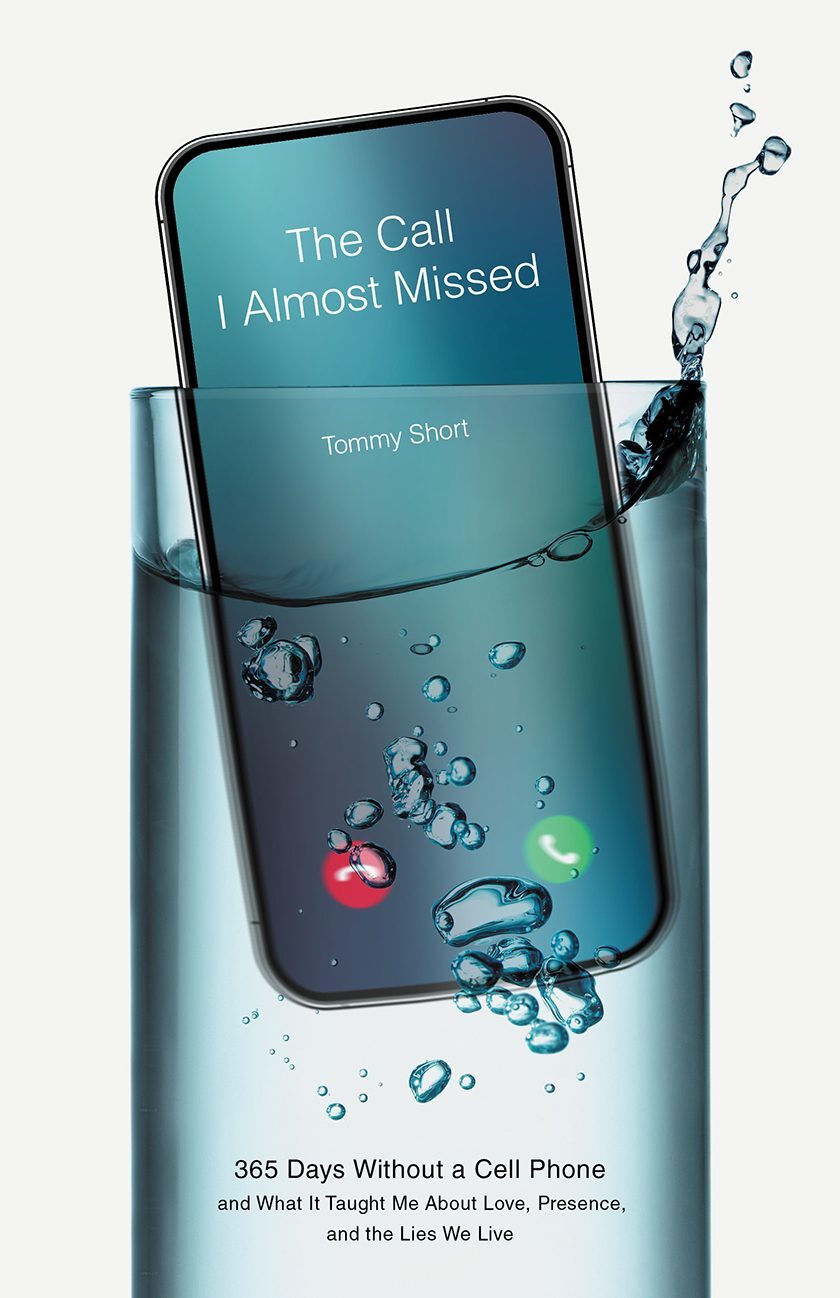
Tommy Short spent nearly two decades officiating Division I college basketball and international play -- and was attached to his phone every minute of it. After retirement, a question from his young daughter stopped him cold: "Daddy, why are you always on your phone?"
He didn't have a good answer. So on August 6th, 2023, he turned his phone off for a full year.
In this conversation, Tommy walks Eric through what he found: the phantom pocket-patching, the 68 extra days he reclaimed, and the deeper realization that he wasn't addicted to the device -- he was addicted to the identity he had curated using it. He also opens up about losing his mom during the writing process, how therapy unlocked the final version of the book, and why he rewrote the entire manuscript in 22 days.
I Almost Missed the Call is available now on Amazon, Barnes & Noble, and Walmart. Learn more at TommyShort.com.
Transcript
Eric Jorgenson: I'm very glad to have you here, Tommy. Your book concept resonates with me as I'm sure it does with so many people. Will you just introduce us to the book by way of your background and the moment that this epiphany struck you?
Tommy Short: Sure. Which are alluding to, I spent previously almost two decades officiating college basketball at the division one level. Also was fortunate to work international basketball. So working with our USA men's Olympic team. And for your listeners out there, I was attached to my cell phone morning, noon, and night. And one of the things when I retired in 2020, I still had this. kind of subconscious attachment to the phone. And the question that you're alluding to, which led to this book, is I can very clear as day remember, it was a Saturday, I'm sitting on the couch. I don't remember, and I think that says a lot about it, I don't remember what I was looking at, and I can just remember my now six-year-old looking up at me and asking, daddy, why are you always on your phone? And for any parents out there, that question, like it strikes, deep, deep in your soul. And I may or may have, may or may not have heard of that question before, but for whatever reason, it was a Saturday, it was the middle of the day. It wasn't like it was, you know, on a Tuesday at 1 PM in the middle of the hustle and bustle. And, and that question was really the start that made me really put that thought in my head of like, why are you always on your phone?
Eric Jorgenson: Yeah. What was the honest answer to that question?
Tommy Short: I didn't have a reason. It wasn't like an important email. So when I started my own business after I retired from officiating, one of the things in a way or step to create some distance, I've never had email on my phone. So it wasn't like I was looking at something work-related. So whether it was the ESPN app or replying to a text or whatever it was, it wasn't more important than you know, playing dress up or, you know, with Barbie dolls in the living room on that Saturday.
Eric Jorgenson: Yeah. And what did you do with this epiphany?
Tommy Short: So nothing in the immediate aftermath, right? It was one of those that was just kind of sticks with you and lingers. And I'm sure we'll get into it at some point in the conversation today, but it was the middle of the night trying to go to sleep. One of the rules I set for myself when I stepped off the court, Eric, was if I'm not able to fall asleep within five minutes, and it's not like I'm setting a timer, but If I'm not able to fall asleep just because of so many restless nights after officiating a college basketball game, I just told myself after five minutes, you're going to do one of two things, both of which involve leaving the bedroom. And it's either reading a physical book. So not a Kindle, not on the iPad or pen and paper, not on my laptop. not on a remarkable or anything like that. Whiteboard I've done many a times and it was summer of 23 right before I started this year without a phone journey. The idea popped in my head of, what would happen if you went a year without your cell phone? I'm like, that's the dumbest idea of all time. Who would do that in 2023? That question was the start that led me on the journey of having the book today.
Eric Jorgenson: Interesting. So when did you start the year without a phone?
Tommy Short: So that idea popped in my head. I think I talk about the exact date in the book, call it mid-June. So August 6th is the year that I started my business or August 6th is the date. And I really started that journey in August for two reasons, Eric. One, now as a speaker and doing some research, I've seen there's maybe four or five people that have gone a year without a phone. but no one had written a book about it. There's what I would call a short form, 1,500 word essay or something like that. I also knew if I waited until January, that probably would have invited even more excuses. Or if I'm being honest, I didn't want another speaker, I didn't want to make this big announcement, hey, in six months, I'm going to go a year without a phone, knowing that one, no one's ever done it. Take the book aside just from a speaking perspective. And so I'm like, what if someone hears about this and starts in September and they're going to be first to market? So I gave myself really about five or six weeks from the time I had the idea until I pulled the trigger. So it was August 6th of 23 to August 6th of 24. Wow.
Eric Jorgenson: What sort of preparation do you do?
Tommy Short: As far as like just doing it.
Eric Jorgenson: Yeah. Yeah. I mean, I imagine you got to like sort of prepare your friends, your family, your, your business. Like you got to make some adjustments.
Tommy Short: You know, there was, I didn't make like this big, you know, social announcement or anything like that. I probably told a hundred to 125 close friends, family and clients. So one of the caveats is I did have my laptop, but I only used it for email and as a speaker, virtual speaking engagements, but I didn't take any app. Like I didn't have iMessage rolling. I didn't take any app on my phone. I didn't listen to any podcast during the year. Literally the computer was for. Email once a day at the end of the day and virtual coaching calls. And so the preparation was, hey, let me just think through logistics of how this is going to work. And then telling friends and family, like, my wife is not my secretary. So treat this as if I'd never had a phone or anyone else has a phone.
Eric Jorgenson: And tell me about the first, like the first week. I imagine the transition itself was a little, little jarring.
Tommy Short: Yeah, for sure. So I can remember the first day specifically, right? Well, in leading up to it, right? It's it's like a concert or something that you're really looking forward to. It's first of all, it's this crazy idea that everyone's like, you're out of your mind, regardless of what they might have been telling me to my face. Like, I know for sure all of them are like, what is this guy thinking? He's he's a moron. But I can very vividly remember that first day and just finishing up the day and my girls are out in the yard playing and going out there. What's the natural thing we want to do if we're in this moment in today's day and age? Well, if we don't have a picture, it didn't happen. I can remember reaching in my pocket As all, as if the phone is, is an appendage, right? And I'm like padding my pocket and I'm like, you know, this brief moment of panic of like, Oh my gosh, where's my phone? And it's like, Oh my gosh. I don't have that. Like you better get used to just being wherever you were. And that was really. and I'm sure we'll get into the book part of it, but that was the only thing I committed to, two things. Number one, and no offense to anyone out there that plans on writing this book, I'm of the belief, and I will take this to the grave, the world doesn't need another productivity book, right? Like we don't need another how-to, three ways to fix your calendar, five ways to, like whatever. And if someone's out there writing it, like more power to you. So that, I didn't know what the book was gonna be. I just, I committed to, I'm not gonna write that book, but I knew I wanted to write a book.
Eric Jorgenson: So you went into this knowing that you wanted to write a book about the experience. So you're kind of like observing and taking notes and stuff like that as you go.
Tommy Short: Yeah, absolutely. Not the sharpest tool in the shed, but I knew that if I wait until the very end and try to recreate or document, I'm going to be at a loss. And so, yeah, that was the thing every day. I mean, you know, there's varying statistics, but the average is, you know, about four and a half hours of screen time, non-work related per day. So I essentially at the end of that year would have got 68 extra days. Now it was up to me to make the most of it. So yeah, I just, my, my only. goal or what I wanted to accomplish during that year was I just want to be the most present person in any conversation, whether it's on a podcast, having coffee with someone, with my kids, wherever I am, I want that other individual to leave the conversation with me and just think, wow, he seems a little off, he's a little different. I can tell there's this innate presence there that feels different.
Eric Jorgenson: Did you feel like you accomplished that?
Tommy Short: I did, I did. And I tell people, I don't know if I get specifically to this in the book, but had you told me everything that was going to happen, the highest highs and the lowest lows of that year, I'm not sure I would have signed up.
Eric Jorgenson: It's a sign of a good adventure, right?
Tommy Short: I don't know if I, you know, from going to the hospital with I think I'm going to have a heart attack to speaking at one of the largest churches in America, to speaking at a prison and all these other amazing things and not so amazing things that happen. Yeah, I'm not sure I would have signed up for this adventure.
Eric Jorgenson: Yeah, but I mean, that's a fantastic adventure then, right? You kind of take it one step at a time and be like, well, we're going to get through this too. You had a phrase that I really liked in the book, an emotional autopsy. I'm curious to sort of unpack that. Is that when you had the sort of space to just think and be present with yourself? Is that just sort of the natural outcome of that experience?
Tommy Short: Yeah, and I would say first, like on the front end of that is what I really noticed or started to notice during that year and since then is that I really wasn't addicted to my phone. I was addicted to the identity that I curated using the phone, right? So this illusion that I was so important and really the first instinct that came was six years ago in 2020 when I retired from college basketball, obviously there was COVID going on and that's not why I retired. But that was really the first time in my life where it was like, despite what my ego was telling me, when I retired, it's like, yeah, there was COVID, but like college basketball still went on. Like the world didn't stop because Tommy Short retired from college basketball. And then it was also realizing that I was outsourcing my sense of self to everything external, whether it was validation from speaking, whether it was the likes on social media, like there were so many other things that I had created in my mind. And it was like, I literally, I had to do this autopsy where it was like, I just need to examine everything and be okay with what I find in that examination. And it's, it's kind of ironic because, you know, in an autopsy they are getting underneath the skin to figure out what happened. Like what was the cause of death? And yet throughout our life, most of us will just stay on the surface level and we don't give ourselves the ability to really go deep, whether it's in a relationship, a conversation or chasing something that may be on our heart.
Eric Jorgenson: It's hard to do for anybody, but it's even harder to turn that inside out and put it on the page and share that with the world in the form of a book. This seems like you've done that, which is an incredibly difficult thing to do. How much harder was it to go through the experience itself versus to externalize that experience and share it and put it down on a page?
Tommy Short: Yeah. Great question. So for me, the version of the book, and we're recording this in April, so the book's been out for a couple of weeks now. The version that everyone holds in their hand is a completely different version. And And it happened because of one thing. So shortly after the year ended, my, when I said a year, the year without a phone, my mom got sick and ended up passing away. So she was for 105 straight days from the first day she went into a hospital, she never came home. And I remember talking to Ricky at Scribe. right after I turned my phone on in August of 24 and I was like, hey, I don't know when I'm going to pick this book back up. Mom is sick and we don't have a diagnosis. We don't know what's going on. So from August, and then she ended up passing away in November. So from August, fast forward until April of that next year. So whatever, seven, eight months, however long. Eric, I didn't touch the manuscript. And I can remember one of the things I started during my year without a phone was going to see a therapist. And for anyone out there, especially men, I can't recommend that enough. For me, it's like going to the gym for my mind.
Eric Jorgenson: I mean, it's been extremely, extremely beneficial.
Tommy Short: And I remember talking to her, call it into late March of 25. So trying to keep everything here. So finished in August, mom passes in November. Then I've got November to basically end of March where I haven't touched the manuscript. And I remember talking to my therapist and saying like, I am not a procrastinator by, by trade. At that point, Eric, I would have said the book was probably 90% finished. And I remember the therapist, my therapist saying you're subconsciously, you're probably connecting. finishing the book and ending the grieving process with your mom. And those are two separate events and you're allowed to finish one and continue the other. And Eric, I completely rewrote the book that people have in their hands today in 22 days. I mean, I created a text that anyone that reached out for whatever it was, it was like a short two sentence, like, I appreciate you reaching out. I'm head down finishing the book. And so I talk about when I speak like, Losing my mom, which has been the biggest loss in my life, was actually also the biggest gift because it allowed me to go so many layers deeper to be vulnerable, to be raw, to talk about the emotional autopsy. Had my mom not passed away and if she's still alive, I don't even know what version of the book would be in print. But it was because, and I'm still grieving and going through that process, but it was because I went through that process and I was really able to sit in the silence of not having my phone and all these different emotions and processing that. That truly allowed me to, for 22 days, rewrite the entire book and come up with the version that is in the world today.
Eric Jorgenson: That's a very interesting context to write this in because the book is written for your daughters. They were the catalyst for the realization. The format of the book is letters to the daughter and you're writing it in the wake of losing your mom and balancing these two generations. I think that's just a really cool, it's a great format choice and I'm sure it makes it a little bit easier to be really honest and open with those emotions, which is what makes a great book anyway, right? People forget, they picture themselves on a stage when they write a lot of times instead of having a conversation. And this is one of those format tricks that absolutely just breaks down that wall and lets you, it almost forces kind of the level of honesty that makes a great book for a reader. It makes it so much easier to resonate with because when you're truly, you know, open chest, like rip your heart out, put it on the page. That's what readers respond to and that's what makes a truly useful book.
Tommy Short: And to that point, I think for me, the final roadblock, and I appreciate you sharing that, the final roadblock that allowed me as I was in that 22-day phase to rewrite was I really went to the end of my life and I was thinking about my funeral. And I was like, okay, let's just imagine there's 300 people there, okay? And people that have known me since birth to maybe the last couple of years. Am I worried about the 300 people at the funeral or, now I hope this book sells millions, but if it just affects one, five, 10 people that never will ever meet me or have a conversation, am I worried about the 300 who have known me and already have this fixed idea in their mind about who I am or the people that I don't know that this book can help. I'll tell you just from the editors and proofreaders that touched the book at Scribe, some of the notes I got from them of just certain parts of the book, how it touched them. If I didn't hear any other comment or review, just those handful of comments and notes from the people at Scribe, that made everything worth it. And also at the end of the day, if the 300 people at my funeral are going to think of me differently once this book is out, it's like, was our friendship or relationship built on something that I was keeping them in a box or they were keeping me in a box to fit their definition or mold of who I was? And ultimately, when I let that thought go, that's what really allowed me to go to levels that I frankly didn't even know were possible.
Eric Jorgenson: love that. That is such an important but universal insight. I feel like the fewer people you're writing for, the better your writing is. And it is a hard process to actually peel away those different lenses that you're trying to see your work through and get to the real essence of it. And it sounds like you had At least one, certainly like you talked about rewriting in 22 days, what was different between the version before and the version that you rewrote? How did you think about that evolution?
Tommy Short: In one word, vulnerability. Right? Like I knew that if I was going to share the real story and like one of my core values is authenticity. And there's a great question that I read in a book several years ago, and I won't go into a whole story, but the question that within the story of the book was what will I regret? And I remember writing that question and having it on my computer screen of when this is over, right? And again, this was a year ago, but when someone's holding the book and they're reading it, what are gonna be the things that I regret of like, oh, I wish I would have said that. I wish I would have gone deeper there. I wish I would have told the full truth about that and not just half truth. So by going through the process of losing my mom and then asking myself, what will I regret with this book? Look, there's a lot of things in the book that even until the book came out, like a lot of people close in my life didn't know about, right? And it was like, there's these stages and, you know, as an author, At least for me as a first-time author, it was like, all right, pressing submit the first time on the manuscript, that was a big thing. Then you get back the six-page summary from the chief editor and you're like, oh gosh, I can't write at all.
Eric Jorgenson: But it wasn't all bad.
Tommy Short: There's some good and there's some bad. There's all these different stages that you go through as an author, but it was just having this realization of All right, I owe it to nobody else, not my girls, not my friends. I owe it to myself, right? To be fully transparent, to just express everything that happened in an act of service. by chance that someone reads whatever chapter it may be, and whether it's a good one, a bad one, whatever, if that allows them to do something different, like that was a win for me. And so it was like, how do I just become the truest, most vulnerable position? And I think not to be sexist, but it's not a common theme for guys. I think it's becoming more prevalent, but it's like, oh, we don't want to be too vulnerable because what's someone going to think about me? Or is this going to cost me a speaking gig because someone's like, oh, Tommy went a little too deep into his faith, or he shared this and that. I don't control any of that, but what I do control is every day when I show up and I'm putting words to that page, I owe it to myself. almost selfishly to be the most vulnerable I can in an act of service to others.
Eric Jorgenson: Yeah, I love it. Again, I think that's what makes great books and makes them really useful to readers is feeling that authenticity and openness that the author did not hold anything back from them and feeling Like that's how you actually strike a chord with somebody, which it seems like I read all the reviews of your book so far. I know it's only been out a few weeks before just coming into this conversation. It really does seem like that. Like this has struck a chord. I think this is a feeling you you really picked up and ran with a fear and a sense that I think is almost universal these days of like, shit, I spend too much time on my phone. I don't know what I'm doing. I have this like amnesia about it. I know I haven't been present for moments or people that I would have wished I did. I know that if I zoomed out and I saw myself in this moment, I would not be proud of how I acted, mostly because of my phone's presence. I know that I had not enough eye contact, not enough being dialed in to people. I think it's an inspiring sort of story of breaking that because so few people have actually treated it like either an addiction or a hard thing and gone on this journey of, no, I'm going to cold turkey this thing and show people that life goes on without a phone. We've lived just fine for generations and generations, and the 90s were great. So what's different now, you're on the other side of this, you have a phone, you have a digital presence, you are on social media. I'm just curious what the reset did for you. What's your relationship to it now and have you been able to blend the presence that you had with no phone with living a connected life?
Tommy Short: Yeah, so it's funny because I had this great plan of how I was going to transition once I turned the phone back on. But as I mentioned earlier, mom was sick and going through that. So I went from being on it all the time prior to the year to cold turkey for 365 days to like almost for the next nine, let's call it six months, being on it again, almost to like three year without a phone. And then after I had some time to process and again still going through that, but little things like leaving the phone in grayscale mode throughout the day. And obviously if I need to look at a picture or something, but trying to make it as unattractive as possible. Leaving the morning for deep work, so leaving it in do not disturb. Leaving those morning hours for someone like yourself and I who are, you know, either leading a team or, or as an entrepreneur, like my, my best time, my most creative hours are our first thing in the morning. So having those dedicated hours of, of no screen time, I still don't have email on my phone. So I'm not. email is still something that's an end of the day shutdown routine. So much so that I have a constant away message on my email, which probably annoys or frustrates some people, but that's just, I don't want to ever get back to like treating email like text message. And then, you know, specifically at home, like I leave it in the office. So when I'm coming out, You know, to spend time with the girls, it's, it's spending time with them. It's not, you know, trying to bounce back and forth of like, Hey, let's watch Bluey, but hold on. I need to it's like, if I'm going to use it, it's I'm going to go in there and use it. And then little things when I'm going in. to have coffee with somebody or going into a meeting, I'll leave my phone in the car. I don't need it during that time. There's nothing earth shattering because I was in a previous life as an official, I didn't have my phone on the court and now today when I walk on stage, I don't have my phone during that time. I want to treat those two performances and carry that into an everyday conversation with someone because how easy is, even if we put it face down, the funny thing for your listeners out there. The cover of my book is a cell phone. Shout out to Anna Dorfman who did a phenomenal job with the cover. It's a cell phone that's submerged in water and it's ringing with the title on it. Eric, I've had probably eight to 10 people that I've handed the book to in person and we're having coffee and the book is on the table. And almost every single one of them at some point in the conversation looked over and thought their phone was ringing because of the book cover. So I've taken those steps of just being intentional. And look, I mentioned in the book and I mentioned this all the time and you alluded to it previously. I am not against cell phone use whatsoever. But what I am against is the burdening regret that may or may not surface for 15 to 20 years. And then we look back and we're like, well, I miss my kids growing up, but you know, I've, I've got a strong online presence or, you know, I miss these moments that, that count. But you know what? All these strangers online, you know, know that I respond within, you know, two minutes to a comment or something. So it's like just being more intentional and realizing what truly is important and matters and, and. What am I going to do about it? It's one thing to know, but it's another to actually take the action to do that.
Eric Jorgenson: To put yourself through the behavior change that actually is the way you want to live. The title of the book, since we mentioned the covers, The Call I Almost Missed, which I love. This is a book where the title, the concept, the cover all came together really beautifully. I think it's one that I encourage everyone to read it, but I think its impact will vastly exceed even the number of people that read it just by you living this example and talking about it and hearing about it and showing that this is possible and life gets better on the other side of an experiment like this. I want to ask, we covered a lot of really interesting stuff, but is there anything very specific that you would give an aspiring author as your first time writer through this process? Your speaker, you just published your first book. What advice do you have for somebody who's two years further back on the road that's considering going on some of the journey you've just gone on?
Tommy Short: Oh man, I think we could spend a whole 30 minutes on that question alone. So many things. I think the first thing that sticks out is I remember reading an article several years ago from Ryan Holiday and like one or two lines specifically, and I'm not going to do it justice and I'll try to paraphrase, but essentially Ryan said like, until you know who you're writing to, the writing won't come naturally. Ryan, I apologize, I butchered the heck out of that. But I always remember that line and I didn't know starting the year, even probably towards the end of the format you alluded to it earlier, the letters to my girls. I would say the first is don't get hung up on the how. On day zero, I didn't know the title, I didn't know the format, I didn't know I didn't know anything. All I knew is that I was just going to be present in every conversation. So it's so cool to look back almost three years now from the day I turned off my phone. I think it was like 968 days from the day of turning it off to finished product being launched to the, to the world. So, you know, almost a thousand days, right? So I think if you get caught up on like, well, how's this going to look or what's, don't worry about it. The second thing, and this is from, I believe, Anne Lamott's book, oh, bird by, is it bird by bird? Bird by bird. she says in there, just get the shittiest first draft on paper. And there was times even in those 22 days where I'm like, Oh, should I? Cause I'd been so immersed in this. I'm like, do I say this? Do I not say this? And there just comes a point where it's like, I know this is going to get just dissected and chopped on the editing floor. So I, if I spend any more time trying to perfect it, because I can promise you the version in print and the, the version that was submitted are completely different for good reason. So don't get caught up on the howl. Just get that first version down and really know who you're writing to. Yes, it is letters to my girls, but creating this avatar of who this book is really for, because with the girls being five and six right now, they're not going to understand what I really did and going a year without a phone. Gosh, they didn't know I didn't have a phone until they realized one day in the car that I couldn't play Taylor Swift. They were like, why can't you play Taylor Swift?
Eric Jorgenson: I'm like, I don't have my phone. Why don't you have your phone? We got to teach you about CDs.
Tommy Short: Exactly.
Eric Jorgenson: Mixed tapes.
Tommy Short: Yeah. Then I think the final point I would make is just start. There's no perfect way and you can get in your head, this may or may not be the best and not to compare myself and Rick Rubin, but his book is The Creative Act or Creative Way. He has a part in there where he says the audience doesn't know. If I was in my home, I'd show you my copy.
Eric Jorgenson: Creative Act.
Tommy Short: Creative Act. Creative Act. He has a line in there where he's like, the audience doesn't know what it wants to hear until it hears it. For me, it was like, if I was oscillating between like, do I share this? What are people gonna think? And I make no bones about it in the book. I'm not the old guy on the porch saying, get off my lawn, don't use your cell phone. I have no expectations that anyone is gonna go a day, a week, a month, a year without a phone. And that's probably the coolest part about the book is that as much as it is me going a year without a cell phone, the book has nothing to do with the cell phone. Like if you truly like, The cell phone and the title and the experiment, the journey, if you will, like unintended, but that's a great hook to like grab someone's attention at a bookstore on Amazon. You're like, wait, this guy did what? And he's not a 24 year old who like just. got rid of all technology and was in some cabin in Montana. No, like entrepreneur, like two young kids, married, like all the things of, of a, you know, 40 year old when I started this. But yeah, I would say just, just start. Like it's not going to be perfect. It's and don't, don't have any preconceived outcomes in mind of like, well, I know this is going to sell a million copies. Like that's not the point of it. If it does great, but that's, to me just the ability to express my thoughts and get them on paper. And I tell people all the time, I've done some pretty cool things. And this isn't to discourage anyone, but writing a book is the hardest thing I've ever done. It's, and it's not even close, but it's arguably probably the most self gratifying, sometimes selfish, but like so therapeutic to just get everything down on paper and put it out there for the world in hopes. Again, like I said earlier, in an active service, maybe it helps somebody going through something to change their course.
Eric Jorgenson: Yeah. And it's already clear that your book is doing that, is helping people, as you mentioned, like just the people on our team that have kind of got to come in contact with it have been, have talked about it and felt refreshed by it. And even in the first few weeks, it's clear it's gaining some real traction. So I think this is a really cool and beautiful act of service you've done. Thank you, Tommy, for answering the call and taking the adventure and sharing what you learned with the rest of us. Where should people go to learn more about you, follow along, get the book?
Tommy Short: Yeah, so book is on Amazon, Barnes and Noble, Walmart. You can get more information about me on my website, thomyshort.com, and then Instagram, LinkedIn, YouTube, TikTok, the same handle, thomyshort86. So the number 86 after my name, thomyshort86.
Eric Jorgenson: Awesome. Are you a good person to express any grievances about? officiating with is that your social media, you know, you know, it's funny.
Tommy Short: I was, I can't remember if it was bag or somebody else, but somebody was telling me like, Hey, you know, once the book comes out, because everybody at scribe has been like, so gracious with their comments. And, you know, part of it's like, well, are they just saying these things because. you know they're the publishers or is it genuine and so when you hear it from others it kind of verifies it but if somebody was like hey i just want to let you know like once the book comes out you're going to hear a lot of great things but there's also going to be you know some people that it just doesn't resonate with and i was like you do remember what i did for almost 20 years like i'm not worried about some mysterious person in you know idaho no shouts, no problem with anyone from Idaho, but someone sitting behind a keyboard who doesn't like my book. I think if you're not ruffling feathers, you're missing out. I'm good with if you want to talk about the book, if you want to talk about missed calls, I'm here for all of it.
Eric Jorgenson: You dealt with arenas full of booze, so you could probably handle a one-star review if it comes your way.
Tommy Short: Yeah, but the funniest one, I got to share this one. I think it was on Goodreads or I can't remember, but it was like their review was something like kind of ironic that you need a device to read the book. And like in my mind, I'm like, no, you don't.
Eric Jorgenson: You can go on Amazon physical.
Tommy Short: Like you can actually hold this thing in your hand. It's not just an electronic version. So yeah, that was, that was that is very funny.
Eric Jorgenson: Yeah. The reasons behind. Bad reviews are sometimes extremely funny. I was texting with an author buddy about that last night. What made you pick scribe amongst all of the other options as you were like, you're kind of sitting there with a manuscript trying to figure out how to get this thing out into the world. What was it that drew you here in the first place?
Tommy Short: I think I reached out to 104 different publishers and literary agents and got either nothing or a no from them. And so I feel like I've, from going and having no knowledge and publishing a book to like having a little bit of knowledge of the industry, I would say it was just the, it felt like I wasn't just a name on a sheet. And I owe a lot to Ricky, who I first came in contact with at Scry. Like, I mean, even when my mom was sick, like she was reaching out to me and like not about when is the book coming out. It was just like, Hey, is there anything I can do for you? And like, we've never met in person. I've talked to her a ton on the phone, but like just, just the human element of like. being genuine and the whole process of dealing with Scribe. There was no pressure. It wasn't like, hey, you got to do this. It felt like I was a member of the Scribe family even before I signed with them. That meant a lot to me, especially with what I was going through personally. Obviously, there were some reputable titles that you all have already produced. It was an overall feeling of This felt like home, especially after, again, 104 people or companies said no. 105 was the magic number.
Eric Jorgenson: Kudos on your persistence. And I'm delighted to hear that because that's, you know, as you mentioned, it's a really hard personal thing to go through to write a book. And especially if you want to write a good book, the combination of being held to a high standard and feeling supported and not belittled, supported and encouraged and led and guided, but not told what to do. The mix of helping you execute your vision at the very highest level while being encouraging is actually a really difficult combination that I feel like very few authors feel like they get from the industry that we strive to do. I'm grateful to hear that that's been your journey and that you're really proud of the product and we are too. I'm very excited and grateful that it's out in the world and to see the ripples that it makes over the next couple of years and hopefully decades.
Tommy Short: Yeah.
Eric Jorgenson: I don't know what's coming after the phone, but I promise you it'll be more addictive than whatever we're dealing with now. So these are probably timeless principles. You'll get to do one of these about a fully immersive VR Neuralink headset in 20 years.
Tommy Short: Yeah. I can only imagine what's going to be available when my girls are 25, 30 years old.
Eric Jorgenson: And they'll be prepared, thanks to you. That's right. They'll be ready.
Tommy Short: All right.
Eric Jorgenson: Thank you so much, Tommy. Appreciate you taking the time.
Tommy Short: Absolutely. Thanks for having me Eric.
Want to Write Your Own Book?
Scribe has helped over 2,000 authors turn their expertise into published books.
Schedule a Free Consult