Why Pricing Is Your Most Underrated Innovation Lever

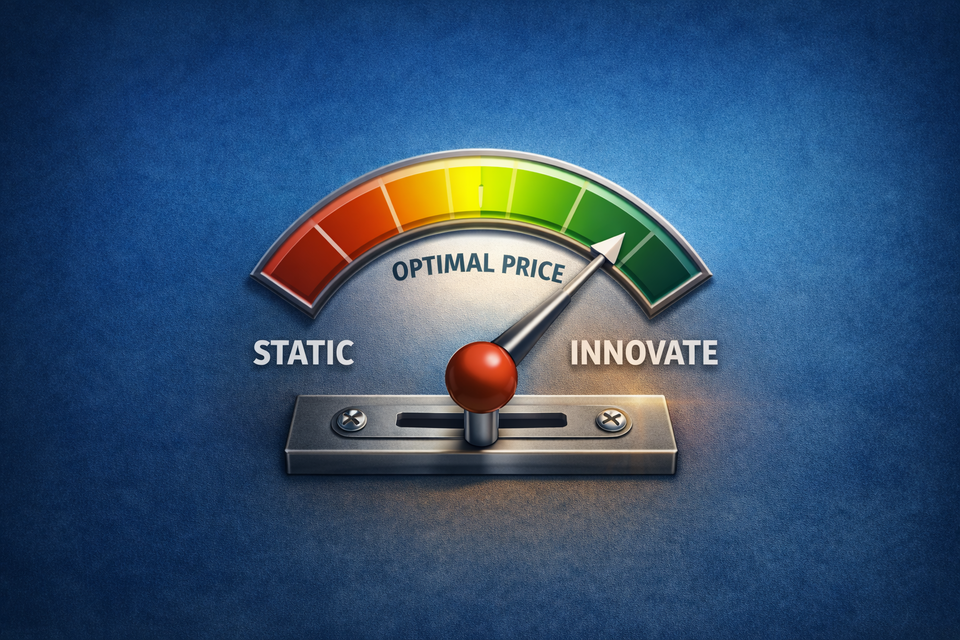
The following is adapted fromThe 100-Page Subscription Pricing Book by Felix Mörée.
When most leaders think about innovation, they picture new products or breakthrough technology. Joseph Schumpeter, often called the father of innovation, identified five core types: new products, new production methods, new markets, new resources, and new organizational forms. But there’s a powerful sixth category that often gets overlooked: pricing.
Pricing isn’t just a number. It’s a strategic lever—and when treated as an innovation discipline, it can unlock growth just as effectively as launching something new.
Too many companies set a price once and move on. In reality, pricing should evolve alongside your offering. As your product improves, as customer needs shift, and as willingness to pay changes, your packaging and pricing should adapt. That requires intentional experimentation, not guesswork.
The most effective pricing innovation is data-driven. Internal transaction data can reveal patterns in usage and purchasing behavior. Direct customer feedback can uncover what buyers truly value. Combining primary and secondary data ensures your pricing aligns with real market dynamics—not assumptions.
For incremental changes, simple experiments can go a long way. A/B testing different price points or packaging structures with separate customer groups can reveal what performs best. The key is discipline: define your success criteria in advance, ensure your sample size is large enough to draw conclusions, and know what you’ll do if the results don’t meet expectations.
When considering more substantial shifts—like introducing a new pricing model—qualitative insights become essential. Structured interviews and surveys can surface nuanced feedback about customer needs, buying criteria, satisfaction levels, and perceived value of specific features. Importantly, price-related questions should come later in the conversation. If customers suspect their responses will directly influence pricing, they may understate usage or willingness to pay.
Bring concrete concepts to the table. Mockups of packages, clear descriptions of pricing models, and tangible scenarios help customers react meaningfully. The clearer the stimulus, the more actionable the feedback.
For bold changes, testing with a subset of customers before a full rollout reduces risk. Companies like Netflix are known for experimenting extensively before implementing major changes across their user base. Controlled experimentation allows you to refine before scaling.
And don’t overlook external perspective. If you’re exploring a new model—like usage-based pricing—reach out to companies in other industries that have already made a similar shift. Non-competitors are often surprisingly open about sharing lessons learned, pitfalls, and unexpected outcomes.
Pricing innovation is not a one-time event. It’s an ongoing process of testing, learning, and refining. When approached with the same rigor as product development, pricing becomes a strategic advantage rather than a reactive decision.
...
For more advice on subscription pricing and pricing innovation, you can find The 100-Page Subscription Pricing Book on Amazon.
Felix Mörée is a pricing expert with extensive experience in marketing, packaging, pricing, andsales of subscription-based offerings. A former director at the global pricing firm Simon-Kucher, he is currently a pricing advisor for clients of all sizes, from startups to multinationals.
He holds a double degree in engineering physics and economics from Lund University. Felix is also the author of four books on pricing and profitability published in Sweden and Finland. His book Ta Betalt! (“Get Paid!”) was named Marketing Book of the Year in Sweden in 2019.

Eric Jorgenson
CEO of Scribe Media. Author of The Almanack of Naval Ravikant.
Ready to Write Your Book?
Scribe has helped 2,000+ authors turn their ideas into published books. Schedule a free consult to get started.
Schedule a Consult