Vishal Agarwal: Give to Get
Read the full transcript
Vishal Agarwal
Vishal Agarwal has lived the corporate life cycle from start to finish, beginning as an intern and working his way up to senior deals partner at PricewaterhouseCoopers. He went on to serve as a Global Top 500 senior leader for General Electric before becoming chairman and CEO of his own private investment management firm, Full Circle Africa. Over a twenty-four-year career, he navigated every facet of corporate life, from building teams and delivering value to translating multinational visions into local wins. Born in Bombay, he lived in Iran during the Iran-Iraq War, was educated in the United States, and now lives in Nairobi, Kenya, with his wife and two daughters. He is the author of Give to Get: A Senior Leader's Guide to Navigating Corporate Life.
📚 Books by Vishal Agarwal
Transcript
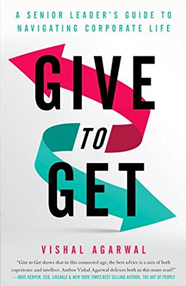
[0:00:37] Charlie Hoehn: You’re listening to Author Hour, enlightening conversations about books with the authors who wrote them. I’m Charlie Hoehn. Today's episode is with Vishal Agarwal, author of Give to Get. Why do some people succeed in corporate careers while others crash and burn? What if you had a guide book for navigating corporate life? That’s what this episode is about it’s for business leaders who are faced with the high stakes complexities of corporate culture and Vishal knows this really well because until recently he was actually a Global Top 500 Senior Leader for General Electric before he became Chairman and CEO of his own private investment firm Full Circle Africa. But he didn’t start there, he worked his way up from an intern to a senior deals partner at PricewaterhouseCoopers and over the course of his 24 year career he navigated all facets of corporate life. In this episode we talk about the challenges that business leaders face from overcoming new guy’s syndrome to finding your why and even overcoming burnout. So, whether you’re a senior level decision maker or you’re on your way to becoming one, this episode is for you and now here is our conversation with Vishal Agarwal.
[0:02:17] Vishal Agarwal: The early days of work when I first moved to Africa taking a job with PricewaterhouseCoopers so I have begun my career with PwC as I told the tale of my book and then later on in my career I have this opportunity to move to Africa, take on an interesting role. And what I found in those early days early months, kind of, shook me off a little because while there was a new environment around me, so forget what was maybe opting outside the office building in terms of geography and assimilation and culture and all of that, kind of, stuff, I think it was not so much that but it was what was happening inside the office, what was happening with team dynamics, that was how I felt I was being treated as a leader who just come in to a new team and how I felt lonely or how I felt confused, how I felt isolated, how I felt that I didn’t have support of peers or senior folks like partners in the firm that had actually brought me to the region in to the firm. How I felt that some of you didn’t have the trust of the team and those early weeks and days and months were what I worked so hard to try and navigate beyond. And those memories served me well in late years and as I got a chance to mentor peers and other senior leaders and, you know, young managers that came in to our business. So, those were the early years that I think are the formative years of this book if you will.
[0:04:07] Charlie Hoehn: Does a particular moment or instance stand out to you where you really felt that way?
[0:04:11] Vishal Agarwal: Well yeah, I remember going to work out sessions with teams and not feeling involved enough. I recall, kind of, not feeling trusted enough, right? I might have felt isolated them I might have felt not leveraged sufficiently then, I might have felt not being given enough of attention then. But when I reflected on it it was declared to me that it was more trust than anything else. It was more relationship than anything else. It was more not having enough of time with each other that drove those moments of not feeling as one with the team.
[0:05:01] Charlie Hoehn: And, you call this new guy’s syndrome, right?
[0:05:03] Vishal Agarwal: Yes, new person syndrome, you know, where leaders come in to businesses all the time, you know, a CEO and a great role gets lateral opportunity and moves from Coca-Cola to Hewlett-Packard or from General Electric to Siemens and feels that with all these years of experience I can do bigger and brighter things in my book I give the example of my friend Denny, you know, who went from a US investment bank to a European investment bank. That culture part our readers should not get focused on, but truly just realize that it’s the new environment that completely discounts you. The new environment that might kind of say, “Hey, yes we know that we hired you for the CV but what have you actually done for us? And what is our relationship with you? And do we really trust you? And let’s, kind of, go through those trenches together that’s kind of build the relationship through some firefighting together,” right? Because you don’t have the war scars to be able to truly have that trust between you.
[0:06:14] Charlie Hoehn: Yeah, and so, how did you sort of figure this out and piece together how did it navigate corporate life as a new leader? I know you laid it out in the book but where you able to figure this out through conversations with your team or were you seeking advice from your mentors, how did you do it?
[0:06:35] Vishal Agarwal: So, a little of everything in this specific example of new guy or new person syndrome, there was some trial and error because there was no guide, there was no handbook, and I was new in the role so I didn’t actually have a mentor. So while I try to build some mentor-like touch points that couldn’t be in week one couldn’t be in month six for that matter, right? I mean it comes with a little bit or time so you build a little bit of face time. You have some time with people you build a little bit of trust with peers and perhaps you can have some mentor-like touch points. So, it was really in my case some trial and error, right? And, what I did was I, kind of, really took my emotional IQ and the radar of my emotional IQ and turn it all the way up. I took my self awareness and turned up the volume of my self awareness for myself all the way up and by using that radar if you will, to kind of, catch what I was trying hard to listen from my teams, from my peers from the office culture around me, I think that served me well because then I was listening I was focused on listening to body language, I was focused on listening to feedback and I recalibrated for that. And the biggest thing that I did that served me well is I focused on building relationships and by building those relationships that served me well.
[0:08:14] Charlie Hoehn: So, it sounded like you became deeply focused on serving others through listening.
[0:08:21] Vishal Agarwal: In my humble view, from a leadership journey standpoint, I think leadership is about serving people and I often say as leaders get bigger and bigger given the seas wits for years for instance, Charlie, I’ve been saying that I don’t do any real work and, you know, people kind of look at me and roll their eyes or laugh at me and I, kind of, say, “Well think about, alright, the everyday grinding, I don’t write spreadsheets anymore. I don’t do any, kind of, deep analysis anymore. I don’t write very large Word documents or write big pitch books anymore. I don’t lift stuff,” right? My role as a leader is one of inspiring, my role as a leader today is to watch the back of my teams to help them navigate to help mentor them, to create a safe environment for them to do what, all this great work they’re doing. So, I think the role of leaders today has changed from the time of, you know, fathers and grandfathers and while in some ways it has become easier in terms of the amount of weight you need to lift from my every day grinding standpoint it is actually quadruply hard at in terms of really being there building trust providing guidance, serving, serving, serving.
[0:09:50] Charlie Hoehn: Agreed, I’m curious Vishal when did you really feel you had a breakthrough that you had overcome the feelings of insecurity when you first started out and really fount your own your leadership role?
[0:10:07] Vishal Agarwal: I couldn’t say there was a moment but I could say there was lots of gratification. I saw it in the eyes of my teams. I saw it in the joyous celebration together around wins. I saw it around sharing and collaborating. I saw it around - so at a superficial level it could be feeling more inclusive getting more attention but at a deeper level it was people asking for advice. People asking for to be mentored, people asking for, how to solutions, people asking for a lot more, “What do you think?” Right? And I think that very gratifying and you don’t have to share it within people’s voice who can see their eyers, you could see them their body language and while at some level it’s an iterative process it’s never you got it hundred percent right because then I think you just become complacent. I think as a leader you can tell that, you know, your team know that you have their back. Your team knows that there’s a trusted relationship and that’s very gratifying because then you know you can do so much more with that team.
[0:11:18] Charlie Hoehn: So, your book talks a lot - it has a bunch of great material like creating a stakeholder map, taking credit to the bank, finding your why, what would you say the biggest take-away is from the book? What’s the one thing you want listeners to really remember from this conversation?
[0:11:37] Vishal Agarwal: Well, you know my favorite story to leave my listeners and for them to, kind of, have it at the back of their mind is my lion and goat story and I want my listeners my readers to always be the lion. And the reason why that’s important is a lot of the stuff that I describe in the book whether it is culture whether it is navigating whether it’s building teams whether it is, you know, detractors in the business, whether it is being underwhelmed, you could be fearful of all of those things but you shouldn’t be is what I’m saying to the reader. The one thing you should be fearful of and that I always am fearful of is not having courage. The only thing that readers, I would say to you, you should be fearful of is not having the courage not having the courage to navigate, not having the courage to assimilate culture, not having the courage to build teams and having their backs or building trust with them all of that stuff including not having the courage to deal with your own burnout. That’s the hardest thing I would say to find yourself without the courage, and therefore, be the lion.
[0:13:01] Charlie Hoehn: Why are you afraid of losing your courage, did you go through that?
[0:13:06] Vishal Agarwal: No, look I would say that they’ve been many moments, where I have been not just reflective but perhaps slow to make a decision, perhaps drag my feet at making a decision. Perhaps overly analyze something, perhaps pause. Which are not bad things but there is a fine balance between being reflective and pausing and thinking through it a lot more and not doing something because you don’t have the courage. That fine balance is an important one and over my career I have had to catch myself coach myself give myself therapy to not fall ofd that fine line. And I have to make a lot of tough decisions as a senior leader which I know exactly I have to do every day. From course correction to letting team members go from downsizing, to you know, shutting down a project, giving hard feedback. These are very hard decisions that leaders have to make and they have to make them every day as they get more and more senior. So, finding the courage to get pass that thinking clearly and objectively is very important. It doesn’t come natural and it doesn’t come just by saying, “I’m going to have courage,” you don’t take a protein or a vitamin in the morning and say, “This is my courage vitamin.” It comes from a lot of hard work and reflection and self-awareness and catching yourself.
[0:15:48] Charlie Hoehn: You know, one of my favorite definitions of depression, is a loss of courage.
[0:15:47] Vishal Agarwal: That’s a good one.
[0:15:48] Charlie Hoehn: Yeah, yeah, and I’m curious of what would you tell a leader who wants to regain their courage? What would you tell a leader who wants to be a lion again?
[0:15:59] Vishal Agarwal: That they were actually born a lion. They just forgot about it. They were born a lion. They could kick, they could scream, they knew when they wanted to eat, they knew when they wanted to sleep, it’s in us, we’re lions. It’s just that as time goes by we get siloed, as time goes by we get fearful, as time goes by we can get hazed. And if we fall in to that trap of putting a next down, if you fall in to this trap of yapping too much, being restless, not being patient, being indecisive, that’s goat-like behavior and ultimately you’ll put your head down for becoming a nice dish of biryani, as I facetiously say in the book.
[0:16:59] Charlie Hoehn: If you could give your book, give to get, to any leader in the world right now to help them be more of the lion who would you give it to?
[0:17:09] Vishal Agarwal: Oh, that’s a tricky one. I would really like to get this book in front of someone that admired dearly Jeff Immelt, you know, Jeff was the Chairman and the Chief Executive of the General Electric company. Leaders like me got a chance to watch him and learn from him. This is a very trying time if you watched the G stock for the company. There are a lot of question marks on culture and navigation and more importantly outcomes. And I think that Jeff is the ultimate lion that I ever worked with and then I would love to get him a copy.
[0:17:55] Charlie Hoehn: What would you think would happen, and really this transitions in to my next question, which is what are you hoping is going to be the transformation that your book has on corporate leaders? What was your intent in writing the book?
[0:18:11] Vishal Agarwal: So, my intent was to really help to share to, kind of, mentor. But there’s actually a second piece of this which is I really like to submit to peers to board rooms to senior executives that this is the, kind of, stuff that things that I talk about in my book, the obstacles, the nuances, the cultural bits that I talk about navigating better past, are actually the type of things that we should not have an organization. Multi-nationals, corporate, businesses, small and large are full of these obstacles, these silos, these cultural difficulties, that executives have to navigate through. They are full of situations that underwhelm executives they are full of situations that accelerate their burnout. They are full of situations that confuse them from a stakeholder relationship standpoint. And while I offer mentorship and my years through this book to folks to be able to navigate, I implore senior leaders, key decision makers, to actually eradicate this stuff form this type of behavior, these kind of bureaucracies from their corporates to make the companies nimble and, agile and great fun places to work where teams foster and grow horizontally and learn and share with each other every day.
[0:19:50] Charlie Hoehn: Let’s touch on that last point making a company in to a fun place to work. Now, what is success look like when it comes to making a place fun to work? Because they’re some companies that hear that and think we need to get some ping pong tables in here. What is it to you? What is it look like?
[0:20:09] Vishal Agarwal: That you fail and you succeed together. That you go as hard as you possibly can for objectives that I are not mine and your’s, but our’s. That we craft goals together, we’ve craft the solutions to achieve those goals together and we celebrate our losses as well as our victories together. And I think that’s a fun place. I’m an old fashion, cufflink, suit and tie guy. I’m not your ping pong, bean bag guy that says that if you have bean bags in your office it becomes fun, yet if you have teams that are motivated to play together, it becomes fun. If you care about personal relationships and make leadership personal, knowing your kids names or understanding what pressures you going at home. We spend so much of time together, make the relationships personal and I mean that from a leadership standpoint. I think that’s what makes it fun because we spent so much of time together, right? How could you not build a sense of community, how could you not build the sense of partnership, right? And, ultimately for me the test is, you know, can you - can you invite your office colleagues, your teams, your stuff, home to dinner with yourself and if you can in a true fashion, I understand you can always have, sort of, wins across the board but if you largely say yes to the question then you have such a fantastic workplace.
[0:21:59] Charlie Hoehn: That’s a fantastic indicator. I love that. I’ve heard people describe if – if you want to go out for a drink with your team, that’s a good indicator. I like inviting them home for dinner, it’s even better.
[0:22:12] Vishal Agarwal: If you can put them in front of your wife and your children, in front of your spouse and your kids, that’s the ultimate test of it then you’re proud of the people that you work with at the office. You want to share their leadership with your children, you want to share that laughter in the library of your home or around your fireplace, because that’s your safest haven right. So if you willing to do that that is the test for me.
[0:22:41] Charlie Hoehn: Beautifully said, now tell me about finding your why. A lot of people end up with as you said underwhelming, sort of, missions that have been put upon them based on the structure, the bureaucracy of the company, the way things have been going. How do we find our why?
[0:23:00] Vishal Agarwal: Look the roots of at my mind comes from not necessarily from Simon Sinek’s, you know, books which I always enjoyed I think it comes in my mind from my learned children asking me that question, you know, as I for example became this crazy road warrior and jumped on planes and missed concerts and was not there when I was there I was on my phone or, you know, it was always there was this intensity madness. I remember my 10 year old asking me, “Why dad?” And I think that was a pretty profound moment for me. Was several years ago and it was pretty profound moment for me because you, kind of, say “Well, actually you know what I don’t know. I don’t even recall,” and if you talk to most leaders they would say that. If you ask them all, “Its New Years Eve and you’re on a phone call because it’s the end of the year and you going to close your book or there’s some excuse. So take a step back and tell me why again.” They’ll say, “I don’t know,” I think that’s telling.
[0:24:12] Charlie Hoehn: Kids are smart. So, Vishal tell me about burnout, tell me about overcoming that something then alive leaders struggle with. They crash and burn. Tell me about your experience with it and how you got through it.
[0:24:30] Vishal Agarwal: I think burn out is a hard one because it’s become this word that just, kind of, takes away the - sucks away the energy in you. It’s this word that, you know, burns that courage in you that I was talking about earlier. But what helped me was to find ways of balancing it out what helped me was to for example find ways to mentor people outside of the office even inside your office. You know, for years because of independence conflicts as a PWC partner I could not for example invest in the stock market and things like that. So, what I would do with the investment portfolio is I would bet on entrepreneurs. I would invest in private enterprises and mentor them and coach them. And that angel investing pattern gave me a lot of fuel to, kind of, help mitigate burnout syndrome. So, seeing that gratification that I got from being able to think about how I was changing people’s lives or how I was making difference, people do that for example through, you know, corporate social responsibility platforms that they might get attached to, people might do that through going to a local university or local college and lecturing or mentoring, you know, I’ve seen people, leaders do that, good leaders do that in many different ways but I think going beyond that single dimension of this boiler room that you find yourself in, driving every day, right? If you can picture, you know, this big battleship and you’re in the boiler room of the battleship, you’re not sitting on the great navigation bridge but you actually in this heat of boiler room and you’re driving this battleship if you picture that for moment, how stressful and difficult is that and if you do not have a release if you do not have a way to, you know, express your interest in art and culture or food or music or sport or helping people, then you just going to be in the boiler room. And I was able to overcome by doing some of those things to express my interest and East African art, I’m a foodie as I speak to it in the book and I love working with people in mentoring them and fostering growth and amongst entrepreneurs that’s what kept me sane.
[0:27:12] Charlie Hoehn: Hundred percent agreed on that tapping in to your playful nature the hobbies and the passions that you have outside of the work room, I think, keep you sane.
[0:27:24] Vishal Agarwal: And then, being able to connect the dots, right so, to be able to connect the dots like you said your life’s balances to your work balances to your hobbies and special interest and skills and qualities that you might have to had at the very early age that you were never able to express, right? And, the word balance, I often, Charlie, joke right? The word balance is a little more than my joke which is for many years when people would ask me, “What about work life balance? And I would say, “You know, my wife Mira, she has the life I have the work and that’s the balance.” And, I figure has to be little more deeper than that facetious, laughable way of putting it, right? The joke is on me.
[0:28:15] Charlie Hoehn: Was that of Vishalism by the way?
[0:28:18] Vishal Agarwal: I like to believe I’ve been using it for years. I’ve been using it for years.
[0:28:23] Charlie Hoehn: I’ve never heard that I thought I heard all the work life balance jokes and that’s pretty good, yeah.
[0:28:30] Vishal Agarwal: Glad you enjoyed it.
[0:28:31] Charlie Hoehn: Thank you, yeah, are there any stories that you particularly love in Give to Get that you want to share here that we haven’t covered? Well, that kind of brings us to some of the final points which is one of our listeners to walk away from this with a challenge. What is something they can do from your book to change their life this week? Maybe to help them regain their courage or to be a better leader or to overcome new guy syndrome? What can you give them to challenge them with this week?
[0:30:42] Vishal Agarwal: The biggest challenge that I can think of for listeners is to, kind of, go back and think of their teams and think of the ambassadors in their team as I explain it in my book. Think of those that are, sort of, the bystanders or those that is sitting on the fence and those that might be detractors. That’s a hard one to come to terms within say, “Well actually I do have detractors and these are the detractors,” and then think about what you’re doing for this people. Do you actually stand with your ambassadors all day long? Do you spend more time with those that favor you as a leader? Do you do anything for those that are your detractors? Are you actually helping them get up that hill as the graphic shows in the book to a point where, you know, the standing of shoulder to shoulder with those that are truly your ambassadors? And I think that if readers where to be able to take their teams, a private exercise for themselves and think of it in the context of those three buckets of those that are the ambassadors those that sit on the fence and those out their detractors and then truly ask themselves what are they doing for the detractors particularly, and how they could make the detractors and ambassadors I think that would be a exercise we’re doing and would give readers and your listeners some great value.
[0:32:19] Charlie Hoehn: Absolutely, now Vishal how can our listeners follow you on your journey as an author and potentially connect with you?
[0:32:29] Vishal Agarwal: On my Twitter handle vishalsvoice. By Linkedin it’s Vishal Agarwal Africa. The book has a website givetogetbook.com. I’m always like to hear from people I’m absolute peoples person to the extent that my biggest ROI on this content would be to get feedback to hear your personal stories, to hear relatable messages.
[0:32:53] Charlie Hoehn: Excellent, so reach out to Vishal if you have your own leadership stories or if this is impacted you in any way. Thank you so much Vishal this has been great. Many thanks to Vishal Agarwal for being on the show. You can buy his book Give to Get on Amazon.com. Thanks again for listening to Author Hour, enlightening conversations about book with the authors who wrote them. We’ll see you next time.
Want to Write Your Own Book?
Scribe has helped over 2,000 authors turn their expertise into published books.
Schedule a Free Consult