Phillip Stutts: Fire Them Now
Read the full transcript
Phillip Stutts
Founder, CEO, and bestselling author Phillip Stutts plays the game of corporate and political marketing on the highest level, battling with fierce competition, multibillion-dollar budgets, and a win-or-die mindset. He’s worked with multiple Fortune 200 companies, contributed to more than 1,400 election victories (including three presidential wins), and made more than 350 national media appearances on outlets like ESPN, CBS, and CNN. Phillip has been lauded by Fox Business as a “marketing genius” who has “generated record sales for his clients.”
📚 Books by Phillip Stutts
Transcript
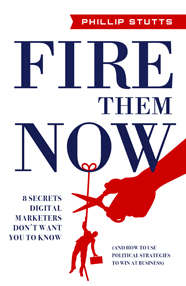
[0:00:28] Charlie Hoehn: You’re listening to Author Hour, enlightening conversations about books with the authors who wrote them. I’m Charlie Hoehn. Today’s episode is with Phillip Stutts, author of Fire Them Now. Is your digital marketing firm failing your business? If you want to get better results, there’s no better place to learn than the strategies used in the fast paced arena of political marketing. In this episode, Phillip points out the common failures in the digital marketing industry and how the strategies and tactics used in politics can be used to win for business. Phillip knows this really well. He has more than 20 years of political and business marketing experience. He’s contributed to more than a thousand election victories of senators, governors, representatives and two US presidents. Now, Phil’s digital marketing firm helps politicians and small businesses and multiple fortune 200 companies. They’ve won more than 20 honors including the award for digital video excellence in a presidential campaign. Phil has been referred to as a political guru by ESPN and a marketing genius on Fox Business and in this episode, we’re going to talk about why political marketers are producing some of the most successful marketing in the game. They work with limited budgets and super tight deadlines and yet they’re very successful and proactive. By the end of this episode, you’re going to have a better way for your business to succeed in the changing economy. Stick with us through the story at the beginning which is a bit longer than most episodes. Because it ties in with one of the most important lessons of this podcast. Now, here is our conversation with Phillip Stutts.
[0:02:49] Phillip Stutts: It really starts probably back in 2012. I was diagnosed with an incurable Esophageal disease. Basically, the nerves on the muscles on my stomach do not work and when you eat, you know, the nerves and the muscles push your food down into your stomach and mine don’t and they’ll never do it the rest of my life. I mean, it’s done, I have a dead oesophagus basically and for the first five years under that disease or four and a half years, I had three major surgeries, they’ve shredded my oesophagus, I’ve had 15 minor procedures. I am on a path the next 10 to 15 years of having my oesophagus removed and being on a feeding tube the rest of my life and for the first five years, the disease until about a year ago or a year and a half ago, I did what most everybody does which is I went to the doctors, I was at John Hopkins, and the male clinic and they said, “You have this disease, there’s nothing you can do, here’s your medication, see you in six months.” I didn’t want to face my prospects and I didn’t do any research on the disease. I just took my medicine, listened to my doctors and went home. I kept basically eating the same foods that were what I have now determined caused the disease.
[0:04:05] Charlie Hoehn: Which foods?
[0:04:07] Phillip Stutts: I’ll get in that in one second. The bottom line was that I, over time, became depressed over the fact that I was in a pretty dire situation. That ended up bleeding into my marriage, it bled into my parenting, for my little girl and I really became just a genuinely not nice person. Selfish, you can even say narcissistic in a way. I was going down a pretty rough path and then slowly but surely, over time, I just decided I didn’t want to live my life that way and the funny thing is that the first things I changed were I created basically a startup company, a digital medium marketing company in politics and didn’t address my family issues or my health. The company exploded and we went form two employees to 20 employees, we went from basically less than a million in revenue to we’re now at eight figures and we did this, we started the company in 2015. And over that three year period where we’re doing this company, I started to address my personal issues, approach my wife and told her that I understood that I was a problem and I needed to change who I was and I fundamentally had a lot of flaws that caused a lot of problems and heartache with her and I was the problem. She wasn’t the problem, I had always put it on her and the fact is it was me. Facing that really sucked but I really don’t have any other motor in me than growth. I decided, if I was going to grow, I had to change my wiring at the young age of 39, 40 years old. Then wired one way my whole life. I started working on that and I’ve made a ton of progress and same thing in my parenting. My daughter now is everything to me, she is my whole life and I don’t know if I always felt that way. I was really in a bad place. I probably attribute this not on to the way I was raised or wired but also just in the disease that probably was put it on steroids a little bit. The last thing was in august of 2016, I went to the Mayo Clinic and my doctor for a review after my third surgery and the doctor basically said to me, “Phillip, you know, the surgery was successful,” the two previous ones were not, they failed and he said. This one worked but you know, you can only have, this is basically what they did, they cut quarter of my stomach out, wrapped my stomach around my oesophagus and t hen shredded my oesophagus with food would dump into my stomach and then they stapled it all together. I’m a mess inside right now. Can I cuss?
[0:06:38] Charlie Hoehn: Yeah.
[0:06:38] Phillip Stutts: All right, I’m a fucking mess, right? You know, he said, “The staples will come undone one day, it could be in a year, it could be in 10 years where you just don’t know.” You possibly can do this surgery one more time but that’s it. They basically – if you look at my stomach, it looks like I’ve been in a knife fight, I just got scars all over the place from where the went and did the surgery and I said, well, what happens after the second surgery or if I have to do the surgery again and they said, “We’ll remove your oesophagus and you’ll have a feeding tube the rest of your life.” I’m 43. I’m thinking, wait, I’m going to be in my 50’s and I’ve got a feeding tube the rest of my life and they’re like yeah. I went, well, I can’t just eat the way I’ve always eaten, take your medicines that you’re recommending. You know, not only recommended high doses of antacids which have long term dementia effects, they also recommended opioids for pain and all that stuff and I just went, “I’m not doing that anymore, I’ve got to get a hold of this.” I spent six months putting everything in my power, everything I knew what to do into understanding the disease itself. Not taking action, understanding it. I took thousands of tests from food allergy tests to blood test, took poop test, took urine test, blood test, I took everything. What we determined was that I had an unbelievable, horribly unhealthy gut. My gut health was in terrible shape, you’re looking at me right now Charlie, I am skinny, I’ve worked out five days a week for the last 20 years of my life and I thought I ate healthy and I didn’t know, I didn’t understand what was going on. As an example, one of the foods is dairy, I am incredibly intolerant to dairy and I ate cheese, milk, some kind of dairy every single day of my entire life until this test came back that said, “You should not eat dairy.” It’s crazy.
[0:08:24] Charlie Hoehn: Would you feel bad after you’ve eaten dairy?
[0:08:27] Phillip Stutts: Yeah, I think that’s part of the problem.
[0:08:29] Charlie Hoehn: You’re just fine, yeah?
[0:08:29] Phillip Stutts: Yeah. I guess, I don’t know what feeling bad was, it just felt normal to me. Once we understood, there’s two things that I’m fighting, which is how do I preserve my health so I don’t have to have another surgery in my oesophagus stays intact and then obviously I had this disease and can we ever figure out what to do with my oesophagus. That was the first six months and then a year ago, I went to a conference in Los Angeles called the Abundance 360 Conference hosted the –
[0:08:59] Charlie Hoehn: Peter De Mendez.
[0:08:59] Phillip Stutts: Peter De Mendez. Who is now become a friend and he got on stage and he talked about – taking a moon shot. Everybody in their life should be taking moon shots. I went to the convergence and I thought I was going to be – I was working on my business, say it’s a business conference and that’s what I thought I was going to work on. It hit me like a bulls eye in the head that I needed my moon shot to be my disease. I decided, I write at my notebook, I will cure – I will find a way to get this disease cured in five years. And again.
[0:09:29] Charlie Hoehn: Which previously, everyone had told you, incurable.
[0:09:32] Phillip Stutts: It is incurable. No one’s ever been cured of this.
[0:09:35] Charlie Hoehn: Yeah.
[0:09:35] Phillip Stutts: Ever. It’s rare and I tell you that is one out of a hundred thousand but most people heave it in their 70’s and 80’s. My age, it’s probably one out of millions and the reason I say that is there’s no money in rare diseases. No one’s looking for a cure, no one’s trying to find a cure, it’s – I’m out there on the ledge and so as part of this transformation of my psychology both in the way I lead my business, became a father and a husband, I decided to take control of my disease. You’re asking me what this book is about, I’m getting to that. But the bottom line is, I created this moon shot and over the last 12 months, I wrote an article in Inc. Magazine a year ago, it got picked up, someone saw it, it’s a researcher on this disease, reached out to me, said that my moonshot was idiotic but she would call some doctors, found this one doctor, Johns Hopkins, I was treated at Hopkins and had failed surgeries at Hopkins, this doctor had never been introduced to me, he had been working on this disease for 20 years. She put me in touch with him and I told him, I wanted to find a cure to the disease and he said, well I’m working on a cure for this disease. I said, “I believe stem cells could probably cure this disease,” – by the way, I’m not a doctor, I just made that up. He said, I believe stem cells actually can be the cure to this disease. We started, we put a team around me and we started working on it and I had a call with the doctor last week and we’re almost approved by the FDA and we’re going to create a one man clinical trial, I’ll be the guy, it’s never been done before, it has not been done on animals, they will extract stem cells out of my calf, they will culture them, grow them and then in the fall of 2018, they will begin a clinical trial where they will inject stem cells into my oesophagus to see if it will regenerate the nerves in the muscle. The reason that that long story’s being told is that I started at a depressed place, I started at a place where I didn’t lead my life the right way and I changed my mindset and because of that, I’m on the precipice of a clinical trial. If that trial succeeds, holy cow, that’s amazing. If that trial fails, I’ll figure out plan B. I mean, it doesn’t really bother me, ultimately, this disease is a blessing, it changed my life for the better, improved my life in so many ways, I wouldn’t take it back and frankly, if you gave me the chance to go back and not have it, I would take it still. Why that relates to this book that I wrote called Fire Them Now -The Seven Lies Digital Marketers Sell, is that in a parallel universe over the last three years that I created my startup company, I kept seeing CEO’s of businesses very frustrated in the digital marketing space. They kept hiring digital marketing agencies to help market their businesses that in the past they could market their business by running TV ads and radio ads, it was a straight shot, hey, let’s buy a TV ad, look, people are coming in the door, there’s this huge ROI, this is easy. The digital marketing space is not that way and these owners of these businesses were so confused and pissed and frustrated and they had fired one digital agency and then they hired another one and they fired another one. I’m in the political marketing space and I go, “Well, why did that digital marketing firm do this and this,” and I just started seeing that on the business side, digital marketing agencies were stealing from the people that they had hired them, they were being fraudulent to the people that were hiring them. And I found that the principles that we were employing in politics were the honest and truthful way for these businesses to succeed. And in a way, these business owners were sticking their head in the sand and much the same way I did for my disease and into my own life for a long time and it resonated with me. I like felt empathy, I understood their pain. Because these business owners, their business is their life, they built something, they own it, it is something that’s very valuable and important to them and it was, they’re losing market share. This disruptive economy that’s going on right now, it’s freaking everybody out and they’re trying to get ahead of the game but they’re not doing anything because they don’t understand the market, the digital marketing space for their own business. And so I decided to shed a light on that and tell the lies that the digital marketers are out there selling businesses and then lay out a lot of stories on businesses that are doing the right things and how political principles can actually grow a business and grow their market share. And I lay out tons of examples of how businesses had used political principles to grow and that was the impetus of the book.
[0:14:21] Charlie Hoehn: Wow. I mean, thank you for sharing that first of all. I can’t tell you how personally inspiring that is, that you took that mentality because I’ve seen family members of mine be sentenced basically to incurable diseases and had the initial reaction that you had, right? Of just burying your head in the sand or just this is the way it is. I get that. It’s also so frustrating and sad. So it’s great that you took the growth mindset of –
[0:14:58] Phillip Stutts: I would even tell you this, I mean, this is just a month ago, you can hear me now, you can understand my passion, you could see that I have a growth mindset and all that stuff but even a month ago, I mean, my wife sat down and says, “You’re still being held back,” and I go, “How?” And she says, “There’s certain amount of fear still in you.” I went, “Man, that is so intuitive, it really is.”
[0:15:20] Charlie Hoehn: How did she pick that up?
[0:15:22] Phillip Stutts: Well, we bought some property and we want to build a house and I was like, “I don’t know if we got the money,” and she’s like, “Well, if you change your mindset and said, I‘m going to figure it out instead of saying, how we can’t do it, let’s figure out how we can do it,” and I went, “Yup.” Frankly, the thing that will hold anybody back is fear and so literally, this is four weeks ago, I just said, “That’s it. Fear will never grip my life again,” I’ve already relinquished about 80% of it, right? There’s this 20% that’s still holding me back a little bit and so I just decided a month ago, I’m giving up that 20%, I’m done with it. I don’t want to live that way anymore and I don’t want to see businesses live in fear. We talk about the disruptive economy, look, you’re wearing Austin right now, we’re in the hub of tech and everything and we’re in a building where I just saw Uber is in this building that we’re in right now and we talk about automated cars, right? People in the tech industry will laugh out loud at automated cars like that’s a done deal, it’s happening, right? My five year old daughter will never drive a car, that will never happen, it’s not about automated cars and it’s not about truck drivers, are the first people to be disrupted, it’s about the second and third order consequences of that just one disruption in an economy that will have thousands upon thousands of disruptions and the example I talk about is, in the book is, look, if you work in the emergency rooms of hospitals and all of a sudden, we have automated cars that are 99% safer, what does that do to emergency room nurses? How many will be cut when governments can’t collect speeding tickets anymore, how does that affect revenue, tax revenue and where do we get the revenue to make that up and who has to be taxed. Then the biggest impact of all I think is organ donations. When you have – last year we had 38,000 people die in car accidents in America, millions worldwide. What happens to those people on organ donor lists when those people that passed away in a car accident and when their organs aren’t available anymore.
[0:17:27] Charlie Hoehn: They got to go to the 3D printers.
[0:17:29] Phillip Stutts: That’s right. That’s absolutely right, there’s a guy named Tony Atala at wake forest university, go look him up on YouTube, he gave a Ted Talk on this exact – he’s literally 3D printing organs.
[0:17:42] Charlie Hoehn: Is that your plan B by the way?
[0:17:44] Phillip Stutts: Yeah. Tony Atala is on my team.
[0:17:47] Charlie Hoehn: There you go.
[0:17:50] Phillip Stutts: I have an insane group around me.
[0:17:51] Charlie Hoehn: Yeah, no kidding.
[0:17:53] Phillip Stutts: It’s really cool but that all started with one moonshot and a notebook that I wrote down.
[0:17:58] Charlie Hoehn: And putting yourself out there and making – yeah.
[0:18:01] Phillip Stutts: In a way, God, this sounds crass and I’ll admit, it is. I marketed my disease and guess what?
[0:18:07] Charlie Hoehn: That’s right, yeah.
[0:18:08] Phillip Stutts: Look where I am right now. You can say that’s misleading or not genuine and I will admit – there are probably certain elements when you put yourself out there, I wrote a 10 part series on Medium on it and about the whole process and it’s fair. But at the same time, the result is that I’m on the cusp of a clinical trial and I have a team of doctors, world renowned doctors around me right now that all happened because I created a moonshot.
[0:18:33] Charlie Hoehn: It created a conversation with people in the medical industry.
[0:18:38] Phillip Stutts: Sure.
[0:18:39] Charlie Hoehn: That normally they probably wouldn’t be exposed to it or feel the impetus to jump on that.
[0:18:45] Phillip Stutts: That’s right, yeah.
[0:18:47] Charlie Hoehn: Let’s talk about your book.
[0:18:47] Phillip Stutts: Okay, let’s do it.
[0:18:49] Charlie Hoehn: I’ve got experience in digital marketing, I have seen the types of marketers you’re talking about, I probably been the type of marketer that you’re talking about.
[0:18:56] Phillip Stutts: You’re a liar.
[0:18:57] Charlie Hoehn: Right. Talk to me about the marketer’s lies . And it’s funny, I was talking to a friend of mine the other day and he said if I could write a book, I would write “Marketing is a Fraud.” Tell me the lies that can expose the game.
[0:19:13] Phillip Stutts: Marketing isn’t a fraud. Honest marketing works, I’ve taught, listen, if I told you all seven we’d be here for six hours because there’s so much context behind it and that’s why you have to read the book to understand the context and then we lay out the political principles behind – why it’s a lie and how it can be overcome. I’ll give one example. The lie is, you know, “My God, your product is amazing, I cannot wait to market your product,” and that sounds like, how is that a lie? Well, it’s a lie because what digital marketers do is they stroke the ego of an owner and they tell them that their product is amazing. The product may not be amazing to the customers; how do you know? But in the pitches, these marketers will say, “My gosh, this is the coolest product ever seen, your customers love it, we’re going to market this, we’re going to – you know what? You’re going to sell out for a million dollars, hundred million dollars, whatever.” That’s a lie, it’s all to stroke an ego of an owner who is very proud of their product or business and what it does is it doesn’t put the priority of trying to grow the business first. What it does is it helps the marketer get the contract and another lie is that part of the book which is every digital marketer in the corporate side that I have interviewed or every CEO I’ve interviewed has told me the same thing is that in politics, we have contracts that go month to month. I’ve never signed a contract in 22 years of being in politics where our contract didn’t have a one – any client of ours could get out of the contract in a two week to four week notice which forces to innovate constantly because we’re fighting for our jobs every single day. On the other hand, digital marketers in the corporate space get six month contracts, 12 month contracts, 18 month contracts. If they fail, if they succeed, whatever, they’re going to get paid first. They’re guaranteed contract, in fact, a buddy of mine is a venture capitalist in Silicon Valley, they needed, one of their startups, needed a digital marketing plan, they hired this digital marketing agency out of san Francisco and the agency made this VC sign, a signing – made the pay a signing bonus before they started of $75,000. Yes, before they got the work- started the work. Six months into the 18 month unbreakable contract, that this guy signed, everything was failing, the marketing plan had not worked, they had spent way too much money and it was a total bust and they still had to pay the marketing firm for 12 more months before they could get out of the contract. Another lie that I talk about, it goes kind of complimentary to that story, is in politics, we’re the ultimate startup, we start with a candidate that has no name, no brand and no money. And over a nine to 15 month period, we have to raise millions of dollars, spend it all and try to get that person elected. What that does is it forces a couple of things. When we don’t have money early in the campaign, we have to test every concept possible with very little amount of money. On the digital marketing front, you’ll appreciate this like you know, I try to tell business owners this. “Look, we want to test 10 concepts, we know two or three will work, we know seven will probably not work but before you spend a lot of money, let’s do a small spending plan and let’s test all these concepts, let’s do a three month probationary period so we can earn your trust, show you what works, you’re not out a lot of money and we’ll figure out where the ROI is for these ads.”
[0:22:59] Charlie Hoehn: Just curious, how much do you typically allot to spend for a test?
[0:23:03] Phillip Stutts: Everybody is different, but I mean, it can be a thousand dollars. I mean, you know, it could be thousand dollars a month to $10,000 a month. It depends on how big, you know, we have a small business clients, we also have fortune 200 clients. It just depends on their’s. But for a fortune 200, 10,000 a month is unbelievably small. That is nothing.
[0:23:22] Charlie Hoehn: It’s nothing. Yeah.
[0:23:23] Phillip Stutts: What it does is it earns the trust and it shows the company, we’re putting their needs above our’s, that we’re going to find out what works before we spend all their money and what corporate marketers do as they go, they test too. All of them test, that’s not a lie. They’ll go, look, “We want to test these concepts but we need a hundred grand a month and we need 200 grand a month,” or if it’s a small business, they’ll say, “We need 20 grand a month and we’re going to do all these testing,” and then they come back and they say, “Okay, we’ve spent for a small business, we spent 60 grand of your money, now we know it works and let’s get in to the real budget and we need another 200.” Again, they’re getting paid before any success. My whole principle or the whole concept of the book is to say no. Your business, you need to figure out what works. The marketer should put your needs above their needs. In politics, if a candidate loses, we lose. What I mean by that is our business is 100% reputational and referral. I cannot advertise my marketing company, it would be laughed out of the industry. Every expenditure I make in politics goes on a publicly viewable website, the federal election commission or some state based website. Every competitor of mine knows who I work for and how much I’m spending on a particular campaign. They will cut my legs out from under me. They’ll gut me if I lose a race. They will crush me in any pitch. My focus is on winning, it is on the client and when the client wins, then I get to run around and brag about how great we were and we get to make money. We get win bonuses and not signing bonuses. My point is like, you’re forced to automatically think of the client and then, if you understand that concept, then you understand how fast we have to move in a 9 to 15 month period, from zero dollars to millions to raise money, to spend money, to test concepts, to figure out what works, to get out votes, to win. For us and in writing this book, we really understood the concept was winning. And people don’t talk about winning business, they talk about market share and they talk about what’s the ROI and can we get a 10% gain.
[0:25:39] Charlie Hoehn: They do it in their Eyore voice.
[0:25:41] Phillip Stutts: Yeah, I’m like, dude, it is about winning in politics, you win or you die. You’re out of business. In 2016, our marketing firm, we got a 120 races we worked on including the presidential campaign. We won 92 out of 120 races. I still fail, I still had races that didn’t win, that’s the honest truth but we won a lot more than we did, than we lost. Because of that, we’ve doubled the company basically every year we’ve been in business. I don’t think I would have done that had I not had so much accountability in the fact that we have election day and the fact that we have transparency and all of these things are lacking in the corporate marketing space. When I started thinking about this man, I went, my god, these are incredible concepts, why aren’t businesses doing that?
[0:26:33] Charlie Hoehn: Yeah, I was just thinking, for digital marketing agencies, how could they implement that into the way that they do business, how could they lead with that. I take it this book is not to teach digital marketing agencies how to do better work and be more transparent and accountable. Do you have any advice for them? For those who want to be better and –
[0:26:58] Phillip Stutts: Well, think about this, we are in a customer centric economy. Like when we talked about the disruption a little while ago, everything is coming down to the customer. The customer is in charge now. I mean, if you go buy a car these days, the dealership no longer is in charge, right? The customer’s in charge. If you go to a restaurant, the restaurant can’t treat you bad anymore because there’s Yelp. The customer is in charge, if you get into an Uber or a Lyft, the customer rates, the drivers, well the drivers can rate the customers now but we’re really a customer centric economy. That is going to be, it is – that is where we’re going on steroids and we’re not even 10% there. Marketing agencies in the corporate side that understand this and provide transparency and go, you know, one of the things we’ve done on our corporate marketing side is we say to any business, come work with us, we’ll give you, for the first three months, no contract and we’ll do these small testing projects. After that, if you’re satisfied with us, let’s figure out how we can work together and by the way, it will still be a month to month contract after that, you basically can get out any time. But you have to prove it to the client, to the business owner, every single day and the reason my political business took off to fast is I think I understood that concept maybe subconsciously, when we started the company three years ago., The reason we picked up corporate clients is because I get this, that is where the world is going and I built a customer client centric company that only succeeds if they succeed.
[0:28:41] Charlie Hoehn: Author Hour is sponsored by Book in a Box. For anyone who has a great idea for a book but doesn’t have the time or patience to sit down and type it out, Book in a Box has created a new way to help you painlessly publish your book. Instead of sitting at a computer and typing for a year, hoping everything works out, Book in a Box takes you through a structured interview process that gets your ideas out of your head and into a book in just a few months. To learn more, head over to Bookinabox.com and fill out the form at the bottom of the page. Don’t let another year go by where you put off writing your book. How often do you hear from your corporate clients, new corporate clients “We haven’t seen an agency interact with us this way at all”?
[0:29:34] Phillip Stutts: Every single one.
[0:29:35] Charlie Hoehn: Yeah that’s what I figured.
[0:29:37] Phillip Stutts: Every single one. Now we made mistakes, we took some clients that was fired so many firms that we came in and we laid out three months and they said, “Just another firm,” and then they didn’t pay us and for the actual ad buying that we did for them and then all of a sudden you went, “All right well it is a two way street, like if I am going to be transparent and I am going to be at the goat, you have to be.” So then, we actually fired a couple of our corporate clients. Because I said, “You know what? It’s a two way street, these guys need to be on the same page as us. They need to fast, they need to be strategic and smart and they need to understand out ethics and our transparency and we all need to be on the same page and if we’re not, it is just not going to work.” One of the things that I did and it’s at the end of the book and if you go to phillipstutts.com/audit, I wanted to provide value to business owners and so we spent – While I was writing the book, we spent three months creating and marketing audit for any business owner out there, anybody listening to this, you basically go that website, you fill out all your publicly listed, your website, your social media, your digital presence, my team will spend a week or two, going through all of your information publicly available and we don’t share. It’s very private and you’ll see the agreements we have on there. The audit will literary take five minutes. We made it quick, we made it fast and then we will spend – we will monitor and audit your companies marketing and prep it and then what we will do is we will grade you and we’ll put together a score card and we’ll tell your business if you’re being taken advantage of, we’ll tell your business if you are doing the wrong things in social media so you can take that back to the marketing firm and sort of expose their lies. If your marketing firm is actually doing a great job, we’ll tell you that too. We’ll give you a great score but we will also tell you if we think you’re over spending or underspending and we will put that all together for you complementary. I wanted to provide value. In addition to the fact that this was something I identified that no one was writing about, I wanted to go one step further and I said, “Why don’t we create a complimentary audit.” This is an audit that we have charged clients in the past, $5,000, we will do it complimentary and you don’t need to hire us. If you get done with your audit and you are impressed and you want to hire us, that’s great. We can talk about that. We have to be aligned in order to work together but I wanted to provide value to the reader in a way that I didn’t think anybody else was.
[0:32:18] Charlie Hoehn: Yeah, I am looking at the form now. It should only take a minute or two to really fill this out and is there a minimum? Did you say there is a minimum threshold of a type of company that you like to work with? Of what you like to spend daily?
[0:32:31] Phillip Stutts: No. It depends on the needs of the client. You know there are businesses that are doing half a million dollars a year that want to create really cool videos for their company. Well, we have a full service digital, our full service video production team. We shoot ads, we produce ads, our ads were, last year we were awarded the best digital video on a presidential campaign and we’ve done, we on the corporate side, we’ve done beer ads, we’ve done car ads, we’ve done a bunch other things. So we have an incredible creative team and it’s a lot of fun but look? Some of those smaller companies can’t do big campaigns. So we do creative work for them. I want to serve, the only thing I ask in return is that we’re aligned.
[0:33:23] Charlie Hoehn: For sure. So that’s phillipstutts.com/audit. Phillip with two ‘L’s Stutts with two ’T’s, cool.
[0:33:31] Phillip Stutts: That’s right, Stutts.
[0:33:33] Charlie Hoehn: Excellent. So let’s talk about winning. How do you guys actually go about winning? What is the most effective if you have to pick one of the strategies that you have consistently employ in these political campaigns that companies can apply what would you pick?
[0:33:51] Phillip Stutts: I would look at the – there is a chapter I think, your number one priority that’s basically how we target. In politics, everything comes down like the first question we ask in a pitch in politics is, “How are we targeting your voters?” Right? And this goes back to what we talked about earlier which is if you are thinking in the business sense, we are asking about the customer first. How do we target the customer? What is the customer like? What are the voters like? So we try to understand more than anything what the voters want in their politician. And those that mean that I go to a politician and I say, “All right you have to believe in these things because this is what the voters want but I will tell you this and this, this a hot topic right now. If I have a candidate that is running and he is a pro-gun, pro-second amendment and he is running in a district or state that’s anti-second amendment, like wants gun control. I am not going to tell him he should change his position. I am just going to tell him, don’t talk about that issue. Speak to these three issues that you are aligned with your voters and make that the core focus of your campaign and then we figure that out. What we do is we do a lot of research and then we have an extraordinary amount of data in this world today. Data really is the driver of everything we do and in politics, every single state has a voter file and the voter file is if you are registered to vote, I know your name, I know how many times you’ve voted, I know if you vote in primary general election, I know your age, I know whether you’re married, I know that you’ve got kids, I know everything, basically about you. And this is before I get into consumer data. This is just voter data and I know this in every single state and most states, I know whether you are a republican, democrat, independent, unregistered, I know everything and so if you are – and so you’ve got to understand think about this in business terms, if we are so precise in that front that’s how we approach customers and clients when we’re doing campaigns on the business side. I know a voter if you vote in primaries that is an habitual voter and boy, you are going to get a lot of messaging from me. If you are a voter that only votes in presidential election years and it is a non-presidential election year so we are coming up on 2018, the election is on November, then you won’t get many ads from me, does that make sense?
[0:36:14] Charlie Hoehn: Totally, yeah it’s looking at these actions that are indicative of who is your ideal -
[0:36:21] Phillip Stutts: We look at the trending, we look at the actions, we understand and then we do a very complicated series of research on every single voter individually and we create voter profiles of every single voter and every single state and then we target that person with individualized messages based on what they care about and that candidate and where they are aligned and that is a very simple explanation to the very complicated way that we do it but that is our secret sauce.
[0:36:51] Charlie Hoehn: So how does that differ from maybe a digital ad agency that is focused on, “Hey, we have all this data on Facebook and we are going to spend 10 grand a month for you on Facebook,” is it fundamentally different?
[0:37:03] Phillip Stutts: No there are similarities but here’s what I would say is the difference, we do research. Tons and tons and tons of research. Not every small – I would say not any small business is doing a lot of research and one of the things that we advocate in our corporate marketing campaigns is can we do some research to figure out your customers before we spend your money. I think that is really important. I will give you a great story and it is a corporate story. It is in the book but there is a startup that would have came out a couple of years ago called Bodega, did you ever heard of them?
[0:37:36] Charlie Hoehn: Sounds familiar.
[0:37:37] Phillip Stutts: Yeah, so Bodega was they were going to put kiosks in apartment buildings and work places basically like a vending machine but would have all the staples of anything that you would have. So you don’t have to go to the CDS, you don’t have to go to the Duane Reades or the Walgreens or whatever and it is all in a kiosk. So if you live in an apartment building and you needed toothbrush, you could go down to your Bodega kiosk and get that. It sounds like a pretty good concept, got millions of dollars in venture capital funding, millions. Some of the big dogs were putting money into those. It was such a good idea, they actually did go and went out, they went out and did research and they said, “Well let’s research Hispanics to see if they like it or if they are offended by the word Bodega,” and guess what they found out, the Hispanics didn’t give a shit. 96% of Hispanics said, “No we call grocery stores and corner stores bodegas”, right? So they were like, “Great, no problem! Let’s go.” And so they went out and they created this and they started putting it everywhere and they expended all of these capital, they made one big flaw and the flaw was that they didn’t research every market or target audience like we do in politics. They didn’t research woke millennials who were offended for the Hispanics that the word bodega was being used. They called it cultural appropriation, they were offended that, how dare this company come out and do this to Hispanics, the Hispanics didn’t care. And so they took –
[0:39:15] Charlie Hoehn: You are embarrassing me on behalf of my generation.
[0:39:18] Phillip Stutts: They took to social media and they basically crushed the entire startup. It’s barely in existence now compared to what it was. I lived in Washington DC for 17 years. I lived in a very gentrified, like Austin, a gentrified neighborhood. To live in a very gentrified neighborhood, we had mini-bodegas in my neighborhood and another offending element that they didn’t research was that people in cities where they were trying to put this in big metropolitan areas, they didn’t realize that people liked their bodegas and if I was thinking about it, it makes sense. In my bodega, the bodega that we always went to in my neighborhood in Washington DC was owned by this Ethiopian family who had this incredible story how they came to this country and I wanted to spend all my money there because I love that family so much, I love their story, they were hardworking, they’re immigrants, they were working 12 hours a day seven days a week. Like that’s where I wanted to put my money right? So in addition to offending millennials, they didn’t realize that they were taking away the jobs and the businesses of the city businesses that they were trying to put these kiosks. Now the company obviously didn’t do their research properly, they didn’t look at their target market properly, they targeted and research the wrong markets and eventually it costs millions and millions of dollar and I would tell you in politics, that would never have had happened.
[0:40:49] Charlie Hoehn: Wow, that’s nuts and again, I am embarrassed on behalf of woke millennials, oh man. So doing proper research it sounds like they just did it surface level which is actually more than most digital marketing agencies are going to do. A lot of them do guess work, right? Do you talk about how to do proper research in here?
[0:41:11] Phillip Stutts: Well it’s not hard. It is literary, I mean if I were to do this for a corporate or a company that hired us, I would literary sit down with their team and spend a day and try to understand their product and their customer, again, I say the product, I need to understand the product but it is about the customer first. The thing that I will tell that is different than anything we do is just like the voter, I care about the customer. I really don’t care about the owner or the company or the product. I need to understand it but my emphasis is on the customer and so I would sit down and try to understand where they’ve had success as a business and then is there room for expansion and what those customers look like and then we would do the research and go out and try to figure out what that is. And I mean we work with. We have partnerships with lots of research firms that help us and work with us on that and then we use that data. And then once we had that data, we start doing our small testing plans but on the other side of this. You have a lot of businesses that just want a, “How do I get rich quick pill?” “I don’t know, research?” “No, no, no just give me the ad that’s going to make me the 10X ROI on my product,” and this is again is where we walk away because we have to be in alignment. Look, I am looking to grow with that business. I am not looking to make a quick buck on that business and in order to do it, you have to do the proper steps.
[0:42:40] Charlie Hoehn: Right, let’s talk about getting negative, what do you mean by getting negative?
[0:42:47] Phillip Stutts: So you hear this and listen, every single person that is listening to this will say the same thing, “I hate negative and political campaign ads. I hate them. Take them off the air, if I see one more political campaign and it is negative I am not…” right? And as a political media ad maker, I would tell you basically, “Fuck off,” because it works. We wouldn’t do it if it didn’t it work. It is the most effective way to run a political campaign. In fact, you probably even seen this. You have seen a candidate for office or a politician stand up on the microphone and say, “I will not run negative ads on this campaign. I will stay positive.”
[0:43:32] Charlie Hoehn: And you’re like, “That person just lost”.
[0:43:33] Phillip Stutts: I say that guy is a dead man or that woman is a dead woman. I mean if you want to commit suicide go do something like that in politics. So I have decided I was going to introduce the concept in the book of negative ad campaigns to businesses but it is not what you think. It’s not club them over their head like we do in politics. Well that’s fun in politics, that’s suicide for businesses, so that is not what I am saying. But there is a way to take the negative ad concept and use it in a comparative fashion to have effective – to run an effective campaign for businesses and I will lay out a couple of example is the book but I will give you a couple that aren’t in the book. There was McDonalds and maybe in November put a tweet up and they made a mistake and in the tweet, literary the tweet said, “Insert copy here,” like the person that was running the tweet just didn’t realize what they did and they posted a tweet that said “Insert copy here.” Well Wendy’s saw this and responded with, “McDonald’s your tweets are broken like your ice cream machine.” That’s going negative but by the way, do you have any negative connotation on Wendy’s?
[0:44:45] Charlie Hoehn: No.
[0:44:46] Phillip Stutts: No, it’s funny, it put McDonald’s down, by the way McDonalds is the king. I always say it’s better to use this concept when you’re the underdog. You’re punching up and if you are McDonald’s and you are punching down, that could be a problem and by the way, that tweet generated millions of social media hits. It generated probably hundreds of thousands of dollars if not millions of free advertising for Wendy’s and everybody laughed at it. Everybody. It was fun, it was smart and I encourage business to do these types of things. The best example I think of all time is Steve Jobs. Apple versus the PC, Mac versus PC and he had the nerdy PC guy and the really hipster cool Mac guy. You never saw on those ads anytime the Mac guy say anything negative about the PC guy. It was always the PC guy stumbling over himself, doing something dumb, being nerdy, you know?
[0:45:53] Charlie Hoehn: And it was ever rare for the Mac guy to talk about himself.
[0:45:57] Phillip Stutts: Right but here is the cool thing about it. I mean I understand that is a cool ad, it’s a good example, but in researching that concept because it stuck with me for 10 years now. I found out that Steve jobs had made over 360 ads, like Mac versus the PC guy. They made 360 plus ads, he only ran about 60. So this was, he understood this concept and then what he did was he took the best ones, the ones that were the least offensive, the ones that matched the principles he was going by and those were the ones that ran. So he really believed in the concept. Now if you are going to argue with Jobs that’s fine. That’s on you but my thing is he didn’t do this half ass, he didn’t just put up a tweet, like that MFer ran millions of dollars in ads. He ran it simultaneously to the iPhone coming out and you can attribute all of those things, the iPhone, the iPad but the Mac ads were part of that incredible surge that Apple took off after the iPhone came out because it again in a way, it branded everything that Mac was doing as cool, young, hip. You wanted to have that and Mac sales did go up after that ad campaign by a lot but overall it was – and the other big campaign that was done in a negative fashion and I talk about it in the book, we don’t have to get into the details but it was the Pepsi challenge from the 80’s. You’re too young to remember this.
[0:47:32] Charlie Hoehn: Oh I remember.
[0:47:33] Phillip Stutts: There was a Pepsi challenge and it was done in the 80’s and it spurred the biggest mistake in all of corporate history by Coca-Cola.
[0:47:42] Charlie Hoehn: New Coca-Cola?
[0:47:43] Phillip Stutts: Yep, they did a new Coke which was the biggest backlash. And that’s what I say, they are like these stages of grief. This is great. If you run a negative ad or do it in a smart comparative way, your competition is going to go through stages of grief. The first stage they are going to go, “Why is my competition doing that?” Oh okay. And then they are going to put their heads in the sand like we talked about earlier because they are like, “I don’t like what this guy is doing this company that is doing this to me,” and they will put their heads in the sand. And then they will come to this conclusion like, “Wait a second, they are hammering us right now. What are we doing?” And then they are going to scramble to try to adjust to it and the smart marketers are already onto the next ad. While this company is trying to play defense and in politics everything that we worked for is to be on offense. Are we on defense? Of course we are on defense sometimes but we’ve got to be on offense more than we are on defense and I am taking that to the corporate marketing front because I want my businesses to always be on offense. And then by the time this business is finally responds, hey do it in such a horrific way because they don’t understand this principle, this concept, this strategy, that they, when Coke comes out with a New Coke and it was the biggest disaster in the company’s history it almost bankrupt the entire company. This isn’t a small business, this is Coca-Cola and they almost were bankrupt over Pepsi literally taking their market share away from them which was young people were starting to drink Pepsi at a much higher clip than Coke and so they freaked out so much over it that they created a new Coke and it almost bankrupt the whole company.
[0:49:24] Charlie Hoehn: So this is awesome information. What I am wondering about is if this are such powerful examples and this works, why don’t we see more of it in the corporate realm?
[0:49:37] Phillip Stutts: We live in a very politically correct world and I think I understand from my world and what I do, this was another realization. They don’t do it. This is so obvious and this is one of the lines in the book. A lot of marketers digital marketers out there tell their client, “Don’t rock the boat, don’t put yourself out there, put generic content out so they can check the box and tell the client look we put…” sorry I will tell another great example. They will put out national, like Delta Airlines put out National Hispanic Heritage Appreciation Month and I told this story on TV the other day and the interviewer is like, “What’s wrong with that?” And I go “Look, there is nothing wrong with that concept but it is such blatant generic gobbledygook pandering that it doesn’t do anything. Here’s what Delta did, they said, “Let’s check a box. Let’s make sure the Hispanic community is happy with us.” No Hispanic gives a damn about Hispanic Heritage Appreciation Month. Here’s what they should have done, here’s what their marketing company should have recommended and here is what is a 10X on that concept: Identify three Hispanics in Delta Airlines who have an incredible story of coming into this country, earning their way in, coming to the company, working from a small job to a senior level management role, highlight their family, their story. People love to buy into great stories and I am sure that there are Hispanics at Delta Airlines who have unbelievable stories. And every – that should have been for that month that Delta did that, they could have highlighted stories. They could have done two things. Look, they could have put them on the screens of their TV where you sit on your seat on Delta Airlines, “Read this family’s story that works in our company.” One, everybody that read that story it would brand that company as Delta Airlines, they have an incredible company, they care about their employees, all those good PR aspects that every business wants. But on the other side, think of what it would have done internally at that company. To highlight an employee instead of some generic gobbledygook crap like, “Let’s just generically celebrate everyone,” it doesn’t do anything. It’s all crap and so what I try to do is get businesses to not put out crap in generic crap and gobbledygook that most marketers will tell the companies to do and then at the end of the month, the digital marketers sends a report that says, “We put out 12 press releases this month,” they didn’t do anything but guess what? “We stayed busy, pay us our check,” and the company does it because they go, “Oh the marketing firm has been busy,” I am not interested in that and that’s where I see that basically I see this a lot.
[0:52:42] Charlie Hoehn: You know this is a breath of fresh air and I can see now what you were saying at the beginning of the mentality. You had empathy for this fearful mentality of these companies, right? Because at the end of the day, they feel risk averse and they’ll just take what’s given to them by these marketing agencies but what you are describing is an empowering mindset in making you feel almost like a bull in a china shop. You have all these timid competitors, you have all these timid companies who are hesitant to make moves like this with their marketing and they are some of the most effective marketing strategies you can employ.
[0:53:24] Phillip Stutts: Look, we’ll go back to this one thing and I can’t emphasize it enough, every single business in our entire country and world will be disrupted in the next 10 years and if you are a business owner and you’ve got your head in the sand over it and you want to put out generic crap and you don’t want to use an outlier strategies and you don’t want to push your business to the next level, then you’re going to find yourself in a very difficult position very soon. The world is just changing. It is changing faster than we have ever thought and you’ve got to stay. You’ve got to grow, you’ve got to be proactive and you can’t live in the fear of what is coming. You’ve got to embrace the change just like what I did in my own disease and that’s why I am so passionate about this.
[0:54:06] Charlie Hoehn: Yeah, so Phil tell me what is the impact you’re hoping this book is going to make? Let’s look down in those, one, five, 10 year marks, what are you hoping companies will do with this? How will it change how we market?
[0:54:20] Phillip Stutts: Had I not change, had I not had the disease that I have, I freely that I would probably be divorced one day, my business would gone out of business, probably would have severely impacted my child for the rest of her life by a broken marriage and it was based in not trying to grow, not trying to be better, not - and living in fear and selfishly, I am living an extraordinary life right now. I feel an abundance of love, vulnerability, I feel I am vulnerable for the first time in my life. I have empathy for the first time in my life and I want to help other people get out of that state. I understand how it feels, I’ve lived it. It sucks and even if you don’t live it in every aspect of your life, if I can just help businesses get out of that and it helps and propels people into better places that is the impact I want to have.
[0:55:14] Charlie Hoehn: That’s a great place to be and the book is Fire Them Now, phillipstutts.com/audit is where they can go to get the free audit.
[0:55:24] Phillip Stutts: And then for your listeners, we discounted the Kindle ebook. It’s at $9.99 originally. We just reduced it to $6.99 and we’ll leave it up for a couple days after the podcast goes out. So if you want to get it on Kindle, its $6.99.
[0:55:37] Charlie Hoehn: Excellent and how can our listeners follow you and potentially connect with you apart from the audit if they just want to thank you for the podcast?
[0:55:45] Phillip Stutts: It’s all in the book, literary my Facebook page, my Twitter, my email is in the book, everything is on the book but the Twitter is @phillipstutts, just my name and my Facebook page is CEO Phillip Stutts. So those are two places you can find me.
[0:56:01] Charlie Hoehn: Excellent, thanks for being on the show Phillip.
[0:56:03] Phillip Stutts: Yeah, thank you.
[0:56:05] Charlie Hoehn: Many thanks to Phillip Stutts for being on the show. You can buy his book, Fire Them Now, on Amazon.com. Thanks again for listening to Author Hour, enlightening conversations about book with the authors who wrote them. We’ll see you next time.
Want to Write Your Own Book?
Scribe has helped over 2,000 authors turn their expertise into published books.
Schedule a Free Consult