Lance Gibbs: Not My Circus, Not My Monkeys
Read the full transcript
Lance Gibbs
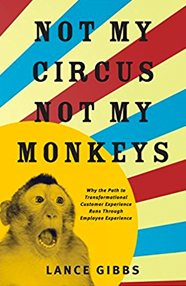
Lance Gibbs is an authority on business process management and the author of Not My Circus, Not My Monkeys: Why the Path to Transformational Customer Experience Runs Through Employee Experience. He is the founder and executive chairman of BP3, an award-winning firm that helps clients accelerate, innovate, and simplify their process solutions. A Certified Master Black Belt in Six Sigma and an OCEB-Advanced BPM Expert, Gibbs has spent more than twenty years helping companies across many industries manage and transform how they work. His book argues that the path to a better customer experience runs through the employee experience, offering strategies for giving employees the systems, authority, and support they need to do their best work.
📚 Books by Lance Gibbs
Transcript
[0:00:15] Charlie Hoehn: You’re listening to Author Hour, enlightening conversations about books with the authors who wrote them. I’m Charlie Hoehn. Today’s episode is with Lance Gibbs, author of Not My Circus, Not My Monkeys. Every company talks about the importance of the customer experience, but what about the employee experience? In this episode, Lance shares what he learned after transforming his employee experience and how making certain things in inconvenient actually made his team stronger. By the end of the episode, you’ll know why companies like Airbnb and Alibaba are the future of business. Now, here’s our conversation with Lance Gibbs.
[0:01:16] Lance Gibbs: Get some folks together and talk about — an ideal representation of folks from around the company, just a handful, no more than what two large pizzas can feed and start with the big question, which is, “Who are we? What do we value as an organization?” I’m not talking about the mission and value statements you see posted in the cafeterias or on the walls or in people’s cubes, that’s not that. If they can ask themselves the why of what they do and start having a conversation about what they value at that keeping at that level, not the how or what they do or even the what and the tactics of what they, do but the why behind what they do, it’s amazing what that will start to unlock. You will get people starting to think broader and larger and they will be less inclined to say, “Oh, this would be great but we can’t do it because they say we can’t. Or this will be great but they say we can’t.” If you just keep them on the big picture and the why and just have a conversation around what this company means, what you mean to one another, it’s very healthy and it’s very effectual. I mean, this is exactly how companies get launched you know? As entrepreneur start businesses. Companies start to change themselves. This is the exact beginning of it, this is the ideology behind all of it, is that very thing.
[0:02:39] Charlie Hoehn: What were some of the things that your team surprised you with?
[0:02:44] Lance Gibbs: As an example, we have one situation so one of the things or those particular prospect was doing at the time was they’re doing site activations. So what does this mean? Think of it as drug trials, large drug trials, each one costing five to seven billion dollars and taking 10 years. What we wanted to do is try and help the customer, this prospect figure out how do we contract that 10 years? One of the things that they ran into was around data aggregation. The way that the prospect at the time, which is now a customer, but the prospect at the time was thinking about doing it the way our sales guys were basically answering their question, the customer’s asking, “Can you do it this way?” Our sales guys of course said, what sales guys do, “Yes.” That was the end of the conversation. These are the folks that came in and said, “What if we did data aggregation this way? What if we pulled it form here? Wouldn’t that save us tons of time, tons of money?” The customer was, “Well, we don’t know?” We put together this proposal and we sent it back, the customer flipped out, they were in love. They were like, “Yeah, that’s a hell of a lot better than the way we were thinking about doing it.” Really, when the technology issue is just a way that, in their process, the way, and the points in the way, they were aggregating particular data around the pharmaceutical trial and so that’s an example. I know that sounds a little esoteric being more technical, but it was a big change. It was a big deal and again, otherwise, if we hadn’t engaged the folks in our own teams, into this dialogue and brought them into this conversation, it wouldn’t have gone anywhere. We may have missed that opportunity.
[0:04:22] Charlie Hoehn: Right. Lance, tell me, why is your book called Not My Circus, Not My Monkeys?
[0:04:32] Lance Gibbs: Oh, because that just seems to be a euphemism that has come up throughout my own experience and journey and the same thing I hear with our customers. Not my experience, not my monkeys basically says in another way, it’s not my problem. When I first started into developing IT Solutions and they’ll say the employees had a particular mindset. You know what? That’s not my problem. They don’t’ work for me, I can’t change it, not my problem. If you’re working within an organization, let’s say that a group in an organization, the customer contact center is really struggling to keep the customers happy and you’ve got somebody in another group or another department building products that aren’t necessarily making it and they’ve already told because of our contact center, this is all they’re going to do and their customer contact center’s solving problems, they would say, “Yeah, that’s not my problem.” I mean, I can go on and on, and on, but the notion of people dismissing, “Yeah, that’s not my problem,” was the reason behind the title of the book.
[0:05:28] Charlie Hoehn: Makes sense. Yeah, from what I understand, your book is — the manuscript’s locked right now and the cover’s locked, so you’re waiting for it to come out, is that right?
[0:05:39] Lance Gibbs: Yeah, that’s right. We’re looking around mid-June.
[0:05:42] Charlie Hoehn: Mid-June. So what are you currently doing to market your book or to prepare for marketing your book?
[0:05:51] Lance Gibbs: Right now, I have at least put out even a raw manuscript to a couple of very closely related people I know. Now I wouldn’t necessarily call them friends, but they’re close enough to me that our end positions, that would be impacted by this book or that would be the target into the target audience of this book, trying to get some feedback. We are planning, when I say we, the company is planning to probably do a book launch and then start setting up with our own distribution list, a campaign, put it on the, you know, get everything ready to put it up on our website linking back out to Amazon, Barns and Nobles, iBook wherever it all will live with our customers base. And then having a big component, we have an annual conference that it used to be, just an all hands, a buyer from a company comes in to an event for three days in Austin, in August, we do this every year. Three years ago, we opened it up to customers. We’re going to have another big piece of that there with some of the content for our customer base.
[0:06:53] Charlie Hoehn: Very nice. Yeah, it will be available at that conference of course and be a nice talking point there.
[0:07:01] Lance Gibbs: Yup.
[0:07:01] Charlie Hoehn: Is the book’s primary purpose to drive leads to your company, or were you also trying to leverage this into more speaking gigs or consulting with executives? What was your hope?
[0:07:13] Lance Gibbs: Yeah, certainly, it will be great if this turned in to leads, that would be, I guess, the primary — one of the primary functions for the book. If I look at it from the lens of being the company. But I’m going to tell you something much more honest about it, is through my own experience, what I have witnessed and what I have worked with for years and years, I just think it’s a message that I would love for companies to get and really start acting on. whether they engaged us or not. You know, that’s on the side. If they could start getting very serious about the employee experience and factoring that in and more creative ways than they certainly have done via traditional organizational design anyway, it really could change things for us. When I say us, I’m talking about everybody. Everyone of us. That was actually a real primary driver of finally writing the damn book.
[0:08:06] Charlie Hoehn: Yeah.
[0:08:07] Lance Gibbs: I’ve had friends I talked with that I’ve got a very diverse set of friends, they’re all over the map and what they do professionally. As I was writing the book, certainly I bounced around ideas off of them or I said, “You know, this is what I believe, what I think,” and it’s been nice. I’ve had quite a few come back to us and said, tell me, “Hey you know what? This really made me stop to think about my own organization. Made me really think about what I am doing and what I’m not doing?” Some said, you know, they even felt stupid and I can relate. I mean, I felt stupid at one point. Just the simplicity behind what we’re talking about, it’s not — man, this isn’t rocket science stuff, we are not putting people on the moon, we’re not splitting atoms with a butter knife, this is simple shit. It’s just something that via complacency, via status quo bias, we’ve just lived with, I’m rambling, apologies. But anyway.
[0:08:59] Charlie Hoehn: No, this is good.
[0:08:59] Lance Gibbs: This is part of why the book got written. Certainly yeah, as a lead gen for the company would be great but if we could just get any number of this companies, pick up the book, read it and go, “Ah shit, you know, this is totally doable. I can work with this. This is pragmatic, this isn’t crazy stuff,” and start doing — taking some of this behavioral steps and changes, it would be a very good thing.
[0:09:23] Charlie Hoehn: If you could only give it to one company, who would you pick?
[0:09:28] Lance Gibbs: Oh wow. It’s not a company, but I’ll give it to the United States Government.
[0:09:34] Charlie Hoehn: Yeah?
[0:09:35] Lance Gibbs: Yeah.
[0:09:36] Charlie Hoehn: That’s a good choice.
[0:09:37] Lance Gibbs: Yeah.
[0:09:39] Charlie Hoehn: I won’t push you on that one, that’s for sure. So how are you going to get the book out there? If the goal is to ultimately shift the way companies approached the experience, how are you planning on getting it out there?
[0:09:55] Lance Gibbs: Well, we’re certainly going to do as much as we can with generating awareness for the book.
[0:09:59] Charlie Hoehn: What does that mean?
[0:09:59] Lance Gibbs: In every — well, awareness for the book, in any vehicle, in any channel that you can possibly imagine. From the website to Twitter, to publications, you know, maybe submitting some excerpts of the book or at least some of the talk track from the book to other entities out there that are outside of the — necessarily the, our industry or IT constituents of the industries. Speaking opportunities as much as I can, wherever I can, how often I can. Having other people on our own organization, be able to go out and do the same thing and talk about some of the principles because we believe in them, we certainly employ them under our own roof. That is really right now the mandate. Every customer will have copies of it, they may or may not like the book but that’s really beside the point. As much as it is, if there’s anything that gets them to think or click in the right way would be a great start. You know, there’s no illusions here. This shit takes time. I mean, when you’re changing organizations, man, that’s a lot of energy.
[0:10:55] Charlie Hoehn: Sure.
[0:10:55] Lance Gibbs: It’s just worth it in the end.
[0:10:58] Charlie Hoehn: Yeah, can I make a suggestion?
[0:11:00] Lance Gibbs: Of course.
[0:11:01] Charlie Hoehn: For your marketing. So if you have a pretty clear idea of the type of person that’s going to not only benefit from this book but would love the book, would lean into reading it, it’s right up their alley, I would suggest reaching out to as many of those people as possible and sending them the book for free.
[0:11:23] Lance Gibbs: Oh yes.
[0:11:23] Charlie Hoehn: Then following up with them to get a response of some sort. I mean, you can either do this with journalist who have written about — what was the Philip Principle, is that the book you mentioned?
[0:11:34] Lance Gibbs: The Peter Principle.
[0:11:34] Charlie Hoehn: The Peter Principle. Duh. Yeah, my bad. Journalist who have written about that book, a similar book. It could be, you know, all the people in government that you want to reach that could actually make these changes. I mean, it might be difficult of course but if you include a one pager with them, that’s a personal note on what two pages they would get the most benefit from and why you sent it to them, you’re going to get a decent response rate. I mean, you’ll get a decent response rate if you can do some personalized individual emails as well which you can — this is getting into the details, you can send them out in bulk but if you’re offering those books for free, asking them, “What is your best mailing address or would you prefer the PDF or the Kindle file?” You're going to get a good response rate from probably close to half of those people. Then it’s just a matter of following up and seeing what they thought and how you might be able to help them.
[0:12:36] Lance Gibbs: Yeah, I know, that is great advice. Because what I’ve done right now is I’ve reached out to about 12 folks, a couple of them are analyst, they’re in our industry, everyone knows who they are and then a couple of other CEO’s, large companies and was going to, as soon as this thing got out of copy editing and lay out, whenever we can do a prerelease, I was going to do that. But I love your idea of further expanding that, you know, at the time we decide this is jointly available or even through the prerelease, I don’t care. This book was definitely not written with any notion of being a money maker per se. So yeah, I love the idea of the personalized area, especially the call outs of, “Here are the two pages you need to read,” right? Or, “Here’s the chapter, here’s 12 pages, right? Read it.”
[0:13:27] Charlie Hoehn: Or, “Here are the three reasons why this book is relevant to you and why it will help.” Because it really sounds like you’re coming from a place of “I genuinely just want this message to be in the hands of people who can do some good with it”. So if that’s your goal, then it’s just a matter of asking, Lance, how many of those people do you ultimately want to reach and to impact? How many people is it that if you hit that number of people, you would feel this is a success. And I’m asking you. Author Hour is sponsored by Book In A Box. For anyone who has a great idea for a book but doesn’t have the time or patience to sit down and type it out, Book In A Box has created a new way to help you painlessly publish your book. Instead of sitting at a computer and typing for a year, hoping everything works out, Book In A Box takes you through a structured interview process that gets your ideas out of your head and into a book in just a few months. To learn more, head over to bookinabox.com and fill out the form at the bottom of the page. Don’t let another year go by where you put off writing your book.
[0:14:53] Lance Gibbs: I don’t know the answer to that, my friend.
[0:14:55] Charlie Hoehn: Sure. But if you can ballpark it, we can have a better idea of what the outreach process is going to look like?
[0:15:03] Lance Gibbs: Yeah, I mean, are you talking about people that I know or are you talking about just general population?
[0:15:11] Charlie Hoehn: I’m talking about specific people. I don’t think it makes any sense to focus on people who aren’t interested in your message. You might think actually, “This is where I will push back on the government part.” Right? A lot of people in government do not care about this message, but there are some that do for sure, undoubtedly. It’s the same in the corporate world, there are some companies that do not care.
[0:15:38] Lance Gibbs: Not care.
[0:15:39] Charlie Hoehn: You know, we can argue that all day, those people exist. It makes no sense to focus on them, what it does make sense to focus on is the people who are already communicating this. They’re already talking about this all the time. They’re already sharing stories about this, about the impact that it makes. They’re already reading books that are similar to this, they’re already sharing those books with other people. They’re already embodying the principles of these books. So those are going to be your earliest champions and they’re the ones who can kind of get the ball going and spread your message to other much faster than Joe Schmo, the politician in Washington DC who had just heard about your book and has zero resonance with it, right?
[0:16:30] Lance Gibbs: Right. No, I think the number is, I got a better picture of what you’re describing. I think that the number is you know, between three to 400 people.
[0:16:42] Charlie Hoehn: Okay, you're going to have to reach out to three to 4,000 people.
[0:16:47] Lance Gibbs: Yeah.
[0:16:48] Charlie Hoehn: Yeah, to get the kind of conversion that — it will end up being about 10% of the people will not only have your book but have taken some form of action on it. So, knowing that, being able to allow some time for you to get a list of three to 4,000 quality, qualified people who are ready and willing to spread the message that your book preaches and that they’re already enthusiastic about. Having enough time to reach out to them, get them the copy of your book, follow up with them, which will probably take numerous times to do for each of them and you’re an IT guy, you know a lot of this can be automated but the initial outreach and the personalization, that takes some time. You said your book’s coming out, I’m sorry, I forget the date.
[0:17:43] Lance Gibbs: Mid-June is what I’ve got back from Germany, we don’t have…
[0:17:47] Charlie Hoehn: So in a month?
[0:17:48] Lance Gibbs: Yeah. Call it a month.
[0:17:49] Charlie Hoehn: Yeah, okay. So, you said, “You know, this takes some time and it takes some time to get the impact out there.” It may make sense then for, I mean, like our company does this, we can show you either how to do that or we can just help you get it done for yourself. So all depending on what you want to do, but if you’re trying to reach three to 400 people, then it’s going to require three to 4,000 at the outset at the top of the funnel.
[0:18:19] Lance Gibbs: Got you.
[0:18:21] Charlie Hoehn: So what is the follow up book to this? Is there more that you wanted to say on this topic or is there another topic you wanted to tackle?
[0:18:29] Lance Gibbs: I mean there is one area, I have to do with quantitative psychology because I know that the IT geeks out there would love this stuff, but I think others as well too. People in change management for instance. So are you familiar with the net promoter score?
[0:18:45] Charlie Hoehn: Yeah.
[0:18:46] Lance Gibbs: Okay, there is not an analog for that for employees. Common practice, they do a vital signed annual survey of employees but December one, that’s a year and they are taking a snap shot of how someone felt that day when they filled out their survey. In order to gain employee insights there needs to be much higher fidelity kind of data irrigation and information insights from actions and activities but it cannot be intrusive. And so I have kind of worn down the path of more than just cinema analysis but using actually some pretty basic things that actually artificial intelligence machinery could do as long as it’s basic because I don’t require to think much more than a rat does, but it needs to do enough to start getting some additional insights. So I thought about writing a book about those techniques and technology around doing that. So as much as we murder much like Fred Reichheld wrote The Ultimate Question, there might be an analog to that but dealing with the employees because what I believe, what I see in the future is companies not consisting of 250,000 people all decentralized around the world. I think in the future it’s going to be a handful of key folks and a complete ecosystem around them of people that deliver the services, products, systems, applications that they need. People will have their own individual brand, extreme individualism is already there certainly with millennials. That’s only going to increase and it’s going to be much more around engaging communities of folks that aren’t necessarily under your four walls or under your domain as a company, so it’s important. I do believe that is going to be where things are heading. So at any rate that might be the follow on. If it’s not that, it’s going to be a fiction book.
[0:20:40] Charlie Hoehn: So you said it will be around engaging communities. Can you talk about an example of a company that is doing that really well right now?
[0:20:50] Lance Gibbs: Yeah. So if you look at, well shit, well if you look at Alibaba, the largest retailer in the world and they don’t actually make anything. You can look at Airbnb, which they actually don’t own any real estate but yet they have halatious communities of engaged people. You can look at some of the digital disruptors from an external standpoint as a consumer phase and you can look at some B2B companies who are letting more and more go and bringing in the specialists that they need, which is kind of what’s driving some of this. The kind of folks that a company like Macy’s, Disney, Eli Lily, Pfizer, pick your big large Fortune 1000 company or Global 2000 company, the kinds of talents and skills that they need to bring into bare for them to compete in this highly interconnected world that is becoming more and more decentralized with higher and higher expectations of customer experience, they’re not going to be able to hire these people and get them. They are going to be able to have to tap into them and there will be communities set up for that reason and it’s only going to go. The gaps that are already out there today that everyone is talking about, there is not a single large company around now that is not talking about human capital acquisition and human capital skills growth as being in the top three to four strategic initiatives that have a must do-must have connotation to it. So all of this is feeding on itself and when I talk about reaching out to other communities, it’s like okay in the new world, in a world that’s changing, how do you engage, how do you leverage these digital ecosystems that are growing up or about to grow up and what does it mean in your organization? That will be more along the lines of another book I’ve got to go down that particular path.
[0:22:42] Charlie Hoehn: Love it.
[0:22:43] Lance Gibbs: And that’s what I think I found with this book. When I brought this book to Jeremy, there’s a lot of books out there on digital strategy, digital innovation, digital transformation, customer experience this, customer experience that. But there’s really no one talking about the employee experience even Clay Richardson who is the senior analyst with Forester Forever, when he read the manuscript and that’s why he said, “I’m happy to write the forward for this.” Because it’s the blind spot that no one is talking about. It’s right there in their face and it’s just not being talked about and then more recently in the January timeframe, McKinsey started putting out some content around this and about the same time, The Harvard Business Review, Gina Francisco I think her name, wrote What Your Employees Rebel. So this is now starting to get some air play out there. It’s just a concept that has been in the dark until more recently.
[0:23:34] Charlie Hoehn: Totally. So since you were gracious and kind enough to let me give you some marketing feedback, in regards to the engaging communities thing of Alibaba and Airbnb not owning or necessarily making anything but providing incredible customer experiences and amazing communities, what would your approach be for our company, Book in Box? We have this incredible community of thought leaders and people with great ideas and incredible stories coming to us. But they all still stay sort of fragmented, they don’t really bump into each other, they don’t know each other, what would you tell us to do?
[0:24:21] Lance Gibbs: What is the thread that bind between all of these people other than the obvious, theirs authors. Well authors, I think, and I don’t know, how many of your folks are first time authors? I would imagine probably quite a few.
[0:24:35] Charlie Hoehn: What would you want Lance? I guess is what I’m asking.
[0:24:39] Lance Gibbs: Well, this is a longer discussion. So I’ve got a friend of mine that I engaged Book in a Box to help and he’s at the last legs of terminal cancer, stage four cancer and 18 months ago once he got his diagnosis, he started writing a blog every week and he was on Facebook and since then he’s aggregated this information and turned into a manuscript and so I got with Jeremy and Kevin Ways, other people in Book in the Box to help him take this book the last mile to get this published. It’s important to him and it’s something that he feels passionate and strongly about and him answering the same questions over the last 18 months of what’s it’s like to have terminal cancer and how has it changed your family, your life? What is the day-to-day look like? How do you cope, what do you do? And there’s a lot of stories out there and there’s a lot of connections to be made and could be made. So I don’t know that I am really answering questions probably all that well, other than I’ll say what it did for me is that it helped me help someone have a voice and the affection level and affinity level in my mind that I have for Book in a Box is unparalleled with any other company that I have ever done business with, bar none.
[0:26:02] Charlie Hoehn: Wow.
[0:26:02] Lance Gibbs: It is because of the approach I think that you guys take to help get out of people’s heads. Your average Joe, your average person who has had some remarkable experiences in their life, to get it out of their head and get it out there in the world and that for me has been extremely gratifying. I tell people that I don’t care about the end of the day if this book is so kickass awesome and it’s up on New York Times bestseller or it’s a piece of shit. Either way I don’t care, my job certainly and with Book in a Box’s job certainly are positioned the job was, “Let’s make sure it doesn’t suck, let’s try to get the best book we can.” But just going through this process and reliving some of these things and these experiences it’s changed some of the things that I do in the organization and changed some of my coworkers and colleagues in the organization including my cofounder and the way they were perceiving in thinking about things. You know the written word is powerful. I don’t know if it was in one of the Harry Potter movies or something, maybe it’s the last Harry Potter movie when Harry Potter is dead. He is on the train tracks seeing Dumbledore and Dumbledore says, “Magic is powerful, magic is brave and all of this.” But he said, “The most powerful out there is the word. It has the ability to uplift and kill at the same time and I think that’s what you guys are doing. You’re creating what has normally been historically inaccessible and making it accessible and doing it and obviously in the most professional way from your expertise and skills and experience and you are allowing people to have the word to put it out there. I don’t know what you all can do with that, but it seems like there should be like a ton you can do with it.
[0:27:46] Charlie Hoehn: Wow, thank you so much for sharing that, Lance. That was really touching and I know this is our first conversation we’ve had together but that was really touching and I really appreciate you sharing that and man.
[0:28:00] Lance Gibbs: It’s been a pleasure. Yeah I’m definitely going to be reaching out for more help. I’m just so anxious to get the book out there and I cannot tell you I’ve got 500 some od friends on Facebook or wherever else like, “When is the book? Where is the book? I want to read the book. Give me the book. I want to see the book,” and I’ve already had some colleagues reach out like, “Hey, can I read the book?” And so as soon as we get it out, we can get it out and I’m excited by it. It seems like my teammates and staff were excited by it and my friends were excited about it, my family is excited about it, so can’t wait.
[0:28:33] Charlie Hoehn: That’s right man, so how can our listeners connect with and follow you? What are the best places to do that?
[0:28:41] Lance Gibbs: Yeah, I think I am not much of a Twitter guy. God that’s tough. Maybe I should be more active on Twitter — @lgibbsbp3 is my Twitter handle.
[0:28:53] Charlie Hoehn: Cool. All right and your book is going to be available on Amazon mid-June so we’ll be sure to link to that in the episode and everything. So Lance this was great. Thank you so much for sharing that at the end especially that was really special and yeah, thanks so much for being on the show.
[0:29:09] Lance Gibbs: Yeah, I really appreciate it. Thanks again, Charlie man. I really, really appreciate it.
[0:29:14] Charlie Hoehn: Yeah likewise. Many thanks to Lance Gibbs for being on the show. You can buy his book, Not my Circus, Not my Monkeys, on amazon.com and if you’re enjoying the show be sure to leave us a review on iTunes. Thanks again for listening to Author Hour, enlightening conversations about book with the authors who wrote them. We’ll see you next time.
Want to Write Your Own Book?
Scribe has helped over 2,000 authors turn their expertise into published books.
Schedule a Free Consult