Nikki Barua: Beyond Barriers
Read the full transcript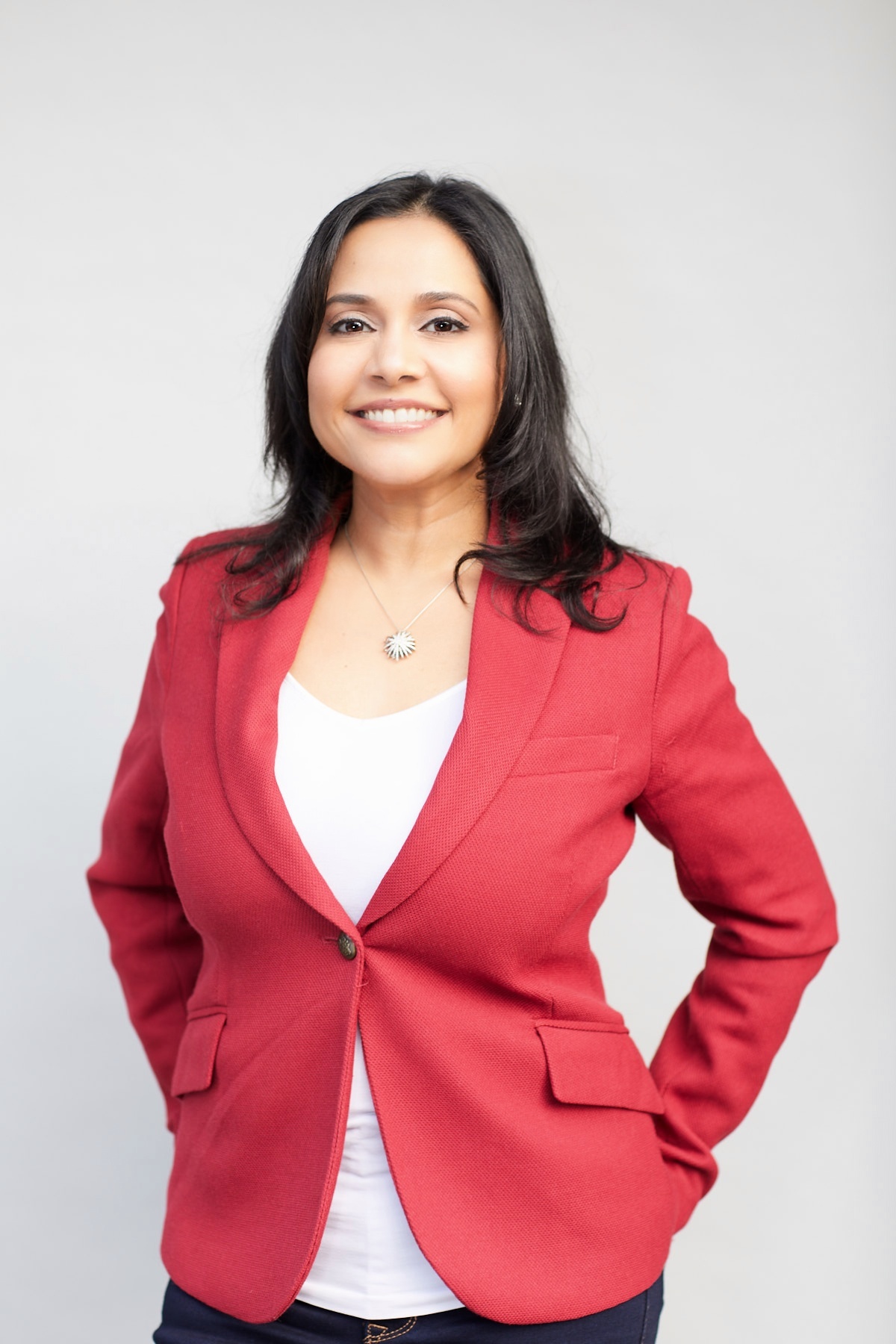
★ Scribe Case Study
Nikki Barua Clarified Her Mission and Launched A Global Platform After Writing Her Book with Scribe
With Scribe's help, Nikki Barua wrote a book that launched a global movement to empower women. Read more on the Scribe blog.
📚 Books by Nikki Barua
Transcript
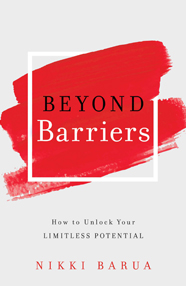
[0:00:28] Charlie Hoehn: You’re listening to Author Hour, enlightening conversations about books with the authors who wrote them. I’m Charlie Hoehn. Today’s episode is with Nikki Barua, author of Beyond Barriers. Do you ever feel stuck? Does it feel like your potential has hit a ceiling? Leveling up in life isn’t always easy. Even when we’re working harder in doing more, it can still feel like we’re trapped by our fear and that our dreams are always just out of reach. But Nikki believes that no matter how lost you feel, no matter how painful failure might be, that breaking barriers isn’t beyond your reach. In this episode, Nikki gives you three simple steps to help you evolve and excel. By the end of this episode, you’ll know how to unlock potential within yourself. Now, here is our conversation with Nikki Barua.
[0:01:45] Nikki Barua: My story begins as a young girl growing up in India, I grew up at a time where there wasn’t a lot of exposure to media or success stories around me and my dad did something that was truly so impactful and special. He created this collage of inspiring women leaders and in the center of the collage he took a white sheet of paper and he sketched out my face. Put that up on the inside of my closet door and did not say a word about it to me. He didn’t say “Hey, I want you to grow up to be like these amazing heroes.” He didn’t say, “Look what you can achieve” or “This is what I hope you grow up to be.” Just did not say a thing about it but every day that I would open my closet door, I would look at this collage and I would look at all these inspiring women and I’d see my face at the center of it and I grew up believing that that’s where it belonged. That I was just like them, they were my friends, I was no different, I had limitless potential just like them and I was born to create impact, born to make a difference. That I was a hero just like all my friends were. That idea sort of captivated my imagination from a very young age. I grew up as this really good kid that did my homework and got good grades and all that good stuff and you know, eventually I realized that I had big dreams and that America was a place where they would come true. In 1997 I set off to come out to America with a one way plane ticket and not a whole lot else and I worked really hard and built my career here, built my life here and no matter how hard I worked though, there was something that just felt like it was missing. I would keep thinking about this collage and I was like, why is it that no matter how hard I work, no matter what I keep trying to do, I just don’t feel like a hero? But at the same time, I had built this picture perfect life. I had just this very polished professional façade, this image that I had and fairly successful career but not a whole lot of fulfillment. You know, this feeling where you have lots of achievement but not enough fulfillment. A huge social circle, but not a whole bunch of people that I thought of as close friends. A life that I’d created that seemed perfect on the outside but just seemed like it was missing something. And I just could not put my finger on it and I didn’t know what was wrong with that because I had spent so much time trying to blend in. Then in 2008, the market crashed and with it so did my life. I lost everything I had and most importantly, I lost my partner to suicide. It wasn’t just an emotional crashing of my life but it was beyond that, it sounds like everything that I’d created, this house of cards had come crashing down all at once. I found myself completely without any life support. I had lost my love, my home, my money and my stability, everything, all sense of security just completely gone. In that moment, there was no place to hide, you know, all these – the perfect image that I crafted just came crashing down and all I was left with was being vulnerable and being completely authentic because there was just no place to hide. I spent the next two years after that, just feeling completely depressed, barely able to go forward with my life and frankly, I wanted to kill myself. I just did not want to go on, I had no idea what the reason for my being was, it just felt absolutely awful the whole time. One fine day, I woke up in 2010 and I opened my eyes and I thought, “Gosh, today I could be just as miserable as every other day has been in the past two years or today I can choose happiness.” “Today, I can you know, choose to wake up and choose my life with a different attitude with the desire to just make a different, make this day feel different.” I realized that happens comes from hope. The reason I’d been so unhappy was that I’d lost hope in everything. I had no hope and love or life or work or the future, anything at all. Realizing that happiness comes from hope but hope really comes from believing in something bigger than yourself. I started to think about what is it that’s bigger than myself that could propel me forward? I started to think about my purpose, what is my purpose, you know, starting to look for answers to those questions of who am I, you know? What do I really want and why do I want it? That introspection and that quest for clarity really helped me discover my purpose and I found my purpose is unlocking people’s potential and as soon as I defined that, suddenly, everything felt so clear and so exciting to me that I was able to just snap out of the state that I was in and just want to seize my life and seize the day and just move forward. That process of clarity then led me to just deal with all my fears and face the failures I’ve felt gone through and just take action and every time I took action, you know, I felt more confident I felt more courageous, I felt more capable. At that point, you know, I had a clearly defined goal, I had a clearly defined mission and I just decided “This is it, this is what I’m going to do for the rest of my life.” So I set a big goal, I said “What can my goal be, now that I have a purpose to find of unlocking potential, how do I measure that, what kind of impact can I create if I dedicate my whole life to that?” I started off thinking, “Well, is that, you know, 5,000 people, 10,000 people, you know, 100,000, I finally came up with a million” and I realized, “Well, I’m from India, a Million is just one zip code, right?” I went from a million to a billion and as soon as I said that, it scared the crap out of me. I mean, I was just in that moment of who do I think I am to touch a billion lives, that’s insane, it’s impossible and that’s when I knew that was the right goal, because it was scary and it was worth fighting for and it changed my perspective on exactly how I go about doing that. I set about committing my life that I was going to dedicate my whole life to unlocking people’s potential and touching a billion lives and I identified different strategies for doing that and that was in 2010. I’ve never looked back since then. My life is completely transformed by following the framework that I present in the book. I have applied it consistently all these years and it’s led to a completely different outcome in less than a decade and then that’s what led me to writing this book because if it’s worked for someone like me, I believe that if ordinary people can create extraordinary impact and if I can do it then anyone can and that’s really the inspiration for writing this book and to share it with everybody else because the greatest truth was finally revealed to me about that collage form my childhood that at the end of the day, it’s not about being a hero like someone else, it’s about unleashing the hero within you and that can only happen when you embrace your own truth. When you understand who you are and what you want and gain clarity on that, and you take courageous action and you never give up.
[0:09:28] Charlie Hoehn: Nikki, my gosh, I have to pause and complement you here because wow, I have done over a hundred episodes of this show and I don’t think any author’s story at the beginning has taken me on more of an emotional rollercoaster than yours. Wow. Beautifully told, my gosh. I’m absolutely taking your dad’s idea of the collage, I think every listener wants to do that for their kid now, that’s a brilliant idea and also just so heart wrenching what you went through. I can’t imagine. I’m thrilled that you are where you are today and that in 2010, you found purpose again and conviction and you were able to move forward. I’m curious, how did you get through the few years that you were grieving that you had had these massive traumas, like what were you doing day to day to kind of get through that? Were you just suffering during that time? I don’t want to dwell on that too much but I know people deal with those situations and for the people who are in those current situations, I was just curious what that was like for you.
[0:10:49] Nikki Barua: Yeah, you know, the years after suffering my tremendous burst on tragedy, the work that comes to mind is numb. I felt completely numb because I went from shock, extreme grief and even anger and guilt and all kinds of feelings. You know, to getting to a point where I simply felt numb. I felt detached form everything. I realized that you know, as much as people avoid emotions, especially the negative emotions like sadness or anger or misery. From my experience, I found that not feeling anything is actually far more scary because I got to that point where I literally could not feel a thing. I would go about my day like a zombie, you know, at first I could not work for many months and you know, until I basically had no way to survive but to go back to work but I avoided company. I did not want to hang out with friends or talk to anyone because I didn’t feel like I had anything to say, or frankly even wanted to hear anything. I mean, I just shut off every single emotion, I shut off people, I shut off all possibilities. That period of numbness was really scary because that numbness, you know, we exist because we feel. Even when we feel sad, we’re feeling something. When we’re feeling happy, we’re in a high and we go through that rollercoaster of emotion up and down but when we’re not feeling, we seize to exist, even if we’re alive, we seize to exist and that’s what happen which is what made me not want to live anymore because what’s the point of existence if you feel nothing? I took a lot for me to just keep going and I remember spending a lot of time in bed, just not wanting to get out of bed. Not really, you know, watching TV but not really taking anything in, barely being able to connect with anyone else. I basically became very isolated and the isolation just makes it worse and that’s why I got to a point where I realized, I was passed the point of anyone else being able to help me. That no one else, I build such walls around me that really, no one could reach me. That’s when the collage frankly saved my life because I recall thinking about that collage and thinking, “How did my life go awry?” You just cannot help anyone else if you’re in a state of fear. But if you’re not helping anyone else and you don’t have a bigger purpose, it also doesn’t give you much hope. It’s not necessarily about just saving the world, you know, purpose could be as simple as providing for your family or taking care of your loved ones but when you give to other people, you feel like a hero. That’s what unlocks your super powers, when you give to other people and that’s what creates hope and when you feel hope, you feel happy.
[0:13:53] Charlie Hoehn: It literally extends your life.
[0:13:56] Nikki Barua: It completely extends your life and for me, it was just going from this N word, isolated, hopeless state to this outward connected and truly hopeful, limitless state. That’s what made the transition and that’s what made me realize what being a hero is really about.
[0:14:15] Charlie Hoehn: I have to say again, my highest compliments to the way you told that story was phenomenal and I’m so glad to be having this conversation with you. Thank you for sharing that. Yeah, let’s talk about your book, Beyond Barriers and I take it the big idea in the book is your hero lies within. Is that fair to say or is there a different big idea you want listeners to take away?
[0:14:45] Nikki Barua: Yes, absolutely. I think the big idea of Beyond Barriers is that we are all limitless, you know, we are all heroes and we have these limitless super powers within us and when we recognize that, when we accept that about ourselves and we tap into those super powers to go beyond barriers, that’s when our life opens up. You know, the way I think about it is life is like a video game, we all start off at level one, whatever level one means for each of us but we all start off at level one and we have a set of tools and super powers at that state. Then you know, we go through our lives and we face these obstacles and barriers and sometimes we overcome them and sometimes we don’t. If we don’t overcome all of those barriers at level one, we remain stuck at that level. We just never kept get passed that. The only way to get passed every single barrier is simply to tap into your own potential, where you develop the competencies and the confidence to face that obstacle and turn it into an opportunity. When you finally do that, when you overcome those barriers at level one, that’s when you get to level two. Guess what happens as soon as you get to level two?
[0:16:08] Charlie Hoehn: More barriers.
[0:16:09] Nikki Barua: The barriers just get bigger. More barriers and they just get bigger and they get more complicated. The only way you can overcome them is when your competencies and confidence is even greater than the barriers you face at that level. You work harder, you get more creative, you keep adapting, you keep learning, you keep learning from your failures. You deal with any fears you have in facing those obstacles and you finally figure out how to overcome, how to overcome the barriers of level two. Finally, you get to level three and guess what? Now, a very even bigger. If you think of your life as a video game with a timer, we all have a set timer if we’re lucky, you know have a timer of 80, 90 years and we’re starting out at level one. The faster you overcome the barriers, which means you know, the faster you learn and grow and be courageous in all your actions, the faster you're going to get through to the next levels and so forth. Life gives us limitless levels. Instead of seeing every barrier, something that holds us back, we just have to recognize that it’s actually the pathway to getting to the next level and it’s really the obstacle is the opportunity because that’s what unlocks that super power within us. If the obstacle weren’t there, we would not know our super power. When we keep, you know, collecting these super powers as we go from level to level, we just get better and better and suddenly before you know it, you’ve transcended many levels and you can keep going. The higher the levels are, the more impact you create for other people beyond just yourself.
[0:17:50] Charlie Hoehn: Right, in your book, you kind of lay out the steps or it’s in three sections which is clarity, courage and conviction. Let’s start with clarity. I order to get through these levels, to unlock our super powers, we have to know ourselves and what we want and why, right? That’s what you list in the book. Can you talk us through how do we get to know ourselves and what we want and why we want it? How do we do that?
[0:18:23] Nikki Barua: Yeah, absolutely. I think I’d refer back to the collage idea, that it all begins with understanding what is it about ourselves that is our greatest strength or our greatest gift. You know, there’s many exercises in the book that will help the reader learn more about themselves but one great way to do that is to create your own collage and who are the heroes that you admire because it’s not the individuals that you admire but it’s the attributes that they have that you most value in yourself. Now, you may not fully live that, you may not have tapped into it fully but there’s something about them that you admire that is reflective of who you are on the inside. When you identify that, and then you connect that to your big dream of what you really want, suddenly you’re able to create your own hero’s journey because now you know what your super power is, you know what your big dream is and the most important thing at that point is really understanding why that’s important to you. Because, if you don’t have a big enough why, you won’t be able to face the obstacles, you’ll likely give up too easily. In my case, I was able to have a – have the clarity of my purpose and you want the attributes were about my heroes that I most admired in myself and wanted to tap in to and with that, I was able to then have absolute clarity on the reason why that was important to me because in my case, if I did not follow that path, there was only despair and doom on the other end and on the flip side of it, if I followed this purpose, there was hope and impact and contribution.
[0:20:18] Charlie Hoehn: Author Hour is sponsored by Book in a Box. For anyone who has a great idea for a book but doesn’t have the time or patience to sit down and type it out, Book in a Box has created a new way to help you painlessly publish your book. Instead of sitting at a computer and typing for a year, hoping everything works out, Book in a Box takes you through a structured interview process that gets your ideas out of your head and into a book in just a few months. To learn more, head over to Bookinabox.com and fill out the form at the bottom of the page. Don’t let another year go by where you put off writing your book. So you can use me as a pretend case study here which in actuality, I am a real case study so I really believe in what you’re talking about and in fact, I made my own collage of sorts of my heroes. The people that I admired most and the commonality, the thread that I found through all of them – and there were gosh I think 75 of them was they approach their work through the lens of play. They approached work playfully. They weren’t motivated necessarily by profits or even purpose. They were motivated by creating their own game and having their own sense of fun and you could see that in the work that they did and the energy that they brought to it. So that’s been a personal mission of my own is to approach my work and do work that brings that out in me and that I approach work through the lens of play. Knowing why I want it, which is the third part of finding clarity in your book, I am not entirely sure if it is aspirational enough or big enough as you said because there have been certainly periods where I’ve neglected it, approaching work and doing work that I didn’t find fun in but that just paid the bills because I was afraid I couldn’t pay the bills if I didn’t do it.
[0:22:37] Nikki Barua: I think what I am talking away from your story of the heroes you admire and approaching the work playfully is the sense of freedom. That freedom I would imagine is probably a really important value to you, freedom to experience things or to be immersed in something and to be anywhere is likely a value that is very appealing and none of these, the reason why it doesn’t have to be something that’s really profound. It just has to be important to you. It’s a matter of how important is that, so if freedom or sensory experience or playfulness, is a really important aspect. The question is why is that? Does it bring out, does it tap into your creativity? Does it bring out the best in you? Does it make you happy every day? Does it allow you to give more? If you know what that is for to be the best version of yourself that state is really important to you, that’s good enough you know? Because it’s when we go through our lives in autopilot, not questioning, not being fully aware, not even being aligned to the things that move us versus the things we do – that’s when we see this in congruency translating into a mediocre life and dissatisfaction overall. That’s when lack of fulfillment results but when we have congruency in what drives us. So for me, contribution is a big driver as long as I feel like I am making massive impact every single day I feel good. But there’s good days and there’s bad days, there’s failures and there’s successes. It doesn’t matter and there’s days when not everything is perfect but that’s okay because there’s still overall congruency in who I am, what I want and why I want it.
[0:24:37] Charlie Hoehn: First of all, all the above to the things that you said are important to me. I am curious, for contribution that’s your highest value it sounds like, when did you feel like you’d made the greatest contribution? It can be recently, it can be over the last several years but I know your company helps other companies with culture changes, with transformation, have you felt that in your work?
[0:25:07] Nikki Barua: Well I feel that every day or make it a goal to feed that value every single day. You know I have often thought about my greatest gift is seeing the gift in other people, being that catalyst and a change agent that helps to bring out the best in other people and that’s why across the board, I looked at in what ways can I catalyze change? Whether it’s writing a book or speaking or influencing public policy or building an education platform. Or even my business Beyond Curious is really a catalyst for change for big companies because change is incredibly painful and most fussed in to avoid change because it takes us into uncomfortable places but without change there is no growth and growth is what leads us to greater outcomes and more successes, whether as an individual or as an organization. But when you catalyze change, that’s when it creates a lot of awareness of where it interrupts the pattern of where people tend to be. And so for me as far as feeling a sense of contribution, I’ve build my business and my entire life around this idea of helping other people see their gift so that they are able to tap into that super power and become the best version of themselves and the work that Beyond Curious, my company does for its clients is not that different either because our tagline is “We make elephants run” and we work with these very large companies.
[0:26:42] Charlie Hoehn: How did you decide on that?
[0:26:44] Nikki Barua: Well, you know the metaphor is perfect for the work that we do right? We work with large Fortune 500 companies that are in legacy businesses. They are the ones that have massive scale but very little speed but that’s no longer enough. You know we are living in a world where the pace of disruption is so high that you have to be able to adapt very quickly to all of that change but most big companies are like these lumbering slow moving elephants. That may have a tremendous strength and power and geographic reach but they’re way too slow and in the meantime, emerging tech startups and other companies are like gazelles that are running past them and taking up the opportunity and frankly threatening their life. So what Beyond Curious does is that we’re a transformation consultancy. We’re like a change agent, we’re like that catalyst that comes in and helps that elephant remove the barriers in its way. And typically the barriers are that they have outdated business strategies so we help them define new business strategies, sometimes they have outdated capabilities. They’re not digital business so how does a legacy business become a digital business. So building the systems, technologies and tools that allow them to reach the customers in a different way or empower the employees differently and then finally, we also catalyze the culture. How do you go from a risk avoiding bureaucratic culture to a risk taking entrepreneurial culture? We help them collaborate and execute their work differently. So as a result of all the things we do across strategy and digital solutions and culture transformation, we are essentially removing the barriers for these big elephants and that’s what makes the elephants run.
[0:28:39] Charlie Hoehn: And your book is effectively the game plan for the individual and the companies that you work with.
[0:28:47] Nikki Barua: Absolutely, the philosophy is quite the same. You know that just like for individuals, you need to have clarity on your path, who you are and why you want it and you have to take courageous action and then you need to just stay the course and not give up and the way you do that is by constantly learning and adapting. So that what helps individuals overcome the barriers and unlock the potential but if you think about businesses, at the end of the day a business is just a collection of individuals. Large companies are collections of very large group of individuals and that’s why change can be hard but if you think of it as what will help each person change and if each person does change then the company changes. So the philosophy is very much the same thing even for driving a change within businesses and then unlocking the potential of large companies is the same thing. It’s really helping these companies gain clarity on their purpose because it’s a different world. A company that was successful 50 years ago, you know the same formula and the same purpose is not going to set it up for success for the next 50 years. I mean Toys "R" Us just recently went out of business.
[0:30:00] Charlie Hoehn: Oh no, don’t remind me. It hurts. It hurts to talk about.
[0:30:04] Nikki Barua: But it’s just another brand name that has fallen and when you think about just the list of memorable brands, from Kodak and Blockbuster and Toys “R” Us and all of these, they’re not failing because they don’t have the resources or they don’t have the intellectual capital or the distribution channel. They are really failing because they are not adapting to change. They are not moving fast enough. They’re not taking the risk. In fact it is a pretty scary stat that in the next decade, 75% of the SMP 500 are expected to go out of business. When you think about it, these are the companies that really make up the global economy and they define our way of life because of the products and services that we consume. We’d be losing a lot more of these companies and imagine the jobs that get lost. Imagine the lives that are ruined and so for me, even my business and what we do comes as deeply connected to my own sense of purpose. Of creating impact in the world because by being a catalyst for change for this big companies, it gives me leverage to impact a lot of lives because when we save these dying elephants, we save a lot of jobs, we make those companies healthier, we give them clear purpose, we help them go from risk avoiding and old school methods to bold courageous action and we help them constantly learn and adapt in a way that allows them to succeed more effectively in a very fast paced world. And when they are able to do that that’s what helps these dying elephants become running elephants and that’s what saves jobs and makes the world a better place.
[0:31:48] Charlie Hoehn: Yeah, it really sounds like you help individuals and companies evolve and the word that I kept hearing from you was adapt and it made me think of the Charles Darwin quote which is “It’s not the strongest of the species that survives nor the most intelligent that survives. It is the one that is most adaptable to change.” And we live in a period as you said of enormous approval and a lot of change and disruption. So, it’s never been more important for individuals and the people at the companies. To know how to adapt and to be ready to evolve because that’s what life and business is about right now.
[0:32:39] Nikki Barua: Absolutely. I mean change is the only constant and that we can rely on and adaptability is the number one survival skill. It has been for human beings and it’s equally true for companies.
[0:32:51] Charlie Hoehn: For every species, yeah.
[0:32:52] Nikki Barua: So it’s equally true for businesses and the path to adapting is very much the same. You can’t adapt if you’re not really clear about why you need to adapt and that’s why clarity is really step one but you can’t make the changes you need to make if you’re completely stumped and paralyzed by fear and or you’re broken by the failures you’ve faced. So you need to be able to make these big problems smaller, so that the size of your failure is reduced. And you are able to take those steps forward and then you just keep facing those barriers at every level and you turn every obstacle into an opportunity and you keep learning and adapting, trying new things constantly so that eventually get past the level into the new level. But it’s sort of the agile manifesto, right? It’s not just having an approach to an agile mindset not just in software development but also in life.
[0:33:57] Charlie Hoehn: Absolutely. I hope you reach your one billion people and have you been keeping count by the way?
[0:34:07] Nikki Barua: Not quite in those terms but at the end, I’ve realized that it’s not the number but the magnitude and the commitment to create impact to that scale and I’ve got my whole life ahead of me. So every day it’s just continuing to make that kind of contribution.
[0:34:26] Charlie Hoehn: There you go. Well this has been really inspiring. I want to finish actually with the last part of your book which is about keep celebrating. We talk about keep learning, keep adapting, keep celebrating. How do you celebrate?
[0:34:40] Nikki Barua: That chapter and that perspective is really about fueling ourselves again because much like a marathon, you can’t run an entire marathon if you don’t refuel and celebration gives us a sense of achievement that we’ve made progress. That it fuels our confidence that we are moving forward. For me, celebration has really been key in my journey over the past eight years of going from being completely broken and broke to the life I’ve created today. And the life that I am fortunate to have and the impact I have been able to create. Celebration has been absolutely key and so for me, there’s a weekly ritual that I practice. Every Sunday I spend 30 minutes taking stock of my week before and thinking about my week ahead. The most important practice that I have within that is expressing gratitude for the fact that I am alive, that I have been able to tap into my super powers and that I was able to not only create impact in the past week but also know that I will be able to do so in the week ahead. And I have this somewhat silly thing I guess, it’s I created my own rewards program much like American Express rewards or any other loyalty program. I just created a list of things that are exciting for me. They’re not just things and there’s not material things necessarily but they could be experiences or sometimes it’s just the gift of time of doing absolutely nothing but I make – my rewards program has all kinds of things you can get from it. So every week, when I do my Sunday reflection I get to choose what reward I’m going to give myself from my own rewards program. I also identify what reward I will look forward to in the week ahead because I basically break my entire life into annual goals and quarterly goals and weekly goals but there is always a reward, something to look forward to and it’s one of my favorite parts because it is truly special and it is not something I’m waiting for retirement to have. I am not waiting a year to get it but it’s every week.
[0:37:00] Charlie Hoehn: I love that. There is so much gold in this interview. I mean I can’t wait to share this with my wife and for us to make a collage of heroes for our daughter and for us to implement our own rewards program. I love it and that implementing a rewards program by the way that’s positive reinforcement to your brain. So it makes the process that you are talking about into a habit much easier than if you didn’t have any rewards at all. So I think keep celebrating is a fantastic way to end. So Nikki, this has been fantastic. Could you leave our listeners with a challenge? What’s the one thing they ought to do from your book this week that could change their life?
[0:37:43] Nikki Barua: Well there’s definitely a lot of different things that could be done from the book. Certainly I would encourage everyone to work through the exercises at your own pace because at the end of it, you will have the clarity, you will find the path to take courageous action and you will find a way that keeps you learning and adapting and celebrating yourself. But the one thing that in my mind is where it all begins just like in my life story, it begins with the collage. I would challenge everyone to create their own collage and put your picture in the center and then figure out who are the heroes that you would surround yourself with and then when you look at that collage, think of one word that comes to mind that best embodies that entire picture that is the one attribute that everybody shares that you have within you because that is your super power and once you have, once you realize that you are limitless then it’s simply a matter of taking one step after the other and becoming the hero that you were born to be.
[0:38:51] Charlie Hoehn: So good. Nikki how can our listeners connect with you, follow you on your journey, what’s the best way to do that?
[0:38:59] Nikki Barua: The best way to connect with me is to find me on nikkibarua.com, you can also follow me on Twitter @nikkibarua as well. I would invite the readers and the audience to connect and join my mailing list and more importantly be a part of the community that is really all about ordinary people creating extraordinary impact. This is not just about a feel good thing of yet another book that you read and you feel great about and then you put it on the bookshelf and don’t implement. This is a practical guide that is truly meant to help every single person recognize that ordinary people have the ability to create extraordinary impact, that we’re all heroes with super powers and we’re all limitless. I look forward to learning about everybody else’s journey and sharing my own along the path. Thank you so much.
[0:39:57] Charlie Hoehn: Thank you, this was phenomenal. Many thanks to Nikki Barua for being on the show. You can buy her book, Beyond Barriers, on Amazon.com. Thanks again for listening to Author Hour, enlightening conversations about books with the authors who wrote them. We’ll see you next time.
Want to Write Your Own Book?
Scribe has helped over 2,000 authors turn their expertise into published books.
Schedule a Free Consult