Ali Katz: Episode 1157
Read the full transcript
Ali Katz
Ali Katz, formerly Alexis Martin Neely, is the founder and CEO of New Law Business Model and Eyes Wide Open. She has appeared on the Today show, National Public Radio, The Money Answers Show, Good Morning America, and more to teach parents about how to plan for everything they have and everyone they love.
She is also the creator of kidsprotectionplan.com, a free website that helps parents choose guardians for their kids and legally document their decisions.
Most importantly, Ali is driven by her vision of a world in which everyone has the empowered guidance they need to make eyes-wide-open decisions about the legal, insurance, financial, and tax matters that impact us all.
📚 Books by Ali Katz
Transcript
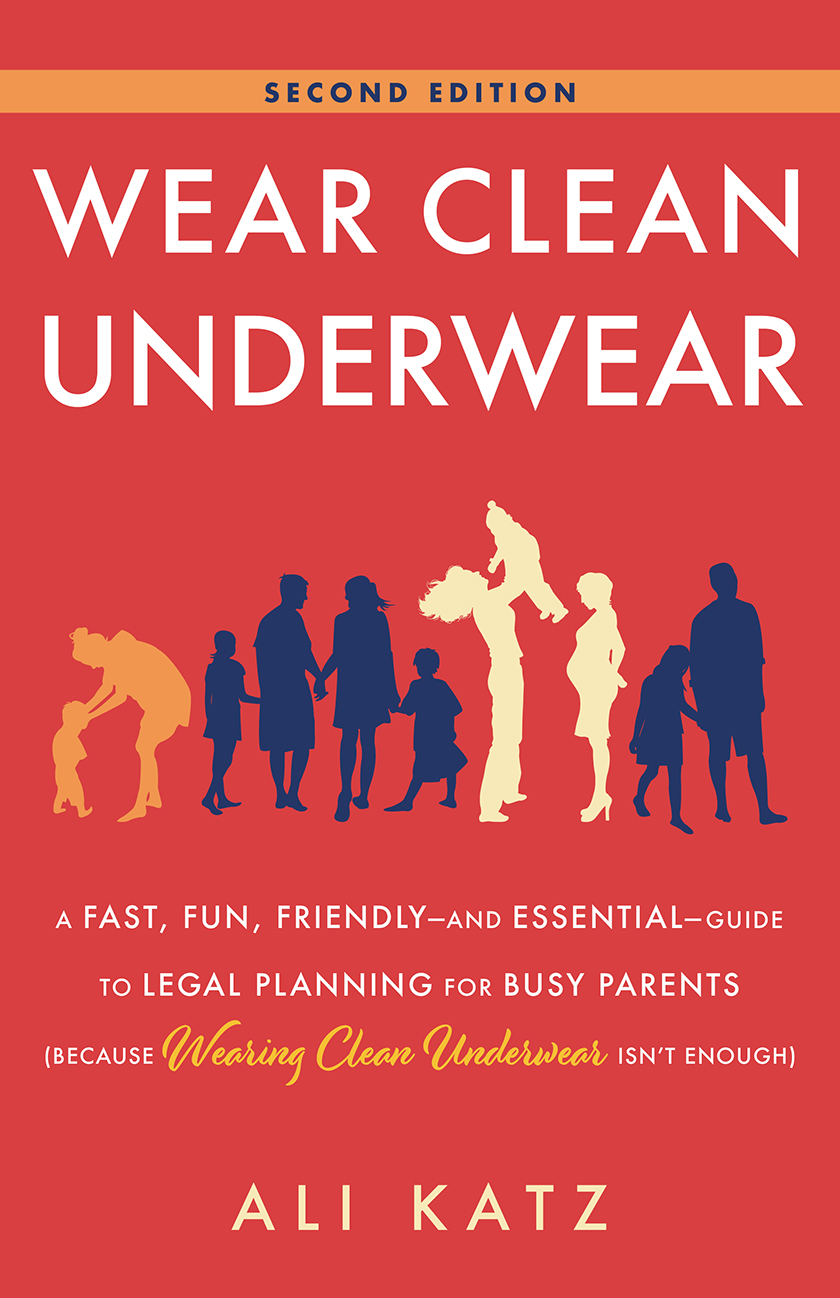
[0:00:37] HA: In time and as you become a parent, there are critical legal planning steps you need to take. Do you have a ‘sure to work’ plan to make sure your children would stay in the care of people you know and trust from the first critical hours through the rest of their childhood? Welcome to the Author Hour Podcast. I’m your host Hussein Al-Baiaty and today, I’m joined by Ali Katz, who is here to talk about her new book called, Wear Clean Underwear: A Fast, Fun, Friendly—and Essential—Guide to Legal Planning for Busy Parents (Because Wearing Clean Underwear Isn’t Enough). This is her second edition. Let’s flip through it. Hey friends, welcome back to the show. I’m here with my friend Ali Katz today, who just launched the second edition of her amazing book A Fast, Fun, Friendly, and Essential Guide to Legal Planning. I’m really excited for this. Ali, thank you for coming on the show today.
[0:01:38] Ali Katz: Thank you. It’s great to be here, I’m excited to share about the book.
[0:01:43] HA: Yeah. So before we get into the book, ins and outs of all the great stuff you share, I want to start to give our listeners a little bit about who you are, maybe your personal background, maybe where you grew up, and maybe a person or an event that sort of shaped the direction that you’re on today.
[0:01:58] Ali Katz: Sure. Well, I will say that everything to do with where I am today and this book in general really came from this compelling desire that I had to have my children. I knew that I was going to have both of my children before I was 30, which in this day and age is kind of young. My daughter was born when I was just turning 26 years old. So in some ways, we grew up together and they are the ones that are responsible for the first edition of this book and now, of course, the second edition as well because it was as a result of their birth that I realized there were major holes in the estate planning process that we use to make sure that kids raised by the people that their parents want in the way that their parents want if something happens to them. I’m an estate planning lawyer and maybe I wouldn’t even have become an estate planning lawyer if it wasn’t for my children because I wouldn’t have even really realized the importance of estate planning but then once I became a mom myself, it became very clear to me, “Wow, I have a huge responsibility to my children and I really want to make sure that I am living up to this responsibility.” When I went to law school, my daughter was actually born the year that I graduated from law school and my son was born the year that I started my own law practice a few years later after being in a big law firm for three years, one of the best law firms in the country and they really help me to realize, “Whoa, even though I have an estate plan in place” because I’m an estate planning lawyer after all, “If something happens to me and their dad, this estate plan has a number of holes that are going to leave them at risk of being cared for by people I don’t want. And I need to solve that problem and then once the problem is solved, you know, for my own family, I need to solve it for my clients and once I’ve solved it for my own clients, well, I need to make sure that I share that with the world.”
[0:04:03] HA: Yeah, that’s so powerful and I love how those moments in life sometimes, how they get us to think on a larger scale, right? You see a fuller picture, if you will, probably not the fullest but a fuller picture where you can see yourself being so valuable to others in helping them see this very important development and planning phase. You know, things that I feel like most of us avoid. It’s like doing taxes, right? We just avoid it, we just don’t do it, we don’t want to deal with it because it’s hard and I don’t want to think about, you know, what happens when I pass and what happens to my kid. It’s such a – it’s a very emotional thing but if we can subside the emotions and get just a little logical, that’s where you are to help us kind of move forward. I know you talk about estate planning, which for the most part, in your scenario and how you bring it out into the world, is kind of an older model and that there is a newer model that is emerging and one that you're definitely in a lot of ways developing. Can you tell us a little bit about your planning methodology and what you like to call it? I think it’s really cool.
[0:05:13] Ali Katz: Yeah, so it’s interesting because what you said is a lot of people don’t want to face the reality of death but what we found and what I found throughout my life because it’s now been over 20 years since I‘ve been doing this work and as I get closer and closer to the reality of death, what I’ve found is actually facing death makes life better. If we didn’t have death, life would get kind of mundane and meaningless. We wouldn’t appreciate it at the same degree and in the same way that we do when we tap in for a moment into the impermanence of it. It’s like your absence makes the heart grow fonder or you really love something after it’s gone or when you are just about to move away, you know, you’ve lived in like the same house or the same town for so long and you’ve really started to take it for granted and then just as you're about to move away is when you meet all the best people or when you really start to love it. Well, we can really approach death and life from that same lens and really look at facing death as this opportunity to love our lives a little bit more every day and what I have found that that has done for me is that that has really helped me to create the most incredibly amazing, living my best life every moment. “If I die today, I would die fulfilled” reality and I think is what we’re all striving for. I think it’s really – when I look at the days of my life when I wasn’t happy, what was it that I wasn’t happy about or what was it that I really wanted? I was seeking fulfillment. I was seeking meaning in my life and I have sought meaning in all the wrong places, Hussein. Only to finally come to realize that the only place for me at least, to really find meaning is in asking the question, “If I knew I was going to die tomorrow or a month from now or six months from now or even a year from now, what would I be doing differently in this moment?” and then, to live that way. To live that way and so in some ways, this book s that it is a book about legal planning, it’s got a funny title. It’s called Wear Clean Underwear and it’s called Wear Clean Underwear because your mom always told you to wear clean underwear in case you’re in an accident or, at least, my mom always told me that; “Wear clean underwear in case you’re in an accident,” but once you are a parent, wearing clean underwear alone is no longer enough. There are important legal planning steps that you need to take as well and so this book is a series of three stories, choose your own adventure-style stories that really guide the reader step-by-step down the path of, “Well, what do I need to do? What are the legal planning steps that I need to take?” and it shares those steps in a way that it’s really easy to put yourself into the shoes of the people that the story is about. So that you can really determine the next steps for yourself not from a place of not wanting to look at death but from the place of, “Okay, how do I use death to make legal and financial choices that create my best life or that leave my children and the people that I’m choosing to raise them or handle money for them in the best possible position that I can?” and just get this existential relief of knowing that I’m showing up fully for this life as I get to as an adult, which it turns out is pretty darn great.
[0:09:34] HA: That’s so powerful you know and bringing that closer to your mindset and saying, “You know, this is a gift.” It’s reminding yourself that you bring yourself back to the moment. You know, I think death is a very powerful way, like you said, to live in its opposite, which is life. So get the most out of it and really - like the things – I’ve always tried to lean into the things that I feel are stressing me out or bugging me out or whatever it is, I’m really just trying to go for a quick jog or a walk and it just – I think that for me is like, what brings me to the moment and realize like, “Okay, what really matters here? How do I go through to my peace as supposed to go through this emotional process of whatever it may be in life?” And yeah just remembering like, my own health and my presence, it’s so grounding but with that, you know, you do a lot of work in this environment, in this world for a lot of people. Can you share a story about a time when you witnessed the consequences of not having an estate plan in place?
[0:10:39] Ali Katz: Yeah. So there are really two big problems that people face when there’s either no estate plan or an insufficient estate plan or a plan that fails. So starting with the no-estate plan. This one is a story of one of my best friends actually and she – it’s really unfortunate because she had always told me and everyone in our life together knew that if anything happened to her, she wanted me to be her decision maker for her healthcare decisions, for her financial matters. We were best friends, I’m a lawyer. She actually worked in my company and yeah, we never did anything to get that handled, even though my company coaches lawyers and she was a coach for those lawyers, even though I’m an estate planning lawyer, I train other estate planning lawyers, I wrote the book on it, we never got around to doing it because, well, there was always so many more important things to do and we figured, “Well, she doesn’t have much.” “It’s not that big of a deal, we just keep putting it off” and by the way, this is one of the biggest dangers. One of the biggest dangers is that you just won’t get around to doing it and it’s actually why we train the lawyers that we train in the way that we do because actually we have very clear systems in place to make sure that you get your planning done and in this case, we didn’t get the planning done because she didn’t use a lawyer. Because we figured, “Well, she doesn’t have that much, she could just do it herself” but of course, she never did. Then she was in a car accident and in a coma and I got called in because everybody knew that she wanted me to make decisions for her but then her mom flew in and when her mom flew in, her mom decided that she wanted to make the decisions and from a legal standpoint. She had priority and as a result of that, my friend did not get the medical treatment she wanted, did not get to be visited by the people she wanted and actually even got taken out of the state and out of our community and back home to be cared for by her parents, by her mom, which is not what she would have wanted. That cost my friend thousands of dollars because her mom used my friend’s money to have herself appointed as my friend’s guardian. So while my friend didn’t have much, what she did had was then used by her mom to go to court and get appointed as her guardian, my good friend became a ward of her mother, meaning that her mother had complete control over her medical, financial, legal decisions and even her body, her physical location and it was pretty devastating. Ultimately, my friend did recover, physically recovered, and took much longer than it needed to. She lost a lot of community in the process and a lot of her emotional and mental health as a result, that it took a long time for her to get back up and it didn’t need to go that way. It didn’t need to go that way, you know, if we had taken the steps that I lay out in the book and either my friend could have done it herself or if we had actually had her work with a lawyer not because it was super complicated. But just to make sure that it all got done, there would have been a different outcome and what would have happened instead is that when my friend was in a coma, they would call me and then I would have just handled everything. No poor process would have been needed, no intervention of her mother, I would have made the decisions, my friend would have gotten the supplements she wanted and the community care that she wanted and she would have stayed in the town that we live in and it would have been a different reality. You know, the cost of not having a plan is significant, whether you have a little or you have a lot. It results in needing to go to court, it can result in assets that are lost and never found. We have $58 billion across the US in departments of unclaimed property and that happens because somebody becomes incapacitated or dies and nobody knows what there is or where to find it and so we’re really committed to making sure that that doesn’t happen. Then the second piece is having an insufficient plan or a plan that fails and we are really more at risk of that now than ever before because there is a huge rise in DIY, do-it-yourself options for estate planning for wills and trusts and so people think, “Oh, I just want mine to do it myself” or there’s a big race to the bottom mentality among lawyers where it’s like, “I’ll just get as many clients as I can and charge as little as I can and maybe sell them some life insurance on the back end to make up for the money I’m not getting paid to do the right way.” What happens is people end up with said documents, the will, the trust, healthcare directive, power of attorney, maybe guard denominations that they have created and they think when it’s done and they put that set of documents on a shelf or a drawer, maybe it’s staying in their computer and they put it away and they never look at it again. It doesn’t get updated, assets are not owned in the right way and then something happens. Somebody becomes incapacitated and their family goes to you know, pull up that set of documents and now that they’re meaningless, they don’t keep the family out of court. They don’t keep the family out of conflict and this is the exact thing that happened to the father-in-law when I was in law school. He had spent $3,000 on that estate line and this happened and I thought for sure that must have been malpractice but it wasn’t. It’s really common practice and it’s only getting worse and so this, you know, where if this book, Wear Clean Underwear, really lays out an alternative. It lays out an alternative to make sure that if you are going to do your planning because you want to make sure that things are as easy as possible for the people that you love, that your assets are not lost, that your family doesn’t get stuck in a court process unnecessarily that you know how to do it the right way.
[0:17:22] HA: Yeah, that’s so powerful and so important, and a few things, you know, I am sorry about your friend, unfortunately, the events that unfolded but I’m sure you have tons of those types of cases where things just went astray. What advice would you give to someone who is just starting their estate and legacy and life planning process? What’s one thing just to think about at least?
[0:17:48] Ali Katz: Well, of course, read the book, right? That would be number one but I think the important place to think about is to look around and just survey what you have and consider who would come forward, just practically speaking not even worrying about an illegal level at all like who will come forward to handle things in the event that you were in a hospital or at the event of your death and what would they need to understand. What would they need to know about what you have, would they be able to find what you have? Would they know where it is, would they know how to find it? Would they know what to do with it once they did? Will they know how to transition it? Will they know how to transfer it? Will they know how to make sure your rent gets paid and your mortgage gets paid if you own a home? So survey that reality and determine, do I need help to gather everything together in one organized form? So that when something does happen, somebody could come in, somebody of my choosing could come in and just know how to even find what I have. How to even find it, that’s the most important starting point, and then what do I want to happen to what I have and will the law carry out what I would want without me doing anything? The answer is probably no, so then the next question to ask is, “Am I the type of person that is really organized, really diligent, really focused, I’m going assemble, I’m going to learn, learn, learn, learn, learn, handle everything and then do it myself or am the type of person that’s really better to have my hand held through the process? To really make sure that it gets done instead of trying to do it on my own.” When I think about you know, estate planning, I’m really thinking about first of all, what is the nature of your family dynamics and your assets, and then what is the nature of how you operate? Am I a procrastinator or am I a do-it-yourselfer? Am I super organized or do I really need organizational support? That is really going to help you get clearer on, “How much should I just try to do things on my own and how much should I try to work with somebody to get supported?”
[0:20:25] HA: Yeah, that’s really powerful. I think for me, I’m always needing support. I always need somebody to help me through the different things that I am not thinking about because to go out and like educate myself individually and make the time for it, that’s a quest in and of itself. Like your book states, sometimes we’re just too busy for all of that especially raising the kids, running around, work, life, all the things and it just keeps getting put behind and it feels like the further you are away from it, the harder it is to get back to it. For me, I think engaging with someone that could bring it into my radar every six months, every year, or whatever it is so that I stay at least close to it and keep it updated and whatever it is and that’s true to accounting. That is true to life goals and all of the things and I love that because you share that. You share, we take birthdays and we take these specific days out of the year, we do all this planning for them but we don’t plan for the really important things that could, sadly, leave a mess, and how to just mitigate that and what you ultimately want is the health and happiness of everyone. But if you don’t set up the system to do that, it’s not going to be very pretty and obviously, this is where your line of work really goes into very deep but also not only are you speaking from experience, you’re sharing really practical things that people could do, which I love all throughout your book. So, when your readers pick up the book and get through it and finish up, how do you want them to feel? What do you want them to feel when they’re walking away from it?
[0:22:09] Ali Katz: Clear. They’re clear on their next steps. So yeah, after reading even just one story in the book because there are three stories, three different situations that we walk the reader through on a, “choose your own adventure” story format, so that’s fun but even after just reading one of those, my hope is that you will feel clear on exactly what you can do next for yourself and the people you love and you’ll know how to take that next step. You’ll just have a level of clarity that you did not have.
[0:22:40] HA: That’s super powerful. Ali, thank you so much for sharing your stories and your experiences with me today. The book is called A Fast, Fun, Friendly, and Essential Guide to Legal Planning for Busy Parents. My apologies, the title of the book is – go ahead, Ali, tell them what it is.
[0:23:00] Ali Katz: The title of the book is, Wear Clean Underwear.
[0:23:03] HA: Yeah, I love when you say it, it’s just funnier.
[0:23:07] Ali Katz: A Fast, Fun, Friendly and Essential Guide to Legal Planning for Busy Parents, and it is, as I said called, Wear a Clean Underwear because once you’re a parent, wearing clean underwear alone is no longer enough. There are important legal planning steps you need to take and this book will help you figure out, “Do I need thong, do I need a false spanks coverage, what kind of a plan do I need?” What sort of legal plan do I need to make sure that my assets are fully covered in the event that something happens to me?
[0:23:42] HA: See? I love that, I couldn’t have said all that better than you, that’s awesome, which is why you’re the guru behind this book and again –
[0:23:50] Ali Katz: That’s right.
[0:23:50] HA: This is the second edition. I’m grateful to have had you and had this conversation today, Ali. It got me thinking about some stuff too, so I’m going to be reaching out on LinkedIn. Besides checking out the book on Amazon and Barns & Noble and all that good stuff, where can people find you?
[0:24:04] Ali Katz: The best way to find me or by the way, one of the lawyers that we have trained in the systems and methodologies that we’ve created here is at personalfamilylawyer.com and they have nearly 500 lawyers across the United States and branching out internationally now, who have been trained in my heart center counseling based methodology for helping families to make great decisions about how to handle family dynamics and assets in the event of incapacity or death and really being a true trusted advisor to their clients throughout life and then to their families of beyond and so you can find those lawyers as well at personalfamilylawyer.com.
[0:24:51] HA: Ali, thanks again, appreciate you and your hard work on this book, congratulations.
[0:24:55] Ali Katz: Thanks, Hussein. Okay, thank you.
[0:24:56] HA: Yeah, absolutely. Thank you all so much for joining us for this episode of Author Hour. The book is called, Wear Clean Underwear: A Fast, Fun, Friendly—and Essential—Guide to Legal Planning for Busy Parents (Because Wearing Clean Underwear Isn’t Enough), second edition, right now, on Amazon. For more Author Hour episodes, subscribe to this podcast on your favorite subscription service. Thanks for joining us, we’ll see you next time, same place, different author.
Want to Write Your Own Book?
Scribe has helped over 2,000 authors turn their expertise into published books.
Schedule a Free Consult