Susan Chen: Episode 1164
Read the full transcript
Susan Chen
About the Author
For nearly two decades, Susan has worked with teams and leaders to develop talent strategies and interventions that build capabilities for sustainable growth across a broad range of companies. Susan believes in the power of HR as a function to transform businesses and people.
Susan is also a strong advocate for education transformation and inclusion, and has worked and lived in Taiwan, New Zealand, UK, Norway, Singapore and Indonesia. Susan holds the people investment thesis that the fundamental growth of human potential can only be unlocked and amplified through a growth mindset.
Susan received her PhD with a focus on knowledge management from the University of Stavanger, Norway, and is continuing further capability development in the areas of educational psychology, education technology and research.
Susan has worked with diverse companies including a healthcare start-up in Indonesia, the first decacorn technology platform in Indonesia that went public, a fintech MNC in Singapore, a national energy company in Norway and a Gaming and Entertainment company based in the US. Susan is also a strategic advisor and angel investor in various education and people technology start-ups searching to transform learner impact and outcomes.
📚 Books by Susan Chen
Transcript
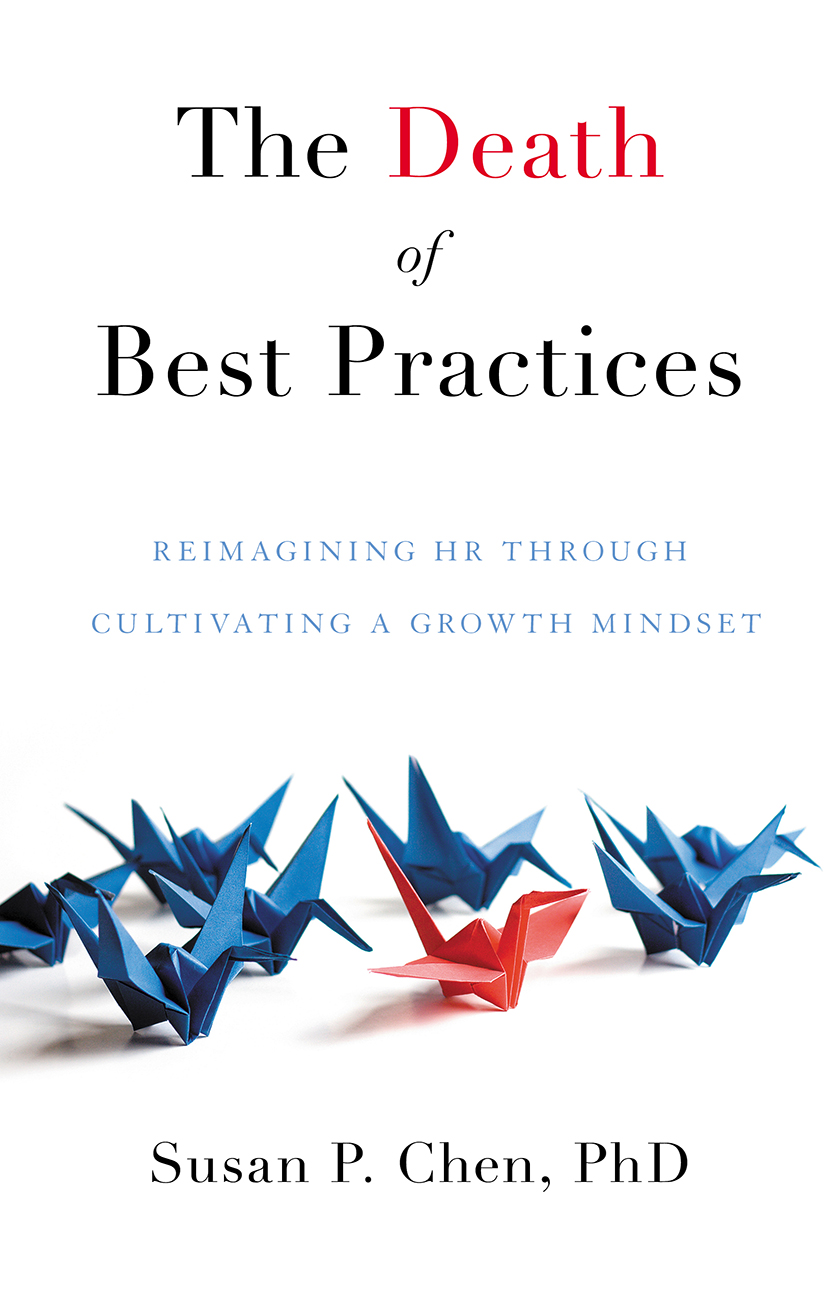
[0:00:42] HA: My next guest invites you to explore HR leadership centered around curiosity and grit and not the standard “been there and done that” playbooks from best practices. Welcome to the Author Hour podcast. I’m your host, Hussein Al-Baiaty and I’m joined by Dr. Susan Chen, who is here to talk about her new book, The Death of Best Practices: Reimagining HR through Cultivating a Growth Mindset. Let’s flip through it. Hello everyone and welcome back to Author Hour. I’m Hussein and I’m here with my friend, Dr. Susan Chen. Susan, how’s it going today?
[0:01:22] Susan Chen: It’s a lovely sunny day in Singapore. So I’m feeling great and can’t wait to chat with you about the book.
[0:01:30] HA: I love that so much. Thank you so much for joining me. I’m really excited, you know, I got the chance to go through your book here in the last few days, and man, I got to tell you, it’s one of those books that’s kind of easy to read, easy to pick up, even though I’m not in the HR world, you kind of gave me a scope of what it is like to work in that world and that’s kind of been your work. But before we get into the book and your work and all those good stuff. I want to tell our audience a little bit about who you are, where you grew up, and what got you into this line of work? Was it someone that inspired you or an event that kind of you know, made your route go this way?
[0:02:06] Susan Chen: Great question. Well, maybe I’ll start with a little bit about my background. So well, I’m Susan. I was born in Taiwan, so I speak fluent Mandarin but I moved to New Zealand when I was 10. So for those out there listening to me wondering about my accent, that’s where, New Zealand, a bit of a mixture and then I was in New Zealand where I have most of my education, and then from New Zealand, I went to London first, I cannot forget that. I’m in London doing my master’s degree, working, and then from London to Norway when I did my Ph.D. and I’m also working and then from Norway to Singapore, where I currently am. Although between now and the not-so-distant past, I was also, I took an en route to Jakarta for about four years before coming back to Singapore. So being sort of living around the world a little bit. But to cut back to your question about what got me into HR, you know, I don’t want to say that it was an accidental. I do see there quite a lot of my fellow HR professionals that have come into this world by accident because it has evolved so much as a profession. For me, it was probably more initiated by growing up in New Zealand, which is a small country, quite far away from the world, I knew I wanted to experience the world outside New Zealand. I knew what excite me, interests me is some combination of, sort of learning, teaching, psychology, and sort of legal and at the time as a young, you know, 16-year-old, I remember going through my options, I go, “Ooh, I would like to be a lawyer. Ooh, I will love to be a teacher, ooh, I will like to be a psychologist” and then I realized, all these professions actually abound by sort of geographical licensing. You can be a certified or a registered psychologist in New Zealand for example, but that wouldn’t allow you to practice in America or in Europe without going through a whole new set of learning paths and I kind of sort of go, “Okay, let’s take a step back, what really excites me?” and what I realized is, I just enjoy learning about people but not necessarily just as individuals, but the power of collective. The power of people within organizations understand organizational impact within society and you know, I was in HR before it was called HR. So now I’m telling people my age so don’t count on that but I started when it was more like organizational psychology, organizational studies, and that’s where I sort of started diving a bit deeper academically into the world of HR.
[0:04:45] HA: Yeah. So I mean, think about all these paths that have to like, sort of weave together to kind of land in a place where you can sort of practice these things that you’ve been fascinated by growing up. I know for me, it was a trend for me too. I went into architecture and I went into business and tried multiple things because so many things interested me. You know, I resonated with that and you know, when you kind of brought it together and you’re like, “Oh, this is a place where I can actually invite all of these parts of me to work together to solve a problem” and there’s no better feeling than that and I think for me, it’s like, that moment in time is where you realize like, you are kind of like going down river, you know? In a way, where you’re still kind of you know, you're challenged and all but it’s just like, you love what you do. I just love that and I wanted to make sure that we embed that in this episode because that’s a big part of who you are as a leader and I love how you opened up your book with a story around technology and how we can take that in HR and the intersection of like, you know, the work that you’ve been doing. But really, that an app isn’t going to help the HR department. We need more than an app and I just love that because you know, you just take us a little bit further. Can you kind of talk to us a little bit about the intersection of you know, HR, technology, leadership, where you found yourself, and why you wanted to write this book?
[0:06:13] Susan Chen: Great question because you know, I almost feel like writing a book, especially as we saw in our last few months, you know, the growing and all the blowing up of AI technology be able to break in the way that people feel like it surpasses a lot of, sort of the human touch. I think people might feel like writing a book is pretty old school now, right? And I do think that the more technology takes over our day-to-day, the deeper we need to look into our human practice and be more connected with who we are as human beings and the sort of connection of individuals as human and what I meant by this is that we can never ignore technology, right? So we’re not going to see that, the apps out there aren’t helpful with the work that we do either as HR professionals or as leaders or as individuals but I think is recognize not everything is right for everyone. So how do we connect with teams and leaders, and individuals at the human level and understand what is needed for the scenario for that time, for that problem space that we are solving, I think is what I’m really advocating for.
[0:07:26] HA: Yeah, it’s so powerful because I think, you know, we’re definitely at a time where I feel like every industry needs to look at a way to reform and you know of course, HR is one of those places that especially in the last few years, it’s an immense thing to take on, you know? It’s a heavy lift and so, you know, your work is very detrimental. Can you share a story of a time when you personally experienced the benefits of you know, having a growth mindset in your work as an HR leader?
[0:07:58] Susan Chen: You know, and if I go back to thinking about growth mindset, what does that mean? Because I find sometimes people do say, “Oh, growth mindset, it’s so abstract” right? It feels like is it something that you’re born with? Is it so difficult to channel? One thing that we want to do at least in this book is almost sort of a mask, this concept of growth mindset by being really clear, what are those capabilities? So I talk about activating curiosity and also practicing grit, being those two key components of bringing growth mindset together. So I think I have both being the, hopefully, the person who practices sort of activating that and sort of really channel into my own growth mindset but also, be able to experience growth mindset and so almost intentionally look for it in my work and in my teams and I see that really having a drastic impact in our work or in our personal lives. So if I start with maybe a more personal story around growth mindset, it’s actually, let me tell you about this book. What you see of this version of the book is actually the third book I wrote. So I actually wrote two other versions where I think it wasn’t really conveying, really, the growth mindset that I was actually talking about because we’re actually talking about not having a single solution to a scenario. So the book actually took a few different formats and one of them was actually me sharing my experience working in Southeast Asia, emerging markets, and how we could approach emerging market problem solving differently to what’s happening in a more mature market and as I write, I realized I was almost talking in a way that as if there’s a best practice or the way to do certain things in an emerging market, which is absolutely against, I think, the philosophy of the book and how do we think about problem-solving and sort of connecting really deeper into the human and collective needs. So that’s where I took a step back. I stop and I said literally to a certain extent, rewrote the book and I think growth mindset is — that’s very much about practicing grit. So if you think writing one book is hard, you know, this is actually probably an outcome of writing three books but pushing it through, it was four years. I think I wrote a little bit of that in my book as well. It took four years but I think that was the right thing to do and by being curious. By going, “Okay, what does continue changing in our environment?” and making sure that, you know, it took me four years and then in this time, the world has changed actually a lot. We’ve gone through a pandemic, we saw the different sets of movement with even technology and different industries, ups and downs of the startup world, which I have operating in a very long time. So definitely, I think personally, growth mindset is very much through this kind of curiosity and grit and professionally, I also look for these individuals and teams that really show through their growth mindset and the grit and curiosity through, you know, whether it’s working together in the interview process and a lot of time, I see a project that was stuck for quite some time. You know, things are not moving forward. By activating that curiosity, asking these questions, you know, how can we do things differently, are typically how we can unblock some of these challenges and roadblocks for projects and move forward and maybe in a direction that wasn’t originally thought as the planned approach but is the right way forward that gets us across the line in terms of getting that organizational outcome we’re looking for.
[0:11:38] HA: It’s so deep. I mean, the work is so interconnected. Can you give an example of how you know, you talk a lot about this in your book, how curiosity and grit have played a role in your own sort of problem-solving approach, as an HR practitioner?
[0:11:54] Susan Chen: So I think a lot of it if I want to sort of summarize it, is about asking questions, right? How do we ask questions to yourself or the teams that you’re mentoring or the leaders you’re partnering with? So as you could see in the book, we actually try to practice this at the end of the different parts and chapters. You have reflective inquiry practices and this is actually a great way to activate that curiosity and grit, right? Because the curiosity is by asking the question. And practicing grit sometimes is realizing the answer, actually, the very honest answer maybe isn’t as connected to you or what you’re hoping to achieve, right? So for example, I talk about, I ask one question and I have had some – a few feedback from readers say, “Wow, I never sort of sat down and ask myself these questions. How do you speak about best practices?” right? Like how do you on your day-to-day because sometimes we may not be as intentional and thoughtful about the way we talk about it especially as leaders, right? For those senior leaders out there, do you go and ask your team, “What’s the best practice of this? Can you show me so we can use that as a baseline for solving problems?” You know, do we think about how we use it, right?” And how do you feel about it? So something we, you know, again that curiosity is go deeper than just about how do you do something but how did that make you feel, how does that make your team feel about it? So I think these are sort of through the book, we really want to connect this, not just by this concept of asking questions and we’re going to be asking you a few questions that hopefully get you to reflect and think about it as well and part of the curiosity, for example, is about deep work. So you know, we’ll get you to reflect on, “When was the last time you did? Describe that, what were you working on? How does that make you feel?” So through the book, we wanted to show you that curiosity action by asking questions. So I think professionally, a lot of time is for me as a leader not to being in sort of either meetings or interactions where I kind of be like, “I have all the answers.” I will actually be as open and say, “I’m not going to let my assumption bind you or myself, so let me just ask a question” and I think personally and professionally, that really has been helpful as I continue to develop as an HR professional and also as a leader.
[0:14:14] HA: So important. I love the curiosity approach because it is really about like yeah if you’re feeling good working on this project but now we’re working on this project that’s way out of left field and you are not feeling good, I think that lack of communication then you know, the stumbling starts to happen and then spiral downwards but opening up that communication curiosity, that’s what can really help people stay attracted and I just love that. In your opinion, what are the most important steps, though, that an HR leader can take to cultivate a growth mindset culture within their organization?
[0:14:52] Susan Chen: Great, great question. I think again, if we think about growth mindset really as part of broader learning culture if we talk about it within an organizational setting is how do you lead by example but also build an ecosystem within the organization that allows growth mindset to foster, right? So it is building a growth mindset culture and again, there is something about asking questions as an HR professional. Be a coach to your team and to your leader and be mindful of what you say, right? So if you see sort of the third part of what we really talk about in HR growth and mindset framework that other else you think about building that as an HR professional, you know and again, reimagine what is HR role in organizational learning not from a content perspective but activating curiosity perspective because a lot of time, organizational learning takes a little bit more programming and say, “This is all the things you need to learn” rather than, “How do we build a culture of learning?” I think HR function actually takes a critical role in rethinking about that role in the organization and also organizational learning and again is then a second part of that, you know, activating that growth mindset is through that leadership of self, your partners, and the team and then we go a little bit deeper talking about embracing authenticity. How do we empower sort of kind of growth mindset, so vulnerability, which is allowing people to make mistakes, right? Part of that curiosity, part of that grid is learning from the mistakes, having a safe space to make those mistakes as well, which for example, it can look really practical. I work with my team where they outline monthly basis, everyone shares. We don’t frame it like share your mistake but we do frame it like, “Share a learning that has really captivated your attention and your bend with the last month.” They typically share a story that may be something that didn’t go so well and they have learned to do things differently. So how do you build this kind of open conversation with your team, also with the broader organization? That is kind of like the starting point of building that growth mindset. You know again, as I continue to go through, there is building a curious learning culture, becoming a T-shape expert, which we’ll dive a bit deeper in the book as well, right? T-shape is really about being sort of understanding generally across the board what you do but having that deep expertise that anchors I think some of your thinking, your curiosity, and your growth because we do see – you know, part of curiosity, I talk a little bit more in the book. They say it’s not just because you are excited to learn about a thousand things, a world that will make you curious. It is actually how do you gravitate and go deeper into some points of curiosity and making you an expert because I think with curiosity, that doesn’t have the expertise to practice, it just becomes distractions actually. So having the ability to really captivate, are you being curious right now or are you actually being distracted? And then of course, at the end of the day is practicing that. Being that advocate, being that coach, which will be really important, that holistically become that growth mindset or growth-minded HR professional.
[0:18:11] HA: That is so powerful, you know? Just the whole idea of not just how curiosity just leads the way but this idea of creating space that we need to make mistakes, to be able to fail forward and to learn from that and you know, in positions where that is it’s okay to make a mistake but what else are we not doing to you know, whether are we not training you? Are we not providing the right tools? You know, all these things it’s a two-way street as opposed to it’s always your employee’s fault, right? You know that’s huge, I think that mindset and that culture really allow for growth. It allows me to want to come to work and try my best and not be scared to. So I love those ideas and how you sort of woven them together, it’s very powerful. So you know, this is your third book and I guess you know, a lot of ways third iteration. As you get deeper into this work you realize how much deeper we can go, right? This idea of not having distractions, I love that so much. It’s all about get curious about the projects you’re working, go deeper into the project. You know, curiosity and creativity kind of obviously go hand-in-hand, you know? But yes, if I’m over here doing X and then I’m looking over here while Z and Y are doing their thing then yeah, I want to do that. It’s like yes, it is pulling me away, there is distractions but awareness is huge and I just love that. So what’s been your favorite part of pulling this specific book together and what did you learn from that journey?
[0:19:44] Susan Chen: Well, I think my favorite part of writing this book is actually having those critical conversations with myself, a self-discovery process of not just about how I’m thinking about HR as a professional but you know, when you started this conversation you talk about making easy to read. That was actually something I have to learn to do because having a Ph.D., I have a tendency and you have the feedback of maybe writing a little bit too academic, right? In a way that is not always as interesting to read and that was a big learning, to remember that it is your voice, that is your thoughts but there’s also your audience and audience from the sense that is not about, “Oh my god, you know, you want to be the number one bestselling author.” What you do want though is to write in a way that even if one person reads it but they read it and they go, “Wow, I’m going to activate my own curiosity and practice growth because I do want to continue to channel my own growth mindset.” That is what I want to do, I want the HR professionals, the leadership to read it and say, “I get it. I connect with these” and I think one this is also understanding these are not rocket science concepts, right? It is not a concept that you know, no one has ever heard before but it’s how do you connect that together meaningfully within the context of the HR profession, I think was something that I wanted to do and worked really hard towards and you know, as I started writing and go deeper, the version of the book I realized, “Wow, this is a lot harder than I first imagined.” I almost feel like this is harder than a Ph.D. because in Ph.D., there is a clear research framework and you write in a way that is it’s more geared towards that academic publishing, right? So that was a whole new ballgame of writing to reconnect with myself and then making sure that connects with the future audience or the audience that I am writing for.
[0:21:42] HA: Yeah, that’s amazing. As I was reading it, what I mean by like it was easier to read is that you wove such good stories, right? It made me want to keep flipping through it and I think with writing, it’s such – like you said, it’s a very personal thing. So you are kind of – you are always kind of in your thoughts and trying to pull out the things that you believe the reader would really receive well. I think for me, you know, I like all different types of topics. I mean, I am a book fiend. So for me, it’s all about like where do I relate to this, right? Where have I experienced this? And honestly across the board if we ask ourselves whether it be financial books or real estate or anything, you just ask, “Where am I in this book?” and I think the ones that connect with the most are the ones that are speaking directly to me and come on, oh my god, I can’t tell you the amount of HR madness I went through as a young man, right? From “Tuck your shirt in” to “You’re late a minute” to “Put your phone away” it’s very disciplinary, right? It feels like I’m in school and when I finally realized I wanted to open my own business because I didn’t want to deal with that anymore and it is one of those journeys that you talk about that most people experience in some way, or shape or form and I think it’s really powerful that you sort of led that space in HR. Congratulations because man, writing a book is no easy feat, and being on your third one is certainly no easy feat because it doesn’t get easier. I don’t care what anybody says, the books get harder, so congratulations. Now, when your readers pick up your book and begin to read through it and hopefully, start absorbing this content, what do you hope they feel after putting it down?
[0:23:28] Susan Chen: Ah, good question. I think I want them to feel – I think one is, to your point, connect to some of the self-discovery through some of the questions that we walk through in the book. Just for easy reading, we have the collection of all the questions in the appendix for easy referral because we do think that is a question you should continue to ask yourself at different times and different spaces and you know maybe you were stuck on a project, you don’t know how to approach something, come back to these questions and ask yourself these things. So I hope that is a book that you want to pick up again in the future but maybe not to read it end to end, right? It’s to say, “Ah, I remember that chapter talking about deep learning. Let me go back” just read a short chapter but go back to those reflective questions. Go back to some of those and think about it. So I want them to walk away thinking, “This is the beginning.” This has opened a way of thinking that is just a starting point as a mindset shift that will hopefully allow people to go deeper and further figure out what does that mean for them, right? So the book provides some sort of baseline framework for you to be able to articulate, think about it, practice it but again, there is no best way, right? For me what deep learning means for me will look very different to you Hussein and then so it is about how do you then ask the question about what does the work mean to you, how would you practice that, and then continue with that consistent practice is what I would love people to find this as a journey that they can then continue to go on by themselves. So that’s what I would love for the readers to be able to get out from it and feel.
[0:25:13] HA: So Susan, it’s been my pleasure today. I honestly have learned so much. I feel like HR is one of those things that people don’t think about too much but let’s be honest, HR world think about it a lot because it is their world and I feel like if you work for an awesome company and you have awesome culture, it’s probably because you have a good HR department, a group leader that’s leading the company in a way that really drives not only results of course but you know, company health and wellbeing. I think it’s so much further than the profits and the PNLs and all those kinds of things but I feel like the well-being of a company is really a reflection of the people that work there and obviously, if that’s great, then all these other components sort of take care of themselves and you’re obviously a driver in that space and I am very grateful to have not only met you today but just really dive into your work and your book. So it’s been my absolute pleasure. Thank you for sharing your stories and your experiences. The book is titled, The Death of Best Practices: Reimagining HR through Cultivating a Growth Mindset. So besides checking out the book, where can people find you, Susan?
[0:26:27] Susan Chen: Being an HR professional, I’m definitely on LinkedIn. So please search my name, you’ll find me there. I’d love to be connected, I'd love to hear about what you think about the book. You will also be able to find me and my partner in cogrow.company, which we are a boutique HR consultancy that looks and think about HR as a function that transforms as well as thinking about the future of work. So hit us up, we’ll love to chat with you and tell me what’s keeping you up at night, and then let’s work on how we can potentially collaborate and transform the function together.
[0:27:03] HA: I love that. Well, thank you, Susan. I appreciate you, it’s been an honor having you on the show today. Thanks again and congratulations.
[0:27:10] Susan Chen: Thank you very much for having me.
[0:27:12] HA: Thanks for joining us for this episode of Author Hour. You can find, The Death of Best Practices: Reimagining HR through Cultivating a Growth Mindset, right now on Amazon. For more Author Hour episodes, subscribe to this podcast on your favorite subscription service. Thanks for joining us, we’ll see you next time. Same place, different author.
Want to Write Your Own Book?
Scribe has helped over 2,000 authors turn their expertise into published books.
Schedule a Free Consult