Keshara Moore: Episode 1182
Read the full transcript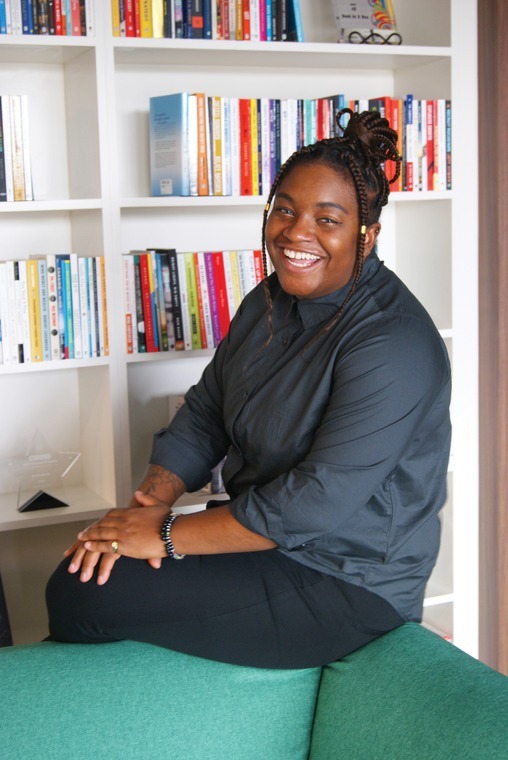
Keshara Moore
Author Bio: Don't really have one, but gun to my head it would be this: Keshara (she/her) currently resides in Austin, Texas where she accumulates new hobbies on the daily. She can be found @FarOutBlackGirl on Twitter and Instagram. Obsidian Society is her debut novel."
📚 Books by Keshara Moore

Transcript
[0:00:42] HA: To turn within is to survive. After the collapse of humanity in 2211, Letty Valentine, her family, and the rest of Washington DC’s Black upper class sought refuge in the ruins of Salt Lake City. As the founders of The Obsidian Society, they turn inward, protecting their own against remaining colonies on earth. My next guest just launched her debut novel and it’s amazing. Welcome to the Author Hour Podcast. I’m your host Hussein Al-Baiaty and I’m joined by my friend and author, Keshara Moore, who is here to talk about her new novel called, The Obsidian Society. Let’s flip through it. Hello everyone and welcome back to Author Hour. I’m here with a special guest, my good friend, Keshara Moore, who just launched her debut novel, The Obsidian Society. Yo, Keshara, I’m so excited to have you on the show. I’m really excited to get into this conversation but most of all, thank you for coming on, how are you feeling?
[0:01:48] Keshara Moore: I feel very – that was a really smooth slick intro. But yeah, no, I feel wonderful. I’m super excited to talk and be here and all the things.
[0:01:55] HA: Yeah, I’m super excited for you because I got to tell you like, I know we talked a little bit off air but man, your book was so, like, instantaneously pulled me in. I was like you took me in this scene and I just felt like I know what that was like. Swimming is not like a strong suit of mine.
[0:02:12] Keshara Moore: I mean, I do not think that you are alone so that’s the feeling that I was going for.
[0:02:17] HA: No, it was perfect, you were describing something that I think a lot of people feel, especially when they jump in that water but again, you know, that’s the power of you know, captivating the audience, the very beginning and you did such a good job and I’m super excited to get into the novel, the behind-the-scenes but before we do that, I love to give our audience a little bit about you know, who you are, you know, where you grew up, your personal background a little bit and what led you down the path of getting into, you know, publishing and writing and creative stuff that you do now?
[0:02:47] Keshara Moore: Yeah, great question. I will start off by saying I don’t have any major credentials. I feel Scribe was like, “Oh, unlocking the world’s wisdom, everyone can write a book.” I am a great case of that in the sense of like, yeah, I didn’t have like a ton of writing background and you know, this paper and this dissertation and all those things. But yeah, just from like growing up, both my parents were in the military. So I moved around a ton, I moved around every three years. I got to experience a lot of like, great places, a lot of great people, ended up going to college, thought I wanted to be an attorney. So ended up becoming a paralegal. Got into the law business and then very quickly was like, “You know, I’m sure this is for some people but this is definitely not for me.” So all of that being said, that was kind of the background I was coming from as far as like, how I ended up in Austin, got my first job here.
[0:03:41] HA: Yeah, I love that. You know, just for those listening, Kesh and I work at Scribe Media and you know for the most part, we publish books that are expert-driven, knowledge share, or memoirs. So this one was a little bit you know, a little bit outside that scope which is actually amazing. I love that you kind of took on that lead of you know, launching something that was creative. But all of together, I mean, even the theme of the book was actually really powerful, which we’ll get into but I want to know like, what inspired you to write, to turn within and this idea, this concept of turning within. How do you come up with the concept? Is this something that was planted within you when you were young or is this something that you started sort of thinking up in the last couple of years and decided like, “I want to write this story, I got this concept.” How did that come about? Because a novel is obviously different than writing, you know, what we’re experts in, or a memoir, you know?
[0:04:35] Keshara Moore: For sure. No, great question. Where do I even start? Yeah, so as with a lot of things, as you know, the world is pausing, you know, COVID-19 is going on, it was very fresh. I actually did work from home probably for like a total of two months when the courts kind of shut down. This was like peak paralegal time, things were kind of shutting down and I kind of just started doing some scribbling, just some ideas kind of swirling around. I started playing around with those and it was mostly just kind of for fun, and escapism, and just something that I like to do with my time and then, I was like, “You know what? How funny would it be if I just like turned this into a novel?” I wondered where that could take me. So to turn within and turn within is actually a super funny phrase because – and I won’t spoil but once you get to the end of the book, hopefully, the reader will realize this, that turn within is actually kind of takes a transformation in the sense of like, actually, the real power here is turning outside of yourself, turning outside from what you’re used to and looking at things from a different point of view. But very early in the book, the main character is very much in his mindset of, “Yeah, I need to turn within in order to deal with these problems and deal with my issues.” So the turn within is kind of a funny-like transformative thing.
[0:05:52] HA: So talk to me a little bit about the writing process for something like this, like your novel. What kind of challenges came up for you while writing it? I mean, I feel like the research and like, thinking about these elements and people and you know, things like in my mind, because I haven’t written anything like this, it feels like there’s so many moving parts, right in a novel and you got to kind of in a way, suggest that where the dots will connect, right? But you know, obviously, I don’t know, for me that could be challenging. For you, it could be where you’re floating down river but can you talk a little bit about that process of how you start to kind of gather your thoughts around these kinds of components?
[0:06:31] Keshara Moore: Absolutely, I could talk about this all day but since we don’t have all day, I’m just going to get the quickest of rundowns but obviously, again, just citing the fact that I am no expert. So for me, this was actually the longest piece of work I’d ever written. So I think the thing that the number one thing that really helped was the fact that I was actually interested in building this world, interested in where the characters were going, interested in what motivated them, the actions that they were taking because I have several friends who are like, “Hey, I really want to write fiction but every time I try, it seems like you know, I kind of get a little bit of the way and then I get bored” and it’s like, “Bro, if you’re feeling that way, imagine how your readers are feeling.” So I fully understand that. So I think the – for me, the beginning thing was like, “Okay, let me just write about something that genuinely interests me and the rest will go from there” but I actually recently just had a conversation. Someone asked me, what’s the question they ask like, “Are you a plotter or a punter?” I know it’s a common question in the community and that’s funny to me because like, “Oh, you got to be one or the other?” When in reality, you’re probably a little bit of both but I will say, shout out to Rose, shout out to Cal, they were some of the folks that helped me edit. Those first manuscripts were very rough in the sense of like, yeah, it was literally me just having fun, not paying attention to formatting and structure and things like that. Those things came later on once I kind of got the validation of like, “Oh, this might actually you know, turn into something, it could be something.”
[0:08:07] HA: I love that you approached it with this idea of like, “What is interesting to me? What resonates with me, what do I want to write about?” and what’s interesting about that concept I feel like there’s an unknown, right? Because what’s interesting to you can always evolve as you grow and as you write, it’s going to kind of bring itself out of you and I think that’s an interesting take because it’s trusting something that is going to be there but may not be there in the moment and that is really difficult, I feel like for writers, right? But then, if we just write completely what we know, how we know it, you know, all the – sort of the past experiences, those things, you know I could tell you from personal experience, writing a memoir, there is parts of my life where I was like, “This is boring” you know? And I’m like, “And it shouldn’t be here” but ultimately, a piece of that story is actually helpful for this long piece of the story or the bigger piece of the story but it’s almost like you don’t know what needs to come of it until you actually sit down and write. I think it’s really powerful that starting with, what’s interesting to me, that’s a very powerful question because then, you write everything kind of stacks on top of that. Because if you’re interested in it, then you got to write it away that gets the reader interested into it of course, which makes, I think, for a powerful perspective. So talk to me a little bit about how the story, you know, it takes place obviously in a post-apocalyptic world and I know, you know, there are many types of stories that kind of share this idea of you know, far in the future and things are going down and the world isn’t you know, what we think of it or we want it to be. But here’s an opportunity to be completely creative and everything is really open for your own translation. So talk to me a little bit about this world in which you create and maybe what kind of research did you do to create that world and characters.
[0:09:57] Keshara Moore: Yeah, so as far as it goes, the first thing you said about writing what you know and writing what you're interested in, I fully, fully believe that everyone who creates stuff has like just the biggest ego ever because how much of an ego do you have to have in order to be like, “Hey, I’m going to create this thing and I know, you know, there’s one person out there, at least one person out there is going to vibe with this and read with it.” You’ve got to have like some bit of an ego for that but I definitely think it’s like a fine line between that ego and hubris and all the things. So that’s number one but to answer your question about like research and the behind-the-scenes stuff, terribly-terribly-terribly was actually, ended up being helpful of like, yeah, just all the things going on around us with COVID-19 at the time because a book doesn’t take place that far in the future from where we are currently right now. To where – and that was purposeful because I didn’t want it to be some, you know, insane amount of years like in the future where it’s almost like very hard to envision this thing happening but the fact that yeah, a lot of the fallout in this world is manmade in the sense of like nuclear bombs and sickness and things like that like those post-apocalyptic or apocalyptic themes that everyone’s kind of like, you know, familiar with and used to. Those are something that it’s super easy for us to envision because you know we quite literally, and still are on the tail end of it, lived through a lot of those really hard things. So as far as research, there were definitely, you know, some ins and outs or just like wasn’t familiar with stuff because you brought up like the whole drowning thing, I cannot tell you, my Google search history is so questionable right now. But yeah, you know you Google the ins and outs of like, and something that I ended up finding out, I was like, “Yeah, drowning actually doesn’t happen that slowly.” It happens very quickly. So I took that into account when writing that like opening scene and so all of those like little things, obviously, you research those. You know, kind of bridge the gap of my own knowledge but even then, yeah, it just goes back to the fact that yeah, you know, the ultimate goal is for other people to read this story but at the end of the day, I had fun doing that research and I had fun coming up with this world but yeah, I didn’t want it to be – I know the sci-fi and the fantasy publishing gatekeepers are going to be like, “Ah, this doesn’t fall under all of those like umbrellas” and I’m actually not upset with that because it really was just me having fun, building a world that I hope entertains other people.
[0:12:28] HA: I love that, I’m glad you brought us there because I want to sort of share a little bit about that world and the characters in it. You call them, you know, the main group, The Valentines, or the founders of The Obsidian Society, and correct me if I’m wrong. Can you tell us more about The Society and its sort of values and those kind of things that I feel like in a way, resonate with some of the things that we think about today but you approach them in a very unique way, which I love, can you share a little bit about that?
[0:12:55] Keshara Moore: Yeah, so you had it spot on. The Obsidian Society is the faction currently living in Salt Lake City and they are – I don’t want to say, necessarily run but a big portion of their leadership is this family, The Valentines. The matriarch, Regina, she is obviously overseeing this entire colony and yeah, I don’t – just because of like, the length of the novel, I didn’t really have time to go into the nitty-gritty. But the idea here with The Obsidian Society is I was like, “What does it look like for a group?” If you do your research and go back far enough, essentially, there are these groups that spring up after the emancipation proclamation and you have these freemen who are now free, these people who used to be slaves who are now “free” and they start to move to areas and one of those really big popping areas was Washington DC and if you do some research, I can’t think of the names of the top of my head. But there are a lot of these groups who would populate in cities like Washington DC and they would found these groups and the expressed purpose of those groups was the advancement of those Black families and Black settlements that were cropping up from these freemen groups. So the idea there is that – and this is mentioned in the book but The Obsidian Society kind of takes some ties from there. That is kind of the present-day version of those groups.
[0:14:16] HA: Yeah, it’s so powerful. I don’t want to give too much away, I feel like the book is so unique and I love that you draw from these sort of past experiences and how you intertwined them with modern and future outtakes, which I just love because yeah, I feel like in a lot of ways, unfortunately, history does repeat itself and it can repeat itself but improve, right? I think your sort of – your battle between how the characters really come together and sort of capturing this essence of like, “Okay, you know here’s an opportunity for us to create a new world essentially but there is some stuff going on and we got to get through this stuff. I love that and I think your book kind of sets it up for a potential sequel maybe. Do you have plans to continue the story or the series?
[0:15:05] Keshara Moore: Ooh, that is the sweet question. I absolutely do. Yeah, I kind of went back and forth. I knew that one book definitely was not enough to tell the entire story that I wanted to tell. So I actually think it is going to be a trilogy, so kind of out of the box, yeah.
[0:15:18] HA: Yeah, I love that. Okay, I’m glad we shared that because I was – you know, as I was kind of perusing through your book, I was like, “Man, this is so powerful.” I kind of want this to be a series selfishly and then the more I read, I was like, “Okay, yeah, I think there is a setup here for that potential” which is really cool. So talk to me a little bit about your favorite part of pulling this book together. What did you learn from that journey?
[0:15:43] Keshara Moore: I love a well-built character like you have the plotting’s cool, you know you can do all these wonderful things with the plot, you can do all these wonderful things with structure but just like a genuine character whose voice you can hear in your head and who you can kind of start to paint your own mental picture of what that person’s look like and their mannerisms and why they did this instead of that. I love me a good well-built character and I feel like one of the parts of the character, which I really try to emphasize a lot was just this idea of dialogue. So there are some characters in the book like Nico and Nila, who have these very like some might say hard to read accents and have these very thick accents that are there throughout the entirety of the novel. So yeah, playing around with that dialogue, one word here versus a word here, and how that makes a difference was probably something that I really enjoyed and I think I did well. I might be brushing off my own shoulder but I think I did an okay job.
[0:16:40] HA: No, you did a good job. You did a great job.
[0:16:44] Keshara Moore: Yeah, that was one of the things I had a lot of fun with though.
[0:16:46] HA: Yeah, I love that. Can you tell me a little bit about you have a very unique sort of overall theme to the book and story, you know, just tell me a little bit about how you sort of drive this theme and where does it come from? Where does it land with you personally?
[0:17:02] Keshara Moore: There is so much to talk about there but yeah, as far as themes go, I mean, the most obvious one is yeah, just this intersection of like what does it mean to be Black and to be queer and then to also be a woman because I – and I put the woman in there because I do think that this novel looks or this story looks completely different if this is a Black gay man versus Letty, who is the main character, who is a queer Black woman. I think the story looks completely different if it’s from that point of view but yeah, that’s one of the really biggest things, and using that and that intersectionality to kind of break up this idea of like the Black monolith, right? We’ve all heard about the Black monolith, it’s this idea that all Black people in the US have the same exact experience, which then is so harmful to us as people and so I wanted to use Letty to kind of like bring about what does it look like to have this Black queer woman but not to have that be her whole story, you know? I feel like oftentimes, a character like Letty has previously been used in a comedic relief type of way or like injustice like, “Oh, I’m going to pile all of this shit on this character and then they are just going to have this terrible ending at the end.” I feel like those types of characters tend to be used in that way and I wanted to do the opposite of that and actually fully flush out all of the different aspects of Letty’s identity with the fact that yes, she’s Black, she’s queer, she’s a woman but also you know, she’s not limited to just being those things. She has all this other stuff going on. So that’s probably the biggest theme that people are going to immediately get but to quickly name a few other ones, you know we’ve obviously also got generational trauma, this idea of the beliefs that are handed down to us from our parents and what we do with those as we age. Yeah, we’ve got some silly ones that are like, what does it look like to write Black people in places that historically, we don’t often get to see that stuff and this is probably a really big one in the sense of you think of like why stuff like Mortal Instruments, Vampire Academy, Beautiful Creatures and like if you go and watch those film adaptations of the book, it’s almost funny to just sit there and just watch those movies because it’s like, “Dang, there ain’t no Black people in this movie.” This is supposed to be modern-day society and not a single Black person and it’s almost laughable to a point, right? So I want to do that in I feel like apocalyptic settings, it’s like for some reason when we enter those settings, it’s like, “Yo, where are all the Black people at?” So that’s kind of something that I really wanted to point out as well.
[0:19:39] HA: I love that so much because I think that is the most relatable thing throughout your theme and throughout the book is that you know, even though it is set out in the future and you got this amazing character that’s experienced a lot and this has been passed down with a lot, you know it feels similar to the things that you and I go through almost every day, right? So you don’t see a whole lot of Middle Eastern people in those movies either.
[0:19:39] Keshara Moore: Right, exactly. Look, people of color in general.
[0:20:06] HA: Yeah and if you do, they’re portrayed in a specific way and we know why, you know what I mean? That’s why I felt like somebody amazing, I can’t remember who they were, it was a podcast or something I watched on YouTube but he said something like, “If your people are not in literature, they’re probably not anywhere” and that was so powerful to me and it really pushed me to write my book because I just felt like no matter how many books we write, no matter how many movies we’re creating, no matter whatever, it’s just like that drum isn’t loud enough because our people are certain – You know they are out here trying to just survive let alone have the opportunity to create. I think creativity is a blessing and it is a privilege that we can indulge in to bring our voices to the table, you know? It doesn’t necessarily have to be a luxury, right? But if you can create that 30-minute, one-hour block of putting your voice down on paper then it’s amplified and it amplifies all our voices and of course, it inspires all of us to go out and do that thing that we have been putting off. That idea that we have been brewing and in your case, you were brewing this for a few years, you started passing it around and started moving it and I think that’s beauty alongside your work because you are working really hard too but I think it is just a testament to how not only does that theme sort of apply to who we are today but just how it unfolds in our modern culture and you know pointing and bringing those ideas to attention in these creative works, I think that’s so powerful. I am so glad you took the time to do this.
[0:21:42] Keshara Moore: Yes, well said, that was beautiful.
[0:21:45] HA: Because it is opening up the door. No, thank you but really though, I mean as you, you know, taking on the reins to do something creative and do something that we haven’t really done at Scribe, which is create this novel and bring it out into the world through that and the idea of owning our work, our creative work, our stories, our art, I have always been a fan of people who kind of go out and do it on their – not necessarily on their own but to the point where they own it and it’s not controlled by whatever means, you know what I’m saying?
[0:22:13] Keshara Moore: I totally feel you and I mean, having – just I mean, it’s easy to see, “You know, X, Y, and Z designed this book deal” or “So and so just released this mega-series” like I get all of that and that is all great for someone who wants that but yeah, I have to give the biggest shoutout to obviously Scribe, mostly for the fact of like yeah, the fact that they helped me bring this product out into the world so beautifully. No kind of weird undercoat swindling or anything like that, it’s quite literally like, “Hey, we want to help boost this story out to other people who might enjoy it. So yeah, just the idea that I still own all of my own royalties, all of my own content and they’re kind of just there giving me the resources and cheering me along, along the way has been so incredible because I think I mentioned this in my acknowledgments. But it is definitely although it started out as a very me, just pen to paper or I guess typing, it started out a very lone thing that I was doing on my own. Since then, it’s been like an entire team effort. So many people have pitched in, in just the smallest and biggest ways. So I can’t even harp on that enough of just like how much of a support system and how much of a team effort this has become, so yeah.
[0:23:28] HA: Yeah, I love that so much and I’m sure the whole team is super excited.
[0:23:32] Keshara Moore: Yes, I won’t name every single name but it’s in the book, I promise.
[0:23:37] HA: Yeah, okay and for those of you who are listening, the book cover is out of this world. It’s so well done.
[0:23:43] Keshara Moore: Oh, shout out to Erin Tyler.
[0:23:44] HA: Yeah, shout out, man, it is huge. It is amazing, I love just all the elements and how they kind of stack on each other. It is just so powerful to me, so I love that but I got to ask you one last question and it’s about your readers and I want to know, what is the thing that you hope they feel when they finally finish up the book and put it down?
[0:24:05] Keshara Moore: The thing I hope they feel. I think the biggest thing is going to just be entertained. At the end of the day, you know, life do be lifing, and if this book can get into people’s hands and like they even you know, entertained by a specific character or really feel some things with a specific character and be like, “Oh shit, my mom is kind of like that too” or anything that they can relate to even if it is just the smallest thing and their day not be so – Maybe they just needed a few moments of escapism, that’s probably the biggest thing is just them being entertained, hopefully, signing on for Letty’s journey as she journeys through the rest of these two books and I promise, it is about to be dope but yeah, just entertainment.
[0:24:51] HA: I’m so excited. I can’t wait to continue reading it and you know, like I said, I got through chapter three and I skimmed sort of the rest to kind of come up with this dialogue that we are having because I literally started reading it yesterday and so yeah, I have the rest of the week. Yeah, I have the rest of the week to kind of push through it a little bit and I am super excited because I know this ending is going to be amazing. The setup is actually really good, I really love that you kind of really wove that in as far as creating this trilogy. Well, Kesh, it’s been absolutely amazing having you today. Congratulations again on launching your book. Yeah, you’re remarkable, you have inspired me to continue pushing along on my second book so I am excited for that but man, thank you so much for just joining me today and sharing your stories and sort of behind-the-scenes of creating, The Obsidian Society, which I just love the title. It’s so powerful.
[0:25:42] Keshara Moore: Hey, thank you for having me.
[0:25:44] HA: Of course, so besides checking out the book, where can people connect with you, reach out and say “What up?” or ask for help or inspiration, whatever it is?
[0:25:52] Keshara Moore: Yeah, I’m always down for a DM, I will respond even if it’s just like the small sort of comment like, “Hey, I really like this.” If it’s like, “Hey, I really hated this” you know, maybe just keep that to yourself but yes, I’m on Instagram, Twitter, both of those are @faroutblackgirl, and then LinkedIn for the really professional folks. I’m not on TikTok because absolutely not. Yeah, I think those are all the things, yeah.
[0:26:17] HA: I love it. Well Kesh, again, it’s been a pleasure. This has been so fun hanging out with you. You know, we connect on LinkedIn but of course, our Slack channel is going to be on fire after this but again, thank you so much for coming on Kesh. This has been amazing, congratulations. Have a fantastic rest of your day, I know this is going to be a number-one seller, so I’m just waiting. I’m just waiting.
[0:26:39] Keshara Moore: Oh, I’m manifesting. Manifest that for me. Thank you so much, Hussein.
[0:26:43] HA: That’s right. All right girl, well, thank you so much for coming on the show.
[0:26:45] Keshara Moore: Woo!
[0:26:46] HA: Thank you all so much for joining us for this episode of Author Hour. You can find Keshara’s book, The Obsidian Society, right now on Amazon. For more Author Hour episodes, subscribe to this podcast on your favorite subscription service. Thanks for joining us, we’ll see you next time. Same place, different author.
Want to Write Your Own Book?
Scribe has helped over 2,000 authors turn their expertise into published books.
Schedule a Free Consult