Jennifer Nash: Episode 1186
Read the full transcript
Jennifer Nash
Jennifer Nash, PhD, MBA, PCC is a Fortune 50 executive advisor and consultant to start ups and executives at organizations such as Google, Ford, Exxon Mobil, JP Morgan, Boeing, and Verizon. Her work has been published in Harvard Business Review and other outlets TBD.
A former executive at Deloitte Consulting, she is the Founder, Chief Coach, and CEO of Jennifer Nash Coaching & Consulting. Her purpose is to help successful leaders and organizations connect the dots between people and performance to deliver exceptional results.
Learn more and download your free self-assessment at drjennifernash.com.
📚 Books by Jennifer Nash
Transcript
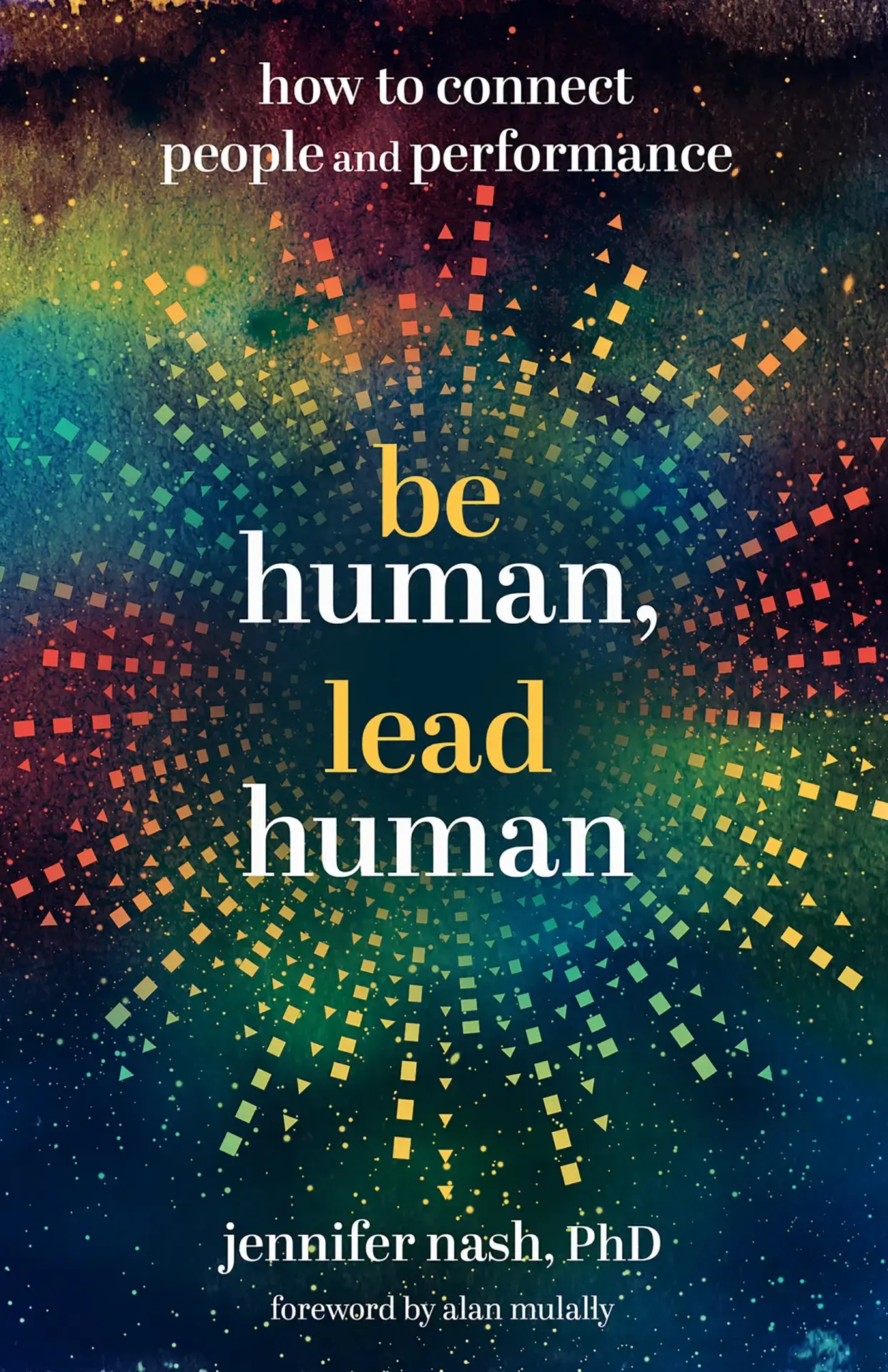
[0:00:13] HA: My next guest asks a very simple question. Are you being the best leader you can be? In the wake of seismic operating shifts, technological advances, and a global pandemic, workplaces are forever changed, and what used to work no longer yields the same results. Welcome to the offer hour podcast. I'm your host, Hussein Al-Baiaty. I'm joined by Dr. Jennifer Nash, who's here to talk about her new book called, Be Human, Lead Human: How to Connect People and Performance. Let's look through it. Hello friends. Welcome back to the show. I'm here with my friend, Dr. Jennifer Nash, today. Dr. Jennifer Nash, how are you doing today? I'm so excited to have you with me because it is a very special episode. But before we get into it, I just want to introduce you to our audience and let them know how lucky I've been to watch your journey unfold as you put so much time and energy into this book. It's been really amazing. The book is titled, Be Human, Lead Human: How to Connect People and Performance, and it just launched. How are you feeling?
[0:01:26] Jennifer Nash: Hi, Hussein. Thank you so much for having me today. I am feeling amazing. As you know, it's been quite a journey to get this book out into the world. So just to have it finally be published and available for people, it feels so wonderful and I'm so happy. I can't wait to see all of the impact that this book has for people.
[0:01:46] HA: Yeah. I love that so much. You have a very beautiful journey and your leadership really ranges over the last few decades. I just am excited to talk about all that good stuff, because your book is jam-packed with some really insightful key moments, but also really interwoven with just a beautiful story. I found myself hooked and excited to go pick it back up. I'll give you that for sure. I know why that is and it's because you put a ton of time into it. Before we get into the book, I really want to give our listeners just an idea of who you are, your personal background, where you grew up perhaps, and what led you down this path that you're on now.
[0:02:27] Jennifer Nash: I grew up in a small town in Michigan. I have three brothers and sisters all younger than I am. I have been observing human behavior and studying human behavior ever since I can remember. It's always fascinated me why people do what they do and how they do it and what those intended and unintended outcomes are of those actions and behaviors. When I started in the workforce, here I had this perfect living laboratory of people acting in ways that I really didn't understand. You have to know like about my background. I was never a business person to begin with. I actually started out life as a dancer and a pianist, a classical pianist. Transitioning into the business world when I graduated from college, I was a little unprepared as to why things worked the way they did and how things worked the way they did. I felt like I was walking into a space where I didn't speak the language, I couldn't figure out the cultural norms. I didn't understand why people did what they did and how they did it. That started me on a journey of really learning to dive deeper into what are the motivating factors why people do what they do? How does that behavior surface above the water line, right? We can see those behaviors. If you think about the top of the iceberg, all those behaviors that we see out in the workplace today, those are the things above the water line. But what really is driving those behaviors are the things below the water line. Those are the things that we don't see. I've always been so intrigued by what those are and how they motivate people and how that prompts them and drives them to action in ways that benefit them. Also, in ways that maybe doesn't serve them as well as it could.
[0:04:26] HA: Wow. That’s so powerful. What a unique thing to, I guess, grow up in the idea of, I am just excited by what moves people, what gets this cause and effect that happens between people. It's really interesting. I just appreciate that you kept going down that road and then rediscovered it in a way in business, which is, of course, very resourceful and helpful for people who are leading in business. Can you talk a little bit about – you work with some very notable people in leadership, which is just remarkable. They really came through in the book, as far as the stories and interviews that you put together. Was there a pattern that you saw that really stood out to you in connecting with these leaders in the last, let’s say, two decades or so? Because I find that there's a lot of, obviously, there's a lot of changes that we're going to talk about here in a few, a lot of changes, especially in our work environments. What's something that really stood out to you in working with a lot of these leaders and their ability to adapt?
[0:05:34] Jennifer Nash: One of the things that stood out to me the most about the leaders that I interviewed throughout the research that I did is that when leaders were able to adapt to the existing conditions, not only inside the workplace, but also paying attention to those external factors, right? These leaders had what I call them in my first dissertation, part of my dissertation, a duality of focus. They were able to focus internally for themselves and lead themselves and guide themselves in a way that was effective, but they were also able to focus externally, right? For those around them, the people that they were leading and help them figure out how to lead themselves and how to motivate themselves. That duality of focus wasn't just limited to the individual unit of analysis. It was also for the internal environment of the organization as a whole, right? What is going on in marketing next door to me? How do I need to integrate that into what I'm doing maybe here in IT and help the business elevate everyone at the same time? At the same time that they're looking internally in the organization overall, they're also looking externally in the marketplace, right? They're looking at the competitors. They're looking at what's happening with a particular product or particular industry or particular exogenous factors that are happening around them. Then taking that data and input and integrating that into how they are leading internally so that they constantly are tacking back and forth between this internal focus and this external focus, whether it's for them at the individual unit of analysis or whether it's for the organization as a whole, or whether it's for the entire industry, or whether it's for the entire marketplace, so you see where I'm going with that. These leaders that I was interviewing, I noticed that they had this duality of focus and the leaders that I chose to portray in the book, they demonstrated this duality of focus extremely much more strongly than some of the other leaders that I had spoken with. That's one reason why they were profiled in the book, because they did demonstrate this ability to have that duality of focus and focus on themselves and focus on others.
[0:07:56] HA: That's really powerful. I love that because I feel like in order to have that duality, you need quite a few years of experience as well because I feel you need to dip back and forth to understand the more you grow yourself, the more you got to understand how to communicate that to others and then as you grow that, then it's the idea of paying. How do you get them to communicate well with others? It's such a balancing effect. With that, I really love your intention behind creating this framework and you call it humans. Can you share a little bit of a story of when that started to come to fruition and how that started building up in your mind as something that you put into your practice?
[0:08:40] Jennifer Nash: Yes. I started seeing that the pieces of that human's framework dotted throughout the research that I was doing. It had always been in the back of my mind. Pandora's self-efficacy and Ryan and Desi's self-efficacy theories. I'm going back to what we talked about earlier in the podcast with understanding what drives people and then what motivates them to do what they do. I have always believed that as a leader, you cannot motivate anyone else. I liken that to a parent with a two-year-old. It's very difficult to get a two-year-old to do anything that they don't want to do, right? If you are setting the conditions instead, you're creating that environment instead for people to motivate themselves, right? How do you discover – how do you help people discover what motivates themselves? Getting that in place is one of those key factors that I was noticing in the research. As that started to become more clear, I started thinking about Maslow's Hierarchy of Needs, right? What does that look like? Those are motivational drivers for us. We need those levels of the pyramid, the safety, the security, the food, meeting those elemental fundamental needs, but as you go up the pyramid, you encounter some of these more self-actualization needs. When you think about the human's framework, some of these needs are actually closer to the bottom of the pyramid and some are closer to the top of the pyramid. It becomes this framework that helps people not only meet some of these elemental needs that they have, but also some of these higher-level self-actualization needs that we are all looking for from work. We all want to feel that our work matters. We all want to feel that what we do is important and that it has value and that it makes a difference in the world. It doesn't matter if you are the custodial crew taking care of the office late at night after people leave, or whether you are the CEO setting vision in the corner office and wondering, is anyone even paying attention? Does this matter? Is this going to make a difference when I retire? Where you are on that Maslow's Hierarchy is partially determined by where you are at the stage in your career, but I would also say that these needs are universal human needs. They apply equally regardless of race, regardless of ethnicity, regardless of religion, regardless of geography. That's what I think is so beautiful about this part of the book is that it is inclusive. It is equal. It helps everyone feel that they are important and that they matter. As human beings on this planet, we all want to feel that connectedness with one another and know that we matter to each other.
[0:11:52] HA: Yeah. I love that so much, because I mean, it just ties into our just – there's those deep philosophical questions of like, not only why am I here, but like, really what am I? When you break down the ideology of like, I feel like, what it means to be human, it is for me personally, what I've come to is the understanding of being as present as I possibly can be to appreciate and observe the natural world around me. In that gratitude comes friendship relationships and growth and opportunity, right? All these beautiful things. Even how you started your book in the ideology of gratitude, I found myself like instantly gravitating towards it, because of the methodologies that I feel like my father used on helping me grow up in the way exactly to what you're saying and that he saw something in me in that I love – I gravitated towards drawing like he's an artist, right? He made sure he had – he gave a sketchbook.
[0:12:56] Jennifer Nash: Yeah.
[0:12:57] HA: Hey, I bought you some colored pencils today or like different things that he – it's like, again, putting the environment around this person and seeing what they would do with it as opposed to, “I want you to draw this.” Like, he would never do that, right? I just love that aspect that you brought that into your writing, so eloquently and in that when you set the environment up, then the resistance and friction, it may still be there, but it's not going to be as powerful to hold that person back, right? If anything, it's going to probably push them forward. That's such a powerful thing to think about. When we think about leading others, how does this framework then apply in building those better relationships in team members?
[0:13:38] Jennifer Nash: Yeah. Before I answer that question, I want to go back to something that you were saying. You mentioned that your dad gave you the tools, right? He set up an environment for you to self-motivate, right? He gave you that agency and autonomy over what you were going to choose to do with those tools. That was up to you. If you step back and think for a minute how he created that environment, he created a way for you to self-motivate, right? To bring out that intrinsic motivation that you have that is long-lasting. As you continue to explore that space that becomes a positive reinforcing loop, because the more you continue to explore, the more you discovered, the more you learned, the more you became confident in your abilities, the more you were able to create and draw and be – fulfill that need that you have to create and be creative. Leaders can do the same thing, right? But we have to understand what is it that motivates our people and what's important to them. Because if we don't know what's important to them, then we're not able to use that particular lever, if you will, to help them create the conditions to be successful and have that motivation be long-lasting, right? We've always heard about carrot and stick where, oh, well, we're going to dangle the salary offer in front of you and we're going to dangle that bonus in front of you. Sure, that may work for a while, but motivation long term is not effective when it's with the carrot and the stick. It has to be intrinsic. As leaders, when we understand what's important to our people, what matters to them, what they value, we can better create those conditions to help each person succeed and self-motivate.
[0:15:28] HA: I love that. You really go in and describe vividly what each of these elements in your framework go into. I invite the listeners to really check out this book because it has this depth of not only understanding where the person is and meeting them and all these things that we typically know about leadership, but it's the idea of those inspiring components. You talk about that really eloquently. I'd love to go there for a moment. How have you seen leaders successfully using the word “inspire their team”, right? Members using those components in your human's framework.
[0:16:12] Jennifer Nash: is the question around how do they use the inspiration element of the framework in particular or how do they use all the elements?
[0:16:19] HA: No, no. How exactly to your first point, which is how do you use that inspiring component to basically establish this fluidity in the company? You know what I mean? How do they get their teams inspired? Because I feel like inspiration is such a personal deep down in my soul thing. How does that then become like a fragrance in the team environment? You know what I mean? You speak to that a little. Yeah.
[0:16:48] Jennifer Nash: Yeah. I think from an inspiration standpoint, leaders who are able to inspire others do so through emotion. It's one thing to talk about something and engage someone at the head level, right? Where they're thinking logically, they're thinking logically, but when you're able to inspire someone at the heart level, and you tap into like you just mentioned. What is that wellspring that they have deep inside them that allows them to, for example, believe in the vision that you are setting for the organization or believe in the mission that you have for the company to go out and do good in the world, whatever that vision or mission might be. Inspiration works with emotion. Leaders that are capable of inspiring their people tend to also be very good storytellers because they have a way to frame the message that connects with someone at an emotional level.
[0:17:55] HA: It’s so powerful and so liquid. Like I just – it's what I appreciate about how you wove those together is that every single time I've met someone that is, someone I look up to and admire from a distance, whatever it is, whether it be like spiritual or whether it be business or whatever it is, specifically people like my dad that we're just good old people that just trying to do their best in the world. I look at like what genuinely inspires me about them. It always comes back to these memorable experiences that were emotionally driven. Sometimes I disappointed my dad, right? There were times where I made him feel super proud, right?
[0:18:41] Jennifer Nash: Yeah.
[0:18:41] HA: All the ups and downs between them. But what was interesting is that they always left me inspired by not what they said typically, but how they made me feel when they said something or made me think about something, which I just I just fell in love with. One of my first, I would say managers or [volume 00:19:02], he was the owner of a bowling alley. This guy was so, I mean, he's amazing. He's in my book too. He's an amazing human being who quite literally led with one thing, inspiration, right? Like, he was not only a great storyteller, but he – like leaving a conversation with him made me so pumped up about life, you know what I mean? That I could do anything. It made me not only want to work for him but work harder for him and show up for him, just based on simple conversations about life. I just appreciated that so much. I'm so glad you wove this concept of inspiration into your book because it is something – I feel sometimes overlooked. I just wanted to bring it up, because it resonated deeply with me. Thanks for going there with me. I want to jump to talking about really this really important part of putting this whole book together. What was your favorite part? Because I know there was so many elements. You've been working on this for a few years now. There's that component of putting a book together something like this because I know you interviewed a ton of people. What was that like for you? Tell me a little bit about the process.
[0:20:13] Jennifer Nash: Creating the book had so many different pieces to it. I'm a social scientist. I always love to do the research first and start with the data collection. One of my favorite parts about this whole book writing process has been the conversations that I got to have with these amazing leaders who took their time to share with me how they have shown up in the world as leaders and what that meant to them and how they impacted lives around them. Having those conversations and just creating those special moments of interaction to me was just like the best thing ever. I love deep conversations and just really diving into stuff at a deeper level. Having the ability to do that with people who are clearly outstanding in how they lead and helping uncover what it is that drives them to greatness and as well as what allows them to continue to be great, right? What keeps them there? What keeps them motivated? That was just one of the favorite parts of my book, of the book process for me.
[0:21:19] HA: I love that. Who would you say – I mean, I've pointed to my dad a few times and there's a few other individuals that I really appreciate out in the world. Who would you say someone in your world that either inspired you to go into this leadership understanding, unfolding, if you will, someone that moves you in the leadership world? Who is that person and when did you come across their work?
[0:21:42] Jennifer Nash: Yes. That's a great question. If listeners have dived into the book yet, they will encounter a story that I tell at the very beginning of the book with a gentleman named Alan Mulally, who is the former CEO of Ford Motor Company. He is one of the greatest, if not the greatest leaders that I have ever had, the opportunity and honor to work with. He is the person who catalyzed my thinking and practice of leadership and my desire to learn more about leadership and set me on the path to go pursue an MBA and set me on that path to go pursue a Ph.D., because I still wanted to learn more at that point. Ultimately, he is the person who inspired me to write this book, because of how he chose to lead when I was working with him at Ford. I don't want to spoil that story for the listeners if they haven't read the book yet. I won't do a spoiler alert. I will just say that he really has a fundamental role in my decision to write this book and spend so many years of my life pursuing this in the hopes that this book will reach as many people as possible. It will impact as many lives as possible and make the world a better place, not just the world of work, but the world overall.
[0:23:10] HA: I love that, because in your book, it's not employee, right? It's humans. As humans, work is just one aspect of our life. It's a multitude of things. I love that, because your book really – I feel like it taps into those multitudes, because when you bring your best self forward, it's not just going to serve your boss, right, or that promotion or whatever. It's really going to serve yourself, your family, the people that you really want to engage with, the interests that you have. It's like, you bring your full self to those things as opposed to wanting those things to come to you, right? I think there's this level of where we're at today in the world as far as work, AI. There's so many different elements and change I feel is happening. I feel like, I'm a younger generation person, which I feel like I've gone through three different, almost three different types of careers all lined up in the arts and media and creativity, but the whiplash of speed at things are changing now, I feel like has quadrupled. Where do we find ourselves as young people and leaders? How do we look into the future and see out, see not only where our potential can lie as far as developing leadership skills, developing ourselves? I genuinely feel like leadership and creativity are two things that can't disappear from the human experience. They just can't because there's just – it's what we are. We are creative and we are always seeking someone to help us grow to the next level. I just don't see how technology can completely eradicate these two things. I get that creativity is on the line a little bit, but even with that, it's like, it’s still very much prompt-driven. I would have to give instructions to this, whatever it is, system. How do you feel about where we are today and where leadership stands in regards to tech innovation and tech? I feel like, at the same time, which is something that's really weird. This is like, I feel like there's a tech bubble that's bursting. Where do you see the landscape? How do you see it?
[0:25:27] Jennifer Nash: Is the question, where do I see the human element continuing to be at the forefront of business or is the question, how do I see AI shifting the leader's role and what that means for leadership going forward?
[0:25:42] HA: Yeah. I feel like, I would more lean towards your first analysis of just like, where do you see the human element, human experience in the near future, I would say?
[0:25:54] Jennifer Nash: I think from the research that I've done in organizations and interviewing leaders, there is no shortage of opportunity for leaders to focus on the human element at work and make that a priority. Yes, I think technology is changing and we're bringing in all these different ways to further remove the human element from the workplace. However, I think there is still such an opportunity to put that in front, right? Prioritize that. Think about what happened when COVID hit, for example. Prior to COVID, leaders were operating how they've been operating since the turn of the century, where command and control was pretty much the default style, managers told people what to do, how to do it, when they could work, where they had to be, all of that, right? You had to go into the office and then all of a sudden COVID hits and all organizations, mostly all organizations, had to determine how are they going to adapt to that and evolve. Seemingly overnight, the technology department figured out how to let people work remotely, if that wasn't already in place. People started working remotely and they did that for a year and a half, maybe two years until a lot of the COVID restrictions lifted. Now we're seeing the pendulums swing back to leaders demanding or requiring that people are back in the office like they were before COVID. I think that that is happening for several reasons. One is because when the walls came crumbling down through Zoom and we saw into people's lives, right, the messiness and the beautifulness of people's lives, where the kids are bombing on Zoom, the dogs and cats are walking across the monitor screen and we have all these things happening, right? Which put the human element squarely at the forefront of here are people at work now, they're working from home, because of COVID. No one – people didn't have like home offices set up for the most part, right? They're making do in a closet, they're making do at a kitchen table, they're making do maybe at a kitchen countertop. All around them, life is happening. We're seeing all of that particularly before Zoom figured out how to blur backgrounds, right? All of a sudden, leaders were like, “Oh, my gosh.” Like, I really do have to deal with this person as a human being and all of these different facets that are part of them. They're no longer just an employee who's producing output for me, so I am now seeing them as a father, a mother, a brother, a sister, a sauna, a person caring for an elderly parent, I have to see them in a different way and so many leaders just didn't have tools to do that. They didn't have anything in their toolkit. I think, you know, what I was saying is that leaders just didn't have the tools in their toolkit to lead people as human beings, rather than employees and managing tasks and managing projects.
[0:29:08] HA: Yeah. In fact, we slowly got away from really thinking about who we're working with as a person that is struggling with the same things, if not worse or if not more, because their lives are so different than ours. Because we've limited how much we interact about those kinds of things outside of work. There's a whole other culture at work that we're also balancing the drama, the things, right? Like the changes. It's really interesting. I appreciate your perspective because that really helps you understand the idea that, again, back to the human element of, look, we're all in this trying to figure things out. Technology's always been there to serve us and to serve – to make things faster. I feel like the new AI thing is beautiful, but it's also, yes, there are scary parts of it and all these things, but I feel like every hundred years or so, there's something that comes around and changes our lives. The internet did that and improved it. There's so many elements that we can push to, but as long as we remember that like, these things are here to serve us and our creativity and our leadership for one another, then we can guide ourselves through these things in a very more cautious way and more transformational type of perspective. I just appreciate that. Yeah.
[0:30:28] Jennifer Nash: Exactly. Yeah. I'm not against technology.
[0:30:33] HA: By no means. Yeah.
[0:30:34] Jennifer Nash: I think technology has done amazing things to bring people together that didn't have the opportunity to connect in that way before.
[0:30:43] HA: Yeah.
[0:30:43] Jennifer Nash: At the same time, I think that it's actually divided people, right? Those screens are dividing people in a way that we're losing the ability to connect on a human-to-human level. Developing that skill set and making sure that that's a priority is something that I think we really need to focus on as we look as we look forward to the future.
[0:31:04] HA: Yeah. Well, I love that so much. Your perspective is so needed right now. Jennifer, it's been an absolute pleasure having you today. Thank you so much for sharing your stories and your experiences with me and, of course, our audience. Besides checking out the book on Amazon, Barnes and Nobles, and all that good stuff. Where can people find you and connect with you?
[0:31:23] Jennifer Nash: Yeah. People can find me at my website, www.drjennifernash.com. I have all my social media platforms, so they can connect to me on those different platforms. Those are all listed on my website as well.
[0:31:37] HA: I love it. Well, Jennifer, thank you so much. Again, congratulations to you. This book is going to be amazing. It's already making waves, already a bestseller. I mean, it's already doing amazing things out in the world. I can feel it. I know. I'm going to be picking it back up and trying to finish it this weekend. If you're out there and you're listening, get the book. It's remarkable. It's well written. Well thought out, and the connection there is beautiful. The book is titled, Be Human, Lead Human: How to Connect People and Performance. It's available on Amazon, so go check it out. Dr. Jennifer Nash, thank you so much again for joining me. Congratulations.
[0:32:12] Jennifer Nash: Thank you so much, Hussein. It was a pleasure.
[0:32:15] HA: Thank you all so much for joining us for this episode of Author Hour. You can find Jennifer's book called Be Human, Lead Human: How to Connect People and Performance, right now on Amazon. For more Author Hour episodes, subscribe to this podcast on your favorite subscription service. Thanks for joining us. We'll see you next time. Same place, different author.
Want to Write Your Own Book?
Scribe has helped over 2,000 authors turn their expertise into published books.
Schedule a Free Consult