Kathleen Davis: You Never Told Me That
Read the full transcript
Kathleen Davis
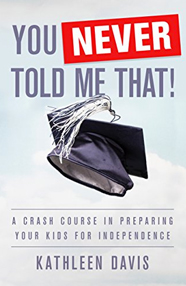
Kathleen Davis is a writer, painter, and Realtor raising her two teenage sons in Whitefish Bay, Wisconsin. She studied design at the Savannah College of Art and Design and earned her bachelor of fine arts from the University of Wisconsin-Milwaukee. She has spent several years volunteering as a coach and mentor to middle and high school students, and she worked with the Whitefish Bay school district to develop its anti-bullying program so that all kids could feel safe at school. She is the author of You Never Told Me That! A Crash Course in Preparing Your Kids for Independence.
📚 Books by Kathleen Davis
Transcript
[0:01:14] Charlie Hoehn: Today’s episode is with Kathleen Davis, author of You Never Told Me That. Like a lot of parents, Kathleen had read books on how to raise infants and toddlers but nothing prepared her for what came later; teenagers who were obsessed with social media. In this episode, we talk about the difficult conversations that every parent needs to have if they want to help their kids thrive in the real world. If your kid is about to graduate from high school or college, this episode is for you. Now, here’s our conversation with Kathleen Davis. Kathleen, I want to talk about You Never Told Me That and it’s a crash course in preparing your kids for independence and this is your first book. So I’m curious. What is like the number one take away from your book or if you had to choose an idea or a story that listeners would love, what would that be?
[0:02:25] Kathleen Davis: I think the number one take away from the book would be that it’s not obvious. I think that people tend to think that our kids just pick things up and that if they don’t, it’s just the not so bright kids that don’t and it’s just, that’s not true, there’s so many things that we really need to tell our kids and we need to spell them out for our kids and they’re really basics. You know, some of them are basic and some of them are not so basic. They’re pretty intense things and we’re either afraid to have the conversations or we think that they’re not important enough to have. A few examples and then I’ll give you a story, but a few examples are things that are as simple as like why do you get up and make your bed in the morning? Why is it important to open your mail? Then some more serious things like consent or teaching your kids to develop empathy. So I’ll use that as a story. I think a lot of people believe that empathy is something you’re born with and I would suggest that that’s not true and that I think that empathy is something that has to be taught to your kids from the time that they were born. I think that you can teach empathy going, starting right from the beginning and that it’s going to affect them in ways that you never thought possible. From when they’re sitting in a job interview, to any business negotiation, to getting them out of a pickle when they’re having an argument with a friend or a roommate. When my son was in second grade, he was being bullied and there was a kid that kept sending — they were putting notes on his desk and then the notes would say, “I’m going to beat your face in and I’m going to bloody your face,” and this kid wasn’t joking. You know, this was a pretty big kid and he was scary, and a lot of kids at school were afraid of him. He actually did have my son’s face on the ground in the playground quite a few times and my son was terrified of him and so you know, I said to my son, Henry, “Hey, do you want to invite him over?” And Henry was like, “Are you out of your mind? We’re not having him at our house, what’s wrong with you mom?” I’m like, “Well, honey, here’s the thing. I have a feeling this kid is like, there’s something he feels really bad about.” People don’t go around saying “I’m going to bloody your face” unless you feel bad. They just don’t. Maybe he doesn’t have any friends? I don’t know what his deal is but I think if we invite hime…
[0:05:07] Charlie Hoehn: Maybe he gets abused at home.
[0:05:09] Kathleen Davis: Yeah, we don’t know, right? I go, “Let’s just invite him over and then we can just sort of like break the spell.” Of course Henry was like, “No, you’ve lost it and just be quiet mom.” We didn’t ever invite him over but, you know, like ultimately, the kid stopped bullying him. School ended, he came back the next year and he and Henry were friends. But it turns out the school, the teachers were afraid of his mom. The apple did not fall from the tree but, you know, it all did resolve itself and actually, that was the year that I worked with another parent to sort of start an anti-bullying initiative in the school district. But my point with Henry was that you can‘t just think about what’s happening to you all the time. It’s not all about you, it’s usually not anything about you. It’s about this kid and what he’s probably going through that’s making him do this. Like try to focus on that and you might have some better insight into why he’s doing it. I think that’s what I try to teach my kids all the way along and that’s, I try to remind myself of that, in business, all the time. I find it’s like, maybe my most powerful business tool. For negotiating in real estate. I always ask my — there’s not a transaction that I negotiate where I don’t say, “Okay, what is the other guy thinking? What are they trying to accomplish, how can I try to give it to him while I try to get what I want at the same time?” You know, you can’t lose if you’re negotiating that way, it’s just — so to me, empathy is a huge thing to teach your kids.
[0:06:50] Charlie Hoehn: Yeah. I wonder, how do you find the balance as a parent of letting your kids figure things out for themselves and also being a secure base that they can go to and because at a certain point, your kids are like going to say, “Let me live my life mom, don’t interfere,” and if you don’t strike that balance, it can be tense. How do you decide “I’m going to jump in here and I’m going to teach them and help guide them towards stronger empathy” versus “I’m going to let them figure it out”?
[0:07:35] Kathleen Davis: You know I think you just have to set them up with the tools and let them fail sometimes. Just let them make their mistakes and then the other really good…
[0:07:44] Charlie Hoehn: Wait, set them up with the tools, what do you mean?
[0:07:47] Kathleen Davis: You know, speak your piece, give them the examples. I hope that when I hopefully gave Henry that lesson when he was in second grade and many times since, I didn’t make him have that kid over at the house, I just suggested it and then he said no and I said, “Okay fine.” Then, you know, Henry got some more notes on his desk that said, “I’m going to beat your face in.” There were several things that happened after that and like I said, I only suggested that he have the kid over. But Henry remembers that whole scenario, he remembers what I suggested and I think that you know, over the years, there were many other situations similar to that and I think what happens is it just sinks in the suggestions and then how things play out. Your kids make their own — let your kids make their own decision but suggest things that, another way of looking at things. You know, Henry’s brother is George, his younger brother and so they fight like normal brothers do and sometimes I say, “Hey George, I think the reason Henry called you a whatever is because he thought you were saying, blah-blah-blah, and so, maybe you should consider his point of view,” and then I walk away and if they want to hit each other in the hallway then that’s their choice. But at the same time, I mentioned to them that they should get on the other side of the fence and consider what the other was thinking. I think that, you know — and then if they want to beat the living daylights out of each other then they can handle the ramifications of that. At least I pointed out how I would handle it. So I think yeah, you have to let them fail but I also, it’s my job as the parent to point out options for them you know? And the consequences that might happen that might happen if they do or don’t follow the options. That’s the kind of sort of hands on, hands off parenting approach that I like. Some people would be like, you have to do this or this happens and I’m not as big on that. Because I think if you don’t allow your kids to fail and make incorrect choices or I shouldn’t say “incorrect” because maybe there’s not correct and incorrect, but if you don’t allow your kids to make choices, then they’ll never learn that there is this sea of choices that they can make and what the different choices mean. You know, I say give them the tools, let them choose and then overtime they’re going to figure it out. Henry came to me about three or four days ago and I was so excited because he said to me, “Mom, I used something that you told me the other day,” and I was like, “What did you do son?” Not son, I don’t call him son at all. I’ve never called him that. He said, “Well, I was in the Trader Joe’s parking lot but I was going to get Five Guys and the security guard came up to me and he said, “You can’t park here unless you’re a Trader Joe’s customer.” I remembered mom that you said, “if you say anything with enough confidence, people will believe you”. He said, “I just looked at that security guard and I said, I am a Trader Joe’s customer,” and I turned around and I walked to Five Guys,” and I go, “Oh my god, that’s great Henry.” And he goes, “The security guard had no idea what to do with himself.”
[0:11:17] Charlie Hoehn: Yup.
[0:11:18] Kathleen Davis: I’m like, “There you go.” He goes, “Well, the thing is, I did go to Trader Joe’s afterwards and buy a drink,” but he’s like, “I totally get it, if you just say it, people will believe you,” and I’m like, so he’s listening? I don’t know when, I’ve told him that a thousand times over the years, just say it like you mean it and I mean, don’t lie to people but you know, he shops at Trader Joe’s all the time and if he wants to run and get a hamburger and he believes legitimately that it’s fine for him to do so then just say it and do it. Suddenly I see this confidence come out in him that he knows how to handle himself and that’s what I want, to me it’s like, that’s how I know he’s listening and I didn’t tell him that last week or a week before, I’ve told him that his whole life. So yeah, that’s how they pick up the lessons.
[0:12:07] Charlie Hoehn: That’s great. Tell me the story behind why you wrote this book? What was the problem that you were facing, that you ultimately solved and then decided I want to write a book?
[0:12:21] Kathleen Davis: Well, I’m not sure I solved it. It’s a work in progress for sure, but I was — Henry again, going back to Henry who is, he’s at his very last day of school today, his last day of high school and he is really into climbing. You live in Austin, right? Henry’s going to go to school at Saint Edwards University in Austin next year.
[0:12:47] Charlie Hoehn: That’s great.
[0:12:48] Kathleen Davis: He’s into bouldering especially but he also wants to do some regular climbing. He’s at the rock wall six days a week and he is constantly watching climbing documentaries and free solo…
[0:13:04] Charlie Hoehn: Oh he’s going to love it down here.
[0:13:05] Kathleen Davis: Oh yeah, he can’t wait to try out for the collegiate climbing team and he’s just, he lives and breathes the idea of climbing. I was waking up in the middle of the night, which means the middle of my night so between two and 4 AM and I would be like in a sweat and the dream I would be having was, Henry would just look back at me and he would make eye contact and then he’d take a step off the mountain and just disappear. He’s gone. I think I was having this dreams because he was so blasé about the idea of just dying and falling off a mountain. He would say things to me like, “Mom, everyone’s got to die,” and he truly means this, he’s just this like, you know, “Chill out mom, it’s totally not a big deal.” Because all of this pioneers of climbing or not all of them but many of them end up dying at some point. Henry’s just very laid back. I mean, he just thinks like live large, do what you want to do and if you happen to fall off of a mountain at some point, at least you had a great time, I don’t know. In my mind, ultimately I translated it to I don’t know, “Is Henry ready to make all this big decisions? Or even little decisions?” So I started thinking like, “Well, what are the things that are really bothering me?” I fell back to at the time, we were in sort of this college application sea of applications and all that. Henry had, we had just visited Georgetown and we had just visited American University and he was applying to both and so the day he was filling out his Georgetown application, he left for work and was putting gas in his car and he called me from the gas pump and he was like, “Hey mom, you’ve got to come here immediately, the gas pump doesn’t work.” I’m like, “Are you kidding me? What is wrong with you? You’re 17 years old, I’m not coming to the gas pump. If you want me to come to the gas pump, you have to — you cannot tell Georgetown you don’t know how to pump gas. There’s something wrong with you.”
[0:15:13] Charlie Hoehn: Right.
[0:15:16] Kathleen Davis: You know, I’m like, this is ridiculous. Here’s a kid who’s like so smart, he’s really smart, he just finished up an independent study in like fourth generation warfare, counter terrorism. I mean, he’s not a dummy but he doesn’t know how to pump gas and I’m like, “What is wrong with this picture?” I started thinking about all of the things that maybe he didn’t know how to do that literally we might need to just go down a list and then I started thinking like, “Are there other kids that don’t know how to do this stuff or is it just my kid?” Then I started having conversations with parents and they’re like yeah, my kid is clueless, they have no idea. The more I talked to parents, the more the stories just came back that it was such a universal issue. So that was sort of the inception of the book.
[0:16:04] Charlie Hoehn: Why was it an issue? I don’t understand. I mean, it’s not like he was raised in Brazil where there’s people doing the gas for you. Was it an issue because, do you think that’s your responsibility or his or what do you think?
[0:16:20] Kathleen Davis: Okay, I will say, part of it, although he was not raised in Brazil, I think he was raised in an environment where a lot of things are done for our kids and you know, a little of it is his socio economical — we’re not a supremely affluent family but he does live in a nice area where kids are you know, given a lot and maybe babied a little. I tried hard for him that not to be my children but the case still remains that a lot is done for them. But then also, I think just universally, we just go under the assumption, “Oh, they get it.” Or, “They’ll figure it out,” and I don’t think that that’s true and I thought back then to my college experience and I think some of those things were true then as well and I think about some of the things that I’m not good at even to this day. I think, “Well why is that?”
[0:17:15] Charlie Hoehn: Like what?
[0:17:17] Kathleen Davis: Like opening my mail. I think, “Oh my gosh, I hate the mail,” every time the mail comes.
[0:17:21] Charlie Hoehn: Like the physical act of opening your mail?
[0:17:23] Kathleen Davis: Yeah.
[0:17:25] Charlie Hoehn: Or like, just the mental…
[0:17:27] Kathleen Davis: The mental anguish I get every time the mail comes. It’s like, “Oh, my gosh,” there’s nothing good that comes in the mail for adults usually.
[0:17:32] Charlie Hoehn: Yeah, that’s true.
[0:17:34] Kathleen Davis: It’s like, after you pass the age of like 17 or 18, what comes in the mail, it’s like bills and your taxes and whatever.
[0:17:44] Charlie Hoehn: It’s so depressing, yeah.
[0:17:46] Kathleen Davis: It’s not like you run to the mail man with the dog biscuit or whatever. It’s like, I literally want to close the door when I see the mail coming. I stack it in a nice little corner on my kitchen counter and then every week or so, I go, “Oh my god, I got to look at the mail.” But, one parent told me a story about her child that was away at school and kept calling home and going, “I have no money,” the kid was in tears and like, “What am I going to do? I can’t afford to eat, I can’t buy my school supplies.” Then the parents finally flew to see the child who had never opened his mail and the parents had been sending checks in the mail all summer. That’s like, “Hello? Open your mail.” You know, not to mention, that’s a funny story but it’s like, you know, think about the bad things that happen when you don’t open your mail? Even though it seems so obvious and silly, it’s really not, it’s just like, you know, when the mail comes, just open it, it’s like a simple skill but, you know, form my own life, I’ve learned that like it’s best to rip the band aid off right when it comes. You know, so that’s the mail.
[0:18:59] Charlie Hoehn: Yeah, tell me, is the book then mostly advice for parents or is it like “here are all the things that you need to teach your kids” or is it a story about your life or what?
[0:19:14] Kathleen Davis: Yeah, the book is not really like a list of things that you should do. It’s a book filled with stories and you know, hopefully they’re entertaining stories with, that are meant to sort of probe you to think about what you might want to talk to your kids about. The stories are mostly about Henry and George and then also back to my college experience but there are also stories from other parents like the one I mentioned about the mail. You know, I don’t hit on every topic, I just hit on topics that again are meant to sort of make the bell in your head go off and, “Go, wow, if I talk to him about that, maybe I should also talk to them about this.” Of course, the mail is kind of you know, some of them, like I said are not — they don’t seem serious but they actually can have serious implications on your life but then, some of them do get…
[0:20:05] Charlie Hoehn: Like what?
[0:20:06] Kathleen Davis: You’re not again, like with the mail. You know, if you don’t open your mail, your credit…
[0:20:10] Charlie Hoehn: Sure.
[0:20:10] Kathleen Davis: You’re not to pay your bills and your credit’s going to go down the toilet and you might not be able to rent an apartment in your sophomore and in college. That sort of thing. But then, it quickly delves into some really serious topics like, you know, consent and what does it mean?
[0:20:26] Charlie Hoehn: Yeah, can you talk about that? That is a tough conversation for a lot of parents to have and with things changing so much now, I mean, I don’t know if every parent realizes how insane the world is for children now with digital, with phones, with being able to send photos. It’s the Wild West for kids right now. How do you have that conversation?
[0:20:53] Kathleen Davis: Yeah, those are actually words that are verbatim in the book, the Wild West.
[0:20:57] Charlie Hoehn: Yeah.
[0:20:58] Kathleen Davis: You know I think, parents think that if they start the conversation that they’re giving carte blanche for kids to have sex, to give consent, to get an STD, to send a picture, to do all these things and they’re like, if they just don’t say anything, it will never occur to my child to do these things, which is absurd of course. From the beginning of time, kids were doing all, of this, it’s just a matter of let’s now start thinking about what the ramifications are and also you know, what the boundaries are and how to be safe and how to talk about it. So, you know, there’s a whole section in the book about social media and pictures and where I vary, I try of course to make part of it funny and part of it serious about don’t send a picture of your penis, don’t send a picture of your girlfriend’s hot boobs. Just don’t do it. Because if you do it, it’s child pornography. If you’re under 18 and how easily it can happen because people are like, “Well, my kid is not going to do that, he’s not an idiot. I’m like, guess what? Yes he is because someone is doing it.”
[0:22:07] Charlie Hoehn: Yup.
[0:22:08] Kathleen Davis: It could be even my kid or your kid, they totally would do it because here’s how it easy it happens, it’s like you know, your girlfriend…
[0:22:16] Charlie Hoehn: It can happen in five seconds.
[0:22:18] Kathleen Davis: Nano seconds.
[0:22:19] Charlie Hoehn: It can be an accident, you know?
[0:22:21] Kathleen Davis: It’s so easy because they don’t realize what they’re doing. They just think like, “Hey look, my girlfriend sent me a picture of her boobs and then I just showed it to my friend but then you know, by sharing it, but then my friend showed it — suddenly his mom looked at his phone and then she showed it to the parents who then called the police.:
[0:22:46] Charlie Hoehn: Author Hour is sponsored by Book In A Box. For anyone who has a great idea for a book but doesn’t have the time or patience to sit down and type it out, Book In A Box has created a new way to help you painlessly publish your book. Instead of sitting at a computer and typing for a year, hoping everything works out, book in a box takes you through a structured interview process that gets your ideas out of your head and into a book in just a few months. To learn more, head over to bookinabox.com and fill out the form at the bottom of the page. Don’t let another year go by where you put off writing your book. And the crazy thing, I heard a story that there were schools in Colorado I think where the kids were — they were all sharing naked photos with each other and that boys were basically making a database of all the girls in the school.
[0:23:46] Kathleen Davis: Oh my gosh.
[0:23:47] Charlie Hoehn: I think that’s another thing that parents don’t explain to girls how boys are highly visual. Parents don’t explain to boys how women are emotional and indifferent and they have different wiring and I’m just thinking, as you’re saying this, I was thinking back to my experiences. I was in my teens when Napster came out, right? I was always the kid who is fixing other people’s computers. I would take apart my computer and put it back together. I had that hacker mentality where I just wanted to explore and see what happen. I would create games on my calculator in high school.
[0:24:31] Kathleen Davis: Wow.
[0:24:31] Charlie Hoehn: I’d sell them to other kids, you know? I was always exploring what technology could do and I’m so grateful to my family for allowing me to do that. But, I do remember at one point that porn popped up because of the nature — like, I was downloading movies, I was downloading music, my dad was like, “Please do not do this anymore. You’re going to get us in trouble with like the government,” and I was like, “Whatever and it’s fine.” As a stupid, so porn, I remember popped up, it found me before I found it and then you become curious as to what it is, it’s like terrifying but also fascinating and exciting and you’re like — your friends are all of a sudden aware of it and showing it to you. It’s a confusing time and no one tells you that that’s going to happen.
[0:25:28] Kathleen Davis: No, and what do you do with it? You don’t know what to do with it when it happens.
[0:25:32] Charlie Hoehn: Right, exactly. I remember getting in a ton of trouble when it popped up on our computer like later on because it was like a virus of some sort or something and so all of a sudden, I’m feeling horrible about this thing that I have no understanding of and it’s not even — none of it is registering. These conversations that you’re talking about, having with your kids, I mean, I can’t imagine how many there are that parents overlook because they’re like, “Oh, they’ll figure it out.” Or, it was different. For me, it wasn’t that bad when I was growing up. But the kids are in totally different world.
[0:26:15] Kathleen Davis: Right, and frankly it’s like, we think it wasn’t that bad but I just wonder how much of it just wasn’t talked about. Because I do think maybe a lot of the same things happened. Maybe to a degree it wasn’t the same but I think things are just getting one step more brazen and one step more talked about. But I think that a lot of stuff did happen. We just didn’t hear about it as much and now there are more vehicles for it to get out there and there’s more technology. But I still remember a lot of crazy stuff happening and so I think it’s just a little less hush-hush, which I actually think is great and I think now the burden is coming back on the parents, which I think is good and I think that parents have to suck it up and start talking about it and I think it’s scary. I’m a parent, I don’t really want to have to talk to my kids about some of this stuff but I’ve been pretty ballsy all along with my kids. When my kids ask me how do babies get made and what sex and they were like eight years old, I was not the parent who was like, “There’s a stork and there’s this.” I pretty much get all the anatomy book and was like, “Here’s what happens.” Because I just felt like I was a straight shooter right from the start. I just felt that the more they know, the better off we are I’m going to have this conversation, let’s just get it right from the start.
[0:27:44] Charlie Hoehn: Kathleen let me ask you this, did you give them Santa or no?
[0:27:50] Kathleen Davis: Well I will say, I mean, Santa came to our house but my kids figured it out very early. But then when my kids debunked Santa very young I just looked at them and said, “Which part of this isn’t working for you?” and then they were like, “All right, good point.” So we went with it because I am very going along with being a really creative person. I still like the whole fantasy of everything.
[0:28:16] Charlie Hoehn: Yeah, of course.
[0:28:17] Kathleen Davis: But we create the world around us I think and so as far as I am concerned, just live in the world you want to live in and even if you know that nobody’s coming down your chimney, someone can come down the chimney in your mind.
[0:28:32] Charlie Hoehn: Yeah, it’s one thing to have a healthy playful imagination and relationship with your kids. I think it’s just the avoidance of truth of being afraid to have real challenging conversations that make you uncomfortable as a parent ends up — kids are smart. They see through that instantaneously and they’re like, “Well I can’t depend on my parent to guide me through something that I am just going to have to figure out on my own”.
[0:29:09] Kathleen Davis: I don’t know if every parent feels this way because I like to think I am pretty smart, but I will tell you this, I feel like my kids are so much smarter. Henry and George are so smart and I don’t know if it’s just that kids are provided with so much more opportunity now or if they’re just smart. But they blow my mind how intelligent they are or how much they know and both of my boys are insatiable readers and insatiable learners. And so a lot of times they look at me and go, “Yeah mom, you wouldn’t really get it,” you know? And I’ll go, “Well just try me,” and then if I ever say something that they think is smart they’re like, “Hey mom, not bad,” you know? So I really wanted them to trust me right from the start and know I was telling them the truth but I also knew that frankly they were going to pick up on it if I was lying.
[0:30:10] Charlie Hoehn: Yeah, so tell me what is something that parents can do this week from your book that you would encourage them to do? Have them make a list of topics or have a conversation with their kid, or what do you recommend?
[0:30:26] Kathleen Davis: Well I guess what I would say is listen more because it’s easy to get caught up in the doing and I know I have list sell all over the place like we’ve got to do this, we’ve got to do that and we’ve got the Kaj to-do list of this and then that but I think our kids tell us what they need and what they are wondering about if we just shut up and listen a little bit and then we can tell what they have questions about. You know it’s surprising to me sometimes when I look at them and when I listen to them, I can tell what they don’t get and then if I spend some time with them just filling them in on things, and then also I don’t know all the time. I don’t even know how to answer the question sometimes and then get help but don’t ignore it. It’s easy to not to want to talk about stuff but that is going to be a critical mistake and it could be a fatal mistake. You and I were talking about anxiety and I have suffered from anxiety in my life and my kids are both, I also think that with kids who are highly creative and highly intelligent, they suffer sometimes from anxiety because there is so much they’re thinking about and I think that you really need to listen to those kids because they give clues about whether they are having just basic anxiety or whether they are having anxiety that really requires some assistance and I think that’s super important especially as your kids are getting ready to go to college because they’re not going to be in eyesight necessarily then.
[0:32:04] Charlie Hoehn: Yeah, absolutely. So let’s talk a little bit about the business of your book. So the marketing strategy; are you doing anything specific for marketing right now? Your book just came out, it looks like, a few days ago.
[0:32:19] Kathleen Davis: It did. So the book launch is going to be June 12th so it’s a week from this Monday and I’ve done a few things. I’ve done a local TV show and I’m doing some…
[0:32:30] Charlie Hoehn: Good for you. That’s great
[0:32:32] Kathleen Davis: Thank you, yeah that was enjoyable.
[0:32:33] Charlie Hoehn: How did it go?
[0:32:34] Kathleen Davis: It went well, I really enjoyed it.
[0:32:37] Charlie Hoehn: How did you lined it up?
[0:32:39] Kathleen Davis: It was a morning show and it just so happened that I reached out. One of the host of the show happens to live in the same community I do. So I just center an email, she said, “Hey, we happen to have an opening this Friday,” it was all of a sudden and I grabbed it. I’m a big take your opportunities when you can get them kind of girl. So the second she said it, I jumped on it so that’s how I came about. The show is called The Morning Blend and I got a nice little spot on The Morning Blend and we had a great interview and I got some nice feedback from that and I’m a big social media user. So I’ve been marketing the book for the last six months as I wrote it on social media.
[0:33:23] Charlie Hoehn: How so? What do you mean?
[0:33:25] Kathleen Davis: Well, first of all I am a realtor as I’ve mentioned. So I have a pretty large social media following through my real estate and I also am an artist. So through my different Facebook sites and my LinkedIn site, I just started peppering both of those sites with information about my book and I’ve such great clients and friends that they’ve all been amazingly supportive of the book. I’ve had tons of people asking me when it is coming and where can they get it and can they share it with people. I’m also a lover of talking with people so every time I’ve been on an airplane or in a car, on a bus, on a walk, whatever, I start a conversation and then I’ve said, “Hey, how about I send you a book and then would you share it with everyone you know?” So I’m big on I am not afraid of talking about the book and I guess it became easier when I felt like it was an important topic. So when I first started writing it, I started writing almost because I felt like, for myself. And then as I wrote it, I realized that it had really great value for other people, which made it actually — it completely changed it for me and suddenly I felt like, “Oh my gosh someone is really going to read this, I think, I hope.” But I felt like even though it felt helpful to me, I started getting comments from other people as I was sharing that idea with other people and they were saying, “I think this is really going to be helpful to people,” and I was like, “That would make me so happy.” And then as now people are reading, I have a sample chapter of that people can go to my website and sign up and read one chapter and my website is www.younevertoldmethat.com and people who have read the chapter are like, “This is so helpful. This is going to be a great book” and that almost brought tears to my eyes because my biggest fear was to write something that was self-indulgent and not for other people because I felt like that would be a big waste of time frankly. I just didn’t want to do something that was self-indulgent. I wanted it to be helpful.
[0:35:43] Charlie Hoehn: Yeah, this is great. I am looking at your site right now, did you put this together?
[0:35:49] Kathleen Davis: No.
[0:35:49] Charlie Hoehn: It looks like a Squarespace site or no?
[0:35:52] Kathleen Davis: It is, it’s a Squarespace site. It did not so I mentioned on Morning Blend show came up really last minute. I have a wonderful client, his name is Adam Roop and he is in marketing and he and I are working together to get his house ready to sell and he’s actually the person who introduced me to Book In a Box and Tucker Max and that’s how the book kind of — I had been writing the book already and I mentioned to him I have been writing this book. We were talking about kids in the book and I said, “I just don’t know what I’m doing. I’m writing chapters, I am getting them done on paper or on the computer but I have never written a book before” and he said, “Well hey check out Tucker Max and Book in a Box” and so that’s how the whole thing came into or how it all came to be. So then, of course, again, my knight and shining armor said, I am like, “Oh my gosh I have to be on TV in three days and I don’t have a website”. So he graciously and his marketing team just in almost 24 hours created my website for me very quickly. So I was so grateful to them and still am that’s how my website got up and running so it’s a work in progress but yeah.
[0:37:11] Charlie Hoehn: I love it, yeah and this is a great point I think for all authors is you always have somebody you know for the most part who knows how to do this stuff. Don’t be afraid to ask for help because how do you think this website would have turned out if you put it together?
[0:37:31] Kathleen Davis: It would not. You would not be looking at it. There’s not enough time in the day to do everything you need to do. There’s not and asking for help to me, the people who have offered to help with things and who have really done things for me, it just blows my mind how amazing my support system is, I mean, and this is a client who’s become a friend but the generosity is just unbelievable to me.
[0:38:03] Charlie Hoehn: You know why that happens, right Kathleen?
[0:38:05] Kathleen Davis: Well I have a suspicion about what you’re going to say but I’m just going to let you say it.
[0:38:10] Charlie Hoehn: Okay, fair enough. I think happens when whenever you’re doing something that’s bigger than yourself, that you are doing something that other people resonate with and they’re like, “Good for her, I want to help her get there faster,” and you know I wouldn’t necessarily believe this if I haven’t experienced it so many times over the years. The last book that I made I’ve worked with over 50 people who all volunteered and contributed to it, and there’s not a trace of resentment I’ve come across with any of them, they’re overjoyed to be a part of it and I think a lot of authors might be hesitant to ask for help from people not knowing, not fully understanding that people love to help and love to take part in something that’s meaning to their friend.
[0:39:11] Kathleen Davis: You know what? I think that’s beautiful. I think that’s amazing and true and you said it in a way that’s much better than I ever could have, but I do that…
[0:39:22] Charlie Hoehn: Oh give it a shot.
[0:39:23] Kathleen Davis: No, I think it’s amazing. I think I could never put my finger on it in exactly that way but what I will say is that I didn’t fully understand why but I feel like people are offering to help me and part of me was a little embarrassed by accepting all the help and part of me was just feeling overwhelmingly grateful and happy and I just feel like all I want to do is reciprocate that and help other people in the same way that they’re helping me and I think that that’s the kind of world I like living and so I think that’s all I could say is that’s the kind of people I like to be around so it just makes me happy. So I really like these people and I love that they wanted to help me and I am so grateful for it.
[0:40:10] Charlie Hoehn: Yeah, there’s a great TEDTalk by Amanda Palmer called The Art of Asking that I think every artists should watch, every creative. Because there’s so much hesitation in asking for help. There’s shame in if you make money on a project, it’s crazy. So the goal is to keep doing more and more stuff like this and to keep being able to play the game that you want to play. So I’m curious, Kathleen, is the purpose of this book a legacy piece, is it to help other people or were you trying to get speaking gigs? Were you trying to become an authority on this topic or get leads? You said you’re a realtor, right?
[0:40:59] Kathleen Davis: Yes.
[0:40:59] Charlie Hoehn: A gift for your clients?
[0:41:02] Kathleen Davis: No, when I first started writing the book, I will admit I wasn’t sure. So when I had a conversation with Tucker and I know I was a little grey about my intent and it had to be developed. Because I knew I had something to say and I wasn’t sure exactly how far I wanted to take it in and how much I had to say and it developed as I was doing it. I’ve always enjoyed public speaking and coaching and mentoring and then as I started going it just blew up in my face. I became so passionate about it and then I became passionate about, I think everyone started either giggling with me or at me, I’m not sure which, but I would say, “Okay I’ve got this folder going now and I’ve got the next three books planned out and I want to get some speaking gigs and I want to do this and this and this,” and they’d be like, “Okay hold on, why don’t we just finish the book?” And I’m like, “But I can’t help it. My mind is just on fire,” and then as I mentioned, I’ve got two and a half years with my kids in the house and I am so jacked about this next phase of my life. I’ve been a realtor for 21 years and as much as I love it, I think it’s just prepared me for this next step of my life and I am ready for that. So my plans are to get going on book number two and I’d love to do some speaking gigs on the parenting topic, but also I would like to parlay into some topics that are maybe a cross section of parenting and business and I think that the two can sometimes go hand in hand. I think the example I gave about empathy and how empathy and developing it when you’re young or even when you are older can have a dramatic effect on your business and that sort of thing and decision making and so those are some thoughts that are going through my head and I think I guess that’s all safe for now but that might be the direction that my next book goes in and so that’s where my thought process is going right now.
[0:43:19] Charlie Hoehn: I love it. So if we were talking a year from today and you’re like, “It’s so great to be back on Author Hour. This is my favorite podcast ever. I’ve gotten so many things done over the last 12 months, it’s been such a wonderful year.” What are the milestones, the two or three milestones that would really stand out to you?
[0:43:41] Kathleen Davis: Well, I’m hoping that we could be talking about my next book for one. I’m hoping that at that point we could be talking about some of my speaking engagements that I’ve already done and that I aspire to do and then we’ll be getting a lot closer to the day where we might be talking about completely developing a different kind of brand and I might be getting closer to letting that — well I don’t want to say letting my real estate go. But I think I’m getting really closer to the next phase in my life where I am ready to get my kids off and moving in their own lives and developing this, like I said, this next phase of my life and I think those are the things that are headed in my direction. I guess that’s it.
[0:44:33] Charlie Hoehn: Awesome. Yeah, I think you’re in a fantastic position and I think you have the exact right mindset for marketing your work, which is you were describing how you strike up conversations and you do a little bit every day and I think that is critical for every author to realize is that your book doesn’t market itself. It is something that is with you forever now. If it’s Amazon, it’s up there forever so keep going with it day after day. There are people out there who will benefit from your message who don’t know what you know every single day for the rest of your life and so it’s your job to help them and get it to them.
[0:45:22] Kathleen Davis: That’s exciting and it’s also I am not going to call that a burden because it’s not a burden but I think it certainly is a big charge.
[0:45:31] Charlie Hoehn: It’s a quest.
[0:45:33] Kathleen Davis: It’s a quest, it’s good and I think that a lot of people have — I would say that I would throw it back at everyone and say, “Parents that’s everyone’s quest. Let’s get to it.”
[0:45:44] Charlie Hoehn: Yeah so I know this was your first book but I’m curious if you have a parting piece of advice? You’re totally qualified, what am I talking about? Do you have any parting piece of advice for aspiring authors?
[0:46:00] Kathleen Davis: I would say, do it. Just stop talking about it and do it. I think that one thing I’ve noticed in this process is that a lot of people come up to me and say, “I can’t believe you wrote a book.” Or just like, “Congratulations, that’s such a huge accomplishment.” and I say, “Yeah I am psyched about it but guess what? You could totally write a book. Just find out what you are passionate about and write it. What are you waiting for?” I think everyone has something to say that’s really valuable and can be very valuable to people and the only thing holding you back is you. So I recently said something to somebody and they laughed at me and I didn’t know why they were laughing and here’s what I said. This person said, “I always think I don’t know if I could do that,” and I said, “Oh that’s funny because I always think or I always just assumed I can do everything,” and I think they thought it was really arrogant and I was sort of joking but I really wasn’t because I’ve always assume that if you put in the right amount of work and get the right amount of help that you can do it. So I wasn’t just saying that I am good at everything and that I can do it, I was just thinking that if I really want to do it, I’m going to figure out a way to do it and so that’s what I would say to somebody who aspires to write a book. There’s no reason you can’t write a book, you just haven’t committed yourself to doing it, so that’s my feedback.
[0:47:36] Charlie Hoehn: I think if you can impart that advice not just to authors but to your own kids, then you're a very successful parent.
[0:47:45] Kathleen Davis: Thank you.
[0:47:46] Charlie Hoehn: Kathleen, this has been a great interview, how can our listeners connect with and follow you?
[0:47:53] Kathleen Davis: A few ways, they can connect with me on my website, www.younevertoldmethat.com and if they would like to connect with me about a speaking appearance or any other questions, they can email me at kathleendavisdesign@gmail.com or directly at 414-350-5038.
[0:48:20] Charlie Hoehn: Sweet, throwing out the digits.
[0:48:22] Kathleen Davis: I’m going to put it out. My digits are all over the place as a realtor.
[0:48:25] Charlie Hoehn: That is an Author Hour first.
[0:48:27] Kathleen Davis: I know, right? For a good time call. No, don’t, that was a joke.
[0:48:37] Charlie Hoehn: Many thanks to Kathleen Davis for being on the show, you can buy her book, You Never Told Me That on Amazon.com. Thanks again for listening to Author Hour, enlightening conversations about book with the authors who wrote them. We’ll see you next time.
Want to Write Your Own Book?
Scribe has helped over 2,000 authors turn their expertise into published books.
Schedule a Free Consult