Thom King: Guy Gone Keto
Read the full transcript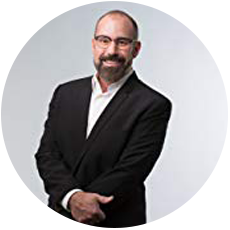
Thom King
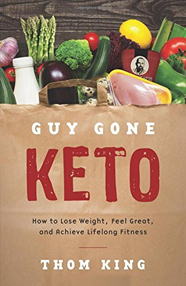
Thom King is a food industry entrepreneur and self-described biohacker. In 1999 he founded Steviva Brands, now known as Icon Foods, one of the largest importers, manufacturers, and distributors of natural sweeteners, building it with a mission to provide healthy alternatives to sugar. Over more than two decades of research and development, he has helped hundreds of manufacturers improve the quality of their products. He is the best-selling author of Guy Gone Keto, in which he details how a high-fat, low-carb diet helped him drop five waist sizes in a single year.
📚 Books by Thom King
Transcript
[0:00:27] Charlie Hoehn: You’re listening to Author Hour, enlightening conversations about books with the authors who wrote them. I’m Charlie Hoehn. Today’s episode is with Thom King, author of Guy Gone Keto. You’ve probably tried countless diets but maybe the weight you lose keeps coming back. The truth is that dieting is always going to fail unless you’re 100% committed to a beneficial lifestyle change. That’s what this episode is about. Thom is here to guide you to your goal of, not only shaping up but staying healthy, losing weight and keeping it off, by burning fats instead of sugars. See, Thom always struggled with his weight before he adopted a ketogenic lifestyle and in this episode, he details how a high fat and low carb diet enabled him to drop five waist sizes in a single year. Thom is the founder and CEO of Steviva Brands, which is one of the largest importers, manufacturers and distributors of Stevia and natural sweeteners. His program includes tips for reading and understanding food labels, techniques to make you feel empowered as well as recipes and easy to follow meal plans to keep you fit and healthy for life. Thom did it, you can too. By the end of this conversation, you might find yourself dedicated to going Keto and becoming who you really want to be. Now, here is our conversation with Thom King.
[0:02:22] Thom King: It was 2015, I was in Las Vegas for a trade show and I was checking in to The Luxor and I don’t know if people in your audience ever stayed at the Luxor before but back in the day, the Luxor was probably a pretty nice hotel but it is really dated. They upgraded me to a suite which I thought would be excellent but when I actually got into the suite, it was basically just like it was back in the 80s and it smelled like stale booze and regret and that’s how it sort of started. After the trade show that I went to in Vegas I had dinner with some clients and of course I overindulged in food and some wine and dessert and the next morning, I woke up and felt somewhat shitty but more than that, it’s like, I woke up in this room that just reeked and I just felt terrible. You know, I went to the mirror, I looked at myself and I just felt like the biggest hypocrite on the face of the planet because I own a company that we help consumer goods companies reduce sugar and we push the keto cause and low carb cause, paleo cause. I was looking at myself in the mirror, I was 35 pounds overweight, my blood pressure was like 190 over 99. I was on blood pressure medication, I was going through my second divorce and having the crap sued out of me and I just looked in the mirror and it’s like, “What’s going on? I mean, look at you, you’re fat, you have low energy, you know? Your personal life is a disaster, where’s your integrity?” At that point, I went into – I’ve always practiced meditation, I went into a meditation and just really associated so much pain with my slothful indulgent behavior that I just - I took a stand and I said, this will be the last day that I live this particular lifestyle and I made a commitment to myself that from this point forward, I will only live in a state of integrity and dignity. Being 35 pounds overweight, you know, I had a lot of weight to lose but mostly, I just had to be honest with myself and honest with my friends and my family about my lifestyle and that is when I began my ketogenic journey.
[0:05:03] Charlie Hoehn: Wow, thank you for sharing that, that was perfect in terms of storytelling, it was personal, I really appreciate that just on a host level. What happened next? Actually, how did you get into promoting and selling products that endorse the keto healthier lifestyle in the first place? When it sounds like you weren’t doing it yourself, right?
[0:05:29] Thom King: I dabbled in it and that’s because it was a diet and so diets are not permanent. In order to really adopt a keto, you have to make a lifestyle change. I started my company in 1999 and I started it as a consumer brand because I was fascinated with stevia and you know, that it could be so sweet yet have no calories. I always dabbled in health and nutrition but it was intermittent, meaning that you know, when it was convenient for me, I would eat a keto diet or a low carb diet but then, you know, I wasn’t very disciplined with it, a friend would come over, somebody to open a bag of chips, buy a pizza or bring a 12 pack of beer over and then I was off of the diet and you know, into the rough. I mean, it was always – it was a yoyo thing. My weight also corresponded with the diet. When I was on a keto or low carb diet, my weight would be – you know, my weight would come down and then I would fall off the wagon and eat whatever I wanted and my weight would go back up. I did this for 15 years and that moment in Vegas, I realized that it’s like, I can’t continue doing this yoyo type thing. You know, my skinny clothes, my fat clothes, you know, which clothes - what month am I going to be wearing my fat clothes again? At that point, I really dug down in the research and like started following people like Tim Ferriss and Dom D’Agostino and you know, one of my friends has a company called Quest Nutrition and they’re very much into ketogenic lifestyle and I was following Ron Pena and Tom Bilu who has a great podcast. You know, on what they were doing and yeah, what I realized is that I can’t make it a diet. I can’t, hey, I’m a little fat, I’m going to have to go on a keto diet, I can’t do that, I need to have it actually be a lifestyle.
[0:07:36] Charlie Hoehn: Makes sense. Before we talk about the specific steps you took, what is the keto diet for people who have heard of it but don’t quite understand what it is?
[0:07:49] Thom King: Well, a ketogenic diet is where your body actually is burning fats or ketone bodies rather than carbs and glucose. Your liver is actually – can convert you know, like any kind of fat to ketones. ketones, your brain is actually able to function either on glucose or ketones so your body’s pretty flexible.
[0:08:14] Charlie Hoehn: Are those the only two things that it uses for energy sources?
[0:08:19] Thom King: Well, I mean, your brain has to have glucose so you have to have a certain amount of glucose in your system or your brain function will start to fall apart. But in answer to your question, yeah, those are the two sources of energy that your body functions best on. You know, carbohydrates are converted over to glucose as well and you know, the excess is stored in your muscles as glycogen. If you're able to put yourself in a ketogenic state, your body will actually make a shift from burning carbs and glucose to actually burning ketones which I think – Which in my experience that they’re a lot more efficient.
[0:08:59] Charlie Hoehn: Why does that really matter? I mean, to the person who is not burning excess ketones, they’re not excess ketones - but they’re not on the keto diet and they feel like, “Hey, I’m functioning fine, I’m functioning at a pretty high level.” Why does it really matter for them?
[0:09:16] Thom King: Everybody needs to, I suppose, have their own lifestyle that they lead. I mean, I’m not saying that every single person needs to move to a ketogenic diet. But what I found has worked best for me is when my body is burning fats as opposed to carbohydrates. I found that you know, when my body is burning carbs, that I don’t have as much mental clarity or energy for that matter that when it’s burning carbs, it’s less efficient. I mean, if there is somebody who is healthy and isn’t carb sensitive and isn’t suffering from some sort of a metabolic condition like for me, I had a lot of weight around my middle which is definitely a sign of you know, a metabolic issue. So if you don’t have any of that, then keto is just a choice. I mean, you could decide to eat keto, to have increased energy, to have increased brain function. But for me, it’s like, I was suffering from a metabolic condition being fat around the middle, high blood pressure. For me, it’s like shifting that lifestyle made a lot of sense and when you look at the amount of people in the world that are suffering from what I call diet, ‘diebisity’. You know, obesity or diabetes or any metabolic condition, I mean, we’ve got 75% of the US population that you know, that’s overweight. If you're in that lucky 25% of the population and you're not carb sensitive and you’re able to eat whatever you want, I hate you and good for you, then keep living your lifestyle. But if you're in the 75% percent which I am, who are carb sensitive and can be thrown into a metabolic melee then I think keto is a good solution for sure.
[0:11:16] Charlie Hoehn: You know Thom, at the beginning of this, I mentioned that your topic is near and dear to my heart but I didn’t say why. I want to say why. My sister for over a decade has struggled with absent seizures. And we tried numerous types of I guess, medical approaches to it and it’s always felt like, almost like, whack-a-mole or just sort of a guessing game. When I really took the time to try and understand like what causes seizures and what are the most effective remedies and I asked friends of mine who are really smart and connected to these types of solutions, so I ask obviously, Tim Ferriss, who also ask, I believe Dom D’Agostino is his name right? Steve Asprey, a friend of mine who, named Veronica Max, she runs a company that helps nurses become entrepreneurs called AANE, all these people Kay Channahon who wrote Deep Nutrition. They all came back and effectively said the number one most effective way to treat seizures is through the ketogenic diet. And my sister up to that point had not tried it and she tried it and went the longest she’s ever been, well over six months I believe, could be off a little bit but she was having pretty frequent seizures. Enough to the point where you know, it really disrupted her life and it was the longest she’d ever gone without seizures. I am a huge supporter of ketogenic as both a diet and a lifestyle. The challenge I’ve heard from – actually from Tim, is that keto treated as a diet can actually kind of mess you up. It does have to be like this lifestyle choice, right? It can’t be this dabbling in like you said it was at the beginning.
[0:13:15] Thom King: Yeah, I mean, that’s terrific to hear about your sister. I’m sure you’re familiar with the Charlie Foundation?
[0:13:21] Charlie Hoehn: Yes, yeah. Which has no association with me.
[0:13:26] Thom King: I didn’t think so but there’s a certain coincidence there. Yeah, I mean, I think that going on and off like what I was doing, the yoyo diet thing, it can have some pretty big metabolic repercussions, you know, if you don ‘t make keto a lifestyle. But I mean, quite honestly, you know, my ketogenic journey has not been without its hiccups. Like currently, I’ve been stuck on a pretty big plateau where my weight is not actually going down. I mean, I’ve ticked up a little bit while staying, while maintaining the ketogenic lifestyle, you know, I’ve been having a hard time getting back into Keto. I mean, I love adversity, so for me it’s like good, Now I’ll be able to figure this out and teach other people what the hell is going on with me. You have to make it a lifestyle because if you get on that roller coaster of gaining weight and losing weight and gaining weight. It’s really unhealthy for you, it’s super hard on your heart. But to take things even further, you know, with brain function and a ketogenic diet, that’s where, I mean, where I really started to drill down into some of the science of it. Hey, how is this working? Why does your brain function and why does it appear to function so much better on a ketogenic diet and you know?
[0:14:49] Charlie Hoehn: Is there research behind that aspect or is it just like a subjective experience where it just feels like you're cognitively clearer?
[0:14:58] Thom King: I think that there’s solid research behind it. I mean, I don’t know if you’ve followed Dr. Jason Fung at all. He really studies brain function through a ketogenic lifestyle and he also waives into an intermittent fasting and fasting from all of the science journals that I’ve read because I mean, I do read a lot of science journals. I’m one of those geeks that –
[0:15:26] Charlie Hoehn: Good man. Yeah, I love people like you. I have a good friend who does that and posts like the summaries on Facebook and I’m like, this is the greatest thing ever. Because they’re hard to read for the average person.
[0:15:38] Thom King: I love reading them, you know, I listen to Dr. Rhonda Patrick. I don’t know if you’ve listened to her at all but yeah, I mean, that stuff to me is like porn. It’s good, I love reading science journals and new studies. I mean, from what I can tell and what I’ve read, you know, when you put your body in a ketogenic state which actually is considered a state of starvation because you're starving your body for carbohydrates and glucose and forcing it to function on ketone bodies. What happens is your body goes through - your cells can go through a state of autophogy where you’re not so well functioning cells will actually start to die off and you know, be flushed out of your system. But what’s more is with the ketogenic diet, you know, at night, your brain’s ability to have what’s called a cerebral flush. It’s where your cerebral fluid actually is able to flush all of the dead proteins out of the fluid that your brain is sitting in and they found that a lot of these neuro degenerative diseases are a function of the buildup of plaque that gets on your brain like amoloidal plaque for Alzheimer’s and Louie Body’s plaque for dementia and so what happens is that – They’re even calling those neurodegenerative diseases diabetes type three now. Because what happens is you get a buildup of plaque on your brain and it really impairs brain function but when your body’s in a ketogenic state which allows your brain at night to be able to have a cerebral flush and get those little proteins out. That’s what develops that clarity. To me, that’s what fascinates me the most is the brain function behind ketogenic because if you like to follow biohackers from Tim Ferriss and Dave Asprey. I mean, you know, some of these stuff that they do is pretty out there but I mean, I’m onboard but anything that will be able to give me a little bit of an edge and increase my brain function, I’m all in. I mean, in keto’s really done that for me.
[0:17:52] Charlie Hoehn: Author Hour is sponsored by Book in a Box. For anyone who has a great idea for a book but doesn’t have the time or patience to sit down and type it out, Book in a Box has created a new way to help you painlessly publish your book. Instead of sitting at a computer and typing for a year, hoping everything works out, Book in a Box takes you through a structured interview process that gets your ideas out of your head and into a book in just a few months. To learn more, head over to bookinabox.com and fill out the form at the bottom of the page. Don’t let another year go by where you put off writing your book. Come to think of it, I don’t think I’ve ever been in ketosis from eating ketogenic but I have done a five day fast and a nine day fast. The experience I had in my mind, I’ve always explained to people that it was like being in a stuffy attic and having a window open like wide open and being in fresh mountain air like at the side of a still lake. Like, it was that stark of a difference in how I felt in my brain. I’d imagine that keto has the similar effect and I’m really onboard with both the cognitive improvements but really, the ability of the brain to take care of itself. I mean, I find myself in getting in situations like I’m not as good as I wish I was. But going to bed a good time on a consistent basis and that’s obviously when that flush happens. When your brain kind of clears itself out, does the reset and if you are like me and struggle with getting enough sleep 100% of the time, you need all the help you can get from how you eat, right?
[0:19:56] Thom King: Yeah, absolutely. I try to go to bed by 9:30 every night and get up at 4:30 and it was super hard to be disciplined with that because I was a person who just like binge watch Netflix and the next thing you know, it’s like one or two in the morning and it’s like, “Shit, what am I going to do now,” and so, now, it’s like there’s no TV at night, it’s you know, I basically, everything gets shut down at 9:30, I’m in bed and I really force myself to stay in bed, you know, for at least seven hours and hopefully more. I mean, I think sleep is super critical and definitely getting your cerebral flush to kick in is super important. You know, and ketogenic and fasting, I mean, are not this similar whatsoever because it’s like, you really – both of them, and I know this is a tough word for people to accept but they’re both starvation situations. You know, you put your today –
[0:20:57] Charlie Hoehn: Which is a good thing. If you read all the literature on fasting, a tremendously beneficial thing. There’s nothing in your body that takes up more energy than your digestive system and just given the modern world, and the years and years and decades of buildup, every now and t hen, you need a rest. It’s like, I think it was described as nature’s internal surgery but like, it doesn’t require any opening up of anything, it just does its own thing. That’s how we evolved in states where we were required to feast and fast.
[0:21:33] Thom King: Absolutely. I mean, if you go back 40,000 years, prehistoric man, it was feast and famine. And that was the cycle and you know, I remember when I first started on this journey, the first real fast that I did, I researched the crap out of it and I did what’s called ‘the black fast’ and so I did a 72 hour black fast where you don’t have any liquids whatsoever and you don’t even have any contact with liquids like no bathing, no brushing your teeth.
[0:22:05] Charlie Hoehn: What? No water?
[0:22:07] Thom King: Nothing.
[0:22:09] Charlie Hoehn: Holy cow, that’s intense.
[0:22:11] Thom King: No contact with water, you know, you just go 72 hours straight with it and that was my first fast because it’s like, I’m going to go all in. Go big or go home.
[0:22:22] Charlie Hoehn: How was that at the end of this – because it kind of varies per fast I found it sometimes, the first 48 hours is the toughest but sometimes it extends into the – up to the 72nd hour and then you kind of hit that point where you’re like, “Okay, it’s easy street from here but what was it like?”
[0:22:41] Thom King: I would say that the first 24 hours was kind of a struggle you know? Because it seems like you’re always noticing food at that point. Like, you can’t watch TV, you can’t look at magazines. I mean, everything is all about food. You sort of develop this, I guess this awareness of how all these indulgences are constantly pushed upon us. I mean, the first 24 hours is pretty tough and after that, something clicked where it’s like, “I don’t really need any food, I don’t really feel hungry,” I don’t like my energy level was not super high, it was enough to go for a walk and you know, do some writing and reflection and which is really good anyway because that’s sort of like a little vacation you know? Unplugging from all of your things and doing some journaling and you know, and some self-reflections. The first fast, first 24 hours, I’m like, “Why am I doing this, this is crazy!” Then the second 24 hours was, “This makes more sense than just about anything I’ve ever experienced in my life,” and it’s beautiful.
[0:23:44] Charlie Hoehn: Let’s address this part and which is, there’s fear around a lot of these changes, right? Fasting is, I found like I just couldn’t talk to people about it. I remember telling Tim about it, this was many years ago and he was like, wow, you know, interesting because he was struggling with lime disease and he was looking at various forms of treatment. I couldn’t talk to anybody about it because I was met with so much paranoia that it was like well, “I believe in this, I did the research, you’re just reflexively saying things.” And the same thing, I’m sure you’re met with when people see, you’re eating quite a lot of fat in the problem is, because people associate fat so strongly with negative, bad thing, but don’t realize that fat is also a macronutrient that is in tons of our foods and we need it to survive and it’s the healthiest thing you can eat for your brain, right? Can you address – I mean, that’s coming from me but can you address what you say to those people who hear about the ketogenic diet and they’re like, “I can’t eat that much fat, I’m going to make myself sick, I’m going to give myself a heart attack.”
[0:25:00] Thom King: I mean, what happens, fat sort of satiates you. So it kills your hunger and that’s something that a lot of people that realize and then, also sort of the demonizing of fat came from the sugar industry. About 40 years ago, there was a so called study that said that fat is what makes you fat and sugar is what gives you energy. It was sponsored by the sugar industry and there were some scientists that actually you know, contributed to the study and I think that that’s where it all started. It was simply because they want to sell consumer, well, ingredient companies want to sell more sugar and this is where it comes into almost like a bit of a conspiracy because when you look at sugar, sugar is a subsidized crop. You're getting sugar either from corn or cane or beet and those are all subsidized crops. When you look at food production and you’ve got an ingredient that costs you 21 cents a pound and you look at the other ingredients like, let’s say in ketchup, you’re looking at tomato puree is going to cost you a dollar 35 per pound and you start adding in all of these other ingredients, it’s way easier to pull out some of the more important ingredients like the tomatoes and just add sugar. But you’re saving so much money by just putting something into your product that’s 21 cents a pound. On the other side of the coin is how our brain reacts when we have sucrose or sugar, right? It triggers the same neurons in your brain that cocaine does. There’s this addictive process where you have something sweet and your body is like, “Holy crap, this is the most amazing thing I’ve ever had,” and now you start requiring more of it. This starts at childhood like if you give a child sugar, it seems like they can’t get enough, you know? The first time they try sugar it’s like, “Jesus, I want this!” And then after that, you can’t really get a child to want anything other than sugar. So I mean, when you look at how our brains are affected, the fact that big consumer product companies can replace nutrient rich ingredients with sugar and just flavorings, I’m mean, it’s a win-win situation for them. A, they save on their cost of goods sold by using something that’s 21 cents a pound and on top of it, it makes their product a little bit addictive.
[0:27:34] Charlie Hoehn: Yeah, totally. You have some interesting things in your book about sugar and we’re not going to be able to cover them all but I want to hit upon a few of them, you say, the average American eats 66 pounds of added sugar each year whereas we evolved with zero pounds. Even healthy foods can be high in sugar, what do you mean by that?
[0:27:59] Thom King: Mostly fruit. On a ketogenic diet, I don’t eat any fruit at all.
[0:28:04] Charlie Hoehn: Not even like berries or anything?
[0:28:07] Thom King: Yeah, let me back up on that. Occasionally I’ll drop in a few black berries or raspberries into a smoothie and I think that cherries are pretty low glycemic as well. But other than that, I stay away from bananas and mangoes and apples and those are really – fruit is really a dessert you know? It’s not a snack and you don’t make a meal out of fruit because fruit is going to be high in fructose and your liver is what metabolizes fructose so if you're eating a ton of fruit and particularly, people that love juice, like I’ll just have a glass of orange juice or a glass of apple juice. Even though you think you're taking something natural into your system which you are, you’re really not having that particular fruit in its natural state. You’re extracting the sugar and you know, the fluids from it and you're drinking that and what happens when you take in that much fructose is it basically turns your liver off from producing ketones to trying to metabolize all of the fructose that you just put into your system. With Fructose, I mean, the dosage, the maximum dosage that a human really should be having is under 25 grams of fructose. That’s the equivalent of maybe an apple or two every single day. That’s the maximum dosage.
[0:29:36] Charlie Hoehn: Yeah, eating it with the fiber and not juiced.
[0:29:41] Thom King: Right, the fiber will offset that impact because the way you calculate net carbs is you subtract your fibers from your total carbohydrates. Fruit in its own state still a dessert, should be consumed in really small amounts but fruit juice. Fruit juice will occupy your liver with trying to metabolize all of that fructose and if your body is unable or if your liver is unable to metabolize all of the fructose that is being taken in, it will actually just store it as lipids which is fat. Snd so it will put you right into a metabolic condition just by drinking fruit juice.
[0:30:23] Charlie Hoehn: So let’s talk about a substitute then for somebody who has a fruit juice or like a fruit smoothie in the mornings, what is a good keto breakfast that they can have?
[0:30:37] Thom King: Well I mean the one that is most popular is bacon and eggs. So I mean that’s going to be your most popular. I mean the keto diet is really set up for you taking in 70% fat, 20% proteins and 10% carbohydrates. But those carbohydrates should be in precipitous vegetables. Vegetables that grow above the ground instead of under the ground like carrots and potatoes. So I mean that’s going to be your primary staples. So fat is going to be mostly what you are consuming. But you are not just taking - dishing out the lard and eating it. I mean you’re eating things like nuts, salmon, coconut oil, MCT oil, which is pretty popular, butter, ghee, full fat milk. So I mean if you are a person who is having a fruit smoothie in the morning, I would maybe suggest that you cut the fruit back and if you’re actually using fruit in your smoothie maybe just add a few blackberries, cherries, maybe strawberries or raspberries. Any of the berries is going to be relatively low on sugar and have a smaller glycemic impact. But if you use those small amounts of berries and then making the majority of your smoothie with weigh protein or even a pea protein, if you’re a vegan and then making sure there’s plenty of fat like clean fat in it so you could add coconut oil or MCT oil or an avocado. My favorite smoothie in the morning is a few berries, some weigh protein, avocado and I have a special 11 string keeper that I use for the liquid and to me that is the ultimate – oh and a handful of pecans. So I just turn on the blender, get it really smooth and that - with that much fat it will sustain you for hours.
[0:32:45] Charlie Hoehn: Now what about for a lot of people on the go and there are just times where it’s like, “I don’t have time to prep or cook, I am driving around and I need to stop in somewhere that’s fast-casual.” What do you recommend for those people? What should they go order at a place like Chipotle or something?
[0:33:05] Thom King: At a place like Chipotle, you want to skip the tortilla because that is going to be flour and I mean white flour is just going to be carbohydrate. So a place like Chipotle, if you just ask for a low carb and have them not include the rice and go super easy on the beans and you can have the salad part.
[0:33:28] Charlie Hoehn: Super easy like half serving or none at all?
[0:33:31] Thom King: Yeah and I mean when you bring up the – for me I don’t really eat beans. The closest that I get to beans is probably lentils. Because they have such a high fiber content but I would just – I don’t know, I would avoid places like Chipotle because most of that is going to be carbs. I’ve been in airports before where I have been in a panic like I need to get something to eat and a lot of the fast food restaurants, actually if you ask them for low carb will accommodate you. I actually went to a McDonalds and ordered a low carb quarter pounder and it just didn’t have any bun or ketchup on it. So basically between two pieces of lettuce and yeah, I mean it got me by but I think it is also important to keep snacks with you. So keep high protein, high fat bars like Quest Bars with you. A bag of almonds, pieces of cheese. I think keeping those snacks around are probably a really good way to prevent yourself from rolling into a fast food place and then going off the rails.
[0:34:38] Charlie Hoehn: Perfect. I love – that always seems to be the thing that I miss in these either podcast or books or whatever is like, “What is the go-to emergency?” Like give me the system when I start to go off the rails so thank you for answering that one. I am looking through your book, it’s got all these awesome stuff that - you talk about working out. Of course you have all the different variants of sugar which there are just a crazy number of them. So many variations. You have all of these great recipes in here, you talk about what to do with booze, what is your go-to booze if you need to have a good cheat, so to speak?
[0:35:19] Thom King: Well I like to drink so I would have to say that if I have any vices, that would certainly be one of them. If you are going to drink, make sure that you are drinking things that are not sweet. So one of my go-tos and this is probably not super great but one of my go-to is Bourbon and Zevia. So Zevia is a soda that’s actually sweetened with Stevia and they’ve got a lemon lime. It’s pretty good so I will usually put a shot of Bourbon in that. Bourbon is not the most keto friendly thing. Probably the most keto friendly booze would be vodka or gin, your white liquors. But you know, I love bourbon and I love whiskey and I think when I moved into ketogenic lifestyle, the one thing that I had to give up was beer. I live in the Pacific Northwest where there is just a plethora of microbreweries. That was super hard because beer is probably one of the worst things that you can have. You know, we also, in Oregon produce really excellent wine. If you are going to have wine, make sure that it’s dry wine like a pinot or a cab or a merlot or a nebbiolo, I mean, any of those like really nice dry red wines, having a glass of that is not going to kill you. But, do keep in mind that alcohol or ethanol is metabolized in the liver so if you’re taking in a lot of alcohol, it’s going to shift your liver from producing ketone bodies into struggling to metabolize the ethanol that you’re bringing in. If you're going to drink, and I do, I would suggest white liquor. Don’t mix it with any sugary mixers, definitely stay away from beer and if you're going to drink wine, drink red wine, dry, only have one or two glasses at the most.
[0:37:28] Charlie Hoehn: Excellent advice. Again, for listeners, this is one of those lifestyle changes where you don’t want to guess your way into it so if you’re listening to this podcast and wanting to give it a try right away, I would encourage you to read the book first. It’s a matter of health. Read Thom’s book first. Thom, what can they expect when they make the transition to keto? How long is it going to take and when are they going to feel the effects?
[0:37:59] Thom King: Well, I think it varies person to person. Some people will feel the effects of ketogenic shift within the first week. Other people, it takes a couple of weeks and there’s also, I’ve heard, people referring to feeling crappy as the keto flu but I never get the keto flu when I decided to make it a lifestyle shift. You can also sort of mitigate the feelings, you know, like you don’t’ feel so well because your body is moving from being addicted to sugars and carbs into - you’re introducing fats and so your system’s going to be a little confused at first like, “Hey, what’s going on, where are the carbs,” it’s going to cry out for the carbs, you just have to push your way through it and a lot of times, if you use what’s called exogenous ketones, that means bringing them from the outside like MCT oil, BHB, betahydroxibutirate. You can just take that as like a drink, it helps push you into keto a little bit faster. But your first week is probably not going to be very awesome because you’re going to be depriving yourself of a lot of the addictive foods that you’ve been taking in. After that first week and once your body shifts into ketosis, it’s literally like somebody turning on a light. When you were talking about your fasting where it’s like, somebody opened a window, a fresh mountain air, that is really what a person can expect when they break through and their body starts – you know, their body starts functioning on burning clean fats. It’s literally like somebody just turns on a light and you’re like, this is how I’m supposed to feel? I can still – I occasionally get into situation where I might fall out of keto, I was at a trade show and I had one of our vendors say, “Hey, these are keto cookies, why don’t you try them,” and I mean, I was ready for the trade show, I’m really excited and I’m like sure, I’ll have a couple so I have a couple of cookies and within probably within 30 minutes. I was like, “Hey, give me the wrapper, I got to read that.” I looked at it and it’s like, no, those weren’t keto at all and it completely knocked me out of keto, you know, for the trade show and I was, oh my God, I was pissed off, I was like, how could you do this to me? I’m going to be barely functioning and so, I took in some exogenous ketone salts but I was still out of keto for probably three hours and really pissed off about it.
[0:40:42] Charlie Hoehn: Yeah. Well Thom, this has been really great, I hope everybody who is interested in the lifestyle change picks up a copy of your book, Guy Gone Keto. What is the best place to for people to get in touch with you, follow you on your journey?
[0:40:59] Thom King: Well, they can go to guygoneketo.com, they can hit me up on thomking.com. Guy Gone Keto, thomking.com. I’m on all of the socials, under Thom King. Hit me up on Instagram, Twitter, Facebook, even LinkedIn, if they search for me on LinkedIn. I’m really good at you know, at returning emails and returning messages. I love supporting people that are on aa ketogenic journey. I’ll do whatever it takes to help them be successful with it.
[0:41:35] Charlie Hoehn: Fantastic. Well, thank you so much for this, it was great. The book is Guy Gone Keto. Thom King, thank you very much.
[0:41:43] Thom King: I appreciate it Charlie, great questions, this was a lot of fun for me.
[0:41:49] Charlie Hoehn: Many thanks to Thom King for being on the show. You can buy his book, Guy Gone Keto, on amazon.com. Thanks again for listening to Author Hour, enlightening conversations about book with the authors who wrote them. We’ll see you next time.
Want to Write Your Own Book?
Scribe has helped over 2,000 authors turn their expertise into published books.
Schedule a Free Consult