Patrick Taylor: Robo-Auditing
Read the full transcriptPatrick Taylor
Patrick Taylor is the co-founder and CEO of Oversight Systems, a company that since 2003 has helped hundreds of organizations, including Google and GE, improve their financial, accounting, and auditing processes. Before founding Oversight, he worked at Oracle and Symantec on closed-loop controls and artificial intelligence applied to network security and finance. Patrick holds a degree in mechanical engineering from Georgia Tech and an MBA from Harvard Business School, and he has spent more than a decade developing artificial intelligence and automation for corporate financial systems. He is a co-author of Robo-Auditing: Using Artificial Intelligence to Optimize Corporate Finance Processes.
📚 Books by Patrick Taylor
Transcript
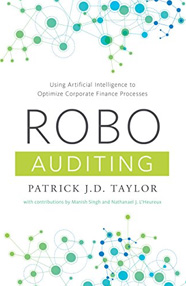
[0:00:35] Charlie Hoehn: You’re listening to Author Hour, enlightening conversations about books with the authors who wrote them. I’m Charlie Hoehn. Today’s episode is with Patrick Taylor, author of Robo-Auditing. If you’re the CFO of a large company, you might have considered adding in AI system into your financial operations. Artificial intelligence can increase efficiency, it can boost your profits and reduce waste and even detect fraud. But the problem is, it might be too costly or complicated. That’s where Patrick comes in. In this episode, Patrick will explain how AI really works. How you can incorporate robo-auditors into existing corporate financial networks. And how to train your team to use this technology effectively. Patrick believes that implementing an AI system doesn’t have to be difficult or intimidating or even expensive. Patrick should know this because he’s the CEO and cofounder of Oversight Systems which for the last 15 years has helped hundreds of companies including Google and GE improve their financial accounting and auditing procedures. So if you’re a CFO of a fortune 500 company and you’re looking for money saving strategies that can reduce your internal waste in boost profits, this episode is for you. Now, here is our conversation with Patrick Taylor.
[0:02:27] Patrick Taylor: Now, an interesting story is, to do our first beta testing and it’s had a shared service center out in Las Vegas. We’ve got our team of guys out there and they’ve cooked up all of these nifty algorithms and we’re sorting through all their accounts payable transactions in this particular case. We keep coming back with findings and we show it to the guy around the shared service center and he goes, “Not fraud, that’s not fraud.” We go back, we adjust the algorithms, the guys work on everything they can work with and we go through this cycle several times over the course of a week and frankly, never find any glaring - “Wow we found fraud, we saved the day.” Our guys are walking out, you know, frankly, dejected, they felt like they failed and very fortunately for us, the person we’re working with said, “No, wait. This was all really useful, you found all these mistakes and I could see you here, the Bob needs training and Susan’s doing a great job,” and you gave me some really powerful insights and what’s going on inside my business. Inside this business process. That was the – for us, the gigantic aha that while robo auditing is certainly can be about finding fraud, that’s in many ways the sizzle. But the steak is in finding opportunities to improve, finding things that aren’t working perfectly. That was a very fortunate that we got a customer who didn’t go, “Yeah, go ahead and leave you guys,” or prospect I guess. Instead, help us see the light if there was more to what we were doing than we actually initially understood.
[0:03:58] Charlie Hoehn: What caused you to write the book, what was the big message that you really wanted to get out to, I’d imagine, CFOs?
[0:04:07] Patrick Taylor: Yeah, CFOs and people in financial operations. And this book has been part of kind of a journey of what happened with our business. Let me take you through that just a little bit here. We for years, went to market and we had this fundamental – yeah, this analytic platform that had workflow capabilities etc. that helped you deal with the process we found but we would essentially go to customers and say, “Here are all our capabilities, what would you like to look for?” We would sit down with them and they would specify what they like to look for and we would build these custom analytics for them, so we’re in a professional services engagement, that went along with our software. What we found was one, not every customer was as good at every other customers designing analytics and we had like one particular case where we kept telling them no, you don’t want to do it this way, they’re like no, do it this way and they’re the customer, they’re always right. Six months later, they’re now complaining like, “This is awful and blah blah blah,” and we told you not to do it that way and we did everything but stand on the table and stomp our feet. You ended up with some inconsistent implementations and so, we took a step back and started first figuring out, okay, we’ve done a lot of projects. We actually have a really good idea of what you should be looking for in these different financial business processes. We engineered a way where we could go to people and say, you know, with prebuilt analytics and say, “This is what you should be looking for.” Started becoming very prescriptive and sort of second benefit out of that was, in the past, if we got a good idea for one client, nobody else benefited from it. Now, with the way we’re doing things, you know, a given client Chevron has a really good idea about something to look for. We go build it back another product and now Fidelity and Delta get to take advantage of it as well. That was the first step is becoming more, I’ll call it prescriptive about the analytics. But we started noticing a second thing and this is kind of where the book comes in is, and this actually relates to a problem we had. Our business is doing better now that we have this more prescriptive approach and we’re adding in more customers and so, we’re not trying to scale up our internal operations. We’re using a very popular CRM system that I’ll remain nameless but you can probably guess. At any rate.
[0:06:21] Charlie Hoehn: Does it rhyme with bails course?
[0:06:24] Patrick Taylor: Yes, exactly. We’ve been using it for pipeline management just like everybody else but of course, the system is much more capable than that. You can do your ongoing customer support and all kind of great things. We’re like okay, we need to scale up our operations and so, we call a vendor and say, “Hey, we need – we’re going to add in more users, we want to use a system more completely. Can you tell us what’s the best way to do that? What are the best practices?” The guys were like, yeah, well come on in the office, we’ll sit down and we’ll get one of our couple of experienced people in the room on the white board. We go in there and I would start saying, “Well tell us what your processes are,” and I’m like, “My processes are terrible, okay? We don’t have any good processes. Tell me what the right way to do it is and that’s what our process will be.” We went round and round and could basically never get to the – “At least tell me what the best practices are and then we’ll tune those to make it work for us as supposed to let’s implement whatever the random processes we have.” That was a little frustrating on our side, then all of a sudden, we started looking at ourselves and go on – you know, we walk into customers and say the same dan-gum thing. We go in and say, “Okay, what would you like for your workflow to be and what would you like your success metrics and tell me how you do this?” You know, frankly, that somewhat, it was more work for them and we frankly had more experience on how you use production with our technology and see more customers and so we also note, in addition to being prescriptive and saying, “This is what you should be looking for,” we now learned to go, “Okay, here’s how you should do the workflow. In six months, here’s how you should measure your success metrics and we’ll come in and help you do that.” Now, people tweak and tune what we give them but what we realized is it’s a whole lot easier for someone to come in and edit what we propose that it is for them to – us to give them a relatively blank piece of paper, blank canvas and draw your own thing. You know, frankly, over the years have developed lots of experience doing this. We have a pretty good point of view to start with. The book is the outgrowth of that of saying, you know, there are some best practices for how I can use artificial intelligence in corporate finance, we call that robo auditing because it’s a mix of automation that’s the robo part and you know, the artificial intelligence which is doing some of the work that one might find from an auditor. The point is less about the AI and it’s more about the how can I make technologies like this work successfully and provide a good ROI at my business. And that’s the whole premise of the book is really – here are some ideas for how to be successful with software like ours but the idea is of course are not at all limited to – I mean, you could use it with different systems.
[0:09:10] Charlie Hoehn: I’m totally onboard with AI, machine learning, automation, all these sorts of things, but, I’d imagine you get some pushback from clients of yours who have done things, maybe the human way or they don’t necessarily understand what exactly it is you’re offering. Am I right to say that or is everybody kind of onboard at this point?
[0:09:33] Patrick Taylor: It is easier to get people on board now because you see artificial intelligence so much in the news and IBM advertising on the paper. But you bring up a really valid point and that is essentially, we’re not addressing new issues and we’re not going to ever sell to someone who doesn’t already care about improving these business processes, it’s about improving their compliance, about driving out malfeasance. If you don’t care about that stuff, I’m not going to convince you to care. If you care, you’re already doing something and as you pointed out a lot of times, what you're doing is some kind of manual inspection, some kind of – we randomly sample 20% of the expense reports or 20% of the accounts payable or what have you and have people look at those and how can you replace the judgment of people. You know, no AI is that great. The picture we try to paint for people, it has a couple of dimensions to it. One, well, in some senses that true, there is a problem so in most corporations, the vast majority of transactions are perfectly okay. Now, if you’re thinking about that random sample of 20%. Most of the things you’re looking at are okay and as humans, we kind of have - or can have issues with something called positive confirmation bias and that means, if most of what I’m looking at is okay, it’s hard to keep my mind focused to find a few things that are wrong. I’m kind of expecting everything to be okay. What we advocate, where we change the equation with artificial intelligence is if you sort of think about this in some ways, you’re looking for needles in a haystack, right? That’s what you’re trying to do with that random sample, let’s look at 20% of this haystack and see how bad our needle problem is, so to speak. We sort of flip the equation and say, “Okay, we are really good and really efficient at looking at all the hay and we’re going to present to you a small pile of things. In that small pile of sharp things, will certainly be some needles. That small pile of sharp things will be much smaller than the 20% random samples.” We’re going to transform what the people you have or doing. Now, we’ll give them three, four, 5% of the transactions to look at, all of them are going to be interesting in terms of, there will be a reason why the analytics identify these transactions, they may not all the shortly will not be all fraud, they may not even all be problems, but they will all be interesting. Now, everything you’re looking at is interesting and you got a lot fewer things to look at. It’s looking at how can I get acceleration, how can I get force multiplier from what I’m doing with the artificial intelligence.
[0:12:03] Charlie Hoehn: Give me an example of a company that you’ve worked with, you don’t have to name them but how they were doing things before you came in and what maybe some of the mistakes, the common mistakes they were making. And then after you and your company came in, introduced your software, what the end result was for them and how it affected their business.
[0:12:31] Patrick Taylor: Right, we have a certainly good example of that. This is fairly large company and so they actually had a dedicated team of people who use business intelligence tools to kid of comb through their – in this case, it was expense reports and try to find problems. They really only ever managed effectively look at somewhere in the neighborhood of 20 to 30% of the overall expense reports. They would find a few problems here and there.
[0:13:01] Charlie Hoehn: Just to put it in perspective, how big were their expense reports? I mean, how many transactions were you looking at?
[0:13:08] Patrick Taylor: In this particular case, it was two billion dollars worth of spend on travel expenses. Pretty big company and that probably equated to two million expense reports give or take. Big operation. There were 70 people involved with this but this concept scales down, you could be 20 million in expense reports and the math will all work the same way. They decided there needed to be a better way, they actually spent some time trying to write their own software, we encountered them at a trade show, actually processed some of their data form in kind of a trial, they were AMAs, we were able to produce results for them in a few days. The results were, their perspective very high quality, especially given, we just you know, stood up, sort of a vanilla system. No tuning or adjustments. Once they got deployed, they actually went down to a team of 10 people doing this job and they now affect, they now look at all of the expense reports and sort of the funny story is, at a trade show, the woman who ran the program was speaking about their success, so when it’s Q&A time, some of the audience raised their hands and said “Okay, look, I get that your moved from 70 to 10 people but how do you know you’re doing a better job?” Then she goes, “Well, I’ll tell you what my metric is and you know, maybe I shouldn’t say this in public but this is how I look at it. Before, when we had the team of 70 people, we might fire one or two people or a quarter for cheating on expense reports.” And you know, this isn’t getting a Cadillac at the Hertz counter. This is really defrauding the company. “Recently, we’ve been firing five or six people a week.” She goes, “That went on for a few months and now that number has gone way down because people know what’s happening but yeah, I’m real sure we’re doing a much better job rooting out the kind of people that we frankly don’t want working at our company,” as I mentioned earlier, fraud’s not the prevalent problem but it is worth looking for because the association and certified fraud examiners will tell you that three out of four times, if someone’s committing fraud on expense report or committing – they’re engaged in some other kind of occupational fraud, right? They’re just not the kind of people you want working at your company.
[0:20:10] Charlie Hoehn: Author Hour is sponsored by Book in a Box. For anyone who has a great idea for a book but doesn’t have the time or patience to sit down and type it out, Book in a Box has created a new way to help you painlessly publish your book. Instead of sitting at a computer and typing for a year, hoping everything works out, Book in a Box takes you through a structured interview process that gets your ideas out of your head and into a book in just a few months. To learn more, head over to bookinabox.com and fill out the form at the bottom of the page. Don’t let another year go by where you put off writing your book. And to break that down in terms of cost, what does it cost a company like that to have, you said they were firing five to six people a week for a few months, so let’s just say roughly they fired 80 people, what does that ultimately costing the company like that to have those people onboard undetected?
[0:16:23] Patrick Taylor: The costs are huge in terms of the amount of money that’s being siphoned off. The real costs are, one, what else is that person doing? So that might be the kind of person too that would cut a shady deal in a sales contract that one day you might get a side letter on a sales contract. The other is, two, the bad example they are setting for other people like wow, if this guy is getting away with something it just isn’t setting the right tone for your company. And entering in other risks and certainly can be well other - whether it is some form of fraud or sloppy mess as well. I mean there’s actually a pretty good correlation between people that take care of their business in the right way or generally taking care of all of their business in the right way in terms of they are working the right way through the company, they are turning in the right kind of deals and contracts or performing. Yeah, they’re just in the fraud case it is a question of again, they are probably not the kind of folks that you really want around. Now it’s worth noting that the vast majority of what you find in fact is not fraud. It’s either kind of wasteful spending or misuse or somebody just don’t know the company policy. So we have actually done some research where we look across all of our customers and so the original looking across all of the expenses we have, the original is just trying to find regional variabilities like, wow, the variability of buying sandwiches is much higher in Seattle than it is in Chicago. And just understanding our data and using that to get smarter about the analysis but an interesting thing emerged. We sort of adjusted our perspective a little bit. We found this version of the 80-20 rule but it is even more severe. It’s like 95-5 rule. Which is 90 plus percent of your problems, your high risk activity are caused by 5% of your employees and 70% of your employees don’t do a thing wrong, right? This is a travel expense but you’d find the same thing if you looked at vendors and accounts payable. Or how your customers behave on the order to cash side. The vast majority of people are frankly operating the right way. So the first principle is let’s not get in their way, right? Let’s not cause more friction for them and then I’ve got in the far, far end you know, tiny percent of the people are really cheating, 5% of people are engaged in high risk activities and then another roughly 25% that needs some gentle guidance, maybe they need a reminder about what your corporate travel policy is. So you want to think about staying out of the way of the 70% of the people, being relatively gentle about how you guide people until you start getting into the ones that are engaged in more repeated, high risk activity and maybe knows you want to start interacting with a perhaps in a more heavy handed way. But if I go back actually to the company I was describing before, they started looking at that and saying, “Shoot, why are we even having the manager’s approved expense reports?” They weren’t finding these people cheating before anyway, it just slows down the reimbursement, it makes our managers busy doing busy work, tedious work and they’re not even doing a good job doing it. And what they do now is say, “Okay, we’ll expense reports without manager approval.” We know our artificial intelligence is going to help us hone in on the relatively small number of employees where we have an issue and now, we’ll give the manager a little dossier that says, “Okay you need to talk to Bob because here are the eight problems we had in the last month with how Bob is traveling”. The manager can sit down and have a meaningful whatever, 15 to 20 minute conversation with Bob. That will do a lot better job of influencing Bob’s behavior. Before if I go to Bob about a one off problem for expense report is almost kind of nagging and Bob is probably going to come up with a good justification. When I sit down with him with a little bit more complete dossier just changes the equation and we’ve actually seen in the data, we show customers this all the time, once you follow up with someone you can see their behavior improve, right? You get what you measure.
[0:20:23] Charlie Hoehn: Wow, so your software can actually empower managers, employers to turn bad apples into good apples because you actually have a full account of the problem rather than a surface level understanding.
[0:20:42] Patrick Taylor: That is one of the lessons we’ve learned and I try to bring this out in the book is years ago, when we started it out, while we thought about what was problematic transactions, let’s fix these right? Whatever business problem they’re having. And we’ve learned that there’s more leverage if I start thinking about the people. Now those people could be our employees, those people could be vendors. So I am thinking in accounts payables in terms, most of our vendors are probably don’t cost me any problems. I’ve got a handful that send an invoice to everybody they know in the company and those are the ones that cause me to make duplicate problems or what have you. So let’s focus on how do I influence the future behavior of those people. Because that is the root cause driving out the problems and then the next dimension up for that is, I’ll also find places where maybe my apologies and procedures could be improved. Be enhanced and we can now also look at that in. So by being more purposeful as oppose to chasing down a problem, doing a little whack-a-mole, chasing down problematic transactions - and this goes back to my opening premise of it isn’t just finding stuff, it is being purposeful about handling the issues you find, learning to look at the dimensions of people, the dimensions of policies or procedures and that’s where you can start even driving and making your world a better place by making things work better on an ongoing basis.
[0:22:04] Charlie Hoehn: Patrick let’s say I am a CFO and I want to get started with the robo-auditor. What do I need to know? What are some of the challenges I’m going to face during the roll out? How do I make that smooth transition?
[0:22:21] Patrick Taylor: It’s a great question and it is certainly one we work with people on a lot. So the first thing is –
[0:22:27] Charlie Hoehn: Just give me the high level, yeah.
[0:22:29] Patrick Taylor: The high level is walk and then run. So your temptation is to go and try to look at everything you can find. Don’t do that. Find some quick easy wins. Get your team used to using this kind of technology because another thing that needs to happen is your team has been doing something else where we’re going to get them comfortable that they can drop what they were doing before and rely on this and so for a period of time, they’re frankly going to do both. So let’s pick some high impact easy wins with what we’re going to do with artificial intelligence. Let’s get everybody comfortable and then we’ll open up the knobs and look for more and more things but just resist the temptation to try to do – get everything out that I can from the beginning. You are asking to have problems.
[0:23:10] Charlie Hoehn: Yeah and then what are the easy – what are some examples of the high impact easy wins?
[0:23:16] Patrick Taylor: So one, pick which business process you want to start with. We see an awful lot of people struck traveling expense and then when I look in there, let’s look for things that are highly reliable and actionable. So a great one is duplicate entries so whether by accident or on purpose, somebody’s expensed is the same thing twice, three weeks apart those kinds of problems they’re hard to find anyway. No one can argue that this is a good thing to stop. We shouldn’t be doing that and let’s get that win going more before we start amping up what we’re doing but I think travel expenses is a great place to start but you can do the same thing in accounts payable, accounts receivable, etc. It’s not limited to that.
[0:23:59] Charlie Hoehn: And how long does this project really take? Is it really hard to get going with a robo-auditor?
[0:24:09] Patrick Taylor: To get to full on, “Hey we are doing everything we can out of it.” Yeah, that’s probably a six month evolution. You should be able to show some ROI, some positive returns in your first month and what we recommend, we’ve just seen the work well is, hey when we start let’s paint a picture for ourselves of what the metrics we’re going to want to be able to show in six or seven or eight months. All right now we’re going to work our way there. And two or three months into it, let’s do a trial run on why our business case works and we are just going to do that internally as our own team. We are not going to share that with everybody in the company. We just want to recalibrate and make any mid-course corrections we need to and then somewhere out there, six or seven months we should actually be able to come up with a very good presentation on, “Hey, look here’s the impact we have. Here’s how we have measured our success.” And I actually think there is an interesting opportunity for finance to lead the way. We’ve got lots of department through technology innovations but lead the way and show how. We have very purposefully measured our success, measured our ROI, reported on it widely plus you can actually not only show how well you’re doing but frankly set a good example for the rest of the company.
[0:25:15] Charlie Hoehn: Awesome. So before we give listeners the best way to get in touch with you and your company, can you give them a challenge maybe something they can do this week from your book that can have a positive impact on their business?
[0:25:35] Patrick Taylor: Probably the biggest thing they can do is you are looking for problems in your business processes that you have some way of doing it or you don’t care. I’m not going to say you don’t care so keep some metrics of what you are finding and how many times is this issue and how many times is it that issue. It’s the fundamentals of a six sigma approach, “Let me track what my root causes are,” but start trying to keep track of those things. Start looking beyond the problematic transactions and think about here, were the people are causing me the problems or the processes which I have, because you can use that even at a very basic level to get better.
[0:26:15] Charlie Hoehn: Yeah, absolutely. Great challenge. So first off who is the right person to get in touch with you? Who makes up sort of an ideal client and then how can they go about contacting you or even just following you in your journey?
[0:26:35] Patrick Taylor: Right, so our ideal client is a corporation with a few thousand employees and probably north of 500 million in revenue. You know where you have enough scale, there is no way one person can look at everything. You really just can’t handle this manually. Those are what we work well today. It is who’s responsible for them for the business processes we want to look at and again, often on the expenditure side is really easy case. So that can be the CFO, you know the bigger the corporation, it may also then sort of filter down the controller or someone running it, people running a shared service center but it’s again, broadly in the finance organization and it’s the people who are owning the compliance and the effectiveness of these business processes.
[0:27:20] Charlie Hoehn: Excellent, now where can they get in touch with you?
[0:27:24] Patrick Taylor: So the easiest thing to do is to go to oversightsystems.com. So www.oversightsystems.com, we have lots of resources there you could read and you can certainly absolutely go and sign up and let us frankly show you a demo. So as eloquent as I may be in describing or like to think I am in describing the power of having a workflow and all of that stuff, if you haven’t seen it, you won’t really get it. Because we are so much more than just a report which is what people tend to think about when they see or hear about analytics. And what the great things we’ve done is they know that putting the analytics is not the end of the problem. In fact, it is just the beginning of the job. And so let us show you how, following up on these problems, interacting with the employees, how all of that can be automated and a lot more efficient than you might imagine how you can automatically get at least statistics and it’s worth the time. It’s a picture versus a thousand words or demo versus 10,000 words kind of problem. And we’d be happy to show you because I think that is the most – that’s where it will help complete the picture for you and be able to see how you can make it work at your company.
[0:28:32] Charlie Hoehn: And you weren’t kidding about the companies that you’ve worked with such as McDonalds, GE, Pfizer, Delta, I mean these are mega companies that you’ve worked with so.
[0:28:47] Patrick Taylor: But we’ve worked with the American Bureau of Shipping right? Who is nowhere, not nearly their scale so we cover a pretty wide swath.
[0:28:53] Charlie Hoehn: Yeah, I am just looking at oversightsystems.com and the graphics, it makes a lot of sense and it looks really user friendly as well. So definitely check that out. Patrick, thank you so much for this. The book is Robo-Auditing: Using Artificial Intelligence to Optimize Corporate Finance Processes. Thank you so much, Patrick.
[0:29:18] Patrick Taylor: Thank you, it’s a pleasure.
[0:29:22] Charlie Hoehn: Many thanks to Patrick Taylor for being on the show. You can buy his book, Robo-Auditing, on amazon.com. Thanks again for listening to Author Hour, enlightening conversations about book with the authors who wrote them. We’ll see you next time.
Want to Write Your Own Book?
Scribe has helped over 2,000 authors turn their expertise into published books.
Schedule a Free Consult