Joe Mechlinski: Shift the Work
Read the full transcript
Joe Mechlinski
Joe Mechlinski is a New York Times bestselling author, speaker, and social entrepreneur who believes that an engaged workforce is the key to unlocking human potential. He grew up in East Baltimore and went on to Johns Hopkins University, launching his first business at nineteen. In 2001 he co-founded entreQuest, a management consulting firm that rebranded as SHIFT in 2018. He is the author of Grow Regardless and Shift the Work and has delivered a widely watched TEDx talk on the future of work. He has invested in more than twenty socially conscious startups and donated over one million dollars to Baltimore initiatives, co-founding the b4students Foundation to improve high school graduation rates.
📚 Books by Joe Mechlinski
Transcript
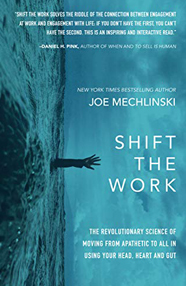
[0:00:25] Charlie Hoehn: You’re listening to Author Hour, enlightening conversations about books with the authors who wrote them. I’m Charlie Hoehn. Today’s episode is with Joe Machlinski, author of Shift the Work. 70% of the American workforce is disengaged. With every tick of the clock, millions of people inch closer to their breaking points. It’s a growing epidemic of apathy and anxiety in the work place. It’s affecting all of our lives outside the office. But meaningful work life integration is possible and in this episode, Joe, who is a New York Times bestselling author shares his personal journey on how he found purpose and how it influenced him to take a deeper dive into the science of human behavior. Joe was inspired by neuroscience research about the connections between our brains, our heart and our gut. This episode is filled with actionable strategies and inspiring true stories. To guide and motivate you to seek fulfilling opportunities to reconnect with your passions and recognize your power to make a difference. By the end of this episode, you’ll know how to reengage with your work and make an impact in the world. Now, here is our conversation with Joe Mechlinski.
[0:02:13] Joe Mechlinski: You know, I grew up in inner city Baltimore where the setting for the HBO show The Wire took place. If you’re not familiar with the wire, it’s a pretty dramatic story of not just inner city Baltimore but of many inner cities. I mean, everything from guns, violence, drugs, I went to the worst high school in the entire state of Maryland. We started with 965 freshmen and we graduated 235 seniors ,four years later. Just to give you a sort of a sense and a picture. You know, my parents, you know, were never short on love, I was very lucky in that way but you know, we didn’t have a lot of money, I went to five schools in five years, I’ve seen a lot. You know, I was very fortunate while all that was happening that I was lucky enough to get into just an amazing school and that really started to change my dataset. I mean, I know that many of us are a product of our environment and I certainly was. As I was able to leave a lot of that sort of trauma behind, you know, as I got into Hopkins, I began to think about possibilities and think about what my life was going to hold. Just like everybody else in college, you know, trying to figure out. What did I want to be when I got older? The one thing I could grab on to for sure was, I wanted freedom, I wanted choice, I wanted the ability to not be sort of caged by a lack of resources and money. I had started up a few different entrepreneurial ventures and really fell in love with being an entrepreneur. I absolutely loved this freedom and this choice and you know, that was I think kind of a popular thing to do back in the late 90s but you know, still, as you think about when you leave school, you know, most people go up to school because they want to get a good job and make good money and live a good life. Here I was, you know, spending all my time in Hopkins, you know, not really a lot of time at school but a lot of time running little small businesses and learning all this great experience. Well, while that’s happening, I was also experiencing a lot of death around me and in fact, you know, one of the closest people to me and my mom, she died when I was 23, I say this often, she was the 23rd funeral I had gone to by the time I was 23. It was really tough experience, I was away on a business trip for a company and you know, the net of the story is, I wasn’t there for her when she passed. It was a pretty - really deep, hard thing. I mean, again, I’m sure people that have lost, people that have lost people close to them can relate to this. It got me soul searching about the things that I wanted in life and at the time, I had graduated, I had a diploma and by a lot of measures had made it to the other side and I had a big job offer from a great consulting firm. I just, you know, at that very moment, I felt like I had to do something that was going to light me up. I had to do something that was more consistent with what my gut was telling me, what my heart was trying to show me. Which was you know, freedom and choice was a big thing for me and working for a big organization, I would lose a lot of that. It was at that point that I decided to really take the plunge and you know, not just as a side hustler, entrepreneur in college but as a full time thing that I was going to be an entrepreneur. At that point in time, it was all about thinking about can you turn people’s mindset from not looking forward to Monday to looking forward to Monday. Why do I get the special cool journey? Why can’t everyone, every employee in every enterprise across the world, why doesn’t everybody, nearly everybody dread Mondays? When I got to searching and looking at this, we spent the last 17 years really pragmatically experimenting, reviewing the latest science that’s out there and in some ways, we’ve stumbled upon an answer, I think not many people have talked about. Which is there’s actual neuroscience behind why and how we show up and if we just had that at our disposal, if we had access to it, potentially, we could think differently about the way in which we work. That’s really the start of our journey.
[0:06:25] Charlie Hoehn: Thank you for sharing that back story by the way, that was really – I mean I could relate. The message of your book, in Shift the Work and talking about the science of moving from being apathetic at work to all in. Tell us, what’s the biggest takeaway? What is the biggest insight you’ve learned over the last almost two decades in the science - what is the big thing that you want listeners to remember from this podcast?
[0:06:54] Joe Mechlinski: The first thing that comes to mind when you ask that is that we’re all the same. We all want the same, at the end of every single day, regardless if you’re doctor, an attorney, a politician, an entrepreneur, an executive, a line worker, an Uber driver. Whenever we’re making the transition from leaving work to going home, we generally ask the same question whether intentionally or not. That, “Was today worth it? Was it worth it?” Was it worth the value exchange if you want to think about economics or was it worth just as a human being, was my time spent doing something today that I can look back on and not regret. Gallop over the last 18 y ears has actually been measuring this and they call it their gallop Q12, it’s an engagement index that asks 12 simple questions and they’ve been asking this now for again, the last two decades. It’s very serendipitous that you know, when they start looking at this, we start looking at this. What they found was that 70% of the American workforce is not engaged. I mean, they can’t really answer basic questions about their job and when you start to look at some other economic factors or just some other metrics I think. When you learn that this country is certainly still the greatest country in some respects but we’re the most obese nation, we’re the most debt laden nation, we were having a hard time trusting each other. We think, our thesis is, that because we spend a third of our waking time at work that if you go home, regretful, if you go home less than what you started the day as, then you won‘t go home and be the mom or dad you want to be, you won’t be the husband or wife or significant other and you certainly can’t be an informed, curious, thoughtful, selfless global citizen. When you look at the state of the state, you look at the kind of the landscape in which we all live in today, whether you're right or left is not really relevant to me, it’s weather we’re thoughtful and engaged and we’re able to have conversations because you’re not depleted from the inside out. You’re legitimately not rotting and what we’ve learned is, if people can reach this state of engagement, if they can be all in so to speak at work, they can be all in at home but you can’t be all in at home if you’re not all in at work, it just doesn’t really play out that way.
[0:09:15] Charlie Hoehn: Man, normally, I ask, “So why does this really matter for the listener?” But I think you made it abundantly clear that it really does matter for not only the listener but their family, everybody they come in contact with in their community and it just has this massive ripple out effect, not only in their own personal life but their future lives and their kids and future – I mean I’m with you 100%. What I’m curious about is, what is your game plan? Based on the findings in your book and the science you looked at, what did you come up with?
[0:09:49] Joe Mechlinski: It’s a great question, we came up with a lot, I mean, over the last 17 years, our organization has had the privilege of working with more than 600 organizations across the country and helping them move the needle from apathetic to all in and –
[0:10:05] Charlie Hoehn: What kind of organizations?
[0:10:07] Joe Mechlinski: We’ve worked with small to mid-sized organizations, I would say, for about half the time and then since 2013, when my first book launched Grow Regardless, it was quite successful, we started you know, getting picked up by bigger organizations. You know, folks like Kaizer Permanente and Microsoft, Benjamin Moore, John Hancock and some other organizations would be you know, I’d have the ability to talk about.
[0:10:36] Charlie Hoehn: Yeah, you’ve run the gamut?
[0:10:38] Joe Mechlinski: Yeah, I mean, we’ve had the opportunity not to come in and not that there’s anything wrong with this, this isn’t training exercise, this isn’t a speaking exercise, this is a two, three, four year program where we go in and we look, you know, at every facet of those organizations and do our very best to help people raise their level of performance by being fully engaged. And you know, that’s a lot of work in between but if you read this book, Shift the Work, I think you know, we’ve put together what I would look at as almost a cheat sheet. There is 27 exercises that we’ve curated throughout these nine chapters that through just the process of picking up a pen and actually doing the work, we believe will actually help you, you know, just to give you a concrete example. I mean, one of the exercises that we have, you know, our companies and their folks go through is something we call the 25 Reasons Why. As an example, you know, 20 years ago, I was fortunate enough to partner up with a bunch of folks who were all do gooders in Baltimore and we created a foundation that was helping high school students get out of high school. We would create these mentoring programs between big companies like Sylvan Learning and Under Armor and Constellation Energy, what adopt the ninth grade class and then they would follow that class through until they graduated from high school. Inevitably, it’s a pretty big divide of have - people that have means and people who don’t from these types of schools, you know, obviously, there is a racial divide, it’s a bunch of white folks going in to an urban kind of environment and there’s not a lot of trust. We would be brought in, our curriculum was essentially - think about having to go in under those circumstances and getting a team to become high performing, getting a group of very different people. This particular exercise was actually born out of that work, I mean, I remember very discretely, the first time I said, “Okay, what do you guys want to be when you get older,” speaking to the students. Predominantly, people from my neighborhood wanted to be an athlete, an entertainer but in this one instance, we had a kid who said, “I want to be a chef,” and I was like great, well, “Why do you want to be a chef?” Having no idea where this is going, this kid was like, “I want to be a chef because I want to make money,” I’m like great, “Why do you want to make money?” Well, he’s a 17 year old boy, he wants money because he wants a girlfriend, right? He can eat and then he can buy a car and then he can buy a house. Like the first five to 10 answers, you could just feel it, that these are good answers but they were answers about him and I know what he’s going to walk back to which is you know, the gravity of status quo, I mean, he’s going to go back to the neighborhood that the amount of peer pressure to do the wrong things and not the right things is so immense that I mean, hardly any of us could succumb - we would all succumb to that at some level. In any event, I kept asking and look, this is like a 90 minute process but I kept asking them, why? It was just root cause analysis and finally, we got like answer 23 and he’s like, “You know, I know why I want to be a chef. I want to be a chef because I want to make my grandmother proud because she raised me and my brothers and sisters.” You could literally tell a difference in his physiology as he’s saying this and I was like, wow, fast forward four or five years later, guess what? Kid’s a chef. We took this thing to corporations and what we found was, there’s not only a correlation between getting to why are you doing this? Now, Simon Sinek by the way has made this infamously more big than we have and it’s been really helpful to our work. We love, by the way, his stuff. But when people talk about their why, it’s like yeah, why are you doing what you're doing, getting to that, we believe connects to your brain, the brain and your heart, you have 40 million neurons in your heart. This is predominantly, if you thought about your heart as almost like a power plant, it’s like a generator, it doesn’t have energy, it creates energy. The more focused and dialed in you can be to your why, this is just again, one of the 27 exercises sitting in this book, this could really help you get re-centered intrinsically, right? Not because of money, not because of fame or fortune but really because you just believe in the work.
[0:14:37] Charlie Hoehn: Yeah, it’s funny, right? Because your why is a Russian nested doll. It accumulated layers over the years and drilling in to what the real why is, at the core, it takes some effort and I’ve heard people say they’ve done this exercise till the point where they start crying. Not from having exerted so much mental energy and figuring out their why but because it hits their heart. As soon as you do that, it becomes much clearer. I think that’s beautiful exercise. What is the most surprising exercise or your favorite exercise in the book?
[0:15:18] Joe Mechlinski: Well, that’s a big one, I love the idea of thinking about sort of the things that you know, are inside of us that we just haven’t had this opportunity to express, I love journaling, I love expressive writing and so, in some ways, back to - we’ve been experimenting on ourselves. I mean, it’s really important that we at our organization Shift have modeled the way, not because we’ve made all the right moves. I mean, we’ve done a lot of silly things that I could tell you about later but for me, the ’25 Reasons Why’ in the book is definitely a – you know, I will say, very tongue and cheek. It’s a crowd pleaser because you know, I think it helps connect people to what they’re doing but there’s another exercise that we talk about in here which is like, ‘What’s Your Destiny?’ This is like a kind of a four layered approach. What’s your destiny is sort of sitting inside the gut brain, right? What am I really meant to do? Why am I doing what I’m doing is one question but what am I really meant to do and so, you know, again, just to geek out on the science for a second, your gut brain, we’re learning more about the gut brain than ever before the gut brain axis, they call it. There’s a hundred million neurons in your gut, 70% of the cortisol, the neuro transmitter that produces kind of a stressed feeling is produced in the gut and then, just ironically, 70% of the serotonin which is kind of the opposite of cortisol is also produced in the gut which is you know, what makes you feel clear headed and really grateful and really decisive in a way. When you learn all these things, you know, small things like you know, when public speakers go up or people who aren’t public speakers who have like a fear of it and they get those butterflies in their stomach, well, we all know there’s not really butterflies in your stomach. That’s cortisol being produced. When you start thinking about that, you know, what I love about what you and I talked about before this is, it’s helping people move from fear to faith. When they operate from a state of faith and trust, in themselves and in others, they can answer questions like, “What do you love to do, right?” Just a series of five things that you love to do. This is one way to think about getting to - again, we’re not saying this works for everybody and you know, maybe you’ve already done this work but you know, if you really listed out, what do you love to do? And then I love this next question because it sort of takes it up to another notch which is, what are you good at? You know what you love to do, you know what you're good at, Jack Welch wrote a really great book recently called the Alt MBA. It was his last book and he framed those two questions just as in a side, his minister framed it, your area of destiny, just getting those two dimensions, what do you love to do and what are you really good at? Again, I know I tell like three stories at once, it connected to me because we used to have a teammate at Shift who passed when she was 25, her name was Annie Odell. We refer to her as AOD. Every time I get a chance to just even utter her name, it’s pretty amazing because you know, I think she was not only left this place way too soon but while she was here, she was just a perfect example of what we’re talking about in Shift the Work which is, she just approached life in her days with so much enthusiasm and excitement and energy. That it was hard not to think about her while writing this. Those are the first two pieces. The last two in thinking about your destiny. I got – what do you love to do, what are you good at? Next one is, what are you paid to do? How do you actually turned this into something. I think this is where sometimes the creative class, the super, uber duper, “I want to go change the world or I’ve got this epiphany and I just left a crazy seminar or I’ve been following a certain person. Now I want to be like them.” You know, to me, this is where it gets down to the pragmatic side which is okay, how are you going to pay yourself or get paid to do this, and then, I like this last piece of looking at again what your destiny might be, which is what does the world need? And this could be on a macro scale or a micro scale. So you could use your telescope and say, “What does the world need?” and you can attach this to maybe one of the 17 sustainable development goals or you could go all the way down to the ground floor which is what does the world need more of you today? And so when you think about the combination of what do you love to do, what are you good at, what are you paid to do and what does the world need, to me the overlapping of those categories begin maybe to materialize into some more clarity about what really does your path look like. This is also inspired lastly by a book that was given to me by a dear friend, Yanik Silver, and the book was called The Great Work of Your Like by Stephen Cope. He talks a lot about the Bhagavad Gita and to gain back your dharma and your path and some of this really was inspired by that.
[0:19:50] Charlie Hoehn: Wow, okay so I love these exercises. I am jotting some notes down. To the listener at home wanting to do these exercises, as you said you have 27 total in the book, is there a reason why you have 27? Does it take all 27 to find your way or do some people find it one or two?
[0:20:12] Joe Mechlinski: Well you know, 27, two and seven equals nine and nine is a magical number in the universe my friend. So I am sorry –
[0:20:20] Charlie Hoehn: You’re a numerologist.
[0:20:21] Joe Mechlinski: I am. On the side, I try to pretend to be and only the worst possible.
[0:20:26] Charlie Hoehn: You know what Joe? That is what the world needs and we’re going to pay you to do it so -
[0:20:31] Joe Mechlinski: Exactly, so I am not a numerologist but I do know that nine holds significance. Nine has been an interesting number in my life. My dad used to play softball and I have these crazy memories of him wearing the number nine. I have played sports my whole life and I never took that number on but nine, I’d even make it add up to nine chapters and 27 exercises but when I looked up after the creative process of the book, it just so happened that that happened. And so the exercises themselves, you know no there isn’t a magical number. Again, I am probably a little less science on that answer than I maybe could or should be but I would just say what we did was we tried to curate from the hundreds of exercises and the hundreds of pieces that we’ve done to really put the best of the best in the book.
[0:21:22] Charlie Hoehn: Author Hour is sponsored by Book in a Box. For anyone who has a great idea for a book but doesn’t have the time or patience to sit down and type it out, Book in a Box has created a new way to help you painlessly publish your book. Instead of sitting at a computer and typing for a year, hoping everything works out, Book in a Box takes you through a structured interview process that gets your ideas out of your head and into a book in just a few months. To learn more, head over to bookinabox.com and fill out the form at the bottom of the page. Don’t let another year go by where you put off writing your book. So we’ve covered the ’25 Reasons Why’ and then the four questions: What do you love to do, what are you good at, what are you paid to do and what does the world need, is there one more exercise that maybe we could do really quickly right here and now and just test out?
[0:22:22] Joe Mechlinski: So there is another one I love which we again, I love giving credit to the best of our ability where credit is due. So I remember when I was 21 or 22, I went to a Tony Robbins seminar and I heard him say this which is, “We should ourselves to death,” right? We “should” all over ourselves which is just a funny way of not saying the word ‘shit’ and so I also became fascinated nowhere near to the neuro linguistic programming but understanding how important syntax and the words that we use are. It got me thinking about what I start within this book which is - 2013 when my first book came out, we already had one child, she had just given birth to our second. My book releases January about three or four weeks after our son is born and it’s an immediate success, huge home run, I’m excited, I am being interviewed by Bloomberg and Fox and all of these other crazy places and I am flying all over the place and –
[0:23:21] Charlie Hoehn: Couldn’t have come at a better time.
[0:23:23] Joe Mechlinski: Yeah, so she basically sat me down and she says, “I have a bad version, or a bad memory of this,” because she said she wasn’t half as hard on me but for me, what I heard her say was, “Listen, when Ellie our first was born, you were amazing. You were the first to run to a poopy diaper, you do bath time every night, you have created all these cool rhythms and rituals and routines,” which is a big thing for me and, she’s like, “But I’ve got to be honest, you know it would almost feel like with James, our second, persona non grata, you are not around,” and she goes, “And I really caught onto this when I heard you say “Gosh, I have to give James a bath”” she’s like, “You’d never say that with Ellie,” and I got to thinking about it and I think sometimes we tell ourselves there are things we have to do which sounds like a coerced or obligation or stress or pressure. Again, we lack a sense of control or perception of control or choice and nobody really operates at peak performance that way and we certainly don’t give off the best of energy or modeling the way. So my dad taught me this a long, long time ago which is he’s worked for the same company for 40 plus years and this book is really an embodiment to him. It’s a testament to who he is which is he’s like, “Look I don’t have to go to work, I get to go to work. You don’t have to get to school, you get to go to school.” So we open up this whole book really, one of the first exercises is write down all the things you have to do. So I could say like today, “I have to go to yoga once this is over. I have to take a client call once that’s over. I have to take the family to Light City here in Baltimore and then there’s bath time, right? And then there’s wife time and then there’s sleep time.” I could use the word “have to” in front of all of those things. And what we’ve learned is that you could just change everything by saying, “Well I get to - like I get to go to yoga. I get to take that client call. I get to take the emails that will pile up by the end of this podcast and this interview,” and then go all the way through all those things. I think it is interesting to catch yourself. Probably the easiest exercise I have seen make the biggest impact is this, this real transition from having to do things to getting to do things.
[0:25:33] Charlie Hoehn: That’s such a beautiful simple shift in perspective. It reminded me of something, our CEO, JT McCormick said recently to me, we were just commenting on the state of homelessness and seeing occasional junkies and he said something that really struck me which was he was like, “Man there are people in hospitals who would kill for a day of being in that state, basically of just homelessness,” you know? That they’re in pain and just having the perspective that you get to live the way that you’re choosing. That you get to live through these moments and not you are forced, changes your mind from sort of a prison state to more of a playful state, so to speak. Of being able to really dive into things and engage things rather than grudgingly go through them. I think that is beautiful, yeah. So let’s wrap things up with maybe your favorite success story that you’ve seen at these companies that you have worked with over the past couple of decades. You’ve told the great story about the young man who wanted to become a chef and became a chef, do you have any favorite success stories from the corporate realm?
[0:27:00] Joe Mechlinski: Yeah, I think one of the ones that comes to mind and I won’t share the actual name but I’ll just say that there was about a $5 billion organization merging with another $5 billion organization. So we will just frame it that way which was in the year that these two organizations were coming together and integrating cultures and all the other things that happen when that type of merger happens. We were hired about six months before that became public and that was happening to really elevate the performance through creating a more engaged workplace and so in our typical fashion we went in and surveyed everybody in the organization. We did some really good work on finding some of the constraints and hot spots which were everything from titles of jobs to onboarding to learning development opportunities to really just burning some things down that just didn’t – not reductionist but thinking about the redundancies. Or thinking about really again, what would get out of the way of people being their best self and really performing that up just a total differently place and so if you are doing that work, I mean the results are pretty profound. Again, when you think about two organizations coming together forget just us being brought in from the outside but we had basically two different population sets to work with and through the integration, that year and the year after both organizations experienced record growth in terms of sales by hundreds of millions of dollars. Their engagement scores has dramatically increased by 20 plus points in both subsequent years, we are in our third year now so I will let you know how it goes this year and they had not really experienced that otherwise and that’s traditionally the worst time to work within an organization is when someone is going through a merger. I mean you have a floor that don’t work than that do so to me, we had sort of three things fall into place. One, for all the hardcore financial folks listening to this, look, they have exceeded revenue targets and had not and we do not get credit for that. That’s not why I say it that way. I mean we played a small part in making that and helping to facilitate and enable that to happen but you would also, we all get measured by some measure and in that particular regard, hundreds of millions of dollars both years exceeding targets, for what now is a combined $10 billion organization networks. And the CEO has been more than gracious with us in giving us a really good attribution of success. Number two –
[0:29:33] Charlie Hoehn: By the way, congrats that’s pretty badass.
[0:29:36] Joe Mechlinski: It rocked dude. It’s upped us in so many different ways. And number two in that same organization experienced a 20 plus point or 20 point increase in their engagement scores and this is using somebody else’s engagement index not even ours. So this was something they had been benchmarking for a couple of decades and they were like, “Holy crap,” people have a more meaningful relationship with their boss. People are more clear on their roles and responsibilities. People feel like they have the tools to be successful and this is the old school way of thinking about engagement but even in that old school way their scores went on 20 plus point - 20 plus percent and the third thing the CEO says about this particular endeavor and this engagement, even as recent as today I talked with them, he’s like, “Listen, the thing that we are not even close to done with is really finding this next gear of what does one culture look like.” So I think everybody can relate to this whether you do this kind of work or not but in the age of tribalism where everybody’s got a badge on their shoulder with what team they will represent themselves as. Whether it’s in politics or frankly during the day, how often does it feel like the competition is not outside the building but within and you know he again would say, “You know we’ve still got a little bit of work to do there but far exceeded his expectations about where we would be.” So this is, to humble brag, this is a pretty normal example for us which is revenue goes up, engagement goes up and people feel differently about their culture but it is not for the faint of heart. I mean this is hard work, this is tough conversations, this is really breaking down ego and fear and those are not easy things to lose in the human condition really.
[0:31:17] Charlie Hoehn: Yeah, they are not. And I can just tell in your voice that all of these everything that you said is aligned with who you are. It is true you are speaking your truth and I mean it is an important message and given the fact that you made an impact of hundreds of millions of dollars with this company is not only a testament to how powerful it is but it should also be a little nudge-nudge to the listener that this might be book worth picking up. So let’s remind our listeners that the challenge for them is to just be aware of the things you think you have to do and instead, frame them as things that you get to do. I think that is a phenomenal exercise that they can just test out today. Otherwise Joe, where can our listeners connect with you, follow you and potentially work with you within their organization?
[0:32:13] Joe Mechlinski: So here’s maybe the only thing I think we’ve done okay. You may disagree as a marketing genius expert. So the book is named Shift the Work and if you go to shiftthework.com, you will actually find out everything you need to know about our organization and you’ll have to dig hard to find the book which was the purpose, but you’ll get a sense of – we’ve got many different businesses and they’re all centered around this belief that the single greatest lever of human potential is a more engaged workforce.
[0:32:42] Charlie Hoehn: Your website is really cool. I am looking at it right now, this is sweet. I mean if people are listening, just go to shiftthework.com and just check it out and I don’t see many sites like this. This is really cool.
[0:32:59] Joe Mechlinski: Yeah, not your typical site and it is not your typical boring management consulting sort of path. We wanted to have some energy that, I mean, you are hearing from me today. The rest of the team is equally if not more in so many ways passionate about what we do sincerely and we say on the website, “We want to be the most caring results obsessed inspired management consulting company on the planet.” I mean that is the aspiration and it sounds a little weak when you say caring. But when you really think about it, wouldn’t you like to work with people who actually give a damn? The working title for this book for whatever its worth was and again, pardon the vulgarity here but it was Work like You Give a Fuck, that got vetoed by my father and my kids and I didn’t want to be a cheap laugh but part of it was when you think about it, this is your life. It’s your life and so if you are going to spend a third of your time on this planet doing something, you should do it with some acknowledgement and connection to that statement otherwise, what are you doing?
[0:34:03] Charlie Hoehn: Beautifully said. The book is Shift the Work by Joe Mechlinski. Thank you so much for this show, this was great.
[0:34:11] Joe Mechlinski: Awesome, thank you Charlie.
[0:34:15] Charlie Hoehn: Many thanks to Joe Mechlinski for being on the show. You can buy his book, Shift the Work, on amazon.com. Thanks again for listening to Author Hour, enlightening conversations about book with the authors who wrote them. We’ll see you next time.
Want to Write Your Own Book?
Scribe has helped over 2,000 authors turn their expertise into published books.
Schedule a Free Consult