Guy Bell: Unlearning Leadership
Read the full transcript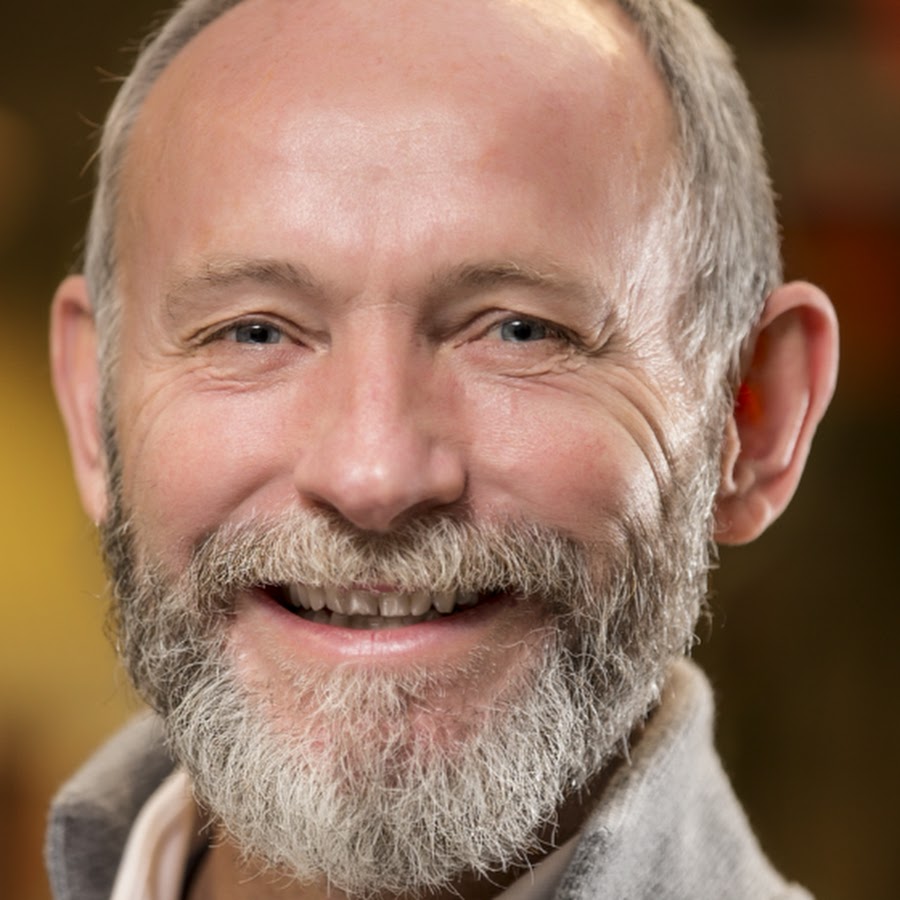
Guy Bell
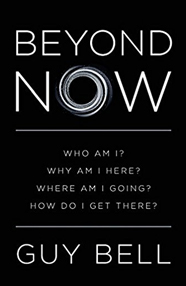
Guy Pierce Bell has spent his career helping organizations work more effectively together. Through his work with countless groups and thousands of individuals, he came to believe that people spend far more time perfecting their outward personas than coming to know their true selves. He writes, speaks, and works with businesses that want to humanize their work and reach their highest potential, and he is the author of Beyond Now.
📚 Books by Guy Bell
Transcript
[0:00:48] Charlie Hoehn: You’re listening to Author Hour, enlightening conversations about books with the authors who wrote them. I’m Charlie Hoehn. Author hour is about answering one question: How can you get the best ideas from great books without spending so much time reading? Every week, we take you behind the scenes with a new author, about the most important points in their book. So if you love to learn while you're on the go, you’re in the right place. All of our book summaries are 100% free and we do more than a hundred episodes every year. So please subscribe to and review author hour on iTunes. Today’s episode is with Guy Bell, author of Unlearning Leadership. “It’s not personal, it’s just business.” That has become a mantra for leaders, a call to put shareholders first, managing employees like machines and protecting the organization from its people. Guy believes that this way of thinking is driving mediocre results. In order to become a transformative leader, he believes you need to let go of what you know so that you can unleash the power of human potential. For more than 20 years, Guy has been successful in business, despite his unconventional approach. He knew early on in his career that his brand of leadership created momentum by connecting with people to reach their full potential. In this episode, he draws on his experiences in startups, publicly traded companies and privately-owned companies to give you a new manifesto for business leadership. By the end of this episode, you’ll know what the future holds for more sustainable business and what can happen when we change our initiatives to be human centric and we dismantle the systemic norms and tap into our whole-body wisdom. Now, here is our conversation with Guy Bell.
[0:03:19] Guy Bell: When I started off in the world of business, I owned business at 19, 20, 21 years old so I had started small businesses in my 20’s. I really never had an official process of learning by going to B school, or whatever people do when they learn how to run a business the “right” way. When I first took a job with someone else to manage another person’s business, I’d already had a very personal experience with what it meant to me. It was limited of course because of age and that time but it was also a really fascinating way to begin this because as I sat down for my first annual review with my boss who I got along great with, had a great first year, had a really fun run in the business, it was you know, enjoyable. He essentially gave me that first review, the advice of “You need to learn to toughen up, you need to be harder on people, you need to care less” and those kinds of lessons that I learned over and over again in that early stage but then again, the next 30 years, were beliefs and ideas that were very dehumanizing. Extremely, I would call shocking, and so when he was giving me this advice on what I needed to do, I was dumbfounded, I was thinking, “Gosh, how in the world do you come to that conclusion and why is that what you consider to be wise counsel?” Like I mentioned, 30 years later, I’m running companies publicly traded, privately held, equity backed and I’m hearing the same kind of crap. You know, everywhere I turn, I’m getting the same limiting school of thought that says, “Hey guys, it’s just business, it’s not personal.” I never bought that. I actually learned really quickly that I’m not going to be taking – they’re good people by the way – but I’m not going to be taking that school of thought on and I questioned this intuition I had that said, “Man, this experience called business is wildly personal, in fact, it’s the only reason we’re in business at all is because of each other.” I made it very personal and I made the experience not just business but we’re in this together, we’re spreading as much time with these people we call our work partners as we are with our wives and husbands and partners. We spend more time with these people than probably any other human beings on this earth in our time here. Why not make it a really fantastic, the best possible experience, lived experience, human experience that we can. I went against the grain and I’ve spent a career really being involved in the room because of that. You know, my wakeup call was that first review where I learned, I saw it differently and then I kept getting the same wakeup call over and over again, but it only got me more convinced that my view and my approach worked. The second is, I hadn’t really ever desired running a company or being a CEO of a business and in that lack of kind of having a bold ambition and trying to move up the ladder, I did very well because I wasn’t focused on me, you know? I was way more focused on who cares about your ego and making sure you create the right impression, I couldn’t give a shit. I really cared about people, about getting people to their full potential, about performance around humanizing what we’re doing, around connecting to the meaning in what we’re doing and if we don’t have one, we got to figure it out because if you don’t have like this enduring, you know, sense, on an individual by individual level, of what we’re doing and why we’re doing it. You’re never going to get to peak performance, you’re never going to maximize the human condition which in turn, maximizes performance itself. I spent a lifetime training around companies as I learned to talk about what my calling card was and I learned to do a 15 second elevator speech around “I’m a turnaround guy.” So, when I finally figured out in an interview when I was moving up the ladder and not really knowing why or having it be a part of a strategy, I began to learn my story and as I learned it say, why I turn things around, what I see as the difference in what I do as a turnaround guy. I really started learning that I don’t match almost anyone else’s perspective of what you should know about a system process organization structure around turning something around. I started embracing the fact that my success had to do with, I saw all of that as super easy, the process systems organization structure, super easy to fix. What’s really difficult is understanding the human condition, what’s really difficult is really reaching in and finding a way to connect people authentically to their fully realized performance themselves, while I’m working on myself in this relationship and it works. That moment where I kind of thought, “Okay, this is really good.” I was very comfortable with how I was going to need to accept that I’m different and not negotiate it but also not go beat other people up because they’re aggressive, they’re egocentric, they’re fear driven. All the things that these really smart people from Harvard, Stanford, MIT, wherever, they’re very bright, they contribute at a high level, they’re fun to work with but there tended to be a bias towards “It’s not personal.” They dehumanize the experience because that’s what we do in theory and in practice in business today. If that’s a very long-winded way of talking about it but that’s essentially what –
[0:08:56] Charlie Hoehn: No. Well first of all, this is something that I’m already fascinated with, you’re speaking a very – I hate to use the word but it’s a seductive thing that you're talking about because I think all of us feel this hole that’s been left in the, I don’t know, what would you call it? The relics of the industrial revolution?
[0:09:23] Guy Bell: Yes, relics of industrial revolution and also this Ford, tailored, machine-minded approach where we dehumanize, we depersonalize for efficiency. We gained some in the last hundred years since Ford created the first model T, but we’ve lost something and what we’ve lost is wisdom, what we’ve lost is humanity. We don’t have to have a choice between the two, in fact, that is the wise choice is to say, “What have we learned that is beautiful and wonderful around efficiency, around systems thinking?” Without you know, being served by our intellect but using it appropriately, being served by our growing knowledge of agile workflow and all the crazy, wonderful language that there’s value in it and there’s so much devalue in it. How do we unlearn the stuff that is really not healthy and take all the good, rich stuff from the industrial revolution, from the tailoristic machine-minded value that was created in that. Does that make sense?
[0:10:23] Charlie Hoehn: Absolutely. Yeah, I mean, in other words, the processes, the mechanics and everything in a business are pretty straightforward, we have that nailed and in fact, that’s been sort of the dominant way of teaching how to think in the west is how to think very logically, structurally. But we’ve dehumanized the process, we’re disconnected from what makes us, us. Is that fair to say, am I like you know, close?
[0:10:54] Guy Bell: No, you’re right on. That’s exactly how I see it, that’s precisely it.
[0:10:58] Charlie Hoehn: What do we need to unlearn in leadership. Where do we get started?
[0:11:04] Guy Bell: At the front of the book, a story that I used to simplify the complex is a story called Four Rules of Flight. Its’ weightlift, thrust, drag and there’s not five rules and there’s not three rules, there are four. Yet we spend in business over the last hundred plus years and I would say, hundreds of years and maybe even thousands, over invested in trying to figure out the rules, process, risk management, all these things that we do that you know, add some value. But to the extent that we spend our time there, we’re actually destructive, we’re designing mediocrity is what we’re doing. What I would say is in the unlearning is, that is just one part of what a successful business and a successful organization of any type needs is structure organization process systems. Those types of things are good but only as a part of the story. I’d say the unlearning is, how do we let go of our fears and our need to control which both, the one we know that we don’t control anything that in terms of other people, but we feel this sense of controlling when we’re controlling, right? We’re more controlling in our behaviors. How do we break that terrible habit of feeling like we control anything? Certainly, look at business process systems, organizations, structure as a tool. How do we move out of that being the rule? Into the wisdom that we have, in this field of potentiality when we use our intellect as a tool, when we wake up to our full potential by – and then stopping for a minute and wondering what this kind of new trend of mindfulness means when it’s ancient obviously but that quieting of our soul, so that we listen and pay attention, that we connect, we create, we are curious and we ask everyone around us to connect, create and be curious about what we do, how we do it and the impact we have on each other. When we do that, when you have 10,000 people in your organization versus 10, creating and connecting and wondering and failing fast together, we accelerate the potential for everybody, including the benefit of the business and our customers. The unlearning part is, dump this crappy thing called “It’s just business” and start working on this thing called, it’s really a transformative experience. When we see it as wildly personal as a way to connect to the full human potential, it begins with me. I have to start and say, I, as a CEO, I, as a – whatever the role is, can make a difference and I’m going to choose to see everything we do from the lens of human potential, move into what I want to see happen and versus a way from a risk or a fear or the bad actor, whatever we do that keeps us from our full potential because we are fearful. Does that make sense? We let go of that fear in that, we don’t have time to create meaning because, there’s always someone that’s going to you know, do something, steal your stupid and hurt a customer experience and hurt our revenue and put us at risk of a lawsuit and so we spend so much time circling the wagons that we forget that all of that work is fine as a tactic, as a part of the structure but by itself is destructive. Makes sense? Little to conceptual?
[0:14:22] Charlie Hoehn: No, I mean, it’s got my mind reeling. I’m thinking about this concept and if you’ll allow me for just a minute to kind of go a little bit out there as an analogy that I’m sort of thinking of, trying to grasp this idea that you’re talking about. There’s this video that I saw a while back that a neuroscientist took a scan of the human baring and one scan was the human mind just kind of doing its thing and the other was I believe, it was either decades of meditation. Somebody had practiced meditation or it was – it might have been mushrooms, a psychedelic and the brain that was in the meditative or the psychedelic brain had literally hundreds times more connections being formed, it was so much more active and the thought initially was “Wow, it makes the brain so much more active.” But in reality, what had happened was, it had lowered the ego, the fear-driven part that I think kind of pervades our normal existence. I think about what you're talking about within a company of, there’s these people that are frankly suffering with the human condition of dealing with fear and their ego and protecting themselves but underneath the human side of connecting and bringing out their most potential and their most creativity in the sort of things that you’re discussing in your book. That seems to be analogous almost to, you’re talking about our potential of what could be if we unlearned this way of thinking and operating that’s – we don’t even see is holding us back.
[0:16:12] Guy Bell: We’ve lost our view, we’ve lost our understanding of how to even see that, how do we have a looking glass, self-understanding of what we’re doing and we just don’t. We don’t play in that field.
[0:16:23] Charlie Hoehn: Because it’s the only model we’re really aware of.
[0:16:27] Guy Bell: Correct. We refuel it in so many ways because, then fill in the blanks. In colleges, we talk about controls and systems and processes ad nauseum, right? It’s fine, there’s aspects of that that are fantastic but not at the limit of human potential. Now that the limit of what you just suggested and shared, which I totally agree. And that is the whole-body wisdom is what I use as a term and I think you know, as we learn through science, because you’re right, your comparison is perfect but as we understand how neuroplasticity works. How the brain is constantly reforming itself and the cells we generate. All the stuff we now know through science, well that does is point us to what these meditative estates have and people had been practicing this, Buddha and everyone else, Christ and so on. We all have the same potential, we all have the same four fundamental abilities which is to be creative, curious, connected, we’re all born with that. Why do we unlearn that age one, two, three, four, five, six, after the hundredth “You have to know” and the hundredth “You’re not smart” and the hundredth, you know, you’re competing for being smarter in this linear process and all of a sudden, you’re a sick child that has ADHD because you know and we start diagnosing people with stuff that keeps people from their potential? And all of a sudden, you’re an adult and you’ve lost yourself because of the hundredth “No.”
[0:17:52] Charlie Hoehn: Yeah, I mean, it’s really frustrating because what is objectively really a crazy way of existence becomes normal because we all sort of take our queues from each other and it’s just like, “Okay, well this is everybody else, this is reality too. There’s no other way of doing it,” and therefore most of us miss what you’re talking about in your book. Enough conceptualizing, let’s dig in to the three ideas that will change everything, did you already say what those were?
[0:18:23] Guy Bell: No, but it’s, I used the word idea because you can use multiple words, I could call it the three words. But the three ideas are, what you believe activates. Monitor what you believe. In other words, I’m a CEO and I’m risking for us. I put a lot of energy into my own process, my own mind, put a lot of energy toward risk management. If you spend time on that subconsciously or quietly, it will inform everything else to the negative if it is not aligned. When I say that, what you believe activates the word that you choose and if they’re incongruent, then they don’t activate. They screw up the last step which is the action. What we believe and what we say, better match what we do and if the three are aligned toward potential, toward the human condition, toward a desire for excellence, for you know, nailing the delivery of the product. Whatever it is, if it moves into what you want versus back away from the fears that you believe, “Well, if it wasn’t for that bad person or that other group or that department, we can go accomplish that.” The three words that will change everything, including your personal life and your professional life and the performance of your business is, make damn sure you understand what you believe at a deep level. Work on it and move it toward what you want, and use activating words to inspire, connect, engage and then choose to act on this in alignment with those two very important parts of how we come to work in business and the world changes. Performance changes, does that make sense?
[0:19:59] Charlie Hoehn: Yes, absolutely. Beliefs. Monitoring beliefs.
[0:20:05] Guy Bell: Know what you believe, spend time, be quiet, listen to your monkey mind. According to some data and it’s all over the board so god only knows what’s real data and what’s not but some version of 90% of our thoughts are negative. Some version of 70, 80, 90% of our thoughts are repeated. How do we work on understanding that? Don’t fight against, it just understand it, begin there. Then play with the idea that it matters what I invest in, it matters what attention I give these thoughts. Let’s choose individually as leaders, as CEO’s to kind of activate the things that we really truly want to see happen. But it takes some time, right? Takes that internal investigation.
[0:20:52] Charlie Hoehn: What did that internal investigation look like for you?
[0:20:55] Guy Bell: I do it all the time. It’s been a part of my personal journey, so I haven’t had the learn it necessarily but I’m learning it every damn day. I activate this as often as I can by staying present. Very tough to do but when I am present, it’s pretty easy to toggle between seeing myself while we’re in a meeting and I can sense everyone’s unspoken nature, I’m pulling out things because I’m present, I’m paying attention to every part of their language, right? As I am doing that, I am more intentional, I am more present with what I want to see happen, I am willing to be vulnerable and say, “I have no freaking clue” because in that state, I don’t have my ego all ramped up and ready to convince everyone I’m right. In that kind of way of being present, I can do it. The minute I get into, I want to accomplish something, or I want you to think I’m impressive or whatever I do that is stupid, but I still do it. I’m at a board meeting as an example and I want to sound good, so I come prepared to speak, versus just be present in the data and information and be authentic. The difference is, one Is activating, one is trying to convince someone of something if that makes sense. I practice it all the time, I don’t leave a day in business without going through what worked and didn’t work and making sure I come back to things that I felt were off. It may not have been a big deal, but it was a big deal because as I reviewed the day and the conversations and the sense of each of the events and the decisions if we made any – were they aligned to have, we got everyone that needs to be involved, involved. Those kinds of things, I don’t let a day pass without doing it.
[0:22:41] Charlie Hoehn: It Takes Two, you have in your book. What do you mean by, It Takes Two?
[0:22:48] Guy Bell: Everyone counts. You know, it’s so easy when you have hundreds of thousands of employees or you have an old-school thought that says, “Well, you’re not my direct employee, I’m not going to give you the time of day.” It is so easy to choose that because in our minds it is simpler. It’s less cluttered. I don’t have to worry about that. Wrong. You need to wake up and engage with every single person and in that engagement, it doesn’t mean you have to go build a long-term relationship for a deep understanding of every single person but if you don’t see everyone as worthy, as important, you’re in trouble. And everyone who you invest in that is not other, meaning not someone that currently perhaps you don’t communicate with will see that you ignore some employees because they’re too low in the organization or you don’t think they have anything to add or contribute. I would say make sure everyone counts and they know they count. So even if it is just a “hi” in the morning “how’s it going?” Guy when I walk to the office every morning and I say hi to every single person. And ask them something about their night or their day, I randomly do that. I am not doing it as a tactic necessarily, but it is a practice. So making sure that you hold yourself accountable for giving a shit. So it matters and if you don’t, do some personal work because it does matter and some of the best ideas come from really simple transactional, “Hey how did you day go?” and “Tell me about it, what happened?” or “Hey I got a thought I wanted to see your take on this.” And I have asked the most random people really complex questions and once in a while they will give you a feedback and you’re going, “Holy crap, that was really good!” and so you really – when you practice that you’re going to start to figure out that you have a lot more talent around you than you realize.
[0:24:39] Charlie Hoehn: Absolutely, so let us talk about the future state of business. Where is the ball heading? I mean I’ve spoken with a number of authors on this show who seem to hint at there’s this shift, a cultural shift that is happening that you seem to be very much a part of, which is bringing consciousness to our corporations making them more feeling and aware of the fact that it is the center of humans not the other way around.
[0:25:16] Guy Bell: Yeah, that’s great and I am excited to hear you say that you have spoken to other authors and have heard the same kind of message, so that is really exciting. I’d say that I am not a big fan of intellectual property. I’d say steal everything I am doing, and I’ll steal any good idea.
[0:25:33] Charlie Hoehn: Oh here’s the thing Guy, I haven’t heard your exact message at all. What I have heard though from other authors, seems to be that leaders are waking up to the fact that the way that they’ve been running bigger organizations even small ones is creating real problems for real people and that can’t continue and now becomes the process of awakening for the entire organization.
[0:26:03] Guy Bell: No that’s great and so what I think is happening and what I believe to be true in this future state is we have – I mean we’re late. I mean we have dehumanized business for so long and we’ve lost so much opportunity to change the world and we have also created so much opportunity. So I am wildly impressed with Tesla, wildly impressed with some fantastic businesses that are very conscientious about changing the world. It’s impressive and I am also very conscious of the fact that we are so far off base in terms of impacting the whole world around this idea of what business can do if we as leaders can wake up. I have not been around too many leaders. I’ve been around bright leaders, I’ve been around a really fantastic intellectually kind of minded trusting in this system but having some sense of leveraging the human potential – but I’ve never really had the benefit of working with people that have all that great knowledge. And intellect and also have an equal balance of mindfulness consciousness, of a deep soul, a deep abiding curiosity around the human potential. I have found that excellence in business, fantastic results in operations come when people go that extra mile on the human condition and connect at the deepest possible level around what performance means for that individual and it means –
[0:27:38] Charlie Hoehn: Sorry to interrupt you but what leaders out there do you see who seem to embody this? I mean is it people like Oprah, Richard Branson, or are they not even close.
[0:27:51] Guy Bell: Yeah, Branson is one of them. You know I think Branson from my limited knowledge is probably one of the better. Ricardo Semler is the best, but I don’t have a personal lived experience with them. Actually, when this book comes out, my goal is to send them the book and ask them if there’s ways we can partner up and I can help him and he can help hopefully me to kind of connect and expand what he is doing. He’s amazing.
[0:28:12] Charlie Hoehn: And you know who else? It’s the founder of Patagonia, his name is escaping me but he’s definitely one as well.
[0:28:18] Guy Bell: And the founder of LinkedIn who is a notorious asshole.
[0:28:22] Charlie Hoehn: Reid Hoffman?
[0:28:23] Guy Bell: Self-described and now, he is the CEO of LinkedIn. I think he is one of the co-founders maybe perhaps.
[0:28:30] Charlie Hoehn: Oh okay.
[0:28:30] Guy Bell: But I have watched him speak and he’s awesome. He just turned into this really wonderful human being and he married a, I think it was a massage or yoga instructor, something like that who softened his soul and he kicked out of this B School, smart kid, young entrepreneur. He really trusted his mind and his ego and his intellect over spirit and over the human condition and it seems like he is working hard to evolve into this new type of leader. So yeah, I mean to the extent I know him. I don’t know him personally but he’s one of those guys that I love that he can say, “I was this kind of person before and now I am really working on being more conscientious” and he’s doing the work, you know? And it is not fast or slow, it’s just work. It’s like everything, like a friend of mine, my girlfriend is a very conscious physical therapist and conscientious physical therapist and she uses different more spirit based more felt sense-based models. To help people heal themselves and I say that as a parallel to realize that we’re all really in the healing process, right? And as we see ourselves as our own healers and then working on this, getting back to our healthy self, our full body, our whole-body awareness it really is that process and so yeah. I think to the extent I know Richard Branson is adopting some of Ricardo Semler’s theories, not many of them but some of them, I think that’s fantastic and so I wish I knew more personally. And I am ambitious to learn who the kindred spirits are out there with this book and through speaking and help the world transform world leaders by showing them the evidence if it works and then two, pathways that can help them get over the fear of, “Oh my gosh I have been wildly successful with this model, why would I change it to be more human when I know fear really works?” but it works but you know I can’t really help everyone I’m sure but that would be the goal is to get to those leaders that are on the fence of saying, “Okay, you know I am curious.”
[0:30:32] Charlie Hoehn: You know to use our crude analogy, it would be sort of the equivalent of saying to somebody who’s only read books, “Well why would I switch to this video thing that you are talking about? Why would I give that a chance?” And it’s like “Well, you could involve all your senses rather than just this rigid way of doing things.” So there’s more vibrance, it is more colorful. You feel things that you’ve never felt and that sort of thing.
[0:31:02] Guy Bell: Well and science shows that the heart and the stomach actually the synapses happen more quickly than the intellect with the brain. So when you look at what’s informing you anyway, you might as well use it all and understand it and take the time to maximize your full potential, why wouldn’t you? Once you understand that I mean my gosh, it seems really logical and simple but it takes a relearning, an unlearning frankly. And then a relearning to let go of our damn ego which has so much power and control over us because it’s caused all of the success in our minds collectively and I’d say it’s caused a lot of failures that we call success with you.
[0:31:42] Charlie Hoehn: And missed opportunities.
[0:31:44] Guy Bell: Missed opportunities, yes.
[0:31:46] Charlie Hoehn: Yeah more than anything I think and yeah, I mean that is super powerful. A lot of people don’t know that the heart has magnetic waves that outstretch for a dozen plus feats that we can feel each other and all of these. To some people listening I’m sure this sounds a little woo-woo but this is all stuff that’s backed by science and that has just not really hit the mainstream and we don’t know exactly yet how to incorporate it into business, which is what you are talking about as the cutting edge. So let’s start with the truth which is you, that’s what you say in the book, “The truth starts with you.” So let’s bring it back to the listener and hey, if you want to make me the guinea pig in this example I’m happy to do that but talk to me about why the truth starts with you and ourselves and our whole body wisdom. Give me the summary here.
[0:32:48] Guy Bell: I was speaking to a group in Chicago a few weeks ago before I took off to a vacation in Europe which was a blast and this group was filled with – I will leave some of the details out, but with really smart executives. We got to the end of my 20 minute canned speech which I change every time and go way off track but we got to the key points and one of them is this point of “It starts with you” and so in the Q&A afterwards one of the participants said which was really sweet. She said, “My god Guy, I wish I could come up and hug you” she said, “Why are so few CEO’s and investors not getting this “It starts with you and it matters how you come to business?” And so we have really nice conversations. A good half an hour or 45 minutes of dialogue with this group around, “Well how do you do this?” And to some extent, the answer is not satisfying because it is a being way more than it is a doing and so, “Well my boss won’t let me.” Or “The CEO’s or investors don’t want that to happen” and I’m like, “It’s not negotiable.” How you come to life is your choice, right? So it starts with you meaning you need to choose to wake up. You can’t worry about someone else because you don’t have the power to change anyone other than through the power of your own change. So to the extent that we are with knowing this my whole lifetime is, you are what you think and you are what you invest in, so be mindful. Be conscious of what you’re investing in and as you come back to work tomorrow, you don’t have to go convince someone that it starts with all of you. You just be the change and you start walking into this wonder state of “Okay so what does it mean to say it starts with me? If I want to have a better human experience in my business, what can I do tomorrow to change it?” And that’s what I’d ask you is, what can you do tomorrow? And you do it tomorrow. Can you walk in and just wonder? Can you stop commenting for when you get typically feedback, get feedback or say we’re going to go in this direction and you stop the conversation, can you stop yourself just for that one meeting? That one day and began to just say, “I’m going to ask a question. I’m just going to listen where I typically weigh in because I am a type A driven person,” whatever their reasons are, right? “I’m the boss I’m supposed to do this.” And can you begin to just leave space and start to ask a question versus say something? Can you wonder meaning just be quiet in your wonder and listen and just probe? And those kinds of things are the beginning of saying, you know if you want to change your organization to be a more human organization, better performing organization, you’re going to have to slow down and wonder personally “What can I do to cause this?” And then begin. As people see you change and they say, “What’s going on?” Where you start to see evidence that it’s gaining some traction because you are getting deeper into the core of what performance means for that individual because now you are paying attention not just giving feedback that you know works. Now you get that incremental improvement and performance or in relationship because you are paying attention at a deep level. You’re wondering out loud more consistently. It starts with you and what I think will happen is what I know and happens in my lived experience is now, all of a sudden I invite people into saying, “Okay how do you do this?” And so I ask the question in the interviews and I ask the question, “Who are you? Why are you here? What are you doing? How can I help you?” And if they tell me all the right things around the job I’ll say, “Great, what do you want to accomplish in your life outside of this job?” And when you get to the core of what people really want in their lives, if they know and if they don’t, they work on it with them. Help them on their journey because it is their journey and they will invest in you in a whole different way when you do that, it starts with me. I need to wonder enough to say, “Man you matter, I want to know who you are. I want you to connect to this job of course but I also want to connect with your deeper purpose.” And I say that because then they start living into this life where they’re living a full life. We are talking about their dream. I am helping them hold them accountable, develop relationships, whatever I am doing while they’re helping the business do better because of their investment in what we do together. It starts with me and then it starts with them and they start to share that same wisdom with their teams let’s say and you don’t do it by a strategy and a poster and a cultural “Here are the five ethical values” and all of that crap. It’s fine but it is not going to do anything. It is not activating. It starts with you is activating. It starts with you teaching that person these types of things that I have just shared with you is activating and they will activate the activation if that makes sense because we are all curious, we are all creative, we’re all connected, period, end of story. To the extent that we invite people into that, we grow the connection. We grow the potential by just showing up and starting with our version of invigorating that kind of idea, make sense?
[0:37:46] Charlie Hoehn: Absolutely. I am with you 100% and I want to throw a little curve ball at you because I’ve received this curve ball before. I know what leaders are saying to you, “It is hard to go down this path because business has worked so well for us doing things the old way, why would we change?” So, the last book that I published myself was called Play For A Living and it was about how some of the world’s greatest innovators, people who shaped our society tended to view their work differently than a normal person would which is, “Just going to pay the bills.” They view the work as a source of their own fund, their own game and some of the feedback I got from people who were skeptical which was a fair number of adults was “All well and good. I’ve got bills to pay basically, right?” My incentives in other words are “I need to be able to keep a roof over my head and I can’t do that if I go off in la-la land and focus on how much fun I want to have,” and I get that. Especially if you have debt or something like that or you’ve got three kids and you are living in a high economic place and you want to sustain that, whatever. What do you say to somebody who says, “Guy this all sounds well and good, I got bills to pay, I’m stressed out man I can’t focus on this?”
[0:39:24] Guy Bell: Yeah, I know. I think that is fantastic and that’s what I get all the time on multiple fronts and definitely, in terms of investors and CEO’s and boards and publicly traded companies, it’s extremely difficult to reach into that mindset that has a ton of confidence in the road, “It is not personal” model. So yeah it is very difficult but for the employee that wants to say or the middle manager that says: “Look I want to do it this other way. I like what you are saying, it feels right to me but you know, if I talk this way and my CEO or anybody finds out they’re going to call me woo-woo and they’re going to lose their confidence,” and blah-blah-blah and so all that exists. So I don’t pretend and I personally have lived my life in it. For 30 years it’s existed for me personally, but the difference is, I come in and turn things around because what I’m teaching people, what I’m teaching the audience today is it works. It works tomorrow morning, it works next Tuesday, it works, and it doesn’t take a lot of time for it to work. The investment is getting quiet has nothing to do with your business. It has to do with you. I spent half an hour every morning in gratitude and going through different things in the morning to set my day up. I do things personally to develop my sense, to develop myself right? So, all of that work is definitely work but it can happen in the quiet of a drive to work. It can happen in lots of places to get yourself grounded and ready for presence, ready for making a difference that day for every life. When you make the investment, it gives a return right away. I’ve been very successful and when I’ve done that well. When I’ve not let fear creep in and say, “Oh my gosh this is a really top down heavy ended culture,” and it is going to be difficult to be this way in this organization which has happened more than once. To the extent, I don’t rely on my intuition and my knowing that this works, I am less successful so I am not helping the business, I am not helping the individuals and these guys, typically men but women and men, were egoic and don’t want any part of this to the extent that I let that rule my situation, we’re in trouble, meaning don’t sweat it because it literally does – you can get performance out of changing the way you run your business quickly. It is not a slow process. What is slow is changing the culture particularly those that have, “It’s not personal, it is just business” model and typically the owners or the executive teams and it is just the nature of the beast but to the extent if we can get our arms around “Don’t worry about that,” don’t try to convince people that are not ready to hear the message just change how I operate, change how I come towards starts with you. You can increase performance, you will increase performance. The goal overtime is to influence people when they ask you. The CEO says as an example, “Yeah you’ve had a lot of success this year. What do you attribute your success to?” And just say, “I am going to tell you something that is going to sound woo-woo but I am going to tell you straight.” And you give them the truth and you don’t heat them up over and you don’t say, “God wouldn’t it be nice if you change the organization to match my belief system which I believe is way more aligned with human potential?” But you just say, “It works for me and you know, I’d be happy to share it if you want me to” and you let those people that are slow to come to it be slow to come to it, but you are ready. So chose to activate your life, connect deeply for performance really. It turns out to be for our best. Every day counts, every person counts and it works, makes sense?
[0:43:03] Charlie Hoehn: Beautifully said and there is so much other great content in the book but I know you’ve got to get running. Well how can people get in touch with you if they want to reach out?
[0:43:12] Guy Bell: My website is guypiercebell.com and it’s obviously has all my contact information. Probably the best way to reach me is through the website, so guypiercebell.com.
[0:43:28] Charlie Hoehn: The book is Unlearning Leadership, Guy thank you so much for being on the show.
[0:43:32] Guy Bell: Thank you for having me. Good to meet you.
[0:43:36] Charlie Hoehn: Many thanks to Guy Bell for being on the show. You can buy his book, Unlearning Leadership, on amazon.com. Thanks for tuning in on today’s show. If you liked what you heard, here is what I want you to do next. Open up the podcast app on your phone or iTunes on your computer and search for “Author Hour with Charlie Hoehn” and then click “Ratings and reviews.” Take 10 seconds to rate this show or leave a review. It is a small favor but it’s really the best way to show your support and give me feedback and if you know someone else who’d love Author Hour, take another three seconds to text them a link to this episode. We’ll see you next time.
Want to Write Your Own Book?
Scribe has helped over 2,000 authors turn their expertise into published books.
Schedule a Free Consult