Gerard Wood: Simplifying Mining Maintenance
Read the full transcript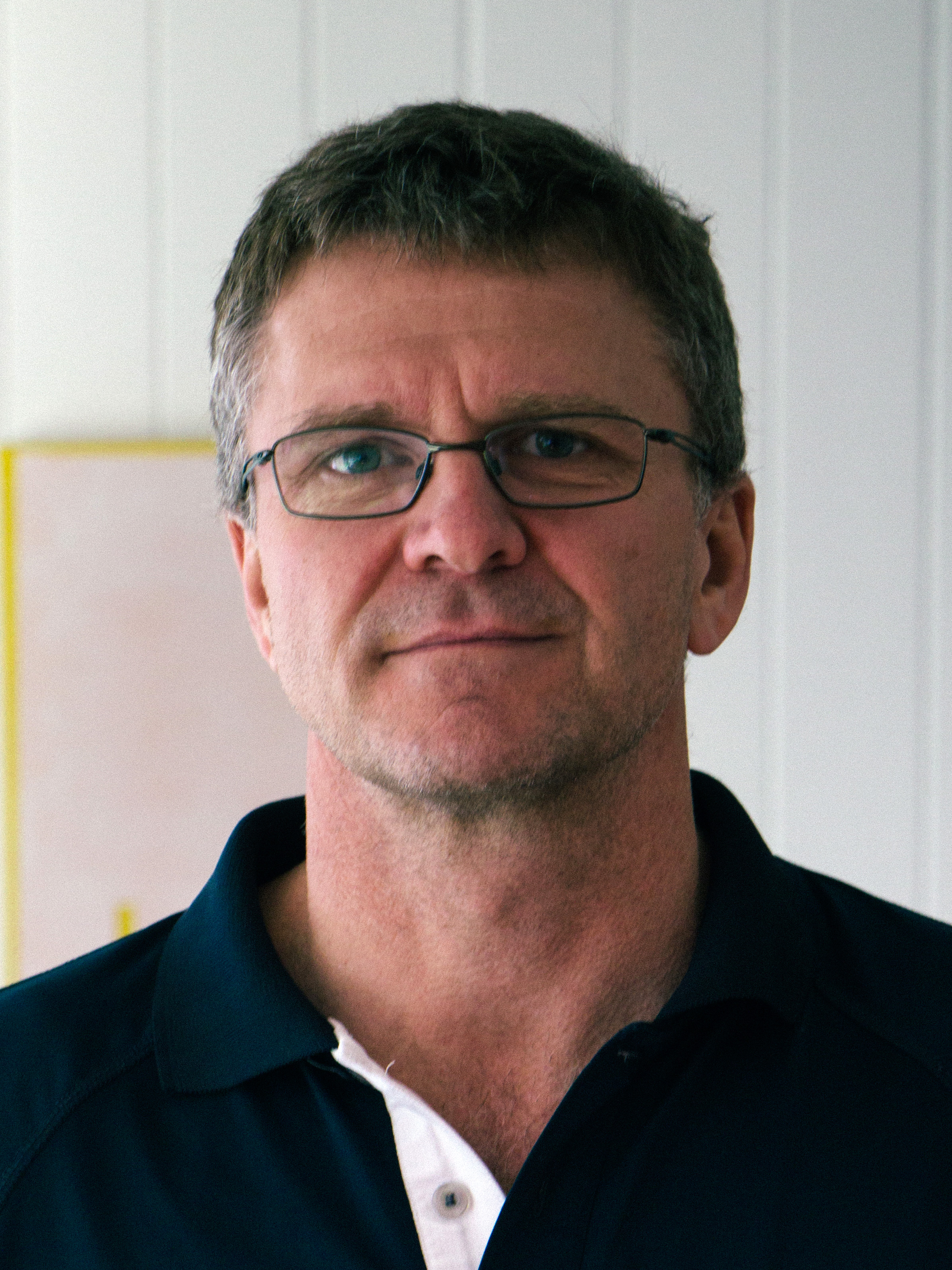
Gerard Wood
Gerard Wood is one of the mining industry's foremost authorities on equipment maintenance and reliability. He began his career in his teens as a tradesman on the shop floor and worked his way up to maintenance general manager, earning advanced qualifications in electrical engineering, business, and mining engineering along the way. With more than thirty years in mining, he has worked around the world solving the persistent maintenance problems that plague the industry by building cultures of ownership and care. He is the managing director of Bluefield Asset Management Specialists, where he helps companies improve efficiency, reliability, and cost effectiveness, and is the author of Simplifying Mining Maintenance and Only Tradies Improve Reliability.
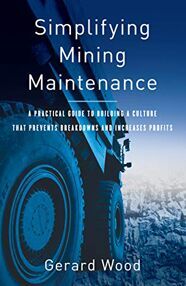
📚 Books by Gerard Wood
Transcript
[0:00:22] CH: Author Hour is about answering one question: How can you get the best ideas from great books without spending so much time reading? Every week, we take you behind the scenes with a new author, about the most important points in their book. So if you love to learn while you're on the go, you’re in the right place. All of our book summaries are 100% free and we do more than a hundred episodes every year. So please subscribe to and review Author Hour on iTunes. What’s up everybody, my name is Charlie Hoehn, I’m the host of Author Hour where I interview authors about their new books. Today’s episode is with Gerard Wood, the author of Simplifying Mining Maintenance. Now, I got to warn you, if you’re not in the mining industry or if you’re not an expert in maintenance systems and maintenance approach. This episode is probably not for you. That’s because Gerard is one of the mining industry’s top authorities on mining equipment maintenance. He’s had a long career helping the world’s mining companies keep their machines running and in this episode, we talk about his approach and some of the common problems he sees that a lot of these companies are overlooking. Again, if you’re in the mining industry or you know that maintenance management is something you need to improve at your company, this episode’s for you. And now, here is our conversation with Gerard Wood.
[0:02:13] Gerard Wood: I grew up in a mining town and after school I thought, always want to be an architect actually. The teachers at school said, gee, that’s a lot of work, you’re not going to get any money and I said, I don’t want that and the guidance officers back in those days, we’re talking 30 something years ago and at school and they said, you know, in those days, we knew you’d be an engineer or maybe something in the medical profession or a lawyer and that’s all the professions we knew about. I thought I’d go to university and do engineering but I didn’t get into the university I wanted to go to and my second choice was, I’d go out to the mines and become an electrician because they got paid $5 a week more than the mechanical guys. There was no real logic behind it other than you know, you’re young, you don’t really know anything but we’re not going out there, I applied myself and I loved it. I really enjoyed it. Fast forward 30 something years later and I’ve gotten through a lot more things and moved on from electrical profession but I’m still there doing it and still enjoying it.
[0:03:23] CH: Setting humility aside for a second, Gerard, given you a window to brag a bit about yourself now that you’ve established like how you got your humble beginnings. You are considered one of the mining industry’s foremost authorities on mining equipment maintenance. How did you get into that position? Was it just time? I mean, you’ve worked in this industry for a few decades now.
[0:03:50] Gerard Wood: Yeah, I suppose it’s a factor of two things, one is time of course, but it’s also a factor of the variety of experience. I worked in mine sites, my first 16 years of my career was working in the mine site, in all the roles that you can be in maintenance from you know, a [inaudible] electrician to electrician to supervisor, mechanical and electrical maintenance supervisor, maintenance planner, superintendent engineer, because I studied externally for many years to get an engineering degree. I did all the roles, maintenance manager, over 16 years and then I went into central improvement roles where you just got exposed to so much more theories around maintenance and go to all the different sites, this is [inaudible] primarily. Going around the world and when you’re trying to help someone improve, it makes you really think about what you know and connect with that so that really helped as well. I think it’s the time and the variety of experience that allows you to get things locked in and the thing that I did at the end of the central improvement roles was get back in the mine, back in the maintenance manager’s role and really test whether you really do know your stuff because it's easy to float around the central maintenance improvement group or something like that and thinking everything theoretically. Then it’s not to get back at the site and you realize that it’s all around people and those types of issues that makes a difference.
[0:05:28] CH: Why did you want to write this book? Simplifying Mining Maintenance? Is this a really complex problem otherwise?
[0:05:38] Gerard Wood: No, I think that you know, over the years, I’m talking probably over the last 15 to 20 years, we, as a fraternity, you know, maintenance leadership in the industry have overcomplicated things and what I know works and what I know delivers reliable equipment, the simple basic things. We’ve been in Bluefield, that’s where I’m working now, we’ve been helping clients improve their maintenance and that’s great. You get so much satisfaction about seeing a team of people enjoy their work and be proud of the results that they’re achieving. But you know, our goal in blue field and myself is to make a difference in the mining industry, not just how, you know, I don’t know how many clients we can help per year in that transformation type work that improvement work, you can’t help that many clients per year so if you want to make a difference in the industry, you’ve got to get the knowledge out there and I thought that, how do I get it out there more broadly and a book is, I suppose, one of the mediums to get that out there. Plus, I’ve also always want to write a book as well, it’s always been on one of my to dos for my life.
[0:06:50] CH: Of course. Let’s talk about the actual content in the book. There are two parts in the book, the first part is an asset management journey which covers a bit of your journey that you talked about of experiencing all the roles but could you give sort of a quick overview of this first part?
[0:07:11] Gerard Wood: One of the models that I present part one, I developed when I was in my first maintenance manager’s role. The thing that I knew was, we needed to get all the people in the team in mind and heading in the right direction. The way that I did that was to get this model and present it to the guys and talk to them about it and get their input so it became theirs as well. Specifically, the part down the bottom around the values and getting us around that values in our department, the maintenance department, what was important to us and just getting the line that enabled us to move forward together in the same direction.
[0:07:50] CH: What were some of those values? I mean, when I think about miners, I think about guys who are just no nonsense, let’s get the job done. It shatters this notion, this old romanticized notion in my head of people who are just going to get the job done, they’re talking about their values, what were you talking about?
[0:08:10] Gerard Wood: Yeah, that’s a great question and you know, you’re right, around the culture in the mining industry, it’s quite male dominated and you know, there’s big egos and all those sort of things but to talk about values is probably not something that we commonly did or do these days. But there are values in terms of what people find oared important or believe are important. You know, people have a very strong belief that you’ve got to do the job properly, you know? Do it once, do it right the first time, all those sort of things. And that’s one of the values of going in there. Yeah, the right PMs done properly. These are the values that we develop and important to me even today. Other people may have different things that they agree or feel are important. You don’t have to talk about them like as values and those sort of things. You just talk about okay, what are the things that are important to us? Motivating people, everyone needs that, how much are you – always consider safety first, accept responsibility for performance and face reality. People all align to those core things, whether they’re common all over the world.
[0:09:20] CH: Absolutely. Let’s talk about some of the major pain points. You list off some big pain points in the book, what are they?
[0:09:30] Gerard Wood: Yeah, the pain points that I’ve listed in the book are things that I just see over and over again that they’re the same problems every day, different - same problem, different day or different place, sometimes you go back to a place, I’ve been back to where I worked 25 years ago and the same problems appear. That we solved 25 years ago. What I’ve done here is just to categorize them in five different areas. You know, one of the things that is key is around too much unscheduled down time. Every time I go to the site, I find that PMs are not done properly. Which is one of the core values back there before.
[0:10:13] CH: PMs?
[0:10:14] Gerard Wood: Yeah, preventative maintenance checks. They’re not executed properly with the right quality and focus and to tell you the story about one of the ones I went to a while ago, where it said that they fuel line was wearing out and rubbing and it was picked up on the PM so that mechanic actually did a good inspection but then there was no follow up and defect wasn’t putting to the maintenance systems. Effectively, it was never going to get repaired unless someone picked it up later on. It could easily become a breakdown and that one’s really serious defects, actually become a fire or something like that on the equipment. They’re the things that I’m still seeing today and the same problems we had many years ago. I find them as, I’ve just categorized them as the pain points. Someone else could categorize entirely differently but effectively, they’re the same thing.
[0:11:10] CH: Yeah, it’s funny that you have as a problem, a common problem, excessive unscheduled downtime and excessive scheduled down time.
[0:11:19] Gerard Wood: Yeah, many years ago, when I was, become a planner and you start to think about, why do we shut the drag line down at that frequency every three weeks for eight hours and every five years and all those sort of fix. When you ask the question, when I ask the question way back then, it was like, well, that’s just what we do. That’s still the case if you go to a site and you say, okay, how do you shut the machines down, in a scheduled fashion and no one really is conscious of why it is, it’s just is as it is and it’s just sort of evolves along. The core part of that section around excessive unscheduled downtime is just getting clarity and deliberate reasoning behind how much scheduled downtime we got to have in a year and then working out how we can optimize it and make more efficient.
[0:12:13] CH: Of these problems that you list in the book, along with their practical solutions, which ones tend to cost companies the most money or the most hardship or whatever.
[0:12:26] Gerard Wood: Yeah, I’d have to say, excessive unscheduled downtime. Every time, not every time, sometimes, a general manager or a CLO or someone, the problem they’ve got with maintenance is too much expenditure, so high cost. But everyone, it’s a 90% of the problems are there’s too many breakdowns, too much unscheduled downtime.
[0:12:49] CH: I was just going to say, what are some of the practical solutions for that?
[0:12:53] Gerard Wood: You know, I’ve listed several solutions there, a year or two years ago, we did a job and all the guys did at the end of their review and we’ve lead them through a process to come up with some actions, all the guys did was to implement a process of talking at their shift start meeting about quality of work, sharing some photos of good quality. So that the people who do the good quality can feel good about themselves and also sharing photos of bad quality and talking about what with the teams and not sort of it’s not the leaders. Not the supervisor talking to them. It is an engaging conversation, that is all they implemented and their performance improved out of sight. So whilst it is a very hard subject and people could over complicate the solution that’s all these guys did to solve it and they achieved incredible results.
[0:13:56] CH: I love that. It’s so simple.
[0:13:58] Gerard Wood: Yeah, exactly.
[0:14:00] CH: It’s brilliant. So you also talk about budget overruns, cost concerns project transition to operations but I want to touch on people problems because people problems tend to be the messiest and the most unpredictable. So do you have a story of a common people problem?
[0:14:21] Gerard Wood: Look, I think every problem in those five categories eventually comes down to people problem but I categorize people problems in that you’ve got people that are leaving and no one is happy and all of those sort of things and really that has come down to just caring about people. So they don’t feel valued and it’s the same in our business, you know? If I’ve got a guy that doesn’t feel valued, just yesterday I was talking to a guy, he is a senior guy in maintenance in a morning contractor. And he said to me that the company implemented some changes which he had already investigated some years ago and he had been in this role for six or seven years, done a great job and he wasn’t consulted. So he wasn’t – no one thought to ask him, no one thought to engage his experience and those sort of things really demotivate people, something so simple it ends in them feeling not valued and looking around for a new job which this guy told me that he was.
[0:15:32] CH: Yeah, absolutely. That goes for any industry.
[0:15:36] Gerard Wood: Absolutely it does and look, the reason I write that this is Simplifying Mining Maintenance is because my expertise is in mining. You know I don’t want to talk about maintenance in other organizations because I cannot profess to know those other organizations or other industries. I believe that a lot of the information in this book is also relevant developer industries.
[0:15:58] CH: Well let’s talk about some of the clients that you’ve worked with, not the names or anything but the results that you’ve gotten with the stuff that’s listed in Simplifying Mining Maintenance. I shouldn’t say stuff but the principles that you list in your book, what kind of results have you gotten and do you have a favorite that comes to mind?
[0:16:22] Gerard Wood: Look, the one I talked about before where the guys just implemented such a simple process and achieve incredible outcome is probably my favorite but we’ve had some problems as well where we did one about a year and a half, two years ago and the guys decided that their solution - and we always let the site come up with their own solution like we would guide them but in the end it has to be theirs. They have to own it otherwise it doesn’t matter. If they don’t feel like they own it, it doesn’t get implemented anyway. It can be the best solution but if they don’t own it, it might be implemented. So we did this one a couple of years ago and they decided to implement it in a different way. They put some additional resources in there as quality inspectors. They’ve got some results and I am happy with the improvement results that they achieve like five or 6% of a good improvement but they didn’t change the culture. So it is much less sustainable. It relies on certain people taking the responsibility for the quality of execution and making sure the defects are raised in the system or those sort of things rather than that being the culture and the first guys I talked about they changed the culture because their whole team was on board. Their whole team was going in the same direction. I always use the sporting analogy. You know there is three things that a successful team needs and that’s commitment to common performance goals, people with variety of skills. If you look at a sporting team, you need people that are great at attack, people that are great at defense, all those sort of things. At every site, we always find those two elements. They are always there, they are always committed to the same KPIs all of that sort of stuff but the third essential element for a successful team is people who are committed to an approach for which they hold themselves mutually accountable and it’s that mutual accountability that really make the team perform. And the example that I shared there before about these guys having that discussion every morning around quality and the things that they said were important to them around execution or work that really was generating that mutual accountability and that is what created the cultural change where everyone was aligned.
[0:18:39] CH: Man I believe it. Well Gerard, let’s wrap up here with a couple more questions. The first question I have for you is what is the best way for listeners to get in touch with you?
[0:18:52] Gerard Wood: Probably the easiest way is via LinkedIn. I am up there but I am happy for them to email me, gwood@bluefield.com.au, yeah either at those two ways is fine.
[0:19:05] CH: Perfect and the final question is give our listeners a challenge. Let’s say people in the mining industry are listening to this podcast, give them a challenge, something they can do this week that will have a positive impact from your book.
[0:19:21] Gerard Wood: Yeah, great question, you know the book is probably going to be the most interest to people who are experts in maintenance. Experts in maintenance processes of some sort or that sort of stuff. So my challenge would be to go out and simplify part of the process so that people who are executing it, who aren’t experts in it and don’t want to be experts in it, they just want to come to work, feel good about the results they have achieve, go home and go fishing, do something like that you know? So simplify just one aspect so it is easier for them to do that job and get the results that we all need to get and if you’re an expert you will be able to simplify it.
[0:20:08] CH: The book is Simplifying Mining Maintenance. Gerard, thank you so much for being on the show.
[0:20:14] Gerard Wood: Thank you Charlie, I really appreciate the time to talk about the book.
[0:20:18] CH: Thanks again to Gerard Wood for being on the show. You can buy his book, Simplifying Mining Maintenance, on Amazon. Thanks for tuning in on today’s show. If you liked what you heard, here is what I want you to do next. Open up the podcast app on your phone or iTunes on your computer and search for “Author Hour with Charlie Hoehn” and then click “ratings and reviews”. Take 10 seconds to rate this show or leave a review. It is a small favor but it’s really the best way to show your support and give me feedback and if you know someone else who’d love Author Hour, take another three seconds to text them a link to this episode. We’ll see you next time.
Want to Write Your Own Book?
Scribe has helped over 2,000 authors turn their expertise into published books.
Schedule a Free Consult