Steve Thompson: Must-Win Deals: How to Close Them (and Why We Lose Them)
Read the full transcript
Steve Thompson
Steve Thompson is Managing Partner at Value LifecycleTM, which helps companies position, negotiate, and close critical business deals. In the past twenty-plus years, he has worked on more than $17 billion in B2B deals (for sellers and buyers) in dozens of industries. He previously worked in senior operations, sales, and executive management at Westinghouse, Black & Decker, and DuPont. Steve also served as a nuclear submarine officer in the US Navy.
📚 Books by Steve Thompson

Transcript
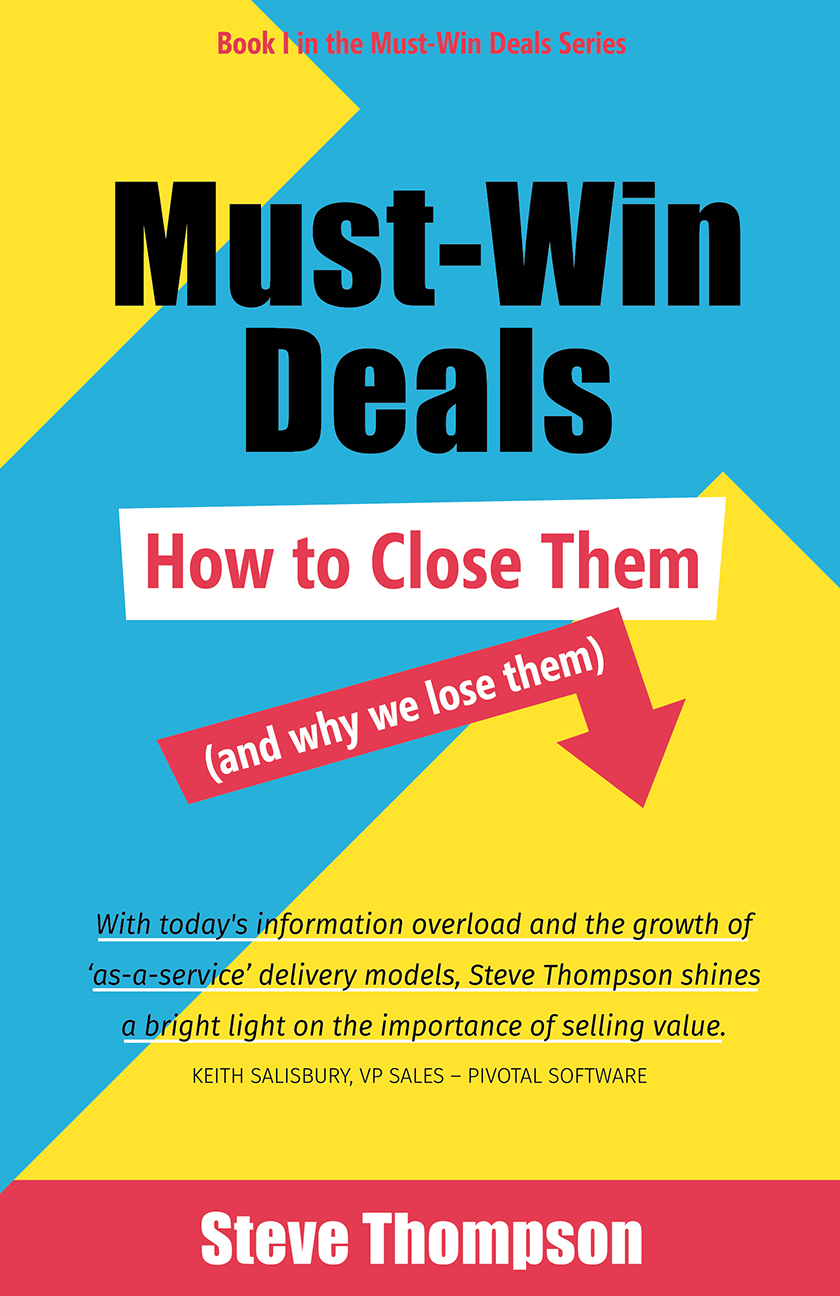
[0:00:20] CH: What’s up everybody, it’s Charlie Hoehn. I’m the host of Author Hour where I interview authors about their new books. Today, I’m going to be interviewing Steve Thompson. He’s the author of Must-Win Deals: How to Close Them (and Why We Lose Them). Now, Steve has been doing this for 20 years. He’s worked on more than $15 billion dollars’ worth of B2B sales in over a hundred different industries in 24 countries, for both selling and buying clients. So this guy is a big time expert on this topic. In this episode, he’s going to break down the four biggest challenges that really make it difficult for customers to award these big, must-win deals. If you’re like me, you may not have even thought about some of these problems, some of these challenges. I was really surprised by the fourth one because it’s so simple and yet we so often overlook this and so, if you are in sales or if you’re working in a business where you have to have certain deals with major clients of yours go through, this is absolutely a must-listen episode. Now, here’s our conversation with Steve Thompson.
[0:01:57] Steve Thompson: What really brought it to life to me is the situation that I started noticing across all of my client’s common issue, and the common issue is that even though they may have thousands of corporate customers out there, there’s generally at any given point in time, just a handful of them that are critical. It could be for a given sales rep so that he or she could hit their quota, you know? There’s just a couple of deals that they’ve got to bring in and if they don’t – the year’s gone, you know? It’s a bust. The same thing if you roll up to a region or you roll up to a corporation, usually the success in terms of hitting sales targets is dependent on just a handful of critical deals. What struck me is that we were treating those deals the same as all the others. It’s what I’ll call the 80/20 rule, you’ve probably heard of.
[0:02:53] CH: Yeah, the power law, yeah.
[0:02:54] Steve Thompson: Okay, exactly. For many companies, it’s even more skewed than that, you know? Maybe 10/90, something like that. I felt like, you know what? Those 10, if we don’t get them right, it really doesn’t matter what we do with the other 90, we’re not ultimately going to be successful. We’ve got to look at these differently and not do more of the same but there’s some critical things we need to do differently.
[0:03:19] CH: Just a quick point, why do we tend to do that, right? Why do we treat everything equally when it’s clearly not, or your clients?
[0:03:28] Steve Thompson: Yeah, I think, when I say “treat them equally”, now they do segment them and they have more experienced people calling on the bigger customers and all that. But in general, they still have them doing the same things they’d be doing if they were calling on a smaller client. Don’t get me wrong, it doesn’t mean the smaller clients aren’t important, okay? At the end of the day. But, if you’ve got a report numbers to wall street every quarter, these big ones are the ones that make you look like a hero. Usually, you know, the direction that’s coming down from the executives and top management is you need to really buckle down, you know? That means you need to work harder; you need to work harder, you need to do more of the same. Well, if I’m not getting there doing what I’m doing now, doing more of it probably isn’t going to help.
[0:04:14] CH: Right. You notice this recurring behavior among companies and what’s the path that led from noticing that to actually writing the book?
[0:04:26] Steve Thompson: Well, there was another dimension to this and that is about half of my clients are also on the buying side. I had what would have been their customers if you will, that were retaining me to help them craft and negotiate critical deals with suppliers that they wanted to have a relationship with over the long haul. When I juxtapose those two things, what I was seeing on the buying side is, consistently, the suppliers that we’re trying to sell to my clients were missing it on four things over and over. They were actually making it hard for my clients, which were the buyers, to make a decision and choose them. It was basically both of those things coming together that was the genesis of the book and the ones that will follow.
[0:05:17] CH: Yeah. So what were some of the things that they were doing to make it hard?
[0:05:21] Steve Thompson: Well, here’s the number one thing that they do to make it hard and that is, you don’t present a value proposition to this customer that is irresistible, that gets their attention and gets them interested in buying from you. Too often, sales people will rely on their marketing value proposition that’s put out there to everybody. You know? I mean, don’t’ get me wrong, marketing is important but the function of marketing is to cast the wide net and hopefully find a few people who are intrigued enough that they want to meet with you and talk with you.
[0:05:56] CH: So a generalized value prop that they’re giving to everybody and not tailored.
[0:06:01] Steve Thompson: Exactly. Such as, “You know what? We’ll save you money.” Okay, I like that idea in general but a sales value proposition would then get down to what money I would save you and how much I would save you and by when would you see those savings?
[0:06:20] CH: Why it actually matters to you.
[0:06:22] Steve Thompson: Exactly. Okay, it’s all about you, the context of your situation, what you’re trying to accomplish and they were missing the mark, you know? They were always coming in with the fancy brochures, what I call the show up and throw up slide deck, okay? That they’re armed with by the marketing department, that by the way is all about them, their products, their services, the number of offices worldwide, how much they’ve grown. To be honest, nobody cares at that point. It needs to be about the customer and what is it they’re trying to achieve? I think I would add a third dimension to this and this is kind of been evolving over maybe the last 15 years or so and that’s the advent of a SaaS, what I would call something as a service. More and more business are transitioning to that model and what that model requires is that you know, first you’ve got to win them, but then you got to keep them and you got to grow them because that model dissolves if you start having a lot of customer churn. You know, there’s a big hole in the bucket on the other end. Really, what I wanted to set out to tackle was, “Hey, if we could just fix these four things, we could dramatically improve the odds of not just winning but growing deals and closing them faster.”
[0:07:43] CH: I love it, yeah. So you start the book with why we lose and so have we – how many of the four things have we covered so far?
[0:07:50] Steve Thompson: That’s just one of them. Just the value proposition.
[0:07:54] CH: Yeah, what are the other three?
[0:07:54] Steve Thompson: Well, the other one is, we give the customer proposal and if you look at B2B proposals and I’m talking about in many cases, we’re talking about deals of many millions of dollars. Sometimes hundreds of millions of dollars are involved. Most sales people treat their proposal as a check box exercise, you know what? Okay, it’s required, I have to give them a proposal. They’ll probably have their favorite format that they’ve used over and over and it’s, believe me, I mean, they’re gorgeous, you know? They’ve got all kinds of pictures and diagrams and tables and all sorts of stuff and they’ll go through and do hopefully a search and replace and put the new customers name in.
[0:08:37] CH: Right.
[0:08:37] Steve Thompson: They’ll change a few things that are relative to that customer, but the whole proposal is about them. It’s not about the customer and what they’re trying to achieve and my buying clients, you know, many times will retain me to help evaluate supplier proposals, and I hate that job.
[0:08:57] CH: Because it’s –
[0:08:58] Steve Thompson: It’s a waste of time. I already know, every supplier is going to be number one in their field. Now, I don’t know how it works that they’re all number one but they are — world leading, innovative, you know, the whole bit.
[0:09:09] CH: You can give yourself awards.
[0:09:10] Steve Thompson: Yeah, exactly. They all have great marketing departments and the proposal’s going to be about them, their product or service. And I read through them and many times I say, “You know, does this sales rep even understand what my client’s trying to achieve?” Okay, because I can’t connect the dots and that’s the problem, the customer can’t either.
[0:09:32] CH: Why is this though the way it is? Is this human nature to not listen and be narcissistic and be egocentric?
[0:09:40] Steve Thompson: Wow, you’re getting off into things that are outside my realm of expertise.
[0:09:45] CH: You’re not a human psychologist?
[0:09:47] Steve Thompson: No, I am not. I am observer of human nature.
[0:09:50] CH: Yeah. But it seems so common. I mean, this is — I’ve seen it as well, I’m not doing deals like you are but I’ve seen it, been on the receiving end and as I’ve gotten older, noticed, “Oh wow, I was the person doing that.” Yeah.
[0:10:04] Steve Thompson: But you know, across business and this is even bigger than just sales, the most successful business people that I’ve run in to in my career, you know, they didn’t have all the answers. But I’ll tell you what they always had, was the right questions. You know, the ones that got to the heart of the matter very quickly. For some reason, there’s a belief that if you’re in sales, you have to have all the answers.
[0:10:27] CH: You’ve got to know it all.
[0:10:28] Steve Thompson: Exactly. I have to tell you, you know, when I was in sales, if I had to have all the answers, I already got enough sales a long time ago because I’m not that smart.
[0:10:36] CH: Right.
[0:10:37] Steve Thompson: I don’t have them and I found it was a lot easier and more natural motion for me, you know, to ask the right questions and then they’re going to invite me to talk about how I can help them with my product, services, or whatever. But, you know, back to the proposal context, it’s a huge opportunity that’s missed. Because it just becomes a check box. That’s the second key area where we make it hard for them to choose us because if every supplier proposal basically looks the same, and they do — you just change the font and the color scheme and the logo on it and they’re all saying the same thing basically. How do you make an informed decision? That’s the challenge the customers, you know, is facing because they want to make an informed decision.
[0:11:25] CH: They want to be in a committed relationship, so to speak, with somebody who actually understands them and knows where they’re coming from and where they’re trying to go.
[0:11:34] Steve Thompson: Yeah. So as I discuss in the book, you know, you’ve got to first understand what’s the purpose of a proposal? The actual purpose is the bridge from the selling to the negotiation, which is going to come if you’re successful. Now, the objectives of that proposal are to reinforce trust and credibility to make it easy for the customer to by from you versus you selling. You’ve also got to manage this thing called uncertainty because in the real world, nothing ever fits a model, you know? You’re never going to have perfect information and as I said, sales is messy and in particular, B2B sales is getting even messier because more and more individuals are getting involved in the decision on the buying side and if you’re a sales rep, you’re finding more and more people are helping on your side of the equation and now you’ve got a whole lot of uncertainty and different moving parts. We got to manage that and the proposal is a great way to do so but that isn’t happening. So that’s the second big mistake, or I shouldn’t say mistake as much as the challenge we present to customers that make it difficult for them, you know, to make a decision.
[0:12:52] CH: Right.
[0:12:53] Steve Thompson: Then the third one is, let’s say they do choose us and we enter what’s called the formal part of the negotiation and we aren’t ready. We don’t have a plan.
[0:13:03] CH: We aren’t ready.
[0:13:04] Steve Thompson: To negotiate.
[0:13:06] CH: Okay. Oh, so they catch us flat footed.
[0:13:09] Steve Thompson: Well, they not only catch us flat footed, you know, they’ll – as you can imagine, for every proposal you submit in your career in sales, there is one objection that every customer is going to come up with and that is, “Your price is too high.”
[0:13:24] CH: Yup.
[0:13:25] Steve Thompson: Now, how many times have they ever said it was too low, right? So you don’t have to worry about that one. It’s coming every time and yet we’re not ready for it. We don’t have a plan and, you know, when you’re selling in the B2B space, particularly the enterprise space, they’ve got a whole group of professional procurement people that have been trained in how to negotiate and they’re ready, but we’re not.
[0:13:55] CH: So what is ready even look like? Is it just being able to respond with a counter offer?
[0:14:01] Steve Thompson: Well, yes, it’s being able to counter what they’re requesting, but counter it in an intelligent way. But first off, being ready is understanding the target you’re trying to hit. Meaning, what would a great deal look like?
[0:14:18] CH: But I thought I proposed that and they’ve turned it down.
[0:14:21] Steve Thompson: But what would it look like for the customer and for you? And then this deal is constructed or comprised if you will a various element; they’re the products, the services, the volumes, the discounts, the payment terms, there’s a whole host of moving parts in there. Being prepared means, understanding how much can we move on each of those things, you know, “We’re going to ask for this, but if they push us, we could accept this.”
[0:14:53] CH: Right.
[0:14:54] Steve Thompson: Okay, that’s what I mean by being prepared to negotiate so that we’re not the ones that are delaying getting the deal closed. Often what I see is the customer will make a demand and the sales rep is not empowered to make a decision and they have to go, “Well time out, I have to go take this back to my management,” you know, and they go scurrying back and then they have this thing called the internal negotiation, which the truth is, it’s even more challenging than the external. They’ve got to fight to get a bigger discount, to throw some additional services in, whatever the case may be. This takes time, it’s delaying the deal and the momentum and then finally they have to reengage back with the customer and maybe it’s procurement, whatever it might be a committee. They present, “Okay, I’m able to give you this.” Well then I go, “Okay, that’s a good start. Now, what we want to talk about are the payment terms.” Your competition, they’re not asking for payment upfront and if you really insist on it, you know, we’re probably going to go, “Oh well, we got to do another time out, we got to go run,” – see, we’re not ready to negotiate. We’ve put things into the proposal and we’re not prepared to discuss them. That not only delays the deal but what I see on the buying side is the more you concede, the more things you give away to the customer as they demand it, the less comfortable they start feeling.
[0:16:24] CH: Yes.
[0:16:26] Steve Thompson: That may seem counterintuitive because we think we’re making them happy, okay? But the truth is, we’ve told t hem what? “We’re the world-leading, number one, we’re giving you the best solution there is, and as soon as you push this on price, boom, we’re prepared to drop it,” and they’re going, “Wait a minute, this isn’t quite right.” Then they push us on services and throwing them in for free and we agree. They’re going, “Whoa, this is not – something’s not right here,” okay? I’ve actually seen on the buying side, clients of mine completely cancel, okay? Because they started feeling so at risk by the behavior, you know, of the selling organization. I mean, they said, “They’re so desperate to do a deal, I’m starting to question their credibility on everything they’ve been telling us from day one.”
[0:17:19] CH: Right. It’s like a stiff wind, it will knock them over.
[0:17:24] Steve Thompson: Exactly. That makes it challenging for them to award us the deal.
[0:17:30] CH: Right.
[0:17:31] Steve Thompson: Then the fourth element is, you’ve won the business, all right? Let’s say this is an existing customer, they’ve been buying from your company for years. They don’t understand the value they’ve gotten from the products and services they’ve already bought. You’re trying to sell them more.
[0:17:49] CH: Yeah, wow, okay. All the others, I had some familiarity with, right? On some level. I’d imagine listeners are familiar with at least one of them. This one I don’t hear about enough. So I want to dig in on this one. Tell me about, what do most companies do, what does it look like, and what is a great example of a company that shows, “Here’s the value of what we’ve been giving you."?
[0:18:18] Steve Thompson: Well, unfortunately, the problem is, there aren’t that many companies that are executing on this, okay? Now, the SaaS companies are quickly figuring out, they’ve got to execute on delivering the promise value and by the way, it’s not just enough to deliver it, you’ve got to get credit for delivering it, okay? You can’t be a hero in your own mind, you have to have them look you in the eye and say, “Yes. You have delivered the value that we were looking for.”
[0:18:44] CH: Can you give me an example?
[0:18:45] Steve Thompson: All right, well let’s say that you’re selling software, okay? You know, you’ve jumped through all the technical hurdles and your software can be installed into their infrastructure and integrated and all the kind of things that have to happen. But here’s the larger question: they just spent a couple million dollars on the software, how are they going to know it was money well spent? Why did they buy the software? What are the outcomes that they are expecting to achieve? And what they’re looking for is a supplier and a partner who’s prepared to get in the boat with them and row to that destination of outcomes and success. Because you see, it is why they buy the software? Well, we wanted to automate something. Okay, well let’s assume that you can automate it, what does it mean? Well what it actually means is that we can decrease the time to market for launching new products. Okay that’s a pretty significant outcome. Well, we can’t just sell them the software, cash the commission check, have a party and move on. We as an organization have got to show we’re committed to that software not only being installed and deployed but ensuring that they are getting the outcomes they were looking for and when you do that and this is what I call the last mile. When you can close that gap, you’ve got a customer that is going to renew with you automatically. You’ve also got a customer when things change, and this is what’s so many sales people miss is this dynamic of change. If you have a customer where nothing is changing, you are going to have a zero opportunities with them. If nothing is changing in the business, there is not an opportunity for you to sell to them. But the good news is there are no companies like that, okay? And if fact the piece of change I submit is increasing in business. It is the change itself that generates new opportunities but you are not going to be able to capitalize on it with an existing customer if they first don’t say, “Yeah, what I bought from you in the past boy we got value out of that, and when things change you know what? I am going to talk to Charlie first because Charlie was with us on the last one. Maybe he can or maybe he can’t help us with this one but you know I am going to give him first a shot.”
[0:21:14] CH: Man, it makes so much sense but it is so easy to overlook and I’d imagine — what are some of the I guess excuses or obstacles that your clients or companies run into that prevent them from doing this? You said failure of the last mile, though I’d imagine there are some products and services that are sold that it’s just hard to measure the impact after it has been taken over by the client, you get what I mean?
[0:21:46] Steve Thompson: Yeah, some things are more challenging than others but again, let us put it in this context, okay? Would you agree with the fundamental premise that if a company is going to go spend hard earned money on a product or service, they expect something or some things to be better and different after they spent that money?
[0:22:07] CH: Yeah, of course.
[0:22:08] Steve Thompson: Would you agree they probably wouldn’t go spend the money purposely trying to make things worse?
[0:22:14] CH: Yes.
[0:22:15] Steve Thompson: Okay, so what are those things that they want better and different? See those are the outcomes and so what we are really bringing this around to is the advent of what is called the outcome-based selling. This is the next genesis, if you will, of the B2B selling because what is happening on the customer side you know and I can say this because again, half of my business is consulting on that side, they are starting to ask the tough question. “Man, we are spending a lot of money with this supplier. What are we getting for it?” and when they can’t answer it suddenly that supplier has a big target painted on them. But actually it is broader than that. The individual or the group of people who brought that supplier in and signed off on the check, they’ve got a big political target painted on them. People are going to question them, “You know, you are not being a good steward of the company’s resources here,” and so politically they’re at risk and so this is how you de-risk it for everybody.
[0:23:19] CH: I think that is brilliant. I mean, just on a personal level, I can think of just small examples that have stood out to me. The first one that came to mind, I know this isn’t in the same universe as the type of companies that you work for. I use an email service called the Email Game for seven years and I am realizing one of the things that they do at the end of it is they displayed the amount of time that I saved by using them if I had gone the normal route it gamifies.
[0:23:52] Steve Thompson: So they’re reinforcing to you.
[0:23:54] CH: Right, they show the value right there and every time I see it I am like, “Why wouldn’t I keep using it?”
[0:24:01] Steve Thompson: Exactly. You know, I’ve got a — it is more than an antivirus program but a cyber-security program on my laptop and once a month it pops up and it shows me this is how many things we’ve blocked, this and this and this,” and that is reinforcing to me, okay you know what? This is money well spent, okay? Because I am not going to be thinking about you unless something goes wrong. But it’s reinforcing to me, you know what? I’ve got no problem renewing with these guys because they are producing the results but they are making sure that they are reminding me of that not in an ostentatious way and that they are getting credit for it and that is what we are talking about here. So that is really the fourth and final hurdle and the truth is it is probably the one that gets in the way the most, of trying to sell to an existing customer. The sales rep doesn’t understand that that problem is out there but behind the scenes on the customer side, there are people asking the questions.
[0:25:00] CH: Yeah.
[0:25:01] Steve Thompson: So if they don’t know the value of what they bought from you in the past, why would you think they’d want to buy more much less let’s say do a much bigger deal? Well they don’t. They don’t.
[0:25:16] CH: Wow. Well, transitioning a bit let us talk about some of the case studies of companies that you’ve worked with and you don’t have to name specifics if you’re under NDA.
[0:25:27] Steve Thompson: Yeah, in fact I am under NDA.
[0:25:28] CH: Yeah, I figured as much.
[0:25:28] Steve Thompson: To do what I do I have to sign an NDA’s. I mean I had one CEO that told me, “You know what Thompson there aren’t enough NDA’s okay for what you know about our business. You know we’d have to put a hit on you,” you know, that’s basically it.
[0:25:41] CH: I believe you. So you work with big companies, big clients that do serious business. Tell me about some of the results that you have seen, the transformation when they have started fixing these problems.
[0:25:56] Steve Thompson: Well, you know when it comes to B2B sales they are generally a few critical metrics. Number one, how much qualified pipeline do you have? And I will tell you that when you go to the trouble to ensure that you are delivering the value and getting credit, you are going to start generating more sales pipeline, meaning more potential opportunities, with your install base then you had any idea what’s out there and so that’s been one of the dramatic changes. By the way, the easiest sale in the world to make, the one that has the shortest sale cycle, is to an existing, happy customer. Because the sales cycles or the deals I am talking about are six to nine months and maybe even more. You can dramatically compress that. So that’s the second to mention, can we compress the sales cycle, get the customer interested in buying quicker? The third thing that we have seen is that your – it’s called conversion rates or close rates of the opportunities you have in your pipeline, you’re converting a lot more of them into deals. Then finally, the deals you are doing on average a lot bigger. So there’s a whole lot of goodness here and what I am not proposing to everybody is a whole new sales process. There is hundreds of them out there. They’re good. I am asked all the time, you know, “What’s the best one?” and I have been trained and certified on almost all of them throughout my career and my answer is always, “Whichever one you can execute,” okay? At the end of the day it’s the one you can execute but rather what I am trying to do is crystallize everyone’s thinking and do two things. One, I want you to flip your view point from an inside out view, which is the way most sales people approach it to an outside in view from the customer’s vantage point.
[0:27:56] CH: You mean have empathy?
[0:27:58] Steve Thompson: Not only have empathy, but also bring them value by looking at it through their eyes of, “Wow is this what you are trying to accomplish? Okay, well we’ve got other customers who have done the same but I am surprised you’re also just only going that far. Do you know that there is an opportunity to go even further in this area?” Well they don’t know. The customer doesn’t know. They haven’t bought this before, so it is more than empathy. It is demonstrating that you are not measuring success by booking a deal with them, okay? You are measuring success by their success.
[0:28:38] CH: By their outcomes.
[0:28:40] Steve Thompson: Exactly and then after that everything takes care of itself. So you know I could give you a thousand examples but all of them get really specific. Let me tell you and by the way, this approach particularly the proposals and the other things, my clients have used on deals from $20,000 to deals well north of a billion and let’s just talk about the proposal a second, which is actually the third book in the series. It’s just seven slides. All right, just seven straight-forward slides were used to have a dialogue with the key decision makers and deals well north of a billion dollars who are agreed to right then and there. Now, afterwards there was a big thick proposal contract and everything but that was just what I call adminisitrivia, okay? It was already done. That was just getting the paperwork done so the money starts flowing and the products and services start moving. But it is just — look, the world is getting more complicated and the most successful people are the ones who can strip the complexity out. It is easy to complicate stuff. It is really hard to strip it to the critical lessons so that you are helping the customer make an informed decision, one where they feel comfortable they are making the right decision and that is really what this is about at the end of the day.
[0:30:11] CH: Yeah, wow. So the seven slides just make it super simple and I mean that is how our brains are hardwired, frankly. If you can’t get past the amygdala, the base then you are screwed. So make it simple, make it easy to digest.
[0:30:27] Steve Thompson: Exactly, and the more I do work on the buying side particularly senior level people who have to be involved in and sign off on large expenditures, you know the questions they have are very simple and straight forward and the clearer and easier you can present it and hone in on what’s important to them, the easier it is for them to make the decision.
[0:30:51] CH: Absolutely.
[0:30:52] Steve Thompson: And that is what we want to do is make it easy but unfortunately as I said we tend to make it challenging and we make it challenging in those four areas.
[0:31:01] CH: Yeah, so as you mentioned this is going to be a series of books breaking down how to conquer these problems and what is the estimated release dates for the other books?
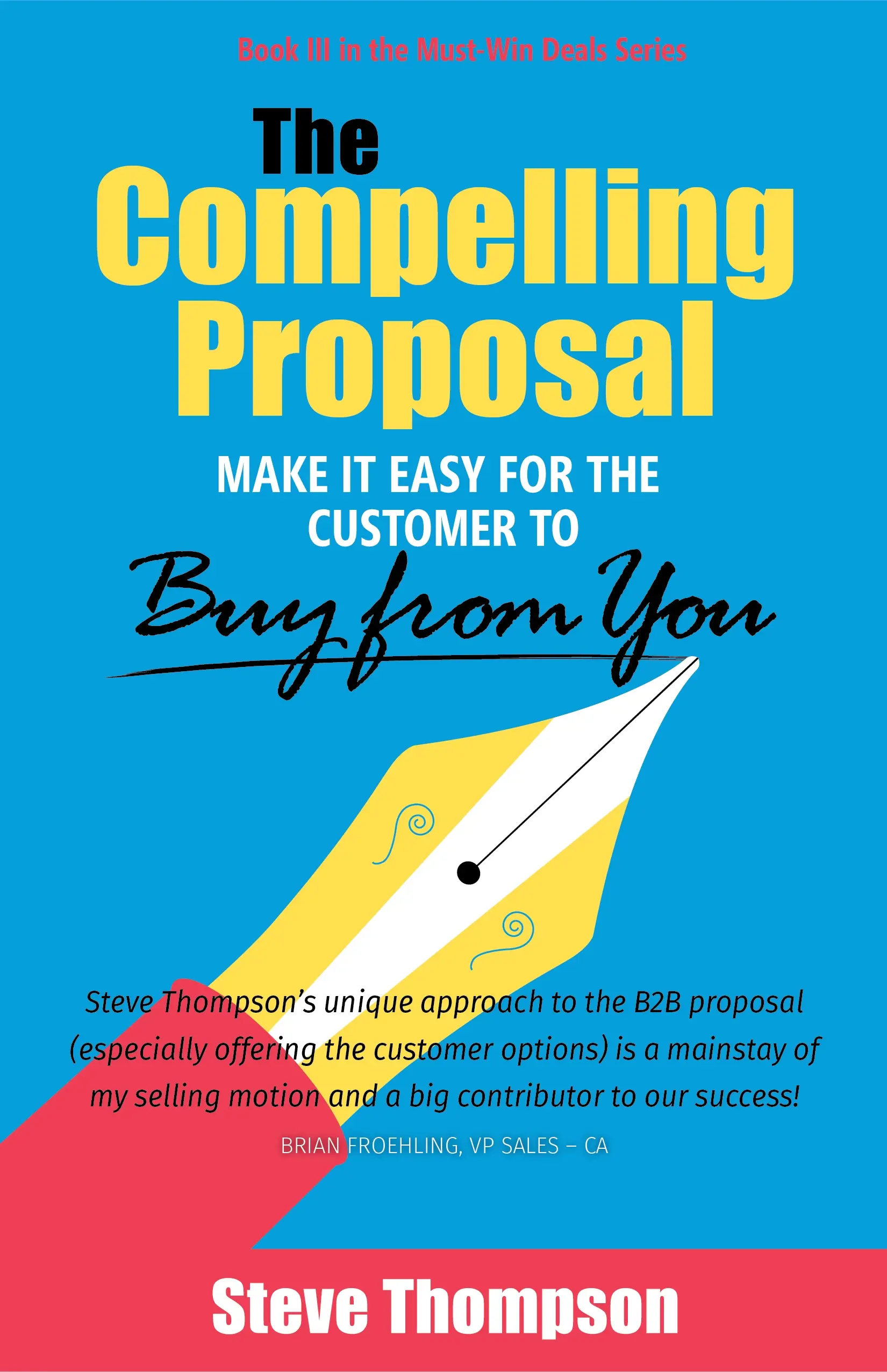
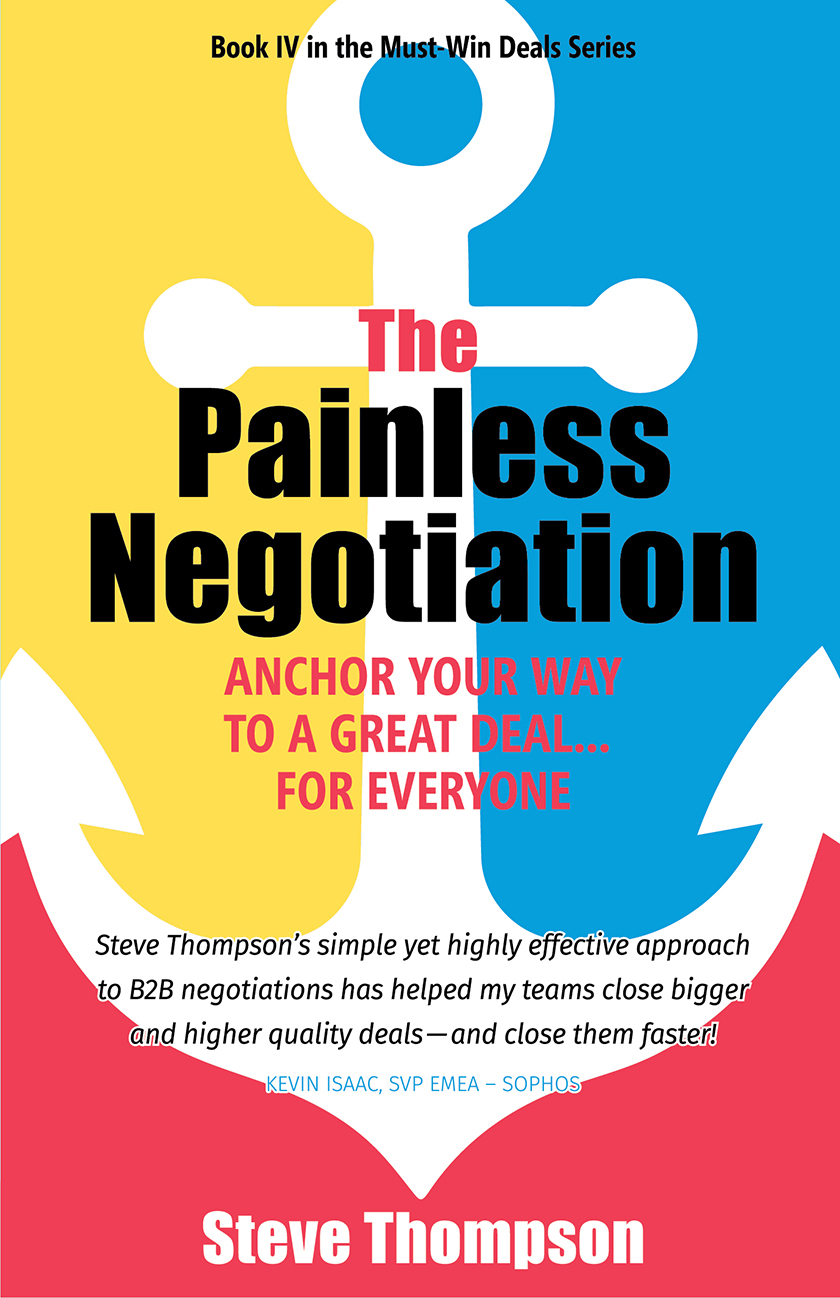
[0:31:13] Steve Thompson: Sure, the second book, which is The Irresistible Value Proposition, so I am tackling the first challenge first, and it follows the same timeline sequence if you will of a selling campaign. That one will be out early in January because literally before I stepped in here with you, I got from my editor his cut on the final edit on it and so I’ve got to review that and he says there are a few things we need to tweak and we’ll get that done and get it in your all’s hands and that’s when that one comes out. The third one which is called The Compelling Proposal, which is the seven simple slides, that one I have already written and he’s already done one pass on it and my intentions are to get it out sometime in the late February timeframe and then the fourth one, which is The Purposeful Negotiation –
[0:32:08] CH: Late February, is that what you just said?
[0:32:10] Steve Thompson: Yeah, late February.
[0:32:10] CH: You are a machine, Steve. I am inspired.
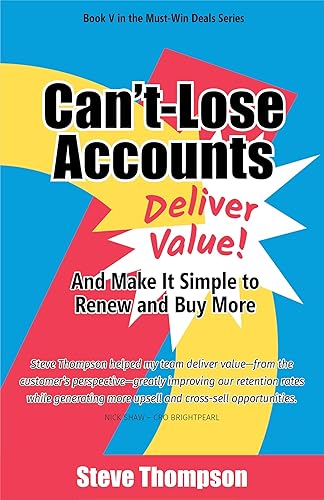
[0:32:13] Steve Thompson: Well you know I made a commitment I was going to do this. I will tell you though I did make a mistake. I tried writing the whole book at once and I know my target audience okay? And they are not going to sit there and read this whole tone, okay? And I stepped back and said no and this is why I am pulling the previous two books that I published off because they focused more on the what instead of the why and so I had material to work with. That’s one reason the first number of them are coming out pretty rapidly. The final book is the one that I have not written yet. The fourth one is the rough draft is done. So it will go to the editor when we get far enough through the third one. But the final book, which is basically the – you know, I don’t even think I’ve got a title for it yet but it is going to fundamentally be the painless renewal or past value delivered, somewhere in there is going to be in the title. That one I haven’t written yet but that’s the one that pulls it all together and okay, how do you manage this through the life cycle?
[0:33:21] CH: I love it. Would automatic renewal make sense as the title?
[0:33:26] Steve Thompson: Yeah but so many people can relate pain with renewals, you know? It is painful and there is a way to make it painless, okay?
[0:33:38] CH: There you go. Nice, well that is amazing you’ve got a lot of books coming out. So let’s wrap up here, wrap up this discussion with a couple more questions. The first one is, what is the best way for listeners to either connect with you or follow you if you want them to do that?
[0:33:56] Steve Thompson: Sure, well number one they can follow me on LinkedIn and on LinkedIn by the way, there are links to my previous books but I publish blogs regularly and in fact right now I am publishing a series that basically follows the books and this series are The 10 Critical Questions That Haunt Sales Management and they have to do with these must-win deals.
[0:34:21] CH: Timed with Halloween even better.
[0:34:23] Steve Thompson: Yeah exactly. It is timely right and it follows the same logic and the same sequence that you are going to find in the books and I am putting out those blogs about one every two weeks so that you will get a taste of what the book is about and what the concepts are about.
[0:34:39] CH: Excellent.
[0:34:39] Steve Thompson: So that is the easiest way. Certainly you can email me, it is steve@valuelifecycle.com and I’ll be more than happy to respond to that.
[0:34:50] CH: Excellent and the final question I have for you is can you give our listeners a challenge. What is one thing from your book that they can do this week that will have a positive impact?
[0:35:01] Steve Thompson: All right, I think I am going to give them two challenges then all right? So I am going to take advantage of my airtime. My first challenge is if they are right now and look, my target here is B2B sales people that’s who would read this book and if you are in the middle of the sales campaign right now my challenge is for you to stop and ask yourself the question, “If they buy what I am selling them and they use it, implement it, deploy it whatever it may be, three to four months after that, how are they going to know that it was a good purchase?” And if you are not thinking that way then you might be selling the wrong things to the wrong people because at the end of the day, the biggest disconnect that is occurring right now in B2B sales is the sales reps are too focused on selling to a deal, which then means quota and commission check and that is what they are paid to do. I get that. But see customers aren’t buying to a deal. They are buying to an outcome. So my challenge to you is to first ask yourself, are you selling just a book deal, or are you selling to an outcome?
[0:36:14] CH: Boom, good challenge. Number two.
[0:36:16] Steve Thompson: Now my second one is, if it is an existing customer I want you to ask yourself, “If you were that customer and you looked at all the products and services that they bought from you could you articulate the value that you have delivered to them because see if you can’t, I can assure you they are not spending time trying to figure it out and my second challenge is you need to start working on that okay? And trying to help them understand the value they’ve gotten from you because it is going to in the way of this opportunity you are pursuing right now.
[0:36:51] CH: Awesome. This was so valuable. I am going to be re-listening to this episode. Must-Win Deals is on Amazon. Steve, thank you so much for being on the show.
[0:37:02] Steve Thompson: Charlie, thank you much.
[0:37:04] CH: Thanks again to Steve Thompson for being on the show. You can buy his book, Must-Win Deals, on amazon.com. Thanks for tuning into today’s show. If you liked what you heard, here is what I want you to do next. Open up the podcast app on your phone or iTunes on your computer and search for “Author Hour with Charlie Hoehn” and then click “ratings and reviews”. Take 10 seconds to rate this show or leave a review. It is a small favor but it’s really the best way to show your support and give me feedback and if you know someone else who’d love Author Hour, take another three seconds to text them a link to this episode. We’ll see you next time.
Want to Write Your Own Book?
Scribe has helped over 2,000 authors turn their expertise into published books.
Schedule a Free Consult