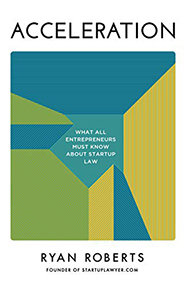
Ryan Roberts: Acceleration: What All Entrepreneurs Must Know About Startup Law
Read the full transcript
Ryan Roberts
Ryan Roberts is a corporate attorney who represents startup companies through all phases of their growth process. He is well respected by clients and peers alike for his in-depth expertise regarding the legal aspects of entrepreneurship, and his international client roster is comprised of emerging growth companies and venture capital funds. Ryan holds a BA and an MA in economics from USC and a Juris Doctor degree from UC Hastings College of the Law in San Francisco. In 2006, Ryan launched StartupLawyer.com, a legal resource for startup companies, which Forbes has named one of the 100 best websites for entrepreneurs. He is the author of Acceleration: What All Entrepreneurs Must Know about Startup Law.
📚 Books by Ryan Roberts
Transcript
[0:00:10] CH: What’s up, everybody? It’s Charlie Hoehn, the host of Author Hour where I interview authors about their new books. Today’s episode is with Ryan Roberts. He’s the author of Acceleration: What All Entrepreneurs Must Know About Startup Law. Ryan is a corporate attorney who represents startup companies through every phase of their growth, and he’s also the founder of startuplawyer.com, which is a legal resource for startups of course and Forbes named it one of the 100 best websites for entrepreneurs. In this episode, we talk about some of the most common legal problems that startups face or that they’re unaware that they’re neglecting. Now, these issues might seem small on the surface but they have huge ramifications including losing millions of dollars, or shutting down the company and having the cofounders walk away. So if you’re an entrepreneur and you run a startup, you need to listen to this episode. Now, here’s our conversation with Ryan Roberts.
[0:01:31] Ryan Roberts: I had a lemonade stand when I was eight years old and it wasn’t something that I planned for a long time, it was more of an arbitrage opportunity I saw with a lot of construction workers in the neighborhood and I would ride my bike down to Circle K and I would by a drink and primarily baseball cards and I thought, “Wow, if I actually started a lemonade stand, I could cut off Circle K and maybe gain a lot of money to buy baseball cards back then.” So I started this lemonade stand and it really took off. I think eventually, within a couple of weeks, we were pulling in between 50 to $75 a day, which you know, when you’re eight years old is a ton of money.
[0:02:15] CH: That’s a million dollars, yeah.
[0:02:18] Ryan Roberts: I had the largest baseball card collection in the neighborhood I think at the end of the summer, after all this. It actually got so big that someone tipped off the news, the local news and so one day, this large TV news van pulls up, you know, someone done up with the microphone, starts asking me a bunch of questions, not even sure if they asked my parent’s permission but yeah, I was on the news. It did pretty well. Thankfully, the news story didn’t tip off the IRS, it would have been pretty ice cold to go after an eight year old kid for the lemonade stand.
[0:02:53] CH: You know, a lot of people listening to this are entrepreneurs. I’m sure they had lemonade stands. I had a lemonade stand and a great baseball card collection, so you’re speaking my language of my childhood here. But I’m curious, what distinguished you, apart from just the amount of money that you’re bringing in? I mean, how did you get that big? What were you doing differently from other kids?
[0:03:16] Ryan Roberts: A lot of it was about location. I think we had a good spot in our neighborhood so that was a little bit of luck. But I think with a lot of entrepreneurial endeavors, luck plays a bigger role or maybe it was timing or both. It was the right time, it was summer time, it wasn’t winter, we had a good spot, sort of towards the entrance of neighborhood and so yeah, I think it just all sort of worked and ended up in this serendipitous summer of baseball cards and lemonade.
[0:03:45] CH: I would imagine that was a very formative experience for you to be not only making that much money, but also to have the news come and film you. How did all this shape who you went on to become?
[0:04:01] Ryan Roberts: I think that was definitely the first experience of me being an entrepreneur and in fact, even to this day, I feel that I’m still an entrepreneur. I feel like I’m an entrepreneur who just happened to go to law school. Maybe that’s why I started my own law practice rather than join a large firm. I think that entrepreneurial side of me has been definitely consistent in almost every facet of my life and certainly in my career.
[0:04:32] CH: Awesome, that transitions us nicely into your book, Acceleration. Now, give a quick breakdown of what this book is about and who you were really trying to help?
[0:04:48] Ryan Roberts: This book is certainly for first/second time entrepreneurs and what really was the spark as to why I needed to write this book was one of the most common phrases or statements, perspective clients when they come the door here tell me is, “I’m coming to you now because we either screwed up our legal in the last time or we had issues that should have been easily appreciated going into our startup. They all tended to revolve around the legal aspects. So I thought, “Well, I’ve already written a blog on these topics but like any blog, they’re sort of scattered, they’re all over the place,” and I thought, “I really need to write a curated, updated version of my blog.” But I wrote my blog over eight to 10 years and what I have additionally now is, after working with over a thousand clients, I’m able to give advice based upon what I’ve seen work and what I’ve seen not work. So my book is based upon my own entrepreneurial lessons that I’ve learned. It’s based upon the legal aspects that face entrepreneurs but there’s this third layer of it, which I think is very important, it’s the anecdotal experience or almost a pattern recognition of what I’ve seen a lot of entrepreneurs and startups go through.
[0:06:26] CH: Yeah, your book is so densely filled with valuable information, questions that entrepreneurs have on the legal aspects of their companies. So I want to just read through some of the sections in this book. So, “Forming a startup company,” is in part one of the book. Questions like why should we incorporate? When do we incorporate? What’s the best legal entity for a startup? Chapter two, you have “Structuring Your Company”. If you have a – the board of directors or if you’re dealing with authorized shares and types of stock, incorporation and equity, that’s what this covers. Chapter three is equity issues. Vesting, acceleration of vesting schedules, that sort of thing. I mean, that’s just part one of the book. There is – let’s see. I mean, I’m scrolling through all the stuff that you have in this book, it’s really legitimately impressive. There are three parts, which are The Entity, the company itself. People, so like founder dynamics, first hires, mentors and advisers. Then part three is Investment, which talks about accelerators, seed round and venture capital and then securities law overview. I mean, this is a really densely filled book with valuable insight on this aspect of business law.
[0:08:00] Ryan Roberts: Thank you. You spoke on one of the big things I want to do with this book is to make it organized in a way that is essentially chronological for the most part, right? You start with your entity, you bring on a cofounder, how does that work? You bring on other people. It really is meant to be a guide that you can take and refer back on as you progress down the path in your startup. Or, alternatively, maybe you’ve already formed your company, you already have a cofounder. Maybe you’re looking to raise some investment capital, you start at part three and that’s great. But, a lot of those questions that are answered and asked in the book are really derived off of the most common, the most frequent questions that we get from entrepreneurs.
[0:08:54] CH: Yeah, you mentioned the entrepreneurs who are coming to you are caught in like a, “Oh dang, we need to do this thing.” Let’s talk a bit more about the weight of what reading this book really means? What problems could they potentially face if they don’t have a guide like this?
[0:09:16] Ryan Roberts: I think that one of the common misunderstandings that a lot of first time entrepreneurs have is that they face the most potential risk or issues from external forces. I think what I’ve seen in a lot of probably other lawyers have seen who work with startups/entrepreneurs is that you’re more likely to be harmed by internal issues, internal forces than a large company like Google started a competing product. A lot of the times startups fail because the internal organization structure just wasn’t setup maybe in a way that could help the company if they have an issue, which I think are inevitable to handle that and move on and even get to the point where they could launch their product or service.
[0:10:11] CH: Give a couple of examples of the types of issues that you’re talking about. Maybe give a story, of somebody who came to you with an issue like that?
[0:10:23] Ryan Roberts: I think probably, the most common issue that presents itself internally is cofounder issues. You know, starting a startup is an extremely stressful time period. You have people who are taking a big risk, right? Statistics for successful startups are in your favor. Maybe you quit your job so it really is this first marriage of people and it’s difficult for them sometimes to ride the roller coaster together if they’re not on the same page. Maybe they’re at a different place in their life. Maybe at home, they have different requirements that are needed. Maybe one has a family, maybe one cofounder doesn’t have a family. So it’s stressful enough to be in a startup by yourself but when other people are involved, just clashes can happen. It’s not because you’ve partnered up with a bad person, it’s just a natural byproduct off the stresses of trying to launch something that maybe isn’t there in the market yet. It can only culminate into chaos and if the documents aren’t handled correctly, what ends up happening is, both people quit. You have what could be a good idea, you have – end up with both founders frustrated and they just both depart.
[0:11:50] CH: Can you give an example of a time that you’ve seen that happen?
[0:11:54] Ryan Roberts: I don’t think the issue is trying to come up with an example, I think it happens once a week. You know, we work with so many startups and just with the low success rates, there’s a lot of things that happen between cofounders. Maybe this pain even a greater picture is, I’ve often wondered whether it should be appropriate to draft what I’ll call a cofounder departure agreement as part of an incorporation package. Because it happened so often that we actually have more or just as many forms and agreements for a cofounder departure than we do incorporations in the first place because they are that common. There’s not really one client I would say that sticks out. Now, when they do stick out is when they’re actually doing well.
[0:12:51] CH: Right. That’s sort of what I mean is painting the picture of the promise of what could have been if only they’d had these documents correctly.
[0:13:01] Ryan Roberts: Right, as a target, it’s difficult because you can’t spend a lot of time and do personality profiles of people who are working there. But sometimes, you know from the beginning, it’s probably not going to work. They have different levels of commitment, it’s probably the biggest red flag, right? Like one cofounder’s all in, they’ve quit their job, they’re working on the startup all day long. Then you have the other cofounder who is still working, still getting the nice W2, still has healthcare. It’s only natural that eventually, the person who is all in is going to feel a little bit of resentment to that person, and maybe rightfully so. But that’s when the fractures in the cofounder relationship start to occur. It’s not always just cofounder on cofounder. It could be cofounder versus their first employee, startup versus their first adviser. That is sort of how we try to walk through the book and say, “Hey these are the things that we see startups encounter the most and present the most risk.” Because if you’ve started a startup, you already are a risk loving person, right? You have accepted the challenge but I think a lot of attention isn’t paid to the internal risk and so I think this book really try to highlight that for the entrepreneur.
[0:14:33] CH: Yeah, in the wake of this I don’t think can be over stated for entrepreneurs because they are dedicating a massive chunk of their life to making an impact in the world in some way that they deeply care about to the point where they are willing to sacrifice a lot and to have it all fall apart, to have it all go away, to have it fail simply because certain documents weren’t taking care of properly is a tragedy and it sounds like, and correct me if I am wrong, it sounds like the likelihood of that happening is pretty high because many entrepreneurs neglect this part of the equation.
[0:15:23] Ryan Roberts: And it may not even be because there is an internal issues between the co-founders. A lot of entrepreneurs are creatives. There is other ideas and things they want to pursue. So the overall timing between the two or more cofounders to want to work on that one idea may not just roll over to be the same period of time and so they’ll have just a different mindset on what they want to do at that time so.
[0:15:52] CH: Well, what are some of the other big issues? I mean there is so many, it is hard for me to choose honestly but if you had to pick one or two other big problems that you really wish you could save other entrepreneurs from the hassle of by reading this part of your book, what would you say?
[0:16:11] Ryan Roberts: I like them to know that they should never sacrifice the long term for a short term gain, meaning that well of course you want to close on a short term deal. It feels like a huge victory for your start up. You have to have an eye on the future. There is going to be some things that you just can’t agree to and unfortunately, it could be better just not to do the deal as well. So when we’re working with a client like most venture lawyers sure, you want to get the deal done, right? I think the big negative connotation people will have about lawyers or using lawyers is they can tend to be deal killers because lawyers are risk averse, right? But I would say as far as on the risk scale, I think venture lawyers like myself are probably the most risk loving or realize that you are already risking so much just keep going forward. But there can be some things that as an entrepreneur that you can agree to and can have ramifications going forward. Whether it is crazy compensation terms for an advisor in your startup, whether it is non-delusion rights for an investor. There are just certain terms that can really throw a wrench in your machine and may not rear its head for six months, a year. But like a lot of these things I say, a lot of these things that you agree to or that you do or don’t do or when I suggest people to do certain things, I tell them, “It only matters if you plan to do well. If you don’t plan to do well, sure don’t have your agreements with your cofounders. Just sign a deal, find a contract off the internet and move on. But if you plan to do well, you really actually end up de-risking your startup, even a little bit when you really pay attention to these things and work them things through.”
[0:18:15] CH: Yeah for sure and because you work with so many entrepreneurs and see these kinds of issues day in and day out, I am curious does a particular client come to mind who you helped, who your company was able to get their documents in order or structure some of this properly so it helped them to avoid risk? Does a particular client or story come to mind?
[0:18:46] Ryan Roberts: Yeah, I think there is actually one client. I believe I talk about it in the book and the first time that they hired me was they wanted to review a potential investment contract and they were being requested to give half of their company for about $50,000 and you can make an argument that maybe the company was only worth that much but with their plan, it would have been essentially a death now to the startup now going forward. The founders wouldn’t have had control, ongoing financing may have been tough because true sophisticated investors want the startup founders to have adequate incentive going forward and to really give up that much equity that fast really could have materially harmed the startup chances going forward. So we were able to help advise and ultimately convince the main founder not to take the deal, which if you could imagine, if you’d been working in your startup for six months, nine months without salary and the first sign of money you’re having to tell them no, and that was really difficult and the founder really had some heart burn with that. But it ended up being an amazing decision for that founder. About a year and half later, they had a term sheet from a really well-known VC and instead of giving up 50%, I believe they gave up about 20% instead of getting $50,000, they received about $1.5 million. It worked out for them in that regard and I think it kind of goes to the idea that when you hire a lawyer and you can’t think of the attorney as just a document repository and there can’t be the misconception that all attorneys have forms and all we do is just fill in the names and the dates and the amounts. But I find that the clients that ask their advisors or me, “Hey, what do you think? What do you think about this deal?” They end up doing the best. It doesn’t mean they have to listen to everything right? I always tell my clients, “I have the easy part of the job. I get to sit here and give you objective advice. You have the hard decision, the hard part. You have to make the actual decision on what to do.” So having to do that as an entrepreneur and when you have advisors and really to lean on people I think when you look at your first lawyer as an advisor that’s how you should be looking at really at anybody. But I think that’s — your venture lawyer as an advisor tends to be overlooked and I’ve had clients who have sold companies before for multi, multi multimillion dollars and they’re still asking. So it is not about because you haven’t been successful or because you’re uneducated about business you should ask advice. I think it’s just a good hallmark. It is a good characteristic for any entrepreneur to do that.
[0:21:54] CH: Completely agree and I think of it a little bit and now I guess too, no one wants to end up in the emergency room. If you can’t avoid the emergency room by having some check ins with your doctor, that’s the easier way to go. So why not do that?
[0:22:13] Ryan Roberts: Right and that brings up another point is that a lot of times clients, just through scarcity of funds and resources, don’t run things by their attorney and I understand that. I have been in the startup before and we’ve had limited budgets on legal but there are some times where attorneys can’t fix what you’ve done or you’ve put your company at such a disadvantage no matter the power or stature of your attorney or law firm, they’re at a severe leverage disadvantage and I have had to tell this to clients that, “Geez, if you just would have spent half an hour with me, it probably could have saved your company a million dollars on this deal.”
[0:22:59] CH: Wow.
[0:22:59] Ryan Roberts: Yeah and so it is – I try not to poise it in, “I told you so”, but I just believe whenever you’re a company and you’re dealing with anything related to the equity or the intellectual property of your start up, it sort of behooves you of at least to spend a little amount of time just making sure that the deal looks good and not just signing something that you think looks standard.
[0:23:27] CH: So Ryan, where can they go to get in touch with your company to potentially work with you and run deals by you guys?
[0:23:37] Ryan Roberts: I think the best way people can contact me is probably though my blog, startuplawyer.com. Email is ryan@startuplawyer.com. My Twitter handle @startuplawyer. I think it’s one of the benefits of having a very common name and not being able to register any service is that I went with what I did, essentially.
[0:23:58] CH: Well Startup Lawyer is a good name. I like that a lot, and I have one final question for you Ryan and I mean this has been great but I do want to re-emphasize, anybody whose heading up a startup, anybody who is a founder, a cofounder or one of the early employees ought to check out the book, Acceleration. Maybe leave it at the office and well, unless you are working at WeWork or something but have it in front of the people on your team to maybe have a discussion about this before it’s too late. So the book is Acceleration, it’s on Amazon and my final question for you Ryan is give our listeners a challenge. Say we got a bunch of entrepreneurs listening, first or second time entrepreneurs, what is the one thing they can do this week that will have a positive impact on their life or on their business?
[0:24:54] Ryan Roberts: Right, so we live in a world where we desire everything to be binary, right? The world is complex, we don’t have a lot of time. So it is easy to want to know simple like yes-no rules. So from what I see there is definitely and exception to every rule and in order to know that, you really have to know the background and the rationale for certain decisions. So I guess my advice or my hope would be that entrepreneurs really try to understand the reasons why behind not just the decisions they are making but why certain terms are in their legal documents and those are definitely the types of things that we try to hit on in my book, the why. That’s the most important part and knowledge I think that an entrepreneur can have.
[0:25:40] CH: Again the book is Acceleration. It is on Amazon now. Ryan Roberts, thank you so much for being on the show.
[0:25:46] Ryan Roberts: Thanks so much.
[0:25:49] CH: Thanks so much again to Ryan Roberts for being on the show. You can buy his book, Acceleration, on amazon.com. Be sure to check out authorhour.co for show notes and a transcript of this episode. We’ll see you next time. Thanks for tuning in to today’s show. If you liked what you heard, here is what I want you to do next: open up the podcast app on your phone or iTunes on your computer and search for “Author Hour with Charlie Hoehn” and then click “ratings and reviews”. Take 10 seconds to rate this show or leave a review. It’s a small favor but it’s really the best way to show your support and give me feedback and if you know someone else who’d love Author Hour, take another three seconds to text them a link to this episode. We’ll see you next time.
Want to Write Your Own Book?
Scribe has helped over 2,000 authors turn their expertise into published books.
Schedule a Free Consult