Lyn Graft: Start with Story
Read the full transcript
Lyn Graft
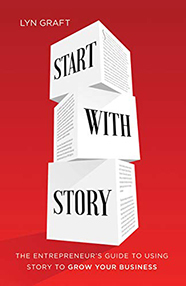
Lyn Graft is the founder of Storytelling for Entrepreneurs, an online platform that helps founders create, tell, and share their stories. Over more than fifteen years he has filmed and captured the stories of more than five hundred of the world's top entrepreneurs, including the founders of LinkedIn, Starbucks, Dell, and Whole Foods, and he has produced more than eight hundred videos on entrepreneurship. He is a co-creator of CNBC's American Made and holds a degree in electrical engineering from New Mexico State University and an MBA from the University of Texas at Austin. In Start with Story, Graft lays out a five-step framework that first-time entrepreneurs can use to build the best narrative for their business.
📚 Books by Lyn Graft
Transcript
[0:00:16] CH: What’s up everybody? It’s Charlie Hoehn, the host of Author Hour, where I interview authors about their new books. Today’s episode is really awesome. It’s with a friend of mine named Lyn Graft. He is the author of Start with Story. Now Lyn is one of the top experts in the world on storytelling for entrepreneurs. He is the founder of a company called Storytelling for Entrepreneurs but even more than that, over the last 15 years, Lyn has filmed and captured the stories of over 500 of the world’s top entrepreneurs. This includes the founders of LinkedIn, Starbucks, Dell and Whole Foods. He has actually produced more than 800 videos focused on entrepreneurs and startups and he’s personally dedicated 20,000 hours to studying and practicing entrepreneurial storytelling and it doesn’t stop there. Lyn is the co-creator of CNBC’s American Made. He is of course a producer but he is also a seasoned entrepreneur himself who’s founded multiple companies and this episode is so great for entrepreneurs because Lyn is going to teach you how to create the best story for your business. See, Lyn believes that your founder story is the key to fueling your company’s success. I mean think of some of the biggest businesses and the most successful founders of today, they all have incredible stories. So this episode is going to be a guide for entrepreneurs to create the best story for their business. So if you’re an entrepreneur and you’ve been told, “Hey you need a story” this is the episode for you. And now, here is our conversation with Lyn Graft.
[0:02:19] Lyn Graft: It was the first time entrepreneur, me and my best friend started a company and we were raising capital. We had this artificial intelligence that sticks in all of these but 20, right in the late 90s and we were frustrated trying to raise capital and advisors were giving us all kinds of advice. We just couldn’t figure it out, we couldn’t get our pitch deck together, whatever and it was a Monday night and I was frustrated. I remember there was a meeting that night. And I decided I wasn’t going to go but I’m like, “You know I will just get out of my apartment and go checkout” they usually had a good speaker. I didn’t know who it was. I get there, I arrived late, I don’t know who this person is, it’s a full auditorium about 250 people here in Austin and the guy walks up on the stage. I don’t know who he is and he’s kind of short in nature like me and he is older and he is a little bit balding and he brings up a duffel bag and he starts speaking. I don’t know who he is mind you, so he starts speaking and he pulls out a t-shirt out of the duffel bag and he talks about, “This is my first company. We had this amazing technology, we never could get it to work. That company failed” he puts that down, grabs another t-shirt, “Second company, great technology, we got it to work, nobody cared” and so we’re all just laughing at the instant and kept going through the sequence and he gets through to the 6th t-shirt. And at this time, this is like six failures in a row. He gets to the 6th t-shirt, shows it to us and every time he shows a t-shirt he is showing the front of the t-shirt so you see the name of the company and we didn’t recognized any of these names and he gets to the 6th one and he goes, “This is a great technology, great product, great market, great timing, great company, raised $20 million and it failed. It was a lot of partnership and business timing, everything but it just didn’t work out.” And at this point everyone in the audience is going, “Wow!” and I’m like, “Who is this guy? He’s failed six times, he’s got to be somebody big” so he pulls out the last t-shirt number seven out of the duffel bag, pulls out the t-shirt and he hold it up and he goes, “This is the 7th company” and this time when he holds it up, he doesn’t hold the name of the company so I still don’t know who this guy is or why he’s famous and beat up. So he holds it up, “Great company, great idea, great technology, same team and the funders that just backed this from the last company lost 20 million they backed this fund.” Turns around and it is AOL and AOL at the time he launched it, it was the most successful internet company ever at that particular time. Time Warner ended up buying them like huge success. It was Marc Seriff, was the founder’s name. I went back home after that night and I was so pumped and I was like, “Man if he can do six figures, I can make this thing happen” we just have this infusion energy, a common best friend and we just talked about it and we’re like, “Yeah!” Long story short, we worked in the next two weeks on a pitch deck, ended up raising what became a $100,000 from this angel investor he raised and wrote a check for us and it was one of those moments where the story invigorating me in a way that it’s hard to explain. It is like this juice of adrenalin that flows that caught the goose bump moment from the story time perspective. This was 20 years ago, I still remember what he looked like, the duffel bag, the t-shirts. The story is a little nebulous but the feeling is what I remember and that is the essence of storytelling and that famous saying that they said, “People may forget what you did for them but they’ll never forget how they made you feel” and that is so true and that is really the core of storytelling.
[0:05:36] CH: So that embodies really well like the power of story. Can you lay out what are the problems that you see now with entrepreneurs? For your entire career, are the guys of them neglecting the story or not having the right story or whatever like what is their life like when they don’t have that and what could it be?
[0:06:02] Lyn Graft: So the jelly falls in a number of categories. If you’re an early entrepreneur, you don’t understand the power or you don’t have a story or you think you don’t need one. Those are the most common in the early stages. As you progressed, people start telling you, “You need a story” so it depends on where you’re at I think.
[0:06:18] CH: So this is common advice that VC’s are given entrepreneurs, so you need a story.
[0:06:22] Lyn Graft: All the time and VC’s are a prime example because a lot of first time entrepreneurs especially raising capital in the fast growth tech don’t think they need a story. They think they need a great pitch deck and a great team and a great idea and a great concept, what they don’t understand and I think with raising capital it is all a number’s game and those things that they’re very focused on and that’s true but at the same time, these are people that you’re talking with. These are not machines so when you pitch an idea in investor deck, when they leave that night of course they are going to look at everything thinking about the slides and number but they’re going to remember the story that you told and they are going to go back and they are going to tell their spouse, their wife, their husband, their partners within the firm, other people, their friends, “Hey what do you think about this idea?” and they’re going to relate a story that you told them and if you don’t have a good story, the probability that you are going to be remembered goes way down.
[0:07:14] CH: Oh yeah.
[0:07:15] Lyn Graft: Super, the story is really critical just from a memory standpoint.
[0:07:18] CH: Right, I remember reading it. It’s like eight times higher.
[0:07:21] Lyn Graft: Yeah and so basically, I’ve researched this a lot. People remember something 20 times more, I have never been able to back that up but I have talked to neuroscientists and they’ve said, “If I tell you a fact or a piece of information, you activate one to two parts of the brain that interpret these analytics type things but if I tell you a compelling story, I am going to trigger six to seven parts of the brain become more active. So that means all these chemicals start flying around the brain and you have a higher probability of remembering the story simply because a lot of synopses are firing triggering chemicals in the brain, which causes you to remember more and feel what the story is about as oppose to just the facts and the figures. So it’s really super important from a founder standpoint regardless of what stage you’re at is to have a great compelling story because they’re going to remember you more. And two and this is what I tell founders all the time, the reason you tell a story is for emotional connection. That’s it. That is the core essence of what it comes down to. If you can make a connection with somebody it becomes personal. It is no longer this third party type thing that is agnostic. It’s like you have reached them on an emotional level and now, hopefully you are going to convince them to listen to what you have to say and here what your value proposition is. And then it is either going to matter to them or matter to someone they care about but those like those guys do a great job telling me nobody cares about your book. They care about what your book will do for them and that’s true with a startup and a product offering. Same exact thing but when you incorporate a story with your product or service that has an emotional connection to the audience that you are talking with even if they don’t have that need themselves, they mean to somebody that does. Or they know there is a market potential that has a drastic need for everything. So you are using that story as the bridge to get to that person you are talking with this emotional bridge. So that now, you have a relationship with them. It is the same reason that we buy from our friends who do business with our friends is that it is personal. You make sure that I call you up, “Hey Charlie, can you give me a ride to the airport?”
[0:09:27] CH: Yeah, I’m like, “what’s your story?” come on.
[0:09:31] Lyn Graft: If you don’t know me, you’re not going to give me a ride but if we have this personal relationship, if I ask you for a ride no way you’re going to give me a ride. Strangers won’t do it unless you’re Uber and I am paying you.
[0:09:40] CH: Yeah, so I am curious what is the best way to tell a story? I mean there are different types of stories I know. You can describe frameworks differently right? Like there is the beginning, middle, end or there is the hero’s journey or there is the Pixar formula, “Once upon a time and every day until one day” you know? So what are the types of stories that you recommend to entrepreneurs for them to start to figure out, “Okay this is framework we are going to use.”
[0:10:08] Lyn Graft: Right but one that I remember all of that, have you seen the South Park story framework?
[0:10:12] CH: Probably, I can’t recall.
[0:10:15] Lyn Graft: It’s hilarious, you’ve got to look at it online. I can’t remember it exactly but it is like, “But if” or something it is like the super simple every South Park episode breaks down this particular formula. Yes but I can’t remember “if then” I have to go back and look at it but I remember reading about it.
[0:10:30] CH: One of my favorite episodes was when they had Mel Gibson, do you remember this? He is just like pooping everywhere. He’s just bouncing off the walls, he is just a nut and I just loved the line where they’re like, “Man, Mel Gibson is f***ing crazy but damn it, he knows story”
[0:10:47] Lyn Graft: 100% true of all the science. When I started speaking about storytelling and teaching it, you find very quickly that whenever you teach something you have to learn it in depth. So I am sitting in there trying to learn. I have been a producer for a while and I figured out along the way. I had a natural gift for story so I have been able to wing it for a while and produce videos but when I started getting on stage and talking about it and speaking about it and coaching, I had to go to another level. So dove into the historical origin of stories and I got to all these framework, read The Hero’s Journey by Joseph Campbell and read a number of other things and I got lost because they are using terms and phrases that – you know I was not an English major. I did not know what denouement was or a lot of terms or the shadow figure.
[0:11:33] CH: What is it?
[0:11:33] Lyn Graft: It’s basically the ending climax. See I can’t remember what it is from that standpoint. They’ll come back to me but I was having a hard time trying to understand concepts and frameworks and The Hero’s Journey is 12 to 13 steps. That is a lot and I got frustrated with myself and here’s a guy who does story for a living. So I literally just threw that out the window. I’m like, “I’m not going to do that. I am going to go back to the origin of what I learned just listening to the person hearing a great story and what was it for me” and there was this magical moment that happened. Over the course of while I am trying to figure this out, I went back and watched a lot of interviews and I talked to successful founders asking how did you learn about story, blah-blah-blah, none of them had taken formal training in storytelling. They were not talking about the Hero’s Journey or The Shadow Figure or Gustav Freytag’s formula. It wasn’t their habit and I’m like, “Well what the hell?” and I was a little bit lost at that point. I’m like, “If I am going to teach this, I need to have a framework or something so I can put it in the book” and all of that and it just hit me one time. I am listening to a person tell a story and it reminded me of something that stuck out in my head. It was Howard Shultz and he talked about how he had gone to Italy and it was a really amazing story, read his book. His first book was an amazing book about how Starbucks was built and what it came down to as simple as anything, it is an experience that has something of meaning related with your business. So I will repeat that, it is an experience that has a meaning related to your business in one way, shape or form and what I mean by that is it sounds so simplistic and duh but really, I started going back all these stories that made and everybody had some experience that happened to them that led to a triggering event in their life that set them down this path to create this amazing company and for Howard Schultz and Starbucks it was because he was walking the streets of Milan. He is working for a coffee bean company in Seattle. He had gone to a conference in Milan, Italy and in between going to the conference where he was staying he walked down the streets there and he got to see this coffee culture and at the time, we didn’t have a coffee culture in the United States. You had cafés and you had restaurants but there wasn’t any coffee bars expect for a couple here and there and he’s like, “Wow” there’s this amazing place what he called “the third place”. You had home, you had the office, you have this third place that everybody would go to and that was this coffee bars and you would hear the baristas and the smell and aroma of just amazing coffee type things and you hear all the espresso machines and the grinding of the beans and it was this romantic experience that he just lived right there in that moment and when he relates what was the genesis of Starbucks it was that moment. When he went back to the United States, talked to his partners at the coffee bean company goes, “We need to open a coffee bar and this is what I saw. It was the experience I had in Milan” and that is what the core essence of the story is. It is an experience that has something of meaning that’s related to your business and then you build your story around that and you can take whatever framework you want but in essence that is what it comes down to.
[0:14:50] CH: That’s amazing. So with Howard Schultz doing that like it almost seems like an inevitability that we would come to this realization that, “Hey Europe’s got some sweet cafes. We need that in the United States” but I am sure there were many coffee shops before him who had tried something similar that failed. Do you think that Howard Schultz was able to drive Starbucks on that story to whether it was to get funding, whether it was to expand and did it allow him to relay that vision to everybody else quickly and be able to make that happen?
[0:15:33] Lyn Graft: Yeah, there is no question if you look at – let me give you an analogy. So computers existed before Steve Jobs happen. You had PC’s that were there and what Steve Jobs was able to do was he created a very different experience with technology. I mean just like computer thing, my iPhone here, I mean we’re surrounded by Apple products and the aesthetics and the user experience, everything around that was really due to his vision and his ability to take all. Everything that happened to him and craft something gorgeous and amazing that you want to use, there was computers before that weren’t they? So somebody obviously would have come along and then another computer, there were coffee shops before Howard Schultz and there would have been coffee shops without Howard Schultz but he talks about very specific. I remember we were sitting in his headquarters filming him and Ingrid, my best friend was the host. On camera host, I am the producer for the show we’re doing for CNBC and it’s the question he always gets ask why coffee and you could tell he gets asked this all the time just by the look on his face and he said, “You know I love coffee but it could have been anything. It just what happened to me in that moment that everything else. You know what people need to understand is that Starbucks was never about coffee. Starbucks was about this experience.” Everything surrounding what happened when you went into a Starbucks from the names on the board that chose, the sounds that you hear, the machines, the cups that they served it in, the smell and the types of coffee, everything was hand selected so that when you go into a Starbucks, it is an amazing experience and also, it’s the same experience no matter where you are in the world. Every Starbucks uses the same, there are subtle differences now but almost all of them use the same experiential touch points. So that when the customers go there, they know exactly what to expect and that’s why those Italian names were they were they were. They weren’t big-small-large. It was grande, lattes, mocha-mocha something along those lines and when Starbucks launched, you knew you were in a Starbucks. Nowadays, you can’t tell any coffee shop starts selling those same names but it’s because his vision and his ability to relate that experience going back to story and his ability to articulate that experience and he told this flat out. It’s what he used to raise money with. It was what he used to raise capital for everyone within his company and I mean there was so much he was able to do with that story that experience that he had in Italy bringing that coffee culture to the United States was a massive undertaking and he was able to do it. Now they have 26 or 30,000 stores around the world.
[0:18:20] CH: That’s crazy.
[0:18:21] Lyn Graft: Yeah, amazing.
[0:18:21] CH: It is hard to imagine the world without them.
[0:18:23] Lyn Graft: Yeah, I mean it is default, defacto part of our lifestyle now.
[0:18:26] CH: Yeah, I mean you mentioned Apple and Steve Jobs and one of the things that always stood out to me about their journey was the fact that Steve Jobs went to Pixar and then came back to Apple and after that Apple took off like a rocket and Pixar is arguably the best storytelling company on the planet.
[0:18:49] Lyn Graft: Yeah, amazing.
[0:18:50] CH: So I feel like or I don’t feel like, I recall reading that Steve Jobs learned story from Pixar and brought that super power back to Apple and was able to launch products to new heights.
[0:19:05] Lyn Graft: Yeah, you know one of the things I don’t do a lot of research on Steve Jobs because everybody does and also, he’s a once in a generation type of genius. So it is really hard, I try not to spend a lot of time on folks like that from teaching others how to tell story because you’ll never be Steve Jobs. There will never be another one like him, he is one of a kind and his storytelling ability in the early days was always great if you like them. If you didn’t like him, you hated him but if you like him, you loved him.
[0:19:32] CH: Well to that point actually, Apple was doing six paid jobs in the New York Times on the technical specifications of computers in those early days as well. So there wasn’t much as strong of a draw on story but yeah, to your point I mean he’s always been a good storyteller.
[0:19:50] Lyn Graft: Yeah I mean along those lines and generally, I wouldn’t say that all the entrepreneurs I’ve filmed had always been a great story but almost all of them learned to become good storytellers. If they wanted to stay at the helm of the company, almost 90 plus percent have developed the skillset to craft and weave a good story. Elon Musk, a lot of people say he’s a great story and I would argue he is not. He stutters, he’s not the best communicator in the world. But he is such a genius and he has such a vision and way to captivate you into what he’s doing. He appears to be a good storyteller but just go back and watch the videos, he is an introvert type person. He is not this care man person. So I don’t really use him as an example because I have a difficult time learning from him but at the same time, he is able to craft a vision that’s so big and so just moonshot style that it makes you in awe.
[0:20:46] CH: Of course mars shot.
[0:20:48] Lyn Graft: Mars shot, yeah that is a great analogy, mars shot. He is bigger than the moonshots, he’s the mars shot along those waves.
[0:20:53] CH: Yeah. So I am curious now like what makes for a great story? I mean I’d imagine a lot of entrepreneurs have stories but they get a lot of “so what?” so how do you make your story standout?
[0:21:09] Lyn Graft: There’s three things that your story has to do. Number one, you have to get their attention. If you don’t get your attention in the first part of your story, you’re going to be fighting an uphill battle the rest of the way. These are going to flat out ignore you or you are going to fight just to get your attention back if you lost it. So it really has to grab the attention in the early stages, first and foremost.
[0:21:29] CH: So let’s pause there. How do you grab their attention?
[0:21:32] Lyn Graft: You know there’s a lot of different ways that you can. It really depends on your style in which your story is. Some people tend to go right into a heartbreak wrenching moment, which is a great strategy to be very vulnerable but when you’re vulnerable, that is almost a hacking way to get someone’s attention or you talk something about “I lost my job” or “I was fired for some reason” “I went to jail” and immediately, you are grabbing their attention because you are going to a place that’s a vulnerable state. And vulnerability is a way to magically make that connection we talked about earlier because someone is just being transparent. That is something that would be very personal but at the same time, that is a way to quickly get someone’s attention. Another way to get someone’s attention is to do crazy outlandish things. So we were talking before the interview about Gary Vaynerchuk. Gary Vaynerchuk is one of the magicians at his. He is loud, he is bombastic, the says very controversial things all the time, the exact opposite. He cusses online, he dresses his own style. So there is another way that you can get someone attention just being out there. Both of those require a certain type of personality, a level of confidence or comfort in yourself to be able to say that. So it is not always the best route but those are two very effective ways to grab someone’s attention right away.
[0:22:47] CH: Yeah and it sounds like intrigue and a WTF type factor can work too like with the story with Mark Seriff of him like what is he revealing. He is uncovering a mystery.
[0:22:59] Lyn Graft: Yeah, I think of Bill Gates of letting go of mosquitoes in a room.
[0:23:03] CH: Oh my god, like what? How is this possible? So what about the so what factor. Let us say we have gotten their attention.
[0:23:14] Lyn Graft: So let me go back to the two points. So the second thing that you need to do is you need to make a connection. In one way, shape or form you have to be able to connect to your audience. You can do that right at the beginning to getting their attention or you could do that in the second stage. So getting their attention, I mean making a connection is all about the essence of storytelling, which is figuring out a way to bridge to them emotionally. And there are a number of ways to do that, again being vulnerable is one way to do that. The second what you are really trying to do and this is figure out a way to make it meaningful to them. So I will give you an example of recently my dog, you have seen me talk about him. You have met him, Fetty G is his name. Fetty G is amazing and he’s gotten up there in years, he’s 13 years old right now and he is one of the passions of my life and he has gotten arthritis. You know arthritis has progressively gotten worse, he has also got a heart condition so he has just had heart failure on two episodes. I am always watching him like a ghost and before he had an episode in December where the arthritis took another lump, really just aggressively had trouble walking. He was shaking at night, I was really worried to come to vet and he told me what happened and they told me and they gave me some medicine form. A very aggressive treatment for the type of arthritis that he has and he reacted really bad and I was like, “Oh my god what am I going to do?” he is already on three meds before this one. So I stopped doing it and I was just almost heart broken. I’m like, “What am I going to do? I can’t have him in pain” so I called my sister and she goes, “My dog had arthritis. What I do is I make my own bone broth and I feed him chicken and rice” and I’m like, “What?” She goes, “Oh yeah” I said, “I knew I fed them chicken and rice. I thought that was a little bizarre but you are making bone broth?” “Oh yeah” she goes and explain what she did. I’m like, “Wait a minute, you spend 12 hours making bone broth once a month and then you freeze it up?” I’m like, “Holy crap” prior to that, I’m a healthy guy. I focus on nutrition on a regular basis. I eat really well. I make my own green macha latte every morning. I try to eat a lot of greens. I do intermittent fasting, a lot of things to really have a healthy lifestyle and I’ve been around bone broth for years. People talk about it to me all the time. I go to this particular coffee shop, one of my favorites Picnic, I’ve had it there but you know, whatever bone broth is cool and I don’t buy it. It’s like eight bucks per drink and it was not cheap either but when my sister told me about bone broth was a way to strengthen my dog and not have him take a medical treatment. You go from the bone and build it’s collagen and it would help do a lot of thing, instantly overnight bone broth is super important to me. I am online, I am researching and I am trying to figure out how can I buy it, what can I make it. My sister gave me a recipe, I spent that weekend learning and making my first batch of bone broth. So there is an example of making a connection with someone because before that, I couldn’t care less but if you find a product or a service and an audience. It is really important, you don’t want to be selling ice to Eskimos. You want to find someone like me that has a condition or has something that they really care about that needs what you have to offer because when you say that, “Hey, did you know that bone broth can help your dog or people in your family that have a hard time with arthritis?” whatever, instant connection. You’re like, “Oh I’ve got a family member, they’ve been really struggling with it” you know? And the bone broth is an elixir for something like that, it is just an example of making the connection and getting over that so what factor that you are talking about.
[0:26:47] CH: Yeah, I think about how infomercials are structured. They’re almost always that at the beginning, “Are you experiencing this version of hell for yourself and do you want to get out? Here’s how” okay. That makes a ton of sense, I see that for sure. Let’s talk about actually is there anymore before?
[0:27:09] Lyn Graft: Well let’s get to the third point. So you get their attention and you want to make a connection. So now you get their attention, you’ve sucked them into your vortex so to speak like this black hole. Now you’ve got to trigger a reaction. You’ve got to make them want to do something that’s going to take an action in your favor, buy your product, download your PDF, call you on the phone, hire you guys to write a book, there’s got to be a reason that triggers some type of reaction. That really is the so what factor and there is a lot of infomercials and they’re a perfect example of that. So they will start out with this – I just did this video on a before and after example. The plug for my video series startup for entrepreneurs for you guys, it is on YouTube and it is about before and after and the general premise of before and after is that you show photos or videos of what they were like before your product and then what they were like after. So that is a way to quickly get someone’s attention. “Oh I want to lose weight, oh I want a six pack abs” or “I want a ninja blender that makes my smoothie in a minute versus everything else” like that. So you are grabbing their attention, you explain all the benefits, you start sucking them in and at the end of the infomercial what happens? “If you call now instead of paying four payments of $29.99, we’re going to give you one payment of $29.99 and if you call in the next 10 minutes, we’re going to give you two.” So they just start layering on these reasons to cause you to take an action that is in favor in this particular case, as you are getting on the phone, you go online and you’re buying that product, subscribing to that service. The next thing you know, you got four ninjas showing up at your doorstep that you’ve got to be like, “What are you going to do with these ninjas? Who am I going to give it to? Charlie, do you need a ninja?” So you’re wanting to have that last that closer if you must, something that is going to trigger a reaction to do something in your favor and that is how those trifecta of a successful story are those three things.
[0:29:00] CH: All right, so state it once more, the trifecta of that.
[0:29:04] Lyn Graft: You want to get their attention, number one, you have to and people ask me what is the most important part of the story, I always say the beginning getting their attention because if you don’t nothing else matters. You might be able to salvage it but it’s really hard. So I always content beginning or end is usually the opinion or the disagreement but I say it’s the beginning, attention. I mean number one is attention. Two, make that connection. Make them care about whatever it is product or service or offering that you have that can benefit them or someone they care about. Third and the final one is the trigger or reaction that cause them to take an action in your favor whether that is buy product, subscribe for a service, comes to a meeting, whatever. You got to have those three things.
[0:29:46] CH: So we have our three elements of the story nailed or in progress I should say. So always in progress, attention, connection, call to action.
[0:29:59] Lyn Graft: Call to action, trigger reaction. The CTA is overly different. This is more you want to trigger something in their brain, in their heart to cause them to do something.
[0:30:08] CH: What is the best one you’ve seen of that? What is the most memorable one?
[0:30:13] Lyn Graft: Most memorable, well the one that I always talk about is the P90X founder. That is the one from P90X generates $400 million a year to this day.
[0:30:24] CH: Goodness, still? Wow.
[0:30:26] Lyn Graft: Still, so Tony’s ability to convince you that you need to spend 90 minutes to transform your body and I think that is a long time and it is a hard core thing. He met a famous infomercial person when he got started and that’s one of the ones that I think anything in the infomercial category where it is not cheesy, people might seem he’s in love with what you see but that is how he is. He’s got this great ability to captivate you. I would have contend the number one person in my world that I study from natural standpoint that has that ability is Tony Robbins. I didn’t understand the power of Tony Robbins until I went to one of his events. I have read his books, listened to his DVD’s, watched him online, a lot of different things but his ability to get you to care and to take action when you are in the moment at his events is unsurpassed and some people don’t necessarily like his style but I loved it. I remember specifically, I went to his UPW conference. It was the 40th in Dallas and it is full on for four days. 16-17 hours a day, all day, incredibly challenged, he speaks about two full days that time, other speakers at the time and he goes nonstop. He gets on stage 10 to 12 hours without leaving the stage. No bathroom breaks, no food breaks, nothing. He drinks water constantly.
[0:31:49] CH: He just have a catheter, how does that work?
[0:31:51] Lyn Graft: I don’t know and I remember this, this is one of the most – there’s a lot of things that were great about that session. It was transformational for me because I was drinking the cool aid, I was full on. I went in wanting to because I wanted to experience why he was so good. The first day he’s speaking, he was probably three hours into it, four hours, I had to go to the bathroom and I was like, “I didn’t want to go to the bathroom” I didn’t want to miss a moment of what he was saying. I didn’t want to leave that experience. I went running to the bathroom. It was a huge conference at the Dallas Convention Center and it was 5,000 people. I am running to the bathroom going there and I am not the only one. There were people literally running from their seats to the bathroom and came right back and he didn’t leave the stage once and he has this unique ability to connect with you on an emotional level to make you care about what he’s saying because it’s all he does. He tells stories over it and over and over. His own personal story and experiences, personal stories, his client’s personal stories. Huge mega star type people such as Oprah and Bill Clinton and other people that he’s worked with, athletes, world leaders and then everything he went through. He had an incredibly challenging childhood. He was beaten by his mother and raised by alcoholics. His father and father in law is really bad to him and it required to quit being the president in his school. It required to quit his first job that he ever got. He just had this really traumatic experience growing up but his ability to relate all of those things that he went through to you so that you care and you can see yourself in those stories and how you can change your life and bring about massive transformation if you take on a certain principles, it was second to none. It was like oh my god, I get why gospel leaders can cause people to do crazy things and he has that reverence about him. To make you want to change your own life. Obviously this does goes back to selling his products, going back to his events and they’re not cheap but at the same time, I’ve recommend it to other people and to this day they say it was one of the best events they have ever gone to and I still remember all four days and I incorporated it. After that event I have incorporated it into my life. There are a lot of things that he taught me and I still am doing that today.
[0:34:13] CH: Wow.
[0:34:13] Lyn Graft: And that is amazing stuff.
[0:34:15] CH: So he’s the best storyteller that you know right now.
[0:34:18] Lyn Graft: No, I will contend that Howard Schultz is the best storyteller I have ever been around just from the pure essence of taking one particular experience and relating that into the vision that he build especially as it relates to entrepreneurship because his ability to take that vision and grow that idea that concept of this third place and turn it into one of the largest most well-known brands in the world is the pinnacle of entrepreneurial story telling. Whereas Tony Robins, there isn’t anyone better at making you care about his stories and weaving that back into your own life so that you care about whatever you are growing and want to transform yourself and get on whatever cool aid he’s drinking.
[0:34:58] CH: Well, we have a lot of entrepreneurs and authors who listen to this show. So both people who are wanting to build a well-known brand or affect a lot of people with the products and services that they’re developing and with authors, ideally is that they are wanting to spread the stories that they are wanting to spread. So let us make this a little – let’s do a quick, I don’t know, 10 minute boot camp on how to construct your story, prepare it. We know the basic model that we are going with, right? The three elements that we need, how do we get started in making a great story if we are already down the path. We have published a book, we have our company, how do we make sure our story is great and gets us to the next level?
[0:35:47] Lyn Graft: Yeah, I mean it is always a little bit tougher for authors because they spend a lot of time amassing that amount of information but at the same time, it works really well and I will tell you why. When I started going out and getting my chops as a producer and a director, it was my responsibility a lot of times to come up with a questions that the host would ask or that I would ask. I was not on camera talent but I still ask the questions. So that the host would ask him so in order to develop questions and it is almost when you develop a show for television for prime time or you are making a video for a website or for Dell or Microsoft, you pretty much need to know the story before you ever bust out the cameras. You are not doing it on the fly, sometimes you are but most of the time if it’s for prime time, you need to do your research. So I would build this dossiers on these entrepreneurs. I read their books, every article I could find, I listen to whatever to watch on social media that they are putting out there and then I would amass it into a word document and I would organize it into a chronological history of their life. I am looking for specific life moments from childhood to primary and secondary education professional career to the job, how they got started and then up to where they are now. So I build these dossiers sometimes 90 pages on a word document and then I’d read them. And then highlight it and then pick out the things that stuck to me and you know things that are interesting to you as an individual or typically interesting to your audience and that is how I would start and that’s a similar process to what I recommend people doing when they get the story going from scratch. You want to build this inventory of assets that is kind of a historical background. I call it the chronological history or chrono history is my nickname for it. And that chronological history takes you through those three stages, childhood and early life of primary school and then college, right after that into professional career and then third phase is your first startup and how you got to where you are at or maybe multiple startups. Those three phases, I recommend starting with that type of breakdown because you are able to see as a third party looking at your own life if it is written around storyboard or anything. You are able to see where those inflection points and if you go back to what is my definition of a story as it pertains to an entrepreneur and it’s the experience that you had that has a direct meaning to what you are doing now as a business, what was that trigger event. So if you look over your life, you can expand it out to a lot of things led up to that or there might be one particular moment and then you start going from there and having that inventory of assets that chrono history will start getting all the assets that you’re going to need to build your story. And then you want to from the second step after you have done that is you want to start going through and pick the best assets. The analogy I like to give is when you are cooking. When you want to make a great meal, great chefs will tell you it all starts with the ingredients. You don’t want a ton of ingredients, you just need the really good ones and you want to have a good set. You want to have some good cooking tools. You want to have some great spices. You want to have all the necessary things right at your fingertips so when it comes time to cook, you’re ready along those lines. So building that chrono history is the first step. Now you are cherry picking from that and you’re picking out the best items from that chrono history just looking through, “Okay that’s good. I am highlighting it” I am marking next to it and then you’re rolling that up and you’re like, “Here is the top ones from that” and that becomes the skeleton of your story as it relates to that experience. That is that next level and then you use a framework and I use it’s called the Sophie framework at the storytelling for entrepreneurs and it’s got three parts, beginning, middle and end and then it has five components. In the beginning it’s where it starts, the trigger point, I mean the backstory if you will and then you have some moment that happens that sets you down the path. Something happened in your life so that is the beginning. And then you get into the connection, the middle stage where you are facing a bunch of challenges and your obstacles and everything along those lines and then you get to a turning point. Something happened, maybe you came up with an “aha moment” after going through all of those obstacles or you came up with an idea or product that you are selling that is great and then you go with the ending and the ending is all about getting back to triggering a reaction. How you bring it back and convince them to work with you. You use that framework to organize all of those cherry picked assets that you’ve taken from your original chrono history and then you start assembling your stories. Those are the three primary exercise you get there. There is a lot more to it to make a great story but if you do those three things, you are going to have a great foundation to create your story from.
[0:40:22] CH: Amazing and you’ve worked with a lot of entrepreneurs in helping them shape their story, can you share one or two of your of favorite, I don’t know success stories of people who came to you, you transformed their story and they went on to do what they wanted to do.
[0:40:40] Lyn Graft: There is a number of people that I have helped over the years and to be from some I am not able to share but those are my favorite ones, I am not able to talk about but you know, there is an individual that she was really having a hard time getting her story out there and it had to do with the fact that she was not comfortable sharing her story. She wanted to get people’s attention, they have to remember her but at the same time, she didn’t want to share what made her story really interesting. And as I was referring to earlier that you know when something’s interesting. So if you are talking to someone on a one on one level, a lot of times they are going to sweep stuff under the rug that they don’t want to talk about and you are like, “That’s it. That’s what I want to know about” so I was coaching her through something like, “That’s what you got to do. You got to share that moment, you got to lead with that.” That is going to get people’s attention. That is going to help people connect with you and I gave her a story and I talk to her with Carley Roney, the founder of The Knot. Carley Roney, she’s got this amazing business, The Knot, the largest wedding online organizers where they do a $100 million public company and when she first started with The Knot, she had four partners to try to figure out that idea. They are at a coffee shop in New York City and they came up with an idea when the internet was just taken off. And she had just gotten married to her husband and the four of them says, “Oh you know what? You guys just got married, why don’t we do an online company to help people getting married?” and she said, “Oh no, no way am I going to do that” and they’re like, “Why?” “Because my wedding was a disaster” is what she is saying and she said the wedding was held in the summer in New York City and one of the hottest on record summers at that time. They only had six weeks to plan it, they were a mixed race wedding. There wasn’t a lot of wedding planners that knew how to handle that type of thing and they didn’t have a big budget and they didn’t know New York City and it was a total disaster and they were like, “Oh that’s too bad” or whatever. So she went home that night and she thought about it a lot and she goes, “You know I don’t want women to go through what I went through” “I want to help women avoid the mistakes that happened to me on my wedding day” and so she came back after a couple of days to her four partners and she says, “You know what? I think that is a good idea. Why don’t we create an online platform” because magazines were still big at the time. The web was just getting going, she goes, “And help brides avoid the fake that happened to me and give them all the tools they need no matter where they’re at, how much time they have, what their budget is, whether they’re mixed raced or whatever we are going to have everything.” And that idea led to The Knot and now, it is a $100 million company and it was all because she was willing to become vulnerable and share something very personal to her and she just flipped it. Instead of being embarrassed about it she goes, “I want to help other women avoid what happened to me” and when she talks about that, she makes an instant connection with brides to be because what is one of the most important days to a woman? It’s the day they get married and husbands as well. So she’s able to instantly bridge that gap and make that connection with them when she tells that story and that is the same thing that I talk to my friend. She’s done very well since she’s been able to come out with that story.
[0:43:51] CH: Amazing. Well I mean your book is phenomenal. It is such a great resource to entrepreneurs. Start with Story, it is on Amazon. Two final questions, the first is what is the best way for people to potentially either follow you or connect with you, say thanks for writing the book that sort of thing?
[0:44:11] Lyn Graft: Definitely, so I got a website called storytellingforentrepreneurs.com, I recommend going there. There is a video series that we launched on YouTube that shares a lot of the same things we’re talking about here. I try to break them down to two to six minute mini apps so that you could learn about a particular topic. We just launched it, we’re about five, six videos in and when you buy the book, let us know. Use #startwithstory. That is my big moniker. I am trying to push that as much as possible because it does start with story. I am so appreciative for Scribe. You guys gave me that name and I love it. It just really speaks to what I always recommend with people because it is a great way because there’s a lot of things you don’t control when it comes to starting a company but story is one of them. You get to create it, you get to massage it and manage it and it gives you the ability to control the narrative. So go to storytellingforentrepreneurs.com. I am also Lyn Graft on Twitter and on Facebook, on Instagram but mostly, Storytelling for Entrepreneurs is where you are going to find information about the book as well as the video series and a lot other content that we have coming out to support the basic principles that story is your MVA, your most valuable asset as an entrepreneur and I want to give you everything you need to create, tell and share your best story.
[0:45:26] CH: Nice and I will attest to that, you have a lot of cool stuff coming on that site.
[0:45:30] Lyn Graft: Yeah, I’m psyche.
[0:45:32] CH: The final question is, I always like to wrap this up with a challenge. So give our listeners a challenge, what is the one thing they can do from Start with Story this week that will have a positive impact?
[0:45:43] Lyn Graft: Think about we’re all great critics, we really are. A lot of us don’t think we are but you make decisions every single day about what news you consume, about what you are going to wear, what path are you going to drive to work, what are you going buy or sell, who you talk to a lot of times. So we are always making decisions, we have this discerning to be like consciously and subconsciously. As you look at your own story if you will, your own history, everything you’re doing, find the one thing that sticks out the most. What is that one nugget or something that has happened to you that either you’re always thinking about, either in a bad way or in a great way, that’s usually the extremes of what you're at, want to live at the edges for this or that people are always asking you about. You’re going to find that your people around you, when you start yapping, you could just start vomiting out information. There are certain things that people remember about you that it’s always going to be associated with what you're doing. If you can find that kernel, that is usually a great starting point, figuring out that memorable goose spot moment, catastrophe that happened, something that won’t lead your mind. Start there and just start building. Ultimately, you’ll find there’s a high probability that that’s going to make its way into your story. If you don’t have that, start looking for it in a very diligent way and do whatever that takes to make that happen.
[0:47:08] CH: Awesome. The book is – Start with Story. Lyn Graft everybody.
[0:47:14] Lyn Graft: Yeah. That was awesome. Good job man. I appreciate and just excited to – big plug for scribe media here. If it wasn’t for these guys, I’d still be writing my book, my god, it was amazing.
[0:47:24] CH: Your journey has come to an end.
[0:47:26] Lyn Graft: My god. 2,190 days, an hour to 10 hours a day. It’s been amazing.
[0:47:32] CH: The end. Well, you got a new chapter coming up that’s going to be really awesome, man. I’m excited. I’m really excited for you man. This is – with the right people, it’s going to be big. It will be exciting to see what happens.
[0:47:50] Lyn Graft: I’m excited. Thank you. I appreciate everyone out there. Thank you, Charlie.
[0:47:52] CH: All right man. Thanks so much again to Lyn Graft for being on the show. You can buy his book, Start with Story on Amazon.com. Be sure to check out the transcript and show notes from this episode at authorhour.co and take a second to leave us a review on iTunes. It make my dog really happy. Thanks again, we’ll see you next time. Thanks for tuning in to today’s show. If you liked what you heard, here is what I want you to do next: open up the podcast app on your phone or iTunes on your computer and search for “Author Hour with Charlie Hoehn” and then click “ratings and reviews”. Take 10 seconds to rate this show or leave a review. It is a small favor but it’s really the best way to show your support and give me feedback and if you know someone else who’d love Author Hour, take another three seconds to text them a link to this episode. We’ll see you next time.
Want to Write Your Own Book?
Scribe has helped over 2,000 authors turn their expertise into published books.
Schedule a Free Consult