Jackie Ducci: Almost Hired
Read the full transcript
Jackie Ducci
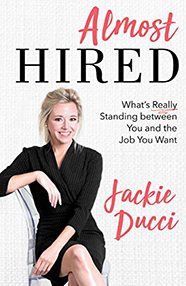
Jackie Ducci is the chief executive and founder of Ducci & Associates, a boutique talent acquisition agency that recruits top candidates for Fortune 500 companies nationwide. She has placed hundreds of people across a wide variety of industries and positions at all experience levels, and her firm maintains a ninety percent success rate for placing candidates in long-term roles. She also hosts the podcast Almost Hired, which takes listeners behind the scenes of how hiring really works.
📚 Books by Jackie Ducci
Transcript
[0:00:20] CH: What’s up, everybody? It’s Charlie Hoehn, the host of Author Hour where I interview authors about their new books. Today’s episode is with Jackie Ducci. She is the author of Almost Hired. This is a problem to anyone who is ever applied for a job. We fail to get an interview or a callback or an offer and nobody tells you why. But Jackie actually knows why. She is the CEO and founder of Ducci and associates which is a boutique talent acquisition agency, they recruit top candidates for Fortune 500 companies nationwide and her firm has an amazing 90% success rate off placing candidates in long term positions. She gets to hear firsthand from these companies why they don’t call you back, why you fail to get an interview and why you fail to get an offer. In this episode, she reveals the costly mistakes that all job seekers make during the hiring process. And why most of the job-seeking advice we get is just wrong. By the end of this episode, you will have Jackie’s best tips and insider knowledge on how to stand out and how to get the right job so you can finally hear those magic words, “you’re hired”. Now, here’s our conversation with Jackie Ducci.
[0:02:04] Jackie Ducci: Coming out of school, and I graduated from college in the early 2000s and I just remember the economy was good at the time, but I felt like nobody was providing any real guidance, we all just kind of entered to world clueless, right? We think we know things and then we realize that we don’t. I remember turning to career counselors at school and just different people for advice and just feeling like okay, you know, you gave me a what career is best for me test and a resume template but I have no idea how to actually get a job. I think that that’s something that a lot of people deal with. It was a flashback for me too when I wrote the book, I’m like wow, I remember how frustrating this was for me at 22 years old.
[0:02:47] CH: Yeah, I will never forget going to a three-hour workshop on how to optimize my resume and then followed by three months of applying to over more than a hundred jobs and not— and getting two legitimate responses of companies saying okay, maybe we’re interested in an interview. I found out one of those companies was a pyramid scheme right before I left for the interview so I didn’t go. The other was just basically a manual labor job, nothing wrong with it but I don’t need a college degree to go do this. It was deeply frustrating. I so appreciate that you wrote this book Almost Hired, because this is a real problem for effectively every graduate, I mean, the advice that they’re still getting today in 2019 is no different from the advice that was being dispensed in the early 90s, the 80s. It’s not fundamentally different. You start your book with the chapter called, “Stop applying for the wrong jobs”. What are the wrong jobs?
[0:04:02] Jackie Ducci: Well, the answer is different for everyone. As you were talking, I was thinking to myself, it’s true that people get bad advice because everything’s cookie cutter and the reality is, cookie cutter doesn’t work for everyone. Everybody’s challenges are different and what everybody’s doing wrong is unique to them. When I say stop applying for the wrong jobs, the wrong job for one person is different than the next. I think self-reflection is just really important, especially for younger folks, they need to think about beyond just the responsibilities of the job that they want, they need to think about company culture, they need to think about the types of people they like to work with, that kind of environment they want, there’s just so many different factors that contribute to a job that somebody’s going to be happy in versus not. When I say, apply for the right jobs, I mean, really think this through and make sure that before you send a resume, you’ve done a little bit of homework on the different companies and thinking about what you want because otherwise it’s so easy to get down this rabbit hole where okay, yeah, maybe this company X made you an offer but then, it’s like, okay, is this really where I want to be? They’ve never thought about it until they get to the end and that’s how people wind up in positions they’re not happy with and then they’re jumping ship. Nobody wins when you're in a position short term. That’s what they should be trying to avoid.
[0:05:22] CH: Yeah, it’s really easy to get caught up in that sort of short-term thinking of “I just got to get a job, I just got to have a paycheck coming in, I need to get on my two feet”, but it’s hard to also not only do what you’re talking about of like think for the long term, think about the company culture, think about what you want, that sort of thing. For a young person getting out of school, they don’t know what they don’t know, right? They may not have a lot of work experience today, they might go in just like, “I don’t know, I’m hoping for the best”. How do they know that they’ve kind of come to, could you maybe give an example of somebody who did do a good job of thinking this through and sort of matching their— you know what I’m driving at. Struggling with the words.
[0:06:15] Jackie Ducci: Yeah, I get it. No, I mean, I see people get it right the second time. Usually what I see is they make a bad decision with their first job and then they learn from that and then they say okay, the example that comes to mind is a college graduate took a sales position and the culture was, it was a startup company, it was very small, very vibrant. I mean, these people were like hard charging, they would go to happy hour together four nights a week. I mean, it was like, very social. This candidate was really good at her job but she was an introvert and so it was exhausting for her to be around these people. And not only was her job kind of forcing her to interact with people all day long but then it was like, if she didn’t want to go out with her coworkers after work, she was looked at like a loser. You know, it’s really unfortunate and so she just finally was like look, I want t to stay in sales but this culture does not work for me so she was very cautious the next time around to really do more research on where she was applying and she landed somewhere that was amazing and it’s a much better fit but it was like, without the misstep, sometimes you’re right, you don’t know what you’re looking for. I would also say, people coming out of school have more experience than they think they do. You know, internships, even little jobs they had in high school, you can learn things from every step of the way. I think if they really reflect, they know more about themselves than they think they do.
[0:07:39] CH: It’s a great point and I’m curious, what else do they have to keep in mind to avoid applying for the wrong jobs? Apart from okay, think long term, is there anything else?
[0:07:52] Jackie Ducci: I mean, I just think it’s like a holistic approach so the who, what, when, where, why. I mean, really just go through every question in your mind like who do I want to be around, where do I want to live? All these different things. I think, the more questions somebody can ask themselves and really just jot down notes, you’ll start to see themes emerging. You know, another thing that can be really helpful is when people take some off those career assessments and I know people roll their eyes and sometimes they’re not that great. But if you take enough of them, themes can start to take shape there as well and that can be a clue into what you want to make sure you either avoid or that you make sure you have in an opportunity that you take.
[0:08:34] CH: Totally. Do you have any career assessments that you really think are great?
[0:08:39] Jackie Ducci: There’s one called the Predictive Index that my team uses. I think it’s really good, for our purposes, we’re using it in the matchmaking process so we usually have a set of data from the employer as well which really helps us do our job much better. But yeah, that’s something that people can look into and there are tons of books out there, I mean, a lot of them overlap quite a bit.
[0:09:00] CH: Yeah, totally. Personally, I’m a big fan of StrengthsFinder, I actually revisit those results from time to time throughout the year just as a reminder because I can get a bit of a shiny object syndrome every now and then where I’m like, this would be a fun career path to walk down indefinitely and I’m like wait, no, I’m terrible at that. I need to just stick with what comes easily and what I know is great. Your second chapter, you talk about, you’ve got this, hitting the send button with confidence and there is no worse feeling than hitting the send button a hundred times with a total lack of certainty every single time or a feeling of defeat before you hit it. Tell me how you hit the send button with confidence.
[0:09:55] Jackie Ducci: Once you’ve identified the jobs that you’re applying for and you’re pretty sure that they would be a good fit. Then, it is all about conveying to the hiring manager that it is a fit and this is where so many people really fall short. The mistake I see made all the time is that people say okay, I have all this great experience, I’m going to throw it all on my resume and tell them every wonderful thing about me and just send it off. It really tends to backfire because the hiring manager then gets bombarded with so much information, it’s hard for them to sift through it and see, okay, how is this actually relevant to the position that we’re hiring for. You could be the greatest person in the world but if you’ve just confused them or distracted them, that’s another thing, there are so many things that are distracting on resumes. They’re just going to move on to the next because they probably have a ton of other people that have applied. That is huge.
[0:10:47] CH: I want to pause you here, Jackie, because what you said is so critical and I want to reiterate it because I feel like this is one of the golden keys to getting hired is basically all young people send the exact same resume to all these different people. There’s no tailoring it, it’s just every single thing that they think could possibly be impressive about them and enticing, when in reality, the employer’s looking at the other end, thinking, this is a disorganized mess. I have no idea how to apply this to the position that they’re applying for. 70% off it is irrelevant.
[0:11:35] Jackie Ducci: Not only that but they’re also thinking, okay, what the heck does this person actually want to be doing? If they’re scattered in five different directions because the employer is concerned about long term fit, not just picking the right person now but they want someone to stay in the position. If it’s confusing and it looks like well hey, this person could choose any of 10 different career paths based on what they’ve done, that doesn’t really look attractive to a hiring manager because they’re going to say okay, are they going to have shiny ball syndrome in two years and go the other direction?
[0:12:06] CH: Right, it’s funny because the impulse, at least for me, many years ago when I got out of school was I want to include all the stuff to show them what a well-rounded versatile, utility player I can be and look at all the things that I can do but that’s like showing up on a first date and juggling and doing magic tricks and also like lifting weights in front of the— being like, look at all these tricks. I have no idea, who are you doing this for? What is this about? It’s not about you, it’s about them and is this a fit for the position.
[0:12:50] Jackie Ducci: Yeah, it just reminded me, I remember being a kid and maybe you lived this too with your parents but it was like, I remember being told as a kid, the more well-rounded you are, the better. Five different stores, speak a couple of languages and we’re just going to make you so well rounded and you’re going to be amazing and then it was like, you go to apply for colleges and you see the people who were really specialized in something get the attention because they stood out. Because every kid was well rounded but the ones that were really amazing at something, that was what got people’s attention. It’s kind of the same thing with job seeking. If you can stand out by being specifically ahead of everybody else. That’s what’s going to get noticed.
[0:13:30] CH: Yeah. I’m sure, I don’t know, if you are like me and listening to this, you might feel a little, I don’t know, maybe down hearing that or, I always used to object, “I can do many things, I am a jack of all trades” and it is actually true. I am quite good at numerous different fields so video, marketing, writing, but they kind of overlap and I never emphasized all three of them at the same time unless it made sense. If you’re applying just for a video position, you only want to show your work through the lens of video and just leave out everything else. It’s not like you have to change, fundamentally just commit to one skillset or area of your life forever. It’s just the way you present yourself matters and it needs to be specific, right?
[0:14:35] Jackie Ducci: 100%. I talk about that a lot in this book, you know, tweaking your resume for every position that you’re applying for and some people actually have a few different versions that they will use if let’s say they have two different skillsets that are both very strong. I’ve seen people that are very good with administrative work but also accounting and they’ve truly done both. They will have one admin resume, one accounting resume and they send whichever version is appropriate based on what they’re applying for and it makes all the difference in the world. I know it sounds like a lot of work and sometimes it is, but my gosh, if you want to propel yourself forward, these are the kinds of things that you have to do.
[0:15:12] CH: You know what is more work? Is spending months applying for jobs and not hearing anything ever. The amount of time it takes to create a few variations of your resume is time well worth it.
[0:15:26] Jackie Ducci: 100%.
[0:15:27] CH: Do you have any specific tips for making a resume that stands out. I mean, I know you talk about it in your book, “A Glimpse Inside the Black Hole”, the black hole is where these applications go and people feel like where they go to die. How do you make your application and resume stand out?
[0:15:49] Jackie Ducci: I think the job description itself is generally all the information you have to go on. I tell people just read that as carefully as possible and just use your common sense. You can find clues. I mean, if they talk about a software package that you have experience with, make sure that that’s not just on your resume but it’s actually highlighted somewhere like bold, so they’re going to see it. Because they didn’t just put that in the JD for no reason. Somebody put thought into this job description. If you're picking up on pieces in there and you say well yeah, I’ve done that, it’s amazing how many times people apply and they don’t stress the same information that the hiring manager just told them that they’re looking for. I mean, it sounds like brainless but it’s just true. You have to go point by point and make sure that you are conveying that you have done what they said they are looking for and then it’s a homerun.
[0:16:44] CH: It’s amazing because what you just said, it is so easy to apply but so few people do it. It’s literally just saying, I read your job description, I’m going to reiterate it back to you that I completely understand it and fit but everybody else kind of just runs with their own thing of what they think is going to work and impress them. That doesn’t work.
[0:17:08] Jackie Ducci: Yeah, because they make it, okay, this is the problem in a nutshell. Candidates make it about them and not the employer. You have to flip that script; you have to think from the perspective of the person who is actually picking. If you owned a business and you had a position open, would you hire somebody who just sent you a canned resume, just talking about a bunch of random stuff or would you pick someone who actually took the time to show you A, that they’re invested in the process and they care to give you something unique, but also that they can actually do the job.
[0:17:38] CH: Right.
[0:17:40] Jackie Ducci: I mean, that customization is critical. I’m thinking about it from the point of view of that person is key.
[0:17:46] CH: Why do you think it’s so common for people to make that mistake of making it just about them? I mean, it’s such a common behavior and as soon as you learn how to not do it, you’re like, how was I doing that? That’s so selfish and egocentric, why do we do that?
[0:18:05] Jackie Ducci: You know, I used to think the answer was because people were lazy. Then, the more I observed it happening, I’m talking to really good people who are motivated who make these mistakes and I think it’s just that they just don’t get it. I mean—
[0:18:19] CH: Is it a lack of empathy or—
[0:18:21] Jackie Ducci: No, I think it’s more like, it is a little counterintuitive, right? Because you’re applying for things and you’re selling yourself. I think where they get stuck is it’s like okay, I’m selling myself so I need to talk about every amazing thing that I do. Rather than no, you just need to convey why you’re a fit for this job. You can sell yourself but it’s just you know, shifting the way that you do it.
[0:18:46] CH: Yeah, it is counterintuitive because it does feel like this big thing and so you do get nervous and you do get in your own head and it’s— I liken it in a lot of ways to choosing a partner that you would want to marry. You wouldn’t just be desperately trying to impress every single candidate so to speak. You wouldn’t be solely focused on yourself. You would be taking the time to really measure this other person, see if you two are a fit, see where their interests are, where they are trying to go and if they were a fit, talking about how you two can be harmonious together and why it makes sense rather than just being stuck in your own mental rut about yourself.
[0:19:39] Jackie Ducci: Yes. I mean, that bleeds into the interview phase too. It’s like, once you are in front of a hiring manager, the candidates that show that they have actually given thought to this process and they’re asking really good questions and processing everything that you just said, they tend to be favored for obvious reasons. I mean, an employer would want to pick someone who’s being thoughtful about this and again more likely to stay rather than just haphazardly like, “Okay, well maybe this will work out.”
[0:20:09] CH: Yeah, I mean you bring up a great point. Someone who is more likely to stay. There seems to be an epidemic especially among young— I don’t mean to pick on young people, I still identify as an immature one, but there’s this epidemic of “I can only work at this next job for one to three years and then I will likely move on to the next” which on the one hand I understand. A lot of things have changed about careers. There’s no longer pensions, retirement accounts or that sort of thing, I get, but how do you empress upon an interviewer that you want to stay, and the second part of the question I guess is why are we so concerned with finding the next shiny object within one to two, three years? I mean that hurts our chances of getting a job.
[0:21:08] Jackie Ducci: It does and some of that is happening now just a result of the economy that we are in. I mean the economy is booming like this and unemployment is so low, the fact is people have more options. I mean if you are a good candidate with good experience, you’ve probably got other employers chasing you right now. So I think because people feel like they are so in demand, they tend to look at their options more so even if they weren’t necessarily actively out there looking. It is easy to get a little ADD like, “Oh wow all these companies want me, maybe I should go take a jump” but the grass is not always greener. So you know I think that’s part of the reason it’s happening now. I am forgetting the other part of your question.
[0:21:48] CH: Yeah, I am just excited to talk about this topic. So I have questions just spewing out, sorry. I guess the other question, yeah how do you impress upon them that, “Hey, I actually want to stay. I’m not going to go running for the green grass over there. I want to sit and stay.”
[0:22:07] Jackie Ducci: So the best way to do that is by conveying why it is a good fit from your perspective as a candidate. So, for example, in that story that I told earlier about the girl that had the sales job and then it wasn’t a good fit culturally, if she went into the next interview process and explained exactly what had happened to her and then highlighted, “Hey, your company culture seems different from where I have been. I really like that about you all and this is why I feel that it would be a great home for me” well that is a perfect answer because then that hiring manager can see: “Okay this person thought about it and is being very genuine and if what she said is true, it should be a long-term fit”
[0:22:48] CH: Man there are a few things that you said that I wanted to ask you about. So one, you mentioned company culture. This person gives an answer where they emphasize this company culture as a certain fit. Right now, it seems like that saying “company culture” is a good buzz word in an interview response, like emphasizing that is almost one of these hacks or shortcuts to making, and I hate to use those words but it is true, to getting in favor with the hiring company. Are there other things that you can say that really standout as this: “Look if you say this in a sentence this is almost certainly going to be in your favor”?
[0:23:32] Jackie Ducci: I don’t know about that. I don’t know, I mean even the company culture thing is a little tricky because okay, this is why research is important. So if you are applying for a company and you’re on their website or you are researching them on social media or whatever and they really stress their company culture like they are so proud of it and rah-rah company culture that is a perfect time to go in and talk about it in the interview. I have actually seen other employers that don’t stress it so much. Like for example, I work with a lot of construction companies that are sort of they are what they are. They are not as focused on that kind of stuff, the bells and whistles and so if somebody goes into a firm like that, talking about company culture is probably not going to go over so well. Yeah they just want somebody that can do the job and show up and be happy. So I think it is really about doing your homework before and yeah, I don’t know if there is any buzzwords or anything like that that I would encourage in general.
[0:24:27] CH: That is a great point. I am glad you shot me down there. Excellent job.
[0:24:30] Jackie Ducci: Just being honest.
[0:24:31] CH: Yeah, no that is fantastic. So people applying for these jobs, going to interviews almost certainly are going to run into disappointment and a sense of rejection. You call it so close but yet so far. How do people stay on track in these final stages, going to multiple rounds of interviews or getting shot down, like, how do they keep the wind in their sails?
[0:25:01] Jackie Ducci: It can be tough. I mean, I think obviously the further you get in the process, the more disappointing it is when things don’t come together, so it’s hard and it is like your dating analogy earlier. It’s like, “Oh man another one didn’t work out, what am I doing wrong.” I think it is just taking time to regroup and keep yourself motivated. I mean there is nothing too complicated about it even though it is hard, I think maybe doing some analysis of maybe why it wasn’t the right fit from the beginning. And sometimes you’ll get a gut feeling about that and sometimes you won’t but the information that you can gather you can then apply to the next search like if you have a hunch just to why they didn’t pick you or something you feel like you could have done better, it is just information for the future and trying to get it right the next time but you just got to keep pushing. It’s a numbers game, really it is. The more you put yourself out there something is going to go right.
[0:25:58] CH: I agree totally. People might hear it is a numbers game and think I just got to apply to more and more, and the key thing is to remember what Jackie said at the beginning, which is the targeted application, one that is relevant. The quality of your application cannot diminish. In other words, it cannot be a general template that you apply to everywhere. It always has to be specific and finely tailored to each opportunity even though it seems like more work, you are actually saving yourself tons of work by doing that.
[0:26:38] Jackie Ducci: Right, thanks for clarifying that. Yeah when I say a numbers game it is like it is but you want to make sure that you are applying for the right jobs because then you are going to see the success rate and the who have to go hand in hand.
[0:26:51] CH: Yeah, so I want to talk about finding the right opportunities. Working with an agency is something that I never did, and I didn’t even know it was an option weirdly. I got all this career advice, no one told me that a company could work on my behalf to find jobs that are the right fit for me and frankly, I didn’t even know that certain companies only deal with agencies and only deal with applications that come through the agency. So can you talk a bit, I know you run an agency, can you talk a bit about what it’s like to work with an agency, what the experience is when you try and DIY, do it on your own versus working with the agency?
[0:27:36] Jackie Ducci: Yeah, so the good news is, if you are in with a good headhunter, you are golden. They will go to the ends of the earth for you because when you look good, they look good and their goal is to put the right person in the right job. So if you have a good relationship there, they can be your best friend through the process clearly. There is a general misconception though and this is something I wish that everybody had a better understanding of, but as an agency, we work on behalf of the employer, not the candidate. So even though we are the go-between and we are technically representing both sides, the way our business works is that an employer comes to us and says, “Hey, here’s the position that is open. This is our vision of the ideal candidate, go find us that person” and then we are paid to run the search and find the needle in the haystack. So from the candidate’s point of view, sometimes they say, “Well, just go find me a job” and it is like, I wish I could do that but I can’t find you a job unless you are a match for my client. So if the match exists then great and we will go to the mat for you and you’re going to be successful, but until that time comes, you know people have to sit tight and just understand that we can’t market them unless we have a match. Does that make sense?
[0:28:51] CH: Totally, absolutely. So it is going back to the dating analogy. It is like having a match maker in your corner and if they know who you are, what your preferences are what you bring to the table, they can match you up with a job without you having to exhaust yourself. And how do you find a good agency? How do you find a good head hunter?
[0:29:15] Jackie Ducci: You know there are so many bad ones out there and it is something that we run into all the time. People roll their eyes when they hear about recruiters but the ones that are good are really good. So I think that the best thing to do is ask for referrals. If you know somebody in your network that has worked with an agency before and they say good things that is a great lead, even putting something out to your LinkedIn maybe and saying: “Hey, does anybody have experience with an agency that is reputable?” I just think personal referrals is always the best way. You can obviously Google search and all of that, but you never really know what you are running into until you’ve had contact. So personal referral is best.
[0:29:55] CH: And we never clarified actually, is your book for everybody who’s on the job hunt or is it primarily for younger people?
[0:30:04] Jackie Ducci: That’s a great question because technically anybody can benefit from it. Anybody who is feeling stuck in a job search can benefit from the content because the rules are the same. I will say, I always have a gut feeling that the 20-something crowd can benefit the most, and would probably enjoy it the most. So my hope is that they’ll devour it.
[0:30:26] CH: Absolutely, yeah. They definitely have the most to gain and because it is actually a skill. Getting hired is a skill and you will need it multiple times in your life. If you do not learn it, life will be potentially be very tough for you or you could get yourself in a job that doesn’t allow growth. You could end up wasting time, you could earn less. I mean the lifetime costs of not learning this are massive and so I would encourage everybody to pick up a copy of Almost Hired. Even if you think you have a decent beat on how to get hired and you gave a lot of great tips, Jackie, in this interview, but there is more in the book. I mean we didn’t cover what to do after they made you an offer and that is a huge opportunity as well. So pick up a copy of the book and yeah, I mean this topic I get so excited about because I have seen personally it just be transformative for my career. I know the power of working with an agency because I have a friend who, he wrote a book called Consulting University. His name is Jonathan Dison and he was telling me about how powerful it is to work with recruiters, with agencies if you want to go into consulting and I asked him, I was like, “It is not that I don’t believe you but the opportunities and stuff that you are throwing around sound a little too good to be true. Let us just run a test through a couple of the recruiters that you work with and see what they bring back to me”. They brought back, I believe it was $1.8 million worth of opportunities of jobs. And he was like, “I work with the best in my industry, I promise you, you would be blown away by these opportunities” and he was right and so I completely agree with you that if you are working with a great agency, recruiter, headhunter, you’re gold, and everybody should deeply consider doing that and search around to find a good one. Your agency, how many people have you worked with at this point?
[0:32:49] Jackie Ducci: I have five within my company but in terms of our client lists, it is probably between, I don’t know, 50 to 75 employers that we work with.
[0:32:58] CH: Amazing and these are— you are recruiting for Fortune 500 companies and you all have an amazing 90% success rate of placing candidates in long-term positions. Your agency is Ducci & Associates, right?
[0:33:16] Jackie Ducci: Correct.
[0:33:16] CH: And so how can people go and potentially contact you, work with you?
[0:33:23] Jackie Ducci: Sure, so I mean our website is the best way to find us. It is ducciassociates.com or you can just Google the company name. So you can see us on our social channels, there are contact information is there if you are candidate or an employer. The other thing we are starting to do now is offer selectively some coaching services to candidates. So if anybody is interested in having some support in their job search we do offer that now one on one. We can only take on so many at a time but that’s something else in addition to placements that we are doing now.
[0:33:54] CH: That is awesome, and tell me a story, if you would, about a client that you’ve worked with, one that you are particularly proud of having placed into a career.
[0:34:08] Jackie Ducci: There are a bunch. One in particular that stands out, and this actually speaks to your point about why it is great to work with an agency if you can, we have had people come our way that would not like, they’re a perfect fit for the job, but they wouldn’t have got it without us intervening. So the person I am think of, she came to us and her resume was just a mess. She had a really good experience but had she sent it to our client the way that it was, they would have just passed it over because she had no detail in there. It was a very specific position and construction and she worked with quotations and things like that but it just wasn’t obvious that she had the experience, but I knew based on the company she was working with previously that they were a competitor of my client and I thought if she has worked there for couple of years in that title, she’s good to go, like, we just need to revamp her resume. So sure enough, she goes through the process, we fix everything up. She interviews like a champ and she got the job and we all just sat around high fiving because we’re like, “If this girl applied on her own, they would have never given her a second look” but because we’re able to repackage her, she wound up where she belonged.
[0:35:16] CH: I love that and it speaks to the broader point of, if you have been sending out resumes and not getting responses at all or just getting unfavorable responses, you might be in that person’s shoes and just not even knowing it. Your resumes that you are sending out might be a disaster even though they seemed great to you. So it is worth the time at the very least to get in touch with someone like Jackie or her team just to have an assessment of where you currently are.
[0:35:54] Jackie Ducci: Another thing that we’ve seen happen a lot is candidates who really blow it in the offer stage. So somewhere in the negotiation there’s some classic mistakes people make and so I think so many times us being involved and helping them navigate that final stage, it is like, “You are on the 99-yard line, don’t say X or Y say Z”, you know those things can really—
[0:36:16] CH: Can you give an example of that?
[0:36:18] Jackie Ducci: People get stressed all the time about negotiating salary and I think it’s just always best to be honest about where you are and what your expectations are because at the end of the day, the employer has a budget in mind for each position. So I always tell people it is not about you, it is about them. Before they even knew you existed, they had a number in mind. So if you are completely misaligned then it is better to get that out in the open earlier, right? So nobody wastes their time, but people price themselves out sometimes because they’ll say, “Okay well I think I am worth this” and it is like, “Ugh, did you really have to throw out a number that high?” because now, they are going to look at you like, “Well, we’re just in completely two different ballparks”. So just being a little bit humble and a little bit honest can really go a long way.
[0:37:06] CH: Yeah that is so valuable. Again the book is Almost Hired. It’s on Amazon. I’ve got one final question for you Jackie and that is to give our listeners a challenge. What is the one thing they can do from your book this week that will have a positive impact?
[0:37:25] Jackie Ducci: It is very simple. Just apply the advice. You know I wrote this book with 15 years of experience in this industry, like it is chock full, every single page of things that I have actually observed that work and don’t work, but it is going to take some effort. So if you read it even a chapter of it and apply what I am saying, you will see an uptick in your success rate when you are job seeking. So it is not rocket science, it’s simple stuff but it does take some effort.
[0:37:54] CH: The book is Almost Hired, it is on Amazon. Jackie, thank you so much for being on the show.
[0:37:59] Jackie Ducci: Thank you so much.
[0:38:01] CH: Thanks so much again to Jackie Ducci for being on the show. You can buy her book, Almost Hired, on amazon.com. Be sure to check out authorhour.co for show notes and a transcript of this episode and be sure to take a second to leave us a review on iTunes, it would mean a lot. Thanks everybody, we’ll see you next time. Thanks for tuning in to today’s show. If you liked what you heard, here is what I want you to do next: open up the podcast app on your phone or iTunes on your computer and search for “Author Hour with Charlie Hoehn” and then click “ratings and reviews”. Take 10 seconds to rate this show or leave a review. It is a small favor but it’s really the best way to show your support and give me feedback and if you know someone else who’d love Author Hour, take another three seconds to text them a link to this episode. We’ll see you next time.
Want to Write Your Own Book?
Scribe has helped over 2,000 authors turn their expertise into published books.
Schedule a Free Consult