Trevor Campbell: Episode 267
Read the full transcript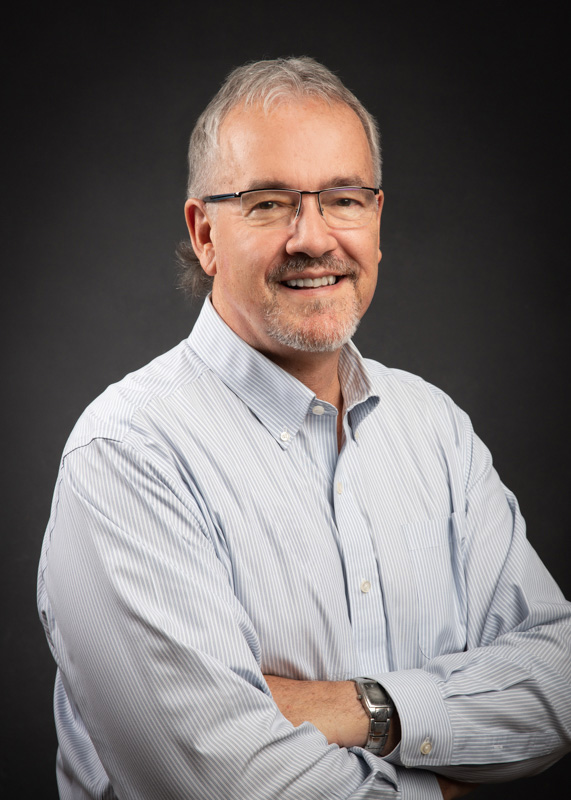
Trevor Campbell
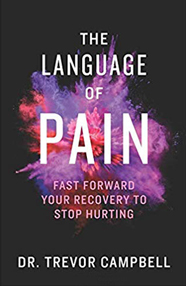
Dr. Trevor Campbell is a family physician who studied medicine at the University of Cape Town in South Africa before emigrating to Canada, where he became focused on the treatment of chronic pain. He has worked in multidisciplinary pain management and opioid reduction programs and served as medical director for a leading pain management provider in Western Canada. In The Language of Pain, he draws on cognitive behavioral approaches to offer practical, non-pharmacological tools for reducing chronic pain.
📚 Books by Trevor Campbell
Transcript
[0:00:17] RW: Hi, everyone. It’s Rae Williams, host of Author Hour, where I interview authors about their new books. Chronic pain. It’s kind of one of those terms that you hear about, but you don’t’ know too much about, more than likely or you know all about it and you’re definitely in need of relief. Our next guest, Dr. Trevor Campbell is the author of The Language of Pain He’s going to explain to us what chronic pain is and how to reduce your suffering that isn’t focused on drugs or expensive pain management programs. Here is our conversation with Dr. Trevor Campbell.
[0:00:54] Trevor Campbell: As a kid in school, I did pretty well. But my focus was on languages and literature, you know? Two European languages, Latin and then I did German later because it came easy to me and I really enjoyed it. That was my first sort of like focus at school, high school. In the end I chose medicine. It was only years later that I realized that they were both, the basis of both were in the same thing which was intense interest in people. While some people say they became a doctor because they had – love with science or they had the humanitarian sort of drive. I have to say; I was just very interested in people. And, point kind of thing. I think it’s the endless variety of thinking patterns and behavior patterns one witnesses on a daily basis. 38 years later in medicine, I still find that fascinating. It was a good choice. What happens is I go to medical school, I qualify around about 81 and at that time, the feeling was okay, you know, after two years in the hospital, doing various jobs, you go out and do what’s called nuts and bolts, general practice we called it inside Africa and the UK and other countries, but it’s called family practice here. I applied for a job at a very high-profile practice, with really experienced doctors. While I’m starting really. To my dismay, I get the job, they take me in and I go in full ball, you know, I’m delivering babies, I’m doing senior care homes, I’m doing all that sort of stuff, right? I get to see some of the other doctor’s overflow, very successful, sometimes the patient can’t see the, they don’t mind seeing me and I’m building up a practice slowly and then something very strange happens. I see that these patients seek me out for certain things. This is with their doctor’s blessing, even though the doctor’s not on holiday and so forth. It’s kind of awkward, but I sorted it out with the doctors, they’re very happy. That’s always a psychological or nearly always a psychological problem or you know, existential crisis maybe and I’m thinking, “why would you come to t the youngest guy relatively speaking, way less than everyone else?” Obviously, hasn’t had a great deal of life experience. Now, I have to tell you that at that stage, the fee for cancelling was lower and a lot of doctors feel that – I mean, you counsel anyway in medicine, it’s naive to think you won’t, you will, in each clinical encounter. But it doesn’t pay every much and a lot of doctors don’t seek it out, they feel that primarily, physicians are not psychologists and somebody wants to do that for the patient, that’s fine. One day, I kind of asked one specific patient, “now, your doctor’s here, you like the guy and huge respect. Why would you come to me with this issue?” He looked me straight back and this is South Africa where people are more shoot from the hip, you know, more extroverted. “Because you have the face that says tell me about it.” What? What’s wrong with my face? You know, only later do I realize that it probably was based on active listening because I am interested in people, right? Anyway, eventually I accept it and I think well, you know, if people are seeing this, I don’t really know what they’re talking about, maybe I shouldn’t run away from it. I do it and I learn a ton about life, about medicine. And what I do is I kind of use literature to describe scenarios related to the predicament they’re in and then they have these choices and they get insights from them. It does two things; it removes the problem from right in front of their face. Then secondly, it basically just makes it easier to get perspective and it’s not such a tender thing to talk about, so that’s what I end up doing and I call it, what do you do with them? I say, it’s called – they come to me with what I call painted in the corner syndrome. Like mid 40s, I’ve got all these blessings that should be counted, but why must counting and why am I so unhappy? It was successful. I kind of was drawn into this, or dragged in if you like. This followed me, even when I came to Canada, did my first locum. My medical officer assistant at that time, she saw my initials, she said, “TCC, what does the C for?” And that’s my middle name, Clyde. I said to her, “it’s called Dr. Trevor Cathartic Campbell, which was amusing to me and she didn’t know what I was talking about.” Obviously, I tried to explain the joke. I guess you had to be there, but it was interesting to me that just the short time in another country, and that same thing happens. Maybe I have to accept that I have got the face that says, tell me about it. They never mentioned that in medical school, interestingly but you know, that’s how I got it. Eventually in Canada, come very interested in chronic pain, which is a mystery and this all sorts of theories, it’s very vague area of – but a very rewarding area of medicine. Of course, I see the type of communication required for this sort of thing. Although the learning curve is steep and the work’s really hard, I do feel like I’ve come ‘home.’ Because it’s almost like what I was made to do. So again, you know, the counseling finds me the pain finds me and since too much, I’m obviously not the greatest planner or something. You know, that’s what happened and yeah, it reminds me of Joseph Campbell, whom I started reading at university. You know, follow your bliss and sort of things look after themselves. I think that is very powerful, he also says, I think it’s he that said, “you know, with those who stood on a cliff and those who jumped all grew wings, but the ones who were waiting for the wings to grow had to stay on the cliff because it just didn’t happen.” Anyway, that’s how I make sense of it.
[0:07:42] RW: All right. Now, I would love for you to expand a little bit more about chronic pain and what chronic pain is because I feel like a lot of people, as you said, it’s a grey area, maybe in medicine too, but also for just people in general, a lot of people I find when they have chronic pain don’t know what’s happening, which is probably why you know, your face matters because they want to tell you about what’s going on and would it really be heard. Could you talk a little bit more about what chronic pain actually is?
[0:08:10] Trevor Campbell: Well, I’ll start by introducing, you’re absolutely right, I mean, most of them have no idea what’s going on. That is part of the problem because how can you present someone with the treatment plan or of quite a bit of due diligence and get their buy in if they really don’t understand A, what is going on and B, why they should do this to counter whatever it is that’s going on. That’s the one problem. The other problem and the reason that persists is because the training at undergraduate level and even currently physician level, where studies have shown that doctors are actually uncomfortable dealing with chronic pain and say so because of their training. The other thing is that the medical model and Canada is obviously different from the States but in Canada basically now, if you’re at a walk-in clinic, you get 10 minutes with the physician in your own practice, you may get 15 minutes and occasionally they’ll double that up as a double consult. But the current medical model, almost in my view, precludes the satisfactory treatment of chronic pain. There’s a lot of inflammation to convey, there’s a lot of skills to be taught and objections to be handled from the side of the patient and then of course, repeat, repeat, repeat because these are entrenched behaviors, so you cannot do it once or twice, you’re going to do it several times. It doesn’t get managed. Now, I happen to lecture physicians and residents, these are people who going to do general practice but in a two year residency. I don’t think based on the knowledge we have that’s being adequately dealt by the universities. Now, I remember my own university, we were more likely to get a question on something that interested the professors than something we would see very often. Maybe it’s a bit of that, I don’t know. The doctors aren’t really trained because I do lecture residents and physicians. Their training has not increased much from what I can see, regarding chronic pain and it doesn’t nearly match what we already know and I think that’s something that really needs correction. The other thing is that for any pain treatment to be successful, it has to be approached in the biopsychosocial model. Now, this is a word that intimidates patients when they first hear it. All it is normally if you have acute pneumonia. You can approach that bio medically, you can make the diagnosis, you can do the X rays, take the cultures, get the appropriate antibiotic, give them right support of treatment and they do well, that’s a bio medical approach. With chronic pain, you’ve got biopsychosocial so it’s very much a disease that is worsened, prolonged, sometimes even instigated by psychological and social factors. We have a biopsychosocial treatment. Because it’s covering three disciplines, obviously, it’s not one thing that’s going to save the day, it has to be multimodal, you’ve really got to address the problem at all three levels in some way or preferably, ways. In fact, based on what I’ve seen, my knowledge is mostly learned in the trenches so I’m not academic as such, I am not a researcher as such. I am seeing how people behave and it’s consistent and making sense of that. Most of my work has been done in pain management programs which are multi-disciplinary and involves psychologists, occupational therapist, physiotherapists, pharmacologists or pharmacists and so on. I would even say that some patients I’ve seen, I would call the illness socio, psycho, biomedical in that order. It’s hard to do all this work at a medical encounter in a normally structured medical practice. Now, in Africa, there’s a saying that it takes a village to raise a kid. One gets the feeling that it actually takes a team to treat a person in chronic pain. Now, on the positive side, this can be handled if the patient can be prepared by knowing the meaning, being coached through acceptance and all of this. That was the reason for all these other factors, the reason for writing the book. I had wanted something where the patient could read it or the caregiver as well and then make, absorb the information and have and be ready to be treated at general practitioner or family practitioner level. So, that ties back to your first question. Now, the other thing is that because you’re juggling issues in so many fronts, to impart this vast amount of knowledge and information. You have to use metaphors as well as analogies because these tend to fast track learning and increase what’s called these days, stickability, it remains in their head, right? Because otherwise, it’s overwhelming. We have to remember that with chronic pain, the outstanding feature is low energy. Often, these people have other pathologies like they are deconditioned, they have the pressure often, anxiety, sleep dysregulation. You are dealing with a person that really doesn’t have a lot of maneuverability from the point of view of learning new things. This book actually, I’m very pleased that most of the information could be conveyed in an understandable form. As I say, while the treatment of family practitioners remains at the current level and while our models of delivery don’t change that much, it’s not going to be well handled which is a shame because in North America, about 20 something, 25% of the population have chronic pain. You know, also deal with opioid reduction and I can tell you that part of the problem has been the idea as regarding opioids, but also there’s much easier to give a prescription than to go through this tag of war. It wasn’t missing information on the product, but there was also this ease of a prescription and the expectation, there was a time in fact that you could be sued if you were under treating pain in certain countries. I’m not sure whether that addresses the question. I kind of jumped around and that’s the quite of feature with chronic pain. Things are so connected that you do od that sometimes, even within the consultation.
[0:15:29] RW: In terms of as you mentioned, just opioids and the fact that at least here in the United States, where I am. There is clearly a huge opioid crisis. What is it that you do or recommend or can tell people to take action on that’s different to treat chronic pain rather than just prescribing these opioids that are obviously creating a problem in our society?
[0:15:51] Trevor Campbell: Okay, well, a lot of the latest research, if you look at pain scales that go from zero to 10, with 10 is the worst pain imaginable and zero is no pain at all or normality, women often say that men don’t know what the worst pain of all is and we have that conundrum, but the real issue is that these scales we rely on are subjective. I have had say, a truck driver who is really having a bad day saying,” well what would you say” – I ask them what would you say your current pain level is? If they’re in a particular frame of mind, they may say, “you want my pain level? It’s about 400 out of 10, you happy now?” It’s very – it often depends on your – well the pain itself depends on your mental state, whether you slept particularly badly or not last night. A whole list of reasons and we know that there are modulators, which are like volume knobs. Think of modulators as volume knobs that can ramp up the pain and de ramp it or soften the pain. For example, you have severe pain and then you get a call from some family member who is really demanding and entitled. They bend your ear for 10 minutes and you can feel that pain almost go up, it’s because of the state that you find yourself in. Lack of sleep can do it, financial difficulty and remember a lot of people with chronic pain are not working or they’re working half time and they really have these stresses. Yeah, basically, that all ties into it. Now, the opioids, it’s been shown recently that if you look at scores and many of these scores, the best results with opioids is they reduce pain by one unit. For example, the idea is if the group on average had an average of eight pain scale, it will go to seven, which is not that much, that’s the type of thing change we would expect to see for something like acetaminophen. Now that opioids are being clamped down on and certainly in Canada and North America, I don’t know about the whole world. But we see a renewed interest in cannabis which is another issue completely, but with all this interest in cannabis, at best, it only reduces pain about .5. Now, there is some evidence that some people, having said all of that do benefit from a trial of opioids, which means they go have some opioids, but it goes, the dosage is checked on and it’s a trial. If their functionality is not going up, the quality of life, whatever their pain is doing, they should still be tapered off. Opioids work incredibly well for acute pain, you break a leg, you will want opioids, it’s as simple as that. But for chronic pain, it’s because the pain has been changed and areas of the brain are affected, which at the beginning of the onset of the pain, were not involved. We talk about this concept; I have to mention this and I should have mentioned it with biopsychosocial in the earlier question. Neuroplasticity is what – is how pain is caused. Brain has the ability to change, we learn a new language, our brain changes, we over time forget a language, our brain changes. With chronic pain, certain changes are made and they kind of extended to an area of the brain called the prefrontal cortex, where it’s tied with memory and emotion. Then, what’s happened is this alarm signal becomes extended and can be triggered by all sorts of emotional issues, memories. We know that, that chronic pain is very often in women linked to abuse issues, physical abuse. Opioids was a quick fix, but it was also based on misinformation. It was presented as something that’s just low risk and so forth. Obviously, we’ve had opioid from overdose. This actually, you know, people talk about the opioid crisis, currently an illegal fentanyl crisis, where there’s contaminated drugs but the prescription crisis is this long-standing issue which started around about sometime in the early 90s where people were just given, for chronic pain, they were just given opioids. That’s where we’re at. My view is that for long term chronic pain, we call it non cancer chronic pain, opioids are not indicated for the most part.
[0:20:55] RW: Okay, so if you have to then go in and choose the unique idea or story from your book that listeners can take action on or just used to help themselves just figure out their way through chronic pain, what would that be?
[0:21:09] Trevor Campbell: I have chosen, what I say in my book that the treatment of pain is often underwhelming when you hear it and you think, “and so what?” That is like kitchen table advice and it does save the day. So, what I have chosen and I thought very carefully you know, about this for a long time since completing the first draft and it is the advice and this is going to sound very strange because we have a history of campaigns. You know are we going to fight cancer and we are going to fight addictions and we fight poverty. We fight illiteracy, we’re fighting everything right? So, we fight chronic disease, addictions. I don’t like the term fight and for chronic pain, I certainly don’t like it because when you fight it means something very specific to anyone and I would imagine in any culture, you are getting ready for battle. Now that’s your sympathetic autonomic nervous system. Flight or fight, most people have heard about it. So, it is great if you are being chased by the saber tooth tiger you can perhaps get away or if something or somebody that you don’t know is coming rushing with you with a sharp object. But this is unfortunately or maybe fortunately an environment that almost precludes, rules out recovery. So, things that rile the patient, I am trying to get them out of sympathetic mode because sympathetic mode is essential for your survival, but very short periods of it. We know that westerners and western cultures, materialistic cultures you are encourage to basically compete and it is a battleground. The workplace is a battleground, socially, it’s competitive, financially it is often a struggle, even if you earn quite well and this just riles people and any time spent on a toxic zone that is prolonged is likely to make whatever condition you have worse. So, people might say, “well okay that is not the most riveting thing I’ve ever heard,” and I would agree with them and it’s important. I don’t know, I just think it is such a simple add here and it goes beyond chronic pain, but specifically applies to it as well. And when we flight or fight, we must also remember that our outcomes are almost assured to be worse because our thinking is, we are on automatic pilot. Thinking gets distorted, behaviors get distorted. For me for example, if my neighbor really irritates me and I’m going to ask him to stop doing something and I go knock on his door in flight or fight mode. I mean who knows what can happen? Whereas if I go and I say, “can we speak? And this is a bit of a problem or somewhat of a problem or I really find this hard to live with.” It could end amicably, the other one could end with a lawsuit or violence. So again, this becomes – this is the way and I use this example because this is the way the book is also structured. It is looking at the issues that can be mopped up or dealt with by the actual patient themselves because this is their environment. I mean an encounter with the doctor is like maybe 15, 20 minutes. What happens to the rest of the time? One cannot simply go back and behave like one behaved before. So, I give reasons I use illustrations, analogies as I say to do that. I realize it is not a mind blow, it is not an epiphany, but it is important and it is sad that it is being so overlooked. You know we still see all of these campaigns to fight and immediately you reach maybe for your wallet if you’re sympathetic for that particular course, but you already riled, just as donor, I don’t know, I do think that’s important though.
[0:25:15] RW: So let me ask you what happens or what have you seen happen when we are not addressing chronic pain in the correct way and you touch on it a little bit but I am wondering if you have an illustration or a story of what can happen or if we are not dealing with this the right way?
[0:25:30] Trevor Campbell: What happens is you lose countless – I have seen people but unfortunately, they came in late because I saw them mostly in the pain program, which are very expensive. So, if they don’t have a good insurance or like a worker’s compensation, a lot of people can’t fund it because it is a whole other of experts and you’re there for six to eight weeks. So, you can imagine they are not inexpensive, but what can happen is that people try things and they put all their faith in it. Whether it is acupuncture, which could be part of the solution or bio feedback or Reiki or whatever you can think of as though it has to be multimodal. It has to be several things going on, but not everything can go on of course because it is a very broad field. But they end up trying something putting all their faith in it and then being disappointed and eventually many of them or certainly too many of them in my view end up sofa surfing. Eventually the spouse is dishing their food and they have a terrible life and they give up on their selves that’s I think the biggest. It is kind of just, “you know what? I don’t care anymore.” And that could be avoided because when it hits them it is not only from inactivity, but they stop socializing. Now I say to people, can you imagine if you didn’t have chronic pain and you had the same lifestyle? You’re still on the sofa, you are telling your wife to tell your friends on the phone that you’re asleep because you don’t want to accept the invitation. You are not having any physical activity. This is not a life for anybody, but it is somehow blamed only on the pain and you see someone – what I focus on is like trying not – in the book it’s repeatedly urges people not to focus on the pain entirely. They should look towards increased functionality and increased quality of life. Make that attempt to socialize like more, make that attempt to do more. It can be as simple as well your legs hurt; you can still unload the dishwasher. Take your time kind of thing and build on this and then things change because things change because what happens is that increased functionality, an increase for quality of life are themselves positive neuromodulators for wellbeing. So, they dampen down the pain. That comes as a consequence, but if you focus on the pain, as I say as often, we drive where we are looking. You know when you learn to drive, they say keep your eye on the road. And when you want to go somewhere look in that direction, not rubber necking while you are on the road and that same principle applies. I mean it might be a pedestrian, every day metaphor but it is true.
[0:28:30] RW: Do you have an example of a success story that you can share just someone that came in and you changed their life?
[0:28:37] Trevor Campbell: There were a few of those and depends on what I addressed and how many of these big issues I am able to resolve or help them resolve, I should say. So, I have this one lady come and see me and that she was not in the pain program so I want to show that it can be done in a practice setting. She is 52 years old around about and she was a paralegal and she just said there is nothing at all that can be done for her pain and all of that. So, I say to her, “well how do you know?” she said she tried everything. So I said, “well maybe the approach was wrong.” Then she said, “well it is fibromyalgia so that is different than any sort of pain.” And over time, I was listening actively, assuring her buy into what I was saying so that I could have the chance to go through everything explaining what was going on. She said, “well I’ve had that trigger point injections, they haven’t work for me.” And so on and so on. Got her to accept it, slowed her down and telling her that not everything that happens in someone over 50’s body necessarily is related to their pain you know? If blurring of vision attest to be the pain’s fault no, what then happens to people at times and get it checked out kind of thing and this whole neuroplastic story of the pain undoing the brain, preparing it for chronic pain is a neuroplastic process. You can redo it. It is a slow process, but it is not going to take you as long as it takes to develop chronic pain, if you stick to it and you are diligent. And you know, I told her and I think this was the big point for her, I said, “when it comes to chronic pain it is not so much the variety or the subtype of chronic pain you have, but how you think and behave when the pain strikes.” So, it doesn’t matter it’s no different really if you have a crushed leg, fibromyalgia, inflamed joints, it is how you respond to it. So, in that context she came to learn that chronic pain is like an alarm system. You know when we get acute pain, that’s immediate pain, say hot surface, you touch the hot surface to protect your body this is an automatic reaction involving two groups of muscles that pull it away and that inhibit the other one that keep it there. And without knowing it, you take your hand away it burns and you recover. Now that is like a good home alarm. There was an intruder the house so to speak, you were warned and you dealt with the situation. Chronic pain is a maladaptive or sensitized alarm system. So, now you are getting the pain alarm, the analogy being in a house, a raccoon past your door or the wind blows very strong and the alarm goes off, even though no one breached the envelop of your house, nobody intruded. So, it is a faulty alarm system that is caused by belief’s behaviors and when I say behaviors this is very important. It’s not just things that the patient did unwittingly that were harmful. It is more a case of stopping those every day behaviors that are so important that we all do without thinking. So, it is a learning process and she went to do very well. She went from half days to full days. She is spending way more time with her grandchildren and there were no drugs involved, even non-opioids I am talking about. So, I focus on non-pharmacological non-drug treatment, right? So, I am not saying you can’t use other substances like Gabapentin or Pregabalin drugs because it is a multimodal approach. I am just saying there is so much that we can do by reversing what happened through behaviors and thinking. And the beauty of it is this applies not only to chronic pain, but to all chronic disease.
[0:33:02] RW: Okay, I would love for you Trevor to give our readers a challenge that they can walk away from this episode with, whether or not they’re having chronic pain, but especially if they are, what is one thing that you would challenge our listeners and your readers to do?
[0:33:17] Trevor Campbell: Okay, now I mentioned that my background was in literature, so whenever I see the word narrative, I don’t groan and I am all over it, right? So you know, as I became more and more aware of the approaches for counseling, talk therapy if you like, that was immediately of interest to me and it’s used really by therapists to bring up deficiencies to patient’s previous treatments or issues they’ve had here to be dealt with. But what I soon learned in chronic pain is that it plays a really vital role. So, when you have chronic pain, we construct a narrative. A narrative is just a complicated word for story. It’s the story we tell other people, physicians, interested family, interested friends and acquaintances about how we are doing and our history and so there’s usually a few versions. A very short version not an elevator pitch, but a short version out of moderate long one and people repeat this over and over because other people want to be polite and they are generally interested and so forth. So what we forget is that every time we tell people we are repeating it ourselves and I remember I was reading a book once and they said if you ever remember just three Greek words, it’s the following and I have never forgotten them because the concept was so important, but it translates into “character is destiny.” And we know there is a lot being written about how we end up depends a lot on how we approach life, things, other people. It was called, “ethos anthropos daimon,” were the three words and what happens with narrative I have learned, this is my observational insight, is that instead of character becoming destiny, history as related by the person suffering becomes destiny because what are we telling our bodies when we give a narrative that really mostly pertains to the milestones? The negative milestones. We won’t mention that again, perhaps we went to Mexico for a weekend it was quite good. We will mention that the MRI looked worse or the pain levels went up, maybe not the MRI, but the pain levels went up or that drug didn’t work. So, the analogy I use for that is can you imagine playing out. I will make it rugby because that is what I played. You are playing rugby or football and you are facing a challenging team and the coach comes into the changing room and he gives you the heart felt plea, “I am with you guys, you’ve trained hard. You are doing well; you will do well and we are rooting for you.” But each paragraph ends with, “even though you don’t stand I hope in hell of winning.” I mean we torpedo ourselves by giving a narrative, which just I am not asking to misrepresent their narrative or edit it to the point where it doesn’t sound like their story. I am just saying be aware and be very careful because if one is in a zone too long, whether it’s sympathetic mode, firstly a very bleak narrative and most of the narratives I hear they are extremely bleak. Some justifiably so, but that puts you in the stride of fight or flight just narrating it and also, it becomes a part of your negative internal dialogue. Now the body is a complex neurochemical, physical entity with very advanced communication systems. It would be naïve to think I am not a celebrated physiologist or anything, but it would be naïve for me to believe that constant negative storytelling about oneself does not filter down to even a cellular level and it is shooting oneself on the foot. Just be very careful, people are going to ask you. Have a narrative, but keep space for good things that happen even if they might at the beginning because ultimately, we become our narratives and if you are only filtering the bleak it’s like filtering in cognitive behavioral therapy, which is obviously a very widely used intervention as well, which I do speak to at a basic level in the book. I know these examples are not shattering and people often expect more. But these are the real confounders and you see this clinically because when people are able to start or when they get that aha moment, they get the insight, remember we are talking non-pharmacological interventions and this is all going on in the background. It’s no wonder that the medication doesn’t work that well. Any medication in chronic pain. I don’t know if I made that completely clear. You see I am so used to telling people this. It sounds like it’s easy to understand and of course when I am with a patient, I can see by tension in the mouth or the squinting or something that I have to explain more, but if you haven’t heard this before, if anyone hasn’t heard this before then it is kind of a challenge to get one’s head around it. It is certainly not complicated or rocket science, but it is underwhelming.
[0:38:50] RW: Right and like I said in the very beginning, I do know that chronic pain is something that people tend to not understand as well and then when you do explain it, it’s like, “wait there has to be more, you know?”
[0:39:01] Trevor Campbell: Absolutely. It’s like life, there’s no end, there is no beginning necessarily, to the story. I am not saying to chronic pain, I am just saying where you start there is only the infinite amount of knowledge, which permeates it, but I think it can be reduced into solid principles that one can literally take to the bank because they are time proven and they actually are intuitive once they’re probably explained. People do get it. I have very few objections. I have people in tears saying to me, “I totally get what you are saying and believe it and I have often thought that myself and I thought it is irrelevant, but the trick is still to do it.” And I say, “well that’s like anything, the trick to stop smoking, the trick to get up earlier to get to work on time it takes practice and it is daily.”
[0:39:56] RW: So, how can people contact you if they want to learn more? Of course there is information in the book that we want them to read but how do they get in contact with you?
[0:40:05] Trevor Campbell: Okay, the website is drtrevorcampbell.com and there is a contact page. Now I am still unsure of the actual launch date because it depends on what is happening on another process with the book, but it should be online in about four weeks’ time.
[0:40:28] RW: Okay, perfect. Check out The Language of Pain on amazon.com. Special thanks to Dr. Campbell for being with us today. Rate and review us on iTunes and listen up for our –
Want to Write Your Own Book?
Scribe has helped over 2,000 authors turn their expertise into published books.
Schedule a Free Consult