Adam H. Michaels: Sink or Shine
Read the full transcript
Adam H. Michaels
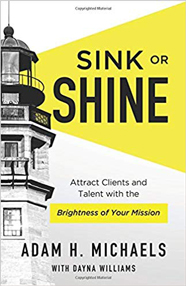
Adam H. Michaels is a sales and business leader and a co-author of Sink or Shine: Attract Clients and Talent with the Brightness of Your Mission. He has spent much of his career as an entrepreneur and went on to lead a large sales organization at a Fortune 150 company. Today he helps startups and international companies entering the North American market build their multi-channel sales and distribution strategies. He also hosts the web series Elevate with Adam and the podcast The Lighthouse.
📚 Books by Adam H. Michaels
Transcript
[0:00:17] RW: Hi, everyone. It’s Rae Williams, and I'm back with another episode of Author Hour where I interview authors about their new books. Our guest today is sharing an interesting concept with us. Tug boats and light houses. Now, if you’re wondering what I’m talking about, no, our next guest is not a ship captain, he is Adam Michaels, the author of Sink or Shine. Adam is talking to us about the modern marketplace and the two types of business around. Tug boats with antiquated ways of the past and light houses, businesses grounded in the strength of their mission and impervious to environmental changes. More importantly, we’re going to talk about how you can transform your business into a lighthouse. Here’s our chat with Adam Michaels.
[0:01:06] AHM: I’ve spent the vast majority of my life as an entrepreneur. I was the little kid on the back of the school bus selling bubble gum to kids for a quarter a piece and then puck me a dollar and buying four packs and then 16 packs. I was always that kind of guy and you know, went through college, became a nightclub promoter, ended up in the insurance business, totally by accident and after a 25 year career of building independent businesses where I sat across from business owners, CEOs and CFOs and heads of corporations and worked internally with a team of tremendous entrepreneurs and taking a corporate role in a large Fortune 500 company. I’d seen kind of like this full scope of business and really the challenges that a lot of them were facing. I think at the core, the real reasons like the real essence of why I wrote this is that I’m extremely passionate about entrepreneurism and entrepreneurs. In fact, I think entrepreneurism was the answer to vast majority of the ills that plague our society as a whole. Primarily because entrepreneurism doesn’t care, it doesn’t care if you’re black or white or gay or straight, it rewards effort and execution indiscriminately. You know, to a certain extent, I think that the luster or the idea of the American dream has started to falter a little bit. You know, the Horatio Alger ideal of bootstrapping your way up the class ladder has been replaced by a narrative of victors and victims. And it’s been shown, you know, obviously in our political environment that we’re in today, there’s this insurgency that’s taking place and I think a lot of that has to do with people feeling like they’re hopeless and economic immobility has kind of grab hold of such a large portion of the population. In my opinion, you know, education system has kind of fallen on its face and isn’t helping those people. We know politicians aren’t going to help people. You know, to me, entrepreneurism is the obvious answer and it’s not just for the entrepreneur, it’s also for the communities that those entrepreneurs build their businesses in, it’s for the employees that work for those companies, it’s for the society as a whole that benefits from the products they serve. You know, this book in a way was an attempt to help individuals that see that path whether they’re inside of a company as an intropreneur. To help them have an increased likelihood of success in an environment that’s becoming increasingly difficult. I think that’ what we set out to do, there are some businesses that are going to thrive and there are going to be others that find themselves really suffering and struggling and you know, dying a slow death and so this book was designed to help people regardless of where they are in life, whether they’re an entrepreneur or wantrepreneur or working inside of a corporation where they feel like they might be able to affect change or not affect change. Every one of those audience s can benefit from understanding what it takes to make a business successful in today’s environment.
[0:04:06] RW: Nice, let’s talk title a little bit. Your title is Sink or Shine. Coming off of what you just said, could you go in a little bit more about why you decided to name the book that?
[0:04:17] AHM: yeah, I coined like this evocative metaphor several years back when I was in a role where I led a team of about 5,000 sales people and this concept of becoming a lighthouse and sending a message to the marketplace to track talent and clients by the brightness of our mission. This idea of the tug boat and the lighthouse is a central theme of the entire business so sink or shine obviously is a play, do you want to be that tug boat that potentially has a risk of sinking or do you want to stand tall upon the shoreline and attract clients and talent by the brightness of your mission? You know, the tug boat is the kind of antiquated business of yesteryear. It was you know, really reliant on the captains and it was susceptible to human failure and mechanical failure. A lot of times, tug boats have limited range, they won’t leave the safety and comfort of their harbor and it’s not really scalable. And in today’s environment, to me, what I’ve seen in the thousands of businesses that I’ve sat across form over the years is that the businesses that really seem to succeed disproportionately are those that have this really strong, authentic mission driven kind of identity. Where that’s the central idea of behind every decision that’s made. And so, you know, we talk a lot about this idea of if you build a lighthouse, there’s no limit to the scope or the potential of where the business can go. That’s really the essence of the title of the book, it’s this kind of difference between the tug boat business and the lighthouse business, that sluggish vessel and that destination that, you know, has this epic beauty, stands out that makes it a decimation of everybody who is looking it forward and even people that happen upon it by mistake.
[0:06:10] RW: Going back a little bit to the idea of entrepreneurship, what is the first step that people can take to just become an entrepreneur and to make sure that they’re starting their business off on the right foot and not being a tug boat?
[0:06:23] AHM: Yeah, well, I think it’s funny because not everybody, when I was a kid, I hadn't decided that you know, I was an entrepreneur, it was really like this realization of a prepubescent identity crisis, you know? I think that I was an athlete but I was not – I didn’t really consider myself as one of the jocks, you know, I was in the advanced classes but I wasn’t a nerd, I was you know, I was into music but I wasn’t kind of – All these people had these identities, ways to identify and so for me, I sat in the class in economics class and understood this idea of risk and reward and became really enamored with an understanding that that was a way to define myself. I think that entrepreneurism’s become a thing, right? Thanks to a lot of people, I mean, when I was definitely not a thing in the early 1990s, an entrepreneur was reserved for people that couldn’t get a corporate job. Today, it’s becoming vogue, you know, in fact, I live in Los Angeles and even in the last decade when I first moved here, you know, any waiter or waitress that you met, they were all trying to get into Hollywood, right? They’re all going to be actors and actresses and today, if you ask most of them what are they doing, they’re like, "I’m in this startup or I’m about to launch a startup or I’m about to do this." I think the first step towards becoming an entrepreneur is waiting for the right opportunity to reveal itself to you. I think that a lot of people are delusional about what that means and there’s a lot of different paths to it. I think that ultimately what you want to find is a pathway that helps you progress towards that ultimate objective. You know, not everybody needs to be, to take on the full risk, depending on your appetite for risk, being an intrepreneur, being inside of an ecosystem that where if you lack the capital or the idea or the know how, there are companies that will reward and acknowledge your thoughtful disagreement and your willingness to take on certain responsibilities for a certain reward. You know, I think there’s no shame in any of those things but the first step is, you know, I think is identifying what your appetite for risk is and what you’re willingness is for deferred reward. If you don’t have an appetite for deferred reward then you know, find yourself a very comfortable job and you know, battle your way up the career ladder and you know, it will be a slow migration, it’s just not a real opportunity to create wealth in today's environment in my estimation.
[0:09:03] RW: All right. What do you think or what would you say is the unique or central idea from your book that people can take action on this week?
[0:09:13] AHM: Well, I think that the goal is to kind of give people a roadmap through illustration and observation of a variety of different businesses of what it is. You know, one is, we really take a look at a deep dive into the history and kind of the environment that’s out there and what’s going on. The truth of the matter is that consumers are, have changed dramatically. Pretty much, everything has changed when it comes to dealing with consumers, a lot of that is predicated on their being bombarded by messages from the moment they wake up to the moment they go to sleep. You know, the internet and smart phones and the maturation of those things has made consumers more informed and also more reluctant to engage than at any other time in history. We talk about this reality, what I call the reflexive no, which is the knee jerk response to anybody saying, "Would you like to," or, "Can I help you find something," and you immediately go, "No, I’m just looking." You know, understanding that this consumer behavior has changed and that really, you have to drive value as your primary modus operandi, regardless of its internal stakeholder or external stake holder. There is this very different appetite for what businesses bring to the table in today’s environment. We talk about the history and then we talk about you know, creating the right mission like an authentic mission. You know, mission statements aren’t just reserved for a plaque in the lobby anymore. There’s really a very high level of expectation on delivering on that every single day and if you don’t, then your employees are going to leave and the company with the best employees always seems to win disproportionately over the companies that don’t do those things. You know, we kind of provide that roadmap for people that are inside of a company that are trying to affect change or for people that are searching for the right place to spend their energy or time or you know, also, from a sense of trying to attract the right talent. We talk about each of these different things and in great detail and hopefully give people a roadmap to self-identify, you know, are you a tug boat or are you a lighthouse, if you’re a tug boat, here are some ways that you can change so that you can actually have success and really separate yourself from the vast majority of the marketplace. You know, will be complacently comfortable in their mediocrity.
[0:11:40] RW: There’s two chapters or two parts of the book that I want to touch on. As you mentioned, talent awhile ago, I’m very interested to know how you can upgrade if you will, your hiring practices. Using your methods and then also, you have a chapter called Leadership Non-Negotiables. We’ll touch into that as well but first, how are we attracting the talent that we want with our businesses right now?
[0:12:04] AHM: I think what’s interesting is that it’s never been more important to help have your people, your internal stakeholders become advocates for you. A lot of businesses still fail to understand the importance of trying to differentiate in the landscape of what you bring to your internal stakeholders. You know, from a business standpoint, I always wanted my organization to become synonymous with entrepreneurs, right? I think the first thing that businesses need to understand is that in denture servitude is not really – it’s not viable. A lot of people will measure like their success by how long people stay and I think the more important thing to do is to measure your success by what people say after they leave. We know that employee transients is increasing at a very rapid pace, right? The average employee only stays at a company 4.4 years, that’s almost 40% less than it was just a decade ago. If you look at the best companies, you know, the companies that you would say are synonymous with greatness in our society, companies like Google, their employee tenure is even less. A lot of that’s because people go with a certain expectation to get something from that relationship. You know, the days of birth, school, work, death, where you’re going to work at one company for 40 years for the rest of your life, they’re long gone, they’re behind, they’re just not a reality. Businesses that are still thinking that way of how do I retain people, how do I keep them here for a long time I think is you know, is misguided. I think that realistically, if you reverse that and you think about what value can I bring to people so that they can launch out of here. This can be a launch pad for them to go on to something else and then they become advocates and for that next generation of people that want to come and learn all the things that is possible inside your ecosystem. That’s a big departure because you know, the CFO and the financial people a lot of times are saying, well, what’s this investment we make, there’s that old adage, what if we invest all this money in our people and they leave. You know, the counter point is, well, what if we don’t invest the money and they stay. I think that you know, when you make the investment, knowing they’re going to leave, understanding that they’re going to be advocate for the next generation is a big deal and so, IO think that ultimately, identifying what it is that you’re looking for in talent, what are the qualities and characteristics that are non-negotiables. You know, in terms of commitment and skill-wise and every business is different, right? Every business has a certain set of needs and requirements. If you’re a computer science company, you’re looking for a different type of employee than a sales organization. Both of them understand who they’re looking for. But it’s about what value your brain to that person, in terms of their professional, development in terms of their growth and you know, can you be a boost on that journey so that they can go on and do more amazing things. I always wanted to be kind of like the launch pad for that next generation of businesses that would – or individuals that when they went on and moved on, they’d say, "That’s a great place to cut your teeth." I think if you – if that’s the focus then you’re you know, it’s key and I think that to make yourself that talent destination, you need to have a really robust professional development program where you’re not just putting them through HR requirements. I kind of tend to believe that the future for businesses, I think that you know, as colleges and universities become almost unaffordable for the vast majority of people and the value becomes less and less, I think that you know, time at a company potentially could be the differentiator, right? You could almost get like a Google MBA and I think that this is a high likelihood that we’re going to see businesses start to commit to their professional development and learning in that manner. You know, if hospitals like NYU can give away free medical school, why can’t corporations give away, you know, even basically the equivalent and I think with online learning and all of the available resources out there, I think that there is real potential for it. I think that there’s also this real strong commitment to philanthropic endeavors. I think that there’s – to have a sensual philosophy around doing good, I think is something that’s really important to the vast majority of people and I think that helps you your business as a destination. So those types of things I think have real potential opportunities to differentiate yourself in the market place. I think that was your question.
[0:17:13] RW: Yes actually and then a lot of touch points a while go brought up some other questions but let us still talk about the leadership non-negotiables. What are those and why are they not negotiable?
[0:17:24] AHM: I think that employees are tired of watching people that claim to be in this titles masquerade in their position declaring themselves as leader. Or you know making statements of altruism when they are completely self-absorbed, right? I think way too many leaders pound their chest and they – nobody wants a leader to be a martyr. That is not what we are looking for and I think that a lot of people are in leadership positions that have no place in leadership. They were great performers or they were really good producers but that doesn’t mean that they’re able to inspire and motivate and captivate the audience. And I think that in today’s environment the businesses that are most successful, the leaders within them are like the new rock stars. They have charisma and they have a certain texture to them that authentically draws a tribe of people to them. And what they are able to do is able to really set priorities that perpetuate the organization's culture through their own individual actions and behavior. A lot of times what happens is you see that people in these leadership roles that aren’t really leaders, they operate in a bubble of self-importance. They are removed from the trenches like long ago they have lost any sort of connectedness to the front line or to really what is happening at the grassroots level. And so what they do in that bubble is they grow insensitive and intolerant of what is actually taking place and they have a real difficulty with messaging. And so, they are a lot of times are reluctant to have courageous conversations or get real feedback or you know create an environment where thoughtful disagreement is not only accepted but encouraged and so a lot of times what you have it people that are just going through the motions in those businesses, right? And you’ve got to create an environment where that is not the case. Leadership is critical to the health of an organization and in a lighthouse business it is related in three different pillars, right? So we talk about context, consistency and compassion. Tugboats are religiously shrouded in secrecy. So typically there is power that consolidates at the top. Often it is like this closed doors and secret meetings and compendiums of information that are not shared and ulterior motives and what ultimately ends up happening is those kinds of things permeate into the core of the organization. And everybody starts to speculate and people are nervous and there is this constant threat of is the company going to be sold, is leadership going to make some crazy change and lighthouses on the other hand are led by competent caring leaders who recognize that context changes everything. That is not to say that nothing is off limits, right? But these leaders recognize that the wisdom of sharing information with people tends to get people unified towards a common mission. They share things with how the company makes money. Why it is in a certain market, why it avoids certain markets. They talk about the talent acquisition plans, they talk about the challenges that the company is facing. They talk about opportunities, they talk about shareholder expectations. So there is just a lot more transparent in terms of where one is going and truthfully that transparency eliminates a lot of that speculation and so you know a lot of times the context is about good news and bad news. And how we deal with all of it, the leader in a lighthouse organization masters the art and science between these two things, between drawing people in, while shielding them from the necessities of some periodic challenge or whatever, keeping people optimistic towards that end goal. But one of the great features of the lighthouse business is that they have a central vision or a central theme by which every decision is measured. So if everybody is pulling in that same direction then you don’t worry about temporary conditions and challenges and I talk in the book about one of my old clients which was SpaceX and I talk about how when the first time I went there I had no real sense of what they were doing other than they were building rockets. And everybody in the building was wearing this shirts that said, “Occupy Mars” and I ask the HR director what that was all about. And he looked at me dumbfounded that I didn’t know and he said, “Well, Elon Musk believes that the only way for us as a people, as the human race to survive the extinction event is to be bi-planetary. So the only reason that we exist is to go to Mars.” And like everything, my mind was just blown but everything I understand about SpaceX from that point forward why people are working 20 hour days and not complaining about it and people were happy and excited and it was full of a buzz with enthusiasm even the face of failures and challenges and so forth, really that central idea propelled them forward. So the second thing is after context is consistency and you know, lighthouse leaders strive for consistency even in the face of change. So you know changes is something that is very consistent but it is always there but we need to have some sort of acknowledgement that though change is constant and is going to impact the professional and personal lives. Lighthouse leaders have this opportunity to serve as a stabilizing force. And they do this through public control of their emotions and consistency in our own actions in spite of the changing conditions and so what you see a lot of times in tugboat businesses are you see this really irrational kind of leaders that go off the handle in a moment’s notice or they yell or scream or they are just unprofessional in a dynamic way and they feel like their position or their authority gives them the right to do that. And that is one of the most damaging things. We no longer have the ability to live in this world where there is total transparency because of social media, you know we can’t allow circumstances whether they are positive or negative to impact our choice to live out or core values every single day and so you know lighthouse leaders are unapologetically optimistic and they are a light source onto themselves and so this idea of being a light ultimately what happens is, is that then is magnified by the people below you and below and below throughout the organization. One of the challenges that leaders face or one of the benefits, the advantages that they have is we don’t become what we want or we don’t get what we want. We get the combination of who we are and what we are willing to tolerate and so lighthouse leaders have to be consistent and optimistic and then ultimately what happens is their people become consistent and optimistic and it permeates through the organization. If you are irrational, if you are a power hungry individual who is constantly going off the handle, you are going to create an environment that is like that. And so lighthouse leaders realize that while they inhabit their role, they are subjected to tremendous scrutiny and so when you are in a leadership role, you open yourself up to tremendous scrutiny or tremendous [inaudible] and they have to embrace this idea. They have to appreciate that integrity means doing what they said they’re going to do when they say they’re going to do it even when it is inconvenient and they know that the ultimate duty of being a leader is to assign the success and the achievements to the organization and to others. And embrace the failures as theirs. And this is again, this is another fatal flaw of the tugboat is they point at other people for the reason of their failure as opposed to owning the fact that it was them that didn’t make the investment or them that chose the wrong leadership or that made an error in the marketing strategy. And you see this all the time where tugboats, what they do is they fire everybody out there and they choose to not really – they tend to be narcissistic and really think that they are the reason that things succeed and don’t fail. They start to talk about how people are overpaid or lazy or ineffective or they refer to a period of time as the lost this or lost that as oppose to saying, “You know what? This is my fault and I own it and we are going to fix it.” Leaders are purveyors, cultural purveyors in the organization. You know the old saying of to whom much is given much is required. The difference between tugboat leader and lighthouse leaders, the tugboat leader thinks that they are kind of immune to the rules, that they don’t apply to them. The lighthouse leader on the other hand assumes the responsibility for modeling what the culture looks like and that can be hard at times. Particularly when things are – when we haven’t been innovative enough or we haven’t invested in the right resources and so we got to find that balance. And then the third quality is compassion. I think whoever said “It is not personal it’s business,” that is tugboat written all over it. Then I think that until robots take over the world, businesses are inherently about people and there is a reason why servant leadership has made its way into the psyche of our society and if you aspire to be a leader who really connects with the minds and hearts of their people at some level, you’ve got to be motivated by compassion. And so there is this EQ thing, you know we talk about all the time. But lighthouse leaders know that compassionate isn’t feeling any more you. It isn’t just a feeling, it is trying to maintain euphoria of the first kiss as opposed to the kind of apathy of a relationship that has been there for a long time. And just like personal relationships are built to last a lifetime, compassion in a professional setting is commitment and you’ve got to commit to this mission and commit to your people. Both your consumers but most importantly your talent. I think that when we make that commitment in our relationships to — whether it is clients or people, as soon as somebody feels like they are bringing a disproportion amount of value into the relationship, that relationship ends. And so you know this compassion is a two way street and it goes beyond just saying thank you for doing a great job. It’s got to be compassion goes into this ordinary office pleasantries that make people feel valued and special. It is a mindset of intentional actions and commitment over the long term but it is even simple as things as don’t ask a question unless you are prepared to get the answer to. You know one of the things that I always tell my people is don’t say “How’s it going?” If you don’t have the time or the energy to actually stand there and listen to the answer. Just say good morning and move on. And so you see, I have been in many situations where I have watched leaders ask a question and then they are busy looking behind the other, behind the person for whoever else is walking into the room. So bottom line, lighthouse leaders are vital to the part of the DNA and they define the culture through their actions and behaviors and so it is that combination of compassion and context and consistency.
[0:29:13] RW: All right, so give our listeners and your readers a challenge. What is one thing that they can do from your book that is going to change their life, change their business?
[0:29:24] AHM: Well I think the book actually has – through the entire book has a series of reflection questions. You know I think that this book isn’t one of those ones where you should read it fast because it is definitely – I think that when you start to read it, the stories are funny and some of them are interesting observations and there is a balance between trying to make it really readable and enjoyable and also hard hitting and impactful. And so we ask people to read a chapter and then absorb the reflection questions and actually really think about their business and how they can apply it and so because it is not targeted just for entrepreneurs, we force people to ask really important questions about the role they play. And I tend to believe that everybody is a leader regardless if you got the C on your shirt, just because my son’s a soccer player who is 10 years old and he is the captain of the team and he is in the process of potentially changing club teams or moving up to a higher level and he said, “Well I might not be the captain anymore.” And I said to him, “Well just because you don’t have the C on your shirt doesn’t mean you are not the captain. It doesn’t mean you are not a leader.” And so I think that the real challenge for anybody reading this book is how do you take these principles and apply it regardless of the role. So if you own a business it is pretty easy, you can start to affect change tomorrow. If you are a number two, you may have to balance between what's the leader’s vision and being able to get there by and really become much more of a lighthouse and it probably requires you giving them a copy of this book and getting them to understand the principles of it. But I think that the further you go down the food chain, how can you affect change? Well we believe at our core that you can affect change in an apartment, in a team and you can become a lighthouse inside of a larger organization. You could become a department that everybody wants to work in. You can become the team within a division that everybody aspires to be a part of and so I think that it is dissecting it down to what you can do and effectively change and so each of the chapters has these reflection questions. And we think that rather than just going on and going to the next chapter, really sit down and look at those questions and then draft out the answers and start to build yourself the blueprint for your own lighthouse.
[0:31:55] RW: All right, so how can we get into contact with you if we want to know more? Obviously we are going to go pick up the book, but how can we reach you?
[0:32:03] AHM: So I am all over social media, Adam H. Michaels. Elevate with Adam on Facebook and YouTube, @ahmichaels on Twitter and Medium. Adam H. Michaels is all over the place in various different locations. The easiest way to connect with me is probably on LinkedIn that’s the communication place. If you like podcast, we got a podcast called The Lighthouse where we talk with the inspirational leaders and people that are measurably trying to change the game through their lighthouse philosophies and strategies and so yeah, I mean those are the best places or you can get me at adam@adamhmichaels.com if you want to send me a direct email.
[0:32:43] RW: All right, awesome. Thank you Adam. Adam’s book, Sink or Shine, is available on amazon.com now so check it out and also check out our next episode of Author Hour, catch you next time.
Want to Write Your Own Book?
Scribe has helped over 2,000 authors turn their expertise into published books.
Schedule a Free Consult