Cheryl Contee: Episode 301
Read the full transcript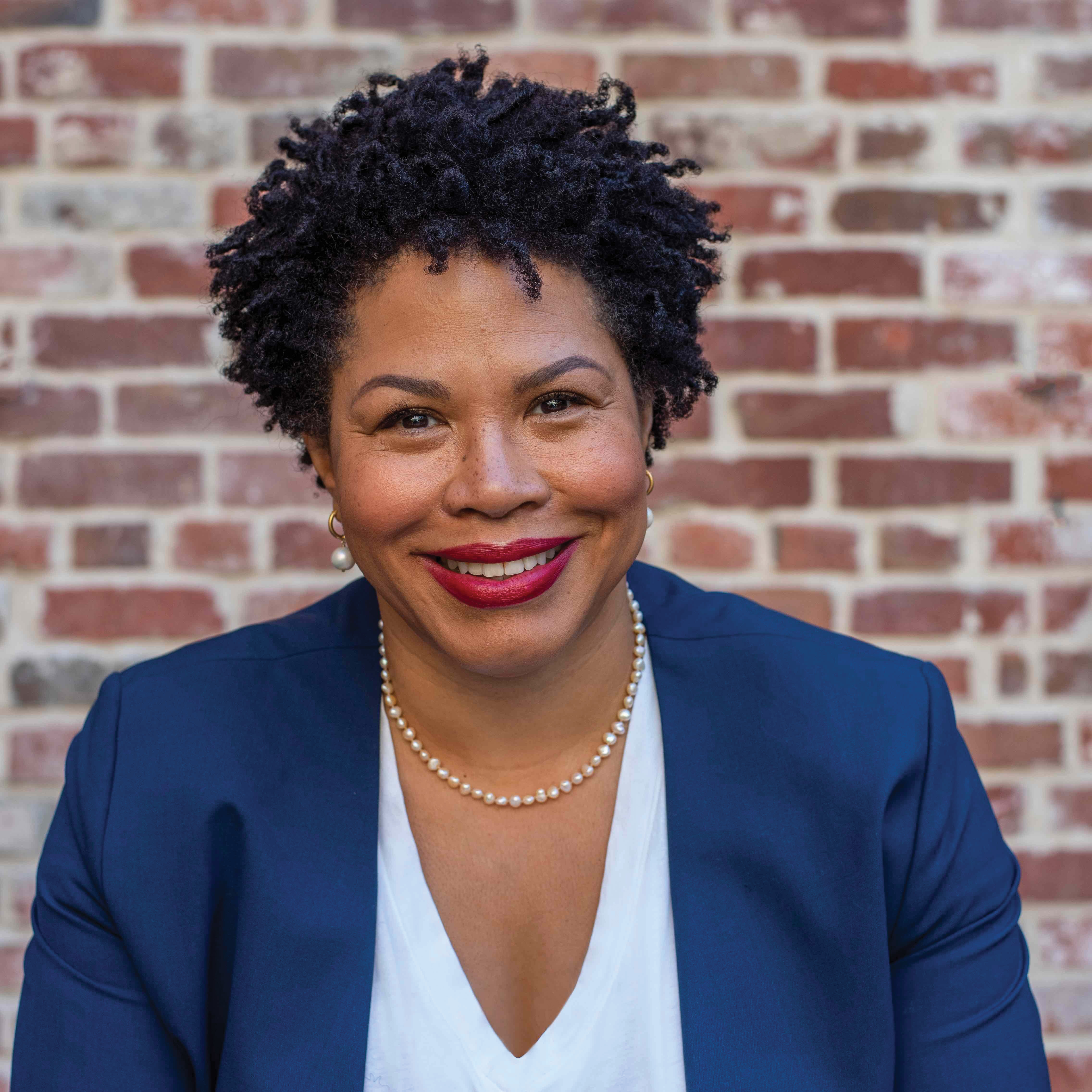
Cheryl Contee
Bestselling author Cheryl Contee is CEO at The Impact Seat Foundation and the Chair and Founder of Do Big Things, a digital agency using new narratives and new tech to create global change in a new era. She has been an affiliate of Harvard’s Berkman Klein Center for Internet & Society and is a proud Co-Founder of #YesWeCode (now Dream Corps TECH) with Van Jones. A Yale and Georgetown graduate, she’s the Co-Founder of Attentive.ly, the first tech startup with a Black female founder to be acquired by a NASDAQ company. Cheryl has been featured in many media outlets, including The Washington Post, The New York Times, Vanity Fair, Fast Company, C-SPAN, Black Enterprise, BBC, MSNBC, and CNN. Learn more at and
📚 Books by Cheryl Contee
Transcript
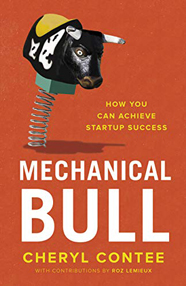
[0:00:30] RW: Hi, everyone. It’s Rae Williams, host of Author Hour, where I interview authors about their new books. I really, really enjoyed chatting with our next guest. Silicon Valley can be a wild ride for an entrepreneur, especially if you’re a woman or a minority or both. If you have big ideas, the fact that you’re not a white dude from Stanford shouldn’t stand between you and startup success and CEO Cheryl Contee, author of Mechanical Bull shares her entrepreneurial journey and leads the way in telling us exactly how this can be done. Here’s our conversation with Cheryl Contee.
[0:01:09] Cheryl Contee: Well, I do a fair amount of public speaking in the course of my work, it’s often about politics and technology, but it’s also increasingly now about the entrepreneur’s journey that I’ve been on. Attentive.ly, my tech startup that I built with Rosalyn Lemieux was a contributor on the book is as far as we know, the firs tech startup with a black female founder to be acquired by a NASDAQ company. So, and just the number of black women who have raised significant seed or venture capital over a million dollars is still a very small club, of women. You know, only a handful in American history. More people have been to the moon than have done what I’ve done and in doing – talking about our story and representing the work and answering questions from aspiring entrepreneurs. You know, I really got a sense of what types of information would be most helpful to folks who say, “wow, show me how it’s done.” So, from that standpoint, I wrote to a certain extent, the book that I wish that Ros and I had had when we first started our journey as entrepreneurs.
[0:02:16] RW: All right. In that, what is the actionable idea, what is the basis of this book and you kind of touch on it a little bit in sharing your experience of what it’s like to start something like this and be one of the first and one of the only to do that. But what is the actionable item that when people read it, they can say yes, this is what I need to do?
[0:02:37] Cheryl Contee: I want people to come away from this book or even as they’re going through the book and use it as a blueprint and a manual for how to get it done. The American dream is in part, around starting your own business and being your own boss and that feeling, that myth, that dream is just intrinsic to our identity as Americans. You know, so many people dream about that and I really wanted to write a book that makes that possible, that starts with the question of, are you really an entrepreneur? Do you understand what that really means beyond the dream and the aspiration, you know, the amount of hard work and the life changes and sacrifices you might need to make in order to do that, what might be holding you back? But then, really taking people all the way through the life cycle of what can you expect that’s going to happen next? Okay, you got to pull your pitch stuff together. You need to build a team, you need to find investors, what happens when you get funded? You know, all the way through exiting and actually potentially selling your business, going to an IPO or in many cases, failing. The action that I want people to take away from this book is that, “ah, I have everything I need now to start my own business and rock it.”
[0:03:56] RW: All right, awesome. So, I definitely want to get into some of the chapters of the book and I love that the first part asks, do you have what it takes? Before I even get there, I would love to hear some of your story, a little bit more of your story, some of your personal journey. How you actually got into tech in general and you know, where the basis of starting this business came from?
[0:04:18] Cheryl Contee: Well, how I got into tech in general is quite a story, Rae. Essentially, it starts with my deep hatred of doing dishes. I would rather clean a bathroom with a toothbrush and at the time, when I was a student at Yale, I had to have a campus job as part of my scholarship and the highest paying job back in the day was working in the kitchens because those workers were unionized. They paid a lot of money, like $17 an hour. But I hate washing dishes and the thought of working 20 to 30 hours a week, washing dishes, you know, I’d rather go to hell. I looked for the next highest paying job, which paid about half as much, so it was a big step down and it was being what was then called computer assistant. Helping professors and students in the library, computer rooms, with the printer, with their computers, with the disk. Back when we had floppy disks, you know, helping them rescue their files. And an innocent young person, 19, I had put together my own Mac SE, yes, I’m dating myself. So, I was like, “I’m great at computers, how hard could this be? I can help people.” As it turned out, it was harder than I thought, but I learned so much. That was really my almost my second major if you will. Shadow major. I never majored in computer science, I actually majored in what was called then ethics, politics and economics at Yale, but I was able to take – unite those two paths both all of that interest in society, but also technology into the career I have today.
[0:05:52] RW: Nice, okay. So, I also hate doing dishes, so I identify with you completely. Hopefully it will lead me to somewhere absolutely fantastic someday too. But back to that part one of the book, Do you have what it takes? How did you know that you had what it takes, how do people reading your book or thinking about being entrepreneurs or starting their own business know if they have what it takes?
[0:06:15] Cheryl Contee: I really didn’t know, to be honest that I had what it took to a certain extent. I think this is for everyone, it is a bit of a gamble. And you know, the reason, when I first came out to Silicon Valley, I did think it was strange that people, their startups would fail. Sometimes, fails spectacularly, flamboyantly and yet they would get a better job than they had before. I was like, “how does that work? It just like classic male failing up or what is that?” But instead, now that I’ve been through the process, I totally get it. Even if you fail and fail hard which apparently the stats are 90% of American small businesses will fail in their first year, there’s a good chance you might fail. Even if you fail, you learn so much in the process that you can then bring into an organization. So, you know, to a certain extent, I didn’t know. But at that point, I had seen so many other people try, sometimes succeed, sometimes fail and I said, “you know, they’re not smarter than me. And they’re not willing to work harder than me. I’m going to give it a try.”
[0:07:22] RW: All right, what was your first step that you took when you decided I’m going to give it a try?
[0:07:26] Cheryl Contee: Well, the first step was well, quitting my job, as it turns out. I had been passed over for a promotion that was in my offer letter at this really big PR firm that had nothing to do with my talent or you know, how hard I was working. It had everything to do with internal politics and you know, I just was like, just something in me said, “it’s time to go.” It started with me quitting my job, walking out, and tweeting. This is the power of a network, Rae. I mean, I put out a tweet that said, “look, I find myself available, who wants to work with me?” I actually got a lot of income from that one message including what turned out to be a fateful message from the then boyfriend, now husband of my cofounder, Ros Lemieux who said, “hey, you should talk to Ros, she’s also thinking about doing her own thing, you know, maybe you guys might make a great team.” And so, you know, long story short, we started working together, it was magical, our team went from two people to 10 people in a year. You know, we just found ourselves really in a groove and I think you know, that’s one of the points that I make in the book is that you can’t do it alone. I think particularly for non-traditional founders, women and minorities, by the time you ginned up enough confidence to start your own business, you’ve operated for so long you know, as an army of one. You know, really pushing hard, you know, as an individual. And there are zero successful businesses that are built around one person. Instead, even if there’s one person who appears to be out front is the face of the business, like Jeff Bezos, you know, I can promise you that behind the scenes, you know, he has a really strong team working with him and many of those people have been there from day one. And so, you know, building that team and understanding that you are good at the things that you’re good at and you need to figure out what are the things that you're not so good at and don’t know about and recruit those people. This is the key to the success and in the case of Ros and myself. Ros is good at all of the things that I’m not good at and I think, vice versa, over the years, we’ve learned a lot from each other and I think now there’s more of an overlap in our skills. But that’s really central.
[0:09:48] RW: Right. To touch a little bit on some of what you said and then lead into a larger question. I think building the team is really important. You made a good point in saying that you know, sometimes as women and sometimes as minorities as well, we’re working in kind of this is this vacuum and at first, it’s difficult for us to actually get into building that team and choosing those right people. So, how do you proceed to kind of break down who you need on your team and how do you do it? And then I know you touch on your book a bit about some of the other gender and raised biases that you’ve experienced? How do you navigate those as well when building your team and when putting your business forward to other people?
[0:10:25] Cheryl Contee: Sure. Well, in terms of recruiting the team, there are some key roles, I go into a lot more detail in the book. But you know, for example, you know, one of the key roles is the visionary, right? Who is the person who has got the big idea and is great at articulating? You know, that big idea. It can really be the void, not only the voice and the face, but really stay, help the team stay true to that big idea. Then there’s the geek, right? If you're talking about a tech startup in particular, but I would say, any startup now, you know, who is the person who is ground zero, you know, all of the – how are we going to get it done, right? And is covering all of that information and you know, sometimes, this person is the same person, but I would say that it’s pretty uncommon in fact, you know? Usually people split off, you know. You need someone who is focused on sales and marketing, often times, having someone who is focused on the product itself and really putting themselves in the shoes of the customer and being the customer advocate. Another important role, the adviser, you know? Having someone on your team, even if they’re not there day to day, they usually won’t be, but someone who can as from not only a more objective place, but from a place of having done it before. Provide you with some insight that will help you make better decisions and make fewer mistakes. These is a few really key roles that people need to think about.
[0:11:56] RW: All right, awesome. How do you navigate just the issue of gender and sometimes race, and being an entrepreneur and in just kind of in an industry that doesn’t seem to be – I’ve spoken to a couple of other entrepreneurs in tech and it doesn’t seem to be female friendly sometimes.
[0:12:13] Cheryl Contee: Things have really changed I would say, in the tech industry and there’s definitely at least more awareness of the special challenges that women and minority face in right now, mostly white and certainly very male dominated industry, you know, of tech. You know from top to bottom. That said, I wrote the book because I think in the startup world, there’s still not necessarily as much discussion about the specific challenges, just an awareness, there are challenges and you know, I think what I wanted to offer were some real solutions, right? What to do when you come up against some bias. For example, I had experiences where we actually had a product, we had a prototype, we had customers and I sat in front of an angel network, an investment, basically a venture capitalist whose job it was to invest in exactly people like me. Minorities. Basically, he said, “wow, this is really great product but I don’t know that you specifically are the person who can actually make this a success.” He was talking to someone who was at that point someone who had created a nationally renowned blog, that really impacted a lot of the political discussion you see today. Who had been on every major media network, CNN, Washington post, et cetera. Someone who had already helped build a multi-million-dollar business. Who exactly was he imagining was going to come in and do this better than myself or my business partners? So, you are going to come up against people who look at your product or your idea and look at you and aren’t able to make the connection and aren’t able to take that journey which means, you’re probably going to have to talk to more people. You know, there’s just no way around it that you know, no matter what you may have done in the past, if this is your first startup, you’re going to have to essentially behave as if you're starting over and prove yourself. Really provide your credentials and knock on more doors than you might imagine or that someone who might look different from you might have to knock on to get the same level of investment.
[0:14:33] RW: All right. Let’s switch gears a little bit and talk about the title of your book. Why did you decide to call it Mechanical Bull?
[0:14:42] Cheryl Contee: Yeah, I decided to call it Mechanical Bull just because for one thing, startups are a wild ride, right? One day, you think to yourself, “I’m going to be queen of the world, it’s going to be great, we’re going to be millionaires.” And the next day you think, “it’s over. It was a fun ride; this was great but this train is rolling into its station.” Startups are absolutely a wild ride and you know; part of the challenge is staying on that bucking bronco as long as you can. However, I called it Mechanical Bull because it’s different when women ride. I don’t know if you’ve ever been in a bar, where there’s a mechanical bull or if you’ve even been on a mechanical bull yourself. I have. It’s a completely different experience. When men are riding a bull, people are looking at their strength, their stamina, right? How long can they stay on, what’s the form? When a woman gets on the bull, all of a sudden, the whole energy changes. People are looking at her body, the things that are jiggling, you know, they are waiting for a boob to pop out. It’s just a very different experience and I would say, a startup to a certain extent is a little like that. You know, not only is the challenge to ride, but you’re under a completely different set of scrutiny and expectations and challenges when you’re a nontraditional founder.
[0:16:02] RW: I get that completely. I love the title and I thought as much, that’s what it meant. Great explanation. I think a great choice. So, let me ask you this, what happens when people, especially women, aren’t following some of the things that you’ve learned and some of the advice that you give in the book, what are some things that you’ve seen happen whether it happened to you or you’ve looked over and kind of seen things fall apart elsewhere. What is the detriment of not kind of following some of your advice?
[0:16:32] Cheryl Contee: Well, the detriment of not following some of my advice is that you know, you’re going to get bucked of that bronco a lot faster. You may find your startup journey, mileage may vary without this book and you know, that’s kind of why I wanted to write, a lot of the pitfalls I think and this is part of what when they call it privilege, right? Or white privilege or male privilege. Part of that is not even realizing how much access or knowledge you already have walking in, that someone may not have, right? Whether it is connections or you know, a parent or you know, an uncle or an aunt, you know who is as successful entrepreneur, CEO, who is an advisor, someone just having – for example, the whole notion of the friends and family round. The friends and family round is considered like a pre seed round. Before you really start to talk to external investors. You may be raising money from your friends and your family and yet you know, if you’re, a particularly if you're a minority, if you’re a technologist, you’re already making the most money in your family, right? Like very few people are making more and in fact, people are asking you for money. People are trying to bum 10 bucks off of you. There’s no friends and family round, just a non-starter. There’s no one who is going to be like, yes, here’s a check for $100,000. That’s just not a real expectation and so, you know, helping people to understand how they can even answer that question, right? Of like, “how did your friends and family round go?” Yeah, my friends and family don’t have the same circumstances that I have and so I need to go straight to seed. That was my hope was to really help educate people on the process, the terms, but also equip them with answers and responses and expectations that they can use to help get overcome hurdles and that come along the way, that might stop them or side track them.
[0:18:36] RW: All right. Now, I know you do a fair amount of speaking in outreach. What is, if you could pass on just one piece of advice, one piece of knowledge that you think is the most important thing that they could take through with them, what would that be?
[0:18:50] Cheryl Contee: Well, there’s so many things, gems in the book, you know, that I hope the book as you know, you’ve read it. We tried to make it a really easy read, right? Insert some personal narrative. There’s a lot in there though. I think that is very practical. I think the biggest step back is talk to people about your idea. I think that you know, I would say particularly in minority communities, there’s often this – I don’t want to tell someone because someone might steal your idea. Look, the furthest from the truth, for one thing, most people aren’t as ambitious as you and so they might hear about that idea and think it sounds cool, but they’re not going to do a thing with it. For another, you need to talk to as many people as possible about your idea so that you can figure out who are my team members, right? Who are my potential investors, who are my customers and what do they think about it and what do they want? Who are my potential suppliers or vendors or business partners? You know, in talking to as many people as possible and reaching out. You know, putting stuff up on AngelList and saying, “hey, I’ve got this idea, who wants to join?” That’s how – once you start putting that energy out, you’re going to see that energy start to come back. If you’re just noodling in your journals, alone, you know, thinking about your idea and kind of hoarding it to yourself. Your idea’s never going to find life and it certainly isn’t going to find investment of customers.
[0:20:18] RW: All right, similarly in that vein, if you had to issue a challenge, so to people reading your book to people listening to us now. Entrepreneurs of all kinds, what would that challenge be?
[0:20:30] Cheryl Contee: The challenge would be make a pitch deck, right? There’s a whole section of the book that’s all about you don’t need a business plan, it doesn’t have to be that detailed and it’s daunting and you know, most busy professionals don’t have time to do that. Instead, there’s a lot of – it’s not that hard to do a pitch deck and the pitch deck is really going to help you focus on the answers that you need in order to see if this is a real thing or not. You know, read the book and make a pitch deck and then start to walk it around to people, don’t worry about getting investment right away, just show it to your friends, show it to your family, you know, put it online see what people have to say about it.
[0:21:11] RW: All right, awesome. Of course, I know people are going to want to contact you to hear more, we’re definitely going to go ahead and encourage people to get the book. Where can they find you to ask more questions?
[0:21:22] Cheryl Contee: You can always find me on Twitter, it’s @ch3ryl. I’m easy to find on Twitter or of course Instagram or Facebook.
[0:21:31] RW: All right, awesome. Thank you so much Cheryl.
[0:21:34] Cheryl Contee: Thank you Rae, this was really cool.
[0:21:38] RW: All right guys, saddle up for a practical guide to launching a successful startup and writing trends like a boss, Mechanical Bul is available now on Amazon.com. So grateful to Cheryl for sharing with us today. Catch us next time on author hour.
Want to Write Your Own Book?
Scribe has helped over 2,000 authors turn their expertise into published books.
Schedule a Free Consult